
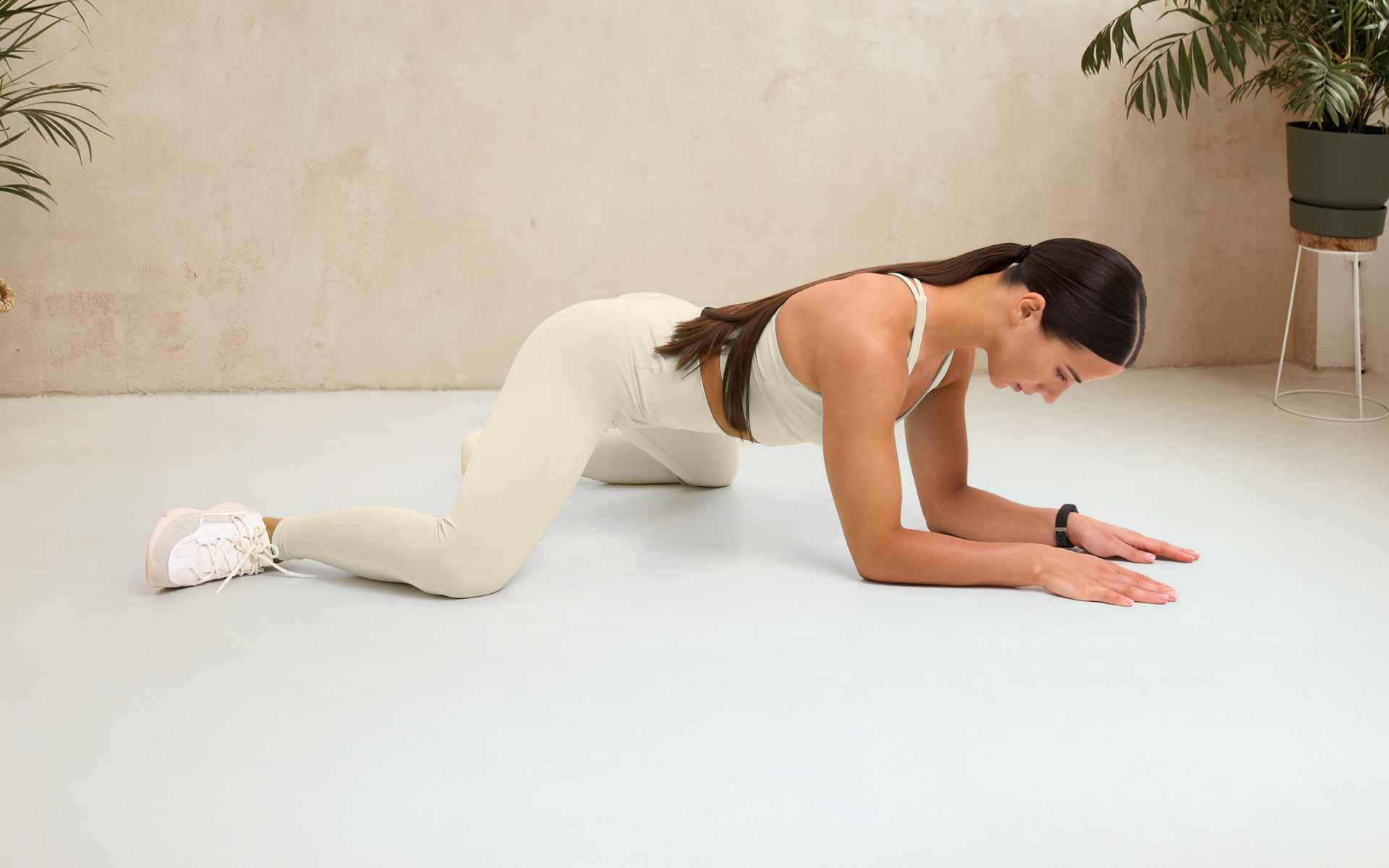
You might have heard the phrase “we store emotions in our hips.”
It’s an idea that blends ancient wisdom with modern wellness practices, suggesting that our tight, achy hips might be holding more than just physical tension. While the science is more nuanced, the experience of emotional release through hip-focused movement is real for many.
This article explores how you can use somatic hip-opening exercises to gently release tension, improve mobility, and foster a deeper mind-body connection. We’ll look at the origins of these ideas, the science behind the practice, and provide a safe, effective routine you can try at home.
What Emotions Are Tied To The Hips?
In ancient yogic teachings, the body has energy centers called chakras.
The second chakra, known as Svadhisthana, is located in the lower abdomen, encompassing the hips, sacrum, and pelvic bowl.
Experts associate this sacral center with emotions, creativity, pleasure, and the element of water, signifying flow and flexibility (1).
Many believe that when Svadhisthana is blocked or out of balance, the blockage can manifest as emotional volatility, creative stagnation, or a fear of change.
Physically, this imbalance manifests as stiffness and pain in the lower back and hips (2).
Hip-opening postures in yoga can stimulate this area, encouraging energy to flow freely and promoting emotional release.
Does modern somatic research support the idea of emotions being literally stored in the hips? Not quite.
Current research emphasizes that while people can feel emotions and stress as bodily sensations (sometimes in the hips), there’s no solid evidence that trauma is literally “stored” in one muscle or joint (3).
Thomas Hanna developed a philosophy of movement he called “somatic education.”

Hanna’s theory focused on how the nervous system learns and holds patterns of muscular contraction. He identified a phenomenon he called Sensory-Motor Amnesia (SMA), where muscles become habitually tight and slip from our voluntary control due to stress, trauma, or repetitive habits (4).
While Hanna did not map emotions to specific body parts, his work aligns with the yogic concept in one key way: both recognize that our life experiences shape our physical state.
Chronic stress can trigger the “Red Light Reflex,” a pattern of contraction in the front of the body that often involves tightening the hip flexors (5). Somatics offers a way to retrain these patterns consciously (6).
So, it’s best to view the “emotions in the hips” concept as a powerful metaphor.
Your hips don’t store feelings like files in a cabinet. Instead, they can hold the physical consequence of emotional states as chronic tension controlled by your nervous system.
Working with this tension can, in turn, influence your overall emotional state.
How Do You Open Your Hips For Emotional Release?
Releasing tension in the hips somatically is very different from traditional stretching.
Instead of forcefully lengthening a muscle, the goal is to retrain the brain-to-muscle connection that keeps it tight. This is a practice of deep listening and gentle exploration (7).
The core technique, developed by Thomas Hanna, is called pandiculation.
It involves 3 steps (8):
- Consciously contract a tight muscle or group of muscles, but gently.
- Slowly, mindfully release that contraction.
- Completely relax and rest, allowing your nervous system to integrate the new, lower level of resting tension.
This process essentially “reboots” the feedback loop between your brain and muscles, reminding your nervous system that it can let go. It stands in contrast to passive stretching, which can sometimes trigger the muscle’s stretch reflex, causing it to tighten again.
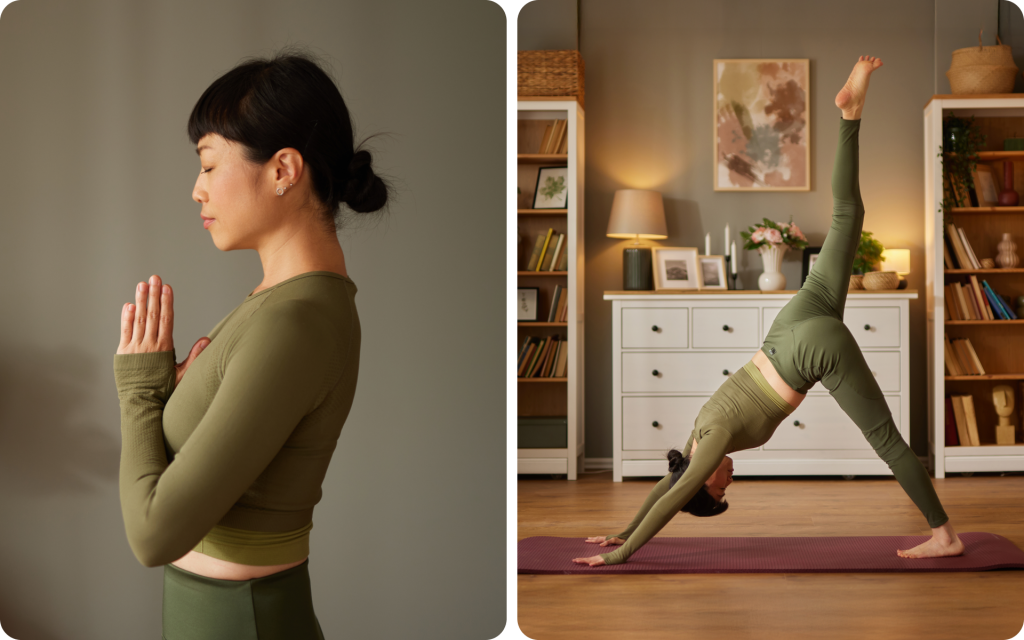
To practice this effectively, follow these somatic principles (9):
- Focus Internally: Your main task is to pay attention to the internal sensations of movement. Close your eyes to minimize external distractions and tune into the subtle feedback from your body.
- Move Slowly: As Hanna advised, moving slowly gives your brain time to process the sensory information from your muscles and joints. Quick movements just reinforce old, automatic habits.
- Be Gentle and Exploratory: Use the least possible effort. The goal is not to achieve a specific range of motion, but to explore the movement with curiosity. Don’t force anything; if you encounter a knot, gently work around it.
Read more: Somatic Pilates For Weight Loss: Body-Aware Movement For A Leaner, Stronger You
How To Unlock Hips With Somatic Yoga?
Somatic Yoga, a practice developed by Eleanor Criswell-Hanna, blends the principles of hatha yoga with the neuroscience of somatic education (10). It transforms traditional postures into opportunities for deep sensory learning and release.
This approach is particularly practical for unlocking the hips.
Criswell-Hanna outlines a specific sequence to turn any posture into a somatic exploration (11):
- Visualize: Before moving, take a few seconds (about 10) to rehearse the posture mentally. This visualization portion “programs your biocomputer,” as Criswell puts it, preparing your nervous system for the action.
- Move Slowly: Enter the posture over about 10 seconds. Keep your attention fully on the sensations of movement.
- Hold with Awareness: While in the posture, maintain your internal focus.
Criswell-Hanna suggests using an ‘Om-count,’ where you silently repeat ‘Om’ at a steady pace, or a simple second count, such as mentally counting ‘one, two, three,’ to mark the time. This practice helps keep the mind engaged with the body, fostering a deeper connection and presence in the pose.
BetterMe: Health Coaching app helps you achieve your body goals with ease and efficiency by helping to choose proper meal plans and effective workouts. Start using our app and you will see good results in a short time.
- Release Slowly: Come out of the posture with the same slow, deliberate control you used to enter it.
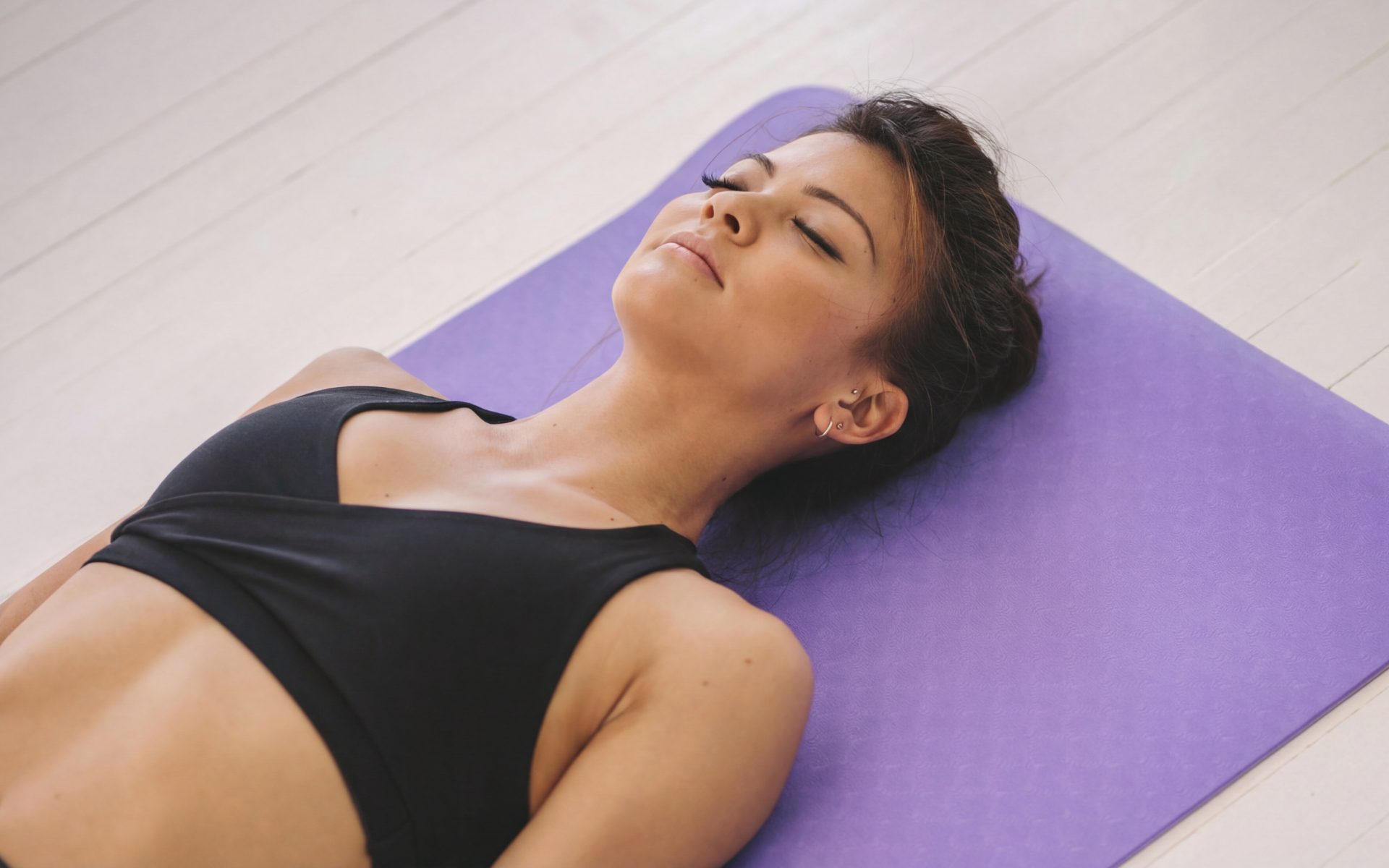
- Rest and Self-Sense: Lie in a neutral position, as in the corpse pose.
For about a minute, scan your body, and notice the after-effects: warmth, tingling, changes in position, or feelings of relaxation. This rest period is when your nervous system integrates the learning.
This structured practice of somatic hip-opening exercises in yoga ensures you are not just stretching muscles, but actively retraining your brain to release long-held tension.
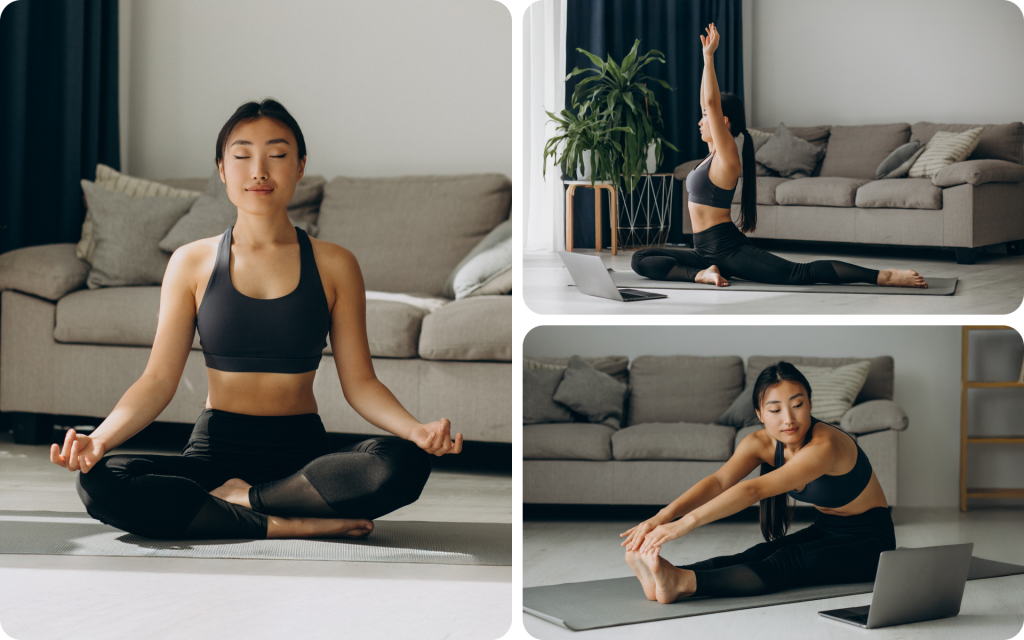
What Are Some Beginner-Friendly Somatic Hip Opening Exercises?
A lot of people want to know:
What are the safest somatic hip opening exercises?
Here are 8 exercises inspired by the somatic traditions of Thomas Hanna and Eleanor Criswell-Hanna. They are designed to be done slowly and mindfully, making them a perfect addition to your morning routine.
Lie on your back on a comfortable, firm surface, such as a rug or yoga mat. Wear loose clothing.
Remember to keep your eyes closed and movements small, slow, and gentle.
1. Pelvic Tilts
This fundamental movement gently awakens the lower back and hip flexors.
- Lie on your back with knees bent and feet flat on the floor, about hip-width apart.
- Gently press your lower back into the floor, tilting your pelvis so your tailbone curls slightly upward. This contraction is a very small, subtle movement of your abdominal muscles.
- Slowly, mindfully release the contraction, allowing your lower back to arch away from the floor. Your tailbone will press lightly into the floor.
- Continue rocking your pelvis back and forth with this slow, easy rhythm.
- After a few repetitions, rest entirely in the neutral position and notice any changes.
2. Knee Drops to the Side
This exercise addresses the rotator muscles of the hips and the sides of the waist.
- From the same starting position, keep your feet and knees together.
- Inhale, and as you exhale, very slowly let both knees drop a few inches to the right. Only go as far as you can without any strain.
- Inhale and slowly bring your knees back to the center.
- Exhale and let them drop a few inches to the left.
- Repeat this side-to-side movement, feeling the gentle rotation in your hips and spine. Then rest.
3. Hip Flexor Release (Arch and Flatten)
This is a classic pandiculation for the muscles of the lower back and abdomen.
- Lying on your back with knees bent, inhale and gently arch your lower back, creating space between your back and the floor. Feel your back muscles contracting.
- Hold the contraction for a moment.
- Very slowly, exhale and release the arch, flattening your lower back toward the floor. Feel your back muscles lengthening completely.
- Rest fully in the flattened position before beginning again.
- Repeat 3-5 times. This movement is one of the core somatic exercises to release trauma held in the “startle” or Red Light reflex (5).
4. Internal and External Hip Rotation
This exercise isolates the rotation of the femur (thigh bone) in the hip socket.
- Lie on your back with your legs extended out in front of you on the floor.
- Slowly rotate your entire right leg inward from the hip, so your toes point toward your left leg.
- Very slowly, rotate the leg outward, so your toes point to the right.
- Feel the movement originating deep within the hip joint.
- Repeat this several times on the right side, then rest and notice the difference between your right and left hips.
- Repeat the sequence on the left side.
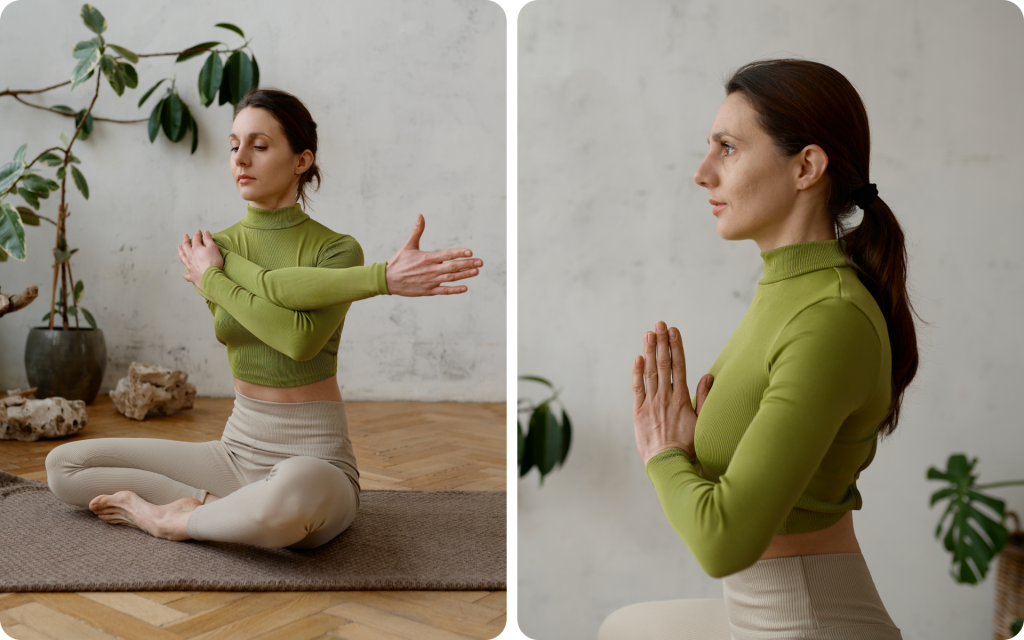
5. Single Knee-to-Chest Squeeze and Release
This squeezing movement is a pandiculation for the psoas and other hip flexors.
- Lying on your back with both legs long, gently hug your right knee toward your chest.
- While holding it, gently press your knee into your hands, as if trying to straighten your leg, but resist with your hands. You are creating a gentle contraction in the hip flexor. Hold for 3 seconds.
- Very slowly, release the pressure and allow your hands to guide the knee a little closer to you.
- Finally, slowly release the leg back down to the floor. Rest and feel.
- Repeat on the left side.
6. Side-Lying Leg Lifts
This movement targets the abductor muscles on the outside of the hip.
- Lie on your right side with your legs stacked and head supported by your arm.
- Very slowly, lift your left leg just a few inches toward the ceiling. Focus on the sensation in your outer left hip.
- Just as slowly, lower the leg back down.
- Feel the full cycle of contraction and release.
- Repeat 3-5 times, then rest. Roll over and repeat on the other side.
7. Glute Contraction and Release
This pandiculation awakens and relaxes the powerful muscles of your buttocks.
- Lie on your back with knees bent and feet flat on the floor.
- Gently and consciously squeeze your gluteal muscles. Notice the slight lift of your hips.
- Hold the squeeze for a couple of seconds.
- Very, very slowly, release the squeeze completely, feeling your buttocks soften and spread on the floor.
- Rest completely before repeating.
8. Exploratory Hip Circles
This is less of a specific exercise and more of a free exploration.
- Lying on your back, bring your right knee toward your chest.
- Begin to make very small, slow circles with your knee. Imagine you are drawing a tiny circle on the ceiling.
- Explore different sizes and directions. Notice where the movement feels smooth and where it feels bumpy or stuck.
- Do not push through any sticky spots. Simply notice them and see if moving even more slowly can smooth them out.
- After a minute, lower the leg, rest, and repeat on the other side. This is a gentle way to encourage a somatic hip release shaking sensation if the body is ready.
Safety Note: While these exercises are generally safe, always listen to your body.
Never force a movement or push through sharp pain. If you have a serious injury, a history of hip surgery, or a diagnosed medical condition, please consult with a physician or a certified somatic educator before beginning this or any new exercise program.
For a deeper dive into these movements, explore somatic stretches for hips.
What Does A Somatic Release In The Hips Feel Like?
A somatic release refers to the process of releasing stored tension or trauma from the body, often through physical sensations or emotional shifts. It is often subtle and can be different for everyone. It’s not always a dramatic ‘pop’ or a flood of emotion. More often, it’s a quiet shift in your internal landscape, like a sense of lightness or calm.
You might notice (12):
- Sensory Changes: A feeling of warmth, tingling, or “buzzing” in the area you worked on.
- Increased Awareness: The area may feel more “alive” or present in your body map. You might feel the hip joint more clearly.
- Spreading Relaxation: A wave of softness that radiates out from the hips.
- Easier Breathing: As the deep hip flexors (like the psoas) release, they can free up the diaphragm, leading to a deeper, fuller breath.
- Spontaneous Movement: Sometimes, the nervous system initiates a somatic hip release, resulting in shaking or trembling. This is an involuntary tremor that helps discharge stored energy. If it happens, try to allow it without fear or judgment, as long as it feels safe.
- Emotional Shifts: You may feel a sense of peace, sadness, or even joy. These feelings might not have a clear story attached; they are simply shifts in your affective state as your nervous system finds a new balance.
Red Flags: Sharp, shooting, or electric pain is not part of a healthy release.
If you experience this, stop immediately. It’s always wise to consult a qualified somatic educator or physical therapist if you have a history of injury or chronic pain (13).
If you are looking for specific movements for recovery, consider learning more about somatic exercises for the hips.
Read more: 6 Somatic Yoga Exercises for Beginners
How Effective Are Somatic Hip Opening Exercises For Emotional Release?
The effectiveness of somatic hip exercises to release trauma and emotional tension lies in their influence on the nervous system. While we can’t prove that emotions are “stored” in the hips, we can see how changes in motor patterns affect our emotional state through several physiological mechanisms.
- Neurophysiology of Motor Learning
As Thomas Hanna established, chronic muscle tension is a learned habit of the central nervous system. Somatic exercises, especially pandiculation, work at the brain and spinal cord levels to reset the baseline tension of your muscles (14).
By interrupting the old habit of contraction, you create an opportunity for a new, more relaxed pattern to emerge. This change in physical holding patterns can break the feedback loop that reinforces certain emotional states like anxiety or depression (15).
- Interoception and Affect Regulation
Interoception is your ability to sense your internal bodily signals, your heartbeat, your breath, your digestion, and your muscle tension.
Research shows that people with stronger interoceptive awareness have better emotional regulation. Somatic exercises are, at their core, a form of interoceptive training (16).
By focusing on your inner sensations, you are literally strengthening the brain pathways responsible for self-awareness, which gives you more data about your emotional state and a greater ability to influence it (17).
Reasons why BetterMe is a safe bet: a wide range of calorie-blasting workouts, finger-licking recipes, 24/7 support, challenges that’ll keep you on your best game, and that just scratches the surface! Start using our app and watch the magic happen.
- Autonomic Balance
The autonomic nervous system (ANS) governs our “fight-or-flight” (sympathetic) and “rest-and-digest” (parasympathetic) responses.
Chronic hip tension, particularly in the deep flexors, is often associated with heightened sympathetic arousal (18, 19).
The slow, mindful, and gentle nature of somatic movement helps to down-regulate the sympathetic nervous system and shift you toward a more parasympathetic state. This shift is what we perceive as relaxation and safety, which is the foundation for emotional processing and release (20).
To learn more about how these movements can aid recovery, check out information on somatic hip exercises to release trauma. If you’re curious about somatic exercises for hips, check out our earlier article.

What Are The Spiritual Benefits Of Hip Opening?
Beyond the physiological, engaging in somatic hip opening exercises can be a profound spiritual practice. In the tradition of Somatic Yoga, the goal is to unify mind and body.
By bringing conscious, loving attention to a part of your body that may have been numb or painful, you are practicing self-compassion.
This practice fosters a sense of wholeness.
Instead of treating your body as an object to be fixed or forced into submission, you engage with it as a living, sensing, intelligent process; a “soma,” as Hanna defined it.
This shift from third-person (viewing your body) to first-person (experiencing your soma from within) can be deeply integrating.
It allows you to connect with your “inner wisdom or guidance,” as Criswell-Hanna describes it (21). As you quiet the noise of habitual tension, you can become more attuned to the subtle messages of your body, leading to a more intuitive and authentic way of being in the world.

Frequently Asked Questions
Can you lose weight with somatic yoga?
Somatic yoga is not designed as a high-intensity, calorie-burning workout. However, by reducing stress and balancing the nervous system, it can help regulate cortisol levels, which may support weight management (22). Its primary benefit is not weight loss, but improved function, comfort, and awareness.
How many times a week should I do somatic yoga?
A daily routine helps reinforce the new neural pathways you are creating. Research suggests that a short, daily practice (15-20 minutes) is effective for retraining your nervous system (23).
Should you do somatic yoga before bed?
Yes, somatic yoga can be an excellent practice before sleep. The focus on slow movement and parasympathetic activation helps calm the nervous system, quiet the mind, and prepare the body for deep rest (24). For more details about the somatic bedtime routine, take a look at our prior publication.
How do I start somatic exercise?
You can start right now with the exercises in this article. The key is to begin slowly and gently, with your full attention on your internal sensations. Lie on the floor, close your eyes, and choose one movement to explore with curiosity.
The Bottom Line
Somatic hip opening exercises offer a powerful, gentle, and intelligent way to release chronic tension, improve mobility, and foster a more integrated relationship with your body. Ground yourself in the understanding that you can learn and unlearn movement patterns; this practice empowers you to become your own expert.
By blending the wisdom of yoga with the science of somatics, you can explore the connection between your physical self and your emotional world safely and effectively.
It’s a journey of self-discovery, one slow, mindful movement at a time.
DISCLAIMER:
This article is intended for general informational purposes only and does not serve to address individual circumstances. It is not a substitute for professional advice or help and should not be relied on for making any kind of decision-making. Any action taken as a direct or indirect result of the information in this article is entirely at your own risk and is your sole responsibility.
BetterMe, its content staff, and its medical advisors accept no responsibility for inaccuracies, errors, misstatements, inconsistencies, or omissions and specifically disclaim any liability, loss or risk, personal, professional or otherwise, which may be incurred as a consequence, directly or indirectly, of the use and/or application of any content.
You should always seek the advice of your physician or other qualified health provider with any questions you may have regarding a medical condition or your specific situation. Never disregard professional medical advice or delay seeking it because of BetterMe content. If you suspect or think you may have a medical emergency, call your doctor.
SOURCES:
- Chakra Origins, Meditation & Symbols (n.d., study.com)
- Sacral Chakra Blockage: Symptoms and Solutions (n.d., healing-sounds.com)
- Clinical Manifestations of Body Memories: The Impact of Past Bodily Experiences on Mental Health (2022, mdpi.com)
- Sensory Motor Amnesia – SMA (2018, elevatedsomatics.com)
- Red Light Reflex (2019, somaticmovementcenter.com)
- Somatic movement intervention among older adults to improve body awareness and spine mobility: A pilot study (2025, sciencedirect.com)
- Effectiveness of Progressive Muscle Relaxation, Deep Breathing, and Guided Imagery in Promoting Psychological and Physiological States of Relaxation (2021, pmc.ncbi.nlm.nih.gov)
- What is pandiculation? (2022, somaticmovementcenter.com)
- The Body Can Balance the Score: Using a Somatic Self-Care Intervention to Support Well-Being and Promote Healing (2025, mdpi.com)
- Hanna Somatic Yoga (n.d., sensateyogamove.com)
- DOCUMENTING HANNA SOMATIC EDUCATION: A MULTIPLE CASE STUDY (2022, researchgate.net)
- Somatic Therapy: Signs Your Body Is Releasing Trauma (2024, integrishealth.org)
- TRANSFORMING LIVES THROUGH HEALING TRAUMA (n.d., traumahealing.org)
- What is Clinical Somatics? (n.d., somaticmovementcenter.com)
- The Face of Emotion: Botulinum Toxin, Emotional Anatomy, and Mood Modulation (2025, onlinelibrary.wiley.com)
- Interoceptive training enhances emotional awareness and body image perception: evidence from improved heartbeat detection and psychological outcomes (2025, researchgate.net)
- The Importance of Awareness, Acceptance, and Alignment With the Self: A Framework for Understanding Self-Connection (2022, pmc.ncbi.nlm.nih.gov)
- Emotional state as a modulator of autonomic and somatic nervous system activity in postural control: a review (2023, frontiersin.org)
- Depression, anxiety may hinder healing in young patients with hip pain (2019, medicine.washu.edu)
- SOMATIC THERAPY SCIENCE: MIND-BODY CONNECTION EXPLAINED (2025, somatictherapypartners.com)
- Connecting to Inner Guidance: Mindfulness Meditation and Transformation of Professional Self-Concept in Social Work Students (n.d., ojs.uwindsor.ca)
- STRESS MANAGEMENT & WEIGHT LOSS (n.d., healthcare.utah.edu)
- Clinical Somatics Exercises for Full Body Relief (n.d., somaticmovementcenter.com)
- Tailored individual Yoga practice improves sleep quality, fatigue, anxiety, and depression in chronic insomnia disorder (2022, bmcpsychiatry.biomedcentral.com)



 By
By