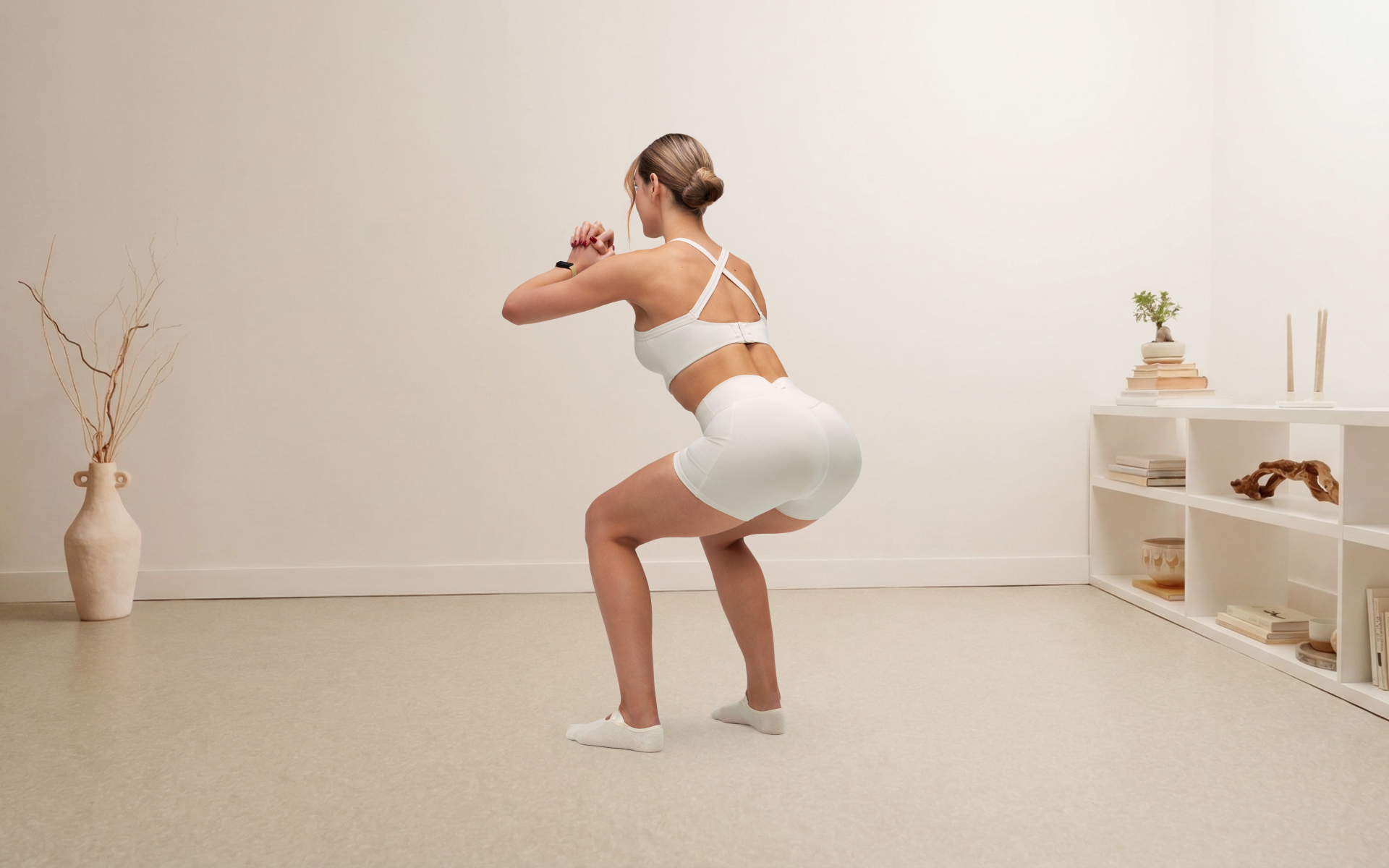
If you’ve spent more than five minutes scrolling through TikTok or Instagram lately, your feed has probably turned into a sea of shelf-building secrets and hip dip hacks. These could be viral Pilates workouts or heavy cable abductions.
Regardless, it seems like everyone is chasing that sculpted side booty. Even though genetics plays a role in shaping our bodies, the obsession with the glute medius has clearly reached peak trend status.
You should stop scrolling and actually feel the burn. For that, dive into this ultimate guide about rounding out those hips and building more defined sides!
What is a Side Booty Workout?
When we talk about a side booty workout, we’re going beyond TikTok trends and looking at the real anatomy behind it: the gluteus medius and gluteus minimus.
These muscles sit on the outer part of your hips. They play a key role in stabilizing your pelvis and helping with hip abduction (moving your leg away from your body) (1).
Even though you can’t spot reduce fat or change your bone structure, those hip dips are often just where your femur connects to your pelvis (2)(3). But you can build these muscles through hypertrophy, which may help create a rounder shape (4).
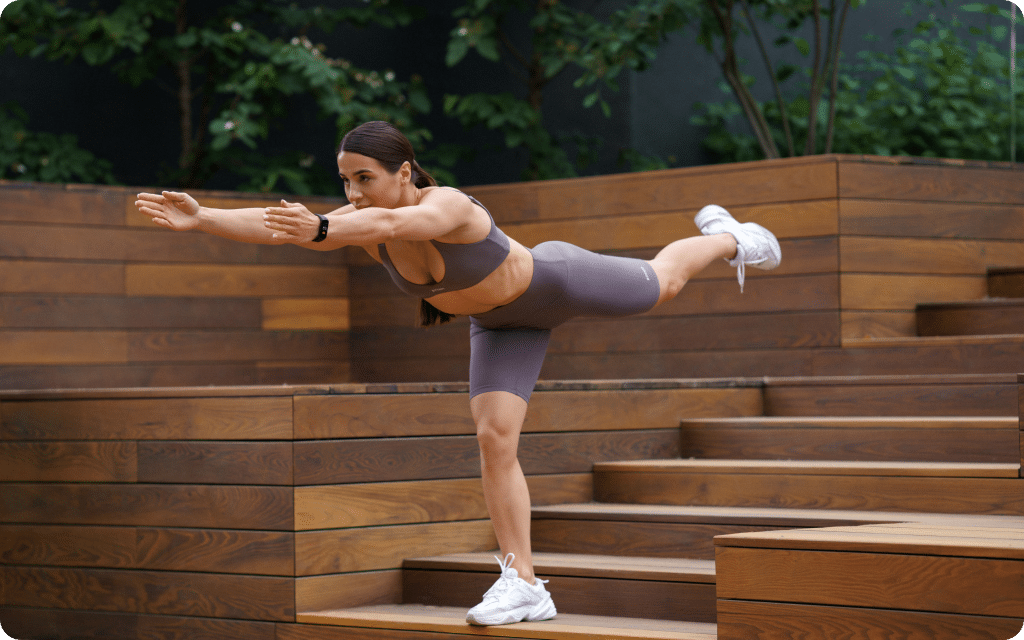
What Actually Happens at Those Sides?
Research shows that you need a combination of high-tension exercises and stabilization work to truly build those sides. We’ve rounded up some research below to help you get a clearer perspective on this:
- Leverage the Power of Step-Ups
Many people assume side booty training is all about kicking out. However, a 2020 systematic review published in the Journal of Sports Science & Medicine found that the Step-Up and its variations led to the highest activation of the gluteus medius (5).
When you step up, your hip must support and stabilize your full body weight. This can help the side glutes engage quickly, helping you avoid losing balance.
- Focus on Abduction
Research published in Frontiers shows that Side-Lying Hip Abductions and Clamshells are effective for isolating the glute medius with minimal assistance (6). We can also say that they prevent cheating from the quads.
The study suggests that, to target the upper outer glute in particular, slow, controlled, high-repetition abduction exercises are often more effective.
BetterMe: Health Coaching app helps you achieve your body goals with ease and efficiency by helping to choose proper meal plans and effective workouts. Start using our app and you will see good results in a short time.
- Consider Adding Weight
A 2019 study in Frontiers in Physiology emphasizes that muscle hypertrophy (growth) requires mechanical tension (7). This means that while bodyweight burners feel good, you eventually need to add resistance, like bands or cable machines, to keep the side booty growing.
The Takeaway
These studies drive us to conclude that side booty workouts shouldn’t be about filling in the hips. When you’re doing a side booty workout at home or at the gym, your goal should be to improve pelvic stability. And so, when you train the gluteus medius and minimus, you’re basically strengthening the muscles that hold your pelvis steady and keep it level.
If these muscles don’t activate properly, your knees may collapse inward during squats, and your lower back often bears extra strain during everyday movements.
Read more: Side Glutes Exercises Gym Guide for Toned Hips and a Confident You
Why Are the Sides of My Glutes Flat?
If you often find yourself looking in the mirror, wondering why the sides of your glutes look flat, it’s now the time to do something about it. What social media often labels as a flaw is usually a mix of skeletal structure, muscle shape, and fat distribution.
Let’s take a look at why some glutes appear flatter and how it relates to the different types of butts.
The Skeleton Secret of Hip Dips
Hip dips are mainly caused by your bone structure. Specifically, the distance between your ilium (top of the pelvis) and the greater trochanter (the bony bump on your thigh).
A 2025 study on hip morphology reports that people with wider iliac wings and higher femoral neck-shaft angles naturally have a larger gap (8). This can cause the skin to curve inward.
Note that these dips are normal and permanent. You can’t change your bone structure.
How Muscles and Fat Affect Your Shape
A 2025 3D MRI study (RSNA) found that prolonged sitting and low physical activity can thin the gluteus maximus and medius, particularly in the upper outer area (9). This may make sides look flatter, even if overall muscle size hasn’t changed.
Genetics and hormones like estrogen determine where your body stores fat. If more fat sits at the back of your glutes rather than the sides, or if you have low body fat, the flat areas from bones and muscles may become more noticeable.
How to Structure the Workout for the Lower Butt
Data like this brings us down to the conclusion that there’s a lot you can do, even though you can’t change the structure of your bones. It doesn’t really matter whether you’re doing a 10-minute side-booty workout or spending an hour with a fitness trainer. You must stay well-informed to make the right choices.
Remember these tips:
- Move More: Break up long periods of sitting to prevent muscle thinning.
- Target the Gap: Focus on glute medius exercises to fill in the sides above hip dips.
- Consistency is Key: Slow, controlled exercises with high reps help build muscle in the right areas.
Understanding your anatomy and following a smart workout for the lower butt helps you enhance your curves. It can smooth out dips and work in harmony with your body’s natural blueprint.
How To Target the Side Bum with Exercises?
You can’t just stick to regular squats or up-and-down moves to hit the side bum. The gluteus medius and minimus do most of the work for moving your leg out to the side and keeping your hips stable.
If you want a fuller side profile, you need to work these muscles in different directions. Here’s how to target them the right way:
- Work Side to Side
Most leg exercises involve forward and backward movement. But to really target the side booty, you need to train side-to-side.
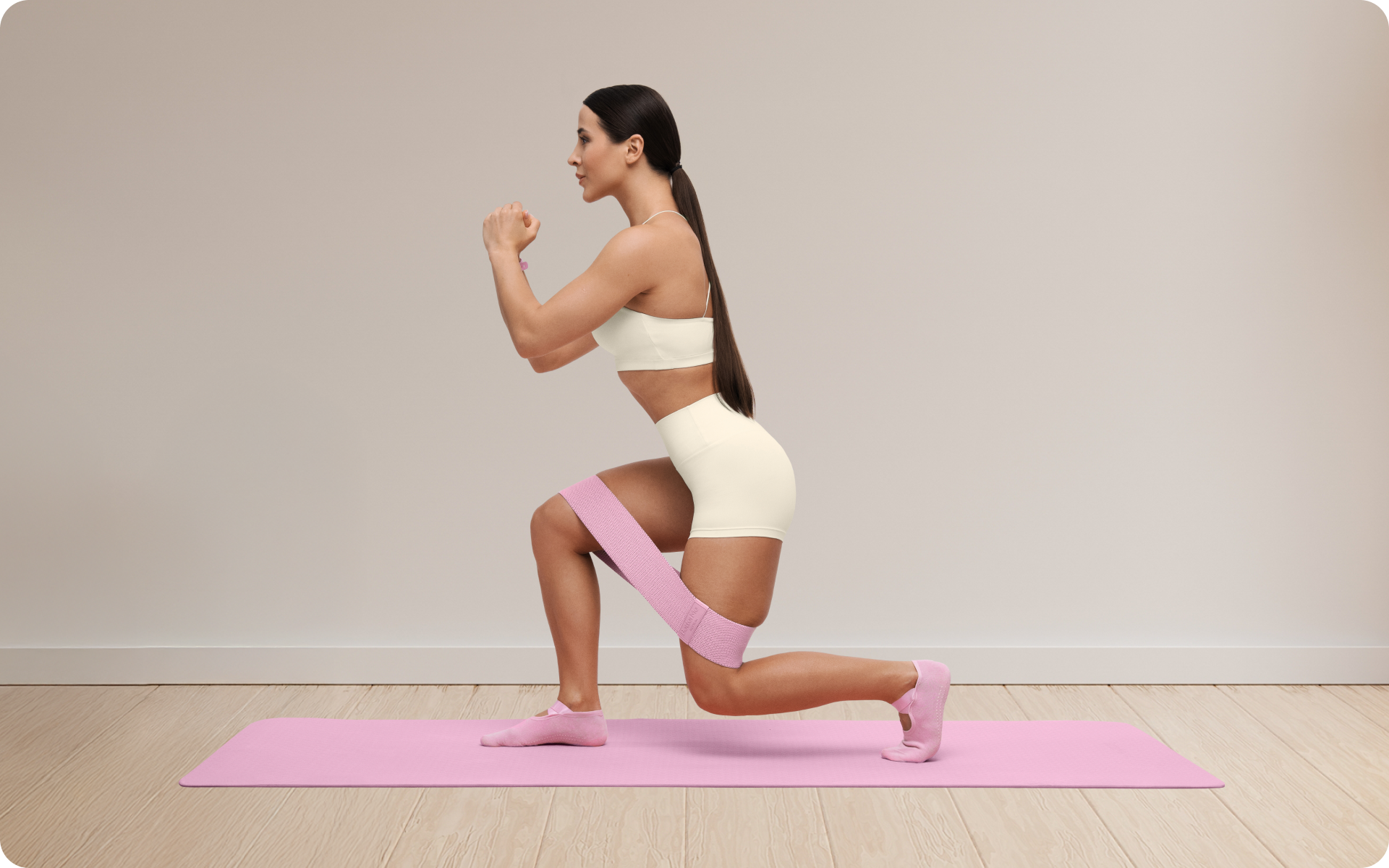
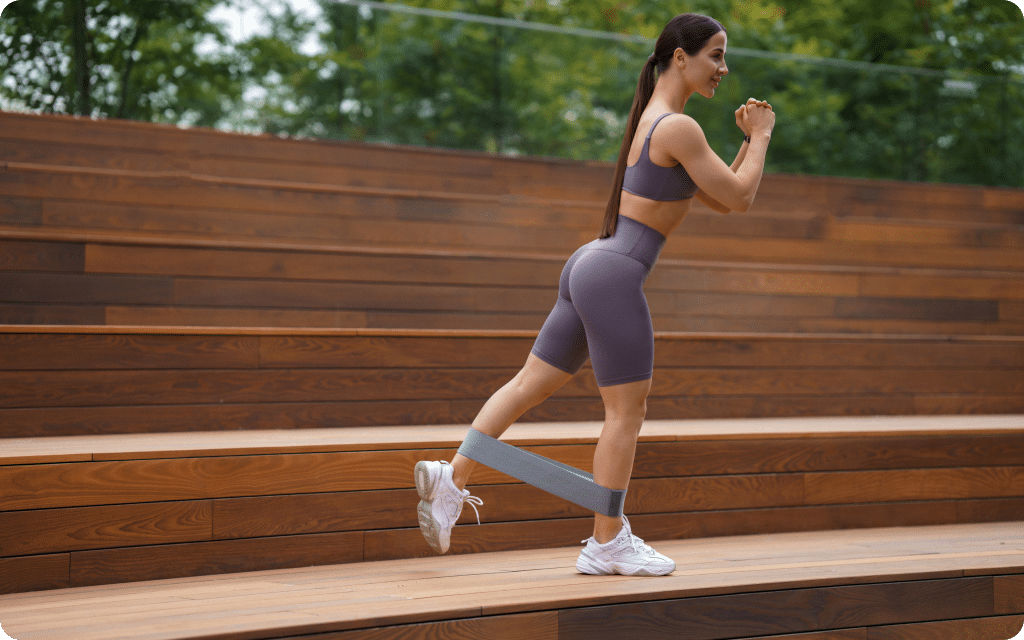
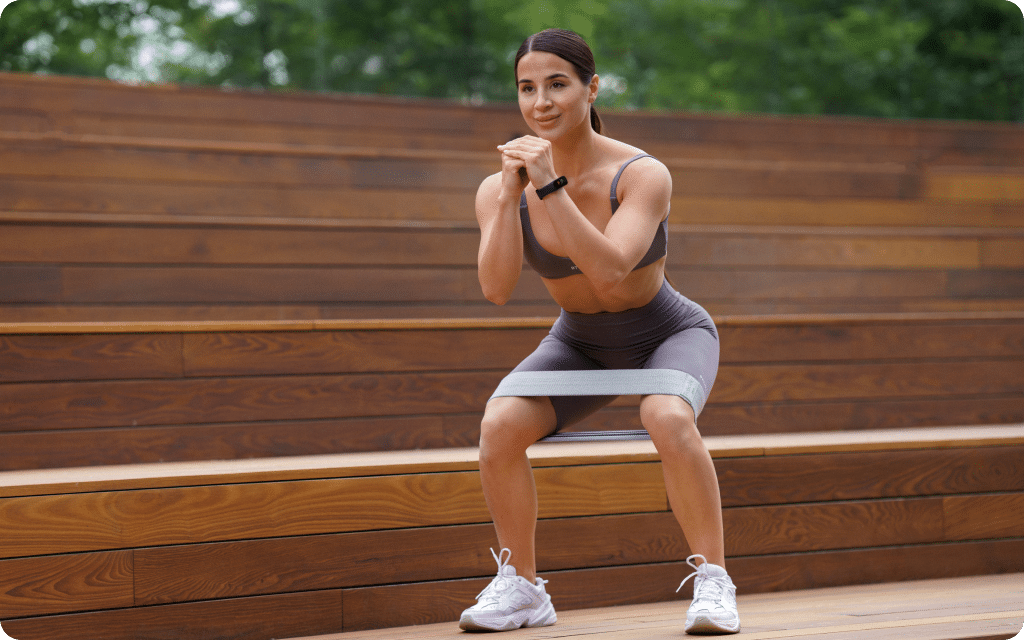
For Lateral Band Walks, placing the band at the balls of your feet rather than your ankles makes a significant difference. This small adjustment engages your hip muscles more. It can keep your hips stable and your movement controlled.
- Train One Leg at a Time
Your side glutes work hardest when they have to keep you balanced. That’s why single-leg exercises are so effective. An exercise like the Single-Leg Romanian Deadlift (RDL) can help tighten the glute medius (10). This can also prevent your pelvis from tipping to one side.
You can make these exercises even more effective by holding a weight in the opposite hand of the working leg. This creates extra pull on the hip, so your side glutes have to work even harder to keep you steady and upright.
- The Copenhagen Move
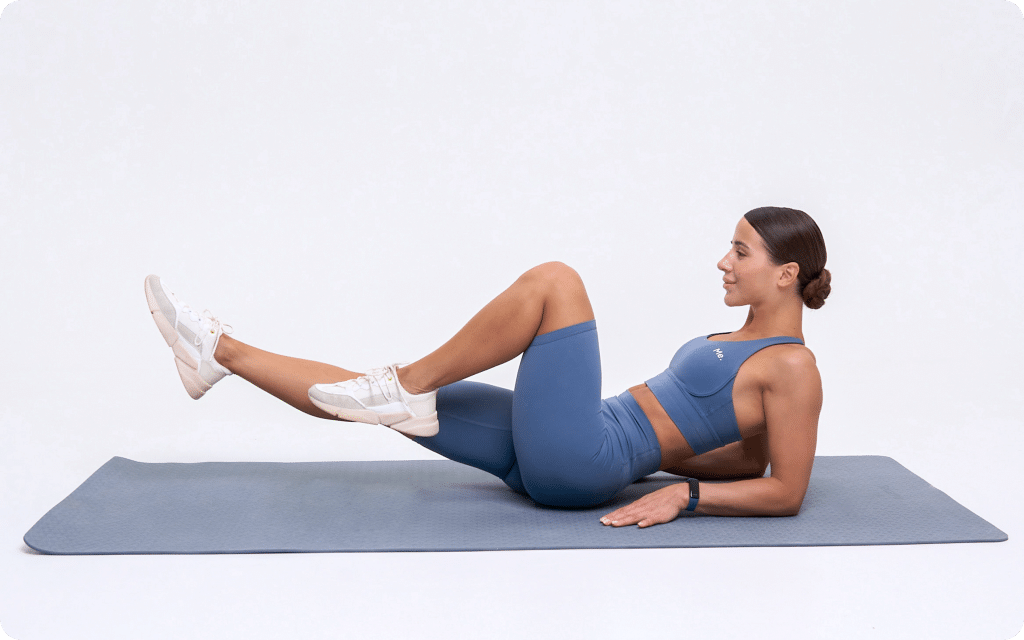
The Copenhagen Plank is usually used to target the inner thighs. It can also be great for building strong, stable hips. In this exercise, your top leg rests on a bench while your body holds a side plank position.
As you stabilize that top leg, your glute medius has to work hard in a strong isometric hold. This creates much more tension than lighter weights, making it a powerful option for overall hip strength (11).
What Is a Pumping Side Booty Workout?
A pumping workout focuses on high reps, short rest, and constant tension to drive blood into the muscles. It causes a tight, burning sensation we call “the pump.”
If you’re looking for a side booty workout without weights, you can absolutely create that pump using bodyweight and smart exercise order.
How to use this plan
- Perform 2-3 rounds
- Rest 30-40 seconds between exercises
- Move with control and focus on squeezing the side glutes
Side-Lying Leg Raises
Reps: 15-20 per side
- Keep your hips stacked.
- Lift your top leg slowly, pause for 1 second at the top.
- Lower with control.
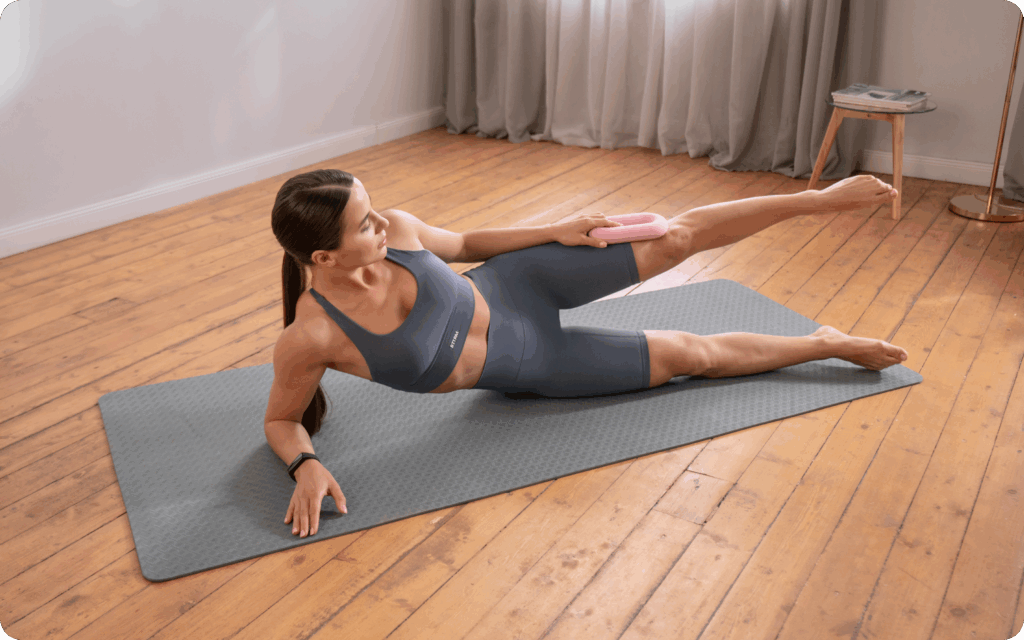
Clamshell Pulses
Reps: 20 pulses + 10 full reps per side
- Keep feet together and knees bent.
- Open your top knee and pulse at the top before finishing full reps.
- Don’t let your hips roll back.
Lateral Walkouts (Bodyweight)
Reps: 12-15 steps each direction
- Stay in a half-squat position.
- Step wide and stay low to keep tension on the glutes.
Fire Hydrants with Hold
Reps: 12-15 per side
- Lift your leg out to the side.
- Hold for 2 seconds at the top before lowering.
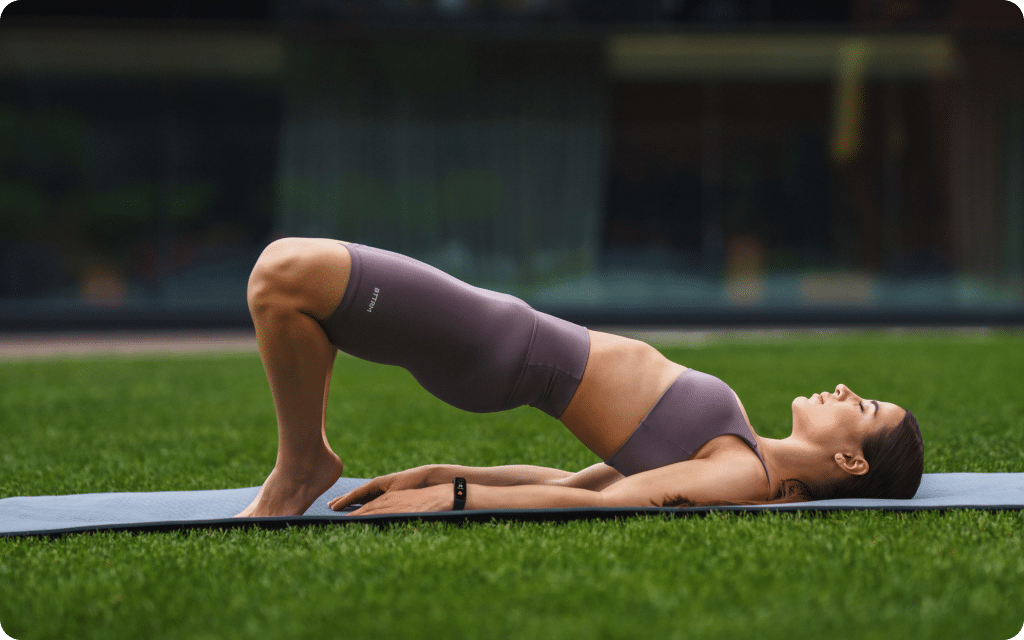
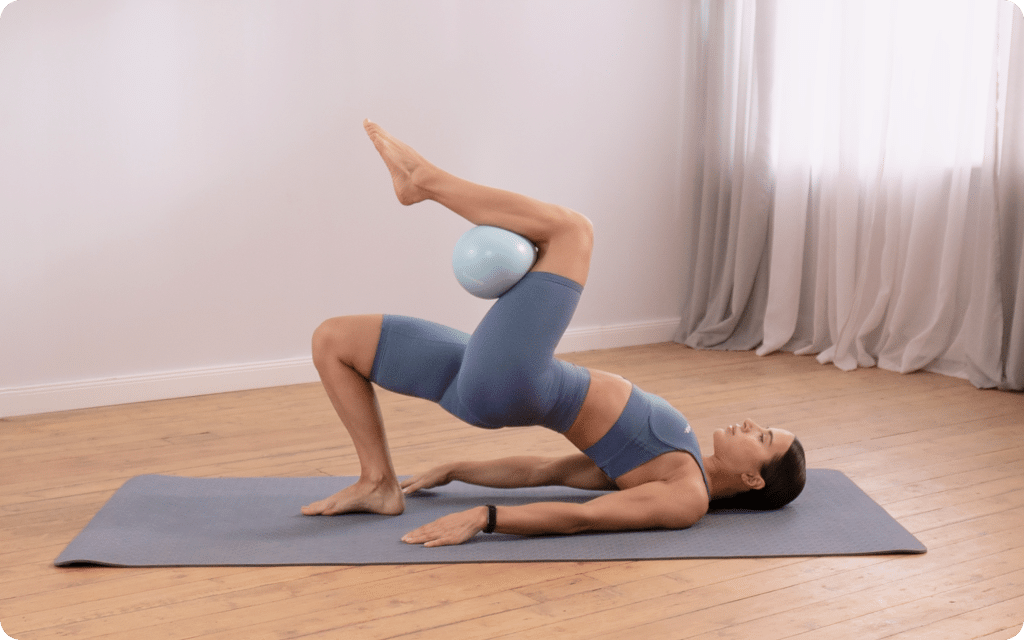
Single-Leg Glute Bridge Hold
Time: 20-30 seconds per side
- Keep hips level.
- Drive through your heel.
- Focus on squeezing the upper-outer glute.
Wall Sit + Alternating Leg Lift (Optional Finisher for Extra Pump)
- Hold a wall sit for 30 seconds.
- Lift one leg slightly out to the side at a time.
When incorporating this workout into your routine, ensure you’re consistent and maintain a consistent pattern in your day. This means having a solid dietary + sleep routine to support the desired outcomes.
Read more: 8 Lower-Body Pilates Exercises for Strong Legs
Which Exercise Grows Glutes the Most?
If you’re building an hourglass side booty workout, don’t overlook the power of step-ups.
A comprehensive 2020 systematic review (still widely referenced in 2024 and 2025 training protocols) found that step-ups and their variations, like lateral and crossover step-ups, produced some of the highest gluteus maximus activation levels of any exercise tested (x).
In some cases, activation even exceeded 100% of a maximum voluntary contraction, meaning the muscle worked harder than you can consciously squeeze it.
Since you’re training one leg at a time, your gluteus medius has to fire intensely to keep your pelvis steady. This can lead to significantly greater side-glute activation compared to traditional two-leg squats.
You can also check out the bubble butt workout to add a fun element to your usual side booty routines.
How Long Will It Take to Grow Side Glutes?
We all want to know exactly when those hours spent on side booty workouts will start to show up in the mirror. Although everyone’s body is a unique mix of genetics, diet, and recovery, most people notice a real difference in strength and muscle firmness within 4 to 8 weeks.
This initial pump is often due to your nervous system getting better at firing those glute muscles.
More visible changes in size and shape typically become apparent after about 8 to 12 weeks of dedicated work. The table below clearly shows what happens in your body after you start working on the glutes:
| Phase | Timeframe | What’s Happening in Your Body? | What You May Notice? |
|---|---|---|---|
| The Neuromuscular Phase | First 4 weeks | Your brain learns how to better recruit and activate the gluteus medius. Strength gains primarily come from improved neural coordination, not muscle size (13). | You may feel stronger, more stable, and tighter. But there’s little visible muscle growth yet. |
| The Hypertrophy Window | Around 10-12 weeks | Muscle protein synthesis increases, and actual muscle fibers begin expanding. Cross-sectional muscle size may be more measurable (14). | Visible shape and fullness may start to appear. This is when real growth becomes noticeable. |
No matter the different types of butts we’re born with, real change comes from sticking to the basics and repeating them consistently. If you want to see progress sooner rather than later, lock in these three essentials:
- Progressive Overload: Challenge your muscles. Lift a little heavier or squeeze out a few more reps every couple of weeks. Growth only happens when your body has a reason to adapt (15).
- Protein Intake: Consider protein as the building block. Without enough amino acids, your body can’t repair and grow your glutes properly.
- Rest: Muscles don’t grow while you’re training. They can grow while you’re recovering. Quality sleep is non-negotiable.
We know how hard it can be to carve out time from busy routines to spend on the exercise mat. But make a vow to yourself that you’ll prioritize yourself, and just don’t quit!
That’s exactly how lasting results are built.
What Mistakes Stop Glute Growth?
Even the best side booty workout can stall if your form or habits are working against you.
Based on the information we’ve covered above, here are the most common traps that could hinder your progress:
- Bouncing off the bottom foot during step-ups, which can remove tension from the glutes.
- Neglecting progressive overload by sticking to the same bodyweight burners without adding weight or resistance bands.
- Sitting for prolonged periods between workouts, which can lead to muscle thinning and poor activation.
- Ignoring the lengthened position by skipping movements like RDLs that stretch the muscle under load.
- Poor pelvic stability during single-leg moves, allowing the hips to tilt instead of staying level.
- Inconsistent protein intake, which can deprive the muscle of the bricks it needs to actually grow during the 8-12 week hypertrophy window.
- Quitting too early (usually around week 4 or 6) before the neurological gains turn into visible muscle size.
Step-ups are the ultimate all-in-one move. They can light up your glutes, sometimes even pushing past 100% activation. Your bone structure is largely set once your pelvis fully fuses in your early 20s. That part doesn’t change. But muscle growth is a lifelong game. The 2025 MRI research shows that while aging and too much sitting can lead to muscle thinning, consistent resistance training can fight that off and build glute volume at any age. The Cable Machine (used for standing abductions) and the Seated Abduction Machine are your best bets. These allow you to apply the mechanical tension for actual muscle growth. When it comes to the side booty, lunges and Step-Ups take the spotlight. Squats can build overall glute mass, but lunges target each leg individually. This can make the gluteus medius fire up to keep your hips stable. Absolutely not. As we saw in the growth timeline, your muscles need 48 to 72 hours to recover and build through protein synthesis. Hitting them every day skips the crucial rest phase, which can prevent you from seeing results within the 8-12 week hypertrophy window.Frequently Asked Questions
What is the #1 best glute exercise?
At what age do buttocks stop growing?
What machine targets the side glutes?
Are squats better than lunges?
Is it OK to train side glutes every day?
The Bottom Line
Building a side booty is all about working with your body and being smart about your training. You can’t change your bones or erase hip dips, but you can grow the muscles that sit on top of them.
To see real results, avoid quick TikTok burners and focus on step-ups, strong abduction exercises, and stability work. Here’s the timeline: you’ll feel stronger in about 4 weeks, but the actual shape shows up around 8 to 12 weeks.
Stick with it, eat plenty of protein, and give your glutes the rest they need to grow.
DISCLAIMER:
This article is intended for general informational purposes only and does not serve to address individual circumstances. It is not a substitute for professional advice or help and should not be relied on for making any kind of decision-making. Any action taken as a direct or indirect result of the information in this article is entirely at your own risk and is your sole responsibility.
BetterMe, its content staff, and its medical advisors accept no responsibility for inaccuracies, errors, misstatements, inconsistencies, or omissions and specifically disclaim any liability, loss or risk, personal, professional or otherwise, which may be incurred as a consequence, directly or indirectly, of the use and/or application of any content.
You should always seek the advice of your physician or other qualified health provider with any questions you may have regarding a medical condition or your specific situation. Never disregard professional medical advice or delay seeking it because of BetterMe content. If you suspect or think you may have a medical emergency, call your doctor.
SOURCES:
- A SYSTEMATIC REVIEW AND META-ANALYSIS OF COMMON THERAPEUTIC EXERCISES THAT GENERATE HIGHEST MUSCLE ACTIVITY IN THE GLUTEUS MEDIUS AND GLUTEUS MINIMUS SEGMENTS (2020, researchgate.net)
- A proposed model to test the hypothesis of exercise-induced localized fat reduction (spot reduction), including a systematic review with meta-analysis (2022, hummov.awf.wroc.pl)
- Hip impingement: beyond femoroacetabular (2015, academic.oup.com)
- Exercise training promotes growth through hypertrophy and enhances capillarization and antioxidant capacity in juvenile largemouth bass (Micropterus salmoides) (2023, sciencedirect.com)
- Gluteus Maximus Activation during Common Strength and Hypertrophy Exercises: A Systematic Review (2020, pubmed.ncbi.nlm.nih.gov)
- Working From Home and Job Loss Due to the COVID-19 Pandemic Are Associated With Greater Time in Sedentary Behaviors (2020, frontiersin.org)
- A Critical Evaluation of the Biological Construct Skeletal Muscle Hypertrophy: Size Matters but So Does the Measurement (2019, frontiersin.org)
- Influence of hip morphology on gluteal muscle biomechanics: a computational modeling study (2025, link.springer.com)
- Westminster researchers reveal how muscle shape captured by MRI can signal metabolic health and diabetes risk (2025, westminster.ac.uk)
- Effects of loading positions on the activation of trunk and hip muscles during flywheel and dumbbell single-leg Romanian deadlift exercises (2023, frontiersin.org)
- Effects of Copenhagen Adduction Exercise on Muscle Architecture and Adductor Flexibility (2022, mdpi.com)
- Strength Training the Glutes: An Evidence-based Approach (2025, acefitness.org)
- Computational Analysis of Neuromuscular Adaptations to Strength and Plyometric Training: An Integrated Modeling Study (2025, mdpi.com)
- Muscle hypertrophy and muscle strength: dependent or independent variables? A provocative review (2020, pagepressjournals.org)
- Effects of Resistance Training Overload Progression Protocols on Strength and Muscle Mass (2024, thieme-connect.de)
 Reviewed by
 Reviewed by