

According to recent data, nearly 50% of runners alter their training habits during winter months, often citing cold weather as a primary deterrent (1).
However, research has shown that consistency is the single most significant factor in long-term athletic development (2). If you want to be good at your favorite exercise activities, there’s less room for improvisation when the temperature drops. The key isn’t avoiding the cold, but mastering how to navigate it safely and effectively.
In this guide, we will explore the physiological impacts of cold-weather training, break down the risks and benefits, and provide you with a structured, evidence-based approach to running in winter.
Is It Okay to Run in the Winter?
The short answer is yes, as long as you take specific precautions.
Physiologically, the human body is remarkably adaptable to cold environments. Research has indicated that while core temperature remains relatively stable during exercise in the cold, skin and limb temperatures can drop significantly (3). This drop in peripheral temperature is a normal physiological response where the body vasoconstricts blood vessels to prioritize core warmth (4)
However, safety is contingent on preparation. The American College of Sports Medicine has suggested that exercise can be performed safely in cold environments as long as frostbite risk is managed (5). This means paying attention to the wind chill factor, not just the ambient temperature. When you’re properly equipped with thermal clothing and a strategy for managing intensity, running in winter is not only okay but can be a powerful stimulus for adaptation (6).

Why Is It So Hard to Run in the Cold?
Running in the cold feels harder because your body is fighting a war on two fronts: maintaining locomotion and maintaining thermoregulation.
- Increased Metabolic Cost
Cold weather increases metabolic demand. Your body expends more energy to maintain homeostasis (internal balance) in cold environments compared to neutral ones (7).
Studies have suggested that glucose utilization rates can increase during cold exposure as your body works harder to stay warm. This means you may burn through glycogen stores faster than usual (7), which can lead to earlier onset of fatigue if you’re not fueling correctly (8).
Reasons why BetterMe is a safe bet: a wide range of calorie-blasting workouts, finger-licking recipes, 24/7 support, challenges that’ll keep you on your best game, and that just scratches the surface! Start using our app and watch the magic happen.
- Respiratory Resistance
Cold air is dry air. When you inhale cold, dry air, your respiratory tract must work to warm and humidify it before it reaches the lungs. This can cause irritation in the airways, leading to a sensation of burning in the throat or chest (9).
For some, this triggers bronchoconstriction (narrowing of airways), which makes breathing feel more labored even at submaximal intensities (9).
- Muscle Stiffness
Low temperatures can affect the contractile properties of skeletal muscle. As muscle temperature drops, the rate of force development decreases (10). This can make your stride feel clunky or stiff, reducing running economy (the energy cost of running at a given speed). You may find that your usual easy pace requires a higher rate of perceived exertion (RPE) (11).
Read more: Running Workout Plan: A Guide to Sustainable Performance
Are There Any Benefits to Running in the Cold?
While the challenge is real, the benefits of running in the cold are substantiated by physiological evidence.
1. Enhanced Thermoregulation Efficiency
Regular exposure to cold during exercise can improve the body’s ability to regulate heat. Research has suggested that athletes who adapt to cold conditions show improved synchronization between their respiratory and circulatory systems. This means your body becomes more efficient at delivering oxygen and removing metabolic waste products such as lactate, even under stress (7).
2. Enhanced Performance Efficiency in Cooler Temperatures
In hot weather, your heart rate tends to drift upward over time, even if your pace remains constant – a phenomenon that is known as cardiac drift. This occurs as your body works harder to regulate temperature by diverting blood to the skin for cooling (12).
In cooler temperatures (typically between 40°F and 50°F or 4°C and 10°C), the body experiences less thermal strain, which helps maintain performance efficiency. Research has indicated that these conditions are optimal for endurance activities, allowing athletes to sustain higher intensities for longer durations with reduced physiological stress (13).

3. Mental Resilience
From a psychological perspective, voluntarily engaging in difficult tasks builds resilience (14). Overcoming the initial discomfort of the cold reinforces the mental discipline required for high performance. This “callusing of the mind” is a crucial component for endurance athletes who face discomfort during competition (15).
4. Improved Lipid Profile
Some research has indicated that outdoor aerobic exercise in cold environments may cause a higher increase in high-density lipoprotein (HDL) cholesterol levels compared to indoor training (16).
HDL is often referred to as “good” cholesterol because it absorbs cholesterol and carries it back to the liver (17).
If you’re looking for a way to boost your resilience and metabolism, consider starting a winter fitness challenge.
What Are the Risks of Running in the Cold?
Understanding the risks is the first step in mitigation. The primary dangers stem from thermal regulation failure and musculoskeletal strain.
- Hypothermia and Frostbite
Hypothermia occurs when your core body temperature drops below 95°F (35°C). While rare during high-intensity exercise due to metabolic heat production, it becomes a risk if you stop moving (e.g. due to injury) or get wet from sweat or precipitation (5).
Frostbite affects peripheral tissues – nose, ears, fingers – where blood flow is restricted. The risk of frostbite increases exponentially as wind chill drops below -18°F (-28°C) (5).
- Respiratory Issues
A study published in the British Journal of Sports Medicine noted that high volumes of cold, dry air are a primary trigger for airway inflammation in winter athletes (18).
- Musculoskeletal Injury
Cold muscles are less elastic and more prone to strain (19). Furthermore, the ground surface in winter presents slip hazards. Running on snow or ice alters your gait kinematics – you may shorten your stride or tense your stabilizer muscles to maintain balance. These altered biomechanics can lead to overuse injuries (20).
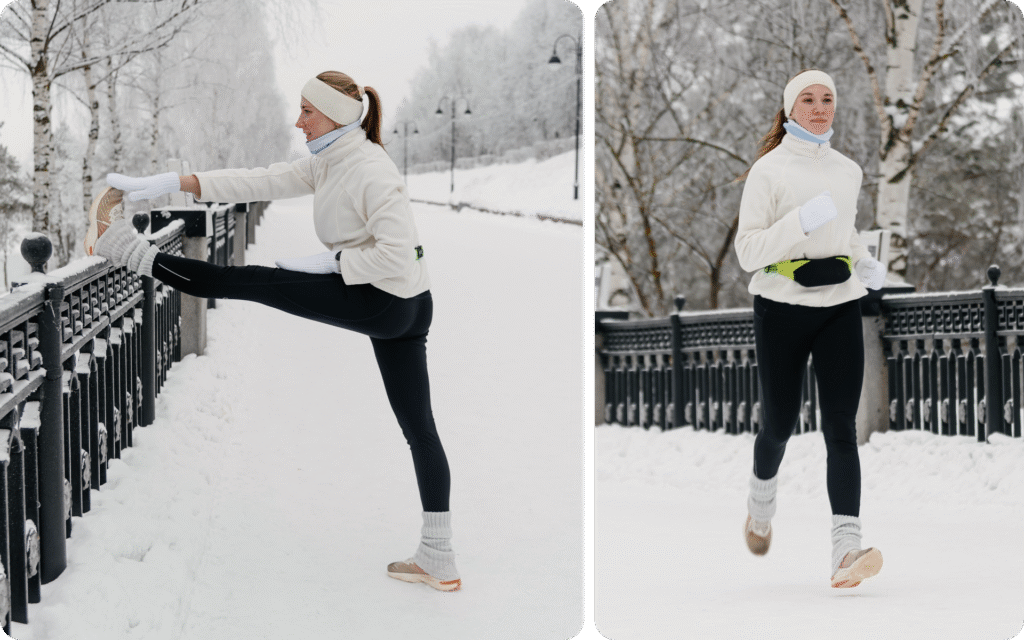
What Are Some Tips for Safe Running in Winter?
Safety in winter running is about creating a microclimate around your body and adjusting your mechanics to the environment.
1. Layering is Non-Negotiable
You need a system that manages moisture and traps heat (21).
- Base Layer: Moisture-wicking material (synthetic or wool). Avoid cotton, as this retains moisture and conducts heat away from the body.
- Mid Layer: Insulating material such as fleece. This layer traps warm air.
- Outer Layer: Wind and water-resistant shell. This protects against convective heat loss caused by wind.
2. Warm-Up Indoors
Do not start your run cold. Perform a dynamic warm-up indoors for 10-15 minutes to elevate your core temperature and induce mild vasodilation before stepping outside. This primes your muscles and reduces the shock of the cold air (22).
3. Adjust Your Pace and Expectations
Forget about hitting personal records (PRs) on icy days. Focus on effort (RPE) rather than splits. If footing is compromised, slow down. A 10-20 second per mile reduction in pace is a smart trade-off for staying upright and injury-free.
4. Shorten Your Stride
On slippery surfaces, keep your center of gravity low and your stride short. This reduces the horizontal force applied to the ground, minimizing the risk of slipping. Aim to land with your feet directly underneath your hips.
5. Hydrate Aggressively
Dehydration is a silent killer in winter. Cold air suppresses the thirst mechanism, and respiratory fluid loss is high in dry air (23). You may not feel thirsty, but your fluid requirements remain high – aim for 16-20 ounces (500-600ml) of fluid per hour of exercise (24).
For days when the weather is simply too dangerous, it’s wise to have a backup plan that involves treadmill running workouts.

How to Breathe when Running in Cold Weather
Breathing in sub-freezing temperatures requires a specific strategy to protect your airways.
- Utilize the Nasal Passage
Whenever possible, breathe in through your nose and out through your mouth. The nasal cavity is lined with turbinates – structures that increase the surface area of the respiratory mucosa. As air passes over these structures, it is warmed and humidified before reaching the lungs. This natural filtration system significantly reduces airway irritation (25).
- Use a Physical Barrier
If the intensity of your run demands mouth breathing (which typically occurs above 65-70% of VO2 max), wear a buff or a face mask made of breathable material over your mouth. This creates a pocket of warm, moist air that preconditions the air you inhale. This simple intervention can prevent the drying effect that leads to “runner’s cough” (26).
- Control Ventilation Rates
Avoid sudden spikes in intensity that require rapid, heavy ventilation until you’re fully acclimated to the temperature. Gradual increases in heart rate allow your respiratory system to adjust to the cold air exchange more effectively.
Read more: Does Running Outside Burn More Calories Than Running on a Treadmill?
How to Prepare for a Winter Run Correctly
Preparation involves both logistical planning and physiological priming.
1. Check the Wind Chill
Always look at the “feels like” temperature. If the wind chill is below -15°F (-26°C), the risk of frostbite on exposed skin is less than 30 minutes. In these conditions, indoor training is the superior physiological choice.
2. Plan Your Route
Choose loops rather than a long out-and-back route. If you get cold, injured, or fatigued, you want to be close to home. Avoid areas that are prone to black ice, such as shaded patches of road or wooden bridges.
3. Visibility Gear
Winter days are short. If you run early in the morning or late in the evening, reflective gear and a headlamp are mandatory. You need to be seen from at least 500 feet away by approaching vehicles.
For beginners who are looking to build a habit, understanding the basics of cold-weather jogging is essential for long-term consistency.

What’s the Coldest Temperature You Can Run in?
While there’s no single universal cutoff, safety guidelines suggest limits based on risk factors.
- Above 0°F (-18°C): Generally safe with proper layering. Exposed skin can still be at risk if it’s windy.
- 0°F to -20°F (-18°C to -29°C): Use extreme caution. All skin must be covered. High-intensity intervals are not recommended due to respiratory stress.
- Below -20°F (-29°C): The risk of frostbite and hypothermia outweighs the training benefits for most recreational athletes. At these temperatures, mechanical equipment on shoes (such as cushioning) can also harden and function poorly.
Whether you’re a workout beast or just a beginner making your first foray into the world of fitness and dieting – BetterMe has a lot to offer to both newbies and experts! Install the app and experience the versatility first-hand!
Recommended Winter Running Program
This program is designed for an intermediate runner who is looking to maintain their fitness during the winter months (12-week base-building phase). It emphasizes consistency over intensity.
Program Notes:
- RPE (Rate of Perceived Exertion): A scale of 1-10 where 1 is rest and 10 is maximal effort.
- Base Run: A comfortable pace where you can hold a conversation (Zone 2).
- Tempo Run: A comfortably hard pace (Zone 3/4), sustainable for 20-40 minutes.
- Strides: Short bursts of faster running (not sprinting) to maintain neuromuscular efficiency.
- Equipment: Trail shoes or road shoes with good traction are recommended. Thermal layers as described above.
| Day | Workout type | Duration/distance | Intensity (RPE) | Focus |
|---|---|---|---|---|
| Monday | Rest or mobility | 20-30 mins | 1-2 | Recovery and joint health |
| Tuesday | Base run | 30-45 mins | 3-4 | Aerobic capacity |
| Wednesday | Strength training | 45-60 mins | 6-8 | Full-body stability and power |
| Thursday | Tempo intervals | 40-50 mins | 6-7 | Lactate threshold |
| Friday | Base run + strides | 30-40 mins | 3-5 | Neuromuscular coordination |
| Saturday | Long run | 60-90 mins | 3-4 | Endurance |
| Sunday | Rest | N/A | Full recovery |
Exercise Execution Guide
Below are the specific instructions for the running workouts that are included in the above table.
Base Run Execution
- Warm-Up: Perform 5 minutes of indoor dynamic stretching (leg swings, lunges).
- Start Slow: The first 10 minutes should be slower than your target pace to allow synovial fluid to lubricate joints in the cold.
- Posture: Maintain an upright torso. Keep your gaze forward, not down at your feet.
- Breathing: Focus on rhythmic nasal breathing if possible. If mouth breathing is needed, use a buff.
- Cool-Down: Walk for 5 minutes post-run to gradually lower heart rate. Don’t stand still in the cold – move indoors immediately to stretch.
Tempo Intervals Execution
- Warm-Up: 10-15 minutes of easy jogging (RPE 3).
- The Interval: Run for the prescribed time (e.g. 2 x 10 minutes) at a “comfortably hard” pace. You should be able to speak in short phrases but not full sentences.
- Recovery: Between intervals, jog slowly for 2-3 minutes. Don’t stop moving completely to prevent rapid cooling.
- Cadence: Focus on a quick turnover (170-180 steps per minute). This minimizes ground contact time, which reduces heat loss through the feet and the risk of slipping.
- Cool-Down: 10 minutes easy jog followed by immediate indoor transition.

Strides Execution
- Placement: Perform these at the end of a base run while your muscles are warm.
- Distance: Find a flat, non-icy stretch of 80-100 meters.
- The Acceleration: Gradually accelerate for the first 30 meters, hold about 95% of max speed for the middle 40 meters, and decelerate for the final 30 meters.
- Form: Focus on high knees and strong arm drive. Stay relaxed – don’t clench your fists or jaw.
- Recovery: Walk or slowly jog back to the start. Allow full recovery (heart rate returns to roughly 120 bpm) before the next rep.
- Volume: Perform 4-6 repetitions.
Long Run Execution
- Fueling: Consume a carbohydrate-rich meal 2 hours before you run. Hydrate with 16oz (500ml) of water.
- Pacing: Keep the effort consistent. In winter, pace per mile may be slower than in summer for the same heart rate. Trust your heart rate or RPE, not your watch.
- Looping: If you’re running for more than 60 minutes, consider a looped course that passes your home or car so you can grab water or shed a layer if needed.
- Mental Check: Scan your body every 20 minutes. Are your hands warm? Is your footing stable? Adjust as necessary.
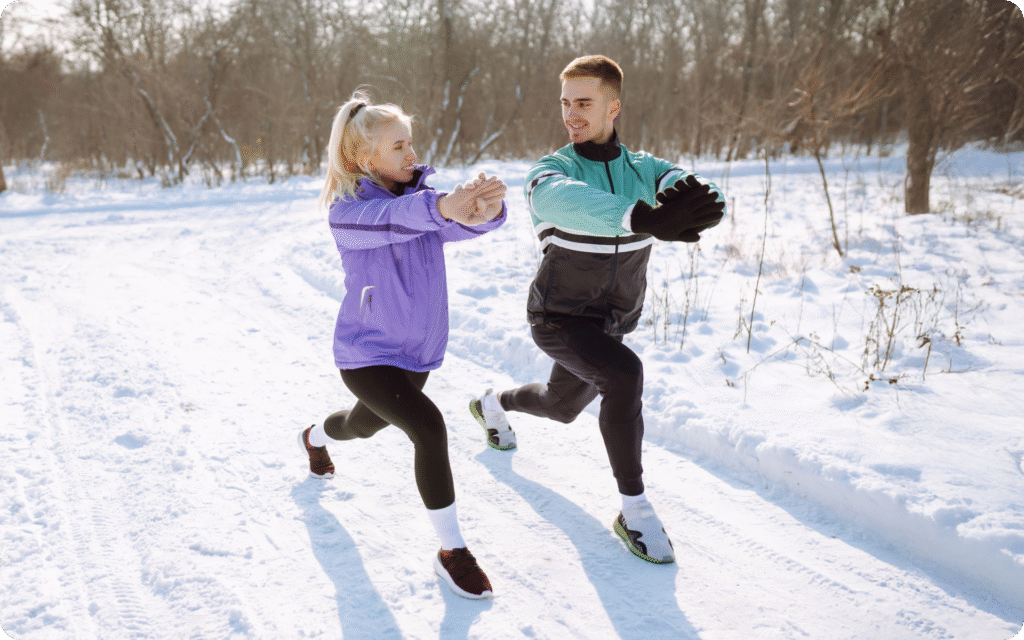
The ideal winter workout is the one that allows you to maintain consistency and enjoyment, regardless of weather or equipment. Whether that’s running outdoors, using a treadmill, or cross-training, the priority should always be to find a routine you can stick with safely. Consistency is a crucial driver for building fitness during the winter months. Yes, serious runners and elite athletes continue training through winter. They utilize periodization, often using the winter months for “base building” – accumulating high volumes of low-intensity mileage to prepare the cardiovascular system for higher intensity work in the spring. It’s generally safe for healthy individuals, but precautions are necessary. Cold, dry air can cause airway drying and cooling, which may trigger bronchospasm in susceptible individuals. Using a scarf or mask to pre-warm the air significantly mitigates this risk (26). Yes, covering your mouth with a breathable fabric such as a buff or neck gaiter is highly recommended when temperatures drop below freezing. This traps heat and moisture from your exhale, warming and humidifying the air before your next inhale, and protecting the bronchial tubes (26).Frequently Asked Questions
What kind of workout is best in winter?
Do runners run in the winter?
Is it safe for your lungs to run in the cold?
Should I cover my mouth when running in the cold?
The Bottom Line
Running in winter isn’t merely about enduring the elements, it’s a strategic training tool that can enhance thermoregulation, build mental fortitude, and maintain aerobic fitness. By respecting the physiology of cold exposure – understanding metabolic costs, respiratory needs, and musculoskeletal limitations – you can transform a potential barrier into a training advantage. Remember, there’s no bad weather, only inappropriate gear and poor preparation. Equip yourself with knowledge, layer up intelligently, and embrace the cold.
DISCLAIMER:
This article is intended for general informational purposes only and does not serve to address individual circumstances. It is not a substitute for professional advice or help and should not be relied on for making any kind of decision-making. Any action taken as a direct or indirect result of the information in this article is entirely at your own risk and is your sole responsibility.
BetterMe, its content staff, and its medical advisors accept no responsibility for inaccuracies, errors, misstatements, inconsistencies, or omissions and specifically disclaim any liability, loss or risk, personal, professional or otherwise, which may be incurred as a consequence, directly or indirectly, of the use and/or application of any content.
You should always seek the advice of your physician or other qualified health provider with any questions you may have regarding a medical condition or your specific situation. Never disregard professional medical advice or delay seeking it because of BetterMe content. If you suspect or think you may have a medical emergency, call your doctor.
SOURCES:
- The impact of weather on summer and winter exercise behaviors (2016, pmc.ncbi.nlm.nih.gov)
- Long-Term Development of Training Characteristics and Performance-Determining Factors in Elite/International and World-Class Endurance Athletes: A Scoping Review (2023, link.springer.com)
- Effect of cold ambient temperature on heat flux, skin temperature, and thermal sensation at different body parts in elite biathletes (2022, frontiersin.org)
- Human physiological responses to cold exposure: Acute responses and acclimatization to prolonged exposure (2016, sciencedirect.com)
- Exercising Caution: The Dangers of Cold Temperatures (2024, acsm.org)
- Practicing Sport in Cold Environments: Practical Recommendations to Improve Sport Performance and Reduce Negative Health Outcomes (2021, mdpi.com)
- Integrated effects of cold acclimation: physiological mechanisms, psychological adaptations, and potential applications (2025, frontiersin.org)
- The “glycogen shunt” in exercising muscle: A role for glycogen in muscle energetics and fatigue (2001, pnas.org)
- The impact of cold on the respiratory tract and its consequences to respiratory health (2018, link.springer.com)
- Temperature-Dependent Effects of ATP on Smooth and Skeletal Muscles (2018, intechopen.com)
- Effects of rain on energy metabolism while running in a cold environment (2013, pubmed.ncbi.nlm.nih.gov)
- Cardiovascular Drift During Heat Stress: Implications for Exercise Prescription (2012, researchgate.net)
- PSYCHOLOGICAL PROCESSES IN RESILIENCE (2022, eaglepubs.erau.edu)
- The role of mental toughness, sport imagery and anxiety in athletic performance: structural equation modelling analysis (2025, pmc.ncbi.nlm.nih.gov)
- Acute and chronic effects of aerobic exercise on serum irisin, adropin, and cholesterol levels in the winter season: Indoor training versus outdoor training (2020, pubmed.ncbi.nlm.nih.gov)
- HDL Cholesterol (2025, my.clevelandclinic.org)
- Effects of Weather Parameters on Endurance Running Performance: Discipline-specific Analysis of 1258 Races (2022, pubmed.ncbi.nlm.nih.gov)
- Winter sports athletes: long-term effects of cold air exposure (2011, bjsm.bmj.com)
- Increased risk of muscle tears below physiological temperature ranges (2016, boneandjoint.org.uk)
- Using wearable sensors to classify subject-specific running biomechanical gait patterns based on changes in environmental weather conditions (2018, pmc.ncbi.nlm.nih.gov)
- EXERCISING IN THE COLD (2012, journals.lww.com)
- The benefits of warming up indoors before exercising in cold weather (2025, bbc.com)
- Influence of Cold Stress on Human Fluid Balance (1996, ncbi.nlm.nih.gov)
- American College of Sports Medicine position stand. Exercise and fluid replacement (1996, pubmed.ncbi.nlm.nih.gov)
- Anatomy and Physiology of the Upper Airway (2010, atsjournals.org)
- Efficacy of a heat exchanger mask in cold exercise-induced asthma (2006, pubmed.ncbi.nlm.nih.gov)





 Reviewed by