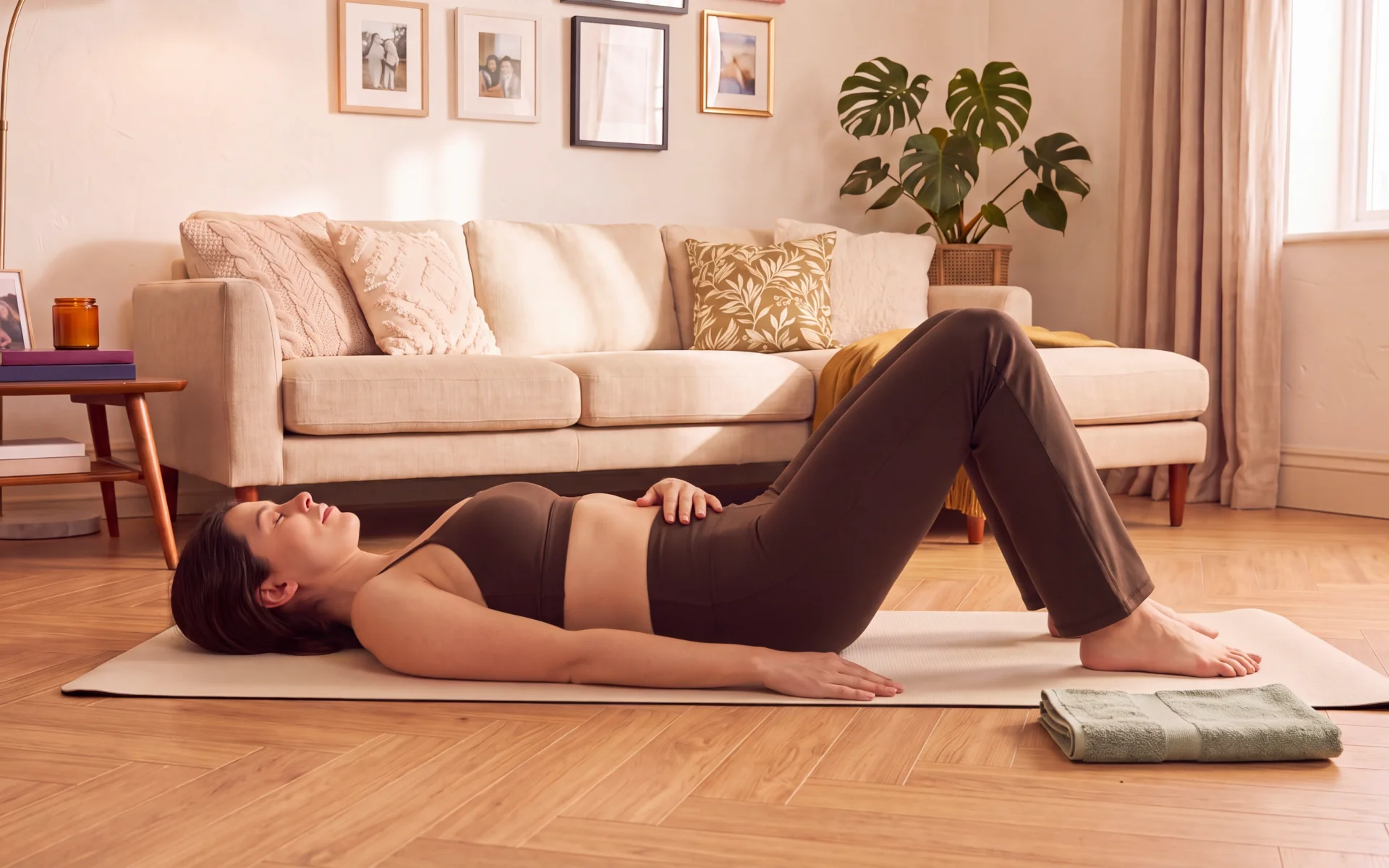
Postpartum workouts should start with breathing, pelvic floor, and light walking once your doctor or midwife clears you, then build slowly toward strength training over the following months. This guide to postpartum fitness suits new moms after any type of birth, and it covers when to begin exercising, the first exercises to try, what to avoid, a sample plan, exercise while breastfeeding, and the warning signs that mean you should stop.
Always consult your physician before you start any recovery fitness program to make sure that it’s suitable for your specific needs.
Get clearance from your doctor, midwife, or other healthcare provider before starting, especially after a C-section or a complicated birth. Stop exercising and contact your care team if you notice pain, increased or heavy bleeding, dizziness, pelvic pressure, or leaking urine; heavy bleeding, fainting, chest pain, or trouble breathing need immediate medical care 1.
Key Takeaways
In short, rebuild from the inside out: breathing and pelvic floor first, low-impact cardio next, and resistance work once your provider agrees.
- Pregnancy hormones such as relaxin make joints more mobile, so stability comes before intensity 2.
- Pelvic floor muscle training, often combined with deep breathing, may improve pelvic floor control 3.
- After an uncomplicated vaginal delivery, gentle activity can often begin within a few days if your provider agrees 4.
- Recovering from a C-section, which is major abdominal surgery, usually takes longer before structured exercise begins 4.
- Guidance for most postpartum women is to work back up to about 150 minutes of moderate activity a week 5.
- Exercise does not appear to reduce breast milk supply in healthy breastfeeding women 5.
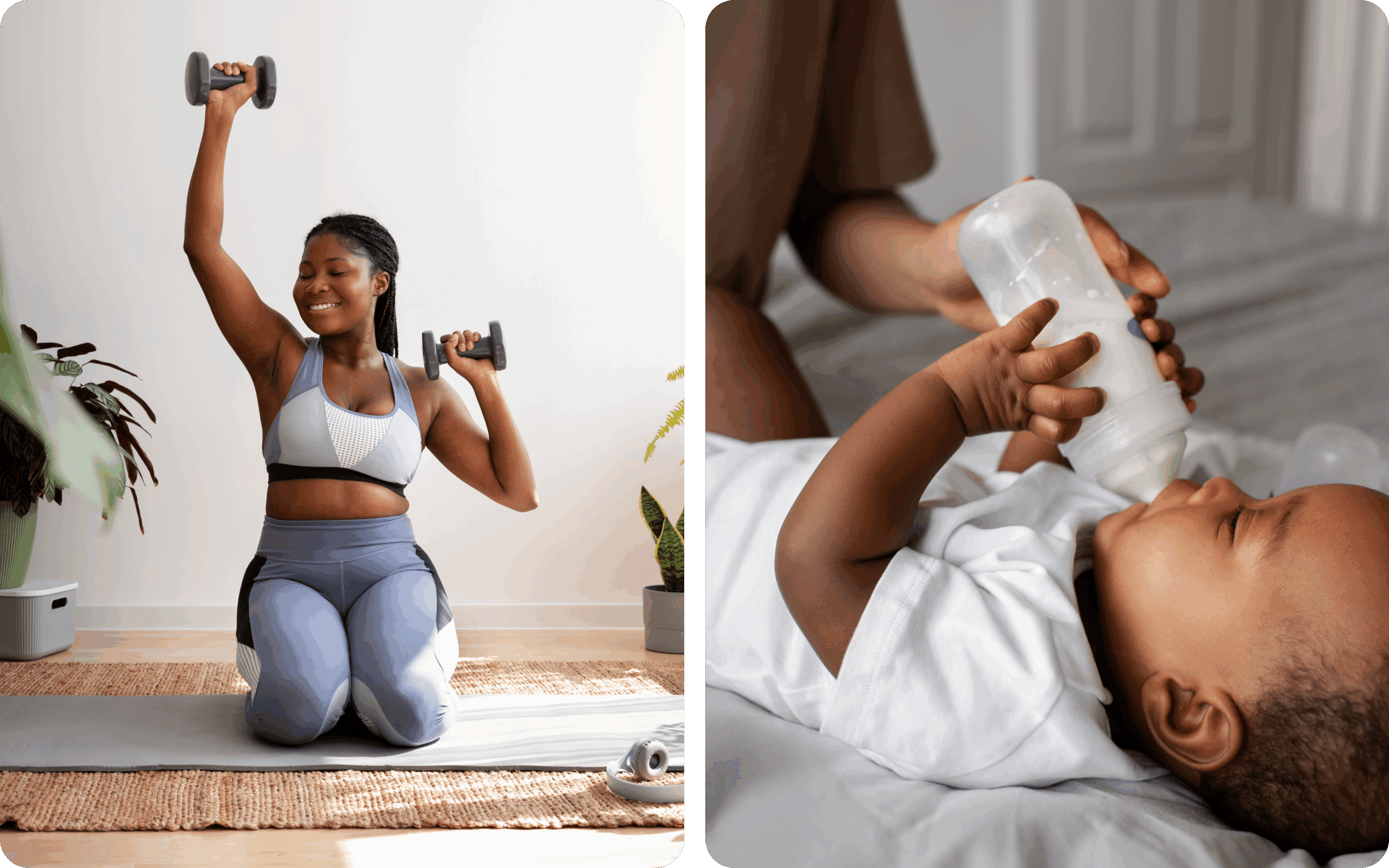
What Is a Postpartum Workout?
A postpartum workout is an exercise routine designed for the postpartum period that puts recovery first, starting with core and pelvic floor work and moving to full-body strength over time.
During pregnancy and childbirth, the abdominal muscles stretch and the pelvic floor carries extra load 6. Joints also become more mobile because of hormone changes 2. A gentle plan usually includes:
- Deep core breathing and pelvic floor activation
- Gentle abdominal reconnection
- Glute and hip strengthening
- Posture work
- Low-impact cardiovascular exercise
In one randomized controlled trial, core stability exercises reduced lumbopelvic pain in postpartum women 7.
When Can I Start Exercising After Giving Birth?
Most people can begin exercising gently soon after of giving birth after an uncomplicated vaginal birth, if their doctor or midwife agrees; after a cesarean birth you usually need to wait longer 4.
| Delivery | Typical first steps | Before harder exercise |
|---|---|---|
| Uncomplicated birth | Breathing, pelvic floor exercises, short walks within days | Provider check, often around 6 weeks postpartum |
| Cesarean birth | Breathing and short walks as advised | Usually longer; follow your surgeon's timeline |
| Complicated birth | Only what your care team advises | Individual plan |
The first six weeks are a guide, not a deadline, and some people take several months after delivery before returning to exercise at full effort. Your body needs time to heal, and every recovery is different.
Read more: Postpartum workout schedule: an adaptable weekly plan
How Should I Ease Back Into Exercise After Childbirth?
When you feel ready, ease back into exercise by starting with 5 to 10 minutes of breathing, pelvic floor work, and walking, then adding a little time or one new exercise each week if you feel well.
- Begin with exercises lying on your back with your knees bent and feet flat on the floor.
- Walk a little longer each week, working up to 20 to 30 minutes.
- Add light resistance work exercises such as bridges and wall push-ups once the basics feel easy.
- Listen to your body and keep rest days in your fitness routine.
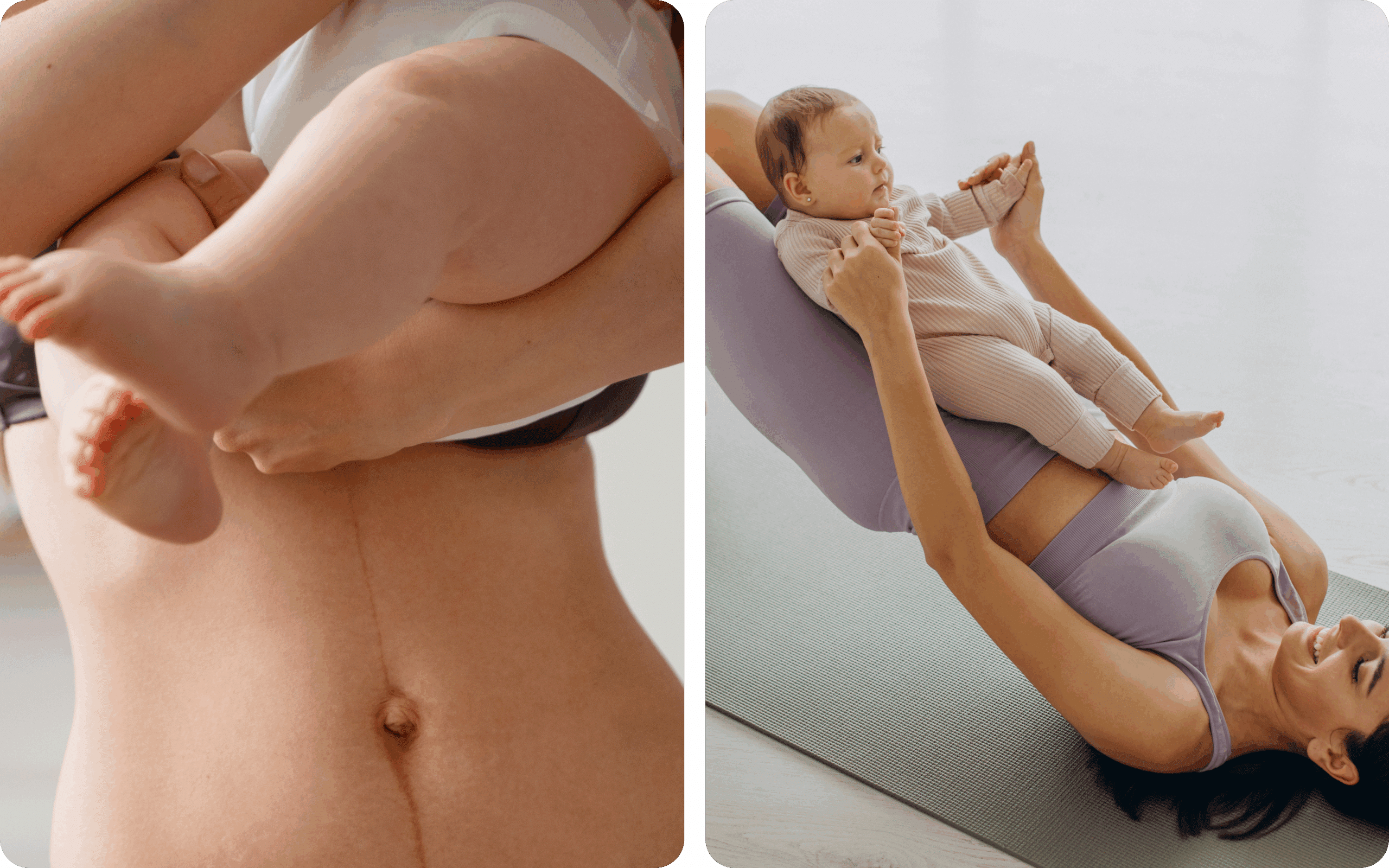
How Can I Strengthen My Core and Pelvic Floor Postpartum?
You can strengthen your core and pelvic floor postpartum with deep breathing, pelvic floor contractions, pelvic tilts, and heel slides, done daily at low effort before any crunch-type moves.
Deep core breathing
Lie on your back with knees bent. Breathe in to let your belly and ribs expand, then breathe out and gently draw your belly button toward your spine.
Pelvic floor exercises
Squeeze and lift the muscles you would use to stop the flow of urine, hold for 3 to 5 seconds, then relax fully. Pelvic floor muscle training may help with bladder control 3. A pelvic floor physical therapist can check your technique.
Pelvic tilts and heel slides
Pelvic tilts gently flatten your lower back into the floor. Heel slides move one leg straight and back while your core stays steady, which supports strengthening the core without strain.
The pelvic floor supports your bladder, uterus, and bowel 8. If you have a gap between your abdominal muscles, a condition called diastasis recti (diastasis recti abdominis), ask a physical therapist which core exercises suit you 9.
What Postpartum Exercises Are Effective for Beginners?
Effective postpartum exercises for beginners are low-impact exercises like walking, glute bridges, heel slides, wall push-ups, and postnatal Pilates or postpartum yoga.
Glute bridges
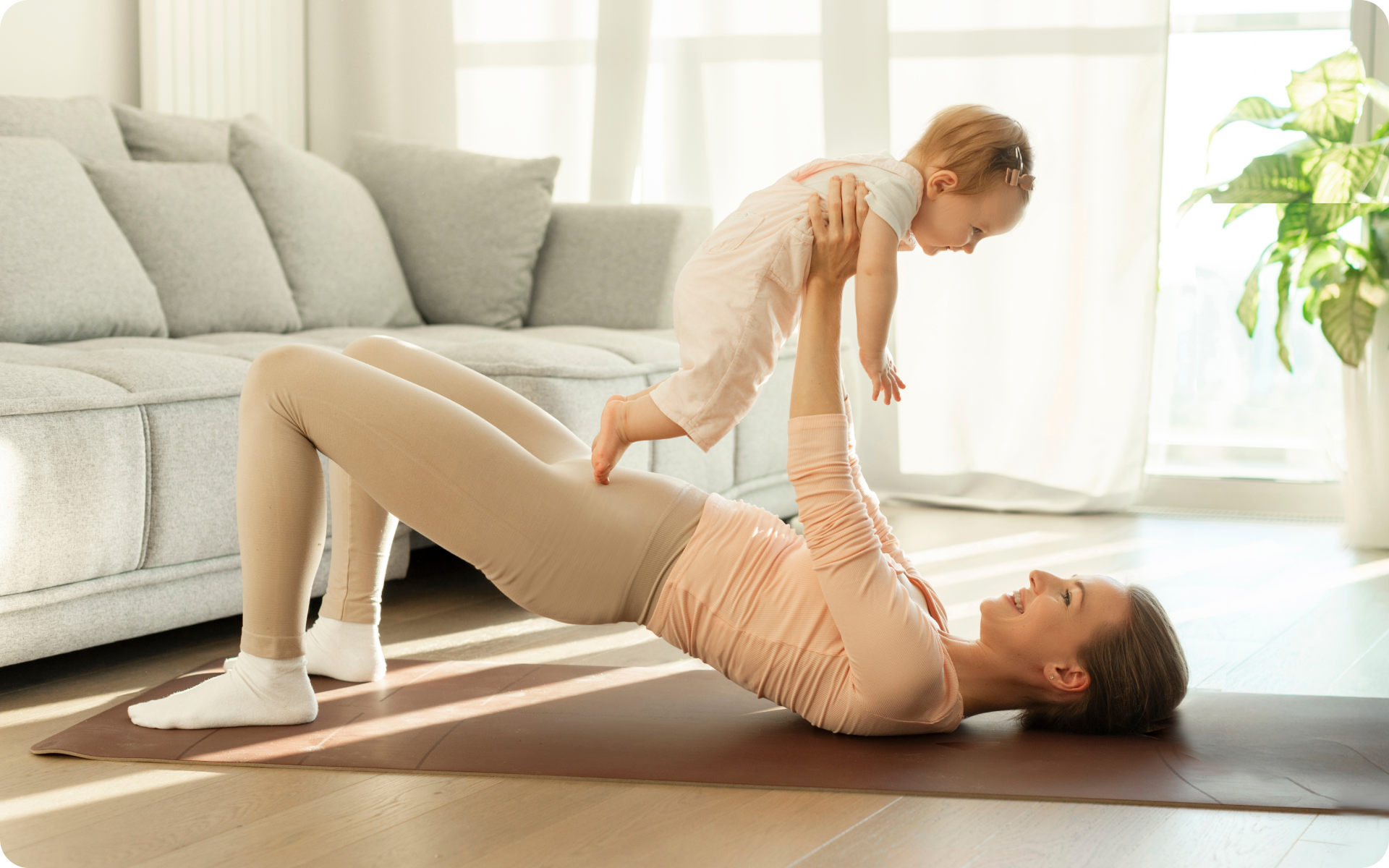
Lie on your back with your knees bent and lift your hips. Bridges strengthen the glutes and support pelvic stability without straining the abs.
Walking with a stroller
A daily stroller walk is a simple workout that is gentle on the joints and builds stamina gradually.
Postpartum Pilates and yoga
Postpartum Pilates and postpartum yoga focus on controlled movement, breathing, and deep core activation, and both can be scaled to your fitness level. A postnatal exercise class led by a qualified exercise specialist can also help.
Stationary cycling and swimming
Cycling and swimming are low-impact cardiovascular exercise options. Wait for your provider’s approval before swimming, since bleeding and any wounds need to heal first.
BetterMe offers a variety of workouts, recipes, challenges, and support tools to help you stay more consistent with your wellness routine. Explore the app to find features that fit your goals, preferences, and schedule.
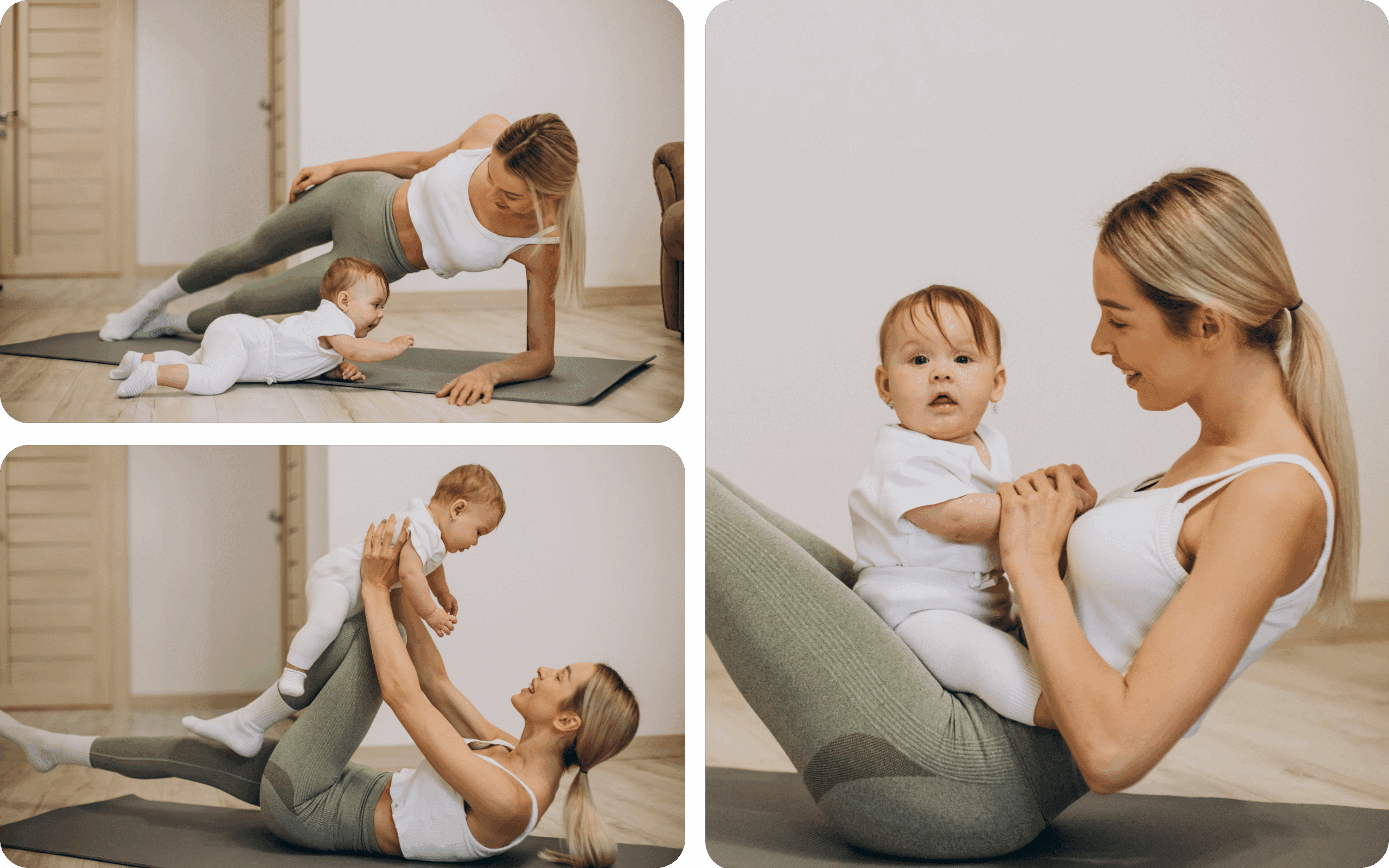
What Exercises Should I Avoid During Postpartum Recovery?
In the early weeks, avoid high-impact moves, heavy lifting, and exercises that strain the tummy wall or pelvic floor until your provider clears you.
- Running and jumping, until your pelvic floor feels strong
- Full sit-ups, crunches, and double leg raises, especially with diastasis recti
- Heavy weights or breath-holding lifts
- Exercises that cause pain, pelvic pressure, or leaking
Without a stable foundation, high-intensity training can increase pressure on recovering tissues 10.
How Much Exercise Should I Do Postpartum, and How Can I Progress?
Work back up gradually toward about 150 minutes of moderate physical activity a week, spread over most days, as general guidance for postpartum people suggests 5.
Progress one step at a time: a few more minutes of walking, one more set, or a slightly harder exercise. If symptoms appear, go back to the last level that felt comfortable.
How Can I Make a Postpartum Workout Plan That Fits My Recovery?
Most guidelines for postpartum workout plans and other workout plans for new moms agree on the basics. Make a plan that fits your recovery by counting weeks from the day your provider clears you, not from the birth, and by moving to the next stage only when the current one feels easy.
Program weeks 1 to 2
These weeks focus on reconnecting breath, core, and pelvic floor.
- Breathing exercises
- Pelvic tilts
- Short daily walks
Program weeks 3 to 4
These weeks add light strength work for the hips and upper body.
- Glute bridges
- Wall push-ups
- Heel slides
- 15 to 20 minute walks
Program weeks 5 to 6
These weeks add full-body moves to help build strength and help you regain everyday function.
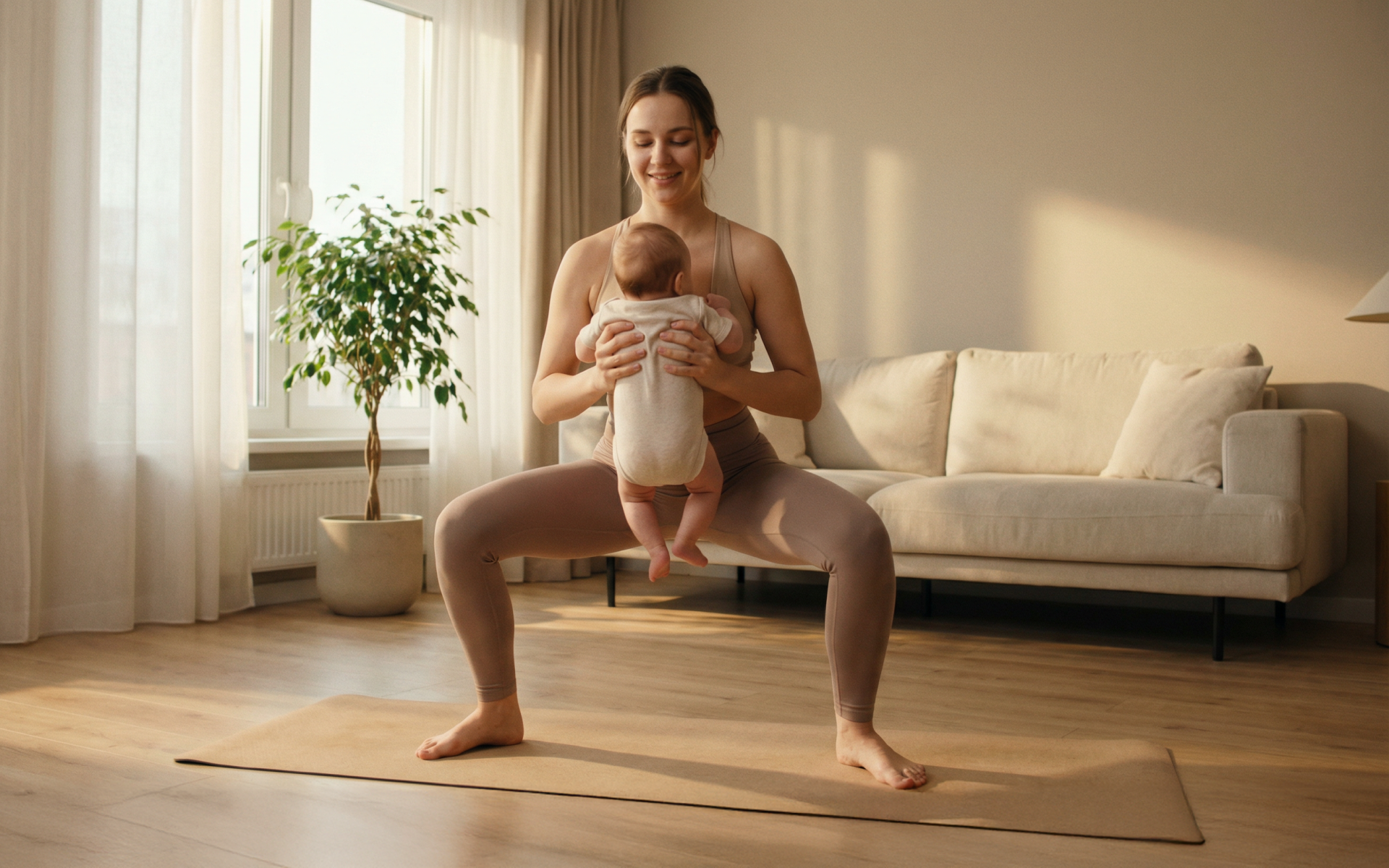
- Bodyweight squats
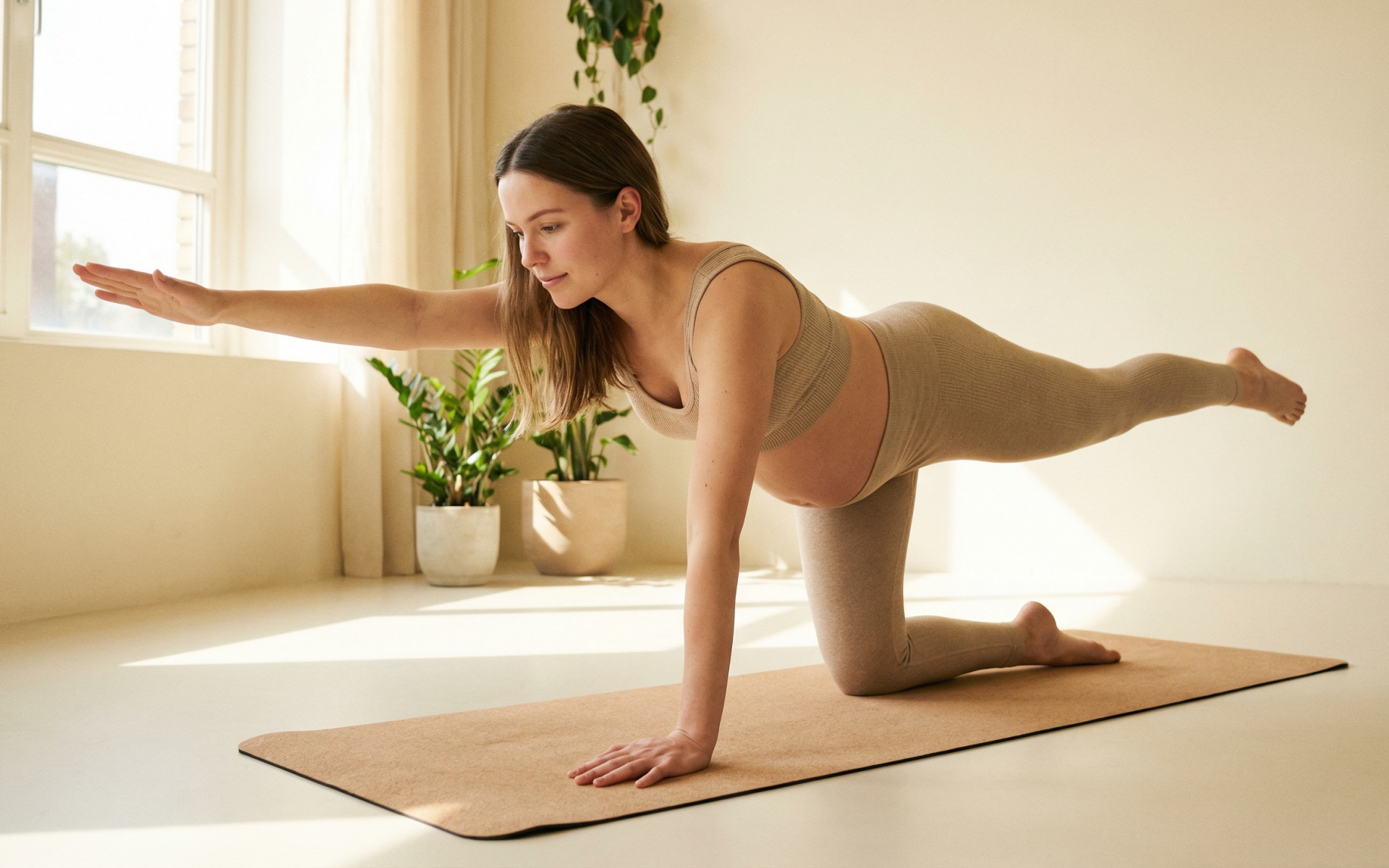
- Bird-dogs
- Resistance band rows
- Light stationary cycling
For a longer plan, see this 12-week postpartum guide or a postpartum plan at home.
Can I Exercise While Breastfeeding?
Yes, you can exercise while breastfeeding; moderate activity does not appear to affect milk supply or your baby’s growth in healthy women 5.
- Feed or pump before activity to feel more comfortable.
- Wear a supportive bra.
- Drink water before and after, since staying hydrated supports milk supply 11.
What Are the Benefits of Exercising After Pregnancy?
Regular activity after pregnancy may help with core and pelvic muscles strength, back comfort, posture, and stamina for daily tasks with a new baby.
- Back and pelvic comfort 7
- Posture, since exercise programs can improve postural alignment 12
- Endurance for lifting, carrying, and feeding
- A gradual return to activity that fits your new role as a parent
Read more: Postpartum workout plan at home: flexible session options
What Signs Mean I Should Slow Down or Seek Professional Help?
Pause your workout and contact your healthcare provider if you notice pelvic pressure, leaking urine, tummy bulging, or sharp pain; seek urgent care for heavy bleeding, fainting, chest pain, or trouble breathing 1.
- Pelvic pressure or heaviness
- Urine leakage during movement
- Persistent tummy bulging
- Sharp pain or increased bleeding

Does Your Body Shape Permanently Change After Pregnancy?
Some changes after pregnancy are temporary and some may remain, such as slightly wider ribs or hips, and both are normal.
Relaxin and other hormones increase joint mobility during pregnancy 2. What feels like a permanent change can partly be muscle weakness or posture, which resistance work may help with.
How Long Should It Take to Lose Postpartum Weight?
There is no set timeline for postpartum weight loss. Early weight loss mostly comes from fluid shifts and the uterus contracting, and later changes depend on sleep, nursing, stress, and diet 13.
Being cleared to exercise does not mean a weight-loss target is appropriate. Discuss nutrition and weight with your clinician or a registered dietitian, especially while nursing, and avoid strict food restriction.
How Do Hormones, Sleep, and Nutrition Affect Postpartum Recovery?
Hormones, sleep, and nutrition all shape recovery after birth, so rest and regular balanced meals matter as much as activity.
- Prolactin: this nursing hormone has wider metabolic effects 14.
- Sleep: short sleep can affect appetite and make weight management harder 15.
- Protein and fiber: support tissue repair and digestion.
- Fluids: help with hydration and milk supply 11.
Whether you’re just starting your fitness journey or looking to add more structure to your routine, BetterMe offers tools that can support different wellness goals. Explore the app and see how its workout, nutrition, and habit-building features can fit into your lifestyle.

FAQs
Why is it harder to lose weight after you have a baby?
Hormone changes, broken sleep, and stress affect appetite and energy, and the body prioritizes recovery and milk production if you nurse.
What’s a good diet for new moms?
A balanced diet with regular meals, protein, fiber, healthy fats, and enough fluid. Extreme calorie restriction can slow recovery.
Do hips widen during pregnancy?
Pregnancy hormones increase pelvic joint mobility. For some women the change is temporary; for others a slight difference remains.
The Bottom Line
Your postpartum body needs time, and your recovery comes first. Start with breathing and pelvic floor work, add walking and light resistance work as your provider allows, and progress slowly. Even a five-minute workout of quiet breathing while your baby naps counts as progress, and a routine without pressure is easier to keep.
DISCLAIMER:
This article is intended for general informational purposes only and does not serve to address individual circumstances. It is not a substitute for professional advice or help and should not be relied on for making any kind of decision-making. Any action taken as a direct or indirect result of the information in this article is entirely at your own risk and is your sole responsibility.
BetterMe, its content staff, and its medical advisors accept no responsibility for inaccuracies, errors, misstatements, inconsistencies, or omissions and specifically disclaim any liability, loss or risk, personal, professional or otherwise, which may be incurred as a consequence, directly or indirectly, of the use and/or application of any content.
You should always seek the advice of your physician or other qualified health provider with any questions you may have regarding a medical condition or your specific situation. Never disregard professional medical advice or delay seeking it because of BetterMe content. If you suspect or think you may have a medical emergency, call your doctor.
SOURCES:
These are the clinical guidance pages, trials, and reviews cited above, listed in order of first mention. Each number in the text links to its source.
-
- Urgent maternal warning signs and symptoms (2024, cdc.gov)
- Relaxin (2022, my.clevelandclinic.org)
- Pelvic floor muscle exercise and training for coping with urinary incontinence (2021, pmc.ncbi.nlm.nih.gov)
- Exercise after pregnancy: How to get started (2024, mayoclinic.org)
- Physical Activity and Exercise During Pregnancy and the Postpartum Period (2020, acog.org)
- Predictive value of abdominal wall scar score for pelvic floor function rehabilitation, vaginal microecology and complications after cesarean section (2023, pmc.ncbi.nlm.nih.gov)
- Effect of core stability exercises on postpartum lumbopelvic pain: A randomized controlled trial (2019, pubmed.ncbi.nlm.nih.gov)
- Pelvic Floor Dysfunction (2024, my.clevelandclinic.org)
- Diastasis Recti (2025, my.clevelandclinic.org)
- Intra-abdominal pressure and pelvic floor health: Should we be thinking about this relationship differently? (2022, pmc.ncbi.nlm.nih.gov)
- Nursing Your Baby: What You Eat and Drink Matters (2025, eatright.org)
- The effect of exercise on postural alignment: A systematic review (2024, sciencedirect.com)
- Navigating Postpartum Weight Loss: Evidence and Interventions (2024, link.springer.com)
- Metabolic Effects of Prolactin (2022, pmc.ncbi.nlm.nih.gov)
- Sleep Deprivation: Effects on Weight Loss and Weight Loss Maintenance (2022, pmc.ncbi.nlm.nih.gov)
 Reviewed by
 Reviewed by