
An intense workout routine, as the name suggests, is one that’s meant to make you sweat. It forces you to give up right then and there, but you can’t, because you have certain goals to achieve.
You know that feeling when you hit the point in a workout where your heart is racing, your brain is negotiating, and your body is like, “Are we really doing this?”
Yes, that’s the spot we’re talking about. Quite surprisingly, there’s something oddly addictive about pushing yourself just a little bit further than you did yesterday. This article explains what an intense workout routine looks like and provides some tips to adjust to it and do it safely.
What Is an Intense Workout Routine to Try?
If you’ve scrolled to this first section and are ready for a challenge, read on to take your fitness routine to the next level. Don’t worry if you can’t find the time to fit in an intense routine. We shed light on workouts that are so time-efficient you can fit them into even the busiest schedule.
What Does “Intense” Actually Mean?
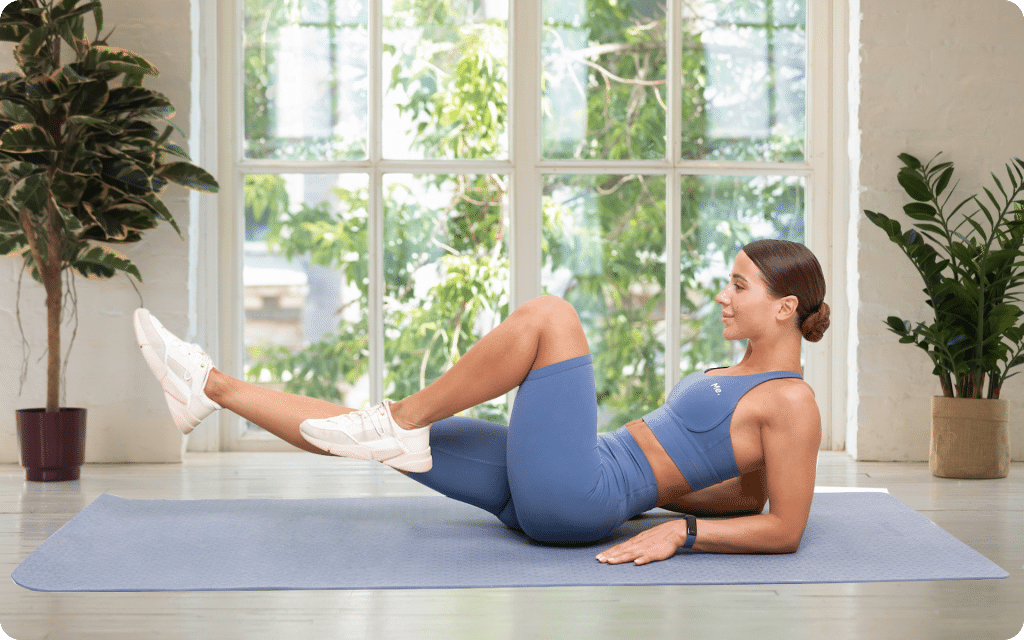
It’s all about effort. An intense workout is the kind that makes you breathe hard, increases your heart rate, and leaves you hot and sweaty. In research terms, it often means working at your highest possible effort, which is also called “all-out” (1).
Don’t panic if you’re a beginner – intensity looks different for everyone. Take this at your own pace, and please contact a medical professional before you get started. Here, your version of an intense workout starts the moment you hit that “I’m huffing and puffing” point. And as research has shown, even moderate exercise for 10-15 minutes can help beginners (2). However, you’ll need to push yourself a bit more over time to keep improving.
Why Do Scientists Support Intense Workouts?
An intense workout session can be practical if you do it with the proper form and frequency.
Research published in the Journal of Applied Physiology: Respiratory, Environmental and Exercise Physiology showed that intensity is the number one driver of fitness gains. You don’t need long sessions either. Just 10 minutes of total workout time with 1 to 2 minutes of true high-effort work (such as 4-second all-out bursts) can be surprisingly powerful (3).
Furthermore, a study in the European Heart Journal found that doing just 15 minutes of vigorous exercise a week (even in tiny bursts of about two minutes a day) can noticeably reduce your risk of health problems (4).
It’s important to note that even short workouts can make a difference, but they work best when they’re combined with other forms of exercise. Adults should aim for 150 minutes of moderate activity or 75 minutes of vigorous exercise each week. They should also perform strength training at least twice a week. Short bursts can help you reach these goals, but a balanced routine is key (5).
Keep scrolling to find an intense workout routine at home that you can do to get maximum benefits.

What Defines an Intense Workout vs a Standard Workout?
A wearable fitness tracker is a great way to get an idea of how strenuous a workout is. However, you can also tell the difference between a standard, everyday workout and a genuinely intense workout routine from three core things: your heart rate, your breath, and your ability to chat.
The table below highlights the primary differences between what your body goes through in each workout:
| Metric | Standard (moderate) workout | Intense (vigorous) workout |
|---|---|---|
| Heart rate | 50% to 70% of your maximum heart rate (6) | 70% to 85% of your maximum heart rate (7) |
| Breathing | Quickens, but you’re not out of breath | Deep, rapid, and you’re breathing hard and fast |
| Anaerobic vs. aerobic | Mostly aerobic (with oxygen) to build endurance (8) | Mostly anaerobic (without oxygen) for short, powerful bursts (9) |
| Examples | Brisk walking, light cycling, doubles tennis | Running/sprinting, swimming laps, heavy lifting, and HIIT |
The scientific guideline is clear: 75 minutes of vigorous activity provides the same health benefits as 150 minutes of moderate activity per week. You’re basically getting double the benefit in half the time by kicking up the intensity!
What Is a Talk Test?
The talk test is the quickest way to know how hard you’re working out (10). Just pay attention to your breathing:
- Moderate Intensity: You can talk, but you can’t sing. You can chat with someone, but you’ll notice you’re breathing a bit heavier.
- Vigorous Intensity: You can only say a few words before needing to breathe. You’re huffing and puffing too much to hold a whole conversation. This is the point where you know you’re really pushing yourself.
Therefore, a standard workout is a routine where you work between moderate and vigorous intensity. You’ll want to vary your training intensities to prevent burnout or injury.
Although these may be a bit more tiring for beginners, there’s still plenty of room to scale them up. On the other hand, an intense workout works for individuals who want to upgrade their fitness routine or challenge themselves more. Create a routine that works for you, but don’t push your limits so much that you end up injuring or hurting yourself.
Read more: Weighted Monday Workout Routine You Can Do Both at Home and at the Gym
What Key Elements Should an Intense Workout Routine Include?
It’s natural to feel confused before you perform a workout. When you have a clear direction and a little sense of what you should focus on to reach your goals, you can achieve your goals in no time. Listed below are some tips to turn hard work into guaranteed results.
- Perform a Dynamic Warm-Up
A solid warm-up can boost your blood flow and prepare your joints for the work ahead (11).
Do this: Light cardio (such as jogging in place) plus moves that mimic your workout. You can perform arm circles, high knees, and bodyweight squats.
- Follow with Compound Movements
As these exercises engage multiple muscle groups simultaneously, they can make your body work harder in less time (12).
Do this: Squats, lunges, push-ups, burpees, kettlebell swings – basically anything that fires up several muscles at the same time.
- Perform an HIIT Structure
HIIT alternates all-out effort with short rest periods to keep your heart rate high (13).
Do this: Work hard for 20 to 45 seconds, rest for 10-30 seconds, and repeat. Aim for near-max effort.
- Minimal Downtime: Keep Moving
Limiting breaks keeps you in the vigorous zone and makes your workout more effective.
Do this: Arrange exercises so you can switch quickly, 5 to 10 seconds max, like moving from upper body to lower body.
BetterMe: Health Coaching app helps you achieve your body goals with ease and efficiency by helping to choose proper meal plans and effective workouts. Start using our app and you will see good results in a short time.
- Cool-Down: Don’t Skip It
A proper cool-down helps your heart rate return to normal and prevents dizziness (14).
Do this: Slow walking followed by static stretches, holding each for about 30 seconds.
As previously mentioned, these are a few elements that should be present in an intense workout session. You can modify it even further if you want – the point is to have a clear plan. Doing random moves and simply exhausting yourself will barely get you anywhere.
What Is an Intense Workout Routine to Try?
Here’s an intense workout routine you can try. You can adjust the intensity based on your fitness level.
Warm-Up (3 minutes)
- 30 seconds of marching or jogging in place
- 30 seconds of arm circles
- 30 seconds of high knees
- 30 seconds of bodyweight squats
- 30 seconds of hip circles
- 30 seconds of light jumping jacks
Main Workout (HIIT Style: 30 seconds work, 15 seconds rest)
Repeat the whole circuit 2-3 times.
Squat Jumps
- Lower into a squat
- Jump up explosively
- Land softly and repeat
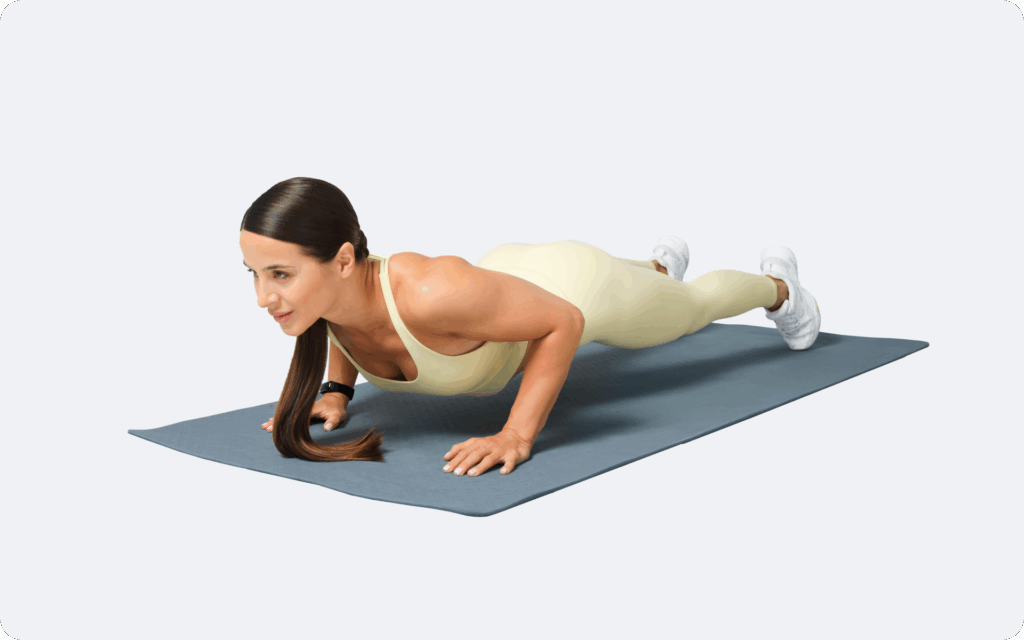
Push-Ups
- Start in a plank
- Lower your chest toward the floor
- Push back up
Walking Lunges
- Step forward
- Lower into a lunge
- Push through and step into the next lunge
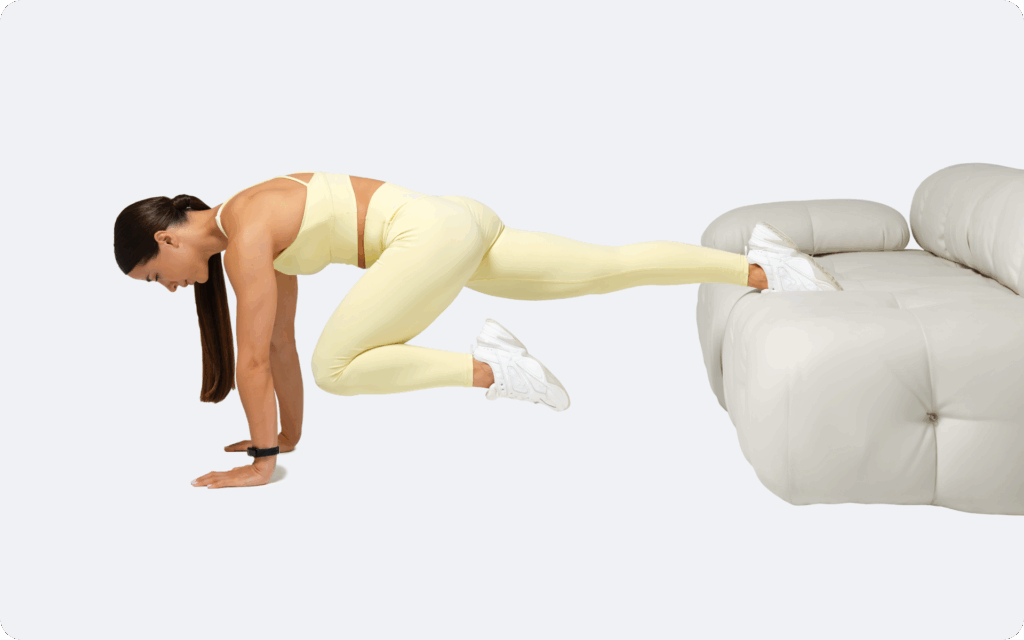
Mountain Climbers
- Start in a high plank
- Bring your knees toward your chest one at a time
- Keep switching quickly
Burpees
- Squat down
- Jump your feet back into the plank
- Complete a push-up and then bring your feet back to center
- Extend your knees as you begin to explode back up from the squatted position
High Knees
- Run in place
- Bring your knees up to hip height
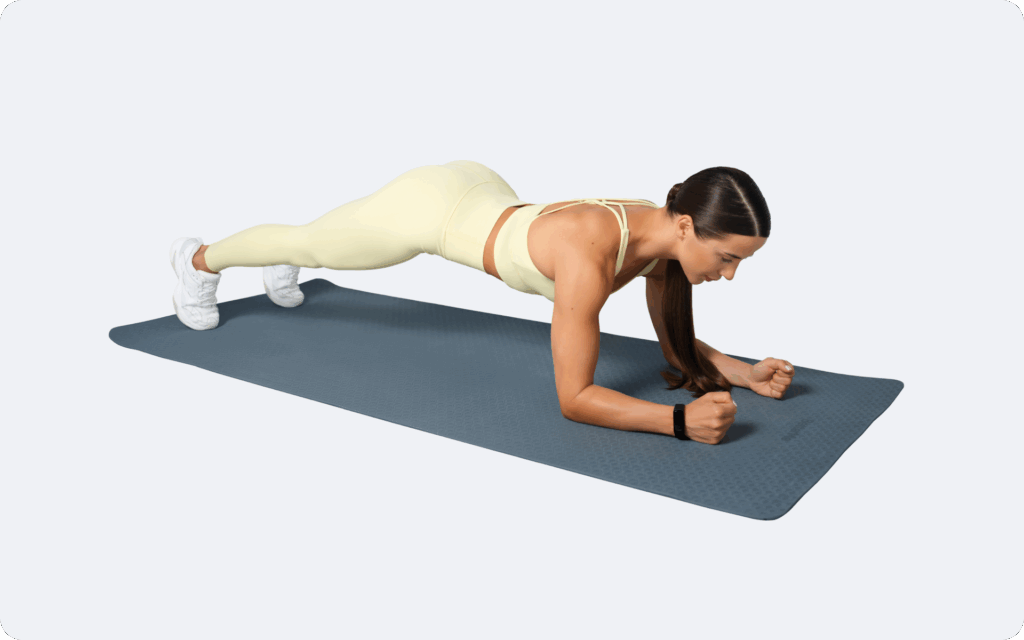
Finisher (1 minute)
- 30 seconds of jumping jacks
- 30 seconds plank hold
Cool-Down (2-3 minutes)
- Slow walking in place
- Light stretching for your legs, arms, and back
Wrap up this circuit, catch your breath, and you’ve got yourself a powerful, no-nonsense routine that pushes you hard in a short amount of time.
How Can Beginners Follow Intense Workouts Safely?
Many beginners get injured not because workouts don’t work, but because they perform exercises incorrectly or add too much weight, too quickly. A 2022 survey found that 75% of Americans reported injuries while exercising, often after jumping back into intense routines too quickly (15). If your body isn’t given time to adapt, muscles, joints, and tendons can’t keep up, which leads to strains, joint pain, or tendon issues.
The numbers back this up. In 2024 alone, exercise and exercise equipment caused an estimated 564,845 injuries, which makes it the top category for sports and recreation injuries (16). The common mistake noticed was that people were doing too much, too soon.
To stay safe, beginners need to respect their current fitness level and progress gradually. Feeling challenged is normal, but sharp or worsening pain is not. Learning that difference early helps you build strength without setbacks.
Start With the Right Mindset
Intense workouts don’t require a fierce attitude toward yourself. Fitness is a long game. Some days you’ll feel strong, other days sluggish, but both are part of the process. Progress isn’t always linear, so patience and self-compassion matter just as much as the workout itself.
Build a Safe and Balanced Routine
A beginner-friendly plan should include all three pillars of fitness:
- Cardio: Activities such as brisk walking, cycling, or swimming
- Strength training: Bodyweight or light resistance exercises
- Flexibility and balance: Mobility drills and stretching
Spreading these across the week will help prevent overuse injuries and keep your body balanced.
Reasons why BetterMe is a safe bet: a wide range of calorie-blasting workouts, finger-licking recipes, 24/7 support, challenges that’ll keep you on your best game, and that just scratches the surface! Start using our app and watch the magic happen.
Follow a Simple Strength Training Routine
You don’t need heavy weights to start. Bodyweight exercises such as squats, lunges, push-ups, and planks are more than enough. According to the CDC, only 24.2% of adults meet both cardio and strength guidelines, but strength work is crucial for joint support and injury prevention (17).
Start with:
- 1 to 2 sets of 8 to 12 reps
- Slow, controlled movements
- Perfect form over more reps or weight
If your form starts to slip, stop. That’s your cue!
At the end of the day, you should remember that going all in and exhausting yourself may not work for everyone. Regular, manageable, intense workouts for beginners can get you stronger far faster than one all-out session followed by days of soreness.
How Can You Adapt an Intense Workout Routine for Home?
Turning a gym-style workout into an intense at-home routine is easier than you think. It only asks for smart swaps and a little creativity.
Replace Weights with What You Have
You don’t need heavy weights to make exercises challenging.
- Change the angle: Elevate your hands to make moves easier or your feet to make them harder (push-ups on a chair or couch work great).
- Use household items: Water bottles, backpacks filled with books, or detergent jugs can add extra resistance.
- Slow it down: Take your time on the lowering part of each move. For example, lower into a squat slowly for 4 seconds.
Make the Most of Your Space
You can use even a limited space if you become aware of the exercises:
- Go vertical: Jump squats, burpees, and tuck jumps quickly raise your heart rate.
- Move side to side: Add lateral lunges or side shuffles to work muscles you don’t usually hit.
Train by Time, Not Just Reps
This keeps your workouts challenging without extra equipment.
- Use a timer: Set it for 10 minutes and do as many rounds as you can of a short circuit.
- Track progress: Next time, aim to beat your previous number of rounds or reps.
Performing an intense workout routine at home saves time and money, but you should do some research to ensure you do it right.
Read more: A Non-Weighted Booty-Building Program to Blast Your Glutes
How Often Is It Safe to Do Intense Workouts?
For the best results and to stay safe, adults should aim for 75 to 150 minutes of vigorous exercise each week, usually spread across 2 to 4 intense workouts (5). Recovery is just as important. Research has shown that muscles need 24-48 hours of rest between hard sessions to repair and refuel, so spacing workouts throughout the week helps prevent overtraining and supports better progress.
What Signs Show Your Intense Workout Routine Needs Adjusting?
When your body isn’t getting enough recovery time, you may be heading toward overtraining. If you notice these signs, it’s time to slow down, rest more, or lower the intensity.
- Ongoing muscle soreness or joint pain: Feeling sore for a couple of days is normal. However, if your muscles feel heavy or achy for a long time, or your knees and elbows keep hurting, your body needs more recovery.
- Your performance is getting worse: Struggling to finish workouts, running slower, or needing longer breaks are signs your body isn’t bouncing back.
- Poor sleep and constant tiredness: Hard workouts should help you sleep better. If you’re tossing and turning or waking up feeling exhausted, even after rest, your body is under too much stress.
- Bad mood or no motivation: Feeling irritable, anxious, low, or dreading workouts you once enjoyed is a strong signal that both your body needs a break.
Listening to these warning signs helps you stay healthy, consistent, and injury-free in the long term. For more details about active recovery, take a look at our prior publication.
Most intense workouts work best at 20 to 40 minutes. This is more than enough time to push hard without overdoing it. Yes, they usually do. As your heart rate stays high, you burn more calories in less time. It even keeps burning extra calories after the workout ends. Aim for a mix of protein and carbs. Protein helps repair muscles, while carbs refill your energy. This could be eggs with toast, yogurt with fruit, or a simple protein shake. Not really. Your body needs recovery time. Most people do best with 2 to 4 intense sessions a week, with easier training or rest days in between. Rest is where the progress actually happensFrequently Asked Questions
How long should an intense workout last?
Do intense workouts burn more calories?
What should you eat after an intense workout?
Is it safe to do intense workouts every day?
The Bottom Line
The idea of an intense workout fascinates many people as they believe that it will help them reach their goals faster. Pushing yourself is part of the process, not punishing yourself. Try to balance your efforts with rest so you can build intensity and give your body the best chance to recover fully.
Remember, intensity isn’t about going all-out every single day – it’s about showing up consistently, knowing when to push, and knowing when to pull back. Stay in touch with a certified professional to ensure you remain on the right track.
DISCLAIMER:
This article is intended for general informational purposes only and does not serve to address individual circumstances. It is not a substitute for professional advice or help and should not be relied on for making any kind of decision-making. Any action taken as a direct or indirect result of the information in this article is entirely at your own risk and is your sole responsibility.
BetterMe, its content staff, and its medical advisors accept no responsibility for inaccuracies, errors, misstatements, inconsistencies, or omissions and specifically disclaim any liability, loss or risk, personal, professional or otherwise, which may be incurred as a consequence, directly or indirectly, of the use and/or application of any content.
You should always seek the advice of your physician or other qualified health provider with any questions you may have regarding a medical condition or your specific situation. Never disregard professional medical advice or delay seeking it because of BetterMe content. If you suspect or think you may have a medical emergency, call your doctor.
SOURCES:
- A Perspective on High-Intensity Interval Training for Performance and Health (2023, researchgate.net)
- An Overview of Current Physical Activity Recommendations in Primary Care (2019, kjfm.or.kr)
- Very intense exercise-training is extremely potent and time efficient (2005, researchgate.net)
- Vigorous physical activity, incident heart disease, and cancer: how little is enough? (2022, academic.oup.com)
- The Physical Activity Guidelines for Americans (2018, jamanetwork.com)
- Study of Blood Pressure and Heart Rate Responses to Exercise in Young Adults (2015, saspublishers.com)
- Effect Of Moderate Level Aerobic Training On Maximum Oxygen Consumption And Cardiovascular Fitness Of Non-Athlete Students (2022, researchgate.net)
- Anaerobic Exercise (n.d., sciencedirect.com)
- The talk test as a useful tool to monitor aerobic exercise intensity in healthy population (2023, pmc.ncbi.nlm.nih.gov)
- Warming-Up and Stretching for Improved Physical Performance and Prevention of Sports-Related Injuries (2012, link.springer.com)
- What are compound exercises and why are they good for you? (2024, unsw.edu.au)
- Heart Rate and Oxygen Uptake During Recovery from High-Intensity Interval Training: A Retrospective Analysis (2025, mdpi.com)
- Cool down (n.d., sciencedirect.com)
- Post-Pandemic Exercise Injuries Common in US Adults (2022, engoo.com.br)
- Facts + Statistics: Sports injuries (2024, iii.org)
- Physical Activity Among Adults Aged 18 and Over: United States, 2020 (2022, cdc.gov)
 By
By 
 Reviewed by
 By
By