Regular exercise plays an integral role in shaping your physical and mental health. It may seem like a mere assumption until you witness the outcomes yourself. If you’ve never worked out before, this guide about a starter workout routine may work as the nudge you needed to get started.
What Is a Good Starter Workout Routine?
A good workout routine for beginners isn’t too extreme. It starts with gentle exercises that warm up your body and make it ready for movement, then it jumps right into fundamental strength training movements. Ideally, it should be a full-body program performed three days per week (e.g. Monday, Wednesday, and Friday), with rest days in between.
The routine should include compound movements. This means including exercises that use multiple joints and muscle groups simultaneously, such as squats, rows, and push-ups. When done correctly, these exercises can build overall functional strength, stability, and muscle awareness.
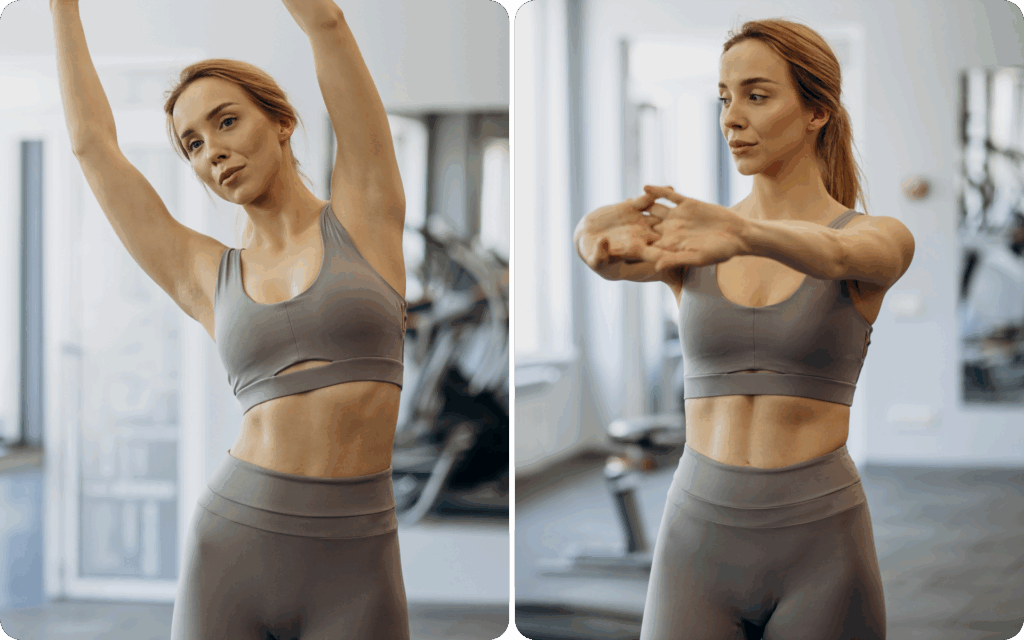
The importance of correct form can’t be emphasized enough – you could injure yourself if you don’t get the posture right. A study published in BMJ Open Sport & Exercise Medicine in 2002 found that injury rates are significantly higher during the first six months of starting a new exercise regimen. Some sources also indicate a 40% increased risk during this initial adaptation phase (1).
Once you’ve mastered the correct form, you can proceed to progressive overloading. This involves increasing repetitions or reducing rest time. And later, you can introduce light resistance (such as dumbbells or household objects).
To summarize, a good starter workout routine covers all the basics before taking you to the next level. When you take a sustainable start to fitness, you are more likely to pave your way towards a well-structured body.
Read more: Strength and Cardio Workout Plan for Ultimate Fitness Results
How Should a Beginner Start Working Out?
A beginner needs a foolproof way to start workouts because their experience in the initial days helps them determine what their future exercise regimes might look like. Listed below are some tips that can help you stay on the right track as a beginner:
- Get Clear Medical Advice
If you haven’t exercised in a while or have any health concerns, it’s always smart to check in with your doctor before jumping into a new routine, just to be safe. Most beginner injuries happen because the basics aren’t done quite right. Watching a few instructional videos from reputable sources can help, or you can even book a single session with a certified trainer to walk you through the essentials such as squats, push-ups, and lunges. It makes a huge difference.
BetterMe: Health Coaching app helps you achieve your body goals with ease and efficiency by helping to choose proper meal plans and effective workouts. Start using our app and you will see good results in a short time.
- Choose a Simple Routine
A great beginner routine is almost always a full-body one. The days may have gaps, so you could work out on Monday, Wednesday, and Friday. Hitting all major muscle groups in each session can give you plenty of balance and the 48 hours your body needs to recover properly in between (2). And don’t worry about marathon workouts. Around 30-45 minutes could be more than enough when you’re starting. All you must do is warm up, get the basics in, cool down, and stay consistent.
- Emphasize Compound Movements
Your workouts should focus on compound movements. For example, you can include exercises such as squats, rows, and push-ups that work multiple muscle groups at once. A diverse workout can be an effective way to build strength without spending hours at the gym.
| Movement Type | Example Exercises |
|---|---|
| Lower body (push) | Squats, lunges, box step-ups |
| Upper body (push) | Wall push-ups (or kneeling), overhead press (light dumbbells) |
| Upper body (pull) | Dumbbell rows, bodyweight rows (if possible) |
| Core/hinge | Plank, bird-dog, glute bridges |
- Learn Progressive Overload
This part is essential for beginners. It’s pretty normal for “newbies” to feel highly motivated and start with heavy routines right away. However, this could hinder their growth rather than improve it, as there is a higher risk of injuries or strains. You can start with just your body weight or very light dumbbells (even household items work!) until you can comfortably do 2-3 sets of 10-12 reps with solid form.
Next, follow the “slow progression” rule. Don’t bump up the weight, intensity, or number of workout days until what you’re doing feels genuinely easy. This is the simplest way to avoid the injuries most newbies run into.
- Listen to Your Body
Almost all fitness experts agree on the importance of warm-ups and cool-downs. You should spend about 5 minutes on some light cardio or dynamic stretches before you start, and 5 minutes on static stretches afterward. It really helps keep injuries at bay.
And remember, rest isn’t optional. Aim for 7-9 hours of sleep, as your muscles actually grow while you recover, not while you’re sweating it out (3). Also, forget the “no pain, no gain” idea. Sharp pain is a hard stop, while normal muscle soreness is totally fine.
That’s a quick rundown of the essentials before starting any workout routine. Whether you’re following a good starter workout routine for females or males, at home or at the gym. As long as you keep this checklist in mind, you’re all set to reach your fitness milestones.
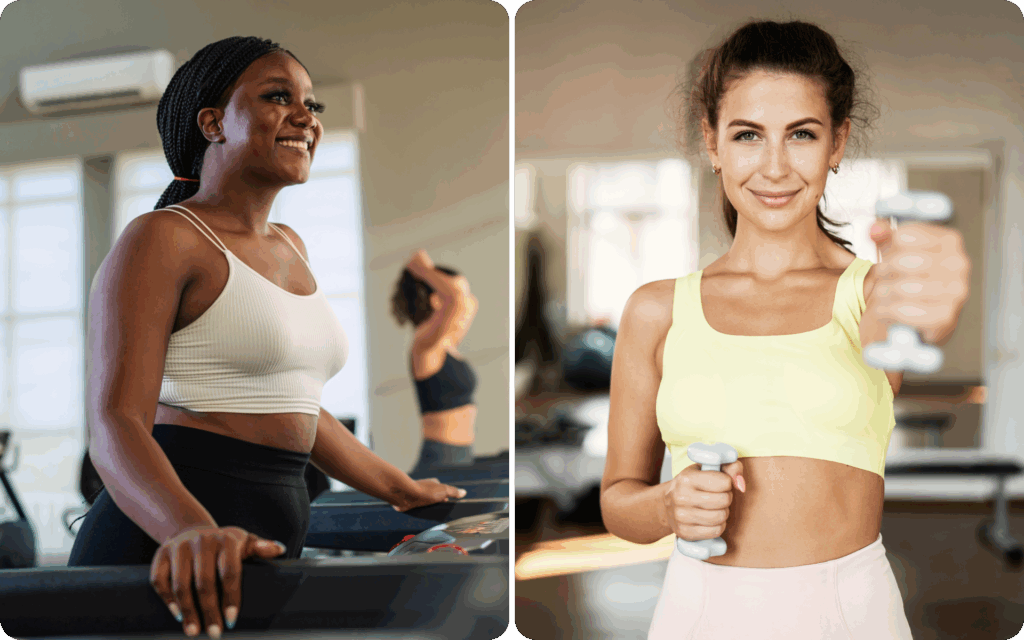
Is It Better to Start with Cardio or Weights?
In most situations, the order of cardio and strength training doesn’t make a major difference. For example, you might run on the treadmill and still have enough energy to lift weights afterward, or vice versa.
However, if you’re training with specific goals in mind, the sequence of your workouts becomes much more important:
- If your goal is endurance, start your workout with cardio.
- If gaining strength or muscle is the priority, start with strength training.
- If weight loss is your aim, start with the activity you feel most motivated to do.
A 2018 review found that people who lifted weights before cardio achieved much higher one-rep max scores for lower-body exercises than those who did cardio first (4). Adding to this perspective, a 2025 study also showed that young, obese men who performed strength training before cardio for 12 weeks gained more explosive strength and muscular endurance than those who started with cardio (5).
This leads us to conclude that strength training before cardio can prime your muscles. The movements may start feeling smoother, turning it into a muscle activation session (6).
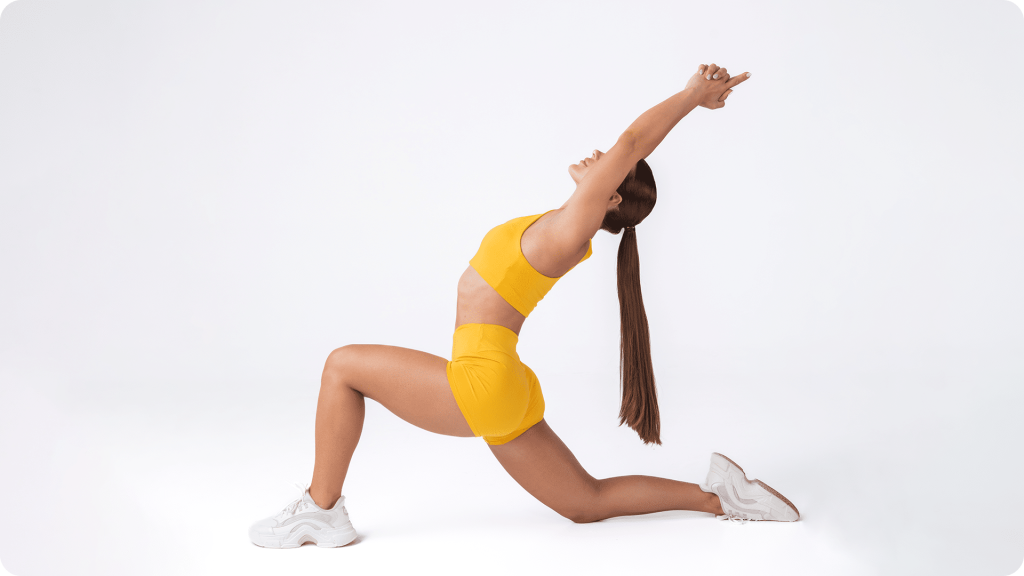
But there’s another side of the story that’s also essential to acknowledge. A small American Council on Exercise (ACE) study found that doing cardio before resistance training would be more beneficial as it would decrease your average BPM throughout the entire workout (7). As a result, the cardio portion may feel tougher if you save it for later in the workout, which could cause you to slow your pace or end the session earlier.
You should create a workout plan that matches your fitness goals and fits your energy levels. Consulting a certified trainer can also help you train safely and reduce your risk of strain or injury. For example, a calisthenics beginner routine may suit some people when they’re just starting out. It all depends on what suits your body, and no one can guide you better than a trainer.
Reasons why BetterMe is a safe bet: a wide range of calorie-blasting workouts, finger-licking recipes, 24/7 support, challenges that’ll keep you on your best game, and that just scratches the surface! Start using our app and watch the magic happen.
What Is a Good Starter Workout Routine?
Below, we’ve created a starter workout routine that might help you get an idea of what it should look like:
Beginner-Friendly Workout Routine (4 Days/Week)
Day 1: Full-Body Strength
- Squats: 3 sets of 10
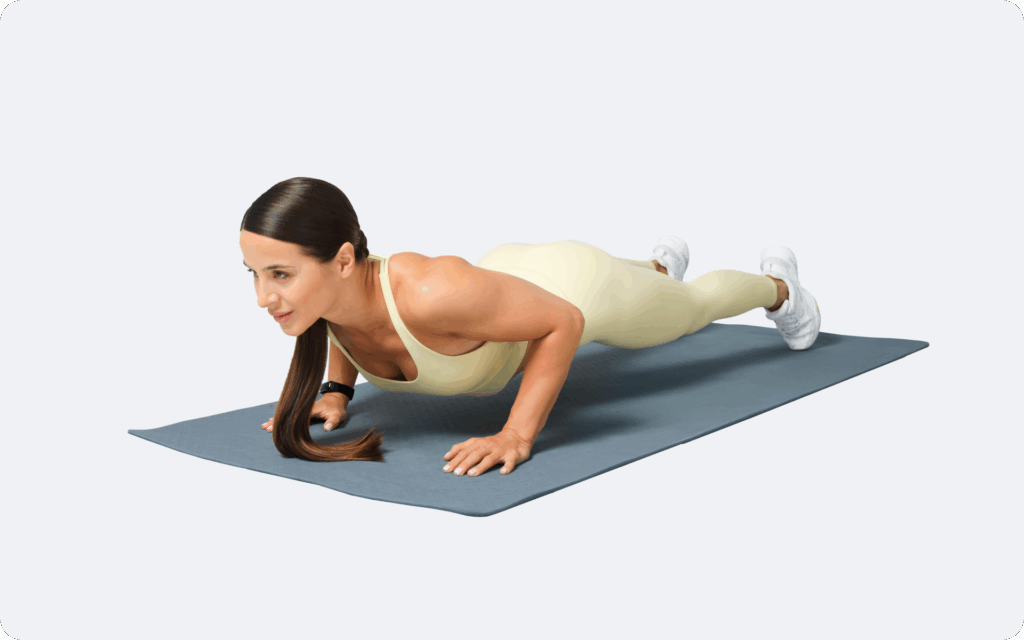
- Incline push-ups or regular push-ups: 3×8
- Dumbbell rows: 3×10
- Glute bridges: 3×12
- Plank: 20-30 seconds
Day 2: Low-Impact Cardio + Core
Cardio (choose one for 20-25 minutes):
- Brisk walking
- Cycling
- Elliptical
- Light jogging
Core (2 rounds):
- Dead bug: 10 per side
- Heel taps: 20
- Plank: 30 seconds
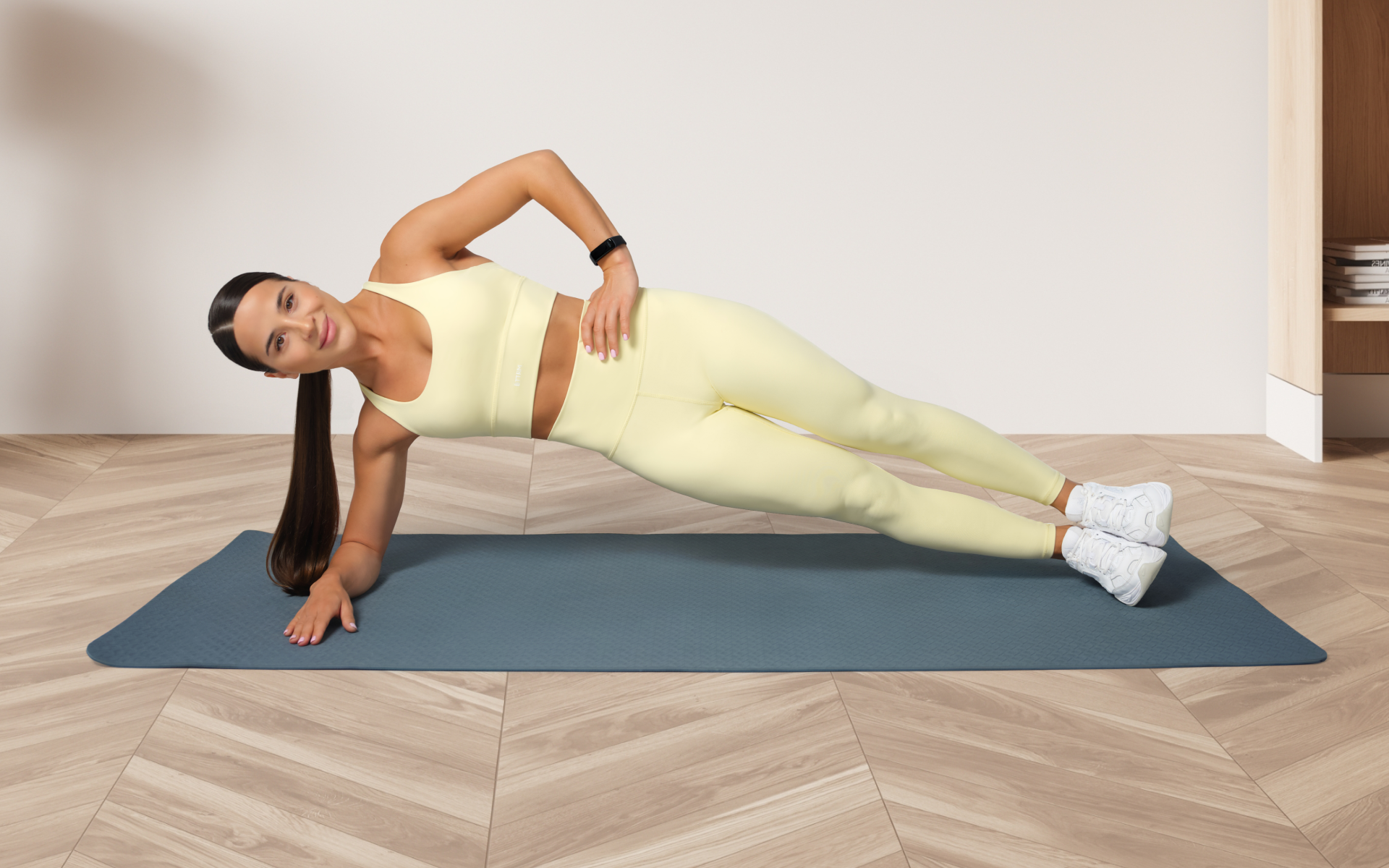
- Side plank: 20 seconds each side
- Leg Raise: 10 reps
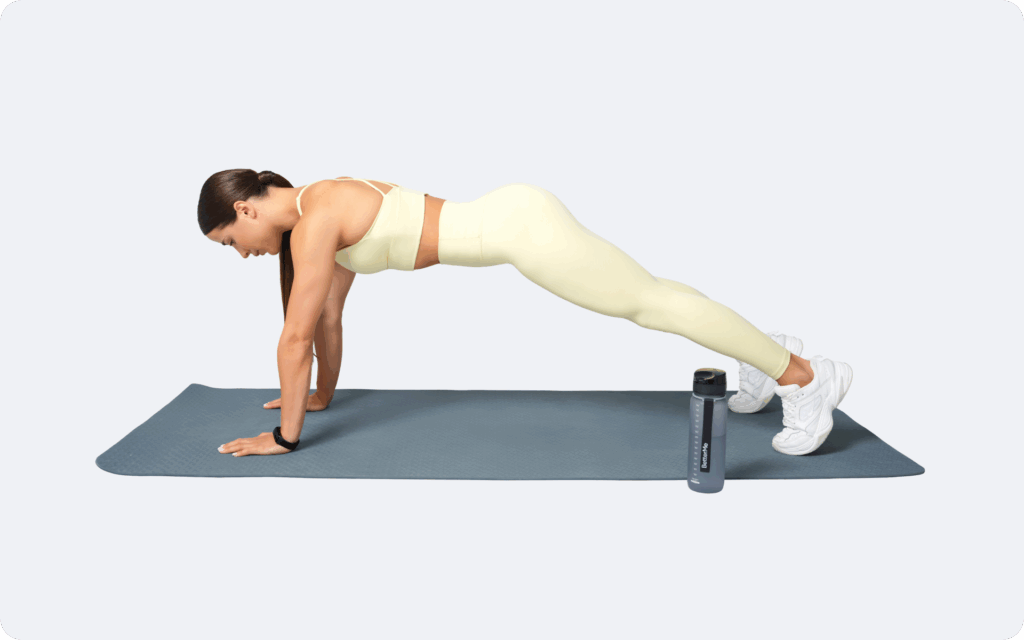
Day 3: Upper-Body Strength
- Dumbbell shoulder press: 3×10
- Bent-over dumbbell reverse fly: 3×10
- Lat pull-down or resistance-band pull-down: 3×12
- Biceps curls: 3×10
- Triceps dips: 3×8
Day 4: Lower Body + Mobility
- Lunges (alternating): 3×10 per leg
- Hip thrusts: 3×12
- Calf raises: 3×15
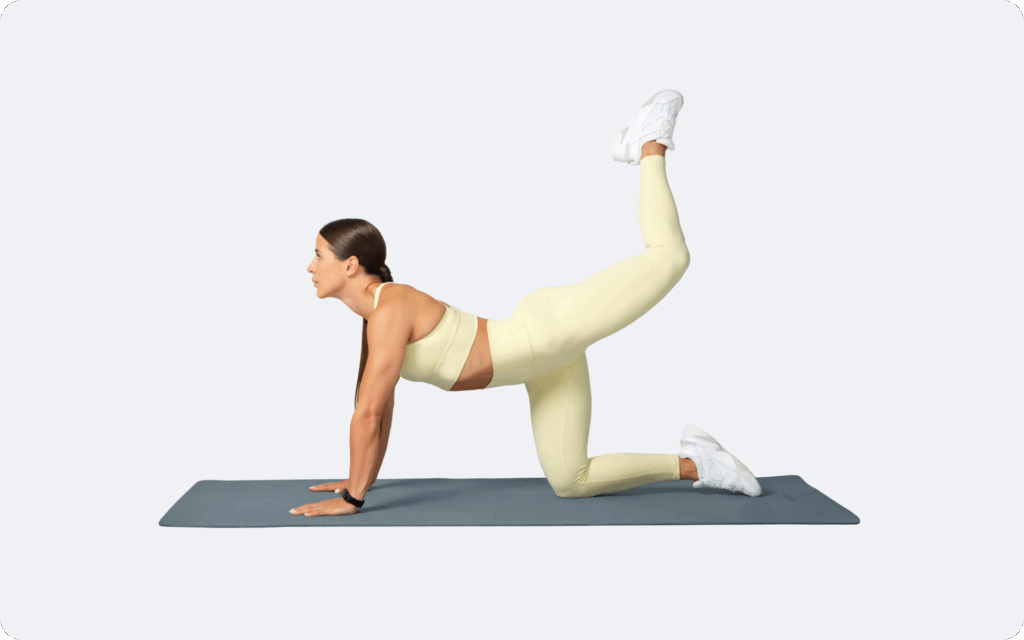
- Leg raises: 3×12
- 5 minutes of stretching: hamstrings, quads, hips, calves
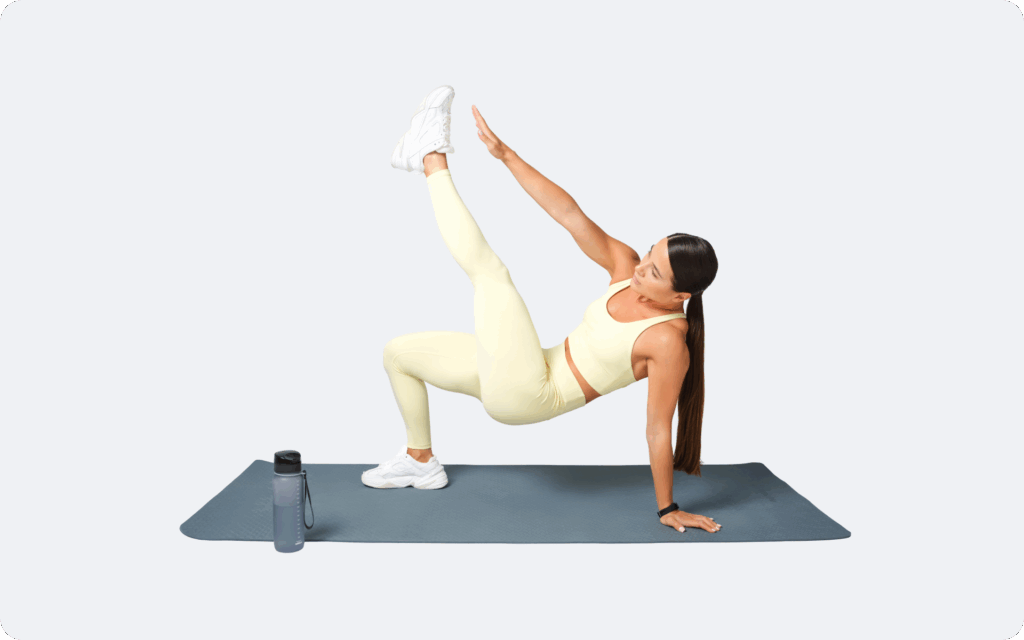
Here’s what your weekly structure should look like:
- Monday: Day 1
- Tuesday: Day 2
- Wednesday: Rest
- Thursday: Day 3
- Friday: Day 4
- Saturday: Optional light walk or stretching
- Sunday: Rest
Take things step by step: start with lighter weights, focus on proper technique, and gradually increase the difficulty. Drink enough water, warm up before each session, and maintain regularity over perfection. This approach will help you grow stronger, improve your endurance, and stay motivated throughout your 4-week beginner workout.
Read more: 1-Week Workout Plan at Home: Your Complete Guide
What Is the Correct Order to Perform a Workout?
A good workout plan for beginners, whether you’re male or female, should follow the order below:
- Warm-Up
Begin with 5 to 10 minutes of light cardio or dynamic stretching to increase blood flow. This can activate your muscles and reduce the risk of injury (8). There are a number of different dynamic exercises you can perform. Ideally, you’ll want to do movements that involve the muscles you’re looking to strengthen that day. A few examples include jogging in place, jumping jacks, leg swings, a walking lunge with a twist, the cat-cow, or anything that gets your body ready for movement.
- Mobility and Activation Exercises (Optional but Recommended)
Include exercises that target the joints and smaller stabilizing muscles. These could be glute bridges, shoulder circles, or hip openers. These movements can improve the range of motion in your joints and prepare your body for more demanding exercises (9).
- Strength Training/Resistance Exercises
Start with compound movements such as squats, deadlifts, or bench presses when your energy levels are at their highest. Follow with isolation exercises, such as bicep curls or tricep extensions. This can target specific muscles more precisely.
- Cardio
If you plan to include cardio, perform this before or after strength training (scroll up to review the cardio first vs. cardio last debates). Moderate-intensity cardio can enhance your endurance and may help optimize your heart rate response without compromising strength performance.
- Core Work
Engage in core exercises after completing major lifts, unless your session is focused on core strength. Planks, carries, holds, rotational medicine ball slams, and leg raises are great options for strengthening your midsection.
- Cool-Down and Stretching
Finish your workout with 5-10 minutes of static stretching or gentle mobility work. This will allow your muscles to recover and improve your flexibility (10).
Key Tip: The general principle is “large-to-small, high-intensity-to-low-intensity”. Focus on the most demanding exercises first, then move to less demanding ones. This ensures safety, proper form, and optimal results.
What Is a Good Workout Time for a Beginner?
There may be specific timeframes when it’d be better for you to work out based on your exercise goals. However, for most people who exercise, the time usually depends on what suits your lifestyle.
The American Heart Association advises engaging in at least 150 minutes of moderate-intensity or 75 minutes of vigorous-intensity aerobic exercise per week. You can spread your routine across multiple sessions. Incorporating resistance training three times weekly can provide additional health benefits (11). Below are some tips that can help beginners work out without overtaxing their bodies:
- Start with shorter sessions (20-30 minutes) if needed and gradually increase as your stamina improves.
- Focus on consistency rather than intensity at first.
- Rest when necessary to prevent burnout or injury.
The key here is to design workouts into manageable/time-efficient chunks. A workout schedule for beginners (female or male) can be the same. There may be some tweaks required depending on your metabolism, health status, or exercise goals. However, a certified personal trainer can guide you on frequency, exercise form, and a specific plan to meet your goals.

How to Create an Effective Workout Plan for Beginners
This is the checklist for creating an effective workout routine:
- Know what you want to achieve.
- 3-4 workouts a week can help beginners adapt and recover.
- Include a balanced mix of exercises: cardio, strength-training, and core work.
- Start with lighter weights, fewer reps, or shorter cardio sessions and gradually increase the intensity.
- Include rest or light activity days.
- Use a journal or app to log workouts.
This list should serve as your handbook when you’re starting an exercise routine. You can progress to an advanced routine later, but these are the rules that apply at almost every stage of a fitness routine.
Yes, even a short workout can boost your energy and burn calories. Absolutely, if you focus on compound movements and maintain good intensity. Both may work, but you should choose a time you can stick to consistently. Yes, rest days are essential for recovery and injury prevention. These are also the days when muscle recovery occurs.Frequently Asked Questions
Is a quick workout better than nothing?
Is a 20-minute full-body workout effective?
Is it better to work out in the morning or at night?
Do beginners need rest days?
The Bottom Line
Exercise can change your perspective on life. You’ll start to feel happier and healthier, despite the initial discomfort from sore muscles, so don’t underestimate its potential. You should find creative ways to make your workouts more potent, and this guide covers most of them. A reputable app such as BetterMe can be your best friend here. At the same time, you should talk to a certified trainer or your general physician before you create a plan for yourself.
DISCLAIMER:
This article is intended for general informational purposes only and does not serve to address individual circumstances. It is not a substitute for professional advice or help and should not be relied on for making any kind of decision-making. Any action taken as a direct or indirect result of the information in this article is entirely at your own risk and is your sole responsibility.
BetterMe, its content staff, and its medical advisors accept no responsibility for inaccuracies, errors, misstatements, inconsistencies, or omissions and specifically disclaim any liability, loss or risk, personal, professional or otherwise, which may be incurred as a consequence, directly or indirectly, of the use and/or application of any content.
You should always seek the advice of your physician or other qualified health provider with any questions you may have regarding a medical condition or your specific situation. Never disregard professional medical advice or delay seeking it because of BetterMe content. If you suspect or think you may have a medical emergency, call your doctor.
SOURCES:
- Training interventions to reduce the risk of injury to the lower extremity joints during landing movements in adult athletes: a systematic review and meta-analysis (2023, bmjopensem.bmj.com)
- Effects of Consecutive Versus Non-consecutive Days of Resistance Training on Strength, Body Composition, and Red Blood Cells (2018, pmc.ncbi.nlm.nih.gov)
- After a break from strength training, muscle memory may help you bounce back (2024, npr.org)
- The physiological effects of concurrent strength and endurance training sequence: A systematic review and meta-analysis (2017, tandfonline.com)
- Impact of sequence in concurrent training on physical activity, body composition, and fitness in obese young males: A 12-week randomized controlled trial (2025, sciencedirect.com)
- The physiological effects of concurrent strength and endurance training sequence: A systematic review and meta-analysis (2018, pubmed.ncbi.nlm.nih.gov)
- Cardio Before Weight Lifting May Help Boost Muscle (2021, ncbi.nlm.nih.gov)
- ACE Research Study: Sequencing Exercise for Optimum Results (2014, acefitness.org)
- Stretching cardiovascular research (2023, uwlax.edu)
- Resistance Training Induces Improvements in Range of Motion: A Systematic Review and Meta-Analysis (2023, link.springer.com)
- The Effectiveness of Post-exercise Stretching in Short-Term and Delayed Recovery of Strength, Range of Motion and Delayed Onset Muscle Soreness: A Systematic Review and Meta-Analysis of Randomized Controlled Trials (2021, frontiersin.org)
- Resistance Exercise Training in Individuals With and Without Cardiovascular Disease: 2023 Update: A Scientific Statement From the American Heart Association (2023, ahajournals.org)

 Reviewed by