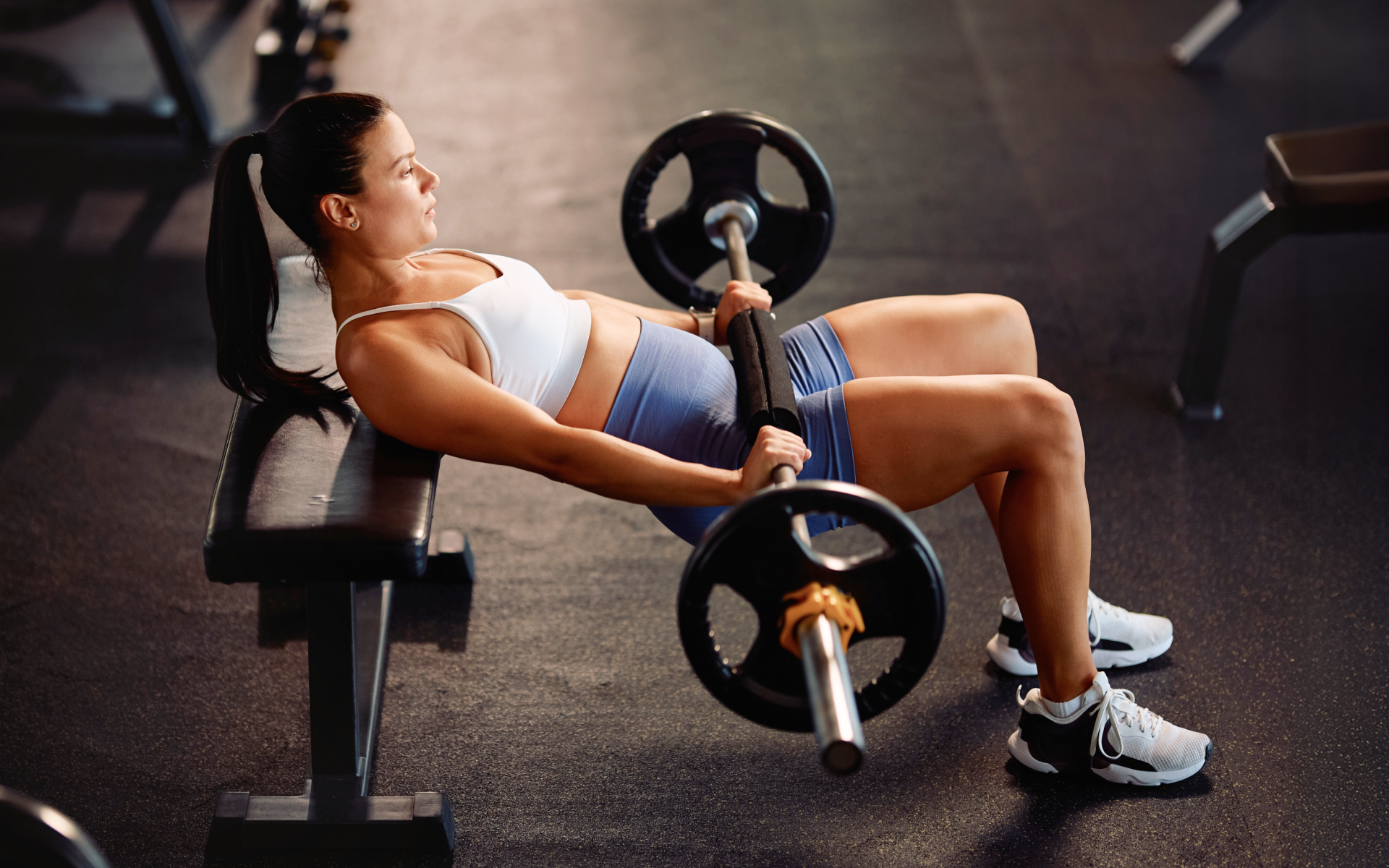
Building strong, powerful glutes is about more than just aesthetics – it’s a crucial component of athletic performance, injury prevention, and overall functional movement. Whether you’re an athlete who is looking to improve your sprint speed or a fitness enthusiast who is aiming to correct your posture and alleviate back pain, understanding the logic behind glute training is essential.
In this guide, we’ll break down the physiological mechanisms of muscle growth, analyze the most effective exercises, and provide you with a structured blueprint for success.
How Long Do Glutes Take to Grow?
The timeline for visible glute growth is one of the most common questions in strength training. Physiologically, muscle hypertrophy (growth) is a gradual process.
If you are a beginner, you might notice “newbie gains” – rapid neuromuscular adaptations that result in strength increases within the first 4-6 weeks (1). However, actual structural changes to the muscle tissue typically become noticeable after 8-12 weeks of consistent training (2).
For intermediate and advanced trainees, the rate of growth slows down. Under optimal conditions – which means a caloric surplus, sufficient protein intake, and progressive overload – you might expect to gain 0.25% to 0.5% of your body weight, as shown in a 2019 study (3).
Patience is key. Hypertrophy requires the accumulation of mechanical tension over time. If you’re consistent with your inputs, the outputs will follow.
What Is the Most Effective Glute Workout?
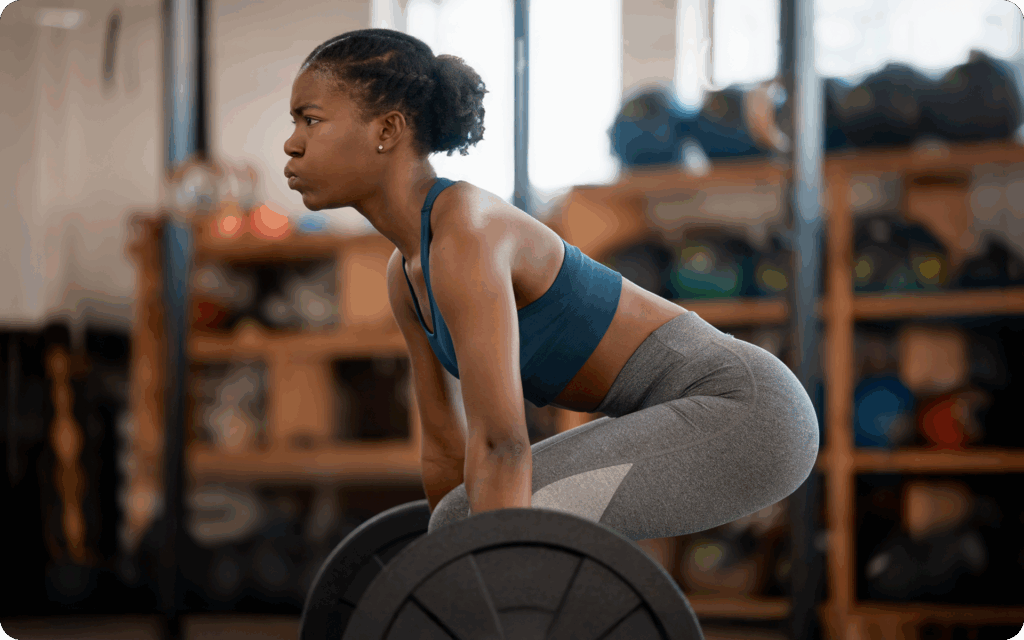
There is no single “magic” workout, but the most effective routine is one that adheres to the principles of biomechanics and progressive overload (4). A well-rounded glute workout routine must target all three gluteal muscles: the gluteus maximus (the main driver of hip extension), the gluteus medius (abduction and stabilization), and the gluteus minimus (stabilization).
Research has suggested that a combination of three movement patterns is superior for optimal development (4):
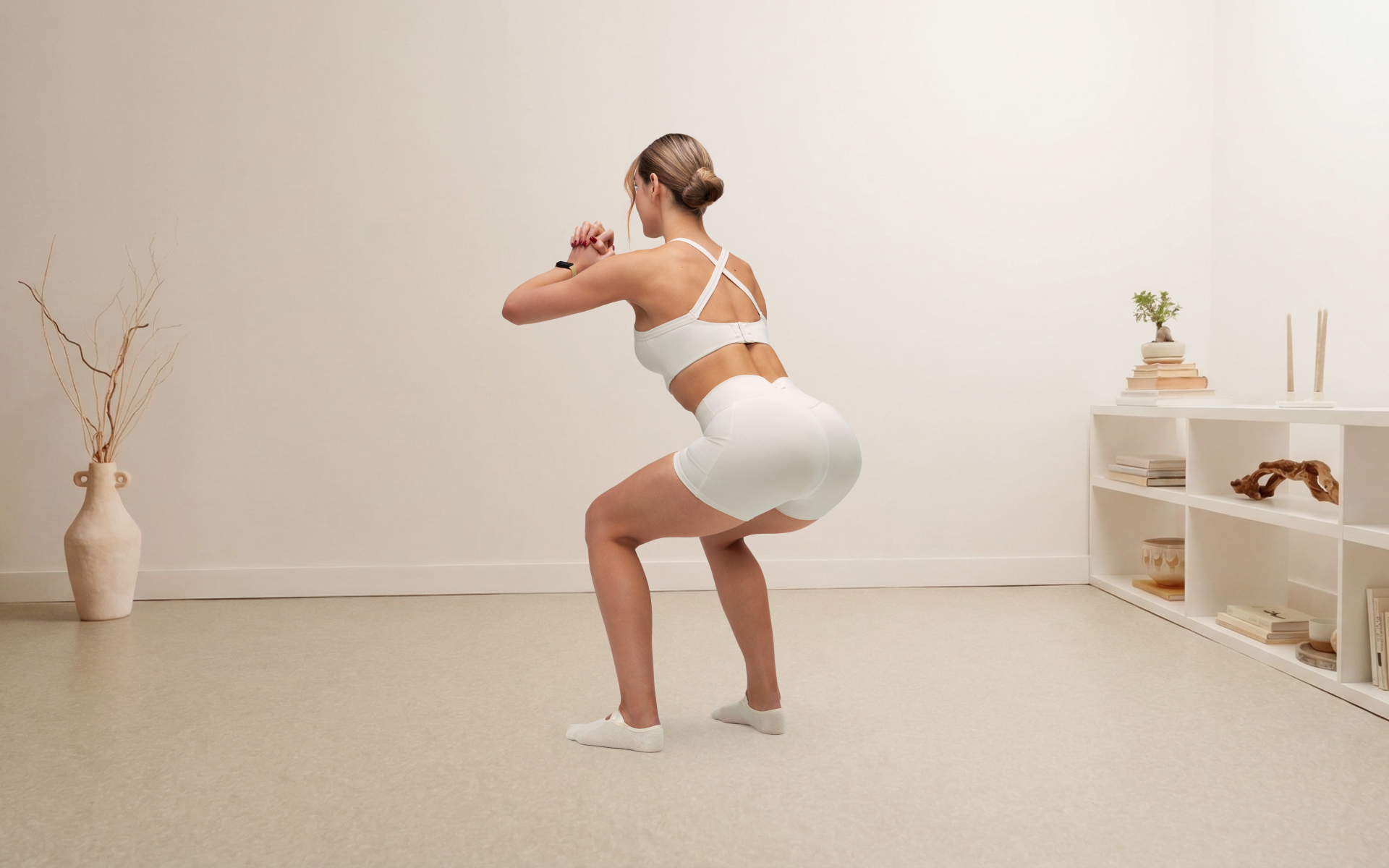
- Vertical Hip Extension: Movements such as squats and deadlifts where the hips move up and down. These place high tension on the glutes in the lengthened position.
- Horizontal Hip Extension: Movements such as hip thrusts and bridges. These place high tension on the glutes in the shortened (contracted) position.
- Hip Abduction: Movements that move the leg away from the midline, targeting the upper glutes.
By integrating these patterns, you ensure that every fiber of the gluteal complex is stimulated.
For those who are engaging in a glute workout routine at home, focusing on high-rep unilateral variations of these patterns is essential to compensate for the lack of heavy external load.
Discover our top picks for the best bodyweight glute exercises here.
BetterMe: Health Coaching app helps you achieve your body goals with ease and efficiency by helping to choose proper meal plans and effective workouts. Start using our app and you will see good results in a short time.
How Many Times a Week Should You Do Glute Exercises?
Frequency is a variable that is closely related to your training intensity and volume (5). Current literature suggests that training a muscle group 2-3 times per week is optimal for maximizing hypertrophy in drug-free lifters (6).
Why this frequency? It aligns with the protein synthesis window. After a hard resistance training session, muscle protein synthesis (the process of repairing and building muscle) remains elevated for approximately 24-48 hours (7).
- Training once a week: You stimulate growth for 2 days, leaving the muscle dormant for 5 days.
- Training 2-3 times a week: You keep the muscle in a state of growth/repair for the majority of the week.
If you’re performing a glute workout routine for mass, spread your volume out. Instead of doing 20 sets in one “glute day” (which often leads to “junk volume” where later sets are ineffective due to fatigue), split this into two sessions of 10 sets or three sessions of 6-7 sets.
Read more: Chest Calisthenics Exercises That Deliver Results
How to Structure an Ultimate Glute Workout Routine
A scientifically sound program should start with heavy compound movements to maximize mechanical tension while you’re fresh, followed by isolation work to induce metabolic stress (8).
Below are two program options: one for the gym (heavy load) and one for home (bodyweight/light resistance).
Gym-Based Glute Hypertrophy Program
Note: RPE = rate of perceived exertion (1-10 scale). RIR = reps in reserve.
| Exercise | Sets | Reps | Rest | Notes |
|---|---|---|---|---|
| Barbell hip thrust | 4 | 8-10 | 2-3 mins | Focus on peak contraction - RPE 8 |
| Romanian deadlift (RDL) | 3 | 8-12 | 2 mins | Slow eccentric (3 seconds down) - RPE 8 |
| Bulgarian split squat | 3 | 10-12 | 90 secs | Lean your torso forward to bias your glutes |
| 45-degree hyperextension | 3 | 15-20 | 60 secs | Round your upper back to minimize spinal erector use |
| Cable kickback | 2 | 15-20 | 60 secs | Focus on constant tension |
Home-Based Glute Workout Routine
This glute workout routine with no equipment required utilizes high repetitions and unilateral work to create sufficient stimulus.
| Exercise | Sets | Reps | Rest | Notes |
|---|---|---|---|---|
| Single-leg hip thrust | 4 | 12-15 | 60 secs | Pause at the top for 2 seconds |
| Single-leg Romanian deadlift | 3 | 10-12 | 60 secs | Use a water jug or backpack for added weight if possible |
| Deficit reverse lunges | 3 | 12-15 | 60 secs | Stand on a book/step to increase your range of motion |
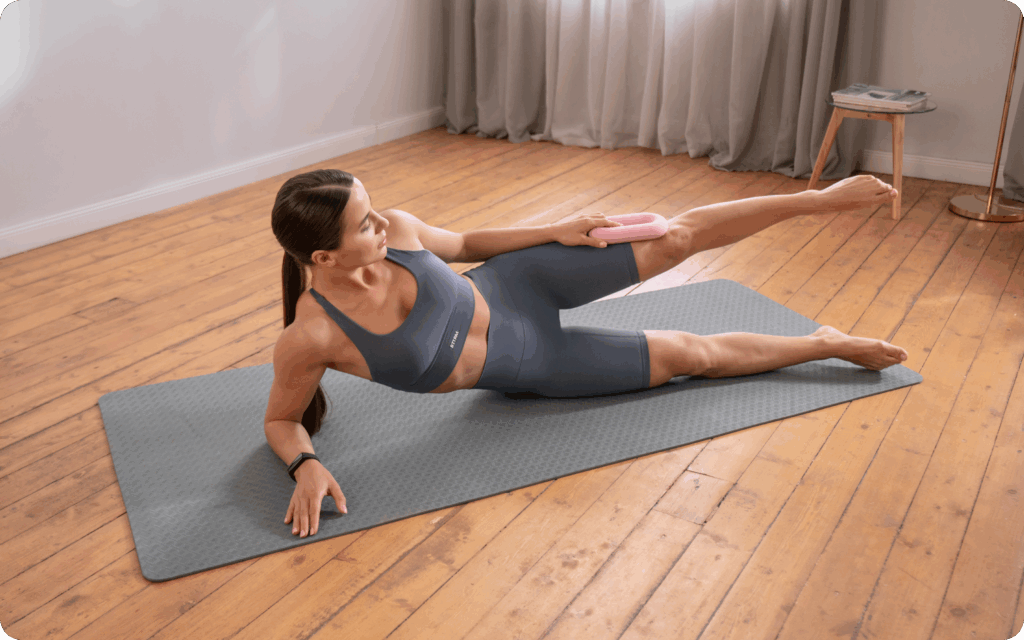
| Side-lying hip abduction | 3 | 20-25 | 45 secs | Keep your toes pointed slightly down |
| Frog pumps | 2 | 30+ | 30 secs | Burnout set - feet together, knees out |
Exercise Instructions and Execution
Barbell Hip Thrust
- Setup: Sit with your upper back against a bench, the barbell over your hips (use a pad). Your feet should be shoulder-width apart.
- Execution: Drive through your heels to extend your hips upward. Ensure your shins are vertical at the top of the movement.
- Contraction: Squeeze your glutes hard at the top. Your body should form a straight line from your shoulders to your knees. Avoid hyperextending your lower back.
- Return: Lower the bar in a controlled manner.
Romanian Deadlift (RDL)
- Setup: Stand with your feet hip-width apart, holding a barbell or dumbbells in front of your thighs.
- Execution: Initiate the movement by pushing your hips backward (hinging). Keep a slight bend in your knees, but don’t squat.
- Range of Motion: Lower the weight until you feel a deep stretch in your hamstrings/glutes, usually around mid-shin level. Keep the bar close to your legs.
- Return: Drive your hips forward to return to the starting position, squeezing your glutes.
Bulgarian Split Squat
- Setup: Stand a few feet in front of a bench. Place one foot behind you on the bench, laces down.
- Execution: Lower your back knee toward the floor. To bias your glutes, lean your torso forward slightly (approx. 30 degrees) while keeping your spine neutral.
- Drive: Push through the heel of your front foot to return to the start. Don’t fully lock out your front knee to maintain tension.
45-Degree Hyperextension
- Setup: Position yourself on a 45-degree hyperextension bench with your thighs resting on the pad and your ankles secured.
- Execution: Start with your torso in line with your legs. Allow your upper back to round slightly to minimize spinal erector involvement.
- Movement: Lower your torso by hinging at the hips until you feel a stretch in your hamstrings and glutes.
- Return: Contract your glutes to raise your torso back to the starting position, but avoid hyperextending at the top.
Cable Kickback
- Setup: Attach an ankle strap to the low cable. Stand facing the machine, holding on for support.
- Execution: Keep your working leg straight or slightly bent. Kick your leg back and up, squeezing your glutes at the top.
- Control: Lower your leg slowly, resisting the pull of the cable, and repeat all reps before switching legs.
Single-Leg Hip Thrust
- Setup: Start with your upper back against a stable surface (couch or bench) with one foot planted and the other leg lifted in the air.
- Execution: Drive through the planted heel to lift hips.
- Peak: At the top, pause and squeeze your glutes for two seconds. Keep your hips level.
- Return: Lower back down with control, maintaining stability.
Whether you’re a workout beast or just a beginner making your first foray into the world of fitness and dieting – BetterMe has a lot to offer to both newbies and experts! Install the app and experience the versatility first-hand!
Single-Leg Romanian Deadlift
- Setup: Stand on one leg, holding a weight (dumbbell, kettlebell, or household object) in the opposite hand of the working leg.
- Execution: Keeping a slight bend in your knee, hinge at the hips to lower the weight toward the floor while your free leg extends behind you.
- Alignment: Keep your back flat and your shoulders squared.
- Return: Drive through your heel to come back to standing, squeezing your glute.
Deficit Reverse Lunge
- Setup: Stand on a low platform (book or step) with your feet hip-width apart.
- Execution: Step back with one foot, lowering your back knee toward the floor until both knees are at roughly 90 degrees.
- Depth: Keep your torso upright or lean forward slightly to increase glute engagement.
- Drive: Push through the front heel to return to the starting position on the platform. Alternate legs.
Side-Lying Hip Abduction
- Setup: Lie on your side with your legs extended and stacked. Bend your lower arm for head support.
- Execution: Keeping your toes pointed slightly downward, raise the top leg upward as high as possible without rotating your pelvis.
- Peak: Squeeze your glute at the top, then lower the leg slowly.
- Repeat: Complete desired reps before switching sides.
Frog Pumps
- Setup: Lie on your back with your knees bent, the soles of your feet pressed together and your knees falling out to the sides.
- Execution: Position your feet close to your glutes. Drive your hips upward, squeezing your glutes hard at the top.
- Burnout: Perform high repetitions, focusing on the contraction and controlling the lowering phase.
- Setup: Sit with your upper back against a bench, the barbell over your hips (use a pad). Your feet should be shoulder-width apart.
- Execution: Drive through your heels to extend your hips upward. Ensure your shins are vertical at the top of the movement.
- Contraction: Squeeze your glutes hard at the top. Your body should form a straight line from your shoulders to your knees. Avoid hyperextending your lower back.
- Return: Lower the bar in a controlled manner.
Learn more about specific glute activation exercises here.
Read more: Beginner Glute-Focused Workout Plan: 6 Exercises That Actually Work
Is It Okay to Work Out Your Glutes Every Day?
Generally, no – and there are several important reasons why high-intensity daily glute training is not recommended, particularly if your goal is muscle growth or long-term performance.
- Recovery and Supercompensation: After intense resistance training, your muscle fibers sustain microscopic damage. Recovery – especially within 24-72 hours post-session – is when your body repairs and builds muscle. Training hard again before full recovery interrupts this cycle, which can hinder muscle gains and strength progression (9).
- Elevated Injury Risk: Daily high-intensity training increases the risk of overuse injuries, including tendonitis, muscle strains, and joint irritation (10, 11). As they are heavily involved in compound movements, the glutes are particularly prone to cumulative fatigue if they’re not given adequate rest.
- Diminished Training Quality: Muscles that are constantly exposed to maximum effort without rest will underperform. This translates to reduced power output, compromised technique, and lower force production in each session – ultimately leading to suboptimal results (12).
- Central Nervous System (CNS) Fatigue: High-intensity lifting stresses muscles and the CNS, especially in compound exercises such as hip thrusts and deadlifts. Without sufficient recovery, CNS fatigue accumulates, manifested by poor focus, sluggishness, and decreased motivation (13).
- Plateau and Burnout: Chronic excessive training without scheduled rest often leads to stagnation in progress and mental burnout (14, 15). Your body and mind both require downtime for adaptation.
For these reasons, many training programs that are informed by current research suggest working the glutes (and other major muscle groups) at a challenging effort level about 2-3 times per week, with at least ~48 hours of rest between sessions (6).
That being said, there is some nuance worth considering.
If your goal is simply “activation” – such as keeping the glutes engaged and counteracting inhibition from prolonged sitting – then performing low-intensity, bodyweight movements (such as glute bridges or clam shells) daily is generally safe and may even be beneficial for neuromuscular health (16).
However, for any program that aims for hypertrophy or maximal strength, scheduled recovery is essential for getting the best results from your glute workout routine as a female or male.
How Much Protein Is Needed to Grow the Glutes?
Nutrition is the fuel for muscle synthesis (17). Without adequate protein, even the best glute workout routine for mass will yield suboptimal results.
Some research-informed guidelines for supporting muscle growth commonly suggest a daily protein intake around 1.6-2.2 g per kg of body weight (approximately 0.7-1.0 g per lb), depending on goals and individual needs (18).
For a 140lb (63.5kg) individual, this equates to roughly 100g to 140g of protein per day.
It’s also beneficial to space this intake out. Consuming 20-40g of high-quality protein every 3-4 hours helps maintain a positive nitrogen balance, keeping your body in an anabolic (muscle-building) state throughout the day.
Can I Grow Glutes without Bulking?
Yes, you can, but it depends on your starting point. This process is often referred to as “body recomposition” – losing body fat while gaining muscle (19).
This is most achievable for (19):
- Beginners: Their bodies are highly responsive to training stimuli.
- Detrained individuals: Muscle memory allows for the rapid regain of lost tissue.
- Individuals with higher body fat percentages: Stored energy (fat) can be utilized to fuel muscle-building processes, even in a slight caloric deficit.
However, if you’re an advanced trainee who is already lean, growing significant glute muscle without a slight caloric surplus (bulking) is physiologically difficult. You don’t need a “dirty bulk” where you eat everything in sight. A conservative surplus of 200-300 calories above maintenance is sufficient to fuel hypertrophy while minimizing fat gain (20).
Click here to get a detailed breakdown of glute isolation exercises.
No, they are distinct exercises with different ranges of motion. A glute bridge is performed lying on the floor with a shorter range of motion, while a hip thrust is performed with the upper back on a bench, allowing for a greater range of motion and typically higher loading capacity. The glutes are a large, dense muscle group with a high tolerance for loading, often requiring significant mechanical tension and progressive overload over a long period (months to years) to show structural size changes compared to smaller muscles such as the biceps. Cycling provides some glute activation, particularly during the push-down phase of the pedal stroke or when climbing hills out of the saddle, but it’s primarily a cardiovascular and endurance activity that lacks the necessary mechanical tension for significant muscle hypertrophy (21). Walking is a low-intensity activity that activates the glutes for stability and propulsion (22), but it doesn’t provide enough resistance or mechanical stress to induce muscle growth (hypertrophy) in the same way resistance training does.Frequently Asked Questions
Is a glute bridge the same as a hip thrust?
Why do glutes grow so slowly?
Is cycling good for the glutes?
Does walking build the glutes?
The Bottom Line
Building strong, developed glutes is a pursuit that rewards consistency, intensity, and intelligent programming. It isn’t about doing random exercises until you’re tired – it’s about applying mechanical tension through vertical, horizontal, and abduction movement patterns.
Whether you’re training at a gym or executing a glute workout routine at home, the principles remain the same: progress your weights, eat sufficient protein, and respect your recovery time. By applying the practical strategies outlined above, you can reduce guesswork and create a more structured approach to training.
DISCLAIMER:
This article is intended for general informational purposes only and does not serve to address individual circumstances. It is not a substitute for professional advice or help and should not be relied on for making any kind of decision-making. Any action taken as a direct or indirect result of the information in this article is entirely at your own risk and is your sole responsibility.
BetterMe, its content staff, and its medical advisors accept no responsibility for inaccuracies, errors, misstatements, inconsistencies, or omissions and specifically disclaim any liability, loss or risk, personal, professional or otherwise, which may be incurred as a consequence, directly or indirectly, of the use and/or application of any content.
You should always seek the advice of your physician or other qualified health provider with any questions you may have regarding a medical condition or your specific situation. Never disregard professional medical advice or delay seeking it because of BetterMe content. If you suspect or think you may have a medical emergency, call your doctor.
SOURCES:
- The increase in muscle force after 4 weeks of strength training is mediated by adaptations in motor unit recruitment and rate coding (2019, pmc.ncbi.nlm.nih.gov)
- Adaptations to Endurance and Strength Training (2018, pmc.ncbi.nlm.nih.gov)
- Resistance Training Variables for Optimization of Muscle Hypertrophy: An Umbrella Review (2010, frontiersin.org)
- PROGRAM DESIGN CONSIDERATIONS FOR OPTIMAL STRENGTH AND HYPERTROPHY OF THE GLUTE MUSCLES (2023, nsca.com)
- Resistance Training Variables for Optimization of Muscle Hypertrophy: An Umbrella Review (2010, frontiersin.org)
- Progression Models in Resistance Training for Healthy Adults (2009, journals.lww.com)
- Skeletal muscle and resistance exercise training; the role of protein synthesis in recovery and remodeling (2016, journals.physiology.org)
- Utilize proper workout structure and exercise order (n.d., us.humankinetics.com)
- The Importance of Recovery in Resistance Training Microcycle Construction (2024, pmc.ncbi.nlm.nih.gov)
- Overuse injuries in sport: a comprehensive overview (2018, link.springer.com)
- Sports Injuries–Types, Symptoms, & Risk Factors (2024, niams.nih.gov)
- Muscle fatigue: general understanding and treatment (2017, nature.com)
- Central and Peripheral Fatigue in Physical Exercise Explained: A Narrative Review (2022, mdpi.com)
- The Plateau in Muscle Growth with Resistance Training: An Exploration of Possible Mechanisms (2023, link.springer.com)
- Overtraining Syndrome: A Practical Guide (2012, pmc.ncbi.nlm.nih.gov)
- The Effect of Breaking Up Sedentary Time with Calisthenics on Neuromuscular Function: A Preliminary Study (2022, mdpi.com)
- Nutrition and Regulation of Muscle Protein Synthesis (2023, mdpi.com)
- Recent Perspectives Regarding the Role of Dietary Protein for the Promotion of Muscle Hypertrophy with Resistance Exercise Training (2018, mdpi.com)
- Body Recomposition: Can Trained Individuals Build Muscle and Lose Fat at the Same Time? (2020, journals.lww.com)
- Nutrition Recommendations for Bodybuilders in the Off-Season: A Narrative Review (2019, mdpi.com)
- Neuromuscular activation of the knee and hip extensor muscles during high-intensity interval and moderate-intensity constant cycling (2019, pubmed.ncbi.nlm.nih.gov)
- Coactivation of the Pelvic Floor and Gluteus Medius Muscles While Walking and Running in Female Runners (2024, mdpi.com)
 Reviewed by
 Reviewed by