Building strength doesn’t require a complex six-day training split or hours of isolation exercises. In fact, the direct path to a powerful physique is quite simple. You need a full-body workout routine that recruits maximum muscle fibre and triggers a superior hormonal response to see growth.
When you train your entire body in one workout, you end up working every major muscle more often each week. This keeps muscle growth active and steady. It also saves time and ensures you have balanced strength throughout your body.
And no, these routines aren’t always complicated. You can find ones that are fruitful and simple at the same time. This article covers some core information you should know about basic full-body workout routines and how you can make them more effective as you progress further.
What Is a Powerful Full-Body Workout for Strength?
A powerful full-body workout trains all the main muscle groups (chest, back, shoulders, legs, and core) in a single session (1). Rather than working on just one or two body parts at a time, it uses big, multi-muscle exercises more often to help your body build strength and muscle more efficiently.
Science Behind Recovery and Frequency
The primary driver of this method’s effectiveness is muscle protein synthesis (MPS). Research has indicated that MPS remains elevated for approximately 24 to 48 hours after a resistance training session in trained individuals (2).
Training your whole body multiple times a week helps your muscles grow and get stronger more evenly. This can limit muscle imbalances, which will ultimately make your training more efficient and safer. When you train all major muscle groups three times per week, muscle protein synthesis stays elevated more consistently than with a once-a-week “bro split”.
A meta-analysis published in Sports Medicine found that when weekly training volume is equated, higher frequencies (such as full-body routines) produce similar or even superior strength gains compared to lower frequencies (3).
Plus, working several large muscle groups in one session creates a stronger overall response in the body, which increases key hormones such as growth hormone and testosterone (4). To be more precise, the perks are:
- Frequent stimulation that keeps muscles active throughout the week
- Balanced weekly volume that supports steady strength gains
- Stronger systemic response from training large muscle groups together
Strength Gains through Compound Movements
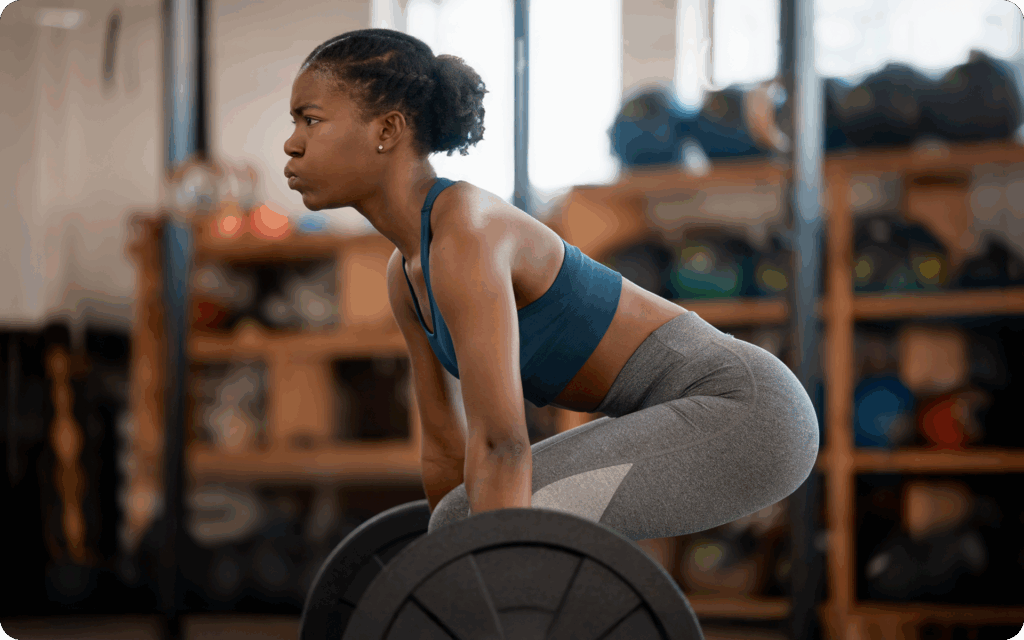
Powerful full-body routines are built on “The Big Five”, which includes squats, deadlifts, bench press, rows, and overhead presses. These are multi-joint exercises that allow for tremendous mechanical tension and progressive overload. Here’s how:
- Neural Adaptation: Strength is as much about the nervous system as it is about muscle size. Frequent practice of complex lifts improves “intermuscular coordination”. This is the ability of different muscles to work together to move a heavy load (5).
- Efficiency: As these movements use 80% or more of your total muscle mass at once, you can achieve a full-body workout for strength at home or in the gym in much less time. This makes them far more efficient than programs that focus mainly on isolated exercises.
BetterMe: Health Coaching app helps you achieve your body goals with ease and efficiency by helping to choose proper meal plans and effective workouts. Start using our app and you will see good results in a short time.
Evidence-Led Insights
A study in the Journal of Strength and Conditioning Research compared a three-day full-body workout plan with a three-day split routine in men with previous resistance training experience. After eight weeks, the full-body group saw much better results. It was noted that the forearm muscle size increased by 8%, compared to just 3.7% in the split group (6).
A 2018 review published in the Journal of Science and Medicine in Sport found that training a muscle three or more times per week led to approximately a 20% greater increase in bench press strength than lower-frequency training (7). The researchers suggested that this happens because higher frequency allows people to perform better-quality sets while they’re still fresh.
Read more: Advanced Full-Body Workouts for Maximum Growth and Strength
Are Full-Body Workouts Good for Strength?
A powerful full-body training approach focuses on how your brain and muscles work together to move heavy weights as one team. It doesn’t isolate single muscles. Instead, it treats the body as a connected system and emphasizes multi-joint movements that build real, functional strength.
The main benefit of a full-body approach is that it trains your nervous system to activate more muscle fibers simultaneously. When you work the whole body together, your body learns to keep the core and spine stable while your arms and legs handle heavy lifts (8).
These heavy movements push the brain to send strong, fast signals to your muscles. They can help you lift more weight without always needing to add muscle size. As all major muscle groups are working together, your body also learns to brace better and produce force more efficiently. As a result, it delivers better practical performance than split routines, which tire out just one area at a time. If you’re curious about full-body strength training routine, check out our earlier article.

Focus on Training Frequency
One of the biggest advantages of this training style is that it allows you to practice the big lifts, such as squats and overhead presses, more often. This can help refine technique and build long-term strength.
Spreading your total weekly volume across three or four sessions can make the workout productive and controlled, while repeatedly triggering muscle repair and growth throughout the week. This approach supports:
- Faster technical mastery of major lifts
- Better training quality through consistent workload distribution
- More steady muscle protein synthesis across the week
Spreading your weekly workload across multiple sessions also keeps workouts high-quality while supporting steady muscle recovery and growth throughout the week.
A systematic review and meta-analysis that was published in the Journal of Strength and Conditioning Research analyzed 14 different studies to determine the ultimate efficacy of training splits versus full-body programs (9).
The researchers found that when training volume and weight were kept constant, both full-body and split routines led to similar strength gains. However, for male participants who can only train two to three days per week, full-body training made it easier to get enough high-quality work done to keep making progress (10).
Moreover, a 2024 pilot study showed that a 12-week full-body strength program improved balance and agility by more than 15% in adults (11). These are essential performance measures that are often missed in a traditional bodybuilding split routine.
Can You Build Muscle with Full-Body Workouts?
Yes, full-body workouts can help you build muscles if you play the right cards. As you’ll be targeting multiple muscle groups in each session, you may notice your muscles gradually improving in strength and size.
It should be noted that building muscle, also called hypertrophy, depends on three main things: mechanical tension, metabolic stress, and muscle damage. A full-body approach shines at creating mechanical tension as you’re fresh for a significant lift each session. This can help you move heavier weights than you would in a split where the muscles are already tired from multiple exercises. For more details about full-body workout everyday, take a look at our prior publication.
Optimizing the Anabolic Window
Full-body training works well as it hits your muscles more often. After a workout, a muscle stays in a growth-ready state for about 36 to 48 hours (13).
With split routines, a muscle might be trained only once a week, then sit idle for several days. Full-body workouts re-stimulate muscle growth every couple of days and spread the workload out. Therefore, you do fewer sets at a time but with better focus and effort.
Effective Hypertrophy Strategies
To ensure your full-body workout routine translates into muscle size rather than just raw strength, you need to manage the following variables:
- Repetition Ranges: While strength is built in the 1-5 rep range, hypertrophy flourishes in the 6-12 rep range. A hybrid approach (alternating heavy days with moderate-rep days) is often most effective (14).
- Progressive Overload: You must consistently increase the weight or reps, or decrease the rest time. Without a gradual increase in stress, the body has no reason to build new tissue.
Ultimately, the success of any workout routine will depend on your commitment to the long game. When you consistently apply progressive overload and stay within the hypertrophy-specific rep ranges, you create a powerful physiological environment that forces your body to adapt.
For further clarification, see the table below. It covers some dos and don’ts to ensure your workouts bring you the best results:
| Feature | Do this | Avoid this |
|---|---|---|
| Frequency | 3-4 days per week | 6-7 days per week |
| Effort | Stop 1-2 reps before failure | Training to absolute failure every set |
| Exercise choice | 80% compound/20% isolation | 50% compound/50% isolation |
| Rest | At least 48 hours between sessions | Training the same muscles 24 hours apart |
What Is the Best Full-Body Exercise to Build Strength?
Your full-body strength training routine should include both low- and high-intensity exercises to maintain balance. This ensures that multiple muscle groups move through a wide range of motion. This can help you lift the heaviest loads possible.
Here are the gold-standard exercises for total-body strength and the steps to perform them correctly.
Squat
- Stand with your feet shoulder-width apart.
- Keep your chest up and your core tight.
- Push your hips back and bend your knees to lower down.
- Keep your knees in line with your toes.
- Press through your heels to stand back up.

Deadlift
- Stand with the weight close to your shins and your feet hip-width apart.
- Hinge at your hips while keeping your back flat.
- Grip the weight firmly.
- Push through your heels and stand tall.
- Lower the weight back down with control.
Push-Up or Bench Press
- Place your hands slightly wider than shoulder-width apart.
- Keep your body in a straight line from your head to your heels.
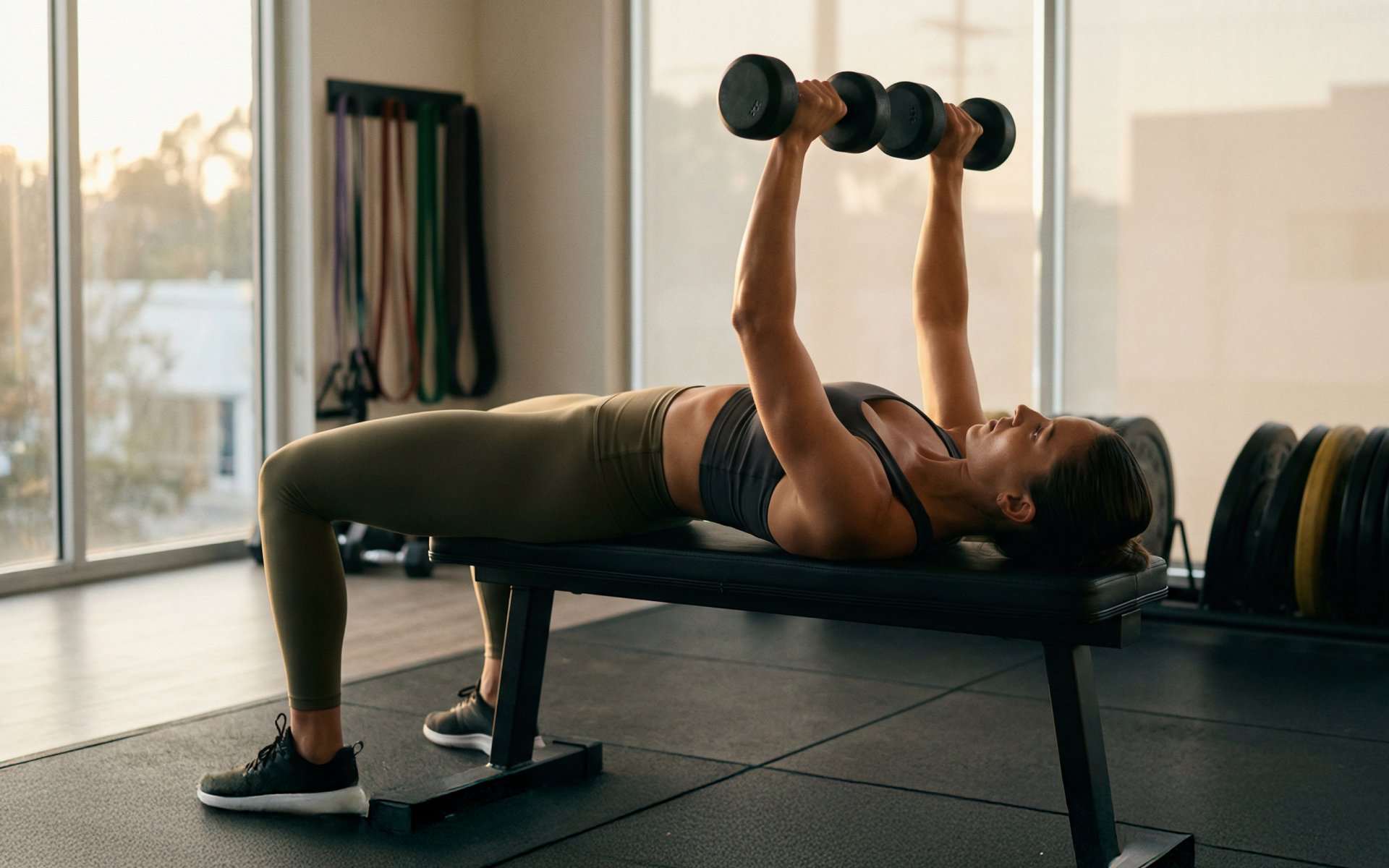
- Lower your chest toward the floor or bar.
- Pause briefly at the bottom.
- Press back up until your arms are straight.
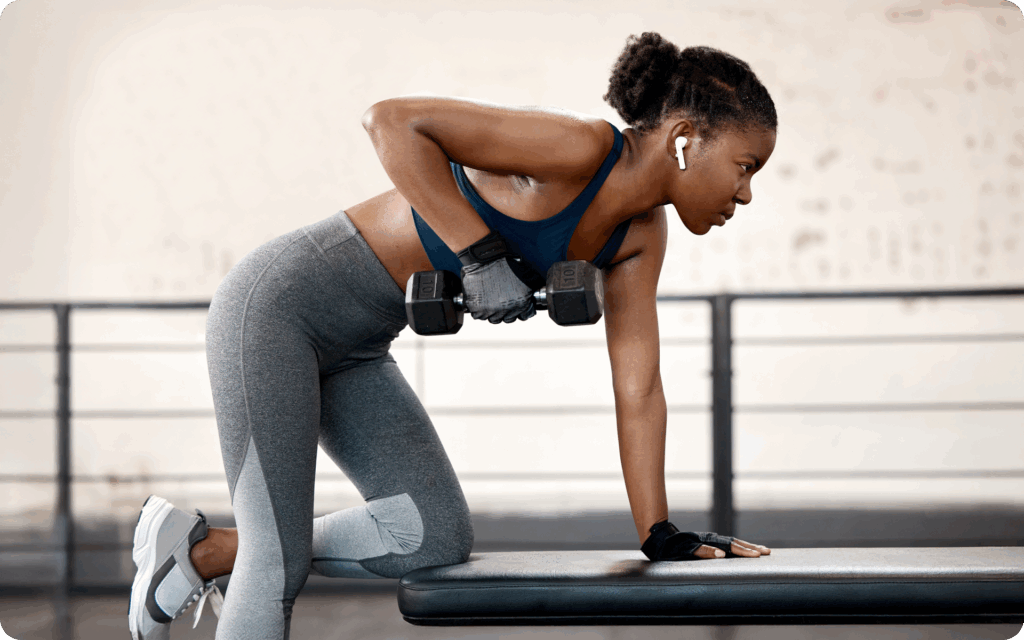
Pull-Up or Row
- Grip the bar or handles with your arms fully extended.
- Engage your core and pull by driving your elbows back.
- Bring the bar toward your chest.
- Pause briefly at the top.
- Lower yourself or the weight slowly.
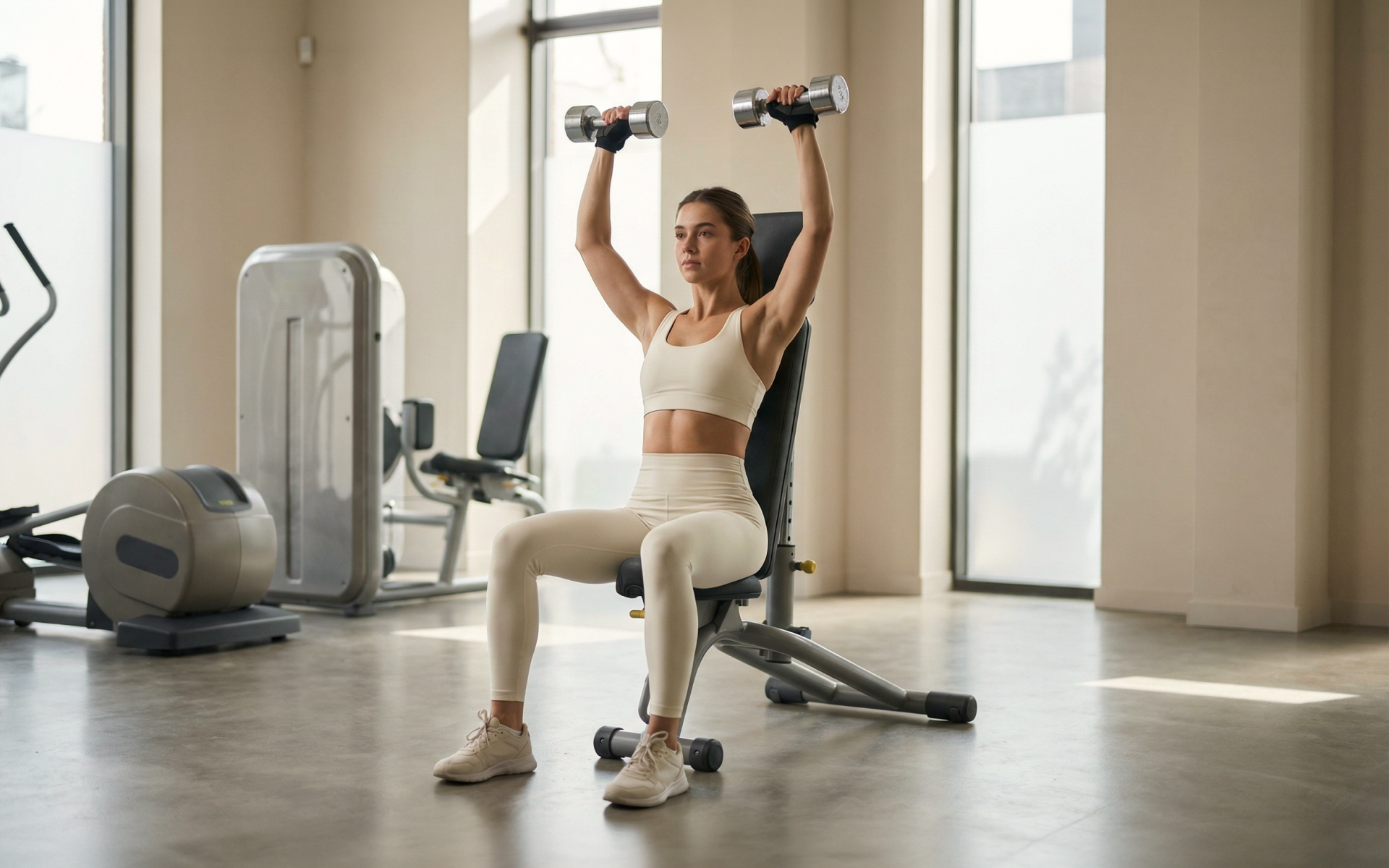
Overhead Press
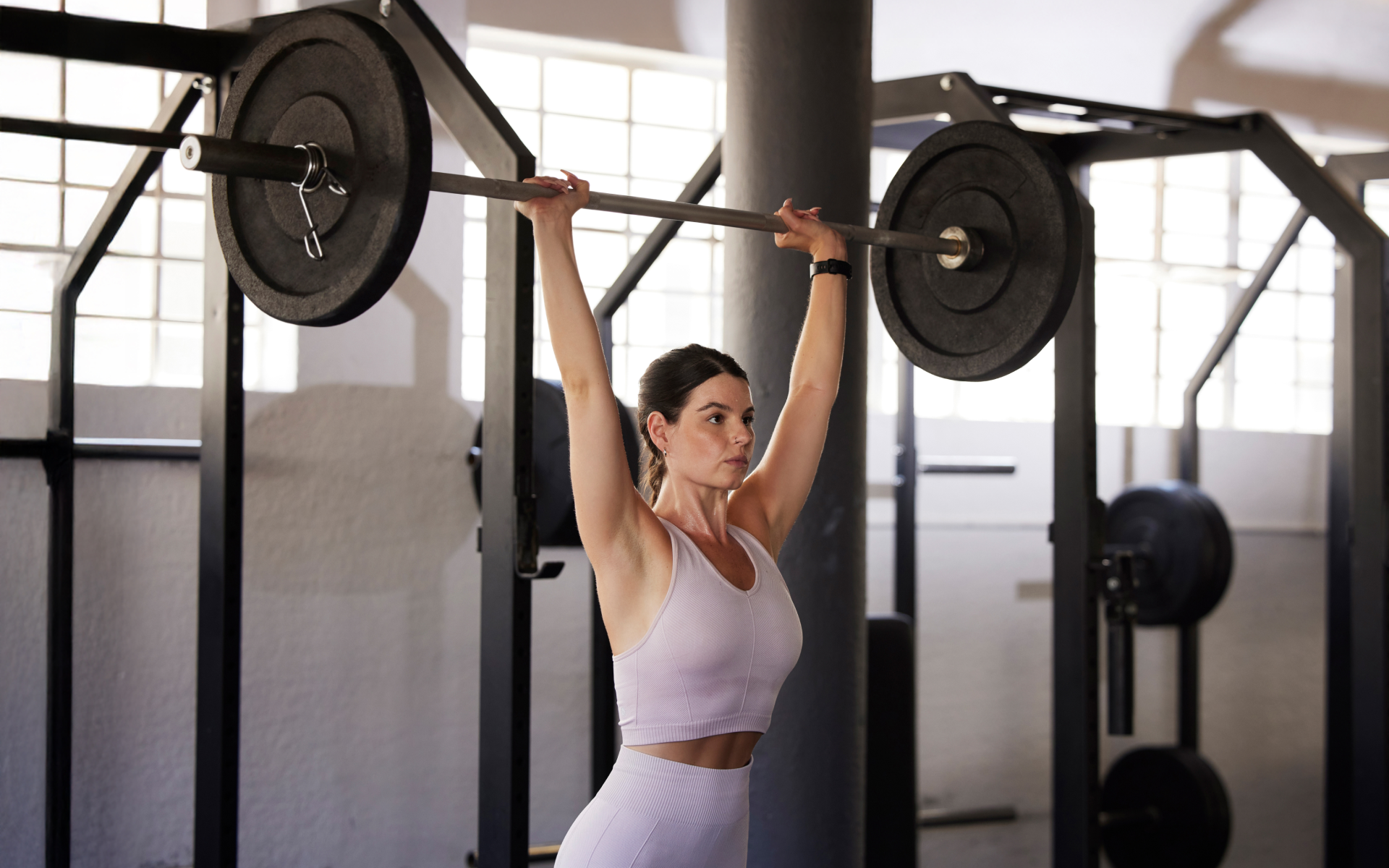
- Hold the weight at shoulder height.
- Brace your core and keep your chest tall.
- Press the weight straight overhead.
- Fully extend your arms at the top.
- Lower the weight back to shoulder level under control.
The below table provides a quick overview of the pattern and target of each of these exercises:
| Pattern | Primary exercise | Key muscle groups |
|---|---|---|
| Hinge | Deadlift | Glutes, hamstrings, lower back |
| Squat | Back Squat | Quads, glutes, core |
| Vertical Push | Overhead press | Shoulders, triceps |
| Horizontal Pull | Bent-over row | Lats, rhomboids, traps |
Each of these movements works well on its own, but they’re most effective when you use them together. When you train with these core lifts, you cover all the major muscles while also centering your training around the various functional movement patterns that are needed for real, all-around strength.
According to the principle of Specific Adaptation to Imposed Demands (SAID), your body will get better at exactly what you ask it to do by focusing on these compound big lifts (15). As your technique improves, every workout becomes more efficient, making sure that the time you spend training leads to stronger, more functional, and more resilient results.
What Is a Powerful Full-Body Workout for Strength?
Below is a simple, structured full-body workout focused on strength. Perform this routine 2-3 times per week, with at least one rest day between sessions.
Workout A
Barbell Squat
4 sets × 4-6 reps
Rest 2-3 minutes
Bench Press
4 sets × 4-6 reps
Rest 2-3 minutes
Barbell Row
3 sets × 5-7 reps
Rest 2 minutes
Overhead Press
3 sets × 4-6 reps
Rest 2 minutes
Plank
3 sets × 30-45 seconds
Rest 60 seconds
Whether you’re a workout beast or just a beginner making your first foray into the world of fitness and dieting – BetterMe has a lot to offer to both newbies and experts! Install the app and experience the versatility first-hand!
Workout B
Deadlift
3 sets × 3-5 reps
Rest 3 minutes
Pull-Ups or Lat Pulldown
4 sets × 5-8 reps
Rest 2 minutes
Incline Dumbbell Press
3 sets × 5-7 reps
Rest 2 minutes
Walking Lunges
3 sets × 8-10 reps per leg
Rest 90 seconds
Hanging Leg Raises or Knee Raises
3 sets × 8-12 reps
Rest 60 seconds
Alternate between Workout A and Workout B each session.
And while you perform these workouts on alternative days, there are some tips you should follow to ensure you don’t end up overdoing or injuring yourself:
- Focus on proper form with every lift to prevent injury.
- Start with weights you can control, then gradually increase the load.
- Rest for 2 to 3 minutes between heavy compound sets to recover fully.
- Keep a training log to track your progress over time.
- Warm up before and cool down after each session.
- Stick to 2 or 3 full-body sessions per week for the best results.
- Prioritize consistency over lifting the heaviest weights every time.
A full-body strength workout is all about hitting all major muscle groups with compound movements spread across the week. By following a structured routine, focusing on proper form, and gradually increasing the intensity, you can train efficiently and build strength in a balanced way.
Dive deeper into the basic full-body workout with our dedicated article.

How Long Should a Full-Body Workout Last?
The duration of a basic full-body workout routine depends primarily on your training experience and the specific goals of the session. Generally, these workouts take longer than isolation-based sessions as they involve complex movements that require longer warm-ups and more rest between sets.
The factors that influence workout lengths are:
- Rest Intervals: Strength-focused sessions require 3-5 minutes of rest between heavy sets to allow the central nervous system to recover. At the same time, hypertrophy (muscle-building) sessions usually last only 60 to 90 seconds.
- Warm-up Requirements: You can’t jump straight into a heavy deadlift. Preparing the joints for compound movements typically adds 10 to 15 minutes to the total time. However, it’s a necessary step for any workout and particularly a heavy full-body workout plan. A dedicated warm-up can help prevent injuries and prepare your body for the workout ahead.
- Volume: The number of exercises per session (usually 5 to 8 for a total body approach) dictates the clock.
Now, check the table below to see what a general recommended duration is by goal:
| Training goal | Ideal duration |
|---|---|
| Maximum strength | 75-90 minutes |
| Muscle hypertrophy | 45-75 minutes |
| General fitness | 30-45 minutes |
| Home workouts | 20-40 minutes |
If your workouts are longer than 90 minutes, fatigue may reduce their effectiveness. To keep sessions shorter but still productive, try supersets. This is when you pair an upper-body push (such as a bench press) with a pull (such as a row). In this way, one muscle group rests while the other works, which cuts rest time without lowering performance.
Absolutely. Full-body exercises usually involve compound movements. They can help you lift heavier loads than isolation moves. This high level of mechanical tension, combined with hitting each muscle group 2 to 3 times per week, creates the optimal frequency for muscular growth. Yes. If it focuses on compound movements and uses proper intensity, a 30-minute session can effectively build strength. Yes, they can improve muscular endurance and strengthen your legs. However, for significant strength gains, adding resistance or varied exercises is recommended. It depends on your schedule. For most people who train 3 days a week, full-body workouts are superior as they ensure no muscle group is neglected for more than 48 hours.Frequently Asked Questions
Do full-body exercises build strength?
Is a 30-minute full-body workout enough?
Will 100 bodyweight squats a day do anything?
Is it better to do full-body workouts or target specific areas?
The Bottom Line
Whether you’re grinding it out in a professional powerlifting gym or starting a full-body workout for strength, no-equipment style in your own living room, the principles remain exactly the same: hit the big movements, remain consistent, and give your body the fuel it needs to recover.
It’s easy to get lost in complicated bro-splits, but focusing on your entire physique a few times a week is often the fastest way to see real change in the mirror and on the scale. Remember to listen to your body, keep pushing for that extra rep, and don’t be afraid to start small. You’ve got the science and the plan now – the only thing left is to actually get moving and enjoy the process of becoming stronger!
DISCLAIMER:
This article is intended for general informational purposes only and does not serve to address individual circumstances. It is not a substitute for professional advice or help and should not be relied on for making any kind of decision-making. Any action taken as a direct or indirect result of the information in this article is entirely at your own risk and is your sole responsibility.
BetterMe, its content staff, and its medical advisors accept no responsibility for inaccuracies, errors, misstatements, inconsistencies, or omissions and specifically disclaim any liability, loss or risk, personal, professional or otherwise, which may be incurred as a consequence, directly or indirectly, of the use and/or application of any content.
You should always seek the advice of your physician or other qualified health provider with any questions you may have regarding a medical condition or your specific situation. Never disregard professional medical advice or delay seeking it because of BetterMe content. If you suspect or think you may have a medical emergency, call your doctor.
SOURCES:
- Guide to starting a strength training program (2023, health.harvard.edu)
- Making Sense of Muscle Protein Synthesis: A Focus on Muscle Growth During Resistance Training (2021, journals.humankinetics.com)
- Weekly Training Frequency Effects on Strength Gain: A Meta-Analysis (2018, springermedizin.de)
- Links Between Testosterone, Oestrogen, and the Growth Hormone/Insulin-Like Growth Factor Axis and Resistance Exercise Muscle Adaptations (2020, frontiersin.org)
- The Effects of Different Relative Loads in Weight Training on Acceleration and Acceleration from Flying Starts (2022, mdpi.com)
- Split or full-body workout routine: which is best to increase muscle strength and hypertrophy? (2021, pmc.ncbi.nlm.nih.gov)
- Effect of Resistance Training Frequency on Gains in Muscular Strength: A Systematic Review and Meta-Analysis (2018, pubmed.ncbi.nlm.nih.gov)
- Core Stability (n.d., physio-pedia.com)
- Neuromuscular adaptations to resistance training in elite versus recreational athletes (2025, pmc.ncbi.nlm.nih.gov)
- Debunking the Split vs. Full-Body Workout Debate: What The Science Says (n.d., smartgolffitness.com)
- Effect of a 12-Week Strength Training Program on Muscle Strength Measures of Institutionalized Older Adults—A Pilot Study (2024, mdpi.com)
- Is There a Postworkout Anabolic Window of Opportunity for Nutrient Consumption? Clearing up Controversies (2018, jospt.org)
- Comparison Between Linear and Daily Undulating Periodized Resistance Training to Increase Strength (2009, journals.lww.com)
- COMPARISON OF THE IMMEDIATE EFFECT OF DIFFERENT TYPES OF TRUNK EXERCISE ON THE STAR EXCURSION BALANCE TEST IN MALE ADOLESCENT SOCCER PLAYERS (2014, pmc.ncbi.nlm.nih.gov)
 Reviewed by