
Financial stress doesn’t stay at home when employees clock in. It can show up as worry, poor sleep, and difficulty making decisions — and it costs organizations in ways that rarely appear on a balance sheet.
Between October 2025 and January 2026, BetterMe surveyed 2,050 employed U.S. adults to understand what financial wellness actually looks like inside today’s workforce — who struggles, what makes it worse, and what employers can realistically do about it. The findings are a clear signal that financial well-being has become a workplace issue, not just a personal one.
The Scale of the Problem
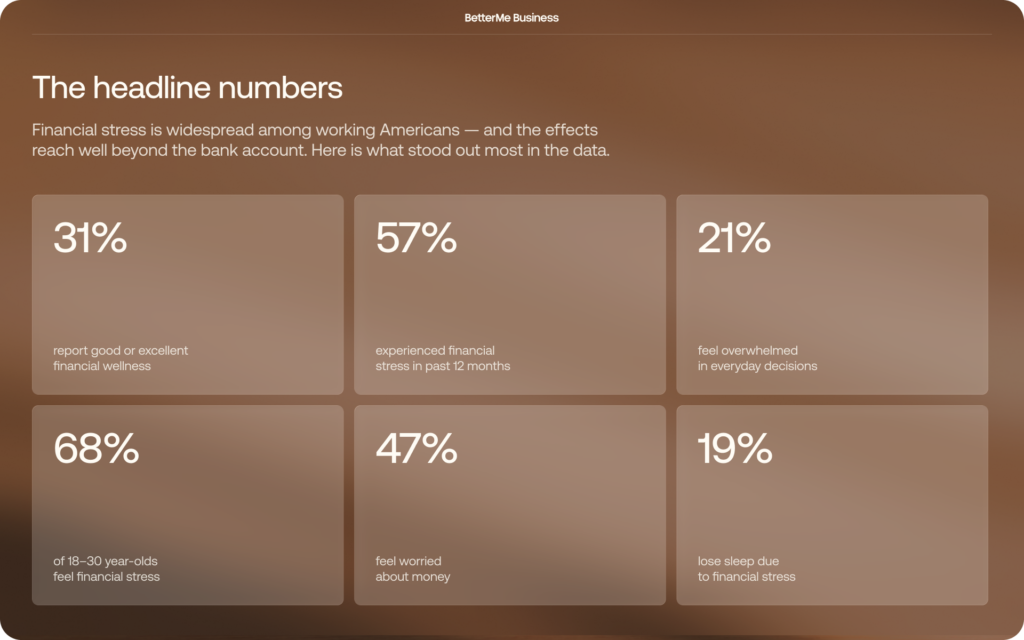
Only 31% of employees rate their financial wellness as good or excellent. Meanwhile, 57% experienced financial stress in the past 12 months — and among workers aged 18–30, that figure rises to 68%.
Financial stress doesn’t just affect people’s bank accounts. In the BetterMe survey, 47% of respondents reported worry about money, 21% said they often feel overwhelmed in everyday decisions, and 19% have trouble falling or staying asleep because of it. These are not abstract concerns — they are the same symptoms that contribute to presenteeism, reduced focus, and burnout at work.
The causes are real and varied: family situation (cited by 24%), rising prices (21%), higher bills and expenses (16%), life situation stress (14%), and job loss or layoff (11%).
Work-Life Balance and Benefits Are Closely Connected to Financial Stress
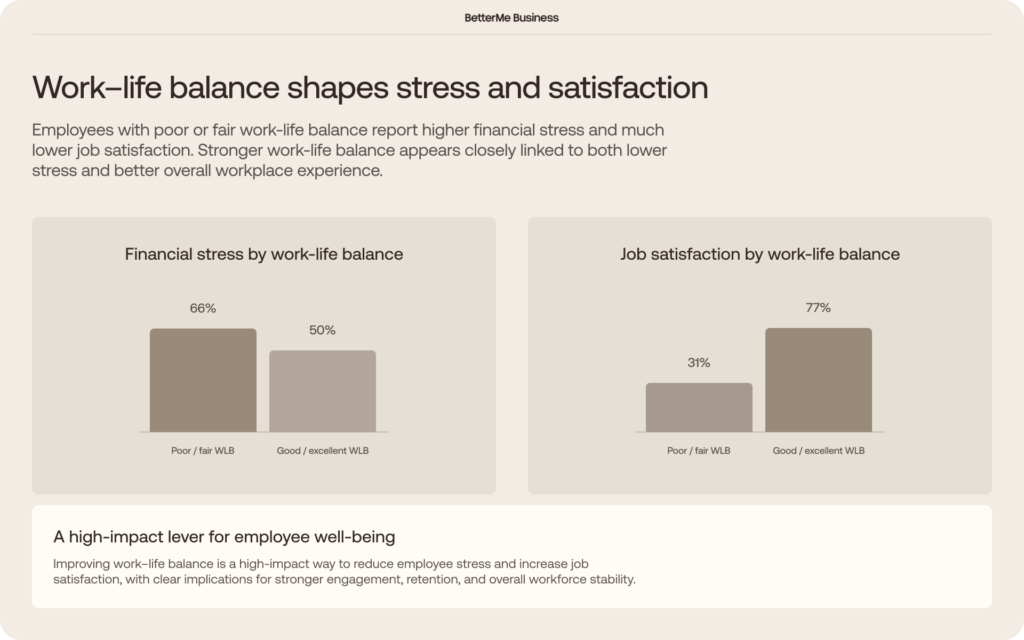
The data reveals a clear pattern: employees who rate their work-life balance as poor or fair are significantly more likely to experience financial stress than those who rate it as good or excellent — 66% versus 50%. Job satisfaction follows the same divide: 77% satisfaction among those with good or excellent work-life balance, compared to just 31% among those who don’t.
PTO satisfaction tells a similar story. Among employees dissatisfied with their paid time off, 68% experienced financial stress in the past year — 19 percentage points higher than those who are satisfied with their PTO.
Benefits satisfaction tracks just as closely. Among employees dissatisfied with their benefits package, 71% experienced financial stress, compared to 49% of those who are satisfied. And only 53% of employees say they are satisfied with their current benefits package overall.
If your team is struggling with financial stress, your benefits offering may be part of the answer. → Book a call to see what BetterMe Business can add to your benefits stack.
What Employees Actually Want from Their Employers
When asked what would most help them reduce financial stress, employees were clear. The top requests were:
- Flexible time and leave benefits (35%)
- Broader health and insurance coverage (28%)
- Professional financial advice (25%)
- Emergency fund support (25%)
When it comes to employer-provided guidance, the most in-demand topics are retirement planning (36%), budgeting and personal finances (30%), and support for managing financial worry in general (30%). Employees aren’t just asking for more money — they’re asking for structure, flexibility, and support that helps them feel less overwhelmed.
The Gender and Age Divide in Financial Well-Being
The data highlights meaningful differences across demographic groups. Men (42%) are more likely than women (29%) to report good or excellent financial wellness. Younger employees carry the heaviest load: 68% of 18–30 year-olds report financial stress, compared to 60% of those aged 31–44, 50% of those aged 45–64, and 33% of those 65 and over.
Work-life balance and job satisfaction both improve with age — job satisfaction reaches 73% among employees aged 65 and over. This suggests that the years of greatest financial pressure are also the years when employees may be least supported.
What Employees Want as Team Wellness Activities
Employees value group-based wellness programming — particularly when it builds habits alongside colleagues. The most important team wellness activities cited in the survey were:
- Workout challenges (56%)
- Nutrition and healthy eating education (43%)
- Healthy eating and hydration challenges (37%)
- Mindfulness and yoga sessions (37%)
- Team retreats and outdoor activities (29%)
Structured group programs don’t just address physical habits — they can help build the kind of routine and community that supports well-being more broadly, including the sense of stability and connection that stress tends to erode.
Why Employees Leave — and What’s Missing
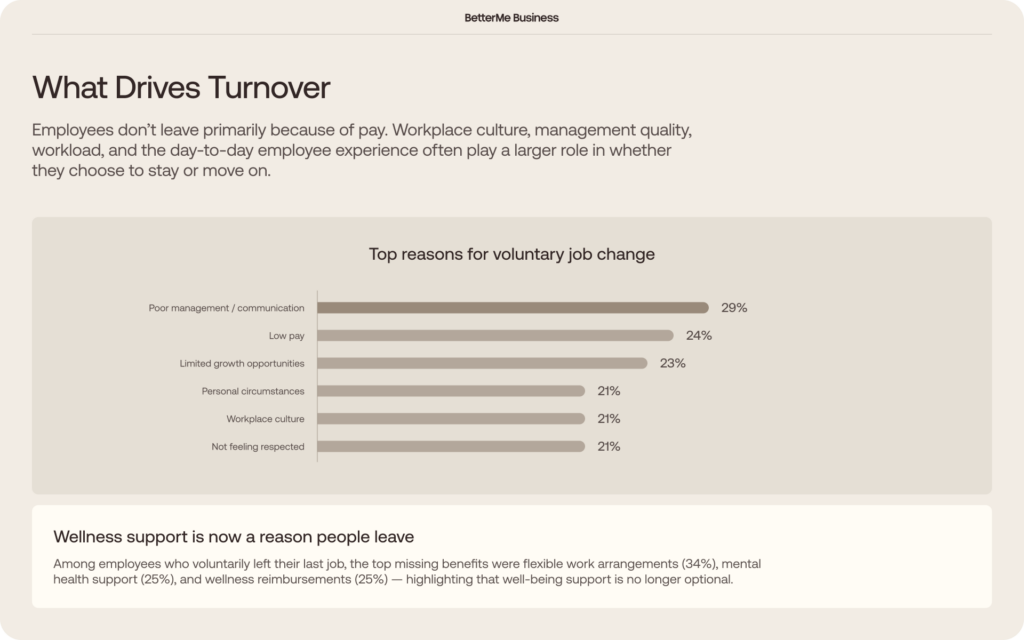
Only 9% of respondents voluntarily changed jobs in the past 12 months, but among those who did, the missing benefits they cited point directly to well-being gaps: flexible work arrangements (34%), mental health support (25%), and wellness reimbursements (25%).
The top drivers of voluntary turnover more broadly were poor management or communication (29%), low pay (24%), limited growth opportunities (23%), and workplace culture or not feeling respected (21% each). Benefits gaps and well-being support don’t just affect retention directly — they feed into the daily experience that shapes whether employees stay.
Want to understand where your benefits stack stands? → Talk to our team and find out what your employees might be missing.
What Employers Can Do: A Practical Starting Point
The data points to several levers available to employers who want to reduce financial stress across their workforce:
- Expand mental health and wellness benefits. Mental health support is currently offered by only 48% of employers — yet it is one of the top missing benefits cited by employees who left their last job. Closing that gap is one of the more direct actions organizations can take.
- Take PTO and flexibility seriously. Employees most often leave PTO unused because they want to save it for future needs (23%), or because of workload pressure (15%). Offering more flexibility in how and when time off is taken — and reducing the implicit pressure to stay online — may help employees actually use the support available to them.
- Invest in team wellness programming. Group challenges and shared wellness activities are valued by employees and can strengthen the kind of community that buffers against stress. Workout challenges, nutrition programs, and mindfulness sessions all ranked highly as wanted activities.
- Provide financial guidance alongside wellness support. Retirement planning and budgeting topped employees’ list of preferred guidance topics. Practical financial education doesn’t require overhauling your benefits stack — it can start with structured programming that meets employees where they are.
Supporting Your Team’s Well-Being with BetterMe Business
Financial stress and mental well-being are deeply connected. Worry about money shows up as difficulty sleeping, overwhelm, and difficulty focusing — all of which affect how employees show up at work every day.
BetterMe Business offers team wellness programs designed to help employees build practical stress management skills alongside their colleagues. Our corporate challenges bring teams together around shared goals — workout challenges, mindfulness sessions, nutrition programs — and can be part of a broader benefits offering that addresses the day-to-day pressure employees are carrying.
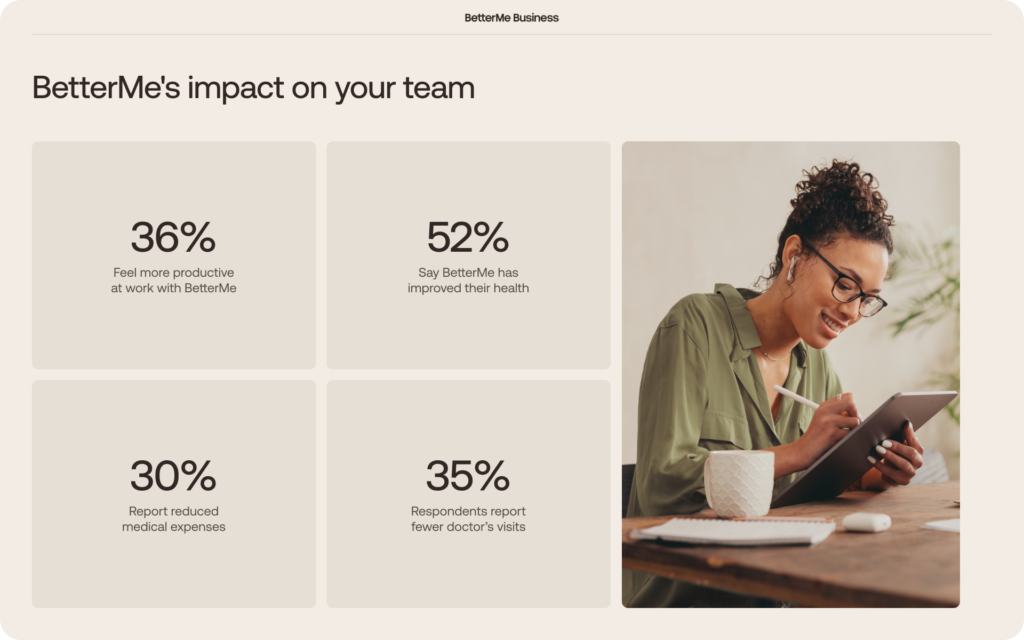
Employees who use BetterMe report meaningful outcomes: 36% say they feel more productive at work, 52% report a positive impact on their well-being, 35% report fewer doctor’s visits, and 30% report lower medical expenses.
BetterMe Business won’t tell your employees how to manage their money — but it can help them manage the stress, fatigue, and overwhelm that money worries often bring.
Ready to explore what team wellness can look like for your organization? → Book a call with our team.
Methodology
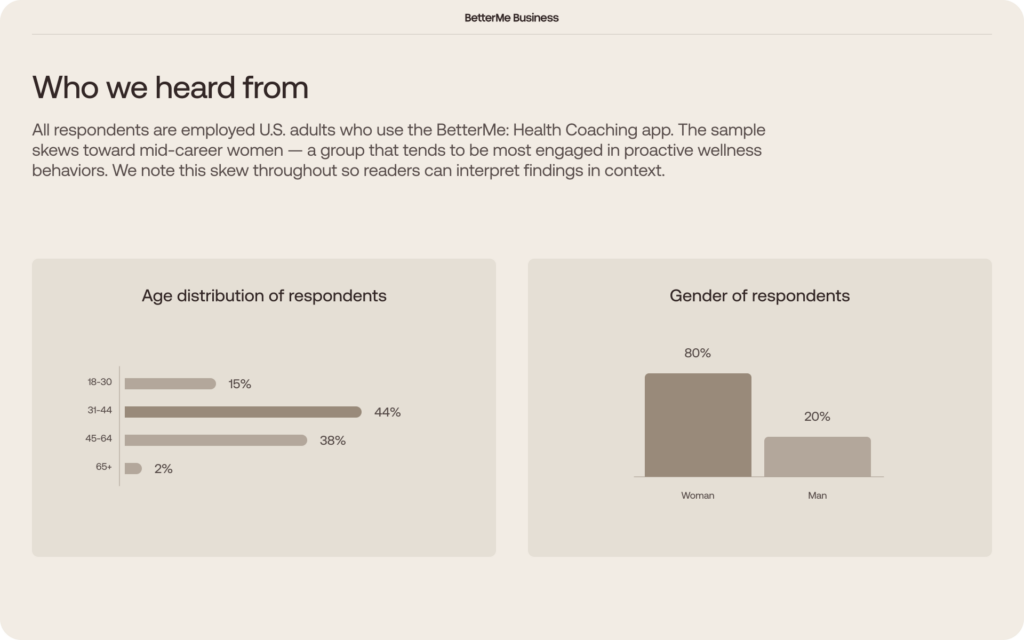
BetterMe surveyed 2,050 employed U.S. adults using the BetterMe Well-Being Coach app between October 2025 and January 2026. The survey was self-administered online (web and mobile). The sample skews toward mid-career women — a group that tends to be more engaged in proactive wellness behaviors. Findings are directional for the broader U.S. workforce and should be read in that context. Subgroup findings for groups under 50 respondents (notably the 65+ group, ~81 respondents) are indicative trends, not statistically confirmed findings. A 20% confidence level applies to emphasized subgroup figures.
DISCLAIMER:
This article is intended for general informational purposes only and does not serve to address individual circumstances. It is not a substitute for professional advice or help and should not be relied on for making any kind of decision-making. Any action taken as a direct or indirect result of the information in this article is entirely at your own risk and is your sole responsibility.
BetterMe, its content staff, and its medical advisors accept no responsibility for inaccuracies, errors, misstatements, inconsistencies, or omissions and specifically disclaim any liability, loss or risk, personal, professional or otherwise, which may be incurred as a consequence, directly or indirectly, of the use and/or application of any content.
You should always seek the advice of your physician or other qualified health provider with any questions you may have regarding a medical condition or your specific situation. Never disregard professional medical advice or delay seeking it because of BetterMe content. If you suspect or think you may have a medical emergency, call your doctor.