Starting a fitness journey often feels overwhelming, with so many goals in mind and confusing advice cluttering the path. However, building strength, mobility, and a leaner physique doesn’t always require a gym membership or heavy weights. A calisthenics routine requires leverage, gravity, and consistency.
In this guide, we’ll break down exactly how to construct a daily calisthenics routine for beginners. We’ll rely on principles of biomechanics and exercise physiology rather than “bro-science” to ensure you understand not just what to do, but why you’re doing it. Whether your goal is body recomposition or simply moving without pain, this guide provides the roadmap.
What Is a Daily Calisthenics Routine for Beginners?
A daily calisthenics routine for beginners is a structured exercise program that uses body weight as the primary source of resistance to build strength, endurance, and mobility (1).
Unlike weightlifting, where you add external load (like plates on a barbell), calisthenics relies on “progressive overload” through leverage changes. This means you manipulate your body position to make an exercise harder or easier (2).
For a beginner, a daily routine doesn’t necessarily mean high-intensity training seven days a week – that’s a recipe for overuse injury.
Instead, a sustainable daily practice typically involves alternating between moderate-intensity strength sessions and active recovery (mobility or skill work).

The primary goal is to master the fundamental movement patterns:
- Push: Moving resistance away from the body (e.g. push-ups)
- Pull: Bringing resistance toward the body (e.g. inverted rows)
- Squat: Knee-dominant lower body movement (e.g. body squats)
- Hinge: Hip-dominant lower body movement (e.g. single leg RDL)
- Core: Stabilization of the trunk (e.g. plank)
By focusing on these patterns, you’ll build a functional foundation that translates to real-world strength.
Read more: 3-Day Calisthenics Workout To Build Muscle
How Should a Beginner Start Calisthenics?
The most common error beginners make is attempting advanced movements – such as muscle-ups or pistol squats – before establishing the foundational connective tissue strength. Your muscles adapt faster than your tendons and ligaments (3). Rushing into complex moves often leads to tendinopathy (tendon pain/injury) (4).
To start safely and effectively, you need to follow these three principles:
1. Assess Your Baseline
Before starting a 30-day Calisthenics workout plan for beginners, you need to know your current capabilities.
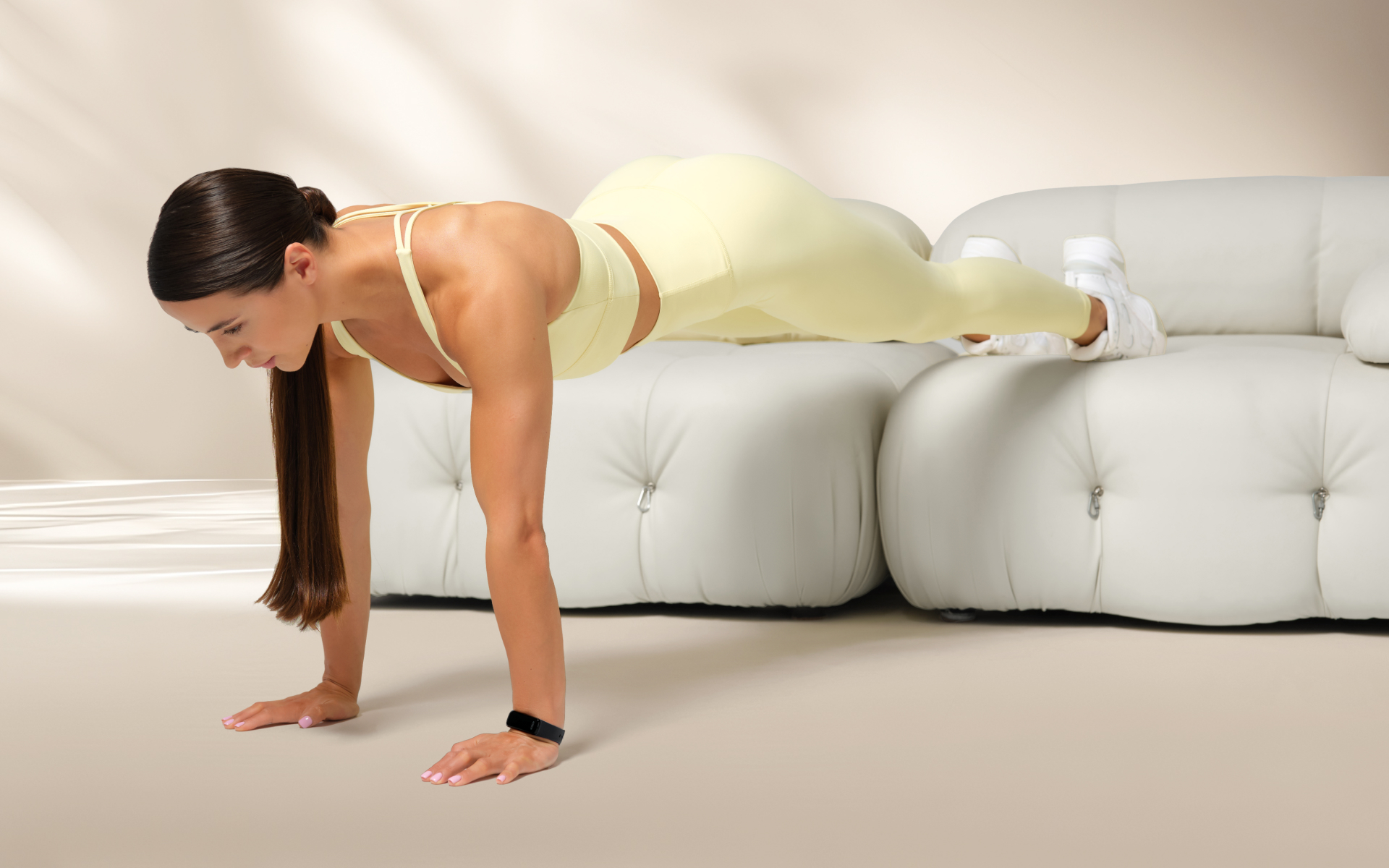
Can you perform 10 clean push-ups with a straight spine? Can you hang from a bar for 30 seconds? If not, you must regress the exercises. For example, if a floor push-up is too difficult, start with an incline push-up (hands on a bench).
2. Prioritize Form Over Reps
With calisthenics, leverage is everything (2). A push-up performed with a sagging lower back changes the biomechanics of the movement, which reduces core engagement and places unnecessary stress on the lumbar spine. Every repetition should look identical.
3. Establish a Frequency
For beginners, a full-body frequency of 3 days per week is often optimal for strength adaptations.
Research has suggested that training a muscle group 2-3 times per week yields superior hypertrophy (muscle growth) compared to once per week, as it allows more quality volume (5). On off-days, you can focus on mobility or light cardio.
If you’re looking for a comprehensive calisthenics workout plan for beginners, proper structure is the first step to success.
Whether you’re a workout beast or just a beginner making your first foray into the world of fitness and dieting – BetterMe has a lot to offer to both newbies and experts! Install the app and experience the versatility first-hand!
Can I Learn Calisthenics by Myself?
Absolutely. Calisthenics is perhaps the most accessible form of training as it provides immediate biofeedback. If your form breaks down, you usually fall or can’t complete the rep. However, self-learning requires a high degree of body awareness (proprioception).
To learn effectively on your own:
- Record Your Sets: Use your phone to film your technique from the side. Compare your form to trusted instructional resources.
- Use External Cues: Instead of thinking “contract my glutes”, think “squeeze a coin between my cheeks”. External cues are often more effective for motor learning than internal focus.
- Follow a Proven Program: Don’t randomize your training. Adherence to a structured daily calisthenics routine for beginners male or female ensures you’re progressively overloading your muscles, which is the key driver of strength gains.
Learning at home is efficient and removes the friction of traveling to a gym. If you’re setting up a daily calisthenics routine for beginners at home, you essentially become your own coach.
How to Plan a Daily Calisthenics Routine for Beginners?
Planning a routine involves manipulating “acute training variables” – sets, reps, rest, and tempo. A well-designed plan balances stress (exercise) with recovery (rest) to produce adaptation (strength/muscle growth).
The Split
For most beginners, a full-body split is superior to a “bro split” (training one body part per day). A full-body routine allows you to hit every muscle group frequently without excessive localized fatigue (6).
Recommended Weekly Schedule:
- Monday: Strength (full body)
- Tuesday: Active recovery/mobility/skill
- Wednesday: Strength (full body)
- Thursday: Active recovery/mobility/skill
- Friday: Strength (full body)
- Saturday: Active recovery (light cardio)
- Sunday: Rest
Volume and Intensity
- Sets: Aim for 3-4 sets per exercise.
- Reps: Focus on a range of 5-15 repetitions. If you can do more than 15 with perfect form, the exercise is likely too easy (intensity is too low). If you can’t do 5, it’s too hard.
- Rest: Rest 90-120 seconds between sets. Adequate rest is essential for replenishing ATP (adenosine triphosphate), your muscles’ primary energy source for explosive movement (7).
Progression
Every session or week, aim to improve one variable. This could be adding 1 rep, improving form, or decreasing rest time slightly. This is progressive overload.
For those who are interested in a specific daily calisthenics routine for female or male beginners, the fundamental principles remain the same – scaling the intensity is the only variable that changes.
What Is an Example of a Good Daily Calisthenics Routine?
Below is a structured routine that’s designed to be performed 3 times per week (e.g. Mon/Wed/Fri). The non-training days should be used for active recovery.
Program Notes
- Warm-up: 5-10 minutes of dynamic movement (arm circles, leg swings) to increase body temperature and synovial fluid production in joints (8).
- Tempo: 2-0-1-0 (2 seconds down, 0 seconds pause, 1 second up, 0 seconds pause). Control the eccentric (lowering) phase.
- Equipment: Pull-up bar (or sturdy ledge), floor space.
The Workout Table
| Exercise category | Exercise name | Sets | Rep Target | Rest |
|---|---|---|---|---|
| Warm-up | Dynamic stretching | 1 | 5 mins | - |
| Skill/balance | Handstand wall hold | 3 | 15-30 secs | 60s |
| Push (horizontal) | Push-up | 3 | 8-12 | 90s |
| Pull (horizontal) | Inverted row | 3 | 8-12 | 90s |
| Legs (knee dominant) | Squats | 3 | 12-15 | 90s |
| Legs (hip dominant) | Glute bridges | 3 | 12-15 | 90s |
| Core (anti-extension) | Plank | 3 | 30-45 secs | 60s |
| Pull (vertical) | Negative pull-ups | 3 | 5-8 | 120s |
Exercise Execution Instructions
Handstand Wall Hold (Skill)
- Face a wall. Place your hands on the floor shoulder-width apart, approximately 6 inches from the wall.
- Walk your feet up the wall until your body is in a vertical line.
- Critical cue: Push the floor away actively with your shoulders (shrug up toward your ears) to stabilize the shoulder joint.
- Engage your core (hollow body) to prevent your lower back from arching.
- Hold for 15-30 seconds, then walk feet down safely.
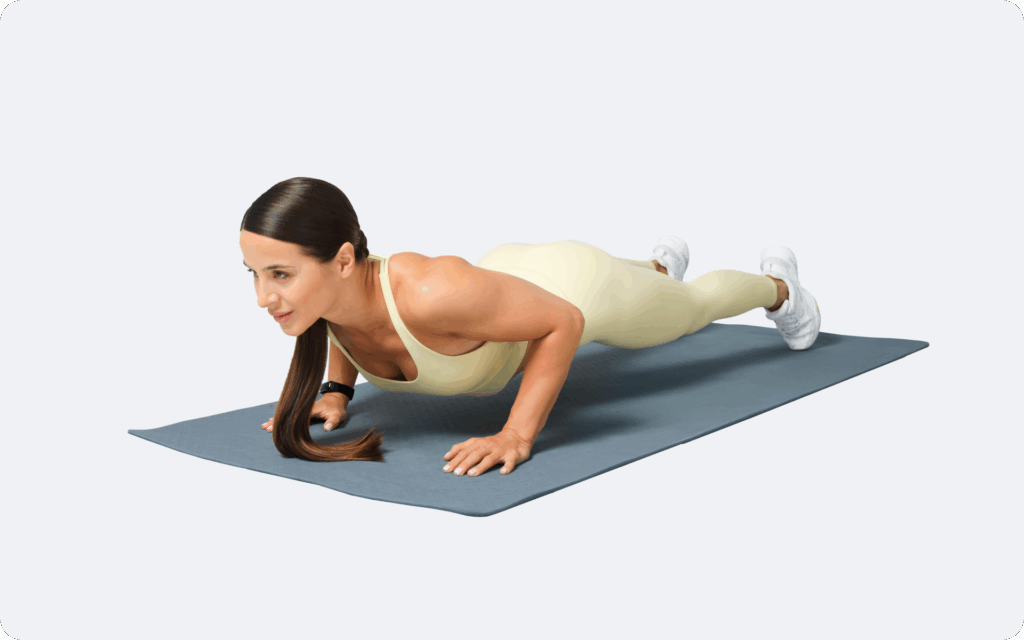
Push-Up (Horizontal Push)
- Start in a high plank position with your hands directly under your shoulders.
- Screw your hands into the floor to generate torque and stabilize your shoulders.
- Lower your body by bending your elbows at a 45-degree angle to your torso (arrow shape, not T-shape).
- Descend until your chest is just above the floor.
- Push back up to the starting position, maintaining a rigid straight line from your head to your heels.
Inverted Row (Horizontal Pull)
- Set a bar (or use a sturdy table/rings) at waist height.
- Lie underneath the bar and grab it with an overhand grip, your hands slightly wider than shoulder-width apart.
- Straighten your body and lift your hips so you’re not touching the floor (heels only).
- Pull your chest to the bar by driving your elbows back.
- Squeeze your shoulder blades together at the top.
- Lower yourself slowly to the start.
- Regression: Bend your knees to reduce the load.
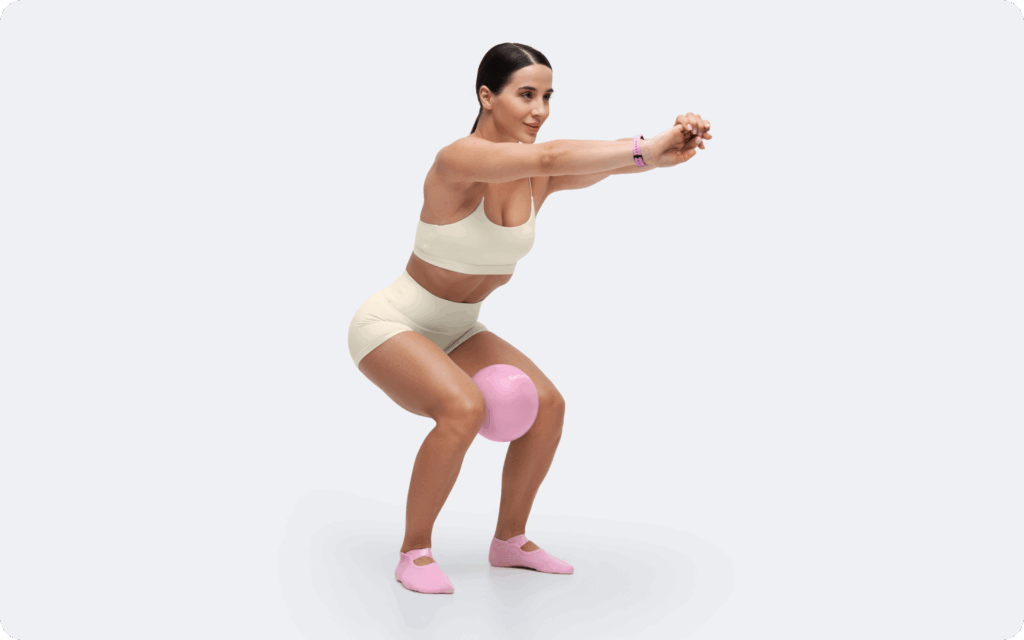
Squats (Knee Dominant)
- Stand with your feet shoulder-width apart and your toes pointed slightly out (approx 15-30 degrees).
- Initiate the movement by breaking at the hips and knees simultaneously.
- Lower your hips as if sitting in a chair, keeping your chest upright.
- Descend until your thighs are at least parallel to the floor.
- Drive through the mid-foot to return to standing.
- Check: Ensure your knees track in line with your toes, not collapsing inward.
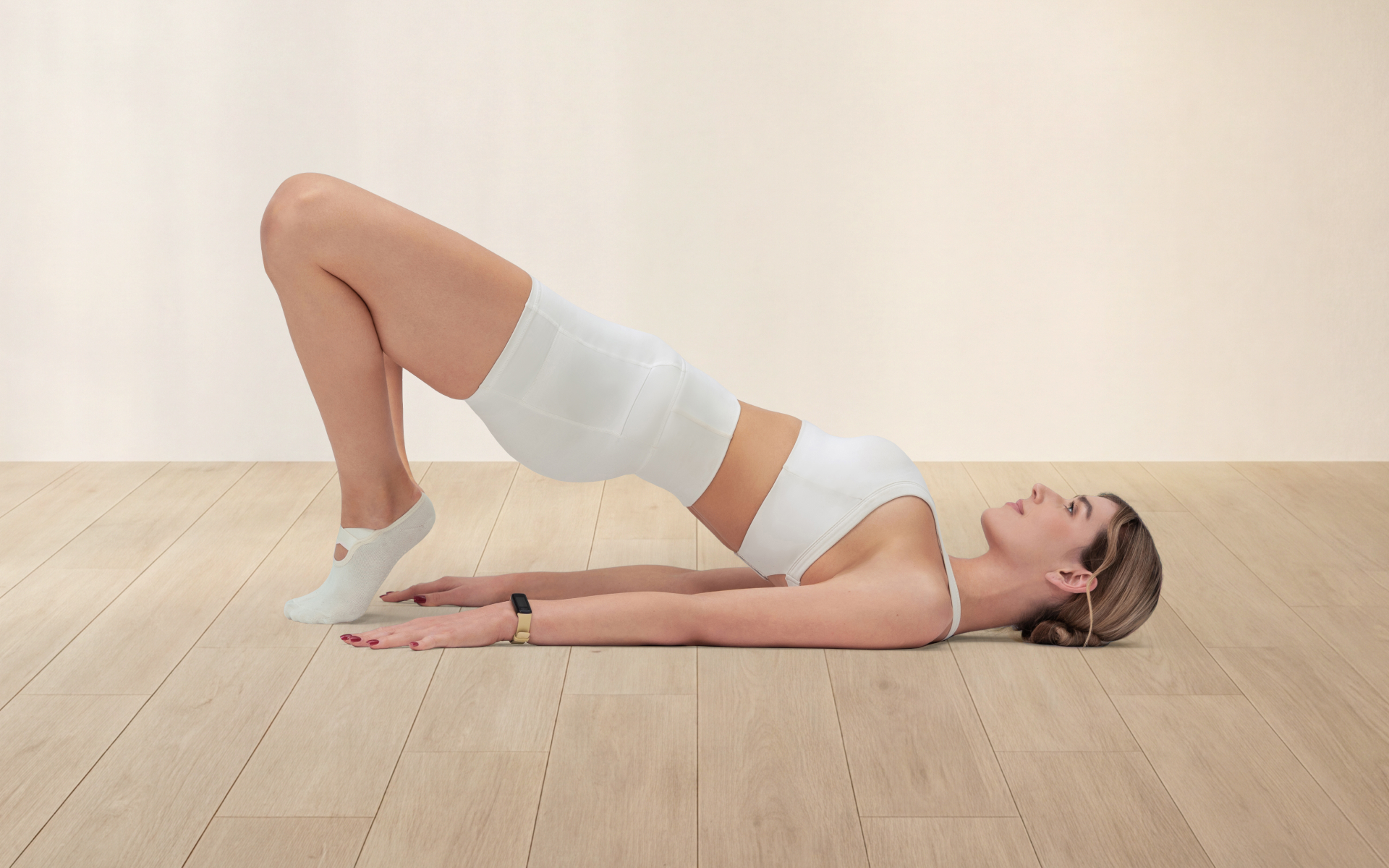
Glute Bridges (Hip Dominant)
- Lie on your back with your knees bent and your feet flat on the floor, hip-width apart.
- Flatten your lower back against the floor to engage the core.
- Drive through your heels to lift your hips toward the ceiling.
- At the top, fully extend the hips by squeezing the glutes hard. Don’t hyperextend the lumbar spine.
- Lower under control.
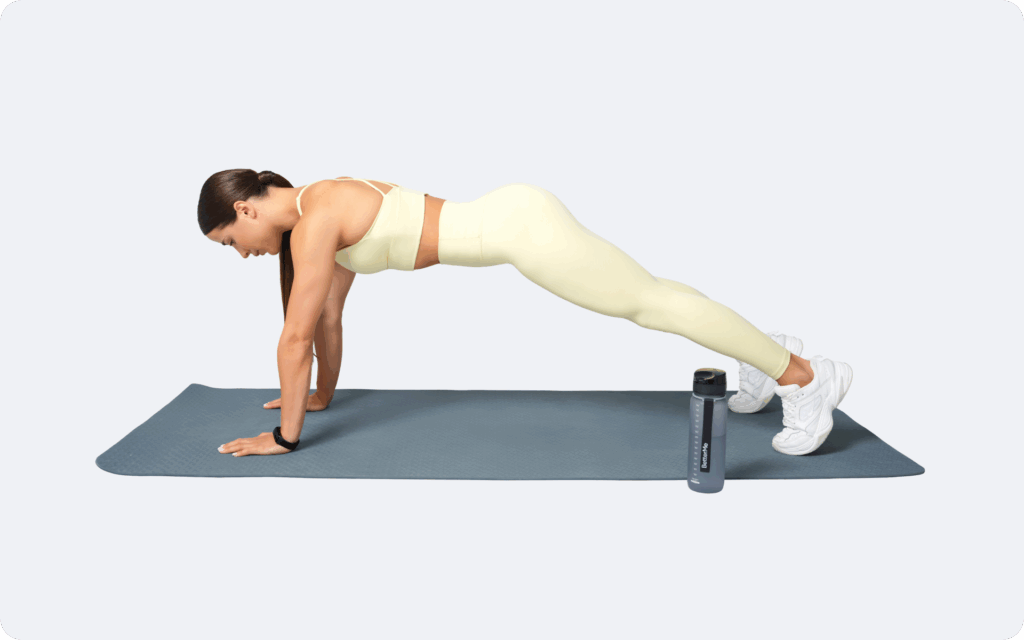
Plank (Anti-Extension)
- Assume a forearm plank position, your elbows directly under your shoulders.
- Clench your fists and drive your forearms into the ground.
- Squeeze your glutes and quads forcefully.
- Posteriorly tilt your pelvis (tuck tailbone) to flatten your lower back.
- Hold this high-tension position. If you’re shaking, you’re doing it right.
Negative Pull-Ups (Vertical Pull)
- Stand under a pull-up bar. Use a box or jump to get your chin over the bar.
- Hold the top position for 1 second.
- Lower yourself as slowly as possible (aim for 3-5 seconds) until your arms are fully straight.
- Release, reset, and repeat.
- Why: This builds the strength that’s required for a full pull-up by overloading the eccentric phase.
This routine serves as a solid foundation for any calisthenics for beginners at home routine.
How Many Calories Do 20 Minutes of Calisthenics Burn?
The caloric expenditure of calisthenics varies significantly based on intensity, body weight, and rest periods.
For a person who weighs approximately 155 lbs (70 kg), 20 minutes of moderate-intensity calisthenics (like the routine above) typically burns between 80 and 110 calories (9).
However, if you increase the density of the workout – using formats such as HIIT (high-intensity interval training) or circuit training where rest periods are minimal – that number can rise to 150-180 calories due to the higher metabolic demand.
It’s important to note that calorie burning is not the primary benefit of strength training. Focus on the performance metrics (strength, reps) rather than the calories burned during the session.
Read more: Your Calisthenics 3-Month Transformation Guide
What Happens if I Train Calisthenics Every Day?
Training every day without a programmed split or variation in intensity often leads to diminishing returns and injury. This is because of the training principle known as “general adaptation syndrome” (10). This concept explains how adaptations to training occur.
- Alarm Phase: Your body experiences the stress of training (muscle damage, fatigue).
- Resistance Phase: Your body recovers and adapts to handle the stress better (strength gains).
- Exhaustion Phase: If stress is applied too frequently without recovery, adaptation stops, and performance declines (overtraining).
If you train heavily every day:
- Systemic Fatigue: Your central nervous system (CNS) may become fatigued, which reduces coordination and strength output (11).
- Connective Tissue Stress: Tendons take longer to recover than muscles(4). Daily repetitive motion can cause inflammation (e.g. golfer’s elbow) (12).

How to do it correctly:
If you want a truly daily habit, you should vary the intensity.
- High-Intensity Days: Strength training (push-ups, rows, squats).
- Low-Intensity Days: Mobility flow, stretching, skill practice (balancing), or walking.
By alternating high and low stress, you can maintain a daily movement practice while allowing physiological adaptation to occur. This approach is key when following a 30-day calisthenics workout plan for female or male beginners.
For a structured approach to daily movement, check out our guide to beginners’ calisthenics workouts.
Yes, you can achieve a lean, defined physique with calisthenics as muscle hypertrophy (growth) occurs largely due to mechanical tension and volume (13), regardless of whether the resistance comes from iron or gravity. To get “ripped”, you must combine this muscle growth with a nutritional strategy (caloric deficit) to reduce body fat levels and reveal the muscle definition underneath. Yes, consistent calisthenics training will stimulate significant physiological changes, including increased muscle cross-sectional area (hypertrophy), improved posture through stronger core and back stabilizers, and reduced body fat percentage if combined with appropriate nutrition (14). Beginners often experience “newbie gains” – seeing rapid changes in body composition within the first 3-6 months. Yes, rest days are physiological necessities, not optional breaks. During rest, your body repairs micro-tears in muscle fibers and replenishes glycogen stores. Without at least 1-2 rest days (or active recovery days) per week, you risk overtraining, plateauing in strength, and increasing susceptibility to injury (15). After 30 days of consistent training, you’ll likely notice improved neuromuscular coordination (movements feel smoother), an increase in muscular endurance (you can do more reps), and initial improvements in muscle tone and posture. While drastic visual changes take longer, the neural adaptations in the first month lay the foundation for future strength gains. A good breakfast should provide sustained energy and amino acids for recovery, typically consisting of a complex carbohydrate source and a high-quality protein (16, 17). Examples include oatmeal with whole milk and berries, or eggs with whole-grain toast and avocado. These combinations optimize blood sugar stability and muscle protein synthesis.Frequently Asked Questions
Can I get ripped with calisthenics?
Can calisthenics change your body?
Do I need rest days for calisthenics?
What happens after 30 days of calisthenics?
What is a good breakfast for calisthenics?
The Bottom Line
Building a stronger, more capable body doesn’t require a complex gym membership, it requires a commitment to mastering your own weight. A daily calisthenics routine for beginners is about more than just push-ups – it’s about learning to control your body through space, protecting your joints, and laying a foundation of strength that serves you for life.
Start with the basics, respect the need for recovery, and focus on precision in every repetition. Be consistent, and results will follow.
DISCLAIMER:
This article is intended for general informational purposes only and does not serve to address individual circumstances. It is not a substitute for professional advice or help and should not be relied on for making any kind of decision-making. Any action taken as a direct or indirect result of the information in this article is entirely at your own risk and is your sole responsibility.
BetterMe, its content staff, and its medical advisors accept no responsibility for inaccuracies, errors, misstatements, inconsistencies, or omissions and specifically disclaim any liability, loss or risk, personal, professional or otherwise, which may be incurred as a consequence, directly or indirectly, of the use and/or application of any content.
You should always seek the advice of your physician or other qualified health provider with any questions you may have regarding a medical condition or your specific situation. Never disregard professional medical advice or delay seeking it because of BetterMe content. If you suspect or think you may have a medical emergency, call your doctor.
SOURCES:
- Bodyweight Training: A Return To Basics (2010, journals.lww.com)
- Exercise progression and regression (n.d., us.humankinetics.com)
- Functional Adaptation of Connective Tissue by Training (2019, germanjournalsportsmedicine.com)
- Tendinosis (2025, ncbi.nlm.nih.gov)
- Effects of Resistance Training Frequency on Measures of Muscle Hypertrophy: A Systematic Review and Meta-Analysis (2016, link.springer.com)
- Progression Models in Resistance Training for Healthy Adults (2009, journals.lww.com)
- Muscle Energetics During Explosive Activities and Potential Effects of Nutrition and Training (2014, link.springer.com)
- Revisiting the ‘Whys’ and ‘Hows’ of the Warm-Up: Are We Asking the Right Questions? (2024, link.springer.com)
- Calories Burned from Calisthenics | Calculator & Formula (n.d., captaincalculator.com)
- CURRENT CONCEPTS IN PERIODIZATION OF STRENGTH AND CONDITIONING FOR THE SPORTS PHYSICAL THERAPIST (2015, pmc.ncbi.nlm.nih.gov)
- Central and Peripheral Fatigue in Physical Exercise Explained: A Narrative Review (2022, mdpi.com)
- Sports Injuries–Types, Symptoms, & Risk Factors (2024, niams.nih.gov)
- Anabolic signals and muscle hypertrophy – Significance for strength training in sports medicine (2025, sciencedirect.com)
- The effects of a calisthenics training intervention on posture, strength and body composition (2017, researchgate.net)
- Why Rest Days Are Important for Muscle Building (n.d., blog.nasm.org)
- Current knowledge about sports nutrition (2011, pmc.ncbi.nlm.nih.gov)
- Athletes’ nutritional demands: a narrative review of nutritional requirements (2024, frontiersin.org)
 Reviewed by