
Stamina in running is your ability to sustain a prolonged physical effort. It’s a combination of cardiovascular endurance and muscular endurance.
To run faster, longer, and with fewer injuries, you must strengthen your muscles. Strong muscles are more efficient. They can produce more force with less effort, which means you expend less energy with each stride. This energy conservation allows you to run longer before fatigue sets in.
Furthermore, strong, coordinated muscles are better at absorbing impact forces. During a run, your body absorbs between two and seven times your body weight with each footstrike. Strong muscles and tendons effectively manage these forces, which reduces the strain on your bones and joints. This is a key factor in injury prevention.
This guide will break down the science behind using bodyweight exercises to improve your running. You’ll learn what exercises to do and how to perform them correctly to build a more resilient and powerful running body.
What Are Signs of Low Stamina?
While feeling tired during a run is normal, certain patterns may indicate that your muscular or cardiovascular endurance needs improvement.
Look out for these common signs:
- Noticeable Drop in Pace: You start your runs strong but find your pace slowing significantly in the later stages, even when you aren’t intentionally trying to slow down.
- Deterioration of Running Form: As you become tired, your form may break down. This can manifest as slouching shoulders, excessive arm swing, a dropping pelvis (hip drop), or shuffling feet instead of lifting your knees.
- Increased Perceived Exertion: Runs that once felt manageable now feel disproportionately difficult. You may find your heart rate is higher than usual at a familiar pace.
- Delayed Recovery: You feel unusually sore or fatigued for more than a day or two after a standard run. This can be a sign that your muscles lack the resilience to handle the training load.
- Hitting a “Wall” Prematurely: You consistently feel completely depleted of energy much earlier in your runs than you’d expect.
If these signs sound familiar, incorporating targeted bodyweight exercises for runners can help build the muscular foundation you need to push past these plateaus.

What Bodyweight Exercises for Runners Help Improve Stamina?
Bodyweight exercises improve stamina by targeting key muscle groups that support your running mechanics (1). These include:
- Glutes and Hamstrings: These muscles power your forward propulsion. Strong glutes and hamstrings help you extend your hips with force, driving you forward with each stride.
- Quadriceps: Your quads help absorb impact upon landing and stabilize your knee joint.
- Core: A strong core, which includes your abs, obliques, and lower back, acts as a stable platform. It prevents excess torso rotation and helps transfer force efficiently from your upper to lower body.
- Hip Abductors: Located on the outside of your hips, these muscles prevent your knees from collapsing inward, a common cause of running injuries.
By strengthening these areas, you improve your running economy. This means that you use less energy at any given pace, which allows you to run longer before fatigue sets in.
Here are 10 bodyweight exercises for runners that you can do at home to build the necessary functional strength to improve your stamina and overall performance.
BetterMe: Health Coaching app helps you achieve your body goals with ease and efficiency by helping to choose proper meal plans and effective workouts. Start using our app and you will see good results in a short time.
The 30-Minute Bodyweight Workout for Runners
This routine is designed to be completed as a circuit.
Perform each exercise for the prescribed repetitions, moving from one to the next with minimal rest. After completing all 10 exercises, rest for 60-90 seconds and repeat the circuit for a total of 3 rounds. This 30-minute bodyweight workout for runners is perfect for integrating into your weekly schedule.
| Exercise | Repetitions |
|---|---|
| 1. Sidelying hip abduction | 15 per side |
| 2. Prone isometric extensions | 10 reps (10-second hold each) |
| 3. Bird dog | 10 per side |
| 4. Single-leg cone touch | 10 per side |
| 5. Forward step-down | 10 per side |
| 6. Star excursion balance | 10 per side |
| 7. Sidelying plank with leg lift | 10 per side |
| 8. DynaDisc lunges (or floor lunges) | 10 per side |
| 9. Modified Romberg’s balance | 30-second hold per side |
| 10. Triple hop for distance | 3 sets per leg |
Exercise Instructions
Here’s a step-by-step breakdown of how to perform each of these full-bodyweight exercises for runners.
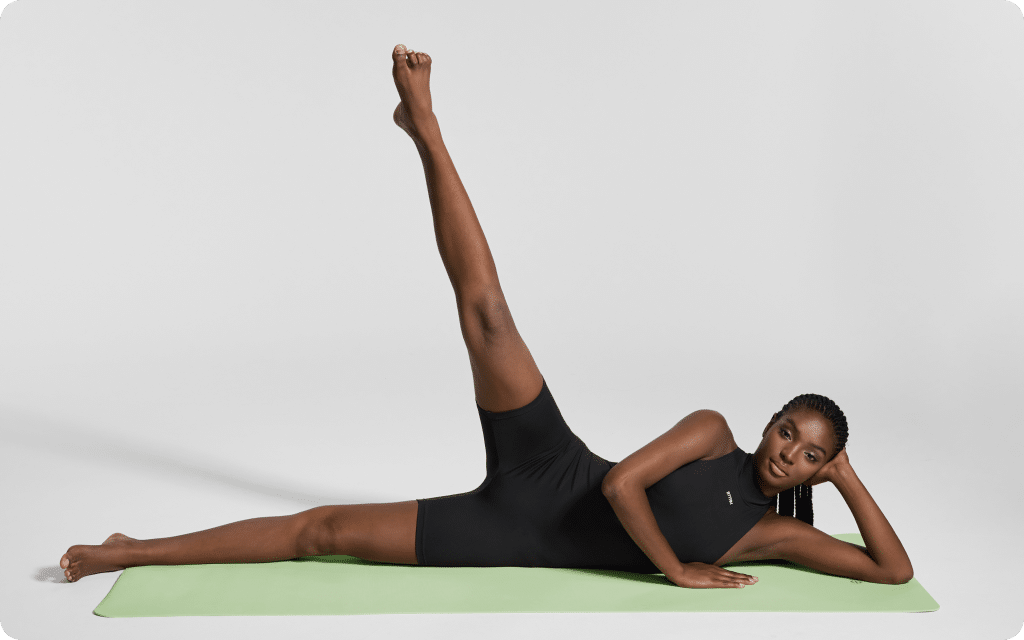
1. Sidelying Hip Abduction
This exercise targets the gluteus medius, a key hip abductor muscle that’s responsible for stabilizing your pelvis when you’re on one leg, which is essentially what running is. Research has shown that people with strong hip abductors are significantly less likely to develop knee osteoarthritis, as these muscles prevent the knee from collapsing inward.
- Lie on your right side with your legs straight and stacked, your pelvis perpendicular to the floor.
- Support your head with your right arm and place your left hand on your hip or the floor for stability.
- Keeping your top leg straight, slowly lift it toward the ceiling without letting your pelvis rock backward or forward.
- Lift as high as you can while maintaining perfect form, then slowly lower the leg back to the starting position.
2. Prone Isometric Extensions
This movement strengthens the back extensors, which are essential for maintaining an upright posture and a stable spine while running. A strong core helps lock your ribs against your pelvis, preventing energy leaks.
- Lie face down on the floor with your arms by your sides.
- Engage your back muscles, glutes, and hamstrings to lift your chest and thighs off the floor simultaneously.
- Keep your neck in a neutral position by looking at the floor in front of you.
- Hold this extended position for 10 seconds, then slowly lower back down.
3. Bird Dog
The bird dog is a classic core stability exercise that improves coordination between your core, hips, and shoulders. It trains your body to resist rotational forces, which is essential for a stable and efficient running gait.
- Start on all fours, with your hands directly under your shoulders and your knees under your hips.
- Engage your core to keep your back flat, as if balancing a glass of water on it.
- Simultaneously extend your right arm straight forward and your left leg straight back.
- Hold for a moment, focusing on keeping your hips and shoulders square to the floor.
- Return to the starting position with control and repeat on the other side.
4. Single-Leg Cone Touch
This exercise challenges your balance, hip stability, and proprioception – your body’s awareness of its position in space. It’s an excellent movement for training the muscles that stabilize your standing leg.
- Stand on your left leg with a slight bend in the knee.
- Place a small object, such as a cone or water bottle, about two feet in front of you.
- Hinge at your hips, keeping your back straight, and reach down with your right hand to touch the object.
- Push through your left foot to return to the starting position.
Whether you’re a workout beast or just a beginner making your first foray into the world of fitness and dieting – BetterMe has a lot to offer to both newbies and experts! Install the app and experience the versatility first-hand!
5. Forward Step-Down
This test-turned-exercise is fantastic for identifying and correcting faulty movement patterns in the hip. It reveals how well your hip abductors control pelvic and knee alignment when stepping down.
- Stand on a stable, elevated surface that is 4 to 6 inches high, such as a step or a thick book.
- Place your hands on your hips and balance on your right leg, with your left foot hovering off the edge.
- Slowly bend your right knee and lower your left heel to gently touch the floor.
- Keep your pelvis level and your right knee tracking over your foot. Avoid letting your hip drop or your knee collapse inward.
- Push through your right foot to return to the starting position.
6. Star Excursion Balance
This dynamic balance drill improves neuromuscular control and can help identify asymmetries between your legs. Runners with a reach difference greater than 1.5 inches (4 cm) between sides are 2.5 times more likely to sustain an injury.
- Imagine a star on the floor with you at the center. Balance on your left leg.
- With your right foot, reach as far as you can in different directions (e.g. forward, diagonally back, sideways) while maintaining your balance.
- Lightly tap your toe to the floor at the furthest point before returning to the center.
- Complete all reaches on one side before switching legs. This is one of the best bodyweight exercises for running beginners who are looking to improve their stability.
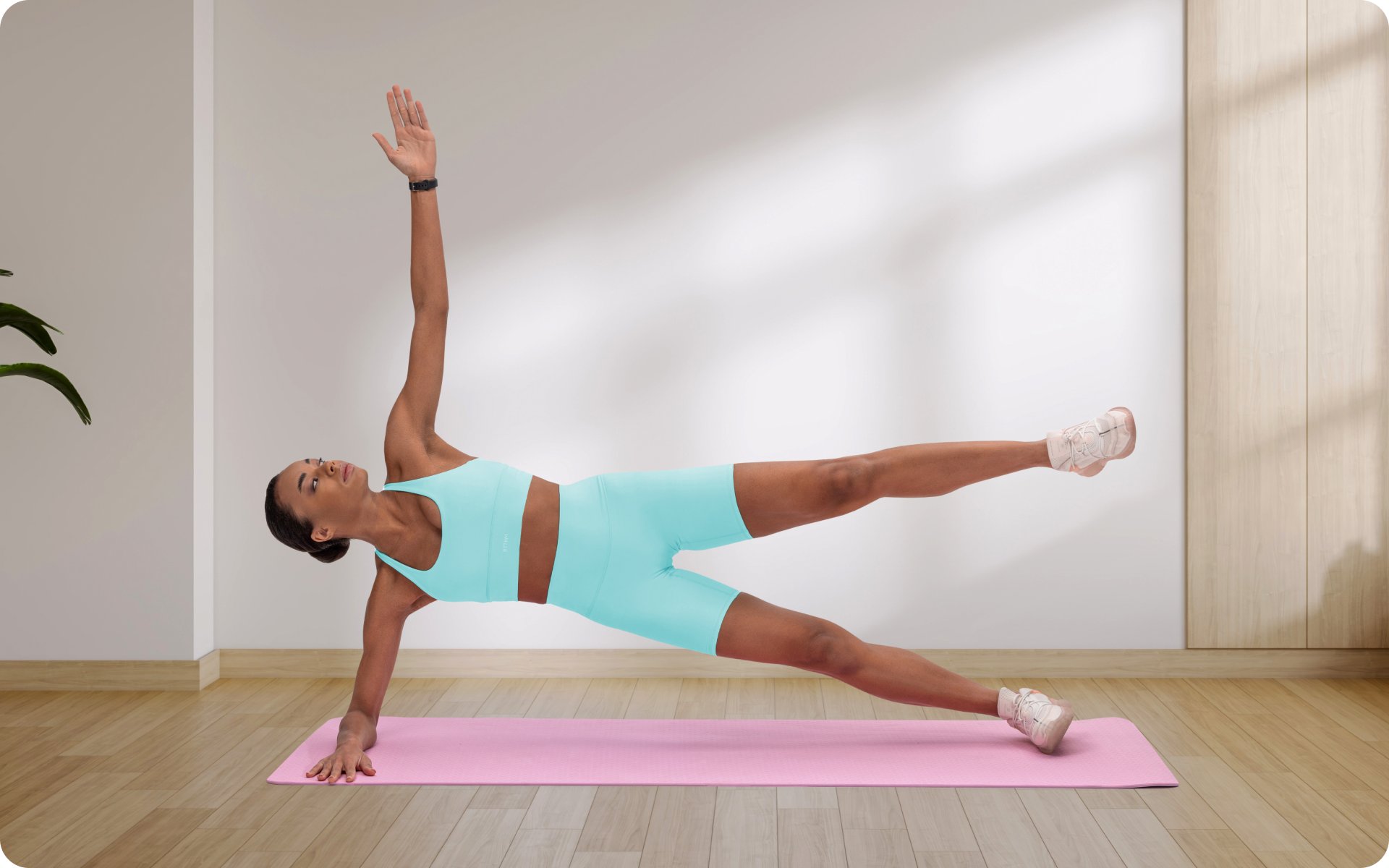
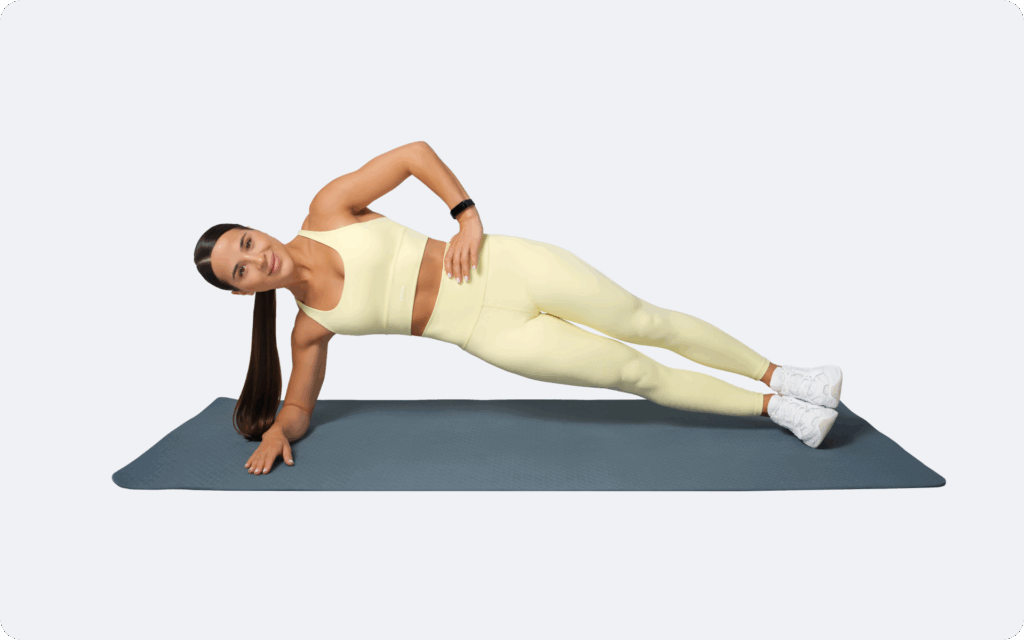
7. Sidelying Plank with Leg Lift
This advanced variation of the side plank further challenges the stability of your core and hips. It strengthens the obliques and gluteus medius in a way that directly translates to preventing the “hip drop” common in fatigued runners.
- Lie on your right side and prop yourself up on your right forearm, your elbow under your shoulder.
- Lift your hips so your body forms a straight line from your head to your feet.
- Once stable, lift your top (left) leg toward the ceiling without letting your hips sag.
- Lower the leg with control and repeat.
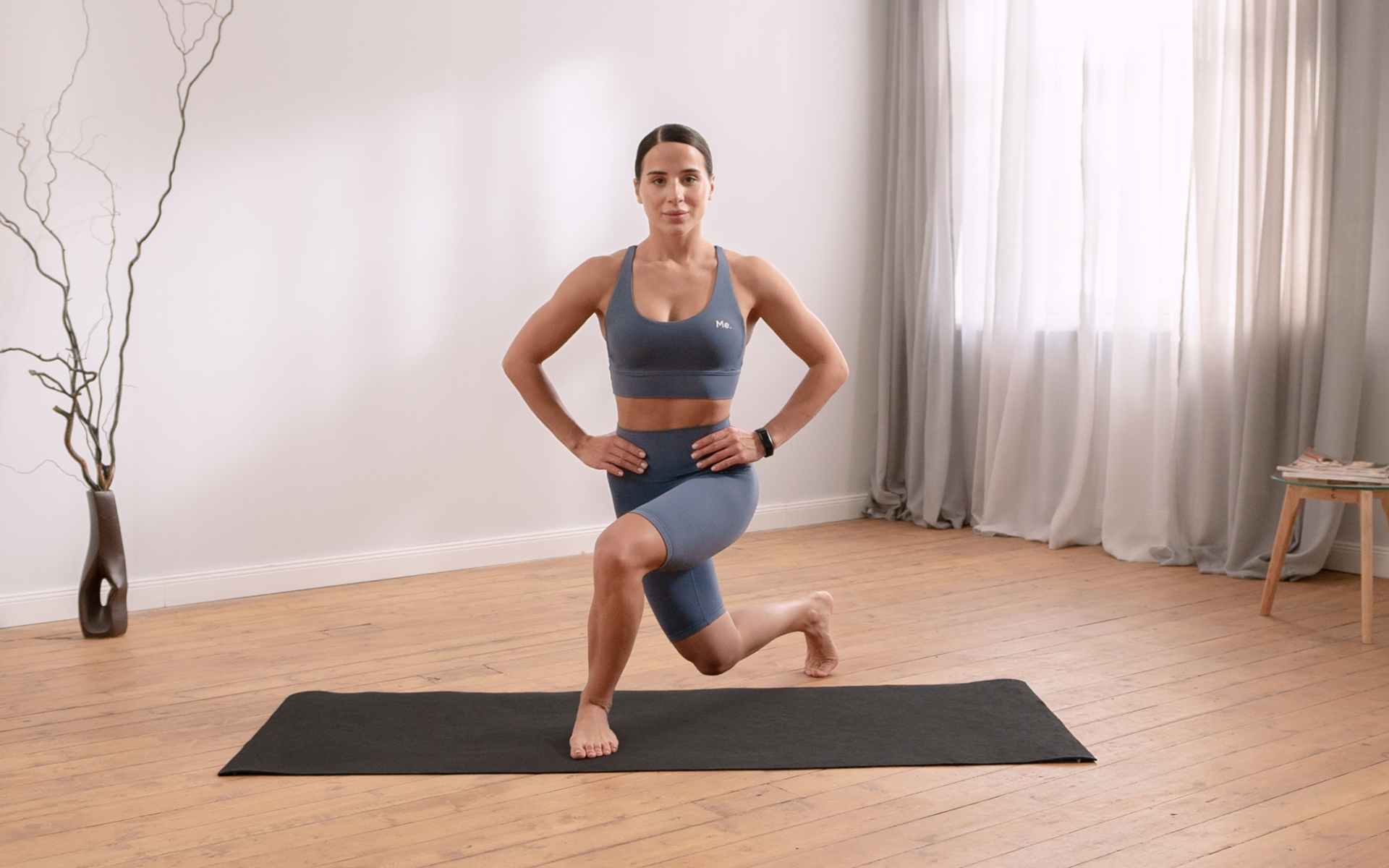
8. Balance Pad Lunges
Performing lunges on an unstable surface such as a balance pad (or a folded pillow) forces your stabilizing muscles to work overtime. This enhances coordination and strengthens the small muscles around your hip and knee that are essential for running on uneven terrain. This is one of the more advanced bodyweight exercises for runners, no equipment needed, but a pillow can work.
- Stand near a wall for balance. Place one foot on the unstable surface.
- Slowly lower into a lunge, keeping your front knee behind your toes and your torso upright.
- Go only as deep as you can while maintaining control.
- Push through your front foot to return to the start.
9. Modified Romberg’s Balance
This simple test improves your proprioception. When you close your eyes, you remove visual feedback and force your body to rely on sensory information from your muscles and joints to maintain balance, an essential skill for running when you’re not looking at your feet.
- Stand on one foot near a wall for safety.
- First, practice balancing with your eyes open for 30 seconds.
- Once you feel stable, close your eyes and try to balance for at least 20 seconds. You may feel wobbly at first, but this will improve with practice.
10. Triple Hop Test
This plyometric exercise builds explosive power in your legs and helps identify strength imbalances. It mimics the propulsive phase of running and trains your body to generate force quickly and efficiently.
- Stand on your left leg.
- Perform three consecutive hops forward, covering as much distance as possible.
- Stick the landing on the third hop and hold your balance.
- Measure the distance and compare it to the distance hopped on your right leg. A difference of more than 10% suggests a significant asymmetry that should be addressed.
To continue improving your hip stability, you can explore more targeted hip strengthening exercises for runners.
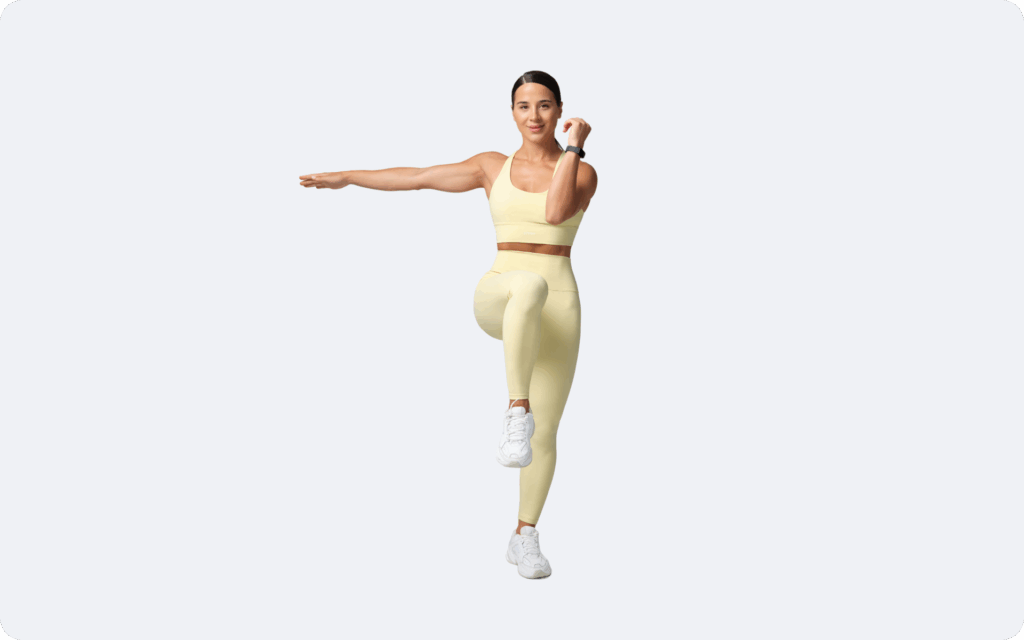
Which Exercises Increase Stamina for Running?
Beyond general strength work, certain running-specific drills and techniques can directly improve your endurance by making your form more efficient.
- Strides
These are short, 60-100 meter accelerations where you gradually increase your speed to about 95% of your maximum, hold it for a few seconds, and then gradually decelerate. Strides improve neuromuscular coordination and running efficiency at faster speeds (2). Perform 4-6 strides after an easy run 1-2 times per week.
- Hill Repeats
Running uphill is a form of resistance training that builds significant leg strength and power (3). Find a moderately sloped hill and run up it at a hard effort, then jog or walk back down to recover.
Proper breathing is also fundamental to stamina. Many runners breathe too shallowly, limiting oxygen intake. Practicing diaphragmatic (belly) breathing can improve your efficiency (4). Learn more about effective breathing techniques for running.
How to Increase Stamina for Runners
Increasing stamina requires a multi-faceted approach that goes beyond just running more. It involves smart training, proper recovery, and supportive habits.
- Be Consistent
Consistency is the most important factor. Aim for 3-5 runs per week, depending on your fitness level and goals. Regular exposure to running stress is what stimulates adaptation.
- Incorporate Long Runs
Dedicate one run per week to be your “long run”. Gradually increase the distance of this run by no more than 10% each week to build endurance safely without increasing your risk of overuse injuries (5).
- Vary Your Pacing
Include different types of runs in your week. In addition to easy, conversational-pace runs, add tempo runs (sustained, comfortably hard effort) and interval training (short bursts of high intensity followed by recovery).
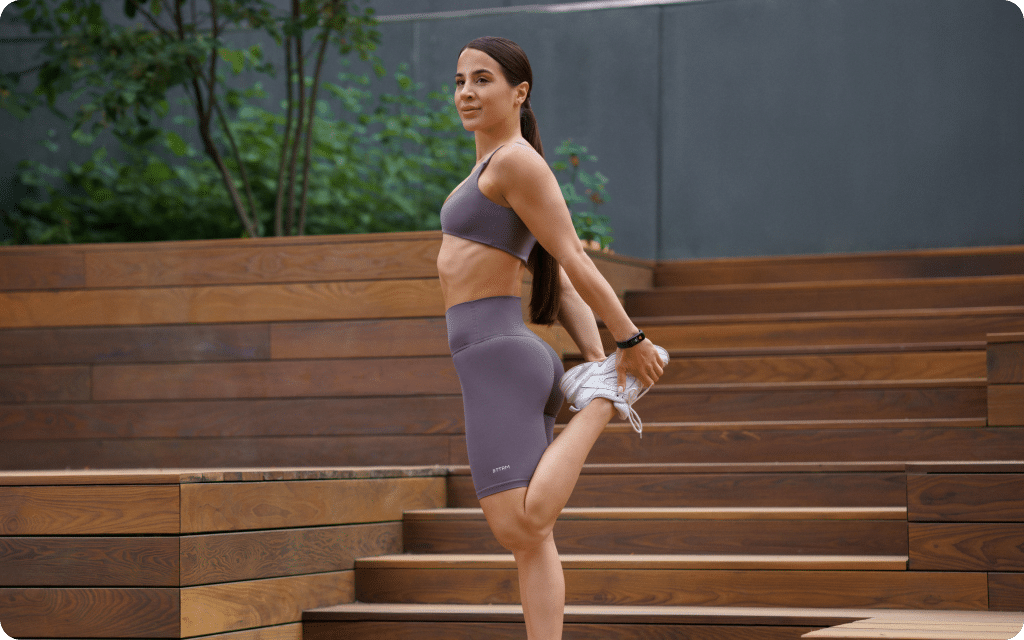
- Strength Train
Incorporate full-bodyweight exercises for runners at least twice a week on non-consecutive days. This form of strength training will improve your running economy and reduce injury risk (6).
Consider performing these exercises as part of your bodyweight exercises routine after running on an easy day. You may progress over time by adding weights to your routine.
- Focus on Neuromotor Coordination
Strength isn’t just about muscle size, it’s also about how well your brain can coordinate muscle contractions. Exercises that challenge your balance and stability, such as single-leg movements, improve the connection between your nervous system and your muscles (7, 8). This allows for smoother, more efficient movement patterns.
- Fuel and Hydrate Properly
Your body needs fuel to perform. Eat a balanced diet that’s rich in complex carbohydrates, lean protein, and healthy fats. Stay hydrated throughout the day, not just during your runs (9).
- Prioritize Recovery
Stamina is built during rest, not during the run itself. Ensure you get 7-9 hours of quality sleep per night, as this is when your body repairs muscle and builds fitness (10).
Read more: Running Workout Plan: A Guide to Sustainable Performance
What Are Some Common Running Mistakes?
Even with a solid strength foundation, certain running mistakes can hold you back and increase your risk of injury. Becoming aware of these habits is the first step to correcting them.
- Overtraining: Doing too much, too soon is a classic error. Your body needs time to adapt to increased mileage or intensity (11). A general guideline is the “10% rule”, which suggests not increasing your weekly mileage by more than 10% from the previous week (12).
- Ignoring Pain: Pushing through sharp or persistent pain is a recipe for a serious injury. It’s important to distinguish between the discomfort of a hard workout and the pain that signals something is wrong.
- Poor Cadence: Cadence is the number of steps you take per minute. A low cadence (typically below 170 steps per minute) is often associated with overstriding–landing with your foot too far in front of your body. This acts as a braking force and increases impact on your joints (13). Aiming for a quicker, lighter cadence of around 170-180 steps per minute can improve efficiency.
- Inconsistent Training: Sporadic running makes it difficult for your body to adapt and improve. Consistency, even with shorter runs, is more effective than occasional long, grueling sessions.
- Neglecting Recovery: Sleep, nutrition, and rest days are when your body repairs itself and gets strong (14). Skimping on recovery can lead to burnout and injury. Many of the principles that are used for running are also applicable to other forms of bodyweight training. To see how, check out this guide to calisthenics for runners.
There is no single “best” bodyweight exercise, as the ideal choice will depend on your goals. If you must choose a comprehensive, functional movement that targets multiple major muscle groups used in running, the bodyweight squat is an excellent contender. It’s a fundamental movement pattern that strengthens the entire lower body – quads, hamstrings, and glutes – and reinforces core stability. However, a balanced routine that includes a variety of movements is always superior to relying on a single exercise. Yes, they will build muscular endurance in your quads and glutes (15). However, this approach has limitations. Your body will adapt to this specific stimulus, and progress will eventually plateau (16). For continued strength gains, you need progressive overload, which means increasing the challenge over time by adding resistance, changing the tempo, or moving to more difficult variations such as single-leg squats (17). The 10-minute rule is a guideline to determine if you should continue a run when you’re feeling some discomfort. The rule suggests that if you start a run and feel an ache or pain, do 10 minutes of easy jogging. If the pain subsides or disappears within this time, it’s likely just stiffness, and you can continue your run. If the pain persists or worsens, you should stop and rest. This rule is often used by runners who are returning from an injury or starting a new program. However, the best way to truly know if you’re injured is to consult a doctor or medical professional. Peak endurance performance is typically seen in athletes between their late 20s and early 40s (18). While cardiovascular capacity (VO2 max) often peaks in a person’s 20s, muscular endurance, mental strategy, and running economy can continue to improve for many years, which allows athletes to achieve peak stamina at a later age. Performing bodyweight squats after an easy run can be beneficial for reinforcing good movement patterns while your muscles are warm. However, it’s best to avoid intense strength training immediately after a hard or long run, as your muscles will be too fatigued to maintain proper form, which increases the risk of injury. It’s more ideal to perform bodyweight exercises for runners at home on separate days.Frequently Asked Questions
What is the single best bodyweight exercise?
Will 100 bodyweight squats a day do anything?
What is the 10-minute rule for running?
At what age do you have the most stamina?
Should I do squats after running?
The Bottom Line
Building a stronger, more resilient body is one of the most effective ways to elevate your running. It’s not about spending hours in a gym, but about consistent, purposeful movement.
By integrating these bodyweight exercises for running beginners and veterans alike, you’ll give yourself the necessary tools to improve your form, boost your endurance, and unlock your true running potential. This approach moves beyond simply logging miles and empowers you to train as a complete athlete.
DISCLAIMER:
This article is intended for general informational purposes only and does not serve to address individual circumstances. It is not a substitute for professional advice or help and should not be relied on for making any kind of decision-making. Any action taken as a direct or indirect result of the information in this article is entirely at your own risk and is your sole responsibility.
BetterMe, its content staff, and its medical advisors accept no responsibility for inaccuracies, errors, misstatements, inconsistencies, or omissions and specifically disclaim any liability, loss or risk, personal, professional or otherwise, which may be incurred as a consequence, directly or indirectly, of the use and/or application of any content.
You should always seek the advice of your physician or other qualified health provider with any questions you may have regarding a medical condition or your specific situation. Never disregard professional medical advice or delay seeking it because of BetterMe content. If you suspect or think you may have a medical emergency, call your doctor.
SOURCES:
- Bodyweight Training for Muscular Strength & Endurance (2022, researchgate.net)
- The Effect of Training Stride Length and Stride Frequency on Increasing Sprint Speed (2023, researchgate.net)
- The effects of uphill training on the maximal velocity and performance of middle-distance runners: a randomized controlled trial (2025, nature.com)
- Breath Tools: A Synthesis of Evidence-Based Breathing Strategies to Enhance Human Running (2022, frontiersin.org)
- How much running is too much? Identifying high-risk running sessions in a 5200-person cohort study (2024, bjsm.bmj.com)
- Resistance Exercise for Improving Running Economy and Running Biomechanics and Decreasing Running-Related Injury Risk: A Narrative Review (2022, mdpi.com)
- The efficacy of neuromuscular training, with minimal or no equipment, on performance of youth athletes: A systematic review with meta-analysis (2023, sciencedirect.com)
- Single-Leg Balance and Lower Limb Strength: Quantitative Analysis with the Balance Master System (2024, mdpi.com)
- Athletes’ nutritional demands: a narrative review of nutritional requirements (2024, frontiersin.org)
- Sleep and muscle recovery: endocrinological and molecular basis for a new and promising hypothesis (2011, pubmed.ncbi.nlm.nih.gov)
- Beyond physical exhaustion: Understanding overtraining syndrome through the lens of molecular mechanisms and clinical manifestation (2025, sciencedirect.com)
- Running: How to Safely Increase Your Mileage (2014, jospt.org)
- The Effect of Running Speed on Cadence and Running Kinetics (2025, pmc.ncbi.nlm.nih.gov)
- Recovery after exercise: what is the current state of play? (2019, sciencedirect.com)
- A Biomechanical Review of the Squat Exercise: Implications for Clinical Practice (2024, pmc.ncbi.nlm.nih.gov)
- The Plateau in Muscle Growth with Resistance Training: An Exploration of Possible Mechanisms (2023, link.springer.com)
- Exercise progression and regression (2022, us.humankinetics.com)
- The relationship between age and running time in elite marathoners is U-shaped (2024, pmc.ncbi.nlm.nih.gov)
 Reviewed by