You do not have to commit to a gym membership or invest in at-home free weights to lose chest fat or build well-defined muscles in this area. A well-structured bodyweight chest workout circuit can offer you these results more cost-effectively and flexibly.
In this article, we will show you some bodyweight exercises for chest that you can do right at home. The exercises may push your limits, but they’ll enable you to lose fat while building strength, muscle mass, and your self-confidence.
What are Bodyweight Exercises for Chest?
These are workouts that target your chest muscles using your bodyweight as resistance to build strength and increase muscle mass. Also known as calisthenics chest workouts, these exercises aren’t reliant on dumbbells, plates, barbells, or gym machinery. The entire routine and final results are dependent on your bodyweight and consistency.
Can You Build Chest With Bodyweight?
Yes, you can. While bodyweight exercises, aka calisthenics, are often seen as inferior to weightlifting, research shows that this training can yield similar results.
- Effect of Progressive Calisthenic Push-up Training on Muscle Strength and Thickness
In this study, published in 2018, researchers wanted to find out how progressive calisthenic training would compare to traditional bench press training. They wanted to see how the results in muscle strength and thickness would compare through either training style.
The moderately trained male subjects were divided into two groups, and they trained 3 days per week for 4 weeks. Once the study period was completed, researchers found that
- Both groups showed significant increases in 1RM (repetition maximum) and push-up progression.
- Push-up progression was significantly greater in the calisthenic push-up training group
- There were no significant differences in the groups for either muscle thickness
Proving that bodyweight exercises are just as good as weight training in increasing muscle mass and strength (1).
- Progressive overload is a style of training where the individual gradually increases the stress placed on the body during resistance training. This is usually done through increasing the weight, reps, duration, and intensity of exercises (2).
Since bodyweight training does not use weights, you replace the ‘increasing the weights’ option by performing harder variations of the original workouts.
E.g., wall push-ups → knee push-ups → standard push-ups → decline push-ups, etc.
- The effects of a calisthenics training intervention on posture, strength and body composition
This study was done on untrained male individuals to see how this type of training would affect their posture, strength, and body composition.
After 8 weeks of training, researchers found that the individuals in the calisthenics group showed significant improvements in their posture, push and pull test (i.e., their strength), and body composition (i.e., reduced fat mass 3).
BetterMe: Health Coaching app helps you achieve your body goals with ease and efficiency by helping to choose proper meal plans and effective workouts. Start using our app and you will see good results in a short time.
- A Comprehensive Review of Calisthenics: Evolution, Science, and Practice
In this review of calisthenics as a mode of fitness training, researchers stated that one of the benefits of bodyweight training was increased strength and hypertrophy. They mentioned that through progressive overload, calisthenics could yield similar results in muscle growth as resistance training. They stated that these results are best seen in beginners and intermediate exercisers.
Aside from that, they also highlighted that bodyweight workouts also help improve flexibility and mobility, core strength, balance, posture, and cardiovascular fitness (4).
- The Effect of Breaking Up Sedentary Time with Calisthenics on Neuromuscular Function: A Preliminary Study
This study was done on 17 healthy adults in their early 30s to mid 40s. Researchers wanted to find out whether 4 weeks of calisthenics training could improve their bodies. The participants were broken in tow 2 groups. The calisthenics group training program was as follows
- Up to eight sets of exercises during the working day
- One set of exercises had 5 different workouts, including squats and lunges
- Each exercise in the set was done in 8 repetitions
At the end of the study, researchers concluded that calisthenic exercises can help increase muscle strength, force steadiness, and dynamic balance (5).
The above studies prove that not only can bodyweight exercises help you increase muscle mass and strength, but they are also beneficial for better posture, cardio fitness, flexibility, and more.
Read more: Calisthenics Hands: How to Build Stronger Wrists, Grip, and Control for Key Skills
What Are Some Powerful Bodyweight Exercises For Chest?
Here is a list of powerful exercises that you can use as part of your chest workout at home without equipment.
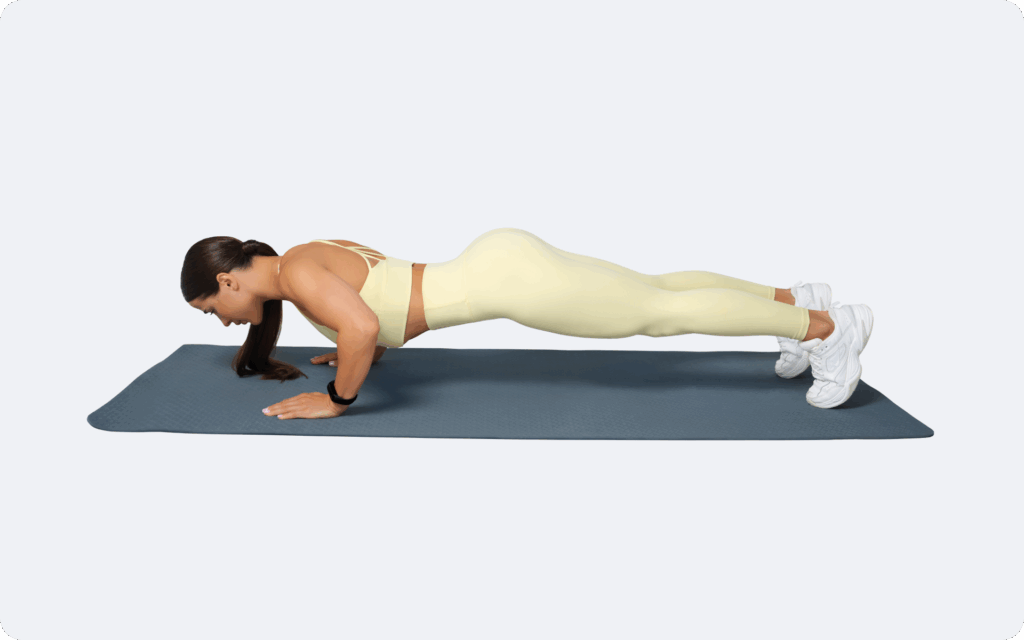
Standard Push-ups
How to do it
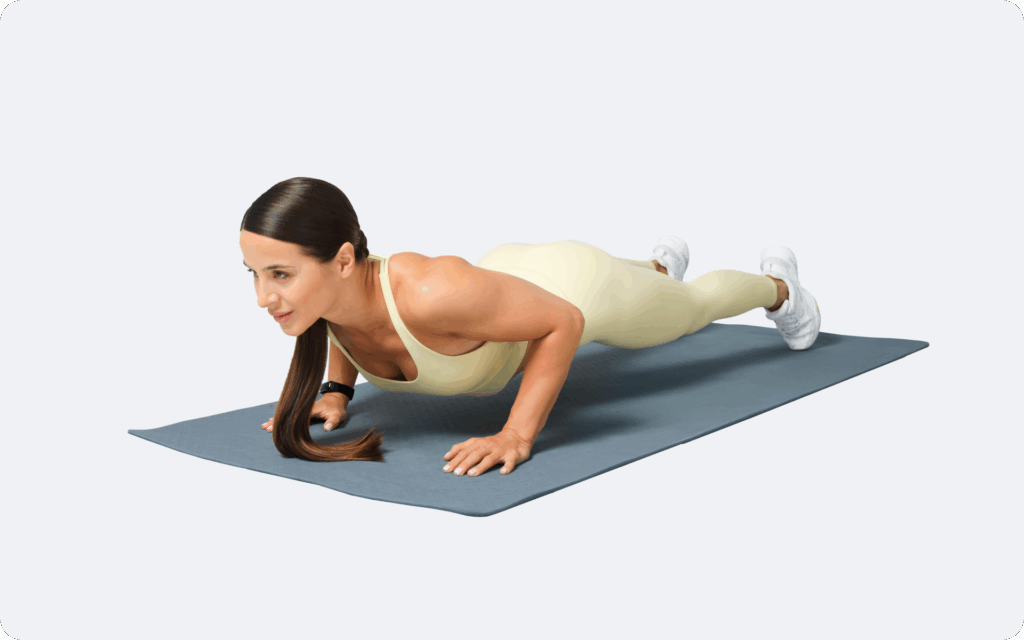
- Start in a plank position with your hands under your shoulders.
- Lower your chest toward the floor, keeping your elbows close to your body.
- Push back to the starting position, focusing on engaging your chest.
- This is one rep. Complete 8-10 reps for one set.
If you are looking for bodyweight exercises for chest and triceps, the standard push-up is a fantastic option. It targets the pectoralis major, triceps, and shoulders.
- The standard push-up may be too difficult for anyone new to exercising. Wall push-ups are great bodyweight chest exercises for beginners. To perform them, push off against the wall instead of getting down to a plank position
Incline Push-ups
This variation is great for a routine that calls for push-ups for lower chest. Unlike the standard variation above, here, your hands are elevated from the ground. The hands are often placed on a bench or a step.
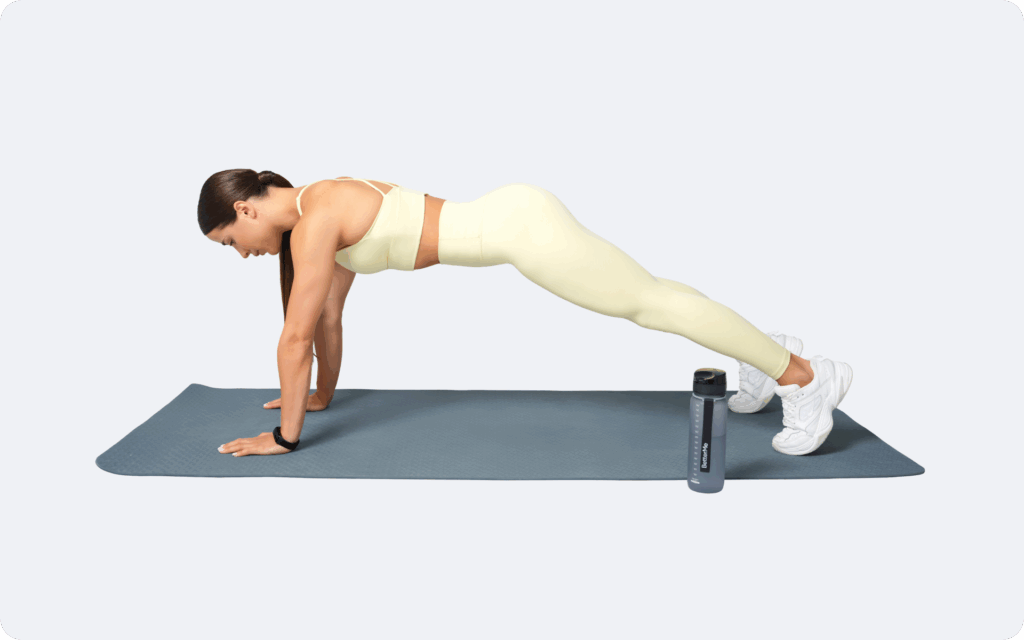
- Place your hands slightly wider than shoulder-width apart on a stable elevated surface.
- Hold your body in a straight line, with your arms extended and core engaged.
- Lower yourself until your chest touches the elevated surface, keeping your elbows close to your sides.
- Push back up to the starting position.
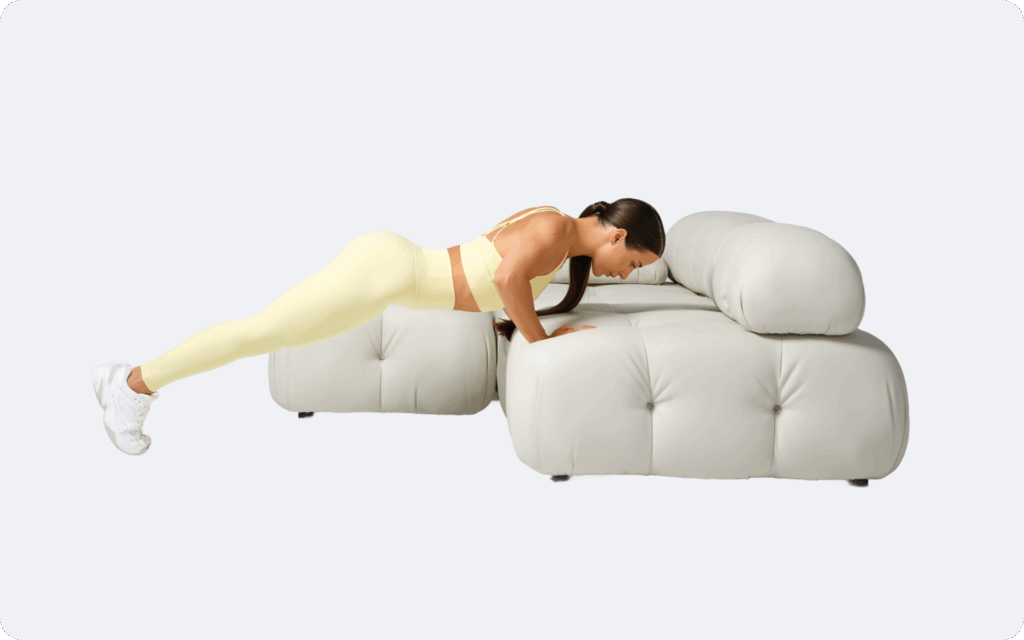
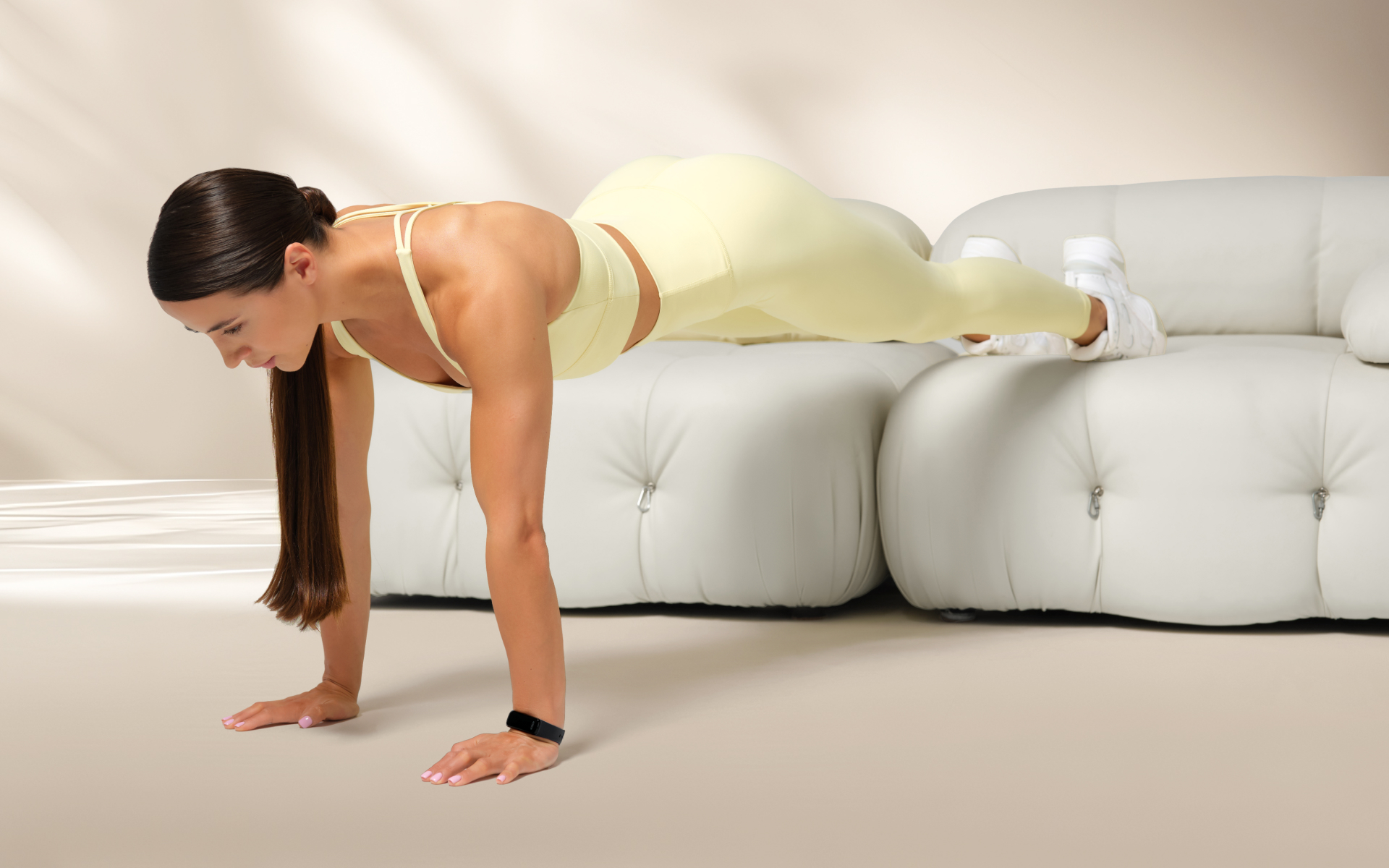
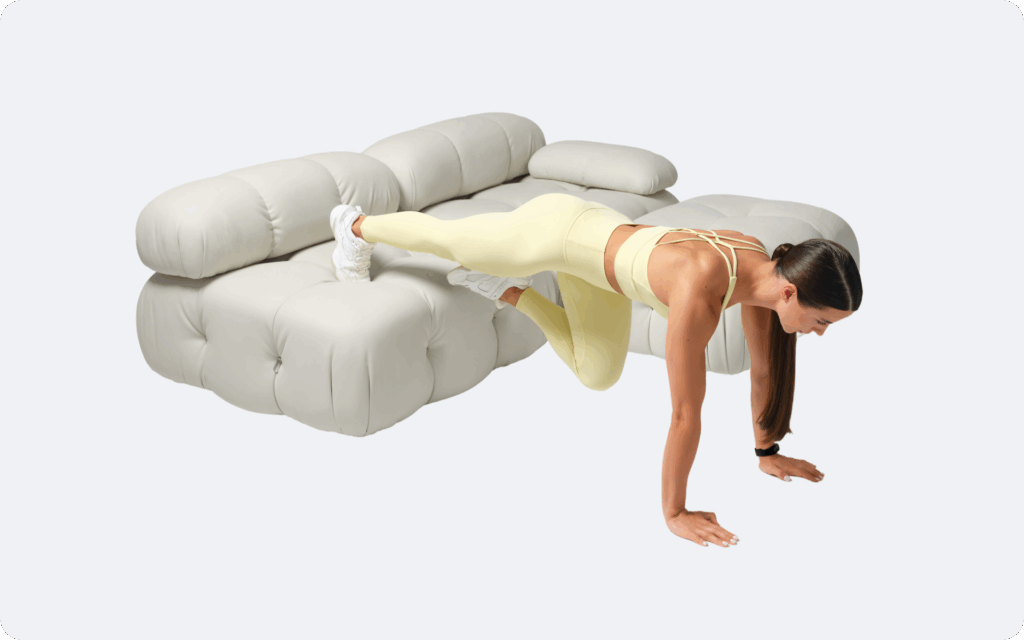
Decline Push-ups
For anyone looking for a challenge or upper chest bodyweight exercises, then this variation could be what you need.
While performing decline push-ups, your feet are not on the ground; rather, they are elevated on a bench, yoga block, or chair.
This angle helps put more strain on the upper chest muscles as compared to the standard variation.
How to do it
- Place your feet on an elevated surface such as a bench, chair, or step.
- Position your hands slightly wider than shoulder-width apart on the floor.
- Ensure that your body is in a straight line from your head to your feet, engaging your core muscles.
- Bend your elbows to lower your chest toward the floor, ensuring they’re at an approximately 45-degree angle to your torso.
- Keep lowering until your chest almost touches the ground.
- Press through your hands to straighten your arms and return to the starting position.
- This is one rep. Do up to 10 reps for 1 set while maintaining your form
Reasons why BetterMe is a safe bet: a wide range of calorie-blasting workouts, finger-licking recipes, 24/7 support, challenges that’ll keep you on your best game, and that just scratches the surface! Start using our app and watch the magic happen.
Pike Push-ups
Pike push-ups are more advanced than the previously mentioned variations, making them a great option for progressive overload. They are also a great choice for anyone looking for bodyweight exercises for chest and shoulders.
How to perform them
- Start in a downward dog position with your hands shoulder-width apart and your hips raised high.
- Drop your head between your arms and keep your spine straight.
- Slowly bend your elbows and lower the top of your head toward the floor. Ensure your elbows flare out slightly through the movement.
- Stop just before your head touches the ground. Pause.
- Push up by extending your elbows to lift your head back to the starting position.
- This is one rep. Perform 6-8 reps in a slow, controlled manner while maintaining proper form.
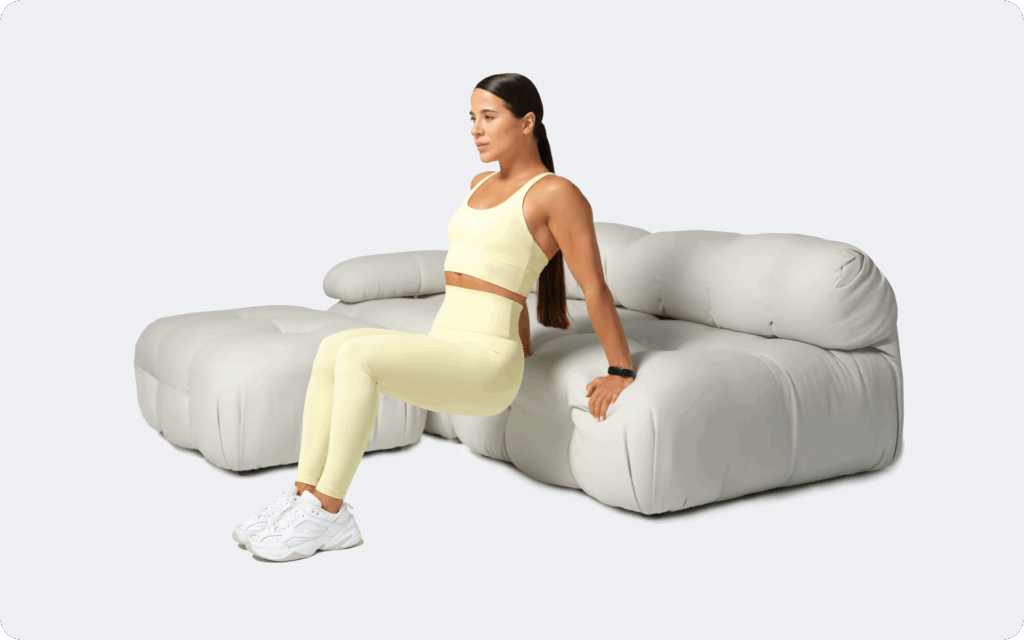
Forward Lean Chest Dips
Do not forget about this exercise when creating a plan for a good chest and arm workout. This exercise can be done using workout rings or parallel bars. Chest dips target the shoulders, lower pectoralis major, and the triceps brachii.
How to perform it (using parallel bars)
- Stand between the parallel bars and hold them with your palms facing inwards.
- Extend your arms so you are pressing your body above the bars.
- Bend your knees to move your feet behind your body.
- Lean slightly forward with your core braced and spine straight.
- Bend at the elbows and slowly lower your body until your elbows reach around 90 degrees, with your shoulders below your elbows. Pause
- Push back up to the start position, and stop just before you lock out your elbows.
- This is one rep. Perform 8-10 reps for one set
Note that these exercises are not just for muscle growth. If you are wondering how to get rid of chest fat, these exercises, as well as proper nutrition (a calorie deficit) and a healthy mix of cardio workouts, can help.
How Long Does It Take For Chest Growth?
It is hard to tell. Aside from exercise, muscle growth rate is affected by multiple factors, including (6)
- your genetics,
- the level of nutrition, especially protein intake,
- stress hormones,
- training duration, intensity, and frequency,
- rest,
- growth hormones, etc.
Because of these very individual factors, we cannot accurately tell how long it will take an individual to grow their chest muscles.
Read more: Chest Calisthenics Exercises That Deliver Results
How Many Reps For Chest Growth?
In a study published in 2021, researchers stated that when training for (7)
- Increased strength, 1-5 reps per set with heavy loads works best
- Increased muscle mass, aka hypertrophic gains, 8-12 reps with moderate loads, is optimal
- Increased muscle endurance, 15+ reps with light loads works best.
It is important to note that this study is based on exercises using weights. However, bodyweight exercises for chest do not use weights. Thus, we can exercise with the suggested 8-12 reps for hypertrophy, but ensure to practice progressive training for best results.
How Much Weight To Grow A Chest?
As the study above mentions, moderate loads are best when training with weights for hypertrophy. However, moderate weight differs from person to person. What feels heavy to one might be light to another and just right for someone else.
Thus, when attempting to do a chest workout at home with dumbbells, start with a weight that challenges you. The dumbbells should not be too light nor too heavy. You can complete the aforementioned 8-12 reps with proper form. If you are feeling tired at the end of the set, then you are likely using the correct weight.
Over time, your strength and endurance will grow to better handle the current dumbbell weights. You can then increase the weights (progressive overload) to better challenge yourself and maintain muscle growth.
How To Build a Big Chest Without Benching
Some ways you can achieve this goal include
- Progressive push-up overload
Do more reps or sets of your preferred push-up variations. You can also choose more advanced push-up variations than what you are used to. Such a routine may look as follows
Standard push-up → incline push-up → decline push-up → diamond/pike push-up → one arm push-ups
Points to note:
1. If you can complete your sets and reps with good form and still feel like you could do 1–2 more reps, then it’s time to progress.
Choose to do more sets or reps, or reduce the time spent exercising. If you are feeling up to it, move on to a more challenging variation as shown above
2. Aim to progress every 1–2 weeks. The time frame depends on your recovery and how challenging the workouts feel.
- Floor-based dumbbell exercises
Some examples include
Dumbbell floor fly
- Lie on your back and bend your knees so your feet can be planted on the floor.
- Press the dumbbells up so you’re holding them above the chest, palms facing each other.
- Keep a soft bend in the elbow.
- On an inhale, slowly lower the dumbbells in an arc movement until the arms are in line with your body. Your elbows should be close to touching the floor.
- Breathe out and squeeze your chest to push the dumbbells back together.
- This is one rep. Do 8-12 reps for one set
Dumbell floor squeeze press
- Lieon your back on the floor while holding one dumbbell in each hand directly above your chest.
- Ensure your palms are facing each other and your elbows are bent at a 90-degree angle.
- Keep your arms close together and squeeze the dumbbells as if trying to bring them towards each other.
- Slowly press the weights upwards until your arms are fully extended. Pause.
- Lower the weights back down in a controlled way, keeping your arms close together throughout the movement.
- This is one rep. Repeat 8-12 times for 1 set
- Chest isolation workouts
Isolation workouts, when combined with compound exercises, can help target the chest muscles more, leading to more muscle growth. Some examples include
Dumbbell flys
- Lie flat on a bench, holding a dumbbell in each hand above your chest.
- Slowly lower the dumbbells in an arc motion, keeping a slight bend in your elbows.
- Stop when the dumbbells reach chest level, then bring them back together at the top.
Cable crossovers
- Set the pulleys on a cable machine at shoulder height.
- Stand in the center and grab the handles with your arms extended slightly forward.
- Pull the handles together in front of your chest, crossing slightly for a full contraction.
- Slowly return to the starting position while maintaining tension
What are the Biggest Mistakes When Training Chest?
Some common mistakes exercises usually make when targeting this body part include
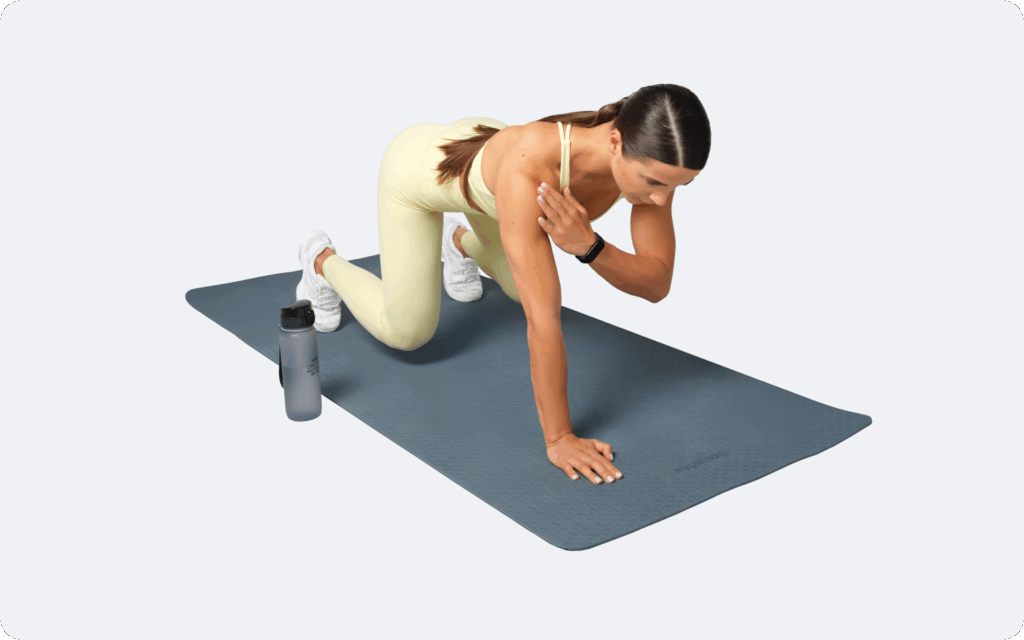
- Not using proper form – As seen from all the exercises listed above, neither option is done the same. They all have slight or major variations that impact how effective they are. When exercising, always pay attention to your form. This affects not only the muscles targeted but also the risk of injury.
- Ignoring back muscles – The best physique in both functionality and aesthetics is a balanced physique. Do not concentrate so much on the chest and forget your back. Always add back-focused movements like bent-over rows, pull-ups, back extensions, etc., for a more balanced routine and physique.
Lifting too heavy – This increases your risk of injury. Instead of looking for the biggest weights, start small. Start with something that is challenging but not too heavy and gradually work your way up to bigger, heavier weights.
There is no shortcut to muscle growth, including chest muscles. For sustained chest muscle building, you will need, Proper nutrition – Whole foods consumed at an adequate calorie intake. If looking to build muscle while losing fat, eat in a calorie deficit (9). If you are at an ideal weight but looking to gain muscle, eat in a moderate calorie surplus (10). Sleep is very important for muscle growth. Studies have shown that a lack of enough or good quality sleep can lead to muscle loss and fat accumulation in the body. It also reduces the rate of muscle protein synthesis; the process in which the body builds and repairs muscle tissue. Muscle protein synthesis is essential for building bigger and stronger muscles (11, 12, 13). While there is no scientific evidence to prove it, many in online spaces claim that the upper chest is the hardest to grow. However, as previously stated, muscle growth is dependent on multiple factors. Thus, the part that one person finds hard to develop might be easy for another. The optimal protein intake for muscle growth, including chest muscle growth, is between 1.2 g and 1.6 g of protein per kg of your bodyweight per day (8). Some sources say that the barbell bench press is the best, while others claim it’s the incline push-up. However, none of these sources has any scientific research backing. Thus, when growing your chest muscles, incorporate This will likely offer better results than just one exercise.Frequently Asked Questions
What builds your chest the fastest?
How important is sleep for muscle growth?
What is the hardest part of the chest to build?
How much protein do I need to grow a chest?
What is the number one chest exercise?
The Bottom Line
Bodyweight exercises for chest work just as well as weight lifting in growing chest muscle mass. If you do not have the time or ability to go to the gym, these calisthenics can also help you achieve your goal. Just ensure that you eat well, be consistent with your routine, rest and sleep well, and do progressive overload training. This combination will lead to the best results.
DISCLAIMER:
This article is intended for general informational purposes only and does not serve to address individual circumstances. It is not a substitute for professional advice or help and should not be relied on for making any kind of decision-making. Any action taken as a direct or indirect result of the information in this article is entirely at your own risk and is your sole responsibility.
BetterMe, its content staff, and its medical advisors accept no responsibility for inaccuracies, errors, misstatements, inconsistencies, or omissions and specifically disclaim any liability, loss or risk, personal, professional or otherwise, which may be incurred as a consequence, directly or indirectly, of the use and/or application of any content.
You should always seek the advice of your physician or other qualified health provider with any questions you may have regarding a medical condition or your specific situation. Never disregard professional medical advice or delay seeking it because of BetterMe content. If you suspect or think you may have a medical emergency, call your doctor.
SOURCES:
- Effect of Progressive Calisthenic Push-up Training on Muscle Strength and Thickness (2018, pubmed.ncbi.nlm.nih.gov)
- Progressive overload without progressing load? The effects of load or repetition progression on muscular adaptations (2022, pmc.ncbi.nlm.nih.gov)
- The effects of a calisthenics training intervention on posture, strength and body composition (2017, researchgate.net)
- A Comprehensive Review of Calisthenics: Evolution, Science, and Practice (2025, ijcrt.org)
- The Effect of Breaking Up Sedentary Time with Calisthenics on Neuromuscular Function: A Preliminary Study (2022, pmc.ncbi.nlm.nih.gov)
- Muscle Development (n.d., sciencedirect.com)
- Loading Recommendations for Muscle Strength, Hypertrophy, and Local Endurance: A Re-Examination of the Repetition Continuum (2021, pmc.ncbi.nlm.nih.gov)
- Systematic review and meta-analysis of protein intake to support muscle mass and function in healthy adults (2022, pubmed.ncbi.nlm.nih.gov)
- Optimal Diet Strategies for Weight Loss and Weight Loss Maintenance (2020, pmc.ncbi.nlm.nih.gov)
- Nutrition Recommendations for Bodybuilders in the Off-Season: A Narrative Review (2019, pmc.ncbi.nlm.nih.gov)
- The effect of acute sleep deprivation on skeletal muscle protein synthesis and the hormonal environment (2021, pmc.ncbi.nlm.nih.gov)
- Sleep, circadian biology and skeletal muscle interactions: Implications for metabolic health (2022, sciencedirect.com)
- Effect of changes in sleeping behavior on skeletal muscle and fat mass: a retrospective cohort study (2023, link.springer.com)
 Reviewed by