Starting a new fitness routine can feel like navigating a complex map without a compass. With so much information available, it’s easy to feel overwhelmed and unsure where to begin.
This guide is designed to be your compass. We’ll cut through the noise and provide a clear, science-backed roadmap to help you start working out safely and effectively, whether you’re at home or in a gym.
This comprehensive beginners’ guide to working out at home will give you the foundational knowledge you need to build sustainable habits, understand the “why” behind the “how”, and feel empowered on your fitness journey.
We’ll cover everything from setting initial goals to structuring your weekly schedule, ensuring that you have the tools for long-term success.
What is a Beginners’ Guide to Working Out Safely?
A beginners’ guide to working out safely is a structured framework that prioritizes your well-being as you start your fitness journey.
Its purpose is to introduce you to exercise in a way that minimizes injury risk while maximizing your potential for progress. It focuses on fundamental principles, proper technique, and gradual progression rather than pushing for too much, too soon.
Safety in this context means:
- Understanding your body’s needs/limits and respecting them
- Learning how to perform movements correctly to ensure the right muscles are engaged and your joints are protected
- Acknowledging the importance of rest and recovery, which are just as important as the workouts themselves for building strength and preventing burnout
This guide is built on that philosophy.
What Should I Do when I First Start Working Out?
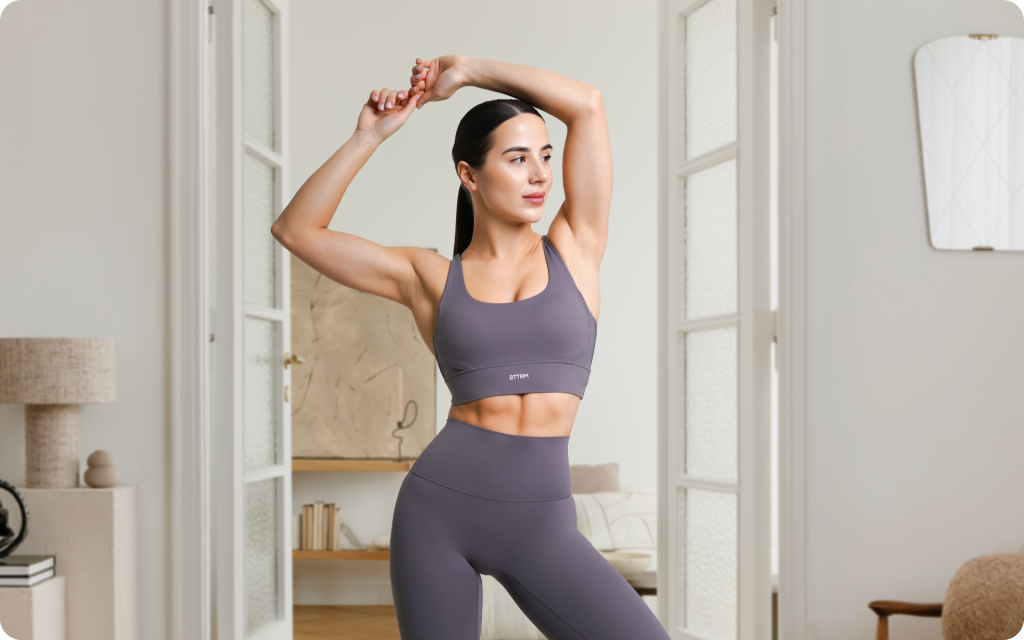
When you first start, the most important factors are creating a sustainable habit, learning correct movement patterns, and listening to your body. The initial phase isn’t about lifting the heaviest weights or doing the most intense cardio – it’s about building a solid foundation.
Find Your “Why” and Set Realistic Goals
Before you do a single push-up, take a moment to define why you want to start working out. Is it to feel stronger in your daily life? To have more energy for your family? To improve your mental health? Your “why” is the intrinsic motivation that will keep you going when challenges arise.
Once you have your “why”, set realistic, specific, and measurable goals. Instead of a vague goal such as “get in shape”, try something like:
- “I will complete three 30-minute workouts per week for the next month.”
- “I will be able to perform 10 bodyweight squats with good form by the end of two weeks.”
- “I will go for a 20-minute walk during my lunch break on Mondays, Wednesdays, and Fridays.”
Achieving these small, concrete goals builds momentum and confidence.
Reasons why BetterMe is a safe bet: a wide range of calorie-blasting workouts, finger-licking recipes, 24/7 support, challenges that’ll keep you on your best game, and that just scratches the surface! Start using our app and watch the magic happen.
Focus on Movement Proficiency
For new lifters, the priority is learning how to perform exercises correctly. This is called developing movement proficiency. Frequent, purposeful practice is the key to mastering new motor patterns (1).
When you start, use loads that are light enough for you to maintain complete control. This is often in the range of 60-80% of your one-rep max (1RM) – the maximum weight you can lift for a single repetition (2). As you won’t know your 1RM as a beginner, a good rule of thumb is to choose a weight that feels challenging, but allows you to stay at least 3-4 reps away from muscular failure. This ensures your form remains solid throughout the set.
Build Muscle and Body Awareness
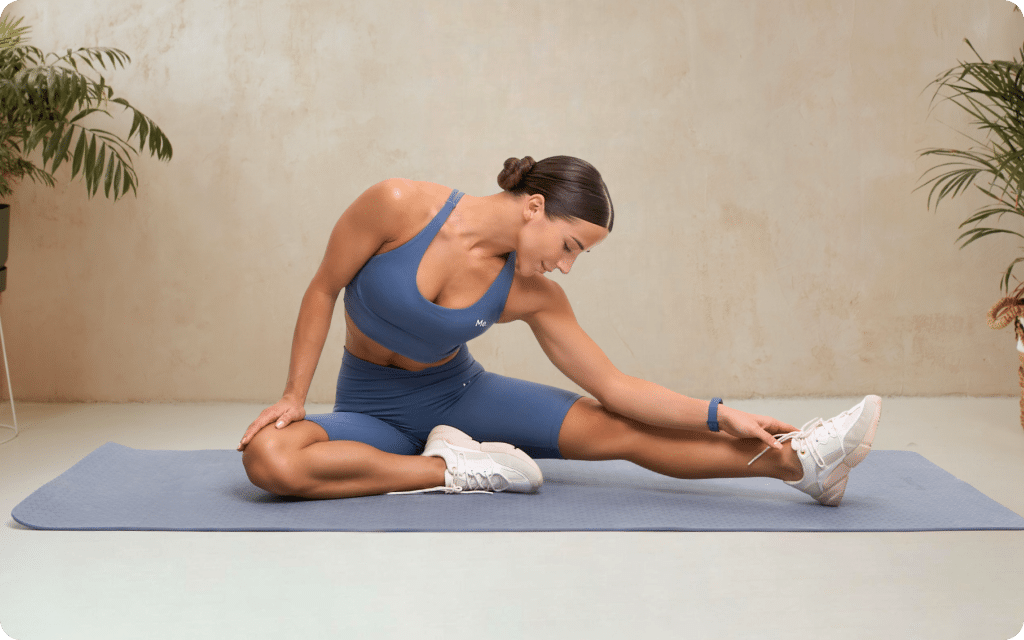
Developing an awareness of how your muscles feel when they contract and relax is a crucial skill – it helps you ensure the target muscles are doing the work during an exercise (3).
- Isolation Exercises: Movements such as bicep curls or leg extensions, which are often called “bodybuilding-style” exercises, are excellent for helping you feel a specific muscle working (4).
- Bodyweight Movements: Challenging bodyweight exercises such as planks, glute bridges, and squats are effective for teaching overall body control and awareness (5).
This mind-muscle connection will make your workouts more effective and safer over time.
Prioritize Enjoyment and Community
Most people who start an exercise program quit within the first year. A major reason is a lack of enjoyment. To build a lasting habit, you need to find a form of movement that you genuinely look forward to. Experiment with different activities until you discover what clicks for you (6).
Finding a community can also be a powerful motivator. This could be an in-person workout buddy, a group class, or even an online fitness community. Sharing the journey provides accountability and support, which makes it easier to stay on track.
For women who want a structured way to stay consistent, check out our resources on creating a workout schedule for female beginners.
Read more: At-Home Chair Pilates Workout Routines for Beginners
What Is the First Rule of Working Out?
If there were one “first rule” of working out, it would be to listen to your body. While principles such as consistency and progressive overload are essential for long-term progress, they are all secondary to your body’s immediate feedback.
This rule is nuanced. It doesn’t mean stopping the moment you feel a slight burn or discomfort – that’s often a normal part of challenging your muscles. Instead, it means paying close attention to the difference between the productive stress of exercise and the warning signs of potential injury.
Here’s what “listening to your body” involves:
- Differentiating Good Pain from Bad Pain: Muscle soreness, or delayed onset muscle soreness (DOMS), is a common and normal response to a new or intense workout. It typically feels like a dull ache in the muscles and subsides in a few days. Sharp, stabbing, or radiating pain, particularly in or around a joint, is a red flag. If you feel this, you should stop the exercise immediately (7).
- Honoring Your Energy Levels: Some days you’ll feel full of energy, and other days you’ll feel tired. It’s okay to adjust your workout intensity accordingly. On a low-energy day, a lighter workout, a walk, or a stretching session is far better than forcing a high-intensity session and risking injury or burnout.
- Prioritizing Recovery: Your muscles grow and get stronger during periods of rest, not during the workout itself (8). Listening to your body means giving it adequate time to recover between sessions. This includes getting enough sleep, managing stress, and fueling yourself properly (9).
Ignoring your body’s signals in pursuit of a rigid plan is one of the fastest ways to get injured and derail your progress. The most successful fitness journeys are built on a partnership with your body, not a battle against it.
Which Workout Is Best for Beginners?
There is no single “best” workout for every beginner. The optimal choice depends on your goals, preferences, available equipment, and current fitness level. The most effective workout plan is the one you can stick with consistently. Let’s explore some excellent options.
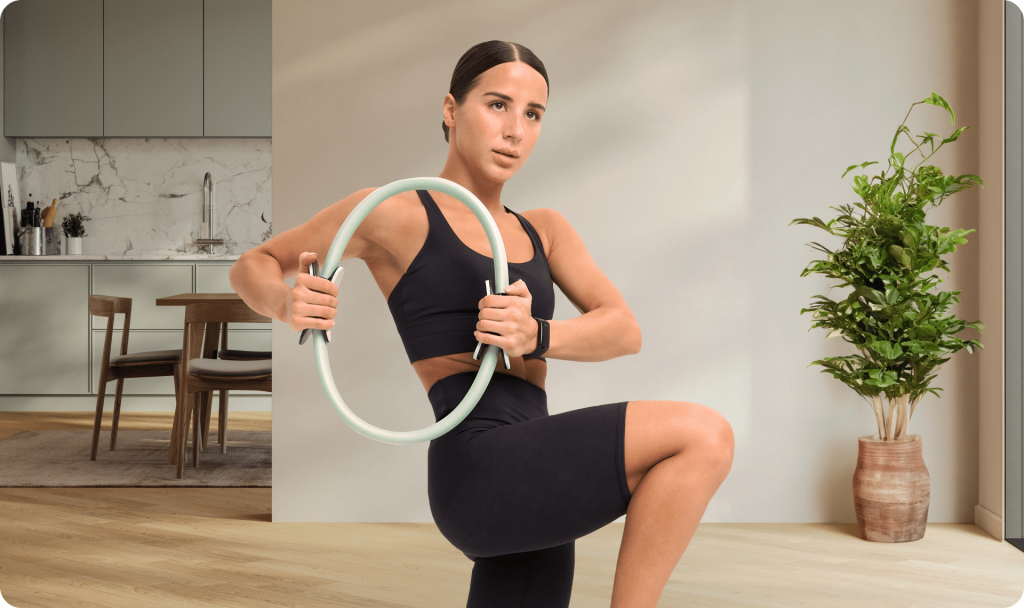
Full-Body Resistance Training
For beginners, a full-body resistance training routine performed two to three times per week is an effective starting point. This approach allows you to train all major muscle groups frequently enough to stimulate growth and strength gains while providing ample recovery time between sessions. Research has shown that for novices, this frequency is ideal for maximizing progress (10). Split routines where you split your training into upper/lower workouts, push/pull/legs workouts, and so on are equally effective, but it all comes down to preference and how much time you can spare.
Resistance training can be done using:
- Bodyweight: An excellent starting point that requires no equipment. A well-designed bodyweight workout plan for beginners, female or male, can lay a solid foundation of strength (5).
- Dumbbells or Kettlebells: Versatile tools for at-home workouts that allow for easy progressive overload (11).
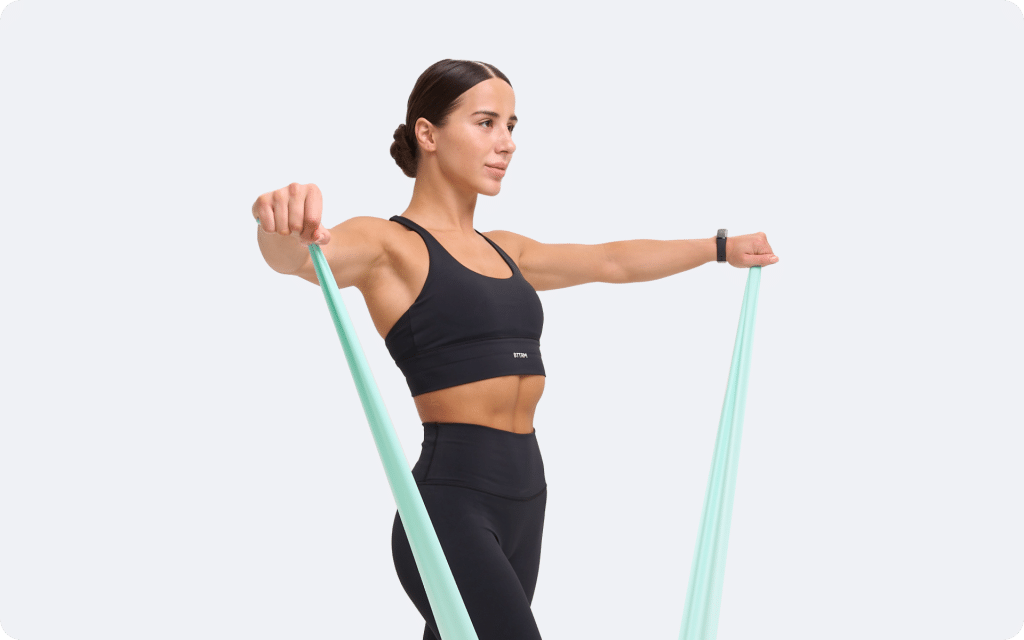
- Resistance Bands: A portable and affordable option for adding resistance (12).
- Gym Machines: These can be helpful for beginners as they guide the movement path, reducing the risk of improper form (13).
At-Home Workouts
Working out at home offers incredible convenience and flexibility. You don’t need a fully equipped home gym to get a fantastic workout. Many effective workout routines for beginners at home use minimal equipment.
A few key pieces can elevate your at-home workouts:
- Dumbbells: A light, medium, and heavy set can cover a wide range of exercises. Adjustable dumbbells are a great space-saving option.
- Resistance Bands: Loops and tube bands are perfect for adding resistance to both upper and lower body exercises.
- A Mat: For comfort during floor exercises such as planks, crunches, and glute bridges.
The beauty of at-home workouts is their adaptability. You can start with just your body weight and gradually add equipment as you progress. This makes it a sustainable and cost-effective option for many people.
Cardio or Aerobic Exercise
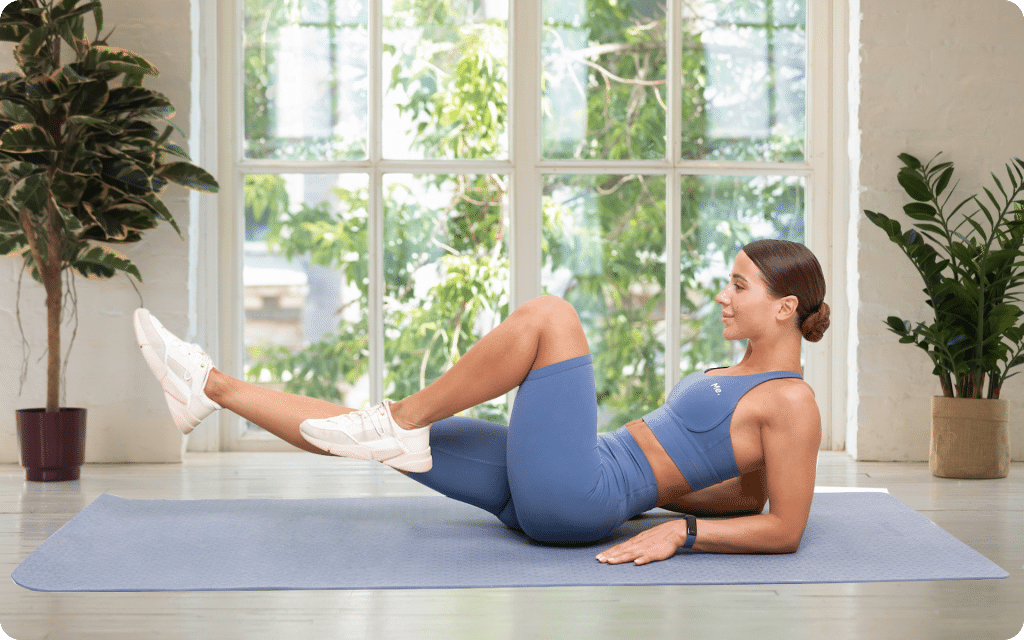
Cardiovascular exercise is any activity that raises your heart rate and keeps it elevated for a sustained period. It’s essential for heart health, endurance, and overall well-being (14). Beginner-friendly options include:
- Brisk walking
- Jogging
- Cycling
- Swimming
- Using an elliptical machine
The key is to start at a manageable intensity. You should be able to hold a conversation while doing it – this is often called the “talk test”.
Do you want to learn more? Explore our detailed guide to cardio exercises for beginners.
Should Beginners Focus on Cardio or Weights?
This is a common question, but it presents a false choice. A well-rounded fitness program for a beginner should include both resistance training (weights) and cardiovascular exercise. They offer different, complementary benefits that work together to improve your overall health and fitness.
Benefits of Resistance Training (15):
- Builds Muscle and Strength: This is the most effective way to increase muscle mass, which boosts your metabolism.
- Improves Bone Density: The stress of weight-bearing exercise signals your body to build stronger bones.
- Enhances Body Composition: Building muscle and losing fat leads to a more toned and defined physique.
- Increases Metabolic Rate: Muscle tissue burns more calories at rest than fat tissue, so more muscle means a higher resting metabolism.
Benefits of Cardiovascular Exercise (14):
- Strengthens Your Heart and Lungs: Cardio improves your cardiovascular system’s efficiency.
- Increases Endurance: It improves your body’s ability to use oxygen, which allows you to sustain activity for longer.
- Aids in Calorie Burning and Weight Management: It’s an effective tool for creating a calorie deficit.
- Improves Mood and Reduces Stress: Aerobic exercise releases endorphins, which have mood-boosting effects.
For a beginner, the ideal approach is to incorporate 2-3 days of full-body resistance training and 2-3 days of moderate-intensity cardio each week. You can perform them on separate days or combine them into the same session (e.g. a short cardio warm-up followed by weights, or a full cardio session after your lifting).
Read more: What Makes Pilates Different From Other Exercises?
What’s a Good Beginner Workout Schedule?
A good beginner workout schedule is balanced, allows for adequate recovery, and fits realistically into your life. The goal is consistency, not perfection. As a novice, your body adapts quickly, but it also needs time to repair. Therefore, rest days are just as important as training days.
Resistance training days should be non-consecutive to allow for at least 48 hours of recovery for your muscles (8). A good rule is to take at least 1 to 2 days of rest between full-body sessions.
Here’s a sample beginner workout schedule that incorporates both strength and cardio:
- Monday: Full-body resistance training (Workout A)
- Tuesday: 30 minutes of moderate-intensity cardio (e.g. brisk walking, cycling)
- Wednesday: Rest or active recovery (e.g. light stretching, yoga)
- Thursday: Full-body resistance training (Workout B)
- Friday: 30 minutes of moderate-intensity cardio
- Saturday: Rest or active recovery
- Sunday: Rest
Beginner Full-Body Workout Program
This program requires a pair of dumbbells. Choose a weight that allows you to complete the target rep range with good form, feeling challenged on the last 1-2 reps.
Program Notes:
- Frequency: Perform each workout (A and B) once per week, with at least one day of rest in between (e.g. Workout A on Monday, Workout B on Thursday).
- Sets and Reps: Perform 3 sets of 10-12 repetitions for each exercise.
- Rest: Rest for 60-90 seconds between sets.
- Progressive Overload: Once you can comfortably complete 12 reps for all 3 sets, increase the weight slightly in your next session.
Workout A
| Exercise | Sets | Reps |
|---|---|---|
| Dumbbell goblet squat | 3 | 10-12 |
| Dumbbell bench press | 3 | 10-12 |
| Dumbbell bent-over row | 3 | 10-12 |
| Plank | 3 | Hold for 30-60 sec |
| Glute bridge | 3 | 12-15 |
| Exercise | Sets | Reps |
|---|---|---|
| Dumbbell Romanian deadlift | 3 | 10-12 |
| Dumbbell overhead press | 3 | 10-12 |
| Seated cable row (or band row) | 3 | 10-12 |
| Dumbbell bicep curl | 3 | 10-12 |
| Dumbbell triceps overhead extension | 3 | 10-12 |
Exercise Instructions
Dumbbell Goblet Squat
- Stand with your feet slightly wider than shoulder-width apart, your toes pointing out slightly.
- Hold one end of a dumbbell vertically with both hands, cupping the top head of the dumbbell close to your chest.
- Keeping your chest up and back straight, initiate the movement by pushing your hips back and then bending your knees.
- Lower yourself until your thighs are parallel to the floor, or as low as you can comfortably go while maintaining good form.
- Push through your heels to return to the starting position, squeezing your glutes at the top.
Dumbbell Bench Press
- Lie on a flat bench with your feet firmly on the floor. Hold a dumbbell in each hand with an overhand grip, resting on your thighs.
- Bring the dumbbells up to the sides of your chest. Your palms should be facing forward.
- Press the dumbbells straight up until your arms are fully extended, but not locked.
- Slowly lower the dumbbells back to the starting position at the sides of your chest.
Dumbbell Bent-Over Row
- Stand with your feet shoulder-width apart, holding a dumbbell in each hand with a neutral grip (your palms facing each other).
- Hinge at your hips, keeping your back straight, until your torso is nearly parallel to the floor. Let the dumbbells hang straight down.
- Pull the dumbbells up toward your lower ribcage, squeezing your shoulder blades together. Keep your elbows tucked in.
- Slowly lower the dumbbells back to the starting position.
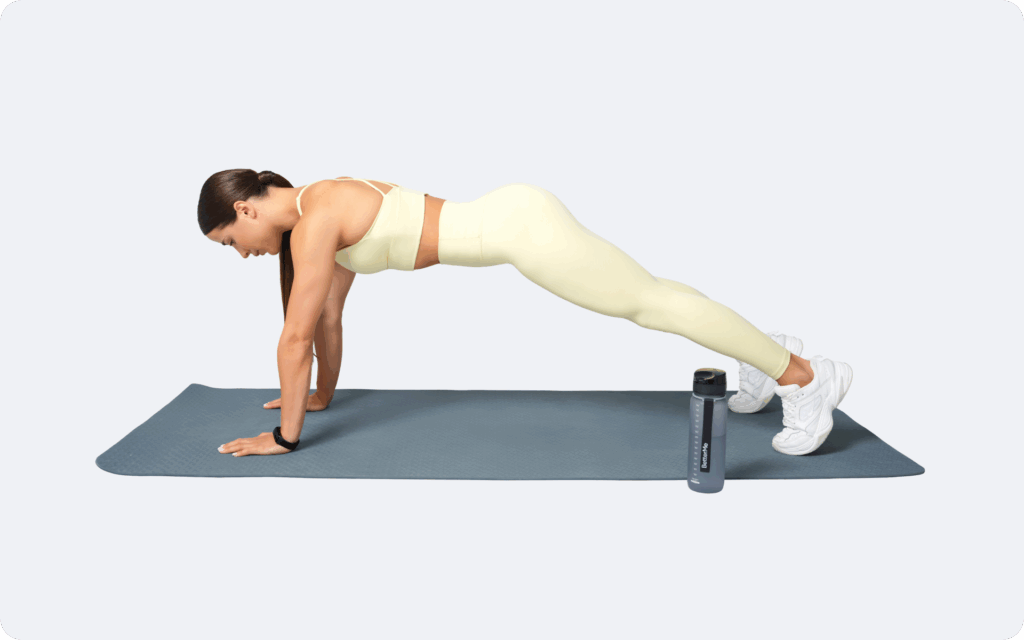
Plank
- Start on all fours, then extend your legs back to come into a push-up position.
- Lower onto your forearms, ensuring your elbows are directly under your shoulders.
- Engage your core and glutes to create a straight line from your head to your heels.
- Hold this position, avoiding letting your hips sag or rise too high.
Glute Bridge
- Lie on your back with your knees bent and your feet flat on the floor, hip-width apart. Place your arms by your sides.
- Engage your core and glutes, then lift your hips off the floor until your body forms a straight line from your shoulders to your knees.
- Squeeze your glutes at the top of the movement.
- Slowly lower your hips back to the starting position.
Dumbbell Romanian Deadlift (RDL)
- Stand with your feet hip-width apart, holding a dumbbell in each hand in front of your thighs with an overhand grip.
- Keeping your legs almost straight (a slight bend in the knees is okay), hinge at your hips, pushing your butt back.
- Lower the dumbbells toward the floor, keeping them close to your legs. Keep your back straight throughout the movement. You should feel a stretch in your hamstrings.
- Go as low as you can without rounding your back, then return to the starting position by squeezing your glutes and hamstrings.
Dumbbell Overhead Press
- Sit on a bench with back support or stand with your feet shoulder-width apart. Hold a dumbbell in each hand at shoulder height, your palms facing forward.
- Press the dumbbells straight overhead until your arms are fully extended.
- Slowly lower the dumbbells back to shoulder height.
Seated Cable Row
- Sit at a cable row machine with your feet on the platform and your knees slightly bent.
- Grab the handle with a neutral grip, and sit up tall with your back straight and chest out.
- Pull the handle toward your lower abdomen, squeezing your back muscles.
- Slowly extend your arms to return to the starting position.
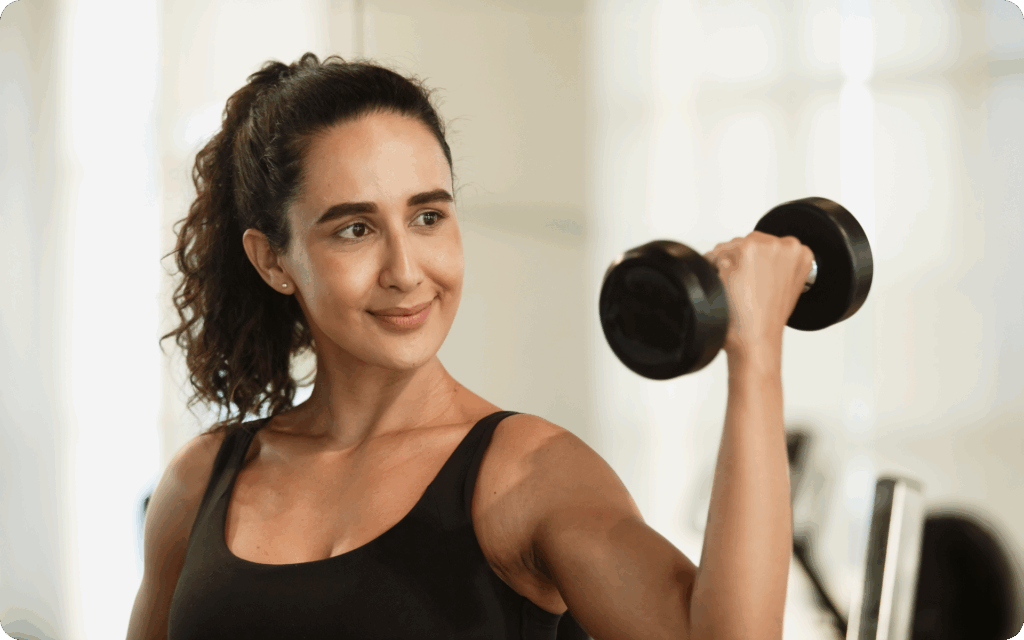
Dumbbell Bicep Curl
- Stand or sit, holding a dumbbell in each hand with an underhand grip (your palms facing forward).
- Keeping your elbows pinned to your sides, curl the dumbbells up toward your shoulders.
- Squeeze your biceps at the top of the movement.
- Slowly lower the dumbbells back to the starting position.
Dumbbell Triceps Overhead Extension
- Sit on a bench or stand, holding one dumbbell with both hands, cupping the top head.
- Extend your arms straight overhead.
- Keeping your elbows pointing forward, lower the dumbbell behind your head until your forearms are parallel to the floor.
- Extend your arms to press the dumbbell back up to the starting position, focusing on contracting your triceps.
Are you looking for help with your nutrition? We have some great meal planning tips to complement your new workout routine.
Where Can Beginners Find More Workout Tips?
As you progress, your needs will evolve. Continuing to learn is key to long-term success. Reliable resources can provide guidance, motivation, and new ideas to keep your fitness journey exciting.
The BetterMe Health Coaching app is a fantastic resource for beginners. It offers personalized workout plans, including a great workout plan for beginners both female and male, nutritional guidance, and tracking tools to monitor your progress. The app adapts to your fitness level and goals, providing a structured yet flexible path forward.
BetterMe’s blog is also packed with valuable information. You’ll find articles on everything from specific exercise techniques to strategies for staying motivated. They are an excellent way to deepen your understanding of health and fitness principles from trusted experts.
It depends on the type and intensity of the exercise. Low-intensity activities such as walking or gentle stretching can be done daily. However, it’s essential to give your muscles time to recover from moderate-to-high intensity resistance training. Taking at least 1-2 rest days per week from intense workouts is essential for muscle repair, growth, and injury prevention (8). Lifting weights without cardio will still build significant muscle and strength, improve bone density, and boost your metabolism (15). However, you would miss out on the specific cardiovascular benefits that aerobic exercise provides, such as improved heart health, increased endurance, and enhanced efficiency of your circulatory system. A balanced program is optimal for overall health (16). Ideally, you should consume a meal 2-3 hours before your workout that contains a good balance of complex carbohydrates (for sustained energy) and lean protein (17). Examples include oatmeal with berries or a chicken and rice bowl. If you’re short on time, a smaller snack 30-60 minutes before, such as a banana or a small granola bar, can provide a quick energy boost. You can’t spot-reduce fat from a specific area such as the stomach (18). The most effective way to lose belly fat is to reduce your overall body fat percentage. This is achieved through a consistent calorie deficit created by a combination of a nutritious diet, regular cardiovascular exercise, and resistance training to build metabolism-boosting muscle (19). This guide has provided the foundational knowledge and tools to start your fitness journey with confidence. The key is to start, stay consistent, and be patient with yourself. Every workout is a step in the right direction, and by applying these principles, you’re building a healthier, stronger future.Frequently Asked Questions
Is it OK to exercise every day?
What happens if I just lift weights and no cardio?
What should I eat before a workout?
What burns the most stomach fat?
DISCLAIMER:
This article is intended for general informational purposes only and does not serve to address individual circumstances. It is not a substitute for professional advice or help and should not be relied on for making any kind of decision-making. Any action taken as a direct or indirect result of the information in this article is entirely at your own risk and is your sole responsibility.
BetterMe, its content staff, and its medical advisors accept no responsibility for inaccuracies, errors, misstatements, inconsistencies, or omissions and specifically disclaim any liability, loss or risk, personal, professional or otherwise, which may be incurred as a consequence, directly or indirectly, of the use and/or application of any content.
You should always seek the advice of your physician or other qualified health provider with any questions you may have regarding a medical condition or your specific situation. Never disregard professional medical advice or delay seeking it because of BetterMe content. If you suspect or think you may have a medical emergency, call your doctor.
SOURCES:
- Motor Learning (2018, sciencedirect.com)
- WHAT IS A ONE-REP MAX? (2022, hprc-online.org)
- Importance of mind-muscle connection during progressive resistance training (2015, link.springer.com)
- How to Add Isolation Exercises to Your Strength-Training Routine (Shape) (2022, acefitness.org)
- Benefits of Bodyweight Training (2025, humankinetics.me)
- What Makes Individuals Stick to Their Exercise Regime? A One-Year Follow-Up Study Among Novice Exercisers in a Fitness Club Setting (2021, frontiersin.org)
- Delayed Onset Muscle Soreness (DOMS) (2025, my.clevelandclinic.org)
- The Importance of Recovery in Resistance Training Microcycle Construction (2024, pmc.ncbi.nlm.nih.gov)
- EXPLORING THE SCIENCE OF RECOVERY (n.d., blog.nasm.org)
- Determination of Resistance Training Frequency (2020, nsca.com)
- 5 Benefits of Dumbbell Training (2015, acefitness.org)
- Effects of training with elastic resistance versus conventional resistance on muscular strength: A systematic review and meta-analysis (2019, pmc.ncbi.nlm.nih.gov)
- 6 Benefits of Using Weightlifting Machines (2015, acefitness.org)
- Cardiovascular exercise (2024, healthdirect.gov.au)
- Resistance training – health benefits (2022, betterhealth.vic.gov.au)
- New research finds half-cardio, half-strength training reduces cardiovascular disease risks (2024, news.iastate.edu)
- Editorial: Pre-workout nutrition (2023, frontiersin.org)
- Spot reduction: why targeting weight loss to a specific area is a myth (2023, sydney.edu.au)
- Effect of exercise training on weight loss, body composition changes, and weight maintenance in adults with overweight or obesity: An overview of 12 systematic reviews and 149 studies (2021, onlinelibrary.wiley.com)

 Reviewed by
 Reviewed by