If you want to master your body’s movement patterns, relying solely on heavy weights isn’t the only path. There is a common misconception that effective strength and conditioning requires a gym membership, a squat rack, and heavy iron.
While mechanical tension from heavy loads is a primary driver of muscle growth, recent sports science indicates that metabolic stress–often achieved through high-repetition, low-load training–is a potent stimulus for adaptation (1).
This adaptive ability is where barre training comes into play.
A lot of people see Barre as purely aesthetic or “easy,” but when executed with proper intensity and form, it profoundly challenges your local muscular endurance and stability systems.
In this guide, we will break down the physiology behind barre, provide a structured at-home barre workout for beginners, and explain exactly how to execute it for maximum benefit without a studio.
What Is An At Home Barre Workout?
An at-home barre workout is a hybrid training modality that combines elements of ballet, Pilates, and yoga into a cohesive resistance-training session.
Unlike traditional strength training, which relies on external loads (dumbbells or barbells), barre primarily uses body weight, gravity, and high-repetition sets to fatigue specific muscle groups.
The defining characteristic of a barre workout is the focus on small, isometric (static) or low-amplitude (pulsing) movements.
Biomechanically, these movements increase “Time Under Tension” (TUT).
By keeping a muscle under constant tension for extended periods (often 45–90 seconds per set), you may be restricting blood flow to the muscle, creating a hypoxic environment (2).
This accumulation of metabolites (like lactate) signals the body to adapt by improving endurance and, to a degree, hypertrophy (muscle growth) (2).
When you perform this at home, you replicate these conditions with household items for balance, eliminating the need for specialized machinery.
Will Barre Get You Toned?
The term “toned” is frequently used in fitness marketing but rarely defined scientifically.
In physiological terms, “toning” simply refers to the combination of 2 specific adaptations:
- Hypertrophy: An increase in the cross-sectional area of muscle fibers.
- Leanness: A reduction in subcutaneous body fat, making the muscle definition visible.
Barre effectively addresses the first component–muscle development–through metabolic stress.
Research suggests that hypertrophy can occur across a broad spectrum of loading ranges (3). While traditional hypertrophy training uses loads of 65-85% of your 1-Repetition Maximum (1RM), barre operates in the lighter load range (often <30% 1RM or bodyweight).
BetterMe: Health Coaching app helps you achieve your body goals with ease and efficiency by helping to choose proper meal plans and effective workouts. Start using our app and you will see good results in a short time.
However, provided you take these sets close to muscular failure (where you physically cannot complete another rep with good form), you will stimulate muscle protein synthesis (4).
For the second component (fat loss), barre contributes to your total daily energy expenditure. A 30-minute session of continuous movement may keep your heart rate elevated, often in Zone 2 (60-70% of max heart rate) or Zone 3 (70-80%), depending on intensity (5).
A sustained calorie deficit is thought to be the primary driver of fat loss (6). The caloric expenditure from a consistent best at home barre workout routine supports the energy deficit required to reveal muscle definition.
If you are looking for more details on the physiological adaptations of this training style, read more about the benefits of barre workout here.
Can I Do Barre Workouts At Home?
Absolutely. The barrier to entry for barre is exceptionally low because the primary resistance tool is your own body.
Barre workout benefits can take place with minimal space requirements.
You need a clear floor area of approximately 6 feet x 6 feet to allow for leg extensions and lateral movements without obstruction.
Unlike high-intensity interval training (HIIT), which might require jumping and sprinting, barre is a contained, low-impact activity.
The structural integrity of your workout space matters more than the size.
You need a stable surface for balance–a kitchen counter, a sturdy chair, or even a wall.
The floor’s friction is also a variable to consider; a non-slip surface or a yoga mat is crucial to prevent sliding during wide-stance exercises like the Second Position Plié.
For those strictly following a no-equipment protocol, the at-home barre workout no equipment requires nothing but gravity.
However, as you progress, you can easily scale the intensity.
If you have access to small external loads, an at-home barre workout with dumbbells (1kg–2kg, roughly 2–4 lbs.) can significantly increase torque at the shoulder joint, intensifying upper-body work.
If you are structuring a longer routine, consider exploring a comprehensive 7 -day at home workout plan.
What Is A Toning At Home Barre Workout?
The following program works as a 30-minute session. It targets the lower body, glutes, core, and posture stabilizers.
Program Notes:
- Tempo: Unless specified, perform movements at a 2-0-2-0 tempo (2 seconds down, no pause, 2 seconds up, no pause).
- Rest: Keep rest intervals short (15-30 seconds) between exercises to maintain metabolic demand.
- Breathing: Exhale on the exertion (the hard part of the movement), inhale on the release.
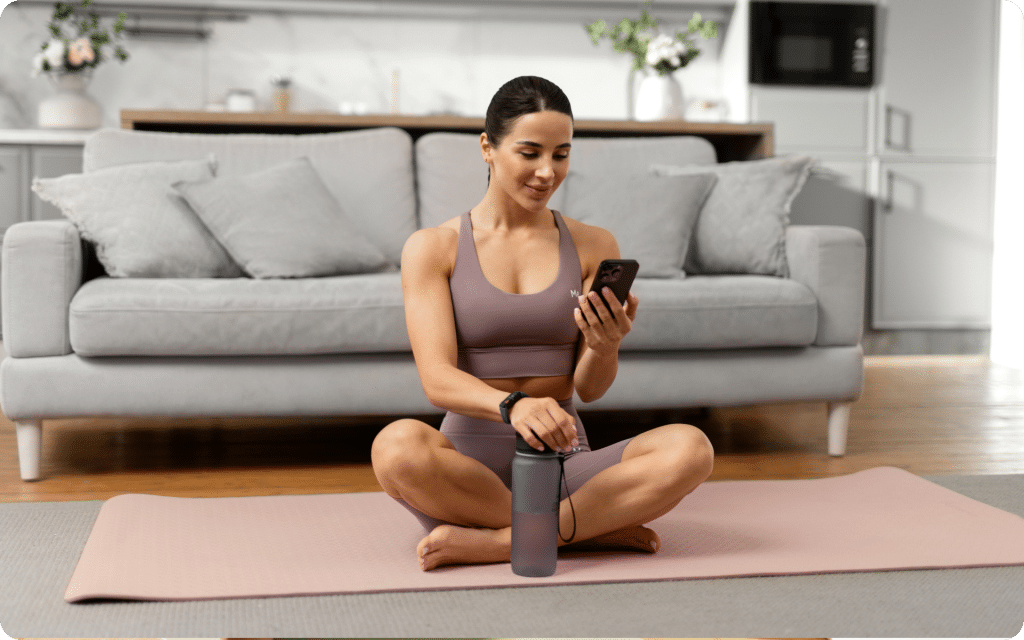
30-Minute Barre Circuit
| Section | Exercise | Sets | Reps / Duration | Rest |
|---|---|---|---|---|
| Warm-Up | March in Place with Arm Circles | 1 | 60 seconds | 0 sec |
| Warm-Up | Knee Lifts with Torso Twist | 1 | 60 seconds | 15 sec |
| Thighs (Quads) | First Position Plié | 2 | 20 reps | 15 sec |
| Thighs (Quads) | Relevé Holds (Heels Raised) | 2 | 45 seconds | 30 sec |
| Glutes/Hips | Standing Glute Kickback | 2 | 20 reps per leg | 15 sec |
| Glutes/Hips | Curtsy Lunge Pulses | 2 | 30 seconds per leg | 30 sec |
| Core | Standing Side Crunch | 2 | 20 reps per side | 15 sec |
| Core | Forearm Plank | 2 | 45-60 seconds | 30 sec |
| Cool Down | Standing Quad Stretch | 1 | 30 sec per leg | 0 sec |
| Cool Down | Forward Fold | 1 | 60 seconds | Done |
Exercise Execution Guidelines
First Position Plié
Target Muscles: Quadriceps, Adductors (Inner Thighs), Glutes.
- Stand with your heels touching and toes turned out to approximately 45 degrees.
- Place one hand on your support (chair/counter) for balance.
- Keep your spine neutral and shoulders stacked directly over your hips.
- Bend your knees, tracking them directly over your toes.
- Lower until you feel a stretch in the inner thighs or until your heels naturally lift (aim for a half-squat depth).
- Press through your heels to return to the starting position, squeezing the inner thighs together at the top.
Relevé Holds
Target Muscles: Gastrocnemius (Calves), Soleus, Stabilizers.
- Begin in First Position (heels together, toes out).
- Engage your core to prevent lumbar hyperextension (arching the back).
- Lift your heels as high as possible off the floor, balancing on the balls of your feet.
- Hold this position isometrically.
- To increase intensity, extend your arm overhead while maintaining the hold.
- Ensure your weight is distributed across the first and second toes, not rolling out to the pinky toe.
Standing Glute Kickback
Target Muscles: Gluteus Maximus, Hamstrings.
- Face your support surface, resting both hands on it lightly.
- Stand with feet hip-width apart and soften your standing knee (do not lock it out).
- Extend one leg straight back behind you, keeping the toes pointed.
- Squeeze your glute to lift the leg 4-6 inches off the floor. Do not swing the leg; control the lift.
- Avoid arching your lower back to lift the leg higher; the movement should come solely from the hip joint.
- Lower the toe to tap the floor and repeat immediately.
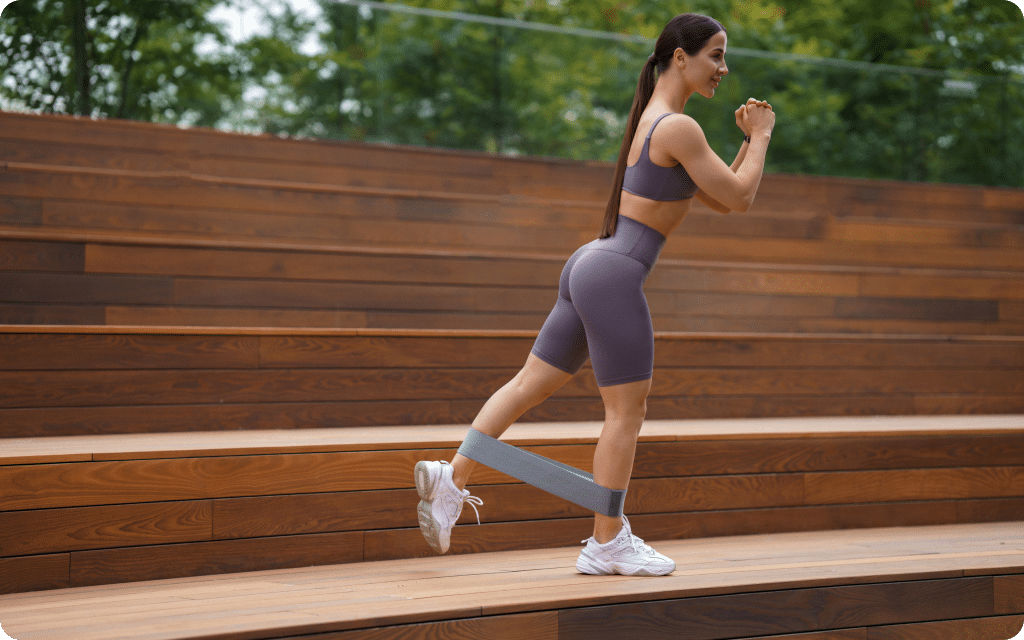
Curtsy Lunge Pulses
Target Muscles: Gluteus Medius, Quadriceps.
- Start standing with feet hip-width apart.
- Step your right foot back and behind your left leg, as if curtsying.
- Lower your hips until both knees are bent at approximately 90 degrees.
- From this bottom position, move up and down only 2-3 inches. This is a “pulse.”
- Keep your weight primarily in the front heel.
- Maintain an upright torso; do not lean forward over the front knee.
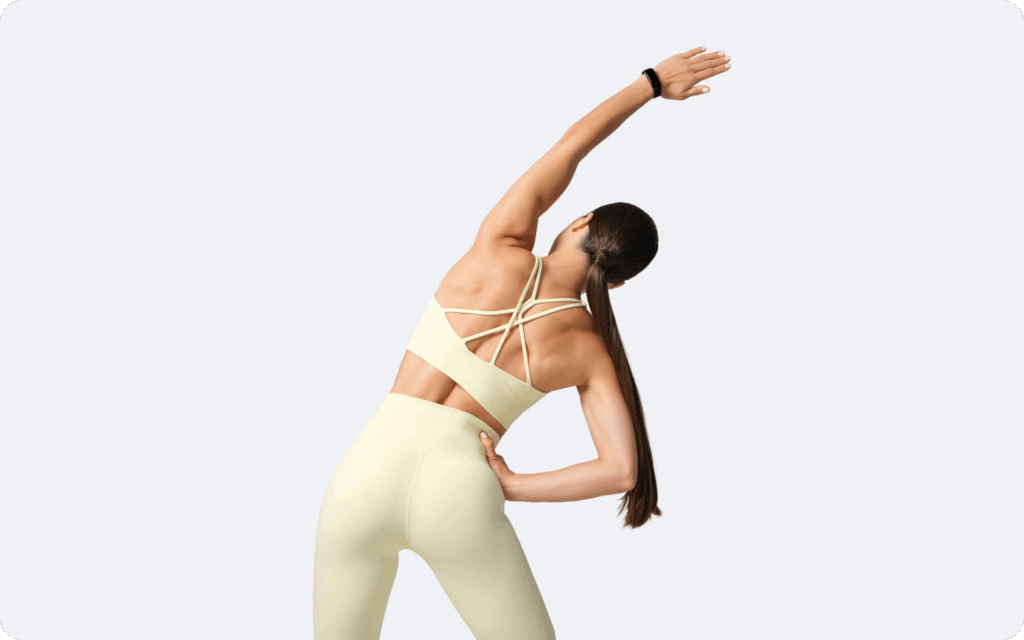
Standing Side Crunch
Target Muscles: Obliques, Rectus Abdominis.
- Stand with feet wide and toes slightly turned out.
- Place your left hand on the support.
- Extend your right arm overhead and point your right toe out to the side.
- Simultaneously lift your right knee toward your right elbow while crunching your torso to the side.
- Focus on contracting the waistline (obliques).
- Return to the extended position with control.
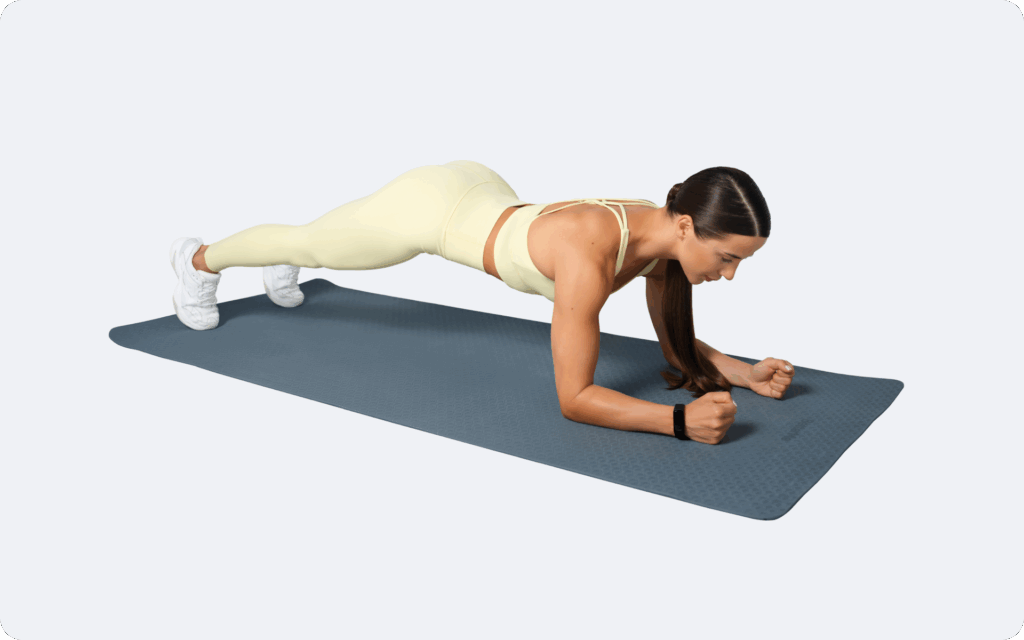
Forearm Plank
Target Muscles: Transverse Abdominis, Rectus Abdominis, Deltoids.
- Lie face down on your mat.
- Prop yourself up on your forearms, elbows stacked directly under your shoulders.
- Extend legs back, balancing on toes.
- Engage your glutes and quads to create a rigid, straight line from head to heels.
- Pull your belly button toward your spine to engage the deep core.
- Hold without letting the hips sag or hike upward.
What Equipment Do I Need For A Barre At Home Workout Routine?
While the at-home barre workout no equipment approach is entirely valid, introducing specific tools can help you apply progressive overload.
Progression is key to preventing plateaus. Once body weight becomes too easy, you must alter the stimulus.
Here is a list of equipment suitable for home use, with descriptions of their specific utility:
- Sturdy Support Surface:
-
- Description: A chair, countertop, or high table.
- Spec: Ideally between 36 and 42 inches high (roughly hip to waist height). It must be stable enough to bear about 20% of your body weight without tipping.
- Yoga or Pilates Mat:
-
- Description: A non-slip surface for floor work.
- Spec: Look for a mat at least 5mm thick. Barre involves kneeling and planking; sufficient cushioning protects the patella (kneecap) and wrist joints.
- Light Hand Weights (Dumbbells):
-
- Description: Small dumbbells used to increase the lever length difficulty.
- Spec: 1lb to 3lbs (0.5kg to 1.5kg). In barre, the high repetition volume means heavy weights are unnecessary and often detrimental to form. An at-home barre workout with weights quickly elevates heart rate and causes deltoid fatigue.
Reasons why BetterMe is a safe bet: a wide range of calorie-blasting workouts, finger-licking recipes, 24/7 support, challenges that’ll keep you on your best game, and that just scratches the surface! Start using our app and watch the magic happen.
- Resistance Loop Bands:
-
- Description: Elastic bands placed around thighs or ankles.
- Spec: These add external resistance to abduction movements (moving the limb away from the body), significantly increasing activation of the gluteus medius.
- Small Pilates Ball (9-inch):
-
- Description: A squishy, air-filled ball.
- Spec: Placed between the thighs during knee bends to increase adductor (inner thigh) activation, or placed behind the lower back for core support during mat work.
If you are looking to focus on body composition, consider integrating these tools into home workouts to lose belly fat.
How To Do Barre At Home Without A Barre?
The “barre” itself serves primarily as a balance aid, not a load-bearing device.
In a studio setting, the instructor will consistently remind students to have a “light touch” on the barre, rather than gripping it for dear life. This lighter grip means improvising at home is safe and effective if you follow safety protocols.
The Kitchen Countertop:
A countertop is often the most stable balancing option. Most standard counters are 36 inches high, which is close to the standard ballet barre height (usually 40-42 inches).
- Safety Check: Ensure the area is dry. Kitchen floors can be slippery.
A High-Back Chair:
A dining chair is a classic substitute.
- Safety Check: The chair must be heavy enough to prevent sliding. If you are doing a movement that pulls away from the chair (like a “water skier” thigh exercise), place the chair against a wall so it cannot tip over. Alternatively, weigh down the seat with heavy books.
A Wall:
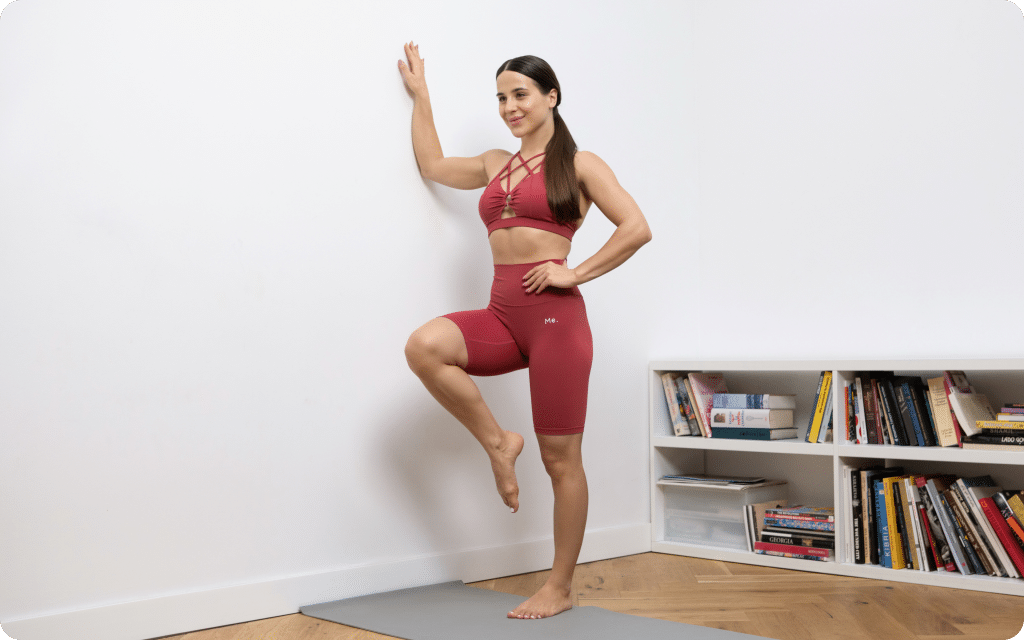
For balance exercises, simply placing a hand flat against a wall works perfectly.
- Safety Check: This removes the ability to “pull” on the barre, forcing you to rely more on your core stability, which can actually enhance the at home barre workout for beginners by enforcing strict form.
Door Handles (Caution Required):
Some practitioners use door handles for stability.
- Safety Check: Only use a door that is pulled towards you to close, and ensure it is fully latched. This door handle method is generally less recommended than a wall or chair due to the risk of the door opening unexpectedly.
Read more: What Is the Best Wall Pilates Challenge to Try in 2026?
Is Barre Harder Than Pilates?
Comparing barre and Pilates is nuanced because difficulty is relative to the specific programming variables (intensity, volume, and rest).
However, we can distinguish them based on primary energy systems and biomechanics.
Barre is typically more standing-based, relying heavily on isometric contractions and high-repetition pulses. The metabolic burn (that “shake” in the muscles) is often more acute in barre due to the extended time under tension for the quadriceps and glutes (5).
It challenges muscular endurance–the ability of a muscle to exert force repeatedly without fatigue (7).
Pilates, particularly mat Pilates, emphasizes the core (the “powerhouse”), spinal articulation, and controlled range of motion. It often involves more complex movement patterns that challenge coordination and deep stabilizer strength (8).
Is one harder?
- If your weakness is leg endurance and balance, the barre practice will feel significantly harder.
- If your weakness is abdominal strength and pelvic stability, Pilates will present a greater challenge.
Ideally, both forms of exercise complement each other. Pilates builds the core stability required to hold a neutral spine during barre exercises.
Read more: How To Perform Thigh Stretch Pilates For A More Flexible Body
How Long Does It Take For Barre To Change Your Body?
Physiological adaptations follow a specific timeline. It is important to manage expectations and understand what is happening biologically at each stage of your journey.
Weeks 1-4: Neural Adaptation
In the first month, you likely won’t see drastic visual changes in muscle size.
The primary adaptation here is neurological.
Your brain becomes more efficient at recruiting motor units (the muscle fibers and the nerves that control them (9). You will feel stronger, balance will improve, and the movements will feel less awkward.
This mental improvement is your nervous system learning the skill of the best at home barre workout.
Weeks 4-8: Metabolic Conditioning
As you continue consistency (aiming for 3-4 sessions per week), your cellular endurance improves. Your muscles increase their capacity to buffer lactate and store glycogen (10).
You will notice you can hold the planks longer and sink deeper into the pliés without needing to stand up.
Weeks 8-12+: Structural Hypertrophy
This is typically when visual changes become noticeable. Structural changes in the muscle tissue (hypertrophy) take time (11).
With consistent progressive overload–either by adding reps, reducing rest, or adding the at home barre workout with dumbbells–you will begin to see the “toning” effect (muscle definition) mentioned earlier.
There is no magic pill; the timeline depends on your adherence to the program, your nutrition, and the quality of your recovery (sleep).
Yes, barre can build muscle through metabolic stress. By performing high repetitions until near-failure, you stimulate muscle protein synthesis (4), particularly in Type I (slow-twitch) muscle fibers, which are endurance-oriented (12). Barre involves sustained postural control and trunk stabilization, engaging the core musculature, including the rectus abdominis and the deep transverse abdominis (13). While it strengthens these muscles, “toning” the stomach also requires a reduction in body fat, which occurs through a caloric deficit (6), not exercise alone. Barre emphasizes the oblique muscles and transverse abdominis (13), which act as a natural corset for the torso. Strengthening these muscles can improve posture and pull the abdominal wall in tighter, potentially creating a slimmer visual appearance of the waist. You cannot “spot reduce” fat from the thighs via exercise (14). However, exercises like pliés and lunges will strengthen and shape the quadriceps and adductors. As you lose overall body fat through diet and activity, your thigh’s muscular shape becomes visible. Yes, performing barre 3 times a week meets the World Health Organization’s guidelines for muscle-strengthening activities (15). This frequency provides sufficient stimulus to promote adaptation while allowing rest days for recovery.Frequently Asked Questions
Does barre actually build muscle?
Does barre tone your stomach?
Does barre slim your waist?
What exercise slims your thighs?
Is barre 3 times a week enough?
The Bottom Line
Barre offers a scientifically proven method to improve muscular endurance, posture, and core stability without heavy equipment.
By leveraging high repetitions and isometric holds, you can achieve significant physiological changes right from your living room.
The key is not the equipment you use, but the intention and intensity you bring to every pulse and hold. Start with the program outlined above, focus on precision, and let the consistency of your effort drive your results.
DISCLAIMER:
This article is intended for general informational purposes only and does not serve to address individual circumstances. It is not a substitute for professional advice or help and should not be relied on for making any kind of decision-making. Any action taken as a direct or indirect result of the information in this article is entirely at your own risk and is your sole responsibility.
BetterMe, its content staff, and its medical advisors accept no responsibility for inaccuracies, errors, misstatements, inconsistencies, or omissions and specifically disclaim any liability, loss or risk, personal, professional or otherwise, which may be incurred as a consequence, directly or indirectly, of the use and/or application of any content.
You should always seek the advice of your physician or other qualified health provider with any questions you may have regarding a medical condition or your specific situation. Never disregard professional medical advice or delay seeking it because of BetterMe content. If you suspect or think you may have a medical emergency, call your doctor.
SOURCES:
- Anabolic signals and muscle hypertrophy – Significance for strength training in sports medicine (2025, sciencedirect.com)
- Time under Tension and Blood Lactate Response during Four Different Resistance Training Methods (2006, researchgate.net)
- Loading Recommendations for Muscle Strength, Hypertrophy, and Local Endurance: A Re-Examination of the Repetition Continuum (2021, mdpi.com)
- Resistance training‐induced changes in integrated myofibrillar protein synthesis are related to hypertrophy only after attenuation of muscle damage (2016, pmc.ncbi.nlm.nih.gov)
- Cardiorespiratory responses to ballet exercise and the VO2max of elite ballet dancers (1982, pubmed.ncbi.nlm.nih.gov)
- Fat loss depends on energy deficit only, independently of the method for weight loss (2007, pubmed.ncbi.nlm.nih.gov)
- Muscular Endurance (2020, sciencedirect.com)
- Pilates (n.d., sciencedirect.com)
- The brain can make you stronger (2019, pmc.ncbi.nlm.nih.gov)
- Maximizing Cellular Adaptation to Endurance Exercise in Skeletal Muscle (2018, researchgate.net)
- Adaptations to Endurance and Strength Training (2018, pmc.ncbi.nlm.nih.gov)
- Muscle Fiber Type Transitions with Exercise Training: Shifting Perspectives (2021, mdpi.com)
- Behind Barre: What It Is and How To Make It Work for You (2025, health.clevelandclinic.org)
- Spot reduction: why targeting weight loss to a specific area is a myth (2023, sydney.edu.au)
- Physical activity (2020, who.int)

 Reviewed by
 Reviewed by