When it comes to training arms, many of us rely on outdated advice. We chase the “pump” because it looks good, rather than following well-established training principles. In reality, it takes more than just lifting random weights to build strong arms.
To build strength and size, it helps to understand how muscle building works, primarily through mechanical tension. This requires progressively overloading the muscle fibers over time. It also helps to understand which muscles are in your arms and which exercises target each.
Here, we’ll look at how muscle growth works, how different muscles are used, and routines that may support your goals.
How Can I Develop Arm Strength?
Developing arm strength requires a precise application of mechanical tension. Mechanical tension is the force that is generated by muscle fibers during active contraction against resistance. This tension is widely recognized by sports scientists as the primary stimulus for muscle hypertrophy and strength gains (1).
Progressive overload is commonly used to support strength development. This means gradually increasing the load, volume, or frequency of your workouts over time (2). For strength adaptations, traditional loading parameters suggest using heavy loads, defined as 85% or more of your 1-repetition maximum (1RM), for 1 to 6 repetitions.
Hypertrophy training is a bit different. Newer research has indicated that muscle growth can occur across a broader spectrum of loads, as long as you take the sets within 1 to 2 repetitions of muscular failure (3).
It’s also important to prioritize rest. Your muscles don’t grow while you’re lifting – they grow while you’re resting. Adequate sleep and nutrition help support muscle recovery and growth over time (4). By balancing consistent, tension-focused training with enough rest, you lay the foundation for long-term, sustainable results. For those who are looking for a low-impact way to strengthen and sculpt their upper body, you may want to explore Pilates arms exercises.
How to Hit Every Muscle in the Arm
To fully develop the arm, you cannot simply perform endless bicep curls. The arm consists of several distinct muscle groups and different exercise positions may place more emphasis on one area than another. Understanding this anatomy ensures that you leave no weak links in your kinetic chain.
The upper arm is primarily divided into the anterior (front) compartment and posterior (back) compartment.
The anterior compartment is responsible for elbow flexion and houses the biceps brachii and brachialis. The brachioradialis is included in the forearm muscles. While they all work together to flex the elbow, varying your grip will change the emphasis on what muscle is targeted.
- A supinated (palms up) grip heavily targets the biceps brachii.
- A neutral (hammer) grip shifts tension toward the brachialis (7).
The posterior compartment houses your triceps brachii, making up approximately 60% of your upper arm mass (5). To place more emphasis on the triceps, it can help to include movements that extend the elbow, particularly those that place the arm overhead to stretch the long head of the triceps (6).
A complete routine integrates these variations to ensure comprehensive development. If you want to dive deeper into forearm development specifically, check out our comprehensive guide to a grip strength workout.
What Are the Best Arm Strength Exercises?
To apply these principles, we’ve outlined a structured training routine. Below are the program notes, followed by the training table and execution steps.
Program Notes:
- Equipment needed: Barbell, dumbbells, cable machine (or resistance bands), and body weight.
- Split structure: This can be performed as a standalone arm day or integrated into an upper-body split.
- Optimal rep and set schemes: 3 to 4 sets per exercise. Repetitions will range from 6 to 12 reps (using moderate loads of 65-85% of 1RM) to support both strength work and muscle-building goals.
- Rest schemes: Rest 90 to 120 seconds between sets to allow for sufficient neural and muscular recovery.
- Proximity to failure: Aim to finish each set with 1 to 2 repetitions in reserve (RIR).
| Exercise | Target muscle | Sets | Reps | Load intensity | Rest |
|---|---|---|---|---|---|
| Barbell bicep curl | Biceps brachii | 3 | 8-10 | 70-80% 1RM | 120s |
| Dumbbell hammer curl | Brachialis and forearms | 3 | 10-12 | 65-75% 1RM | 90s |
| Triceps pushdown | Triceps (lateral/medial) | 3 | 10-12 | 65-75% 1RM | 90s |
| Overhead triceps extension | Triceps (long head) | 3 | 8-10 | 70-80% 1RM | 120s |
| Close-grip push-up | Triceps and chest/shoulders | 3 | AMRAP (-2 RIR) | Bodyweight | 90s |
| Dumbbell concentration curl | Biceps brachii | 3 | 10-12 | 65-75% 1RM | 90s |
Barbell Bicep Curl
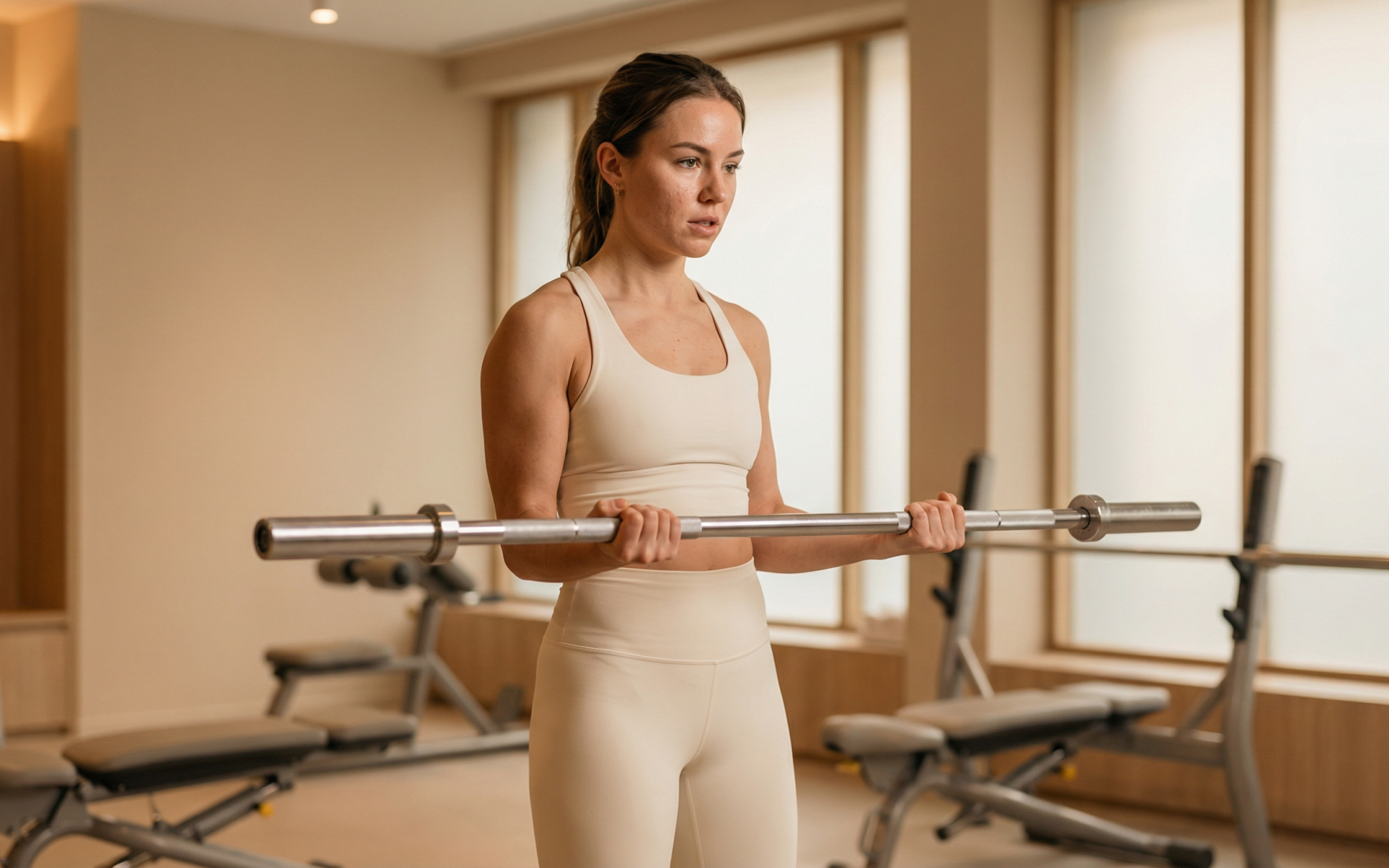
This is a staple for building overall bicep mass and strength. It’s a popular exercise for building arm strength that gym goers can utilize to apply heavy mechanical tension.
- Stand upright with your feet shoulder-width apart, gripping a barbell with an underhand grip, your hands slightly wider than shoulder-width apart.
- Brace your core, pull your shoulder blades down and back, and lock your elbows against your sides.
- Exhale and curl the barbell upward by flexing your elbows, bringing the bar toward your chest.
- Squeeze your biceps forcefully at the top of the movement for 1 second.
- Inhale and slowly lower the barbell back to the starting position over a 3-second eccentric phase.
- Stop just before your arms are fully locked out to maintain tension on the biceps.
Read more: Shoulder Day Guide: Exercises, Sets, and Smart Training Tips
Dumbbell Hammer Curl
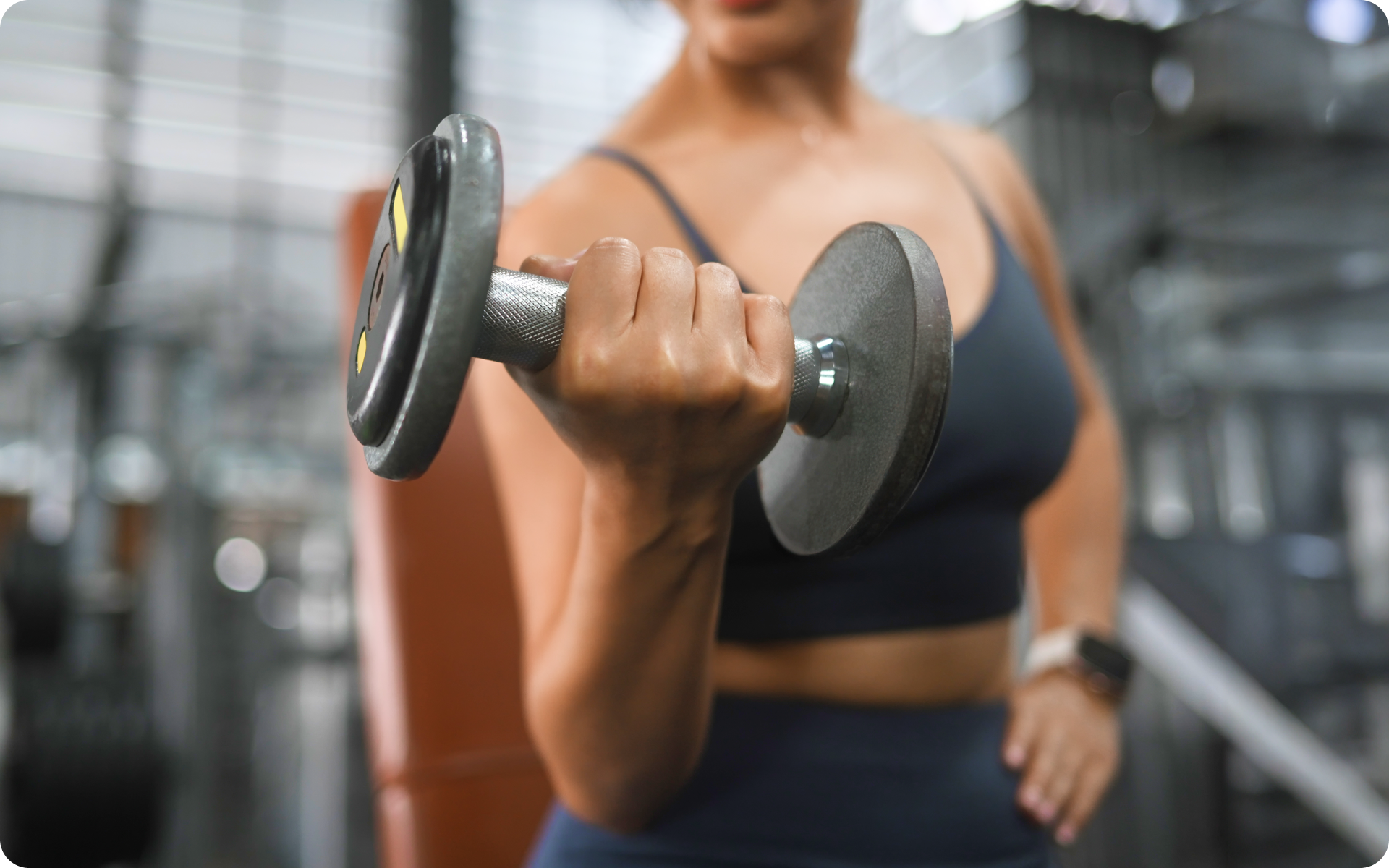
By utilizing a neutral grip, this movement shifts focus to the brachialis and brachioradialis. This can make it a useful exercise with dumbbells for adding thickness to the arm.
- Stand with a dumbbell in each hand, your arms fully extended by your sides, and your palms facing your torso (neutral grip).
- Keep your torso stationary and your elbows pinned to your waist.
- Exhale and curl the weight forward while maintaining the neutral grip, contracting the brachialis until the dumbbell reaches shoulder level.
- Hold the contracted position for a brief pause at the top.
- Inhale and slowly lower the dumbbells back down along the same path.
- Ensure your wrists remain perfectly straight throughout the entire movement.
Intense sweat sessions, working weight loss tips, lip-smacking recipes come in one package with the BetterMe: Health Coaching app—all at your fingertips, start transforming your life now!
Triceps Pushdown
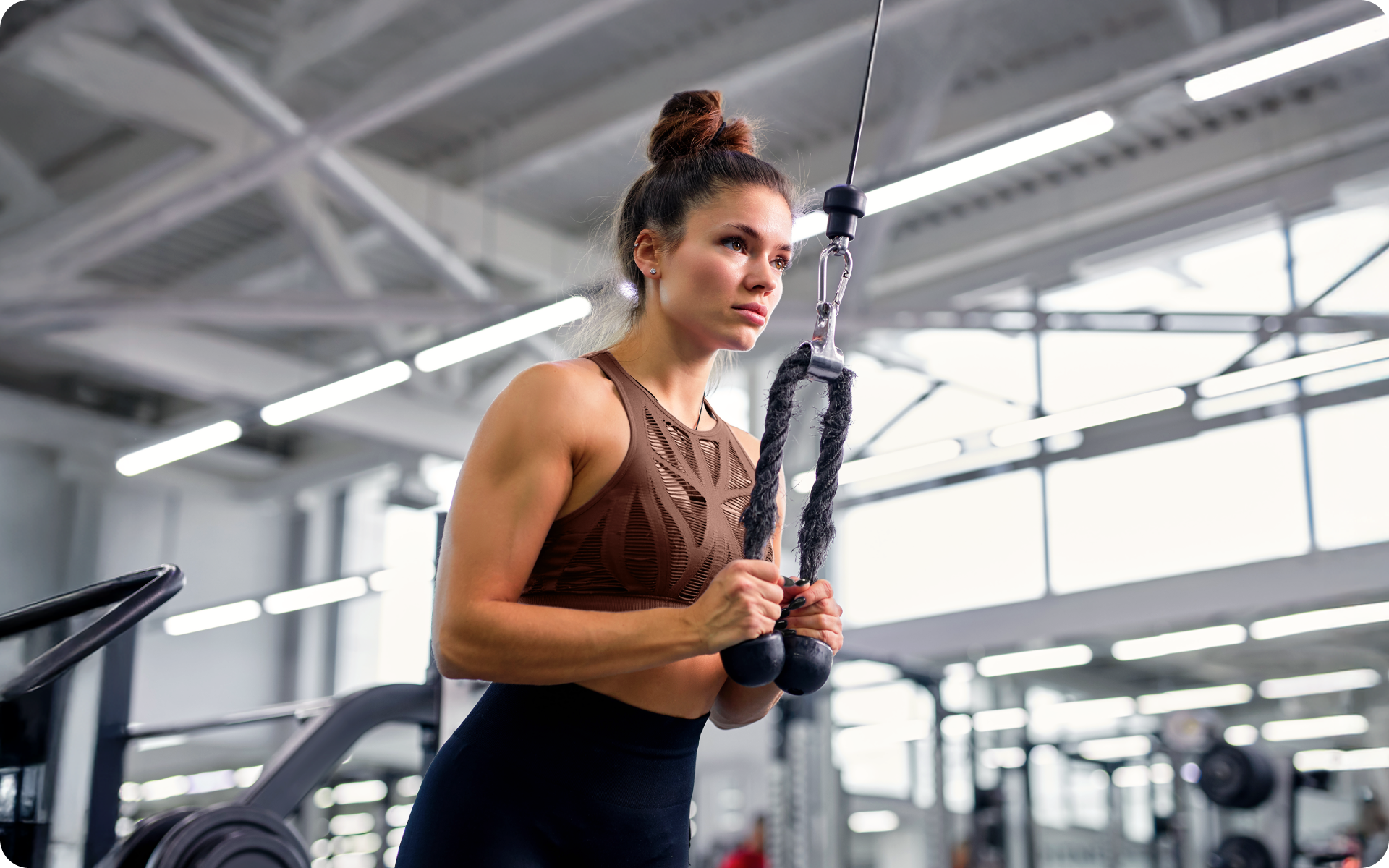
This isolation movement mainly focuses on the lateral and medial heads of the triceps. Using a cable machine serves as an excellent arm strength exercise tool to provide constant tension throughout the range of motion.
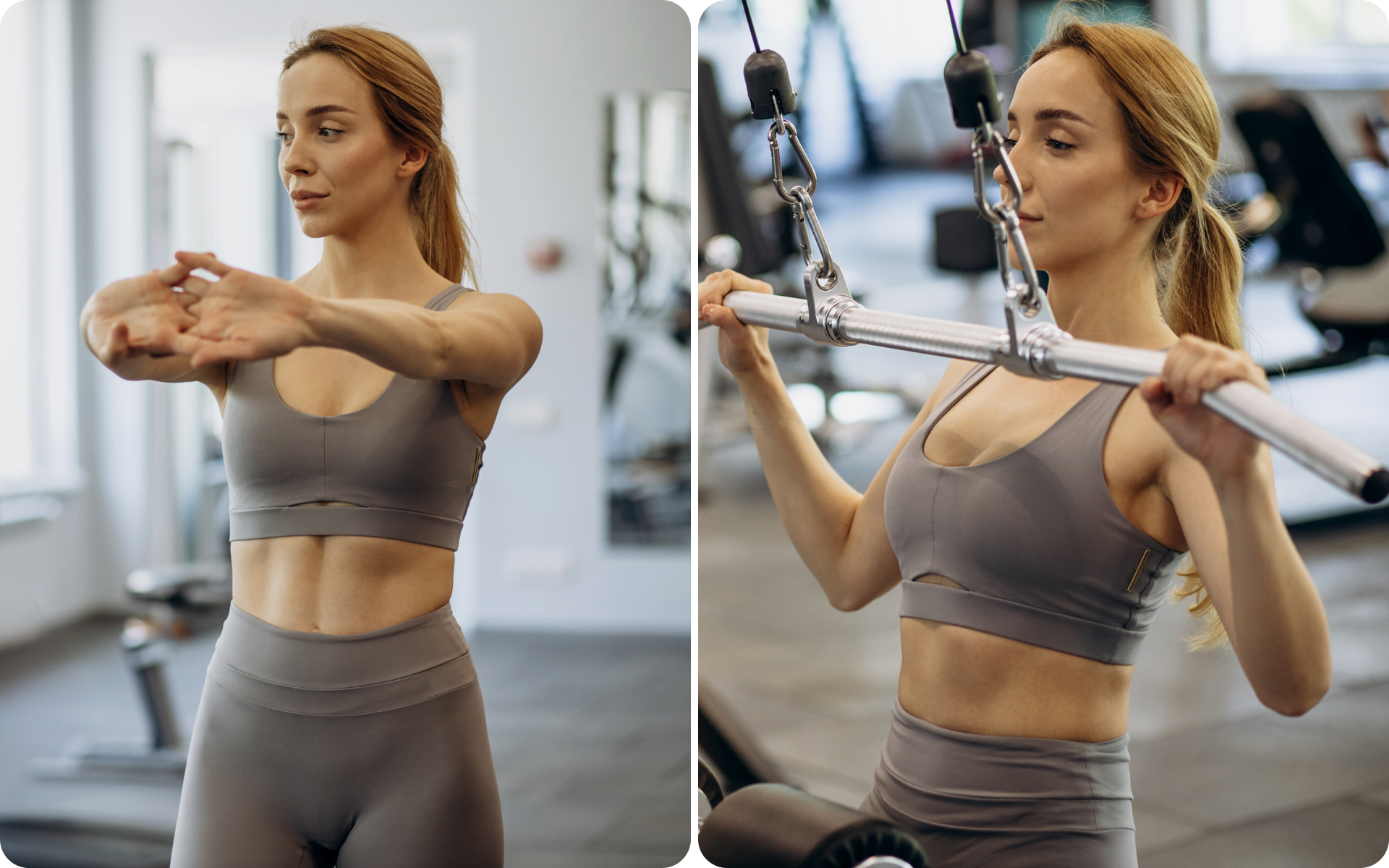
- Attach a straight bar or rope to a high pulley on a cable machine.
- Grasp the attachment with an overhand grip (palms facing down), your hands shoulder-width apart.
- Stand upright, lean slightly forward (about 15 degrees), and pin your upper arms against your torso.
- Exhale and push the attachment down until your elbows are fully locked out.
- Flex your triceps hard at the bottom of the movement.
- Inhale and slowly return the attachment to the starting position, stopping when your forearms are parallel to the floor.
Overhead Triceps Extension
Placing the arms overhead increases the stretch on the long head of the triceps, which may support muscle-building stimulus. It’s one of the best arm strength exercises with weights for overall triceps development.
- Sit on a bench with back support, holding a single dumbbell with both hands.
- Press the dumbbell overhead, gripping the inner plate with your palms facing up toward the ceiling.
- Keep your elbows pointing forward and close to your head.
- Inhale and slowly lower the dumbbell behind your head by bending your elbows until your forearms form a 90-degree angle.
- Exhale and press the dumbbell back to the starting position by extending your elbows.
- Maintain a tight core to prevent your lower back from arching excessively.
Close-Grip Push-Up
This bodyweight movement can be a useful option for the triceps and anterior deltoids. It ranks highly among arm strength exercises without weights and may work well for home workouts.
- Assume a standard push-up plank position, but place your hands less than shoulder-width apart.
- Keep your body in a perfectly straight line from your heels to the crown of your head.
- Inhale and lower your body by bending your elbows, keeping them tucked tightly against your ribs.
- Descend until your chest is approximately 1 inch from the floor.
- Exhale and push through the heels of your hands to extend your arms and return to the starting position.
- Avoid letting your hips sag or your lower back arch during the movement.

Dumbbell Concentration Curl
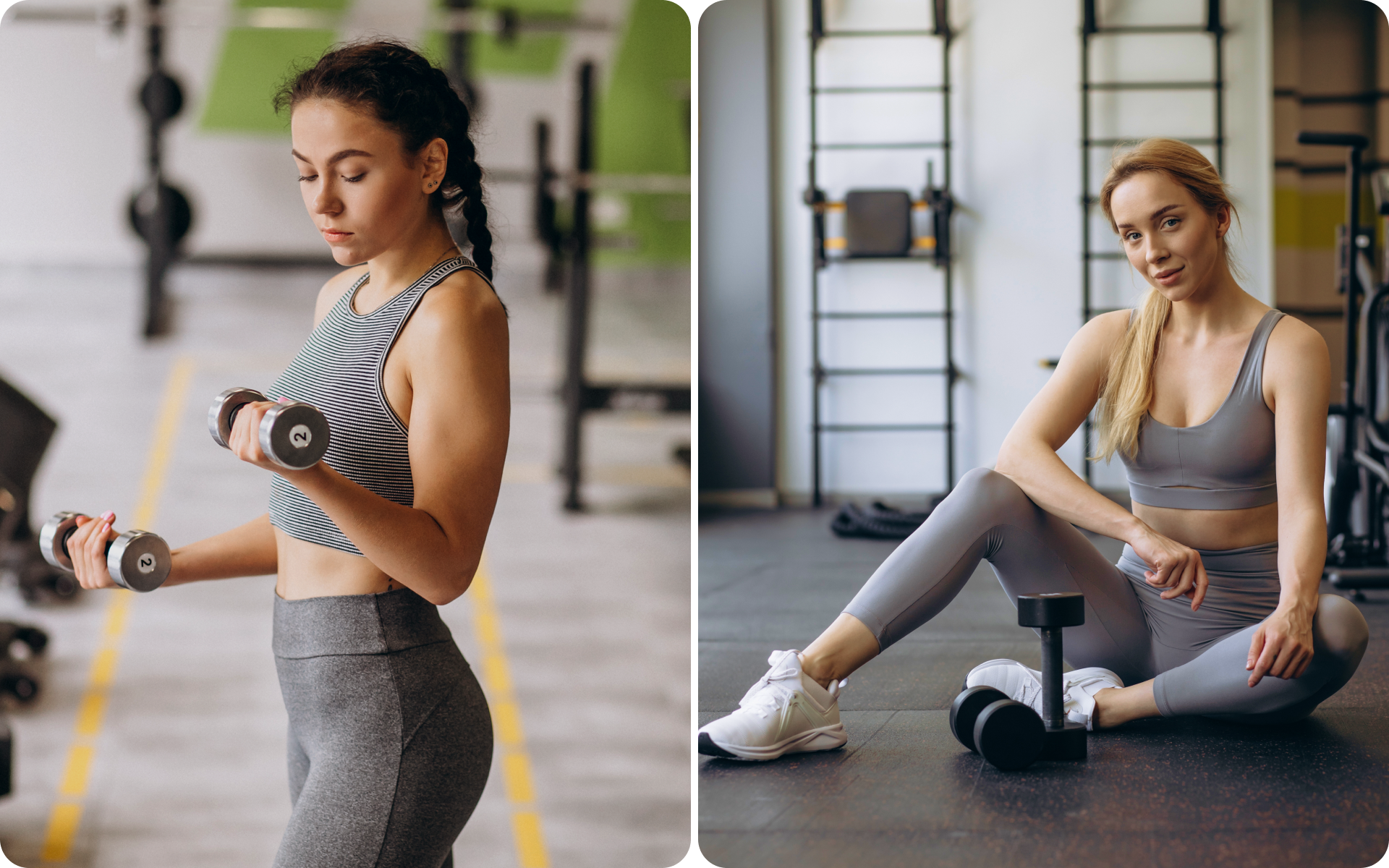
This exercise reduces momentum, which can help place more emphasis on the biceps. It’s an excellent choice among arm strength exercises for beginners, and a highly accessible option when looking for arm strength exercises for women focusing on isolation.
- Sit on the edge of a bench with your legs spread apart and your feet flat on the floor.
- Hold a dumbbell in your right hand and press the back of your right lower tricep against the inside of your right thigh.
- Fully extend your arm downward.
- Exhale and curl the dumbbell forward, keeping your upper arm perfectly still against your thigh.
- Contract the bicep forcefully at the top for 1 to 2 seconds.
- Inhale and slowly lower the dumbbell back to the starting position before repeating.
For a broader routine using similar equipment, you can explore a full dumbbell arm workout.
What Are Some Common Mistakes in Arm Exercises?
Using Excessive Momentum
One of the most frequent errors is the use of excessive momentum. Swinging your torso or utilizing hip drive to move the weight, which can reduce emphasis on the target muscles and place more strain on other areas. If you must swing the weight to curl it, the load, which should be between 65-80% of your 1RM for hypertrophy (3), is too heavy.
Not Training Through the Full Range of Motion
Another major mistake is failing to train through a full range of motion. Stopping a triceps pushdown halfway or only performing the middle half of a bicep curl can reduce the training effect of the movement. Research has indicated that muscle hypertrophy, particularly the addition of sarcomeres in series, is highly stimulated when a muscle is loaded in a stretched position (8).
Not Allowing Enough Rest
Finally, individuals often neglect the importance of rest and recovery. Hitting the arms with high volume every single day doesn’t give the tissue time to repair. After training, the body continues adapting during rest over the next day or two (9).
Not allowing enough rest between sessions with more training may limit progress and increase the likelihood of overuse-related tendon discomfort (10).
Whether you’re looking to simply pep up your fitness routine, jazz up your diet with mouth-watering low-calorie recipes or want to get your act together and significantly drop that number on your scale – BetterMe: Health Coaching app has got you covered! Improve your body and revamp your life!

What’s the Hardest Arm Muscle to Grow?
The brachialis and the forearms can feel harder to develop for some people. The brachialis lies deep beneath the biceps brachii.
As its primary function is elbow flexion in the neutral or pronated (palms facing down) position, standard underhand curls don’t optimally target it. It requires specific, targeted tension using a neutral (hammer) or pronated (overhand) grip to effectively stimulate growth (7).
Forearms present a different challenge. The muscles in the forearm are incredibly dense and possess a high proportion of slow-twitch (Type I) muscle fibers (11), which are highly fatigue-resistant. As these muscles are used constantly throughout the day for gripping and carrying, they may respond better to focused training, enough challenge, and consistency (12).
To overcome these anatomical hurdles, you need to be intentional. Dedicate specific exercises to these muscles rather than treating them as an afterthought. Examples include hammer curls, EZ-bar reverse curls, wrist curls, reverse wrist curls, farmer’s carries, dead hangs, towel hangs, plate pinches, and cable rope hammer curls.
Read more: How to Enhance Muscle Recovery After a Workout
How Long Will It Take to Build Muscle in My Arms?
Building muscle usually takes time and consistency. Early adaptations to resistance training – typically within the first 2 to 4 weeks – are almost entirely neurological. Your central nervous system becomes more efficient at recruiting motor units, resulting in rapid strength gains, but not noticeable size increases (13).
Measurable muscle hypertrophy generally takes 8 to 12 weeks of consistent training to become visually apparent (14). This timeline assumes that you’re:
- Training the muscles 2 times per week
- Applying progressive overload
- Eating in a slight caloric surplus (200-300 calories above maintenance)
- Consuming adequate protein intake (1.6 to 2.2 grams per kilogram of body weight) (15, 16)
Patience and consistency are paramount. Hypertrophy requires the chronic accumulation of net positive muscle protein balance over months and years, not days and weeks.
Frequently Asked Questions
What are the worst bicep exercises?
From a biomechanical standpoint, exercises that force the wrist or elbow into unnatural, awkward angles while providing poor resistance curves are suboptimal.
Examples include straight bar reverse curls for individuals with limited wrist mobility, which may lead to forearm or wrist discomfort, and certain behind-the-back cable curls, which often place the shoulder and elbow in awkward positions. Similarly, using excessively heavy weights for preacher curls can place extra strain on the elbow area, particularly at the bottom of the movement where leverage is poor.
It is also worth noting that not all elbow-flexion exercises are good biceps exercises. Movements performed with a pronated grip often reduce biceps involvement and shift more of the work to the brachialis and brachioradialis. Therefore, some exercises may not be ideal if the main goal is to target the biceps specifically.
That being said, what’s “worst” often depends on an individual’s mobility and execution rather than the exercise itself.
What is the most useless muscle in the arm?
The palmaris longus is a small tendon/muscle in the forearm that is absent in approximately 14% of the human population. While it assists weakly in wrist flexion, its absence doesn’t negatively impact grip strength or arm function, which makes it functionally redundant for modern humans (17).
What’s the easiest arm muscle to build?
The triceps brachii is typically the fastest-responding arm muscle to resistance training. As it makes up roughly 60% of the upper arm’s mass and is heavily recruited in all pressing movements (such as push-ups and bench presses), it receives a massive amount of mechanical tension and volume naturally (18).
What are some signs of overtraining muscles?
Signs you may need more recovery can include a drop in performance, lingering joint or tendon discomfort, and unusual fatigue. If you experience deep muscle soreness that lasts for more than 72 hours and a lack of motivation to train, your recovery may not be keeping up with your training demands (19).
What should I eat to build arm muscle?
To build arm muscle, it can help to include a diet rich in high-quality protein to stimulate muscle protein synthesis. You should aim for 1.6 to 2.2 grams of protein per kilogram of body weight daily (16). Combine this with sufficient complex carbohydrates to replenish glycogen stores and provide the energy required for high-effort training sessions (15).
The Bottom Line
By integrating these evidence-based principles and executing the exercises with precision, you can optimize your body’s potential for growth. Building arm strength is less about trends and more about consistent training, sound exercise mechanics, gradual progression, and enough recovery.
DISCLAIMER:
This article is intended for general informational purposes only and does not serve to address individual circumstances. It is not a substitute for professional advice or help and should not be relied on for making any kind of decision-making. Any action taken as a direct or indirect result of the information in this article is entirely at your own risk and is your sole responsibility.
BetterMe, its content staff, and its medical advisors accept no responsibility for inaccuracies, errors, misstatements, inconsistencies, or omissions and specifically disclaim any liability, loss or risk, personal, professional or otherwise, which may be incurred as a consequence, directly or indirectly, of the use and/or application of any content.
You should always seek the advice of your physician or other qualified health provider with any questions you may have regarding a medical condition or your specific situation. Never disregard professional medical advice or delay seeking it because of BetterMe content. If you suspect or think you may have a medical emergency, call your doctor.
- Anabolic signals and muscle hypertrophy – Significance for strength training in sports medicine (2025, sciencedirect.com)
- Effects of Resistance Training Overload Progression Protocols on Strength and Muscle Mass (2025, pubmed.ncbi.nlm.nih.gov)
- Loading Recommendations for Muscle Strength, Hypertrophy, and Local Endurance: A Re-Examination of the Repetition Continuum (2021, mdpi.com)
- The Interplay Between Physical Activity, Protein Consumption, and Sleep Quality in Muscle Protein Synthesis (2024, arxiv.org)
- Anatomy, Shoulder and Upper Limb, Triceps Muscle (2023, ncbi.nlm.nih.gov)
- The different role of each head of the triceps brachii muscle in elbow extension (2018, pmc.ncbi.nlm.nih.gov)
- Biceps Brachii and Brachioradialis Excitation in Biceps Curl Exercise: Different Handgrips, Different Synergy (2023, mdpi.com)
- Physiology of Stretch-Mediated Hypertrophy and Strength Increases: A Narrative Review (2023, link.springer.com)
- Resistance training‐induced changes in integrated myofibrillar protein synthesis are related to hypertrophy only after attenuation of muscle damage (2016, pmc.ncbi.nlm.nih.gov)
- Beyond physical exhaustion: Understanding overtraining syndrome through the lens of molecular mechanisms and clinical manifestation (2025, sciencedirect.com)
- Data on the distribution of fibre types in thirty-six human muscles (2023, jns-journal.com)
- Muscle Fiber Type Transitions with Exercise Training: Shifting Perspectives (2021, pmc.ncbi.nlm.nih.gov)
- Neuromuscular adaptations to resistance training in elite versus recreational athletes (2025, frontiersin.org)
- Adaptations to Endurance and Strength Training (2018, pmc.ncbi.nlm.nih.gov)
- Editorial: Nutritional Strategies to Promote Muscle Mass and Function Across the Health Span (2020, frontiersin.org)
- International Society of Sports Nutrition Position Stand: protein and exercise (2017, link.springer.com)
- Anatomical Study of the Palmaris Longus Muscle and Its Clinical Importance (2025, mdpi.com)
- Triceps brachii muscle architecture, upper-body rate of force development, and bench press maximum strength of strong and weak trained participants (2023, researchgate.net)
- Beyond physical exhaustion: Understanding overtraining syndrome through the lens of molecular mechanisms and clinical manifestation (2025, sciencedirect.com)
 Reviewed by
 Reviewed by
 Reviewed by