Wall exercises for flat stomach goals can be a practical, low-impact way to target your core and support better posture at home. While losing fat in one specific spot is a myth, pairing a consistent wall routine with a balanced diet and regular movement can help support your core strength, muscle endurance, and overall body composition over time, gently and at your own pace.
Wall exercises for flat stomach routines use a wall as a support tool for controlled, low-impact core movements. The wall gives you a stable reference point, so you can focus on alignment instead of balance. This guide is for busy people who want simple, at-home moves that are designed to keep the impact low. You don’t need fancy equipment or a gym membership, just a clear wall space and a few minutes.
We’ll walk through what these exercises can realistically do, who they suit, and how to build a steady routine. You’ll also get step-by-step instructions, a routine table, a beginner progression plan, and answers to common questions.
Always consult your physician or healthcare provider before beginning any exercise program. The exercises described here are for informational purposes only and may not be suitable for everyone. If you’re returning to exercise postpartum, ensure that you’ve received explicit medical clearance from your OB/GYN or healthcare provider first.
Can Wall Exercises Support Weight Management?
Wall exercises can support weight management indirectly, but they cannot reduce fat in one specific area. Spot reduction is a myth. No single move, including any wall exercises for stomach goals, can decide where your body draws energy from. Your body composition tends to shift based on your overall routine, your eating patterns, and your activity levels over time (1).
That being said, these moves still play a useful role. When you train your core consistently, you build muscle endurance and better movement control (2). This can make everyday tasks feel easier, from carrying groceries to sitting upright at your desk. Stronger core muscles may support posture (3), which can influence how your midsection appears.
There is also the consistency factor. Because wall exercises are low-impact and easy to do at home, many people stick with them. That steady habit matters more than any single workout. When you combine regular movement with a balanced, nutrient-dense diet, you create the conditions that support gradual changes in body composition (4).
So think of wall exercises as one helpful piece of a bigger picture. They’re not a standalone solution, but they can fit neatly into a routine you can actually maintain over time.
What Can Wall Ab Workouts Help With?
A wall abs workout can be an effective way to strengthen the core. Core training may be effective for building core strength, improving alignment, and supporting better movement control (2, 3). The key is having realistic expectations. These moves are not designed for dramatic, overnight changes. Instead, they help you train the muscles that wrap around your midsection in a steady, low-impact way.
Here’s what a consistent routine can support (2, 3):
- Core strength and endurance: Holding positions against the wall challenges your deep abdominal muscles and obliques.
- Posture and alignment: A stronger core may support upright posture, which can make the midsection appear more aligned.
- Movement control: The wall gives you feedback, so you can feel when your body drifts out of alignment during an exercise.
Some people notice they feel less heavy or puffy after gentle movement, although this varies from person to person (5). This doesn’t address underlying digestive concerns or replace individualized guidance. For many people, light activity may support general comfort and movement, which some people associate with feeling less puffy for a short time.
It’s worth repeating that wall exercises work best as part of a wider routine. Pair them with a balanced diet, regular cardio, and rest. Relying on core moves alone tends to produce limited results.
The real value here is practicality. You can do a wall abs workout almost anywhere, with no equipment and very little space. This makes it easier to stay consistent, and consistency is what actually moves the needle over weeks and months. Start where you are, keep it simple, and build slowly.
7 Wall Exercises for a Flat Stomach
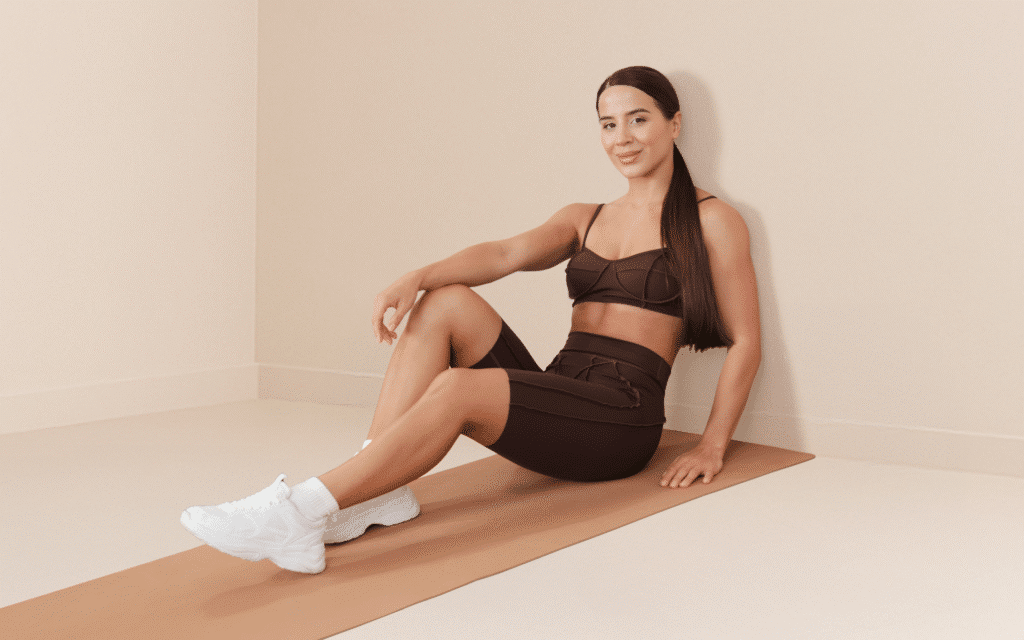
These seven flat stomach wall exercises target your core from different angles while keeping the routine low-impact and controlled. Use slow, controlled movements and focus on form over speed. If anything causes sharp discomfort, stop and rest. These wall Pilates ab exercises are beginner-friendly and easy to adjust.
1. Wall Plank
- Stand facing the wall.
- Place your palms flat against it, shoulder-width apart.
- Walk your feet back until your body forms a straight line.
- Keep your hands in line with your shoulders.
- Gently draw in your core and hold.
- Avoid letting your hips sag.
- Hold for 30 seconds to start.
2. Wall Squat Hold
- Stand with your back against the wall.
- Walk your feet forward slightly.
- Slide down until your thighs are roughly parallel to the floor.
- Keep your knees over your ankles.
- Press your lower back into the wall.
- Engage your core and hold for 20-30 seconds.
3. Wall Sit-Ups
- Sit on the floor about a foot from the wall.
- Lean back so your lower back rests against the wall.
- Place your hands on your thighs.
- Slide your hands toward your knees as you engage your abs.
- Return slowly and repeat.
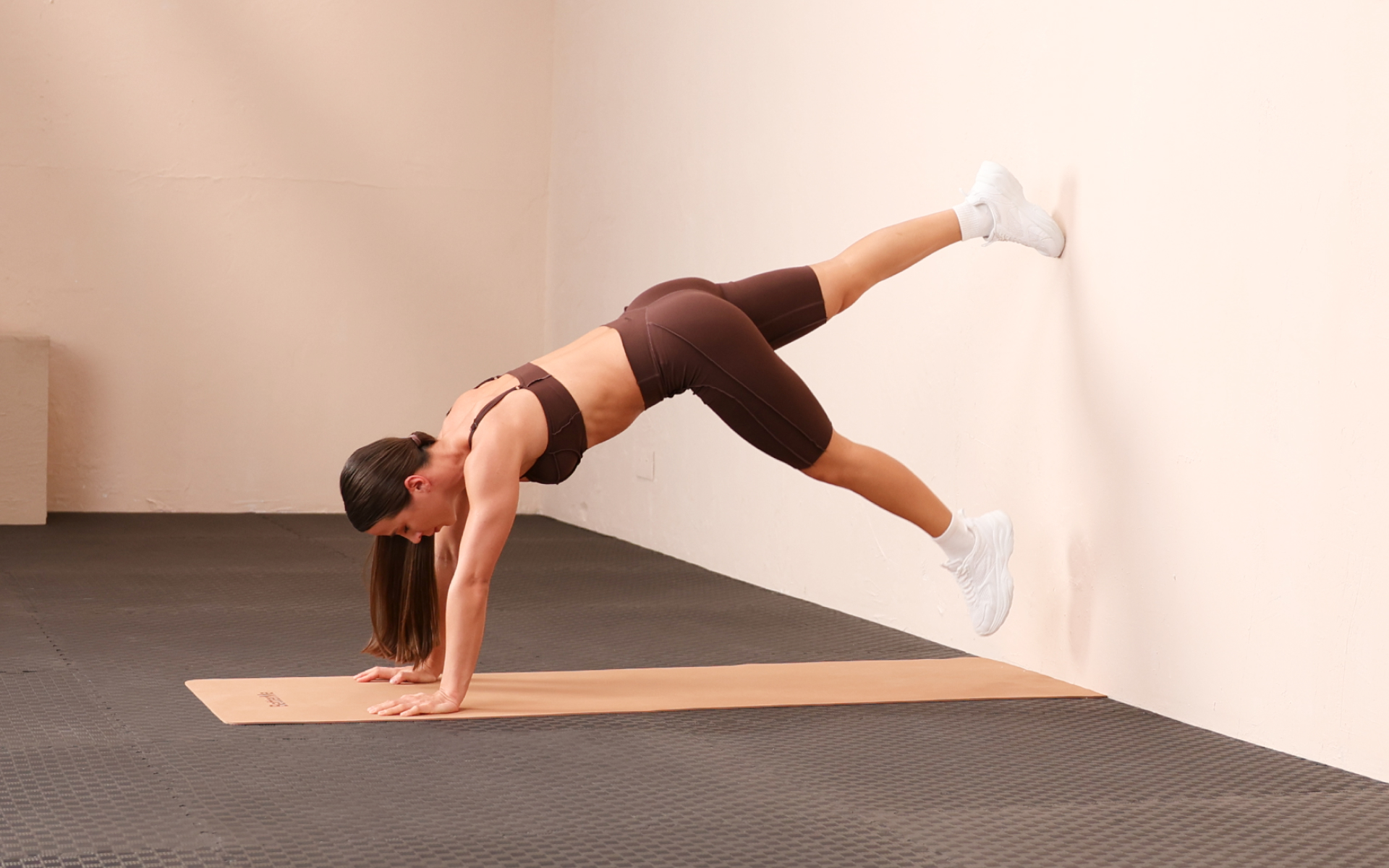
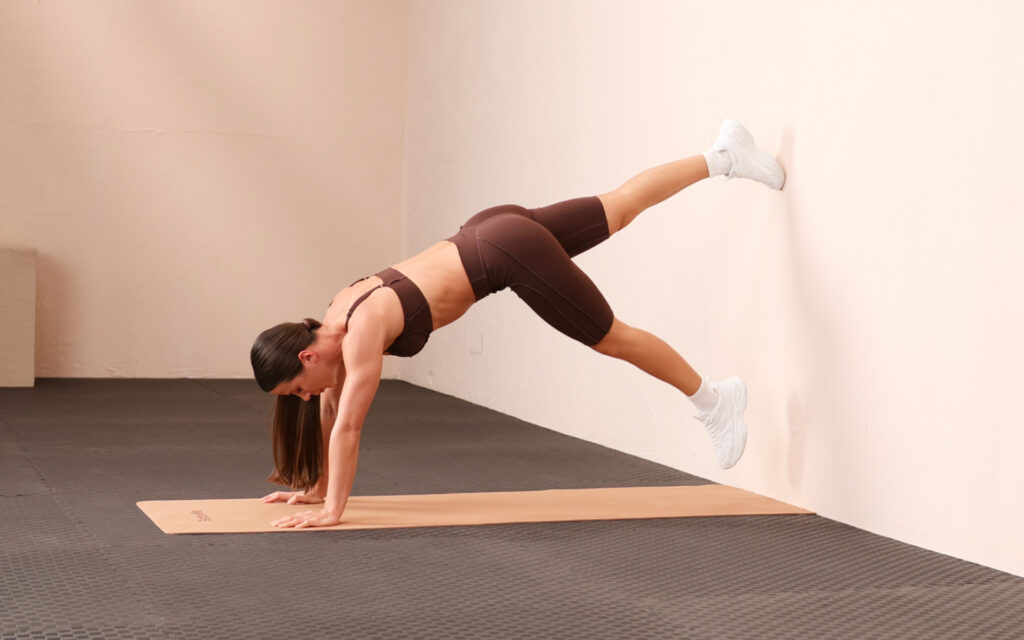
4. Mountain Climbers Against the Wall
- Begin in a plank with your hands on the wall.
- Keep your body in a straight line.
- Pull your right knee toward your chest.
- Return it, then pull your left knee in.
- Alternate in a steady rhythm.
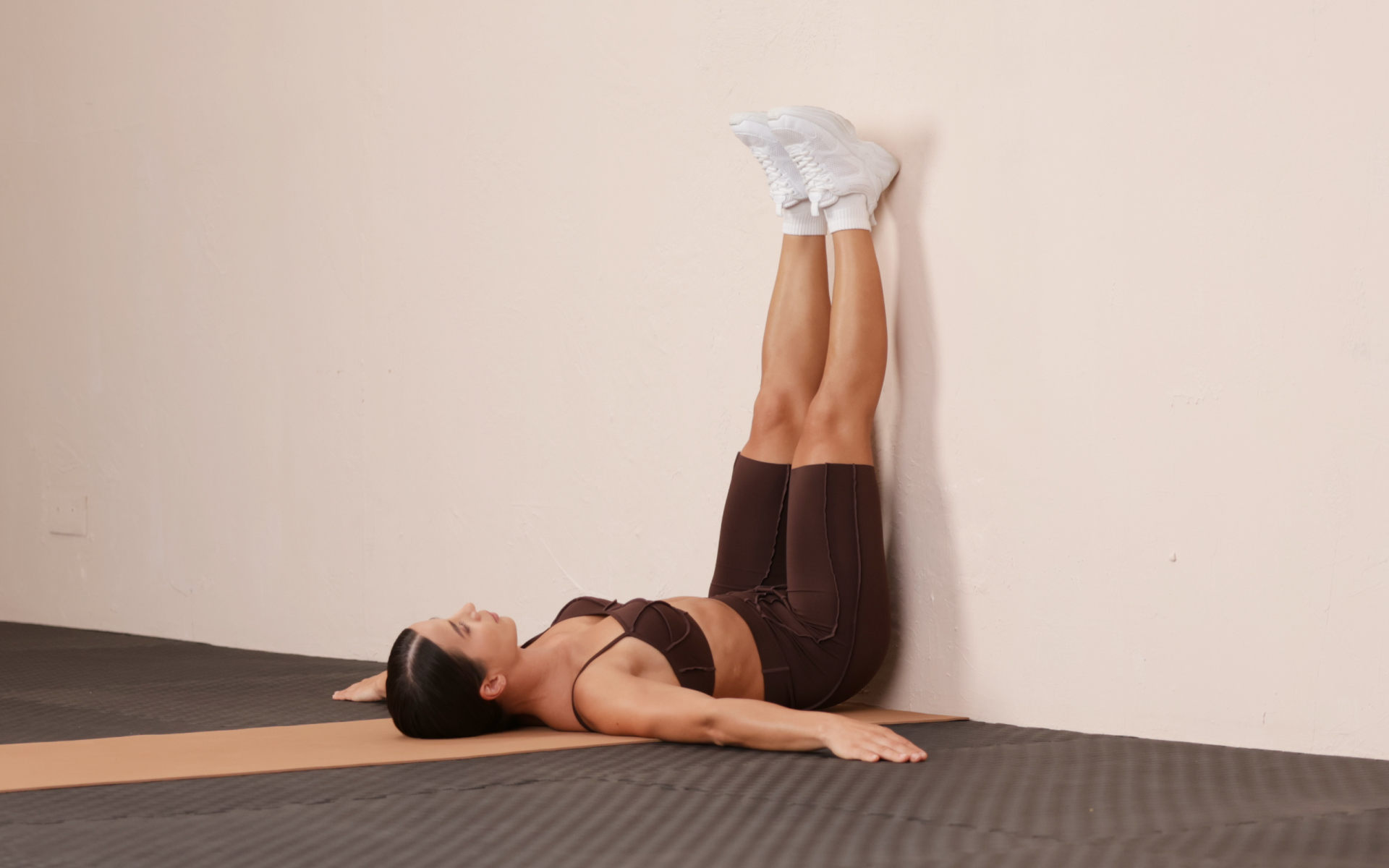
5. Leg Lifts Against the Wall
- Lie on your back with your hips close to the wall.
- Rest your legs straight up the wall.
- Keep your arms by your sides.
- Lower one leg toward the floor slowly.
- Lift it back up and switch sides.
This move focuses on the lower core and controlled movement. If you’re postpartum, only do it after getting medical clearance and skip it if it feels uncomfortable.
6. Side Bends Against the Wall
- Stand with your right side near the wall.
- Raise your right arm and place your palm on the wall.
- Bend gently to your left, sliding your hand down.
- Return to the start and repeat on the other side.
7. Wall Bridge with Leg Extension
- Lie on your back with your feet flat on the wall, your knees bent at 90 degrees.
- Press your feet into the wall and lift your hips.
- Extend one leg straight while keeping your hips lifted.
- Hold briefly, then lower with control.
Here’s a simple routine you can follow as a starting point. Adjust the reps and rest to match your level.
| Exercise | Primary target | Reps/duration | Rest |
| Wall plank | Full core | 30 seconds | 20 seconds |
| Wall squat hold | Core, lower body | 20-30 seconds | 20 seconds |
| Wall sit-ups | Upper abs, obliques | 10-12 reps | 20 seconds |
| Mountain climbers | Core, shoulders | 30 seconds | 20 seconds |
| Leg lifts | Lower abs, hip flexors | 8-10 per leg | 20 seconds |
| Side bends | Obliques | 10 per side | 20 seconds |
| Wall bridge | Core, glutes | 8-10 per leg | 30 seconds |
Move through the list once or twice, depending on your energy. Keep your breathing calm and stop before your form breaks down.
Check out our wall Pilates ab workout article for more wall ab workouts.
Who Should Avoid Wall Core Exercises?
Wall Pilates core exercises suit many people, but they’re not right for everyone. If any of the following apply to you, it’s wise to pause and check with a qualified healthcare provider before you start.
Consider holding off if you:
- Have significant back discomfort or back-related concerns.
- Recently had abdominal surgery, unless your healthcare provider has cleared you for exercise.
- Are in a late-stage pregnancy, where lying flat or holding planks may feel uncomfortable.
- Are returning to exercise after childbirth without medical clearance.
- Frequently have dizziness or balance concerns.
You should also stop immediately if a movement causes worsening discomfort, sharp sensations, or an unusual shortness of breath. These exercises should feel controlled, not uncomfortable in a sharp or unusual way.
If in doubt, a brief chat with your doctor or a movement professional can help you understand what suits your body. Everyone starts from a different place, and there’s no single right way to move. Choosing gentler options or skipping certain moves is completely reasonable.
How Do Core Exercises Influence Energy Expenditure?
Core exercises influence energy expenditure by adding to your overall daily activity, not by targeting one area. You may have searched for wall exercises for belly fat, but that phrase describes a popular search term rather than a real mechanism. Your body doesn’t burn fat from a specific spot just because you train it (1).
What actually matters is your total activity load over time. The more you move across your day, the more energy you tend to use. Wall exercises can be one part of that bigger pattern, particularly when you add a little intensity.
One way to do this is with intervals. You alternate short bursts of effort with brief rest periods. For example:
- Hold a wall plank for 30 seconds.
- Rest for 10-15 seconds.
- Move to the next exercise.
This approach can raise your heart rate and make the routine more demanding without adding extra time. Larger, full-body movements, such as squat holds and mountain climbers, also recruit more muscles, which tends to use more energy than small, isolated moves.
However, no single workout decides your results. Energy expenditure adds up across walking, daily tasks, and other workouts too. Combine your routine with balanced eating and regular movement, and you’ll create steady, realistic support for your goals over weeks and months.

How Often Should You Perform Wall Exercises?
You can perform wall Pilates core exercises 2-4 times a week, with rest days in between to let your muscles adapt. There’s no perfect number that works for everyone. The right frequency will depend on your fitness level, your schedule, and how your body feels.
For most people, mixing things up tends to work best. Pair your wall routine with cardio, strength training, and gentle stretching across the week. Rest days are just as important as workout days, as rest time is when your muscles adapt.
Here’s a simple beginner progression you can follow and adjust.
| Week | Core focus | Wall exercise frequency | Progression tip |
| 1 | Form and control | 2 days | Hold each move for shorter times |
| 2 | Endurance | 2-3 days | Add 5-10 seconds per hold |
| 3 | Consistency | 3 days | Add a second round of the routine |
| 4 | Light intensity | 3-4 days | Add short intervals between moves |
Listen to your body and slow down if you feel overly tired. Consistency over time matters far more than pushing hard on any single day. Find a rhythm you can actually maintain, and let it grow naturally.
Managing Temporary Puffiness and Posture for a Flatter Appearance
A flatter-looking midsection can sometimes come from temporary changes in puffiness and posture, not fat loss. Temporary puffiness can shift based on food choices, hydration, digestion, and posture (7).
A few simple habits may support a lighter, more comfortable feeling. Standing tall and gently engaging your core also creates a flatter appearance without any fat loss at all. Adding standing wall exercises, such as wall sits or wall planks, can support better posture and core awareness throughout your day.
Here are practical factors to consider over the next week.
| Factor | How it may affect puffiness | Actionable 7-day tip |
| Sodium | High intake may cause water retention | Limit ultra-processed and salty foods |
| Fiber | Supports steady digestion | Add fruits, vegetables, and whole grains |
| Hydration | Low water intake may contribute to feeling puffy for some people | Sip water throughout the day |
| Posture | Slouching can make the midsection appear more prominent | Stand tall and engage your core |
These tips support a temporary, flatter look, rather than lasting fat loss. Real changes in body composition take longer and will depend on your overall routine. Think of these habits as everyday adjustments that help you feel and look a little lighter in the short term, while your steady efforts work in the background over time.
Read more: Does Wall Pilates Work? Discover Why Wall Pilates is the New FitTok Hype
FAQs
Why are wall core exercises so effective?
Wall core exercises can be useful because the wall gives you stability and clear feedback on your form, which makes the moves beginner-friendly and easy to control. You also need very little space or equipment, which helps many people stay consistent over time.
How long does it take to see results from wall exercises?
Results vary from person to person, so there’s no fixed timeline. Some people may notice changes in core control and posture within a few weeks of regular practice. Visible changes in body composition take longer and depend on your full routine, including diet and overall activity.
How many calories do you burn in wall workouts?
The number varies based on intensity, body composition, and how long you train. One review reported that a typical Pilates-style session can burn a moderate amount of energy, often more during higher-intensity routines (8). Wall workouts focus mainly on strength and control rather than high calorie burn.
What are beginner tips for starting wall exercises?
Start small and build slowly. Choose two or three moves, keep your reps low, and focus on control over speed. Practice 2-3 days a week, rest between sessions, and add time or reps as you feel stronger. Keep your breathing steady throughout.
Can wall Pilates for abs reduce belly fat?
No, wall Pilates for abs cannot reduce belly fat in one specific area, as spot reduction is a myth (1). These moves can strengthen your core and support posture (9). Pairing them with balanced eating and regular movement is what supports gradual changes in overall body composition.
Wall exercises for flat stomach goals can be a gentle, low-impact way to support your core, posture, and overall movement habits. They won’t reduce fat in one spot, and quick fixes rarely last. What works is consistency over time, paired with balanced eating and regular activity.
The Bottom Line
Start small, choose moves you enjoy, and build a routine you can actually maintain. Listen to your body, rest when you need to, and adjust as you go. With patience and steady effort, these simple at-home moves can become a reliable part of your weekly routine.
DISCLAIMER:
This article is intended for general informational purposes only and does not serve to address individual circumstances. It is not a substitute for professional advice or help and should not be relied on for making any kind of decision-making. Any action taken as a direct or indirect result of the information in this article is entirely at your own risk and is your sole responsibility.
BetterMe, its content staff, and its medical advisors accept no responsibility for inaccuracies, errors, misstatements, inconsistencies, or omissions and specifically disclaim any liability, loss or risk, personal, professional or otherwise, which may be incurred as a consequence, directly or indirectly, of the use and/or application of any content.
You should always seek the advice of your physician or other qualified health provider with any questions you may have regarding a medical condition or your specific situation. Never disregard professional medical advice or delay seeking it because of BetterMe content. If you suspect or think you may have a medical emergency, call your doctor.
Sources:
- Spot reduction: why targeting weight loss to a specific area is a myth (2023, sydney.edu.au)
- Core training and performance: a systematic review with meta-analysis (2023, pmc.ncbi.nlm.nih.gov)
- Core exercises: Why you should strengthen your core muscles (2025, mayoclinic.org)
- Effects of Different Exercises Combined with Different Dietary Interventions on Body Composition: A Systematic Review and Network Meta-Analysis (2024, mdpi.com)
- The effect of a short-term physical activity after meals on gastrointestinal symptoms in individuals with functional abdominal bloating: a randomized clinical trial (2021, pmc.ncbi.nlm.nih.gov)
- The Energy Expenditure Associated With Body-Weight Resistance Exercises of Various Movement Patterns Performed at Different Durations (2024, pubmed.ncbi.nlm.nih.gov)
- Bloated Stomach (2026, my.clevelandclinic.org)
- Metabolic intensity and energy cost of Pilates exercises: an exploratory systematic review and meta-analysis of limited and heterogeneous evidence (2026, link.springer.com)
- Pilates – health benefits (2022, betterhealth.vic.gov.au)
 Reviewed by
 Reviewed by