

Many people struggle to find a workout routine that fits their schedule while still delivering consistent results. It’s a common problem: you want to commit to fitness, but life gets in the way. A well-structured training plan can be the solution, providing the framework you need to build strength, gain muscle, and improve your overall health without spending every day in the gym.
One of the most effective and sustainable approaches is the 4-day workout split. This guide will explain exactly what a 4-day split is, how to structure one for your goals, and provide a complete program that’s designed specifically for women. We’ll break down the science, the structure, and the steps to help you build a powerful routine.
What Is a 4-Day Gym Split?
A 4-day gym split is a training schedule that divides your workouts across four days of the week. Rather than working out your entire body in each session, you focus on specific muscle groups or movement patterns on different days. This approach allows you to train with higher intensity and volume for each muscle group while ensuring adequate recovery time.
For example, a common 4-day split is the “upper/lower” split:
- On two days of the week, you train the muscles in your upper body (such as your back, chest, shoulders, and arms).
- On the other two days, you focus on your lower body (including your glutes, quadriceps, hamstrings, and calves).
This structure allows you to hit each muscle group twice a week, which is an effective frequency for stimulating muscle growth and strength gains.
Are 4-Day Workout Splits Effective?
Yes, a 4-day workout split is a highly effective way to achieve fitness goals. This structure provides a balanced frequency of training that allows you to stimulate your muscles for growth and strength gains while also giving your body ample time to recover and adapt (1, 2).
Recovery is when your muscles actually repair and grow stronger, so having dedicated rest days is essential for progress (3).
By focusing on specific muscle groups each session, you can increase the total amount of work, or volume, you perform for those muscles. This targeted volume is a key driver of muscle hypertrophy (growth) (1).
A 4-day split allows you to perform more sets and exercises for a particular muscle group than you could realistically fit into a full-body workout. This increased focus can lead to more significant improvements in muscle definition and strength over time. It’s an efficient way to organize your training week, which makes it a powerful option for many individuals.
Read more: Good Full-Body Workout: A Complete Guide with a Simple Plan
How to Structure a 4-Day Split
Structuring your 4-day split correctly is the key to maximizing its benefits. It’s about more than just showing up – it’s about having a plan that aligns with your goals. Here are the steps to build an effective program:
Determine Your Split Type
First, decide how you’ll divide your muscle groups. The most popular and effective 4-day splits include:
- Upper/Lower Split: You’ll have two upper-body days and two lower-body days. A typical schedule might be: Monday (upper), Tuesday (lower), Thursday (upper), Friday (lower). This allows you to train each muscle group twice per week.
- Push/Pull Split: This variation can be structured as two push days and two pull days, sometimes with legs integrated.
- Hybrid Split (Push/Pull/Legs + Full Body): A more common approach is a push/pull/legs split spread over more days, but a 4-day version could look like this: Day 1 (push – chest, shoulders, triceps), Day 2 (pull – back, biceps), Day 3 (legs), Day 4 (full body or another push/pull day).
- Body Part Split: This is a more “bodybuilder” style split where you might focus on one or two muscle groups per day. For example: Day 1 (chest and triceps), Day 2 (back and biceps), Day 3 (legs), Day 4 (shoulders and abs).
For most women who are looking for balanced development, the upper/lower split is an excellent starting point. It provides a great balance of frequency and recovery, and it’s particularly effective for a 4-day workout split glute-focused female plan, as you can dedicate two full days to lower body development.

Select Your Exercises
Once you have your split, choose the exercises for each day. Your workout should be built around compound exercises. These are multi-joint movements that work several muscle groups at once, giving you the most benefit for your time (4).
- Compound Exercises: Examples include squats, deadlifts, bench presses, overhead presses, pull-ups, and rows. These should be the foundation of your workouts.
- Isolation Exercises: These single-joint movements target a specific muscle, such as bicep curls, tricep extensions, leg extensions, or lateral raises. Use these to supplement your compound lifts and work on specific areas you want to develop (5).
A good rule of thumb is to start each workout with 1-2 heavy compound exercises and finish with 2-4 isolation movements.
Whether you’re a workout beast or just a beginner making your first foray into the world of fitness and dieting – BetterMe has a lot to offer to both newbies and experts! Install the app and experience the versatility first-hand!
Define Your Sets and Reps
The number of sets and repetitions (reps) you perform will depend on your primary goal. While adaptations can occur across a broad spectrum of loading ranges, some general guidelines are helpful.
- For Strength: Focus on lower rep ranges, typically 1-5 reps per set, using a heavy weight that is around 80% or more of your one-rep max (1RM) – the most weight you can lift for a single repetition (6).
- For Hypertrophy (Muscle Growth): The traditional range is 6-12 reps per set (6). However, research has shown that hypertrophy can be achieved with a wide range of reps (from 5 to 30+) as long as you train with high effort, taking sets close to muscular failure (7).
- For Muscular Endurance: Use higher rep ranges, typically 15 reps or more, with lighter weight (less than 50% of your 1RM) (6).
A balanced program often incorporates a mix of these rep ranges. For example, you might perform your main compound lifts in a lower rep range for strength and your isolation exercises in a higher rep range for hypertrophy.

Implement Progressive Overload
Progressive overload is the most important principle for long-term progress. It means gradually increasing the demand on your muscles over time. Without it, your body has nothing new to adapt to and your progress stalls (8). You can apply progressive overload in several ways (9, 10):
- Increase the Weight: Add a small amount of weight to the bar or use the next dumbbell up.
- Increase the Reps: Try to complete more reps with the same weight. If you did 8 reps last week, aim for 9 or 10 this week.
- Increase the Sets: Add an extra set of an exercise.
- Decrease Rest Time: Reduce the rest period between your sets to increase the workout’s intensity.
Track your workouts in a journal or app to ensure you are consistently challenging yourself. This is a fundamental concept for both a 4-day workout split female beginner and an advanced lifter.
To learn more about the fundamentals of lifting, check out our complete guide to weight lifting for beginners female.
What Is a Powerful 4-Day Gym Split for a Woman?
Here’s a comprehensive 4-day upper/lower split that’s designed to build strength and muscle. This program is ideal for women who want a balanced physique with an emphasis on lower-body development.
Program Notes
- Glossary:
- RPE (Rate of Perceived Exertion): A scale from 1-10 to measure intensity. An RPE of 8 means you feel you have about two more reps left in the tank before failure.
- 1RM (One-Repetition Maximum): The maximum amount of weight you can lift for one rep.
- Progressive Overload: The principle of gradually increasing the stress placed on your body during training. Aim to add weight, reps, or sets over time.
- Equipment Needed: Access to a standard gym with barbells, dumbbells, cable machines, and a leg press machine. For those who are looking for a 4-day gym split female at home, exercises can be modified using dumbbells, resistance bands, and bodyweight.
- Split Structure: This is an upper/lower split performed on non-consecutive days (e.g. Monday, Tuesday, Thursday, Friday) to allow for recovery.
- Sets and Reps: The program uses a variety of rep ranges to target both strength and hypertrophy. Focus on proper form and taking sets close to the prescribed RPE.
- Cardio: Perform 15-20 minutes of low-intensity steady-state (LISS) cardio, such as incline walking or cycling, after each lifting session. On your rest days, aim for a longer 30-45 minute session.
The 4-Day Upper/Lower Workout Program
Day 1: Upper-Body A (Push Focus)
| Exercise | Sets | Reps | Rest | RPE |
|---|---|---|---|---|
| Barbell bench press | 3 | 6-8 | 2-3 mins | 8 |
| Seated dumbbell shoulder press | 3 | 8-12 | 90 secs | 8-9 |
| Incline dumbbell press | 3 | 10-15 | 90 secs | 9 |
| Cable lateral raise | 3 | 12-15 | 60 secs | 9-10 |
| Tricep pushdown | 3 | 12-15 | 60 secs | 9-10 |
Day 2: Lower-Body A (Quad Focus)
| Exercise | Sets | Reps | Rest | RPE |
|---|---|---|---|---|
| Barbell back squat | 3 | 6-8 | 2-3 mins | 8 |
| Leg press | 3 | 10-12 | 90 secs | 9 |
| Walking lunges | 3 | 12-15 per leg | 90 secs | 9 |
| Leg extension | 3 | 15-20 | 60 secs | 10 |
| Seated calf raise | 4 | 15-20 | 60 secs | 10 |
Day 3: Upper-Body B (Pull Focus)
| Exercise | Sets | Reps | Rest | RPE |
|---|---|---|---|---|
| Pull-ups (or lat pulldown) | 3 | As many as possible (AMRAP) / 8-12 | 2-3 mins | 9 |
| Bent-over barbell row | 3 | 8-10 | 90 secs | 8 |
| Seated cable row | 3 | 10-15 | 90 secs | 9 |
| Face pulls | 3 | 15-20 | 60 secs | 10 |
| Dumbbell bicep curl | 3 | 12-15 | 60 secs | 9-10 |
Day 4: Lower-Body B (Glute and Hamstring Focus)
| Exercise | Sets | Reps | Rest | RPE |
|---|---|---|---|---|
| Romanian deadlift (RDL) | 3 | 8-12 | 2-3 mins | 8 |
| Hip thrust | 3 | 10-15 | 90 secs | 9 |
| Glute-focused back extension | 3 | 15-20 | 90 secs | 9-10 |
| Lying leg curl | 3 | 15-20 | 60 secs | 10 |
| Abduction machine | 3 | 20-25 | 60 secs | 10 |
Exercise Instructions
Barbell Bench Press
- Lie flat on the bench with your feet planted firmly on the floor.
- Grip the barbell with your hands slightly wider than shoulder-width apart, your hands over your elbows.
- Unrack the bar and lower it slowly to your mid-chest, keeping your elbows tucked at about a 45-degree angle.
- Press the bar back up explosively until your arms are fully extended.
Seated Dumbbell Shoulder Press
- Sit on a bench with back support, holding a dumbbell in each hand at shoulder height, your palms facing forward.
- Press the dumbbells overhead until your arms are fully extended, but not locked.
- Lower the dumbbells back to the starting position in a controlled manner.
Incline Dumbbell Press
- Set the bench to a 30-45 degree incline and sit with a dumbbell in each hand, resting on your thighs.
- Kick the dumbbells up to shoulder height, your palms facing forward.
- Press the dumbbells upward until your arms are fully extended.
- Lower back down to shoulder height with control.

Cable Lateral Raise
- Stand beside a low cable machine with a D-handle attached.
- With your far hand, grasp the handle and keep your arm slightly bent.
- Raise your arm out to the side until it’s at shoulder height.
- Lower slowly back to the starting position and repeat, then switch sides.
Tricep Pushdown
- Set a straight or angled bar on a high pulley cable.
- Stand facing the machine and grasp the bar with both hands using an overhand grip.
- Tuck your elbows into your sides and push the bar down until your arms are straight.
- Pause, squeeze the triceps, then slowly return to the starting position.
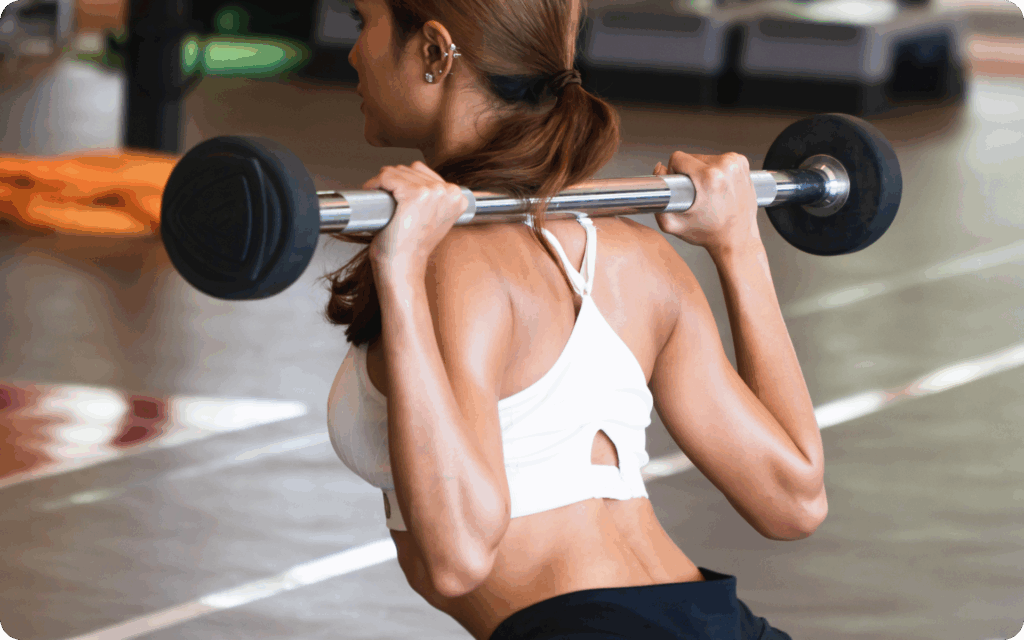
Barbell Back Squat
- Position a barbell on a squat rack at shoulder height. Rest the bar across your upper back, not on your neck.
- Step back from the rack with your feet shoulder-width apart and your toes pointing slightly out.
- Keeping your chest up and your core braced, lower your hips back and down as if sitting in a chair.
- Descend until your thighs are at least parallel to the floor, then drive through your heels to return to the starting position.
Leg Press
- Sit on the leg press machine with your feet shoulder-width apart on the platform.
- Unrack the safeties and grip the handles.
- Lower the platform until your knees are at roughly a 90-degree angle.
- Press the platform back up without locking your knees at the top.
Walking Lunges
- Stand upright, holding dumbbells at your sides.
- Step forward with one leg and lower your body until both knees are bent at 90-degree angles.
- Push through your front heel to bring your back foot forward to the starting position.
- Alternate legs and continue for the prescribed reps.
Leg Extension
- Sit on the leg extension machine and adjust the pad to rest just above your ankles.
- Grip the handles, then extend your legs fully, squeezing at the top.
- Lower the weight slowly until back at the starting position.
Seated Calf Raise
- Sit on the seated calf raise machine with the pads resting above your knees.
- Place the balls of your feet on the foot platform.
- Press through your toes to lift your heels as high as possible.
- Lower your heels down past the platform for a full stretch.
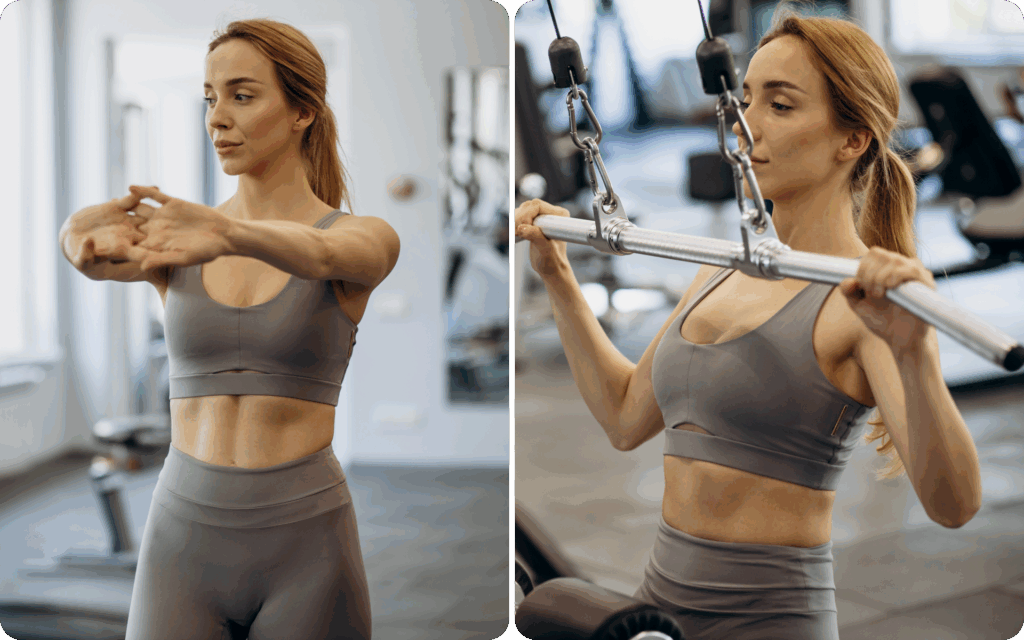
Pull-Ups (or Lat Pulldown)
- For pull-ups, grip the pull-up bar with an overhand grip, your hands slightly wider than shoulder-width apart.
- Hang with arms fully extended, then pull your chest toward the bar, leading with your back.
- Lower yourself under control.
- For lat pulldowns, adjust the thigh pad, grip the bar wide, pull down to upper chest, pause, and return with control.
Bent-Over Barbell Row
- Stand with your feet shoulder-width apart, holding a barbell with an overhand grip.
- Hinge at your hips, keeping your back straight, until your torso is nearly parallel to the floor.
- Pull the barbell up toward your lower chest, squeezing your shoulder blades together.
- Lower the bar back down with control.
Seated Cable Row
- Sit on the cable row machine with your feet on the platform, your knees slightly bent.
- Grab the handle with both hands, sit tall.
- Pull the handle toward your lower abdomen, squeezing your shoulder blades together.
- Slowly extend your arms to return.
Face Pulls
- Set a rope attachment to a cable machine at upper-chest height.
- Grasp the rope with both hands, your palms facing inward.
- Pull the rope toward your forehead, your elbows flaring out, squeezing your rear shoulders.
- Slowly return to the starting position.
BetterMe will shake off your mental funk, rid you of your energy-zapping habits, and help you sculpt the body of your dreams. Intrigued? Hurry up and change your life for the better!
Dumbbell Bicep Curl
- Stand holding a dumbbell in each hand, arms down by your sides, your palms facing forward.
- Curl the dumbbells up toward your shoulders while keeping your elbows at your sides.
- Pause and squeeze at the top, then lower with control.
Romanian Deadlift (RDL)
- Stand with your feet hip-width apart, holding a barbell or dumbbells in front of your thighs.
- Keeping your back straight and a slight bend in your knees, hinge at your hips, pushing your glutes back.
- Lower the weight until you feel a deep stretch in your hamstrings, typically just below your knees.
- Drive your hips forward to return to the starting position, squeezing your glutes at the top.
Hip Thrust
- Sit on the floor with your upper back against a bench and a barbell positioned over your hips.
- Plant your feet flat on the floor, hip-width apart.
- Press through your heels to lift your hips, squeezing your glutes hard at the top.
- Lower hips back to the starting position in a controlled motion.
Glute-Focused Back Extension
- Set up on a back extension bench, your feet anchored and your hips just above the pad.
- Cross your arms or hold a weight to your chest.
- Lower your upper body toward the floor, keeping your spine neutral.
- Lift your torso by contracting your glutes, stopping when your body is in a straight line.
Lying Leg Curl
- Lie face down on the leg curl machine, the pad resting just above your ankles.
- Grip the handles, then curl your legs up as far as possible by contracting your hamstrings.
- Pause at the top, then slowly lower to the start position.
Abduction Machine
- Sit on the abduction machine with the pads positioned against the outside of your knees.
- Grip the handles for support.
- Press your knees outward against the resistance, squeezing your glutes at the top.
- Return under control to the starting position.
For more exercise ideas, explore our list of the best exercises for women over 40.
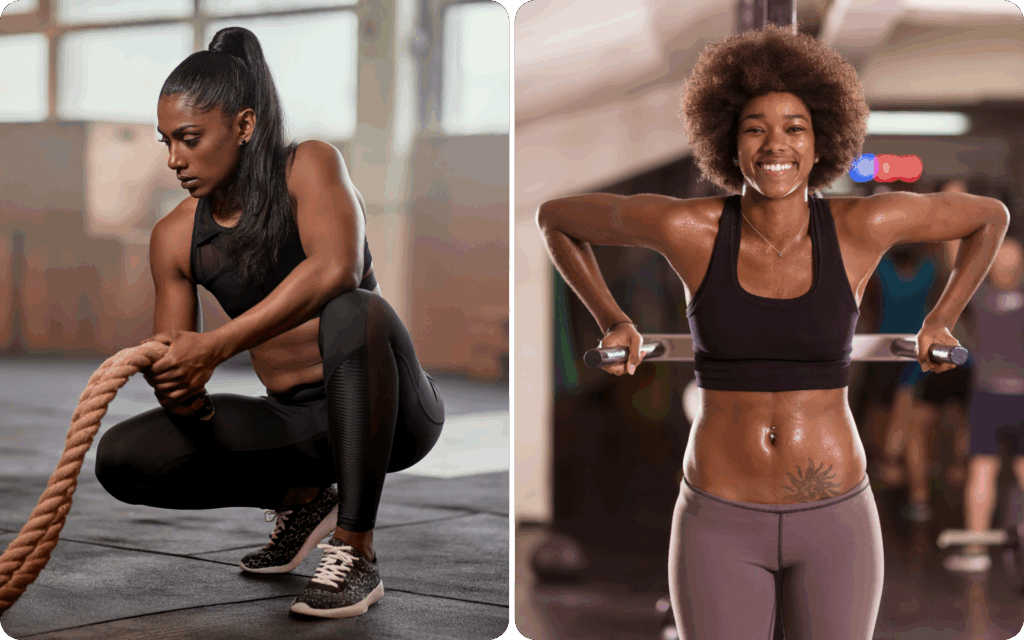
What Are the Pros of a 4-Day Split?
A 4-day split offers several distinct advantages for building muscle and strength.
- High Training Frequency Per Muscle Group
With an upper/lower split, each muscle group is trained twice per week.
Research has suggested that hitting a muscle group two times a week is the optimal frequency for maximizing muscle hypertrophy (11). This frequent stimulation can lead to faster and more consistent gains in both size and strength.
- Adequate Recovery Time
Training four days a week leaves you with three full days for recovery. This is essential as muscles don’t grow during your workout – they grow while you rest.
Sufficient recovery helps prevent overtraining, reduces the risk of injury, and ensures you feel fresh and strong for your next session (12). This balance makes it a sustainable approach for the long term.
- Allows for Higher Training Volume
Because you are focusing on fewer muscle groups per session, you can perform more total work (sets x reps x weight) for each one. This higher training volume is a primary driver of hypertrophy (13).
You can dedicate more energy to performing more exercises and sets for your chest, back, or legs than you could if trying to train your entire body in one workout.
- Flexible and Sustainable
A 4-day split fits well into most people’s lives. You can schedule your workouts around work, family, and social commitments. For example, you can train Monday, Tuesday, Thursday, and Friday, leaving your weekends free.
This sustainability is key for long-term adherence, which is the most important factor for achieving results. A flexible schedule also makes it easier to manage a 4-day workout split female weight loss plan by allowing time for meal prep and other healthy habits.
If you need a plan with even more flexibility, consider a workout routine for women at home.
Read more: Endurance Training Program for Beginners: The Ultimate Guide
What’s Better, a 4- or 5-Day Split?
The question of whether a 4-day or 5-day split is “better” doesn’t have a one-size-fits-all answer. The optimal choice depends entirely on your individual goals, recovery capacity, and schedule. It’s not about which split is superior in theory, but which one is superior for you.
A 4-day split, such as the upper/lower routine detailed above, is highly effective for most people. It provides an excellent balance of training frequency and recovery, which allows you to hit each muscle group twice a week with enough intensity to stimulate growth while still having three full rest days. This makes it a sustainable and powerful option for building strength and muscle.
A 5-day split often involves training a different muscle group each day (e.g. chest day, back day, leg day, etc.). This allows for a very high volume of training per muscle group, which can be beneficial for advanced lifters or those who are focused on bodybuilding.
However, it also means that each muscle is only trained directly once per week, and it requires a greater time commitment with fewer rest days. This can be harder to sustain and may increase the risk of burnout or overtraining if not managed properly.
Consider a 4-day split if:
- You have a busy schedule and need more flexibility.
- You want to ensure you have enough time for recovery.
- Your goal is overall strength and balanced muscle development.
Consider a 5-day split if:
- You’re an advanced trainee who can handle higher training volumes.
- Your primary goal is to maximize hypertrophy for specific body parts.
- You have more time to dedicate to the gym and can manage your recovery effectively.
Ultimately, the best split is the one you can stick with consistently.
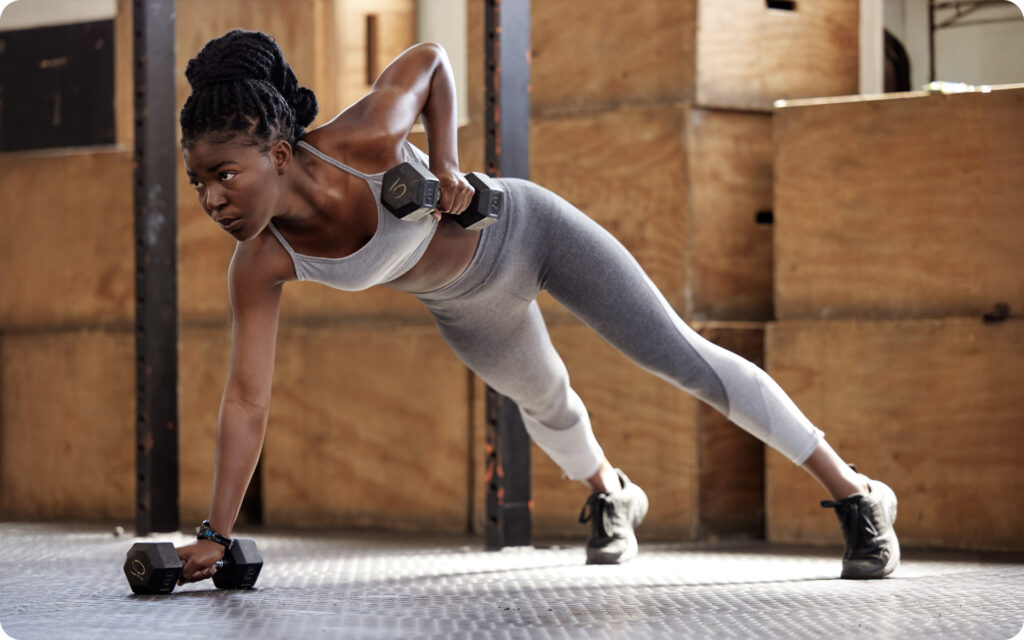
Yes, including cardio is beneficial. Aim for 2-3 sessions per week. You can do 15-20 minutes of low-intensity cardio after your weight training sessions or have longer, dedicated cardio sessions on your rest days to improve cardiovascular health without interfering with muscle recovery. Absolutely. Four days of focused, intense training is more than enough to build significant muscle and strength, as long as you’re consistent and apply the principle of progressive overload. No, you shouldn’t train your abs every day. The abdominal muscles are like any other muscle group and need time to recover. Training them 2-3 times per week with exercises that allow for progressive resistance is sufficient for growth and strength (14). Many compound lifts such as squats and deadlifts also heavily engage your core. Signs of overtraining include persistent muscle soreness that doesn’t go away, a decline in performance (e.g. you can’t lift as heavy or for as many reps), chronic fatigue, irritability, and difficulty sleeping (15). If you experience these symptoms, this is a sign that you need more rest. Incline walking is an excellent low-impact cardio exercise that burns calories, which contributes to overall fat loss (16). However, you can’t spot-reduce fat from your belly or any other specific area (17). To lose belly fat, you need to be in a consistent calorie deficit through a combination of a healthy diet and regular exercise, including both cardio and strength training (18).Frequently Asked Questions
Should I do cardio on a 4-day split?
Is 4 days at the gym enough?
Should I do abs every day on a split?
How do you tell if a muscle is overtrained?
Can I lose belly fat by incline walking?
The Bottom Line
Creating a workout plan that you can stick with is the foundation of achieving your fitness goals. A 4-day split offers a perfect blend of intensity, frequency, and recovery, which makes it one of the most effective and sustainable training structures for women.
By focusing on compound movements, applying progressive overload, and listening to your body, you can use this framework to build strength, transform your physique, and foster a lifelong commitment to your health. The journey is a marathon, not a sprint, and a well-designed plan is your map to the finish line.
DISCLAIMER:
This article is intended for general informational purposes only and does not serve to address individual circumstances. It is not a substitute for professional advice or help and should not be relied on for making any kind of decision-making. Any action taken as a direct or indirect result of the information in this article is entirely at your own risk and is your sole responsibility.
BetterMe, its content staff, and its medical advisors accept no responsibility for inaccuracies, errors, misstatements, inconsistencies, or omissions and specifically disclaim any liability, loss or risk, personal, professional or otherwise, which may be incurred as a consequence, directly or indirectly, of the use and/or application of any content.
You should always seek the advice of your physician or other qualified health provider with any questions you may have regarding a medical condition or your specific situation. Never disregard professional medical advice or delay seeking it because of BetterMe content. If you suspect or think you may have a medical emergency, call your doctor.
SOURCES:
- Progression Models in Resistance Training for Healthy Adults (2009, journals.lww.com)
- The Importance of Recovery in Resistance Training Microcycle Construction (2024, pmc.ncbi.nlm.nih.gov)
- Why Rest Days Are Important for Muscle Building (n.d., blog.nasm.org)
- Compound Exercises (n.d., physio-pedia.com)
- Do Single-Joint Exercises Enhance Functional Fitness? (2012, journals.lww.com)
- Loading Recommendations for Muscle Strength, Hypertrophy, and Local Endurance: A Re-Examination of the Repetition Continuum (2021, pmc.ncbi.nlm.nih.gov)
- Maximizing Muscle Hypertrophy: A Systematic Review of Advanced Resistance Training Techniques and Methods (2019, pmc.ncbi.nlm.nih.gov)
- Progressive Overload Explained: Grow Muscle & Strength Today (n.d., blog.nasm.org)
- Exercise progression and regression (n.d., us.humankinetics.com)
- Complexity: A Novel Load Progression Strategy in Strength Training (2019, frontiersin.org
- Effects of Resistance Training Frequency on Measures of Muscle Hypertrophy: A Systematic Review and Meta-Analysis (2016, link.springer.com)
- Exploring the Science of Muscle Recovery (n.d., blog.nasm.org)
- Resistance Training Variables for Optimization of Muscle Hypertrophy: An Umbrella Review (2010, frontiersin.org)
- Evidence-Based Resistance Training Recommendations (2011, researchgate.net)
- Overtraining Syndrome: A Practical Guide (2012, pmc.ncbi.nlm.nih.gov)
- Predicting the Metabolic Cost of Incline Walking from Muscle Activity and Walking Mechanics (1012, pmc.ncbi.nlm.nih.gov)
- A proposed model to test the hypothesis of exercise-induced localized fat reduction (spot reduction), including a systematic review with meta-analysis (2022, hummov.awf.wroc.pl)
- Weight loss – a healthy approach (2024, betterhealth.vic.gov.au)

 Reviewed by