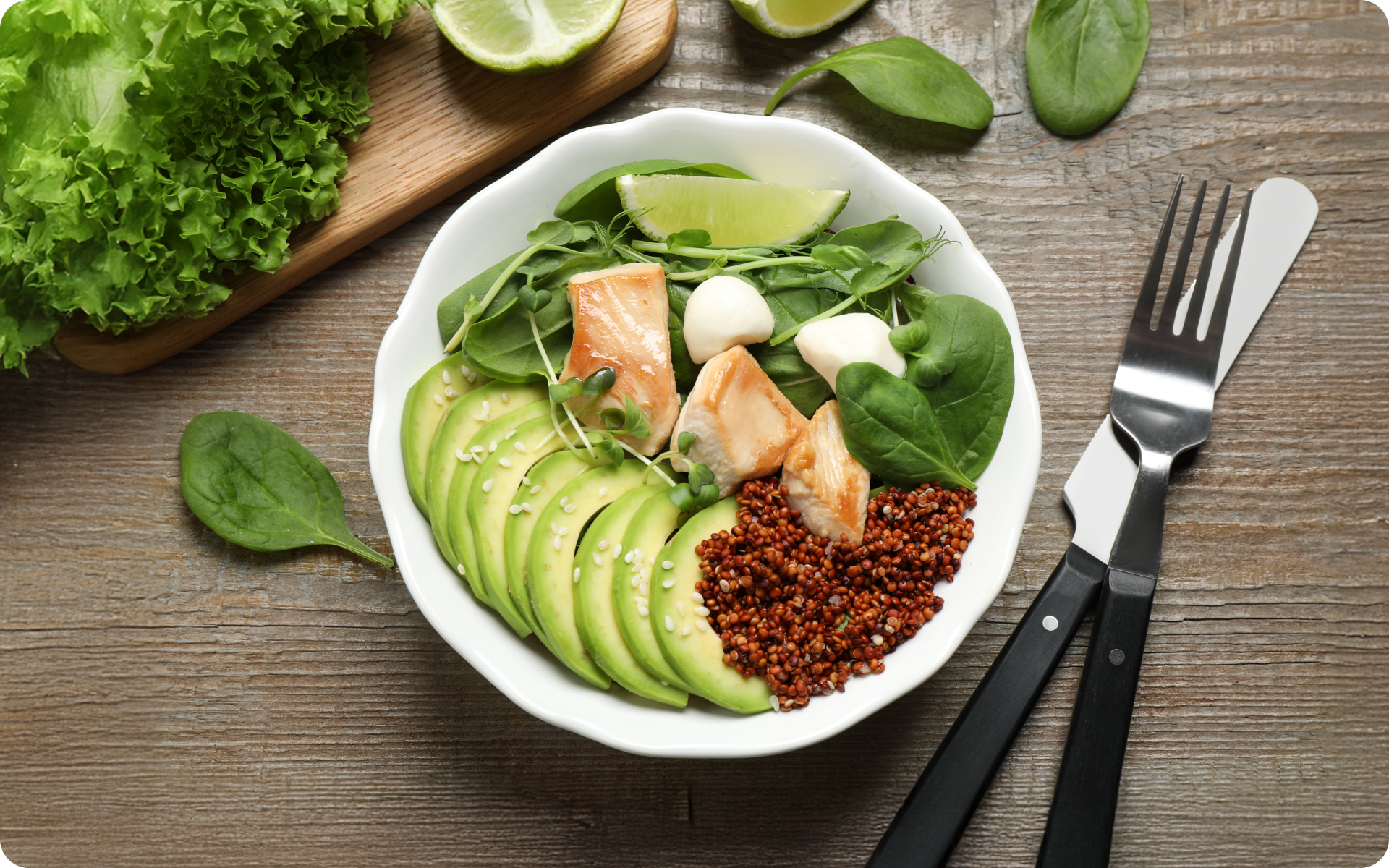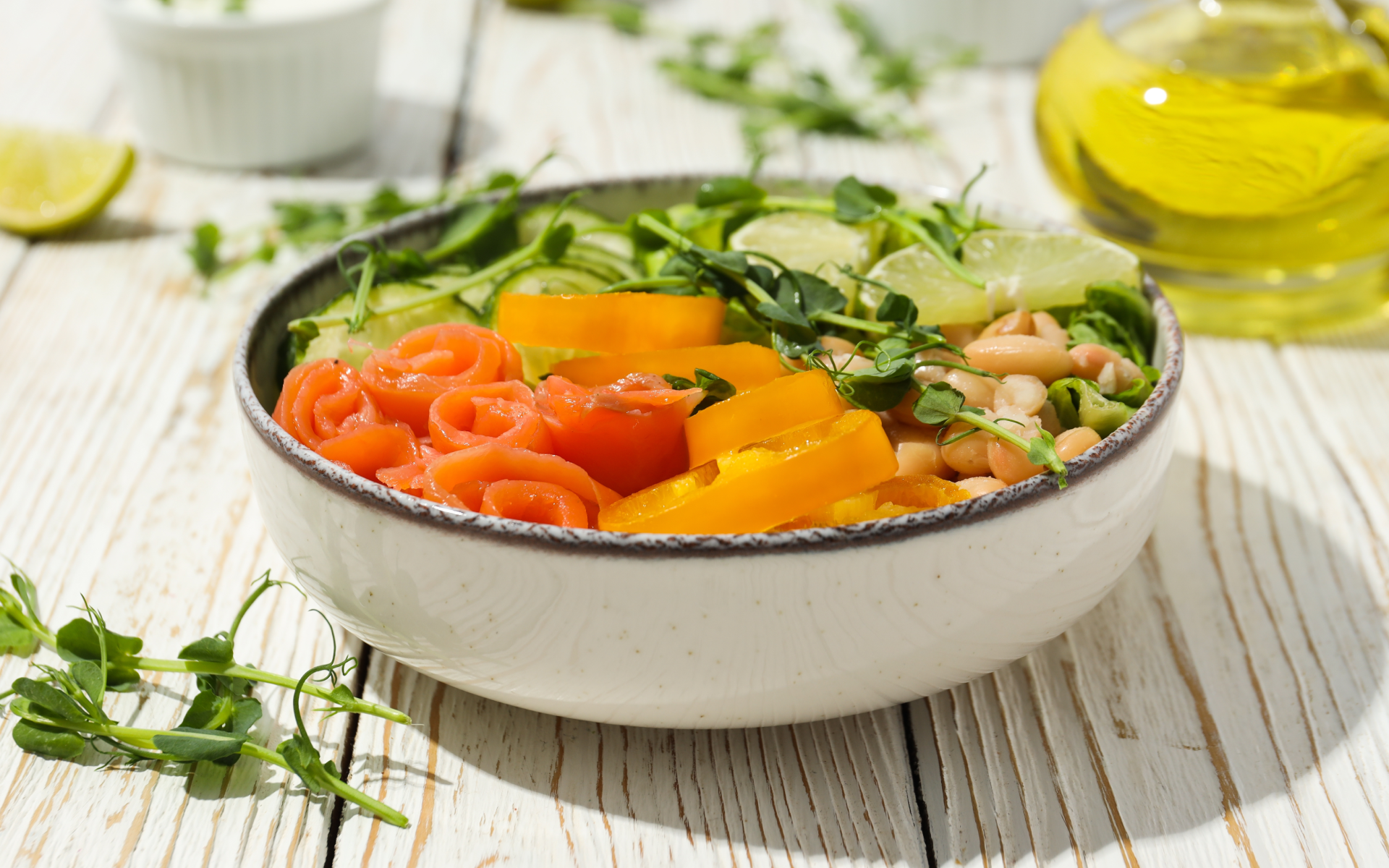
Clean eating means prioritizing whole, minimally processed foods—like fruits, vegetables, lean proteins, and whole grains—over ultra-processed options. It’s not about perfection or restriction, but about making small, intentional food choices that support your overall wellbeing.
The philosophy of “clean” eating may mean different things to different people, but generally it emphasizes more balanced food choices and nutrient-dense ingredients.
Are you feeling sluggish?
Craving more energy?
You may be looking to shed a few pounds. Whatever your wellness goals, clean eating may help support them.
But before we go any further, let’s clear up a common misconception—”Clean eating” doesn’t mean some foods are inherently “dirty.” And it doesn’t mean you have to starve yourself or only survive on salads.
A balanced diet can include all your favorite foods, from leafy greens to that slice of pizza or the burger you’re craving.
The core philosophy of clean eating involves prioritizing whole foods. “Whole” in this case means nutrient-dense and minimally processed (1).
These whole foods can include:
- Fruits and vegetables
- Lean proteins (animal-based and plant-based)
- Whole Grains.
Clean eating is about choosing foods that can support your overall wellbeing.
It lies in the small daily choices you make.
Instead of grabbing a processed snack bar, you might reach for a handful of almonds and a piece of fruit.
Instead of sugary soda, you choose sparkling water infused with fresh fruit.
Does that sound simple enough when you break it down into small actions?

Now, you might ask how one would differentiate between a whole food and something less wholesome.
Foods that experts consider “whole” are closer to their natural state – fruits, vegetables, lean meats, pulses, and whole grains. These foods contain vitamins, minerals, and antioxidants (2).
Ultra-processed foods endure several changes.
Think about sugary cereals, frozen dinners, processed meats like sausages, and pre-packaged chips.
Processing often causes the original ingredients to lose valuable nutrients and gain unwanted additives like excessive sugar and salt, unhealthy fats, and artificial flavors (3). These additives can make foods hyper palatable, which is why it is so easy to overeat them, and they also tend to be high in calories.
What Is A 30-Day Clean Eating Meal Plan?
Remember, clean eating is not about starving or deprivation. It’s about making more intentional food choices throughout the day.
These could include simple swaps like:
- Switching sugary cereals with overnight oats topped with berries.
- Choose antioxidant-rich herbal tea instead of sugary coffee, or reduce the cream and sugar and drink your coffee black.
- Choose grilled chicken over greasy fried chicken.
- Snack on salted nuts and dry fruits instead of chips.
While these swaps may seem small, they can add up over time and support your progress toward your wellness goals.
However, it’s crucial to avoid falling into the trap of overly restrictive diets.
Depriving yourself of things you like to eat tends to backfire more often than not (4).
Clean eating is about finding the right balance for your needs. The only way to stick to it is to enjoy your favorite foods in moderation while prioritizing whole, nutrient-dense options. This approach to eating is about overall wellbeing, not just physical routines. Eating patterns can influence how people feel day to day, though experiences vary.
How Do You Practice Clean Eating?
Clean eating is a lifestyle choice that focuses on nutrient-dense, minimally processed foods. It’s about making more intentional choices that prioritize minimally processed ingredients and reduce reliance on highly processed foods.

This clean-eating approach emphasizes a more intentional relationship with food, including where it comes from and how it fits into your routine (5).
At its core, clean eating revolves around prioritizing whole foods.
If you look down at your dinner plate, it should be a vibrant rainbow of fruits and vegetables. Start slow, but eventually aim for at least five servings of these superfoods daily as part of your big meals and as snacks (6).
Some people notice day-to-day changes when they make more balanced food choices, though results and experiences vary.
If you’re into meal planning…
Plan your protein intake to incorporate lean proteins like:
- Fish
- Poultry
- Beans
- Lentils
- Tofu
- Occasional lean meats
To complete your carb quota, go for whole grains over refined grains (i.e., white rice and bread):
- Whole wheat bread and pasta
- Brown rice
- Quinoa
- Oats
Although fats are sometimes viewed negatively, not all fats need to be avoided.
You can include these healthy fats to add flavor and essential nutrients to your meals.
- Avocados
- Olive oil and other vegetable oils
- Seeds
- Nuts
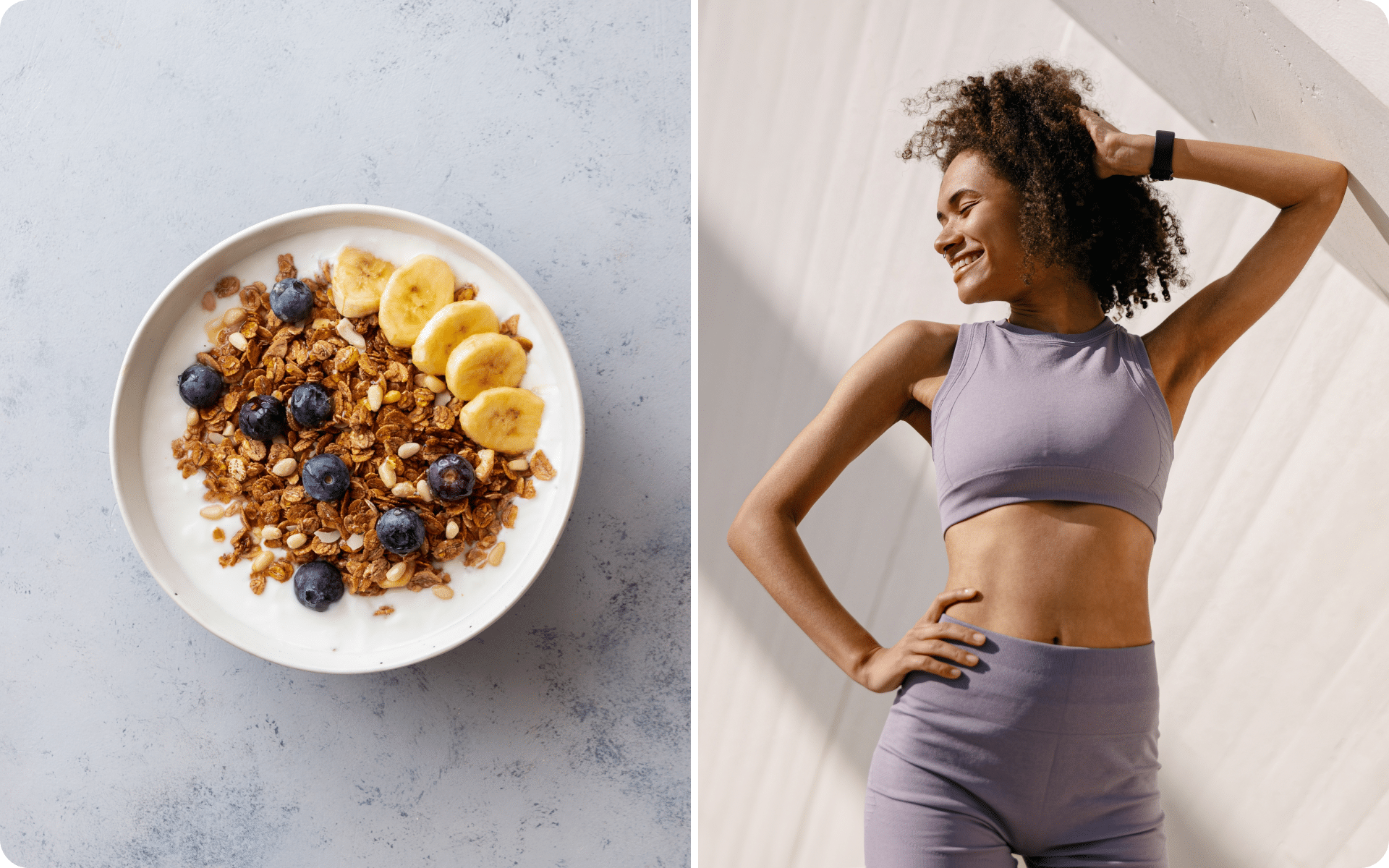
Clean eating is a lifestyle shift involving conscious decisions about your food.
Here’s a breakdown of how to practice it.
1. Befriend Whole Foods (6):
- Fruits and Vegetables: Aim for at least 5 daily servings. About half of your plate should contain these at each meal.
- Lean Proteins: Essential for muscle building. Incorporate sources like fish, poultry, beans, lentils, and tofu in everyday meals. If you enjoy red meat, make it an occasional treat and go for leaner cuts.
- Whole Grains: Brown rice, quinoa, oats, and whole-wheat bread instead of refined grains.
- Healthy Fats: Incorporate sources like avocados, nuts, seeds, and olive oil. Vegetable oils like canola, sunflower, avocado, and others can also fit into a balanced eating pattern.
2. Reduce Processed Food Intake:
- Minimize: Ultra processed foods often contain high added sugar levels, unhealthy fats, sodium, and other additives that make them hyperpalatable and high in calories.
- Avoid: Packaged snacks, fast food, sugary drinks, and processed meats.
3. Cook At Home:
- Home-cooked meals: Cooking at home can give you more control over ingredients such as oil, sugar, and salt.
- Meal prepping: Dedicate time to prepare meals and snacks in advance to make healthy eating easier throughout the week.
4. Its All In The Labels:
- Become label-savvy: Use nutrition labels to help compare products and make more informed food choices (7, 8).
- Choose foods with minimal processing: Prioritize whole or minimally processed foods more often, and limit foods high in added sugars, sodium, and saturated fat (9, 10).
5. Hydrate:
- Drink plenty of water: Drink enough water to stay hydrated throughout the day (11, 12).
- Limit sugary drinks: Limit sugar-sweetened beverages such as soda and other sweetened drinks (13, 14).
How To Start Clean Eating?
It can be tough to take the first step on a clean eating journey.
While you may be nervous, making small, gradual, sustainable changes can make it possible.
If you’re new to clean eating, start with baby steps.
Here are a few simple food swaps as examples:
- Whole-grain tortillas and whole wheat bread over refined flour tortillas and white bread
- Water over sugary beverages like soda
- Roasted potatoes instead of deep fried French fries
- Lean ground or whole cuts of fresh or frozen meat instead of processed meats
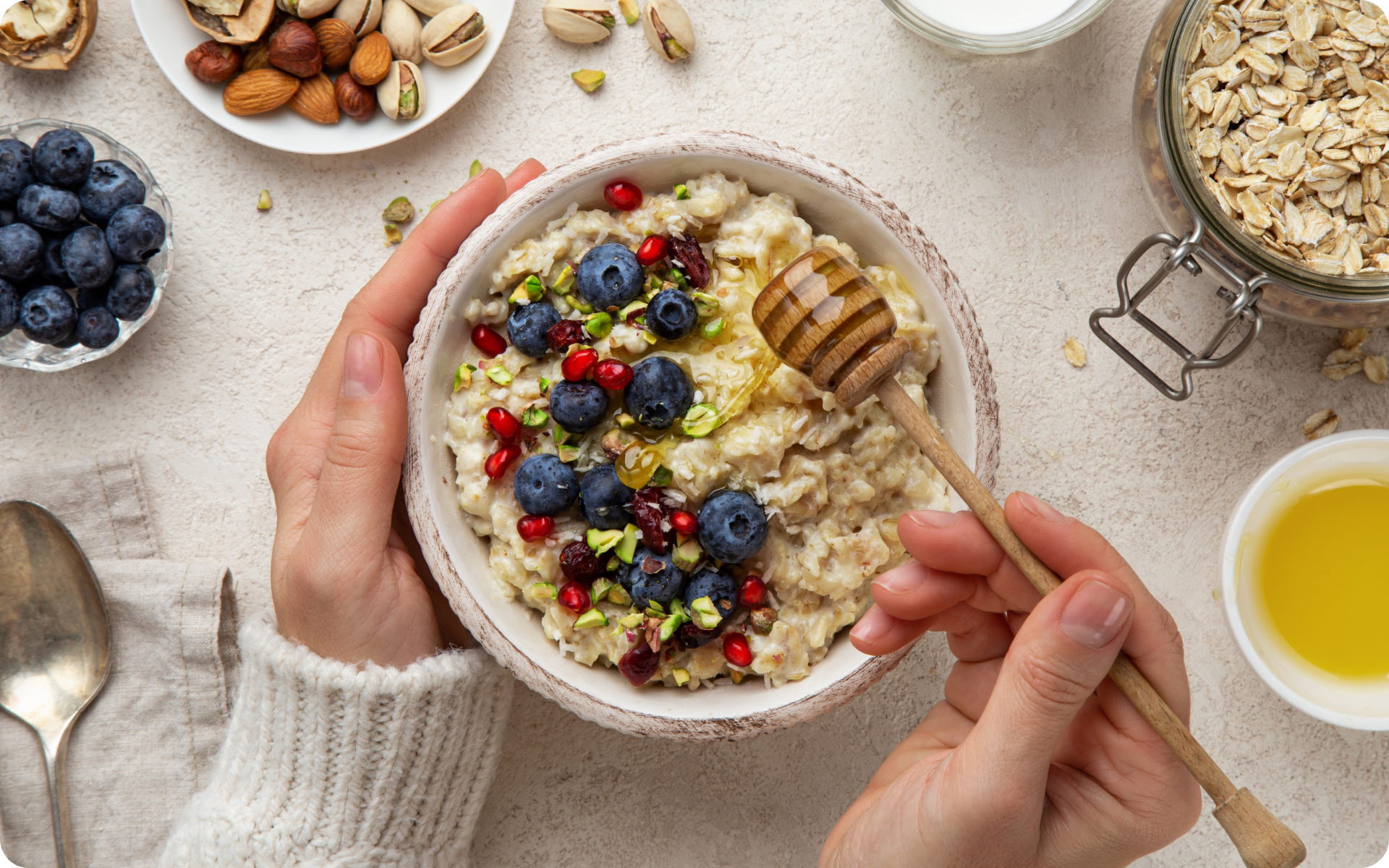
Let’s get you started with a few tips:
Start Small:
- Don’t overhaul your diet overnight: Incorporate 1-2 simple swaps into your daily routine. For example, replace your morning sugary cereal with oatmeal or swap your afternoon soda for water.
Focus on Adding, Not Just Restricting:
- Prioritize adding nutrient-dense superfoods: Include more fruits, vegetables, nuts, seeds, and whole grains rather than just cutting out certain foods.
Meal Prep:
- Prepare meals and snacks in advance: TThis can save time and make it easier to stick to your routine when you’re hungry or in a rush.
- Cook large batches of balanced meals: Store leftovers in individual containers for easy grab-and-go options during the workweek.
Find Healthy Alternatives:
- Explore healthy swaps for your favorite foods: For example, replace white rice with brown or wild rice or baked sweet potato fries instead of French fries.
Seek Support:
- Connect with others: Have a clean eating buddy or join a support group to share your journey and stay motivated.
How To Do The 30 Day Clean Eating Challenge?
A 30-day clean eating challenge is a structured way to jumpstart healthy eating habits.
Here’s how to approach it.
Set Clear Goals:
- Define your goals: What do you hope to achieve with this challenge?
- Examples: Support weight management, aim for steadier energy, or increase your intake of fruits and vegetables.
Create A Meal Plan:
- Plan your meals and snacks: This will help you stay on track and prevent you from making impulsive food choices.
- Consider a variety of recipes: Explore new recipes to keep your meals interesting.
Stock Your Pantry:
- Fill your kitchen with clean eating staples such as fruits, vegetables, lean proteins, whole grains, and healthy fats.
- Minimize ultra processed foods, sugary drinks, and unhealthy snacks.
Track Your Progress:
- Monitor your food intake: Keep a food journal or use a tracking app to track your progress.
- Remember how you feel: Changes in eating patterns may influence energy, mood, and overall wellbeing for some people.
Be Patient And Consistent:
- Don’t get discouraged by setbacks because everyone makes mistakes.
- Learn from mistakes and get back on track as soon as possible.
Focus On Long-Term Sustainability:
Aim to make gradual, sustainable changes that you can maintain long-term.
What Can You Eat On A 30 Day Cleanse?
A 30-day clean eating meal plan doesn’t have to be about deprivation or bland meals.
It’s about rediscovering the appeal of minimally processed foods, such as fruit, vegetables, and protein-rich meal components that may help you feel satisfied for longer.
An ideal clean plate might have sauteed greens, succulent grilled salmon, and a side of quinoa. Consider a creamy avocado, crunchy nuts, and the zesty tang of fresh herbs.
These are just a few delicious possibilities awaiting you on this journey.
A clean diet cleanse celebrates whole, minimally processed foods.
The focus is on whole, minimally processed foods while reducing reliance on ultra processed snacks and sugary foods. Some people find that more structured eating habits help them feel more consistent day to day.
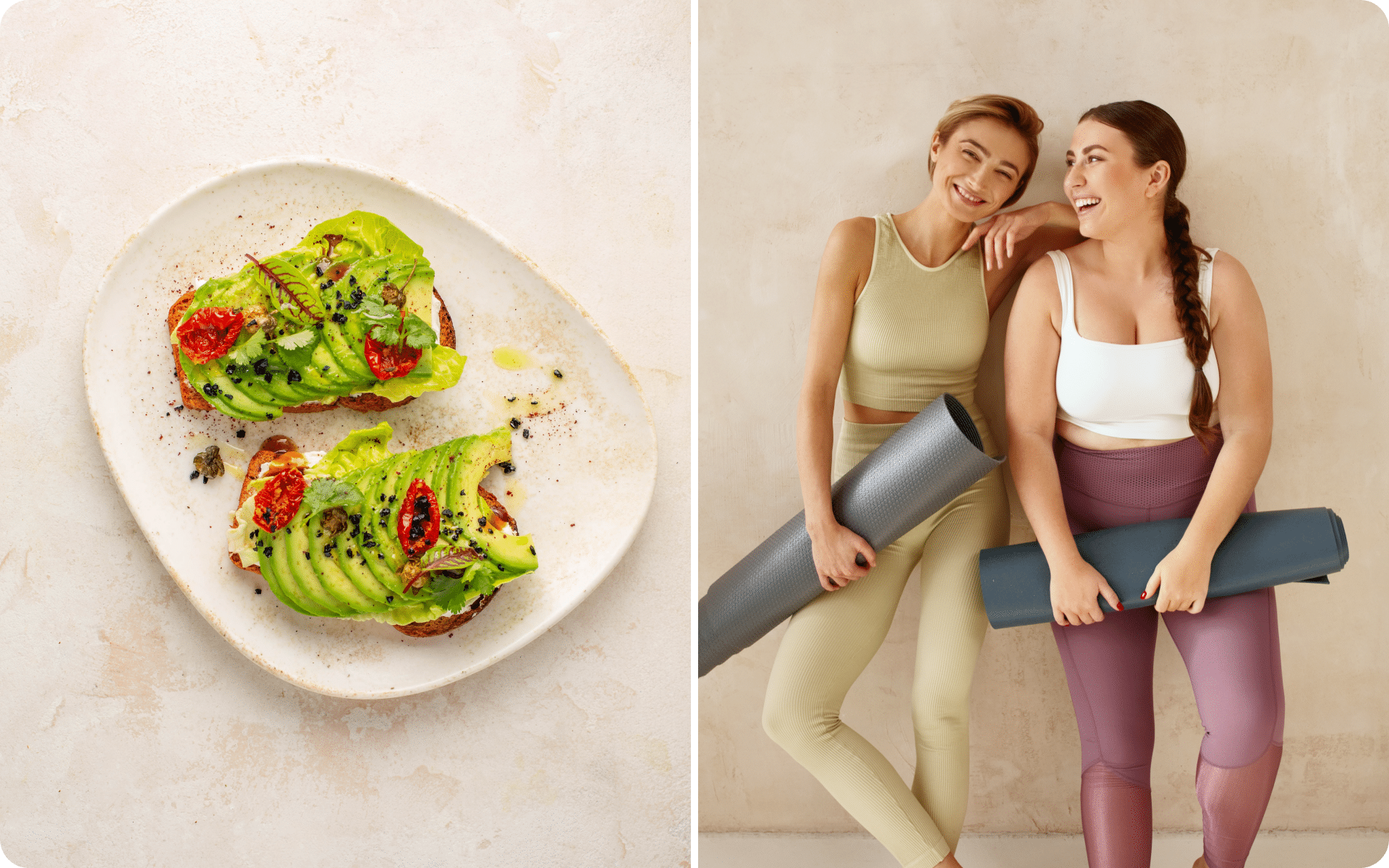
Here are some examples of whole, minimally processed foods you can eat on a 30-day clean-eating meal plan:
- Fruits: All fruits, especially berries, citrus fruits, and apples
- Vegetables: All vegetables, both cooked and raw, fresh, frozen, or even canned. Aim for a variety of colors.
- Lean Proteins:
-
- Fish (salmon, tuna, cod)
- Poultry (chicken, turkey)
- Beans and lentils
- Tofu
- Eggs
- Lean meats in moderation
- Whole Grains:
-
- Brown rice
- Quinoa
- Oats
- Whole-wheat bread
- Barley
- Other whole grain products
- Healthy Fats:
-
- Avocados
- Nuts and seeds
- Olive oil
- Canola oil and other vegetable oils
- Dairy:
-
- Plain yogurt
- Cheese (in moderation)
What Are The Products To Avoid On A 30 Day Clean Eating Challenge?
Ready to refresh your eating habits for the next 30 days?
For a 30-day clean eating challenge, you should aim to limit or avoid these foods.
Ultra Processed Foods:
- Processed meats (cured or smoked sausages, bacon, deli meats)
- Packaged snacks
- Frozen or boxed dinners
- Canned soups
- Fast food
Added Sugars:
- Soda
- Candy
Trans Fats (banned in many countries):
- May be in some ultra processed foods if not banned in your country
- May be listed in the ingredients list as partially hydrogenated oils
Saturated Fats (in moderation):
- Red meat
- Full-fat dairy (butter, cheese, whole milk)
- Coconut oil or Palm oil
Some of these foods are commonly associated with less favorable cholesterol patterns when consumed in excess (15).
How Much Weight Can You Lose Eating Clean For A Month?
The amount of weight you can lose on a 30-day clean eating plan varies greatly depending on several factors, such as:
- Starting weight
- Exercise levels
- Individual metabolism
- Dietary habits before the plan (16)

Factors Influencing Weight Loss
Calorie Deficit: The bedrock of weight loss is creating a calorie deficit, which means consuming fewer calories than your body burns.
A clean eating plan that focuses on whole, minimally processed foods may support a calorie deficit for some people, depending on food choices and portion sizes (17). However, this isn’t guaranteed and will depend on what and how much you are eating.
Dietary Habits Before Clean Eating: The time it will take to achieve your goal weight depends on whether you consumed a high-calorie diet with many processed foods and sugary drinks before starting the plan.
If your usual eating pattern changes substantially, you may notice initial weight changes. This initial weight loss happens because your body adjusts to a reduced calorie intake, drastically eliminating less nutritious foods and utilizing some stored fats (16).
Exercise: A crucial part of any weight management approach. Regular exercise can significantly boost weight loss results.
Exercise increases calorie expenditure and can also support muscle maintenance as part of a broader weight-management routine (16).
Individual Metabolism: Everyone’s metabolism is unique and dependent on personal factors. Age, sex, genetics, and thyroid function can influence how your body burns calories and stores fat (16).
Typical Weight Loss Expectations
While individual results vary, a realistic weight loss expectation for a 30-day clean eating plan (or any weight loss strategy) is 1-2 pounds per week.
Never believe the ‘lose 10 pounds in a week’ baits out there on social media.
A gradual weight loss pace is generally considered more sustainable for long-term maintenance.
Most 30-day clean-eating meal plans suggest avoiding certain types of foods for 30 days.
These include added sugars, refined grains, ultra processed foods, and alcohol.
This approach can promote weight loss due to a substantially reduced calorie intake, if it is a major change from what you were eating before (17).
However, you need to maintain your results after 30 days, make lifestyle changes, and continue eating balanced meals.

One challenge of adopting a clean-eating lifestyle is staying motivated and being open to trying new foods.
While weight loss is a common goal, the benefits of clean eating extend beyond the weighing scale.
A clean eating plan can support:
- Overall wellbeing: A clean eating plan may support overall well-being by emphasizing nutrient-dense foods that provide vitamins, minerals, and other essential nutrients (18).
- Digestive comfort: For some people, eating patterns that include more fiber may be associated with more regular digestion (19, 20).
- Day-to-day focus and mood: Eating patterns may influence how some people feel and function throughout the day, including aspects of mood and mental performance (11, 21).
Frequently Asked Questions
How to reduce weight without exercise?
While exercise is often included in weight-management routines, some people also focus on food intake and daily habits.
Here are some strategies:
- Calorie Deficit: A common principle behind weight loss is maintaining a calorie deficit, meaning consuming fewer calories than your body uses over time.
- Mindful Eating: Pay attention to your hunger and fullness cues. Eat slowly and savor each bite. Avoid distractions like TV or phones while eating.
- Prioritize Whole Foods: Fill your plate with fruits, vegetables, lean proteins, and whole grains. These foods are often more filling and can fit well into a calorie-conscious eating pattern because they may contain fiber and protein.
- Limit Ultra Processed Foods: Reduce your intake of ultra processed foods, sugary drinks, and unhealthy fats. These foods are often high in calories and low in nutrients, plus hyperpalatable and easy to overeat, contributing to weight gain.
- Hydration: Drink plenty of water throughout the day. Water can help you feel full and reduce cravings.
How fast can you lose weight with clean eating?
The rate of weight loss on a clean eating plan varies depending on several factors, including your starting weight, dietary habits before the plan, exercise levels, and individual metabolism.
A safe and sustainable weight loss rate to aim for is 1-2 pounds per week.
Is rice clean eating?
Not all rice is usually considered clean eating.
- White rice: Highly processed and stripped of most of its nutrients, though some may be added back. Generally not considered ideal for clean eating.
- Brown rice: A whole grain that retains its bran and germ, making it a good source of fiber and nutrients. Considered acceptable in a clean eating plan.
- Wild rice: Though technically the seeds of an aquatic plant, wild rice is usually categorized as a whole grain, making it appropriate for clean eating.
Is pasta ok for clean eating?
Refined (white) pasta, produced from processed white flour, is stripped of most of its fiber and nutrients during manufacturing, which is why it generally falls outside the boundaries of clean eating. Whole-wheat pasta, on the other hand, retains its fiber and nutrient content and can be enjoyed in moderation as part of a balanced, clean eating approach. The same goes for pastas made from other whole grains or legumes — such as chickpea, lentil, or brown rice pasta — which tend to be naturally higher in fiber and protein, making them a wholesome addition to your plate.
The Bottom Line
A clean eating plan can be one way to introduce more structure into your eating habits if your goal is weight management. Set realistic expectations and prioritize long-term sustainable modifications.
Weight loss is not linear, and fluctuations may occur along the way.
Enjoy your favorite treats occasionally, focus on making gradual, sustainable changes to your eating habits and routine, and notice day-to-day changes that matter to you.
DISCLAIMER:
This article is intended for general informational purposes only and does not serve to address individual circumstances. It is not a substitute for professional advice or help and should not be relied on for making any kind of decision-making. Any action taken as a direct or indirect result of the information in this article is entirely at your own risk and is your sole responsibility.
BetterMe, its content staff, and its medical advisors accept no responsibility for inaccuracies, errors, misstatements, inconsistencies, or omissions and specifically disclaim any liability, loss or risk, personal, professional or otherwise, which may be incurred as a consequence, directly or indirectly, of the use and/or application of any content.
You should always seek the advice of your physician or other qualified health provider with any questions you may have regarding a medical condition or your specific situation. Never disregard professional medical advice or delay seeking it because of BetterMe content. If you suspect or think you may have a medical emergency, call your doctor.
SOURCES:
- Nutrient Intake and Status in Adults Consuming Plant-Based Diets Compared to Meat-Eaters: A Systematic Review (2021, pubmed.ncbi.nlm.nih.gov)
- The Importance of Consuming Whole, Natural Foods and Avoiding Processed Ones (2023, scitechnol.com)
- Ultra-processed foods: what they are and how to identify them (2019, pmc.ncbi.nlm.nih.gov)
- A randomized controlled trial to evaluate the acceptability and effectiveness of two eating disorders prevention interventions: the HEIDI BP-HW project (2023, pubmed.ncbi.nlm.nih.gov)
- Clean Eating (n.d., nutritionsource.hsph.harvard.edu)
- Phytonutrients: Paint your plate with the colors of the rainbow (2019, health.harvard.edu)
- Using the Nutrition Facts Label to Make Food Choices Is Associated with Healthier Eating among 8th and 11th-Grade Students: An Analysis of Statewide Representative Data from the 2019-2020 Texas School Physical Activity and Nutrition Survey (2024, pubmed.ncbi.nlm.nih.gov)
- Nutrition Info and Other Front-of-Package Labels and Simulated Food and Beverage Purchases (2025, jamanetwork.com)
- Ultraprocessed or minimally processed diets following healthy dietary guidelines on weight and cardiometabolic health: a randomized, crossover trial (2025, nature.com)
- Ultraprocessed or minimally processed diets following healthy dietary guidelines on weight and cardiometabolic health: a randomized, crossover trial (2025, researchgate.net)
- Effects of Water Restriction and Supplementation on Cognitive Performances and Mood among Young Adults in Baoding, China: A Randomized Controlled Trial (RCT) (2021, mdpi.com)
- Water intake, hydration status and 2-year changes in cognitive performance: a prospective cohort study (2023, link.springer.com)
- Sugar-sweetened or artificially-sweetened beverage consumption, physical activity, and risk of cardiovascular disease in adults: a prospective cohort study (2024, sciencedirect.com)
- Associations of sugary beverage intake with type 2 diabetes and the role of physical activity: a prospective cohort study (2024, link.springer.com)
- Diet and heart disease risk (n.d., betterhealth.vic.gov.au)
- Rate of weight loss can be predicted by patient characteristics and intervention strategies (2013, ncbi.nlm.nih.gov)
- Optimal Diet Strategies for Weight Loss and Weight Loss Maintenance (2020, pmc.ncbi.nlm.nih.gov)
- Association between dietary quality and health-related quality of life among older adults: a cross-sectional study (2026, pubmed.ncbi.nlm.nih.gov)
- Association between Dietary Factors and Constipation in Adults Living in Luxembourg and Taking Part in the ORISCAV-LUX 2 Survey (2021, pmc.ncbi.nlm.nih.gov)
- Healthy Eating Index-2020 and bowel habits: a cross-sectional analysis of NHANES (2025, pmc.ncbi.nlm.nih.gov)
- Association Between Diet and Mental Health Outcomes in a Sample of 13,887 Adolescents in Canada (2024, cdc.gov)
 Reviewed by
 Reviewed by