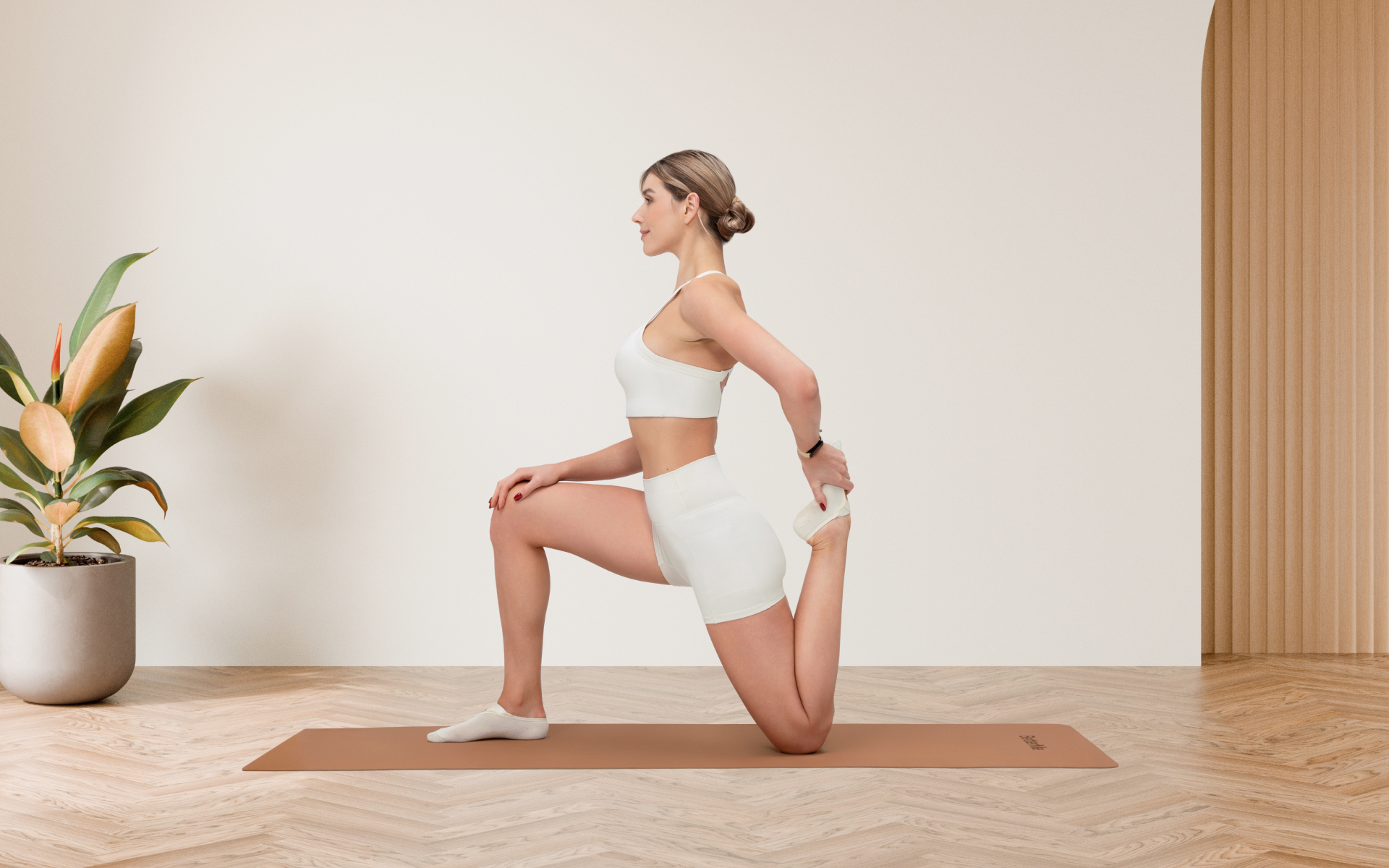
If you spend most of your day sitting—whether at a desk, in a car, or on the couch—you might be familiar with that nagging tightness in the front of your hips. But here is the thing: what feels like tightness is often weakness in disguise.
Your hip flexors are a group of muscles responsible for bringing your knee toward your chest. They are crucial for walking, running, squatting, and maintaining a healthy posture. When they are weak, your body compensates, leading to a chain reaction of issues ranging from lower back pain to poor athletic performance.
In this guide, we are going to move beyond simple stretching. We will explore why strengthening these muscles is the missing link in your training and provide you with a science-backed workout to build resilient, powerful hips.
What Are the Signs of Weak Hip Flexors?
Identifying hip flexor weakness can be tricky because the symptoms often mimic tightness. However, specific functional limitations usually point directly to a lack of strength rather than just a lack of flexibility.
Here are the most common signs that your hip flexors need strengthening:
- Difficulty Lifting the Knee Above 90 Degrees: If you struggle to lift your knee high toward your chest without rounding your back, your hip flexors may lack the necessary strength to perform the movement through its full range of motion.
- Lower Back Pain While Standing: Tight hip flexors often cause the pelvis to tilt forward (anterior pelvic tilt) (1). This forces the lower back muscles to overwork to keep you upright, resulting in a dull ache or sharp pain in the lumbar region.
- Knee Instability or Pain: The hip flexors play a role in stabilizing the femur (thigh bone) (2). When they are weak, the tracking of the knee can be affected, leading to discomfort, particularly during activities like running or squatting.
- Compensatory Movements During Leg Raises: If you perform a hanging leg raise or a lying leg lift and feel the strain primarily in your lower back instead of your core and hips, it is a strong indicator that your hip flexors are not engaging effectively.
- “Tightness” That Won’t Go Away: If you constantly stretch your hips but the feeling of tightness returns almost immediately, you likely have “neurological tightness.” This happens when the brain senses weakness and tightens the muscle to create artificial stability.
Recognizing these signs is the first step. To address the issue effectively, you need to confirm whether strength is truly the limiting factor.
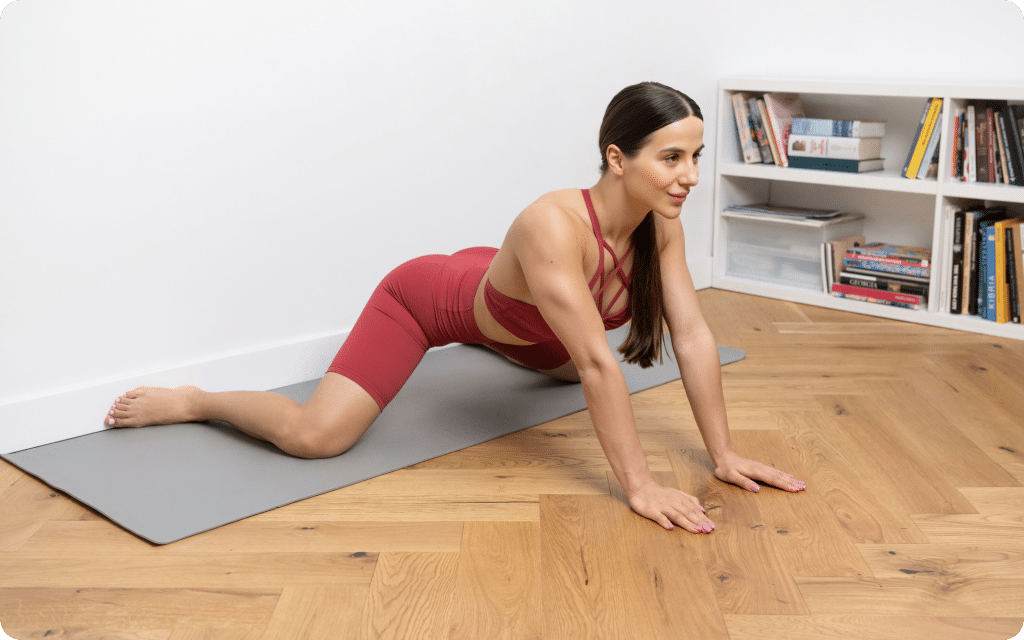
How Can I Test My Hip Flexor Strength?
Before diving into a workout program, it is helpful to establish a baseline. The Seated Hip Flexion Test is a simple way to assess your current strength levels without needing expensive equipment (3).
The Seated Hip Flexion Test
- Setup: Sit on a bench or chair with your feet flat on the floor and your back straight. Do not lean back against a backrest.
- Execution: Lift one foot off the floor, bringing your knee up as high as possible toward your chest. Hold this position.
- Assessment:
- Normal Strength: You can hold the knee above hip level for 10–15 seconds without cramping, leaning backward, or using your hands for support.
- Weakness: You cannot lift the knee above the hip, or you can lift it but cannot hold it for more than 5 seconds without shaking, cramping, or leaning back to compensate.
If you struggle with this test, prioritizing strengthening exercises over passive stretching is likely the best strategy for relief and performance improvement.
If you’re curious about stretches for sitting all day, check out our earlier article.
BetterMe: Health Coaching app helps you achieve your body goals with ease and efficiency by helping to choose proper meal plans and effective workouts. Start using our app and you will see good results in a short time.
How Can I Make My Hip Flexors Stronger?
Strengthening the hip flexors requires a targeted approach that utilizes progressive overload (4). This means you must gradually increase the difficulty of the exercises over time to force the muscles to adapt and grow stronger.
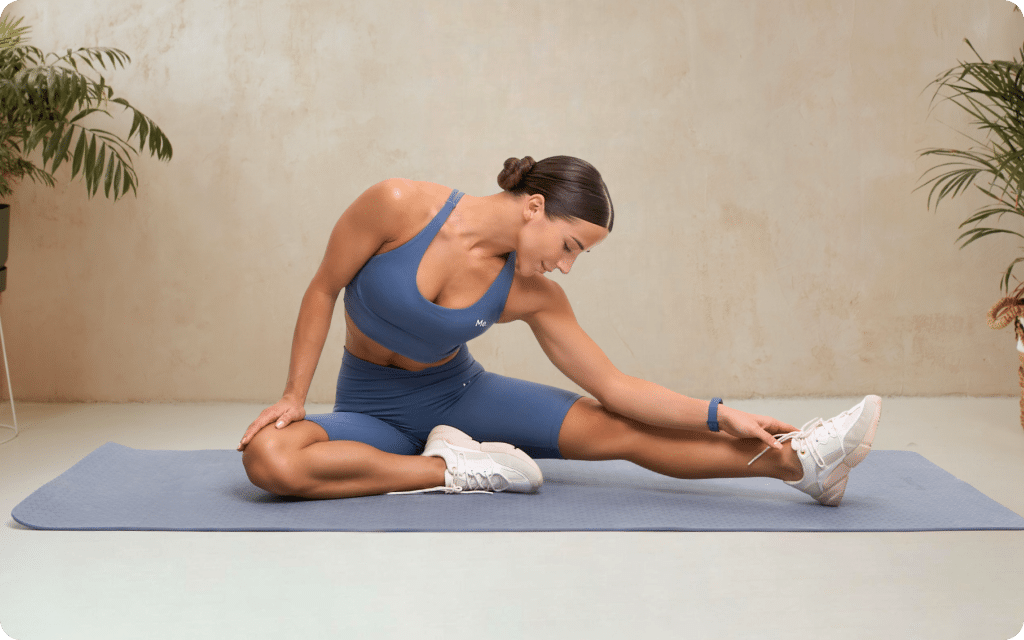
You can achieve this through three primary mechanisms:
- Isometric Holds: This involves holding a contraction without moving (5). For example, lifting your knee and holding it at the top range of motion strengthens the muscle at its shortest point—often where it is weakest.
- Eccentric Loading: This focuses on the lowering phase of an exercise. Controlling the descent of a leg lift slows down the muscle lengthening process, which is highly effective for building strength and tendon resilience (6).
- Concentric Resistance: This involves lifting against resistance, such as using a resistance band or cable machine to pull the knee toward the chest (7).
To see real changes, you should aim to train these muscles 2–3 times per week. Integrating specific movements into your warm-up or as accessory work after your main compound lifts ensures consistency without leading to overtraining.
Read more: Daily Stretching Routine: 8 Beginner-Friendly Exercises to Start
What Are Workouts to Strengthen Hip Flexors?
Below is a structured program designed to take you from beginner to advanced hip flexor strength.
Program Notes
- RPE (Rate of Perceived Exertion): On a scale of 1-10, how hard the set feels. An RPE of 7-8 means you should have 2-3 reps left in the tank.
Rest: Rest 60-90 seconds between sets to allow for recovery.
| Exercise | Sets | Reps | Tempo | RPE | Frequency |
|---|---|---|---|---|---|
| Lying Psoas March | 3 | 10-12 / side | 2-1-2 | 7 | 2-3x / week |
| Seated Kettlebell Lift | 3 | 8–10 / side | 1-1-2 | 8 | 2-3x / week |
| Standing Banded Knee Drive | 3 | 12–15 / side | Explosive Up, 2 Down | 7 | 2-3x / week |
| Eccentric Leg Lowering | 3 | 6-8 | 1 Up, 4 Down | 8 | 2-3x / week |
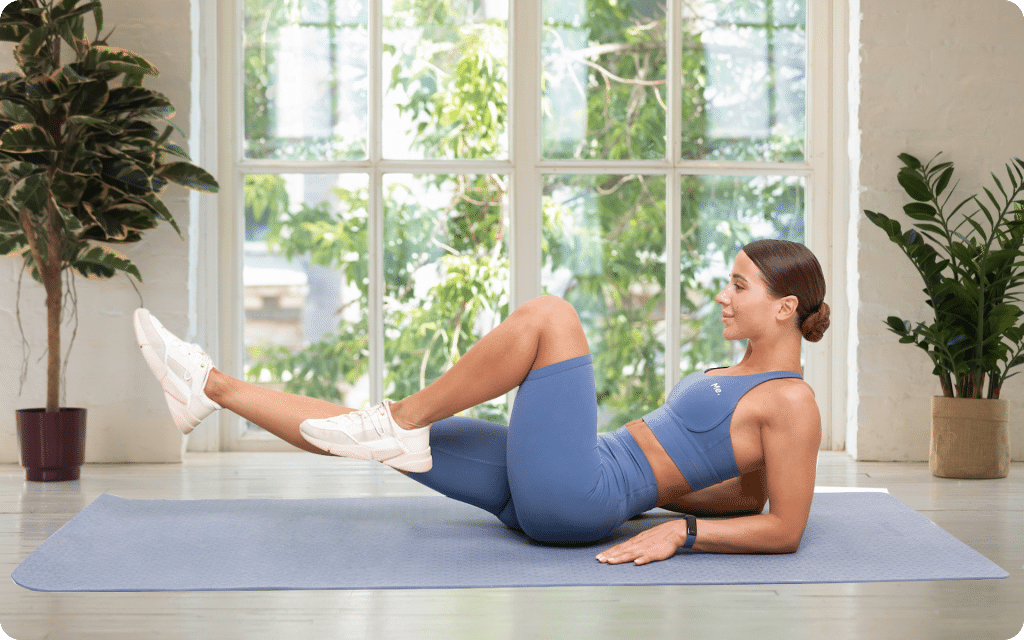
Lying Psoas March
This is an excellent entry-level exercise that teaches you to engage the hip flexors while stabilizing the core.
- Lie flat on your back with a resistance band looped around the balls of both feet.
- Keep your legs straight and your lower back pressed firmly into the floor.
- Drive one knee toward your chest against the resistance of the band, keeping the other leg straight and grounded.
- Pause at the top for 1 second, ensuring your hip flexes past 90 degrees.
- Slowly return the leg to the starting position.
Seated Kettlebell Lift
This movement isolates the hip flexor in a shortened position, which is critical for overcoming “sitting posture” weakness.
- Sit on a bench with your legs bent at 90 degrees and feet flat on the floor.
- Place a light kettlebell or dumbbell on top of your foot (hook your toes up to secure it).
- Maintaining an upright posture (do not lean back), lift your knee toward the ceiling.
- Lift as high as possible, pause briefly, and lower with control.
- Ensure the movement comes purely from the hip, not by rocking your torso.
Standing Banded Knee Drive
This functional variation mimics running mechanics and builds explosive power in the hip flexors.
- Anchor a resistance band to a low point behind you.
- Loop the other end around your ankle or foot.
- Stand tall, facing away from the anchor point.
- Drive your knee up explosively toward your chest.
- Focus on maintaining balance on the standing leg and avoiding arching your lower back.
- Lower the leg slowly to the starting position.
Reasons why BetterMe is a safe bet: a wide range of calorie-blasting workouts, finger-licking recipes, 24/7 support, challenges that’ll keep you on your best game, and that just scratches the surface! Start using our app and watch the magic happen.
Eccentric Leg Lowering
Eccentric exercises are superior for building tissue tolerance and preventing future strains (6).
- Lie on your back and lift both legs straight up toward the ceiling.
- Engage your core to press your lower back into the floor.
- Slowly lower both legs toward the ground, taking a full 4 seconds to reach the bottom.
- Stop just before your lower back starts to arch off the floor.
- Bend your knees to return to the starting position (to protect the back) and press up again for the next rep.
Our previous post goes into great detail about the lower back stretches at work.
How Long Will It Take to Strengthen Hip Flexors?
Neuromuscular adaptations—where your brain learns to fire the muscles more efficiently—typically occur within the first 4 weeks of consistent training (8). During this phase, you may notice that your hips feel “lighter” and movements like squatting feel more stable.
Structural changes, such as actual muscle growth (hypertrophy) and tendon strengthening, take longer. You can generally expect significant, visible improvements in muscle density and functional capacity after 8 to 12 weeks (9).
Consistency is key. Performing these exercises sporadically will yield minimal results. Stick to the frequency outlined in the table above, and you will likely see a reduction in hip clicking, pain, and feelings of tightness within the first month.
Read more: Why Does Stretching Hurt and What Can You Do About It?
Is It Better to Stretch or Strengthen Hip Flexors?
The answer depends on the root cause of your restriction, but for the majority of modern office workers and athletes, strengthening is often superior to stretching.
Here is why:
- Weakness Mimics Tightness: As mentioned earlier, a weak muscle will often tighten up as a protective mechanism (10). Stretching a weak muscle might provide temporary relief (15–30 minutes), but the tightness will return because the underlying instability hasn’t been addressed.
- Range of Motion: Strength training through a full range of motion can improve flexibility just as effectively as static stretching (11). For example, the Seated Kettlebell Lift requires you to actively use your hip mobility, which signals to the nervous system that it is safe to access that range of motion.
- Stability: Stretching makes a muscle more pliable (12), but it doesn’t necessarily make it more stable . Strengthening provides the stability your pelvis and spine need to maintain good posture.
However, if you have a clinically diagnosed shortening of the muscle tissue (contracture), stretching may be necessary. For most people, a combination of dynamic mobilization and targeted strengthening yields the best results.
Dive deeper into the exercises for circulation in legs with our dedicated article.
Does Stretching Your Hip Flexors Strengthen Them?
No, passive stretching does not strengthen the hip flexors.
Stretching involves increasing the range of motion attributable to increased tolerance to the stretch sensation (13). While high volume stretching may promote small increases in muscle hypertrophy and strength, it is less effective compared to strength training in applying the mechanical tension required to stimulate muscle fiber growth or neural recruitment (14).
In fact, excessive static stretching before a workout can temporarily reduce the power output of the muscle (15). If your goal is to have hips that are both mobile and powerful, you must load the muscles.
Think of standing desk stretches or standing hip stretches as maintenance work to reduce stiffness from being sedentary, but rely on the resistance exercises listed above to actually build capacity.
Incorporating exercises for people who sit all day should involve active movement, not just passive holds. Active end-range work forces the muscle to produce force while lengthened, which serves the dual purpose of mobility and strength.
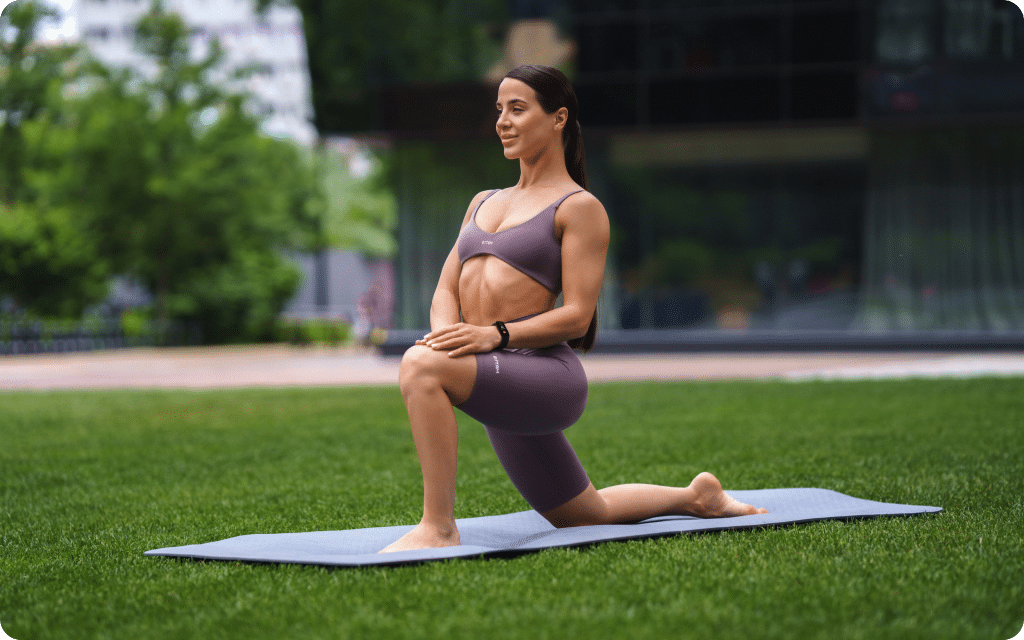
Yes, lunges can strengthen the hip flexors (16), particularly on the leg that is stepping forward. During the upward phase of the lunge, the hip flexor assists in stabilizing the pelvis. Furthermore, the rear leg undergoes an active stretch under load, which creates a beneficial eccentric stimulus for the hip flexor on that side. Yes, weak hip flexors can significantly limit squat depth and stability. They are responsible for pulling your torso toward your legs during the descent (hip flexion). If they are weak, you may struggle to reach parallel depth or find yourself leaning excessively forward (good-morning squat) as your body compensates for the lack of active hip flexion. Weak hip flexors can contribute to knee pain and perceived weakness, although they don’t directly cause the knee joint to atrophy. Weakness at the hip often leads to poor femur control, causing the knee to cave inward (valgus collapse) during movement (17). This misalignment places excessive stress on the knee joint, leading to pain often mistaken for “weak knees.” Yes, leg lifts are one of the most direct ways to strengthen the hip flexors. Whether performed hanging from a bar or lying on the floor, the act of lifting the legs against gravity primarily targets the iliopsoas and rectus femoris muscles. To maximize the benefit, ensure you are lifting with your hips and not using momentum to swing the legs up. Walking provides low-level endurance conditioning for the hip flexors but is generally insufficient for building significant strength. While the hip flexors are active during the swing phase of gait (bringing the leg forward) (18), the load is minimal. For strength gains that translate to athletic performance or pain reduction, higher-resistance exercises are required. Hip thrusting 3 times a week is generally safe and effective for most trainees, provided you manage the volume and intensity. The glutes (the primary target of hip thrusts) are large, resilient muscles that recover relatively quickly. However, ensure you balance hip extension exercises (like thrusts) with hip flexion exercises to maintain structural balance around the pelvis.Frequently Asked Questions
Do Lunges Strengthen Hip Flexors?
Can Weak Hip Flexors Affect Squats?
Can Weak Hip Flexors Cause Weak Knees?
Do Leg Lifts Strengthen Hip Flexors?
Can Walking Strengthen Hip Flexors?
Is Hip Thrusting 3 Times a Week Too Much?
The Bottom Line
Building strong hip flexors is one of the most overlooked aspects of training, yet it holds the key to unlocking better posture, deeper squats, and a pain-free lower back. By shifting your focus from passive stretching to active strengthening, you treat the root cause of “tightness” rather than just the symptoms.
Start with the testing protocol to assess where you stand. Then, implement the exercises outlined in the program, keeping progressive overload in mind. Remember, the goal isn’t just to be flexible—it’s to be functional, capable, and resilient. Treat your hips with the same attention you give your “mirror muscles,” and your body will thank you for it.
DISCLAIMER:
This article is intended for general informational purposes only and does not serve to address individual circumstances. It is not a substitute for professional advice or help and should not be relied on for making any kind of decision-making. Any action taken as a direct or indirect result of the information in this article is entirely at your own risk and is your sole responsibility.
BetterMe, its content staff, and its medical advisors accept no responsibility for inaccuracies, errors, misstatements, inconsistencies, or omissions and specifically disclaim any liability, loss or risk, personal, professional or otherwise, which may be incurred as a consequence, directly or indirectly, of the use and/or application of any content.
You should always seek the advice of your physician or other qualified health provider with any questions you may have regarding a medical condition or your specific situation. Never disregard professional medical advice or delay seeking it because of BetterMe content. If you suspect or think you may have a medical emergency, call your doctor.
SOURCES:
- Comparison of Pelvic Tilt Before and After Hip Flexor Stretching in Healthy Adults (2021, sciencedirect.com)
- Is the Iliopsoas a Femoral Head Stabilizer? A Systematic Review (2020, pmc.ncbi.nlm.nih.gov)
- Manual Muscle Testing: Hip Flexion (n.d., physio-pedia.com)
- Hip Flexor Muscle Activation During Common Rehabilitation and Strength Exercises (2024, mdpi.com)
- Trends and Scientific Production on Isometric Training: A Bibliometric Analysis (2025, mdpi.com)
- Eccentric Muscle Contractions: Risks and Benefits (2019, frontiersin.org)
- Effects of concentric and concentric-eccentric resistance training on speed and force in adult soccer players (2025, nature.com)
- The increase in muscle force after 4 weeks of strength training is mediated by adaptations in motor unit recruitment and rate coding (2019, pmc.ncbi.nlm.nih.gov)
- Muscle Hypertrophy – an overview (n.d., sciencedirect.com)
- Understanding Clinical Characteristics of Muscle Weakness (2021, ournals.lww.com)
- Comparison of resistance training vs static stretching on flexibility and maximal strength in healthy physically active adults, a randomized controlled trial (2024, link.springer.com)
- Practical recommendations on stretching exercise: A Delphi consensus statement of international research experts (2025, sciencedirect.com)
- Can chronic stretching change the muscle-tendon mechanical properties? A review (2018, pubmed.ncbi.nlm.nih.gov)
- Effects of Chronic Static Stretching on Maximal Strength and Muscle Hypertrophy: A Systematic Review and Meta-Analysis with Meta-Regression (2024, link.springer.com)
- Acute Effects of Static Stretching on Muscle Strength and Power: An Attempt to Clarify Previous Caveats (2019, frontiersin.org)
- Improved Hip Flexibility and Gluteal Function Following a Daily Lunge-and-Reach Stretching Intervention (2025, pmc.ncbi.nlm.nih.gov)
- Weak Hip Strength Increases Dynamic Knee Valgus in Single-Leg Tasks of Collegiate Female Athletes (2021, journals.humankinetics.com)
- Hip Flexor Muscle Activation Across Gait Phases in Healthy Young Adults: Effects of Step Length and Cadence Adjustments at a Constant Walking Speed (2025, cureus.com)

 Reviewed by