It’s about time we snapped out of the myth that weight rooms at the gym are reserved only for men. Women should also do strength training to enjoy the rewards it brings to the table. And no, weight workouts for women aren’t only about aesthetics.
They are your secret weapon to boost metabolism, improve bone density, and spark a level of confidence that crawls into every aspect of your life. You may be a complete beginner who is eyeing the dumbbell for the first time or a seasoned pro who is looking to smash a new personal best. The barbell doesn’t care about your gender. What it actually cares about is your effort.
Let’s take the fear out of it and focus on how you can improve your fitness step by step, one rep at a time.
What Are Safe and Effective Weight Workouts for Women?
For a workout to be safe and effective, it should be created by a professional.
Generally, a safe workout can help build muscle, improve your endurance, and support everyday movement by working against some form of resistance (1).
Quite contrary to the cardio workouts that mainly raise your heart rate, weight training uses dumbbells, barbells, resistance bands, or even bodyweight to create mechanical tension in the muscles (2). This tension signals the body to repair and strengthen muscle fibers, which improves the necessary body functions.
A 2025 study published in the Journal of Strength and Conditioning Research found that women can increase their muscular strength by up to 25%. They can gain approximately 1.45 kg (3.2 lbs) of lean muscle in as little as 15 weeks of consistent training (3). Furthermore, industry data from 2025 showed a significant shift in fitness culture (4).
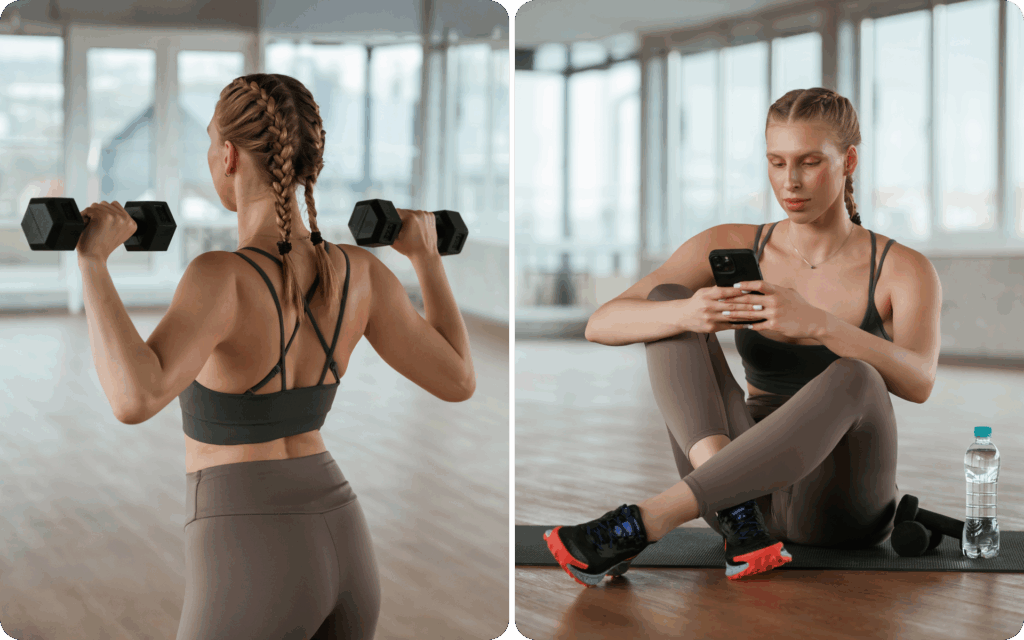
For these workouts to be truly effective, they should be built around a few core principles:
- Compound movements: These include squats, presses, and deadlifts that engage multiple muscle groups at once (5).
- Progressive overload: This is where weight or repetitions gradually increase to keep the body adapting.
And while you’re performing your exercises, you should keep a controlled form that prioritizes proper technique over lifting heavier loads. Progress at your own pace and don’t increase the weight without mastering your technique.
These fundamentals work just as well for weight workouts for women at home as they do in a gym, particularly when using dumbbells or resistance bands.
One common concern among women is the fear of bulking up. If you belong to this group, note that building large amounts of muscle requires years of focused training and specific nutrition (6).
Muscle growth is also proportional to existing muscle mass. As women naturally have less muscle than men, gains tend to be lean and subtle rather than bulky (7). This makes weight training over 40 particularly valuable. It can maintain muscle, support metabolism, and promote long-term health while still delivering a toned and strong physique.
Read more: 4-Day Gym Split, Female Edition: How to Structure Your Program for Lasting Results
How to Lift Weights Properly for a Female
You may have noticed this too: more women are picking up weights these days.
And for good reason.
Back in 2004, only about 17.5% of women in the U.S. were doing strength training at least twice a week (8). Jump ahead to 2020, and that number has grown to nearly 27% (9). This steady rise shows how more women are realizing that lifting weights isn’t intimidating – it actually gives you vision and empowers you to do better.
Before we start to explore the best weight workouts for women, let’s check out some principles of doing them right:
- Don’t Be Afraid to Challenge Your Muscles
Muscle growth will likely stay stagnant unless it’s given progressive resistance through exercise. One common mistake many women make is sticking to the same light weights simply because they feel safe and familiar. Even though this might feel comfortable, it won’t lead to real strength or visible progress.
To see change, your muscles need to be challenged a little more over time.
This doesn’t mean lifting recklessly. It means slowly increasing the weight as your body gets stronger. A good rule of thumb is to add small amounts of weight (around 5% at a time) and see how your body responds. If you can easily finish all your reps, it’s a sign that you’re ready to go a bit heavier.
Many women underestimate how strong they actually are and automatically reach for lighter weights. Instead, you should choose a weight you can lift about 10 times, where the last few reps feel tough, but still controlled. Form always comes first. If your technique starts to slip, pause, rest, or lower the weight. The goal is to lift smart and strong, not to risk injury.
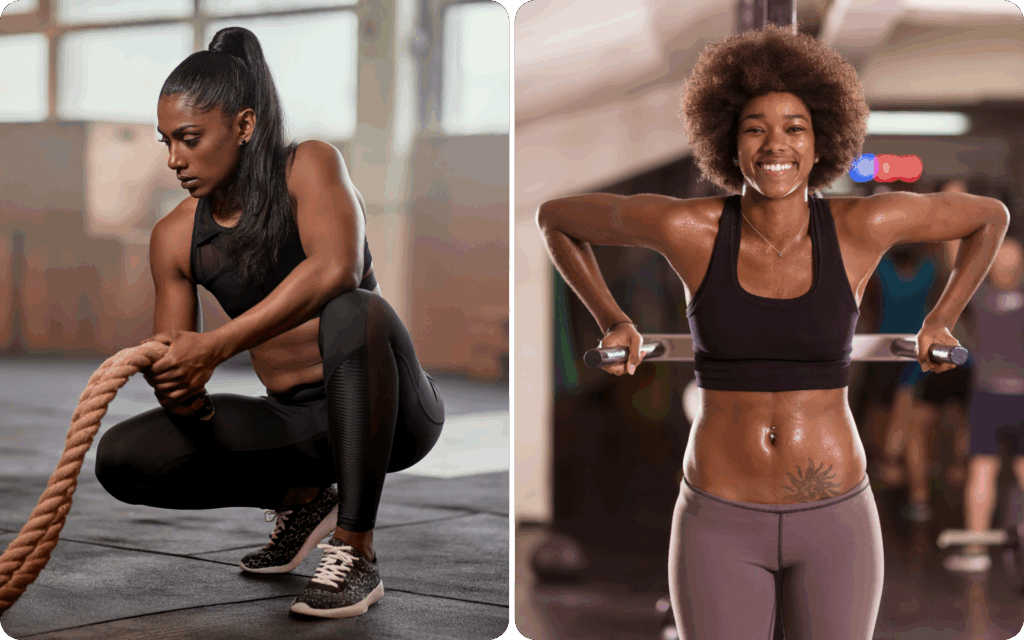
- Find the Right Balance with Sets and Reps
Sets and reps can sound complicated, but they’re really about matching your workout to your goal.
Most muscle-building workouts fall into a simple range. They typically consist of 3-4 sets with 6 to 12 repetitions. That sweet spot usually delivers the best results without overthinking things.
If you lift heavier weights and do fewer reps, your body focuses more on building strength (10). On the other hand, lighter weights with more reps helps improve muscle endurance (11). Rest time matters too. When strength is the goal, taking longer breaks between sets helps your muscles recover so you can lift well again (12).
Small adjustments like these can make a big difference in how your body responds to training.
BetterMe: Health Coaching app helps you achieve your body goals with ease and efficiency by helping to choose proper meal plans and effective workouts. Start using our app and you will see good results in a short time.
- Spot the Right Workout Frequency
Consistency is key when it comes to building muscle. If possible, plan to weight train four to five days a week. Regular sessions matter far more than occasional intense workouts.
Tracking your workouts is also important. Writing down your exercises, weights, sets, and reps helps you clearly see progress and know when it’s time to increase the challenge. Without tracking, it’s easy to underestimate how much you’re actually improving.
Regarding workout structure, you can choose full-body sessions or split your training into upper and lower body days. The format matters less than staying consistent and gradually increasing the workload over time.
These tips clearly reflect why weight workouts for women have gained plenty of attention in fitness circles. People are interested in finding out what works and what doesn’t, so they can figure out the right formula for building strength for women. You can start with a 15- or 30-minute weight workout for women, do them 3-5 times across the week, and track your progress in order to recognize the changes in your body over the months.
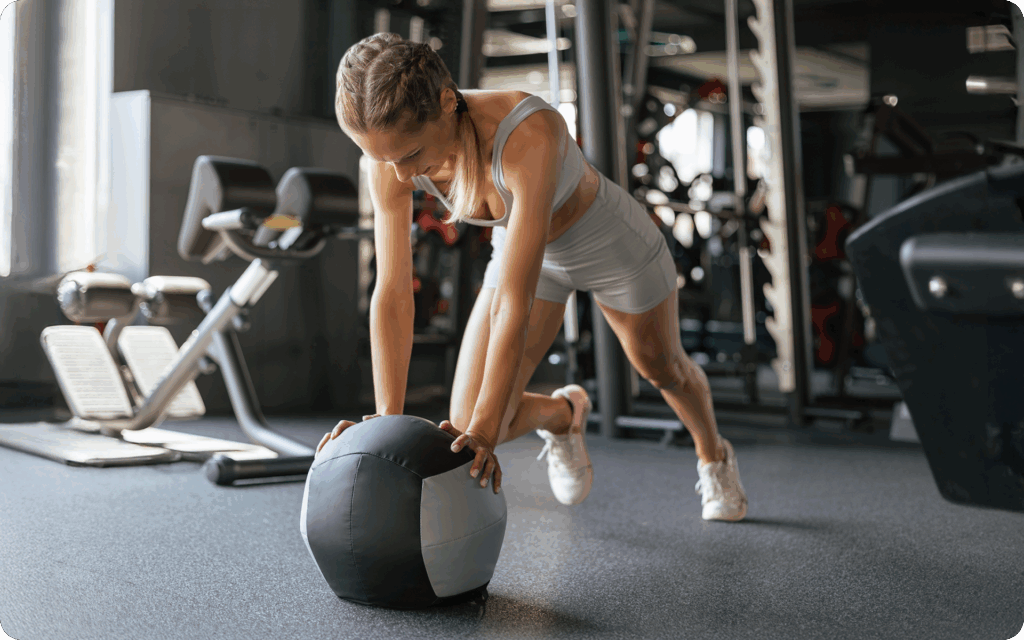
What Are Some Good Weight Workouts for Women?
When it comes to finding weight workouts that truly work for women, the goal should be to do better than you did in the previous session. You want to build strength and continue to make progress over time. Not every day needs to be perfect, but putting in consistent effort will get you results.
As we mentioned earlier, an effective routine revolves around simple, powerful movements that build real strength while helping your body move more freely. This may mean creating a strong base first.
A good workout usually mixes bodyweight exercises with added resistance so your muscles stay challenged and engaged. A 2024 study published in Physiologia found that consistent resistance training can improve body composition in adult women. This increases their lean muscle mass and reduces fat mass, regardless of their starting fitness level (13).
If you’re new to strength training, dumbbells are a great place to start. They’re beginner-friendly and let each side of your body work on its own. As you gain confidence, adding different tools and exercises can keep your workouts fresh and your progress moving forward.
Some of the most effective weight workouts include:
- Squat and Press Moves: These can work your legs, core, and shoulders in one smooth motion.
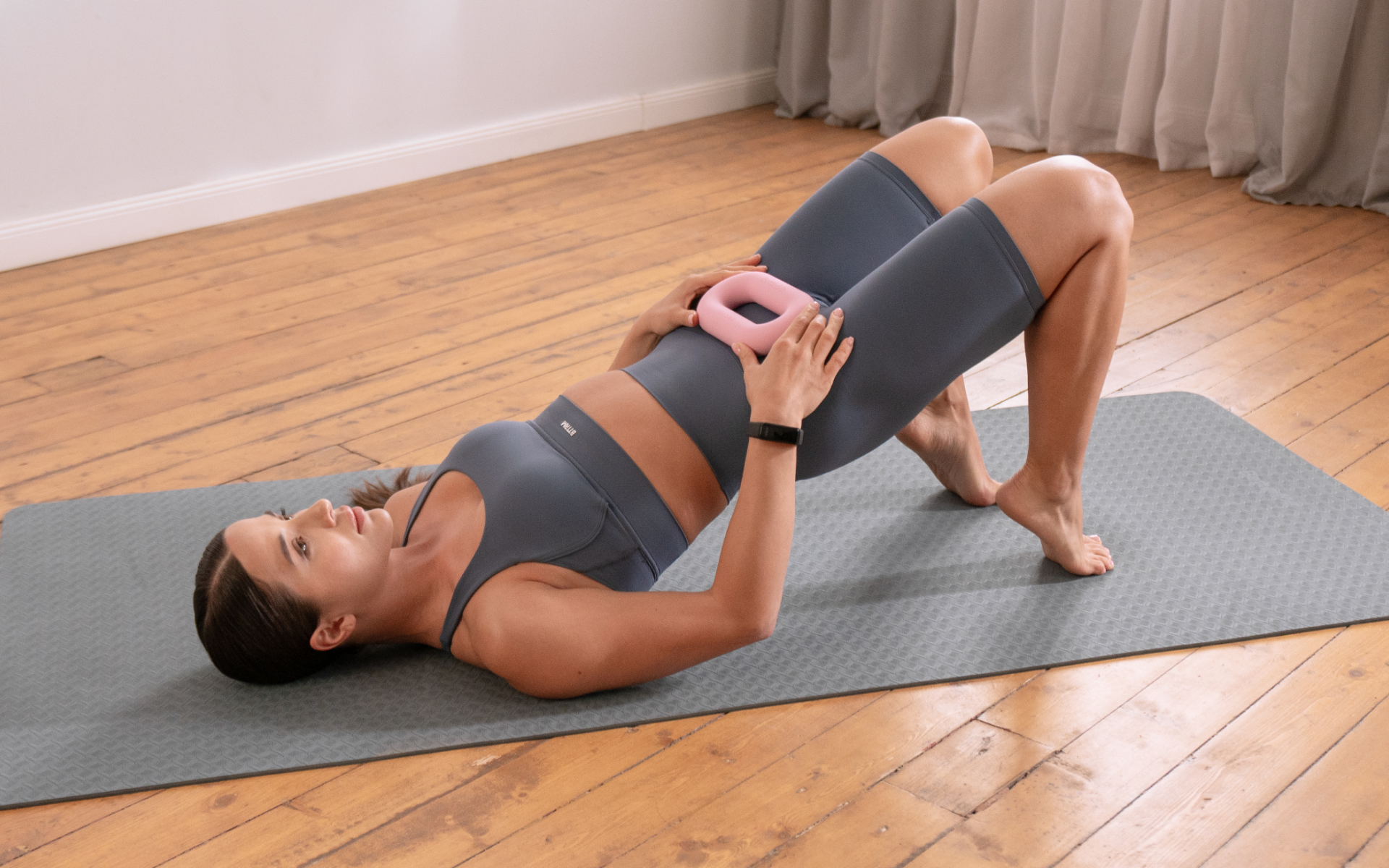
- Hip-Hinge Exercises: These may include deadlifts or glute bridges that strengthen your back, glutes, and hamstrings. These are the key muscles for posture and power (14).
- Upper-Body Pulling Movements: These could be rows that shape the back and balance out chest work (15).
- Core-Focused Lifts: You can start carrying weights while walking, which trains your core to support your entire body, not just your abs (16).
When you combine these movements, your workout continues to burn calories long after it ends. They can enhance the practical strength that helps you move through daily life with more ease and confidence.
Below, we provide examples of two workout plans that can help you get more insight into how you can create one for yourself.
Beginner Weight Workout Plan (3 Days a Week)
Warm-Up (5-10 minutes):
- Marching or light jogging in place
- Arm circles and shoulder rolls
- Bodyweight squats or hip hinges
Workout:
Day 1 – Full-Body
- Goblet Squat: 3 sets of 10 reps
- Dumbbell Chest Press (on floor or bench): 3 sets of 10 reps
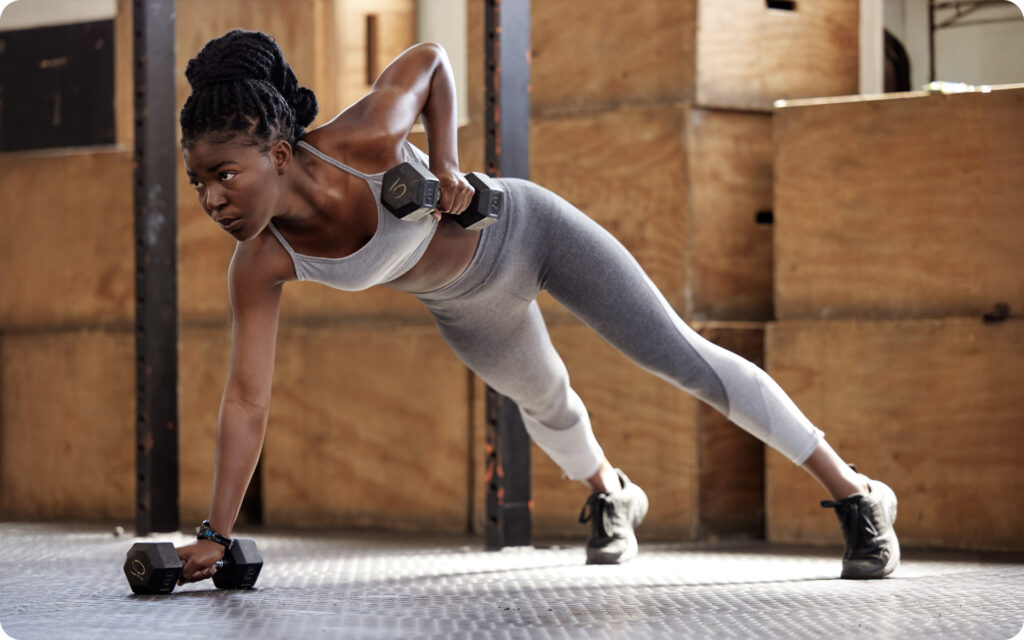
- One-Arm Dumbbell Row: 3 sets of 10 reps per side
- Weighted Glute Bridge: 3 sets of 12 reps
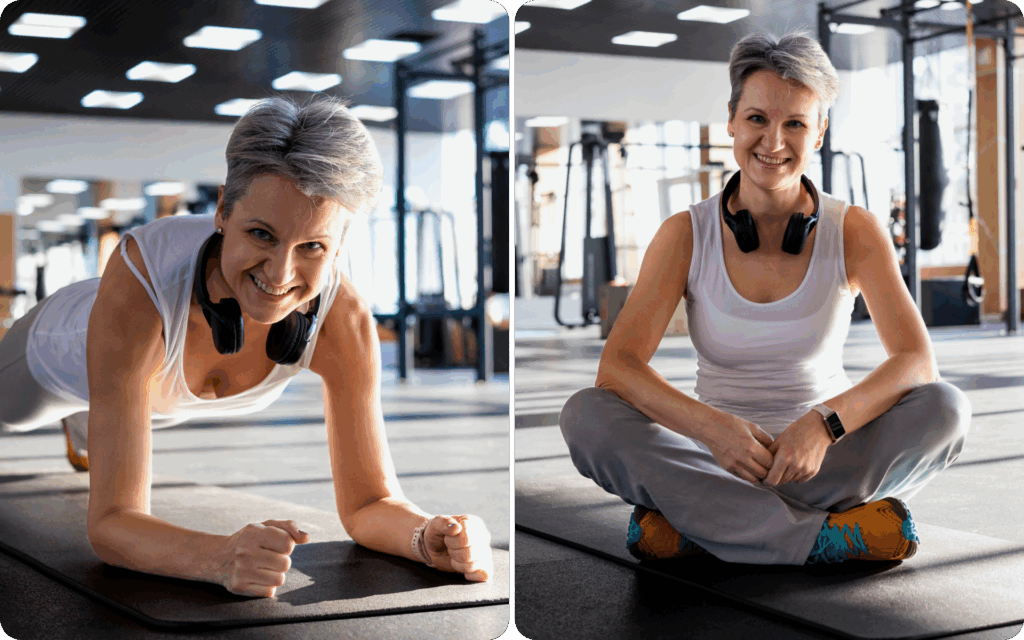
- Plank Hold: 3 rounds of 20-30 seconds
Day 2 – Lower-Body Focus
- Bodyweight or Dumbbell Squat: 3 sets of 12 reps
- Walking Lunges (with or without dumbbells): 2 sets of 20 steps
- Deadlift with Dumbbells: 3 sets of 8-10 reps
- Side-Lying Leg Lifts: 2 sets of 12-15 reps per side
Day 3 – Upper-Body and Core
- Overhead Dumbbell Press: 3 sets of 10 reps
- Dumbbell Rows: 3 sets of 10 reps per arm
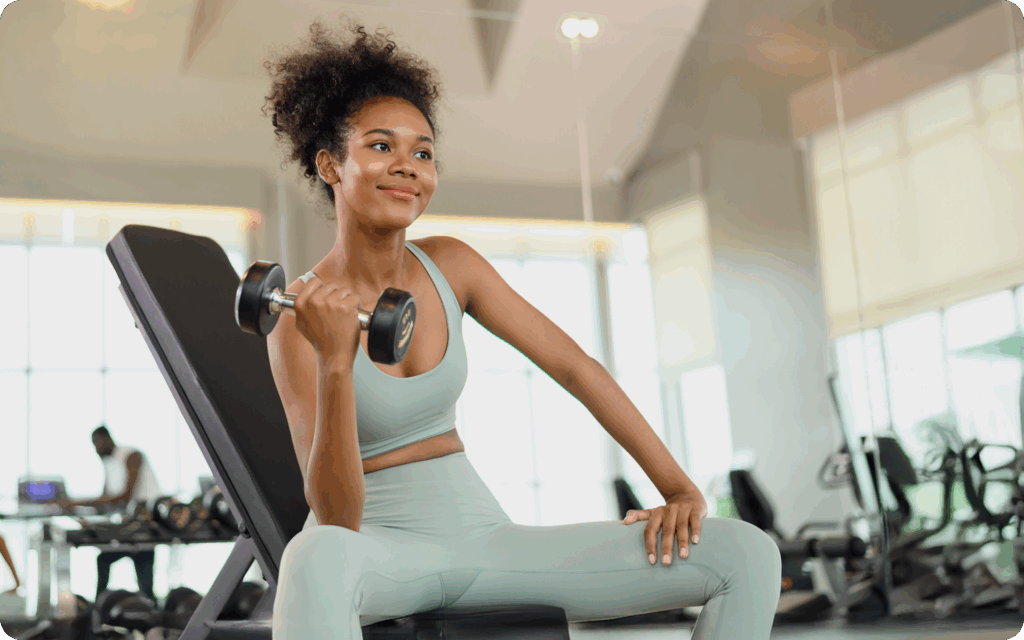
- Dumbbell Bicep Curl: 3 sets of 12 reps
- Farmer’s Carry (engaged core and hold dumbbells, walk 20 to 30 seconds): 2-3 rounds
- Russian Twists (bodyweight or light dumbbell): 2 sets of 15 reps per side
Cool-Down (5 minutes):
- Stretching major muscle groups
- Deep breathing to relax the body
Tip: Focus on form, not weight. The final 2 to 3 reps of each set should feel challenging, but doable.
Intermediate Weight Workout Plan (4-5 Days a Week)
Warm-Up (5-10 minutes):
- Jumping jacks or light cardio
- Dynamic stretches (arm swings, leg swings)
- Bodyweight movements to activate muscles
Workout:
Day 1 – Full-Body Power
- Squat to Press (Dumbbells): 4 sets of 10 reps
- One-Arm Dumbbell Row: 3 sets of 12 reps per arm
- Weighted Glute Bridge or Hip Thrust: 3 sets of 12-15 reps
- Farmer’s Walk: 3 rounds of 30-40 seconds
- Plank with Shoulder Tap: 3 sets of 20 taps
Day 2 – Lower-Body Strength
- Barbell or Dumbbell Deadlift: 4 sets of 6-8 reps
- Walking Lunges with Dumbbells: 3 sets of 20 steps
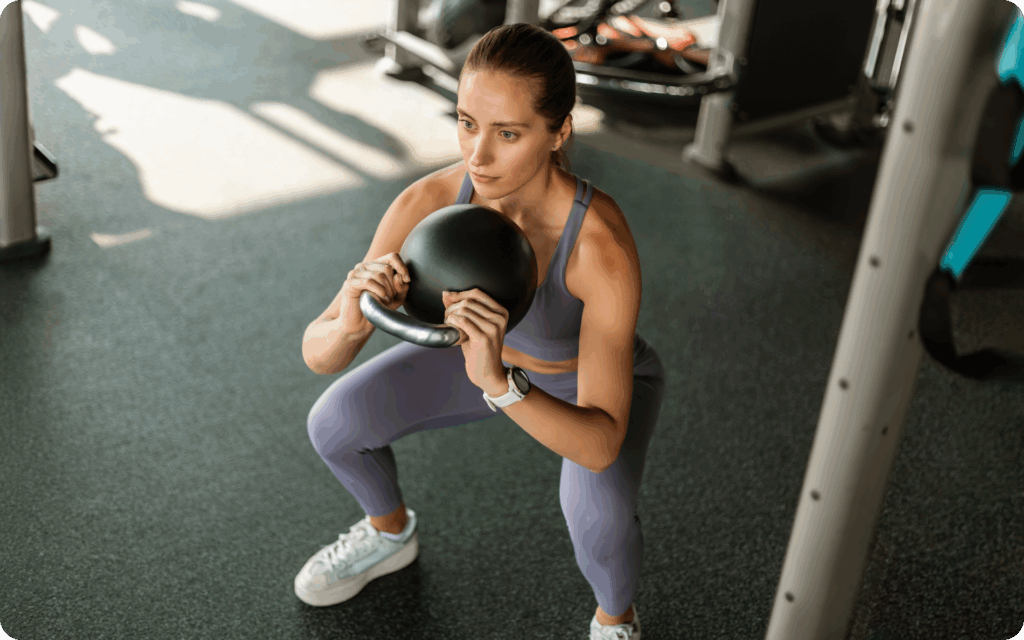
- Goblet Squat: 3 sets of 12 reps
- Side-Lying or Cable Leg Lifts: 2 sets of 12-15 reps per side
Day 3 – Upper-Body Strength and Core
- Overhead Dumbbell Press: 4 sets of 8-10 reps
- Incline Dumbbell Chest Press: 3 sets of 10 reps
- Lat Pulldown or Assisted Pull-Up: 3 sets of 8-12 reps
- Weighted Russian Twists or Cable Woodchop: 3 sets of 12 reps per side
- Plank Hold with Dumbbell Drag: 3 rounds of 20-30 seconds
Day 4 – Optional Active Recovery or Full-Body Circuit
- Circuit (3 rounds): 10 squat to press, 10 deadlifts, 10 dumbbell rows, 10 push-ups, 20-second plank
Focus on smooth transitions, moderate weight, and keeping your heart rate up.
Cool-Down (5-10 minutes):
Stretching, foam rolling, and deep breathing
Tip: Gradually increase weight every 1 to 2 weeks and listen to your body for recovery.
Read more: Six-Week Training Program for Weight Loss at the Gym
How Many Times a Week Should a Woman Lift Weights?
How often you should lift weights really depends on your goals. Still, for most women, hitting the gym 2 to 4 times a week is just right for seeing changes and feeling stronger. The World Health Organization (WHO) and the 2025 physical activity guidelines recommend working all major muscle groups at least twice a week. This could be a good initial point for beginners (17).
Here’s a simple breakdown that’s based on experience:
- Beginners: Start with 2 days a week to let your joints and nervous system adjust without overloading your recovery.
- Intermediate/Advanced: Aim for 3 to 4 days a week to increase your weekly workout volume, which is key for muscle tone and metabolism.
Consistency is what really makes the difference when it comes to results. With a full-body workout with weights, females (beginners or advanced) can see real progress when they stick to a routine.
| Fitness level | Days per week |
|---|---|
| Beginner | 2 days |
| Intermediate | 3 days |
| Advanced | 4-5 days |
And while you’re carving out a weight workout routine for yourself, try to gain more information about what’s new being discovered in this domain. Don’t forget that the rest period is essential. Muscle tissue is actually built. during recovery, not the workout itself.
Reasons why BetterMe is a safe bet: a wide range of calorie-blasting workouts, finger-licking recipes, 24/7 support, challenges that’ll keep you on your best game, and that just scratches the surface! Start using our app and watch the magic happen.
How Long Until I See Results Lifting Weights?
One of the first questions women often ask when they start lifting weights is, “When will I actually see results?” While we’d all love instant muscle definition, your body’s transformation is like a marathon.
At first, the changes are subtle – you may notice strength gains before your muscles start to look different. This happens because your brain and muscles are learning to communicate more efficiently, a process that’s called neuromuscular adaptation (18). In the first 2 to 4 weeks, everyday tasks such as carrying groceries or climbing stairs may start to feel easier, and you’ll likely feel more energized overall.
Visible muscle growth usually shows up a bit later. According to a 2024 review in the International Journal of Sports Medicine, significant changes in muscle size typically appear after 6 to 10 weeks of consistent training (19).
And while you’re working toward it, remember to celebrate non-scale victories. See how your clothes fit, how much stronger you feel, and the confidence you carry in your workouts. Stick with it for 90 days, and the transformation can become part of your lifestyle!
What Should I Eat When Lifting Weights?
The list below shows multiple food categories you should consider eating when lifting weights:
Protein
- Chicken breast or turkey
- Lean beef or fish (salmon, tuna)
- Eggs and egg whites
- Greek yogurt or cottage cheese
- Plant-based options: tofu, tempeh, lentils, chickpeas
Carbohydrates
- Oats or whole-grain cereals
- Brown rice, quinoa, or whole-grain pasta
- Sweet potatoes or regular potatoes
- Fruits: bananas, berries, apples, oranges
- Vegetables: broccoli, spinach, peppers, carrots
Healthy Fats
- Avocado
- Nuts and seeds (almonds, walnuts, chia, flax)
- Olive oil or coconut oil
- Fatty fish such as salmon or mackerel
Snacks and Extras
- Protein shakes or smoothies
- Rice cakes with nut butter
- Hummus with vegetables
Tip: Try to eat a balanced meal with protein, carbs, and healthy fats about 1 to 2 hours before your workout.
If your goal is to build strength or tone muscle, start with weights. Lifting with full energy helps you keep good form and push harder. A quick 5-10 minute light cardio warm-up is fine, but save heavy cardio for after weights or a separate session. The first two weeks are mostly internal changes. As your brain gets better at activating muscles, you may feel stronger and experience some mild soreness. Visible muscle growth takes longer, but you’ll likely lift a bit more than on day one. The best time is whenever you can stick to it consistently. Late afternoons (4-7 pm) can feel easier for strength and performance, while morning workouts can kickstart your metabolism and make sure your session actually happens (20). Within 60 to 90 minutes, eat a mix of protein and carbs. Protein can include chicken, Greek yogurt, or shakes, while carbs typically can consist of fruit, rice, or potatoes. Yes! Weightlifting can burn calories and help build your muscles. More muscle mass means a boost to your metabolism. As a result, you can burn more calories even at rest, which is known as the afterburn effect. This can keep your body burning calories for hours after your workout. For more details about Pilates body vs weightlifting, take a look at our prior publication.Frequently Asked Questions
Should beginners do cardio or weights first?
What happens after 2 weeks of lifting?
What should women eat after a workout?
Can women lose weight by lifting weights?
The Bottom Line
At the end of the day, the best workout is the one that makes you feel unstoppable. You don’t need to live in the gym to see results. Just show up, stay consistent, and push yourself a little more each week.
Lifting weights can help you build the strongest version of yourself. Grab those dumbbells or barbells and start today. Your future self will thank you!
DISCLAIMER:
This article is intended for general informational purposes only and does not serve to address individual circumstances. It is not a substitute for professional advice or help and should not be relied on for making any kind of decision-making. Any action taken as a direct or indirect result of the information in this article is entirely at your own risk and is your sole responsibility.
BetterMe, its content staff, and its medical advisors accept no responsibility for inaccuracies, errors, misstatements, inconsistencies, or omissions and specifically disclaim any liability, loss or risk, personal, professional or otherwise, which may be incurred as a consequence, directly or indirectly, of the use and/or application of any content.
You should always seek the advice of your physician or other qualified health provider with any questions you may have regarding a medical condition or your specific situation. Never disregard professional medical advice or delay seeking it because of BetterMe content. If you suspect or think you may have a medical emergency, call your doctor.
SOURCES:
- Adaptations to Endurance and Strength Training (n.d., perspectivesinmedicine.cshlp.org)
- Effect of free-weight vs. machine-based strength training on maximal strength, hypertrophy and jump performance – a systematic review and meta-analysis (2023, link.springer.com)
- Muscle strength gains per week are higher in the lower-body than the upper-body in resistance training experienced healthy young women—A systematic review with meta-analysis (2023, journals.plos.org)
- 2025 Global Fitness Industry Report Shows Record Growth and What’s Next for the Market (2025, healthandfitness.org)
- Compound Exercises (n.d., physio-pedia.com)
- Is an Energy Surplus Required to Maximize Skeletal Muscle Hypertrophy Associated With Resistance Training (2019, frontiersin.org)
- Women’s Physical Activity Levels are Less Variable Than Men’s, Study Says (2025, today.ucsd.edu)
- Trends in Strength Training — United States, 1998–2004 (2006, cdc.gov)
- QuickStats: Percentage* of Adults Aged ≥18 Years Who Met the Federal Guidelines for Muscle-Strengthening Physical Activity,† by Age Group and Sex — National Health Interview Survey, United States, 2020 (2022, cdc.gov)
- Low Weight, High Reps: Does It Work to Build Strength? (2024, hss.edu)
- Effects of Low-Load, High-Repetition Resistance Training on Maximum Muscle Strength and Muscle Damage in Elite Weightlifters: A Preliminary Study (2023, mdpi.com)
- Rest Interval between Sets in Strength Training (2012, link.springer.com)
- Impact of Resistance Training on Body Composition and Cardiovascular Endurance in Adult Females (2024, zenodo.org)
- Hip Hinge (n.d., physio-pedia.com)
- A Comparison of Muscle Activation during the Pull-up and Three Alternative Pulling Exercises (2018, juniperpublishers.com)
- Increase Hip and Trunk Stability with Loaded Carries for Injury Prevention, Rehabilitation, and Performance (2020, nsca.com)
- Physical activity (n.d., who.int)
- Neuromuscular control and biomechanical adaptations in strength training: Implications for improved athletic performance (2025, ojs.sin-chn.com)
- Does Taking a Break Matter—Adaptations in Muscle Strength and Size Between Continuous and Periodic Resistance Training (2024, onlinelibrary.wiley.com)
- Consistent Morning Exercise May Be Beneficial for Individuals With Obesity (2020, journals.lww.com)
 By
By 
 Reviewed by