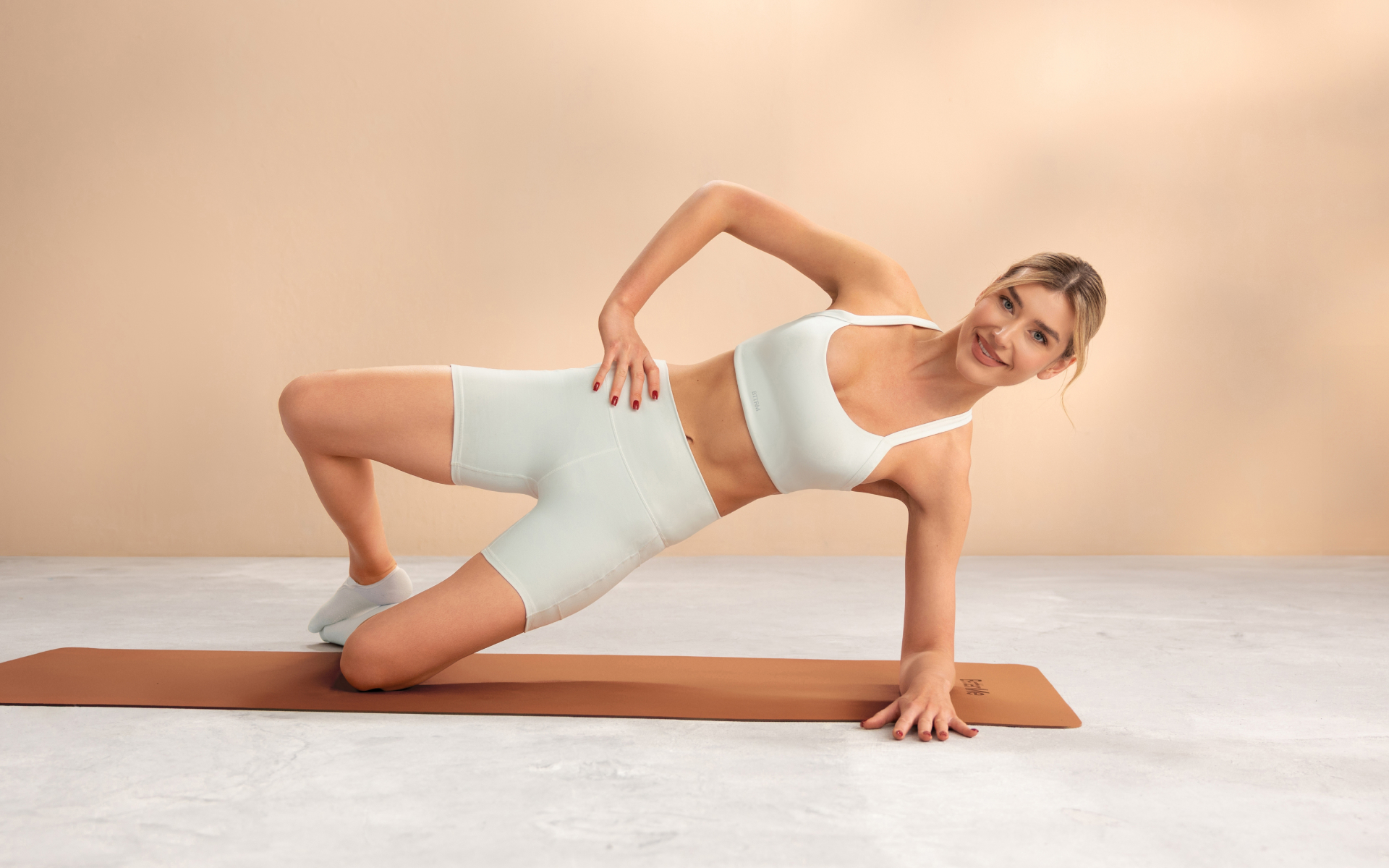
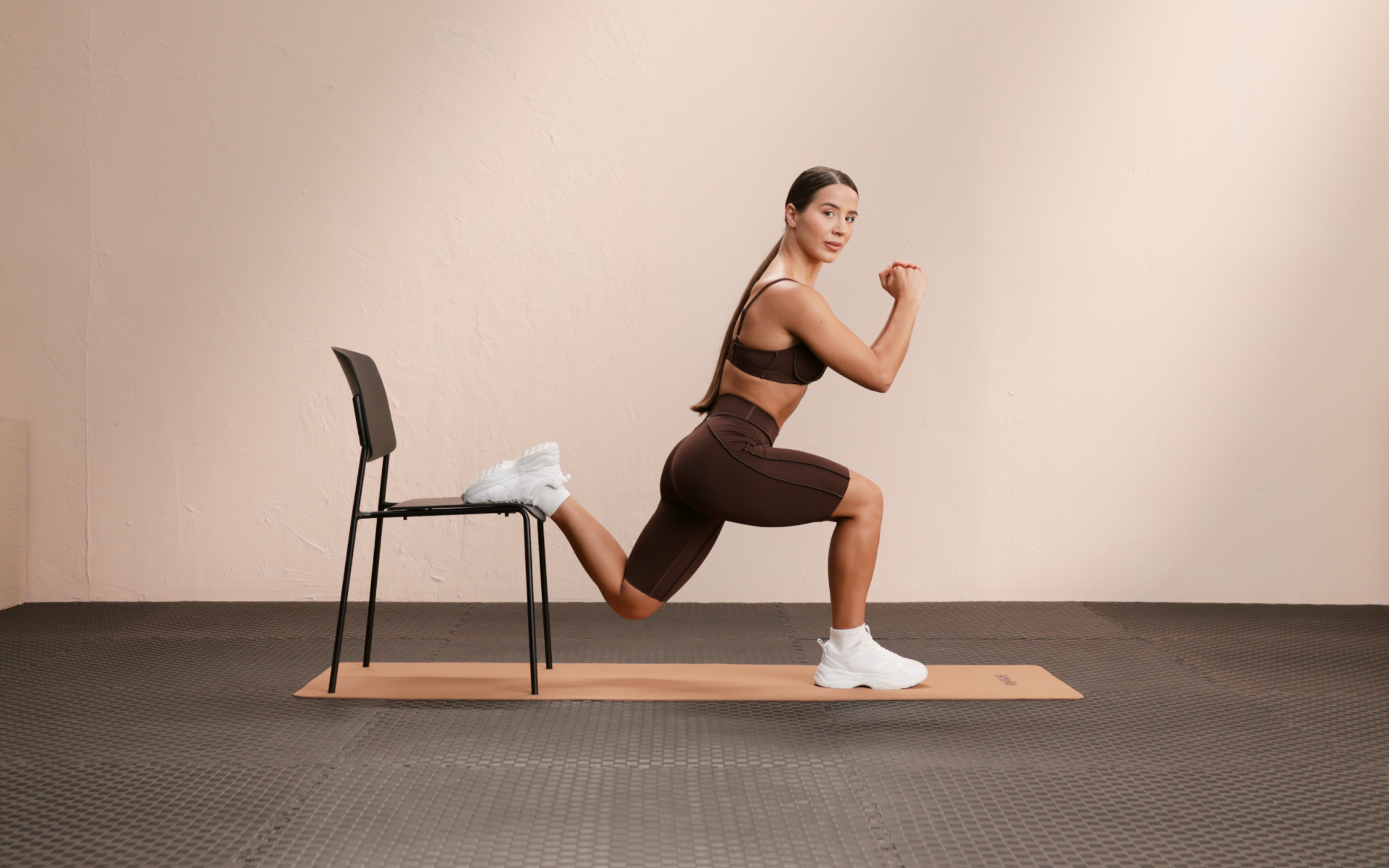
Engaging in pilates chair exercises is an effective, low-impact way to support core strength, balance, and flexibility using a specialized stability chair or a sturdy household seat. (1) By adapting traditional Pilates principles to a seated or chair-supported format, this practice offers a highly accessible path to physical conditioning. It is particularly well-suited for individuals seeking a gentle yet effective way to engage their muscles, improve everyday posture, and enhance overall physical well-being. (2)
IMPORTANT PHYSICAL ACTIVITY DISCLAIMER
Consult your physician before starting this or any new exercise program, especially if you are a senior, have joint or mobility concerns, or are returning to physical activity after a period of rest. This content is for educational purposes only and does not replace professional medical advice. Always perform these movements at a controlled, comfortable pace, and stop immediately if you experience any discomfort, dizziness, or sharp sensations.
What Are Pilates Chair Exercises?
At its core, this modality involves performing structured physical movements while seated on, standing next to, or utilizing a chair for support and resistance. (1) In a professional studio setting, these routines are often performed on a specialized piece of equipment known as a Pilates stability chair or Wunda chair. This equipment features a wooden box design with a padded seat, spring-loaded pedals, and handles, allowing for adjustable resistance that can either challenge or assist the user. (3)
However, many of these same movements can be adapted for home practice using a standard, sturdy household chair. Whether utilizing professional equipment or a household seat, the primary focus remains on controlled, mindful movements that emphasize core engagement, alignment, and deep, synchronized breathing. (1)
BetterMe Well-Being Coach app helps you achieve your body goals with ease and efficiency by helping to choose proper meal plans and effective workouts. Start using our app and you will see good results in a short time.
Is Chair Pilates Effective?
Seated and chair-supported exercise modalities are highly effective tools for physical conditioning, particularly for those who find floor-based mat routines or standing workouts challenging. (4) Research indicates that chair-based exercises significantly support upper-body and lower-body functional capacity, helping individuals maintain the strength required for daily activities. (4)
To understand where this modality fits into a broader fitness routine, it is helpful to compare it to other common Pilates methods:
| Modality | Primary Equipment | Core Focus | Best For |
|---|---|---|---|
| Mat Pilates | Exercise Mat | Bodyweight resistance, core control, and floor-based flow. | General conditioning, core endurance, and floor mobility. |
| Reformer Pilates | Reformer Carriage & Springs | Sliding carriage resistance, spring tension, and full-body alignment. | Progressive resistance training and joint alignment. |
| Chair Pilates | Stability Chair or Household Chair | Seated stability, spring-loaded pedal resistance, or chair-assisted balance. | Seniors, beginners, home workouts, and those with limited mobility. |
By utilizing a chair, individuals can engage in targeted muscle recruitment without the need to get down onto the floor or maintain prolonged standing balance. (4) This makes it an exceptionally practical option for building functional strength and supporting physical recovery after periods of inactivity. (2) (4)
Potential Physical Benefits of Chair Pilates
Regular participation in a structured chair-based Pilates routine offers numerous physical and mental advantages, all supported by recent peer-reviewed research.
1. Everyday Core Support and Posture
The core musculature—including the deep abdominal muscles, lower back, and pelvic floor—serves as the foundation for all bodily movement. Performing seated pilates exercises requires constant, subtle engagement of these muscles to maintain an upright, tall posture against gravity. (5) Systematic reviews confirm that Pilates-based training is highly effective at improving body posture and alignment by strengthening the deep stabilizing muscles of the trunk. (5) This improved trunk stability translates directly into better alignment during daily tasks, such as sitting at a desk or walking. (5)
2. Enhanced Postural Balance and Stability
As individuals age, maintaining postural balance becomes increasingly critical for preserving physical independence and reducing the risk of accidental slips or falls. (1) A comprehensive 2023 systematic review and meta-analysis of randomized controlled trials demonstrated that Pilates training is a highly effective intervention for enhancing both static and dynamic balance in older adults. (1) By challenging the body’s center of mass in a controlled, seated, or chair-supported environment, practitioners can gradually develop the coordination and stability needed to navigate their everyday environments with greater confidence. (1) (4)
3. Joint Flexibility and Comfortable Range of Motion
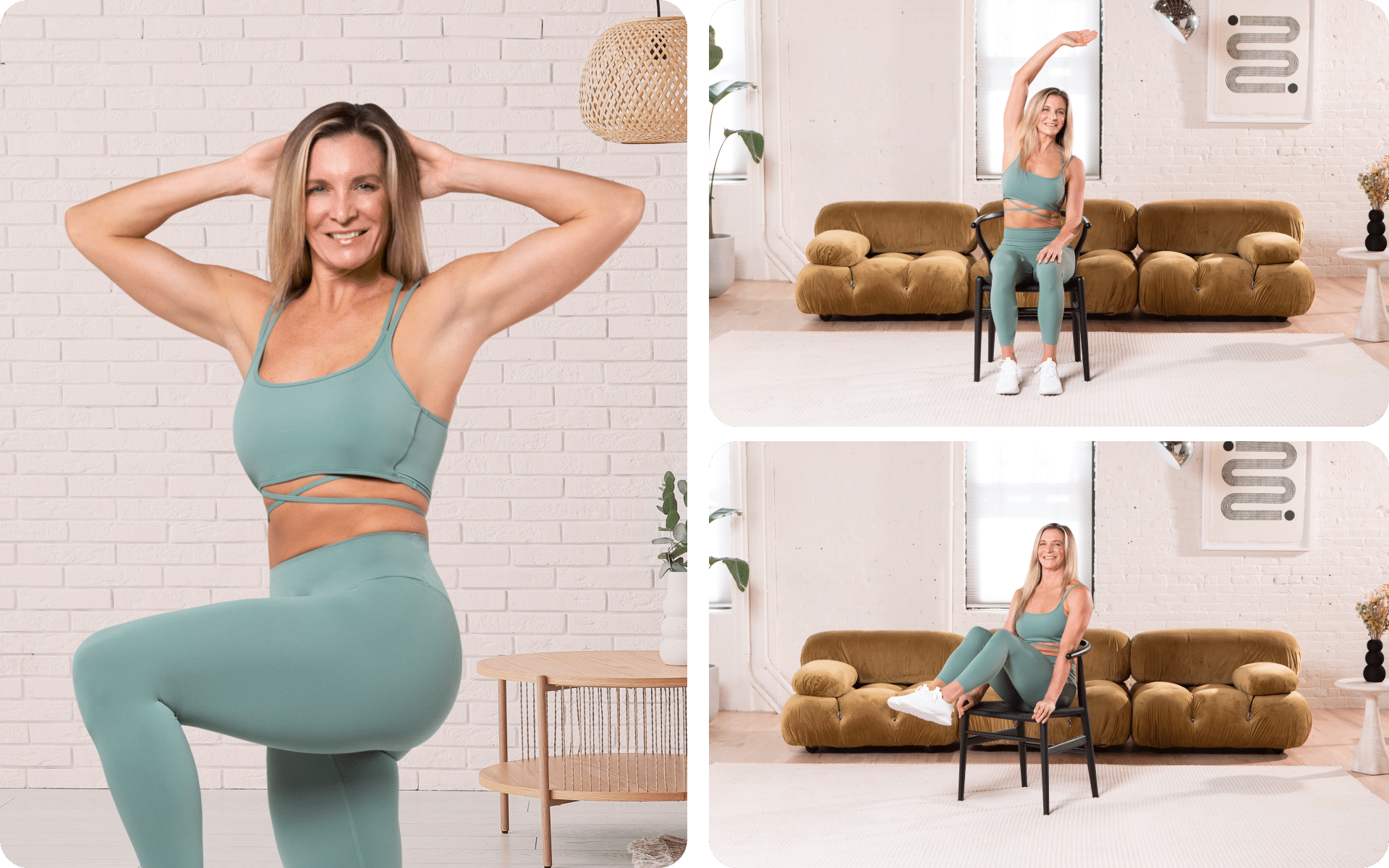
Unlike high-impact workouts that can place excessive stress on the joints, chair Pilates emphasizes smooth, fluid movements that gently stretch and strengthen the muscles surrounding major joints. (6) Research has shown that structured Pilates programs lead to significant improvements in joint flexibility and range of motion. (6) This gentle mobilization helps maintain joint comfort, reduces stiffness, and supports smooth, efficient movement patterns. (6)
4. Cardiorespiratory and Lifestyle Support
While Pilates is primarily known for its strength and flexibility benefits, engaging in a continuous, progressive chair routine can also support broader physiological parameters. Recent systematic reviews indicate that regular Pilates practice has a positive, pleiotropic effect on cardiorespiratory functions, supporting efficient breathing patterns and overall circulatory efficiency. (7) Furthermore, research suggests that the mind-body engagement inherent in Pilates encourages individuals to adopt other positive lifestyle behaviors, supporting long-term physical well-being. (8)
5. Mental Well-Being, Sleep Quality, and Stress Management
The benefits of chair Pilates extend far beyond physical conditioning. Because the practice requires deep concentration, precision, and synchronized breathing, it serves as an excellent tool for managing daily stress and supporting emotional well-being. (9) A 2023 systematic review and meta-analysis reported that Pilates exercise significantly reduces symptoms of everyday stress, anxiety, and low mood, promoting a sense of mental clarity and relaxation. (10) Additionally, clinical trials have demonstrated that structured Pilates routines can significantly improve sleep quality and reduce daily fatigue, helping practitioners feel more energized and balanced throughout the day. (11)
Read more: Transform Your Workspace With 10 Chair Exercises for Lower Back Pain
How to Get Started: Pilates Stability Chair Exercises vs. Household Chair
If you are practicing pilates chair exercises at home, you do not need expensive, studio-grade equipment to experience the benefits of this routine. Understanding the differences between a professional stability chair and a household seat can help you adapt your practice with confidence:
- Pilates Stability Chair (Wunda Chair): This specialized studio equipment features adjustable spring-loaded pedals that can be pushed down with the hands or feet. The springs provide adjustable resistance, which can either make an exercise more challenging (by adding resistance) or assist the user (by supporting their body weight). (3)
- Standard Household Chair: For home practice, a sturdy, armless dining chair or kitchen chair works beautifully. The chair must have a flat, non-slip seat and be placed on a completely stable, even surface (such as an exercise mat or a carpeted floor). Avoid using folding chairs, chairs with wheels, or highly cushioned armchairs, as these do not provide the necessary stability for a controlled, grounded practice.
When adapting movements to a household chair, you will use your own body weight and gravity as resistance, occasionally incorporating light household items or hand weights to simulate the resistance provided by studio springs. Many of the most effective chair exercises pilates practitioners use in studios can be adapted to a home setting with minimal equipment.
Simple Pilates Chair Exercises for Beginners and Seniors
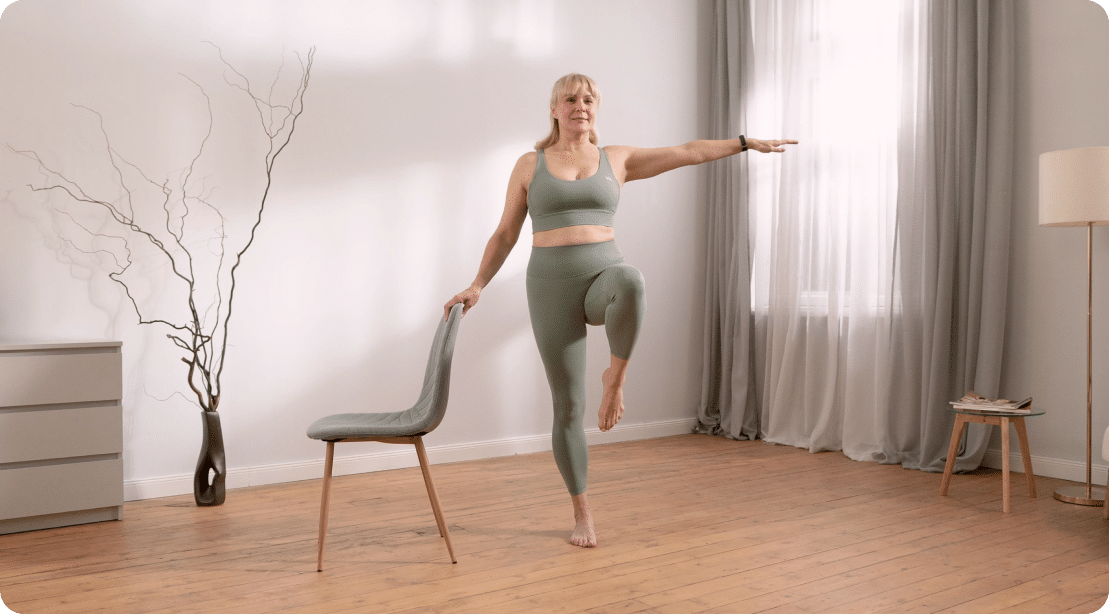
This beginner-friendly selection of pilates on chair exercises is designed to target different muscle groups, including the core, legs, and arms. These movements are particularly well-suited for senior chair pilates practice, as each can be performed at a gentle, controlled pace. Ensure you maintain a tall, upright posture throughout each movement, keeping your shoulders relaxed and your breathing deep and steady.
1. Seated Hundreds (Core Focus)
This classic Pilates move is adapted for a seated position to target the deep abdominal muscles and support trunk stability. It is an excellent option for pilates chair ab exercises.
- Setup: Sit tall near the front edge of your sturdy chair. Place your feet flat on the floor, hip-width apart. Engage your abdominal muscles slightly, drawing your navel toward your spine.
- Movement: Extend your arms straight out by your sides, palms facing down. Begin gently pulsing your arms up and down in a small, controlled range of motion (about 6 inches).
- Breathing: Inhale deeply through your nose for 5 quick pulses, then exhale completely through your mouth for 5 quick pulses.
- Duration: Repeat this breathing pattern 10 times to complete a total of 100 pulses. Keep your torso completely still and upright as your arms move.
2. Seated Single-Leg Stretch (Leg and Core Focus)
This movement serves as one of the fundamental pilates chair leg exercises, helping to engage the quadriceps and hip flexors while challenging core stability.
- Setup: Sit tall in the center of the chair with your feet flat on the floor. Hold onto the sides of the seat gently for support.
- Movement: Inhale to prepare. As you exhale, slowly extend your right leg straight out in front of you until it is parallel to the floor. Flex your foot gently.
- Hold: Hold the extended position for 2 seconds, focusing on keeping your thigh muscles engaged and your spine completely tall.
- Return: Inhale as you slowly lower your foot back to the starting position.
- Reps: Perform 8 to 10 controlled repetitions on the right leg, then switch to the left leg.
3. Seated Heel Raises (Lower Leg and Balance Focus)
Perfect for chair pilates exercises for seniors, this move targets the calves and ankles, supporting the lower-body strength required for stable walking and balance.
- Setup: Sit upright with your feet flat on the floor, hip-width apart. Place your hands on your thighs.
- Movement: As you exhale, slowly lift your heels off the floor, pressing firmly through the balls of your feet. Engage your calf muscles at the top of the movement.
- Hold: Hold the lifted position for 1 to 2 seconds.
- Return: Inhale as you slowly lower your heels back to the floor with control.
- Reps: Complete 12 to 15 smooth, controlled repetitions.
Reasons why BetterMe is a safe bet: a wide range of calorie-blasting workouts, finger-licking recipes, 24/7 support, challenges that’ll keep you on your best game, and that just scratches the surface! Start using our app and watch the magic happen.
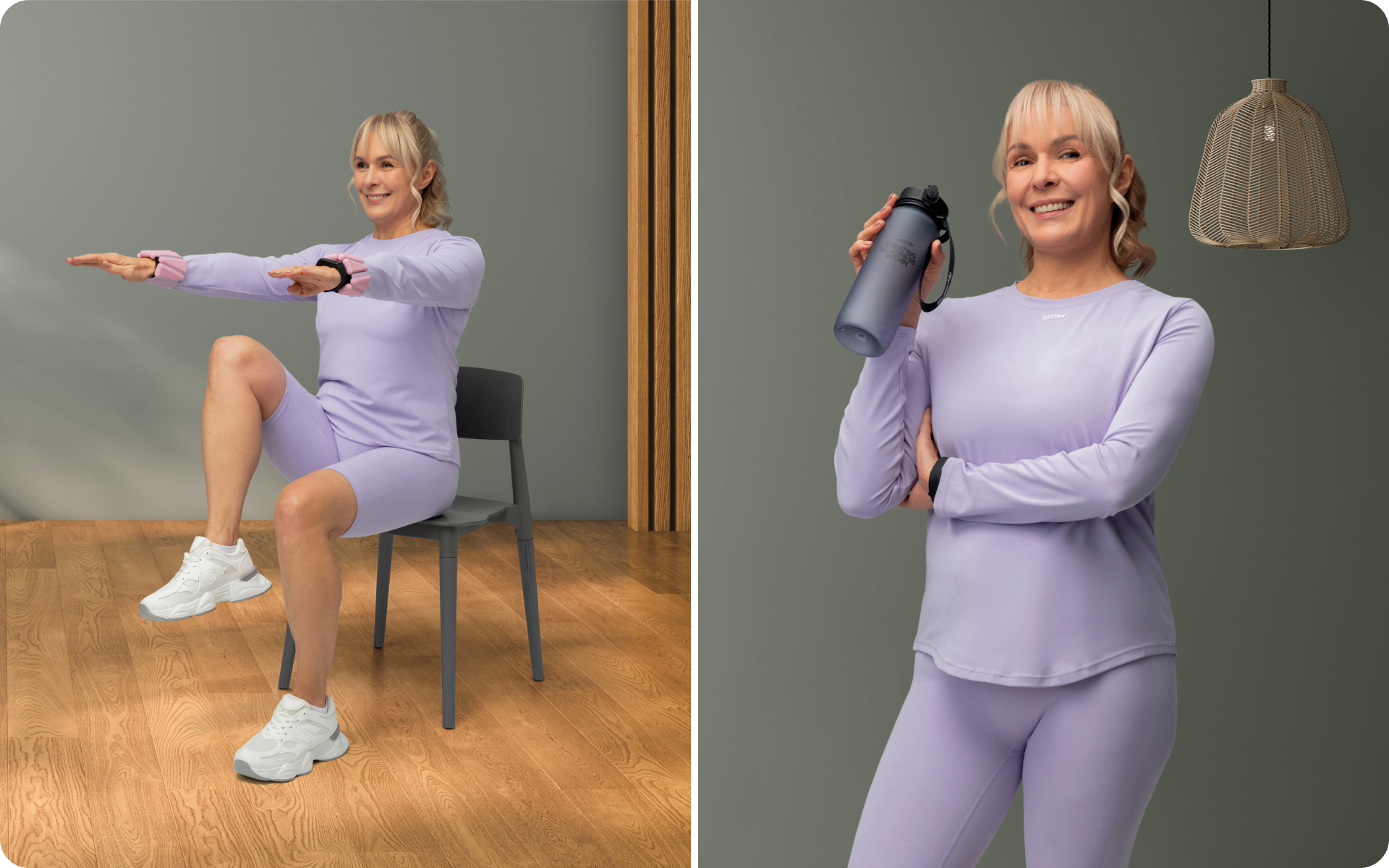
4. Single Leg Knee Lifts (Hip and Abdominal Focus)
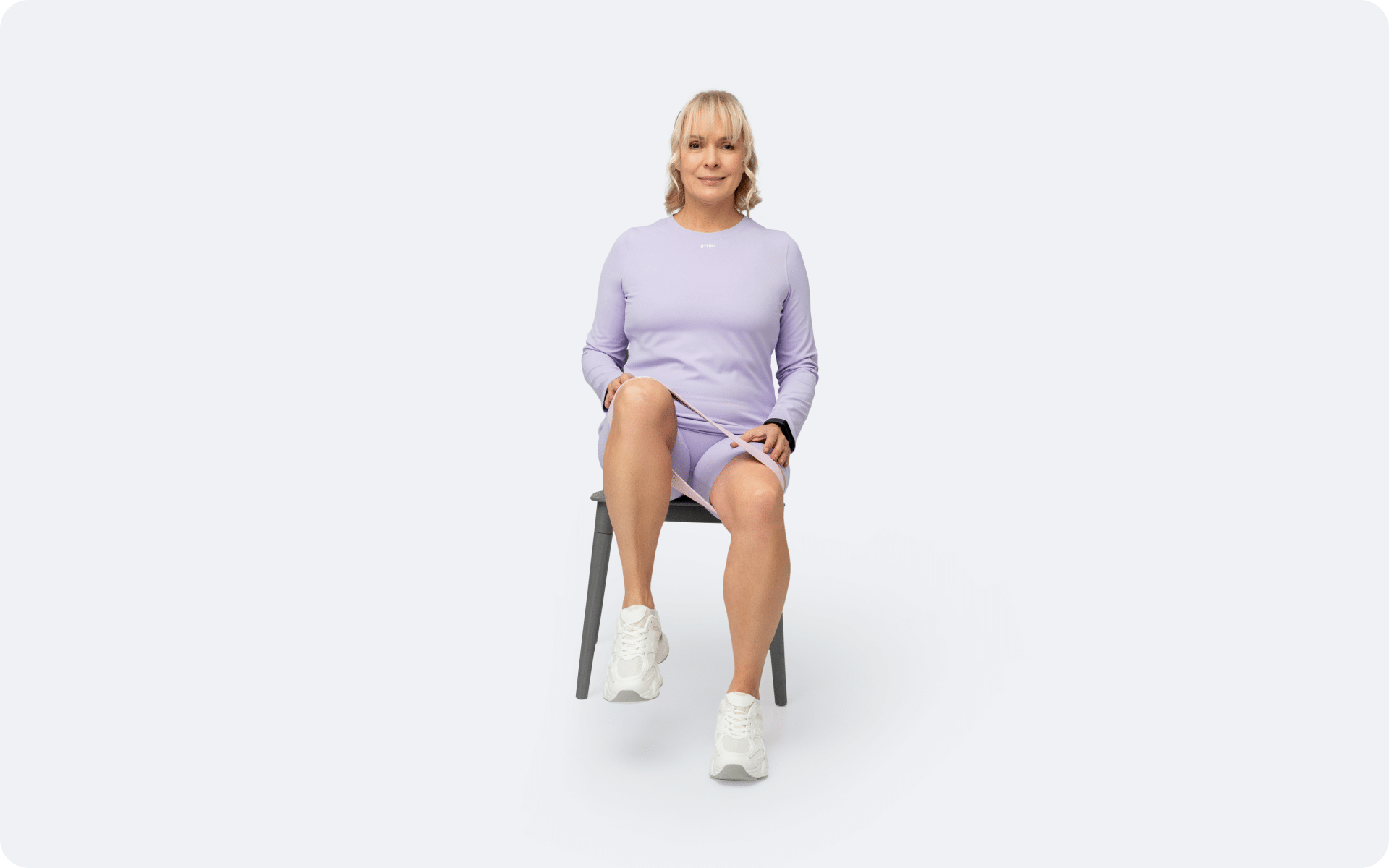
This is an excellent option for chair pilates for beginners, helping to develop the deep core strength and hip mobility needed for comfortable daily movement.
- Setup: Sit tall near the front edge of the chair. Place your feet flat on the floor and rest your hands lightly on your hips or the sides of the seat.
- Movement: Exhale as you slowly lift your right knee toward the ceiling, keeping your knee bent at a 90-degree angle. Lift only as high as you can maintain a perfectly upright spine without leaning backward.
- Hold: Hold for 1 second at the peak.
- Return: Inhale as you lower your foot back to the floor with control.
- Reps: Perform 8 to 10 repetitions on the right side, then repeat on the left side.
5. Seated Chest Expansion with Weights (Arm and Upper-Body Focus)
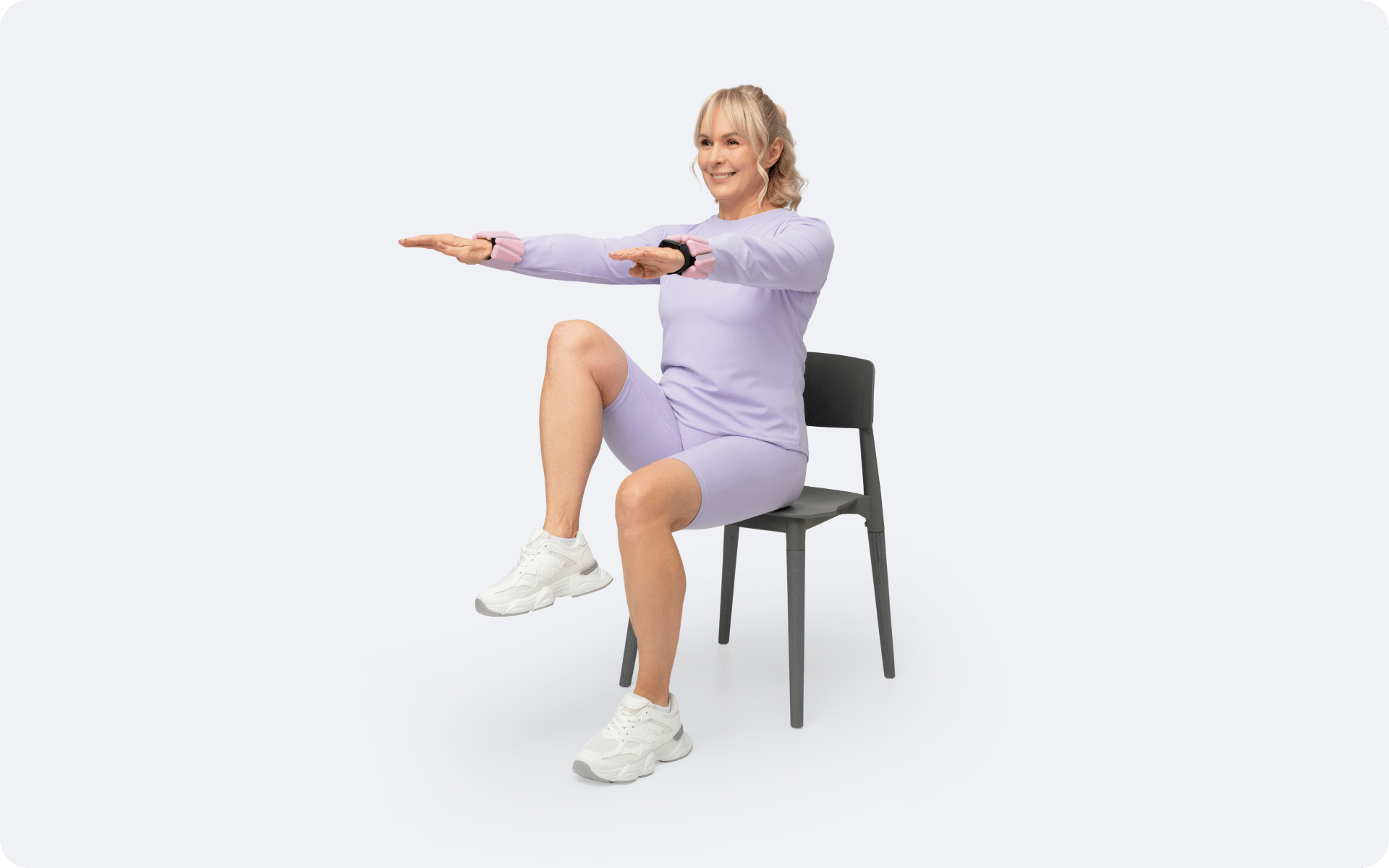
To address the need for pilates chair arm exercises, this movement incorporates light hand weights (1 to 3 pounds) to gently strengthen the shoulders, upper back, and triceps. It is a highly effective way to practice pilates chair exercises with weights at home.
- Setup: Sit tall with your feet flat on the floor. Hold a light weight in each hand, letting your arms hang straight down by your sides, palms facing backward.
- Movement: Inhale to prepare. As you exhale, slowly press your arms straight backward past your hips, keeping your elbows straight and squeezing your shoulder blades gently together.
- Hold: Hold the pressed position for 2 seconds, feeling the engagement in the back of your arms and upper back. Keep your chest open and collarbones wide.
- Return: Inhale as you slowly return your arms to the starting position with complete control.
- Reps: Perform 10 to 12 controlled repetitions.
A Sample 15-Minute Chair Pilates Workout Routine
To help you integrate these movements into a consistent physical routine, the following structured chair pilates workout outlines a simple, 15-minute sequence. This routine can be performed 2 to 3 times per week to support functional strength and joint mobility.
15-Minute Seated Pilates Routine
| Exercise Name | Targeted Muscle Groups | Suggested Reps / Duration | Key Technique Cue |
|---|---|---|---|
| Seated Hundreds | Deep abdominals, shoulders, and respiratory muscles. | 100 pulses (10 full breath cycles). | Keep your spine completely tall; do not let your torso rock. |
| Seated Chest Expansion | Triceps, posterior shoulders, and upper back. | 10 to 12 controlled repetitions. | Press arms back with straight elbows; keep your chest wide and open. |
| Seated Single-Leg Stretch | Quadriceps, hip flexors, and lower abdominals. | 8 to 10 repetitions per leg. | Extend the leg fully and flex your foot; do not lean backward. |
| Single Leg Knee Lifts | Deep core, hip stabilizers, and lower back. | 8 to 10 repetitions per leg. | Lift the knee using your lower abdominals; maintain a level pelvis. |
| Seated Heel Raises | Calves, ankle stabilizers, and lower leg. | 12 to 15 controlled repetitions. | Press evenly through the balls of both feet; lower down slowly. |
Consistency is the key to experiencing the long-term benefits of this routine. This sequence is an ideal introduction to pilates on chair exercises for anyone beginning their practice at home. Always focus on the quality of each movement rather than trying to rush through the repetitions.
Read more: Chair Yoga Poses to Help You De-Stress
Frequently Asked Questions
What Pilates exercises can you do on a chair?
You can perform a wide variety of adapted Pilates exercises on a chair, including core-stabilizing movements like the Seated Hundreds, lower-body exercises like Single-Leg Extensions and Knee Lifts, and upper-body movements like Chest Expansions. (1) (4) These movements utilize the chair to provide stability, allowing you to focus on controlled muscle recruitment and proper alignment without the need for floor-based mats or complex studio machinery. (4)
What are the benefits of chair Pilates?
Chair Pilates offers numerous physical and mental benefits, including improved core strength, enhanced postural balance, increased joint flexibility, and better body alignment. (1) (5) (6) Additionally, the mindful, breathing-focused nature of the practice supports mental well-being, helps manage daily stress, improves sleep quality, and reduces fatigue. (10) (11)
Does chair Pilates provide cardiovascular exercise?
Chair Pilates is primarily a strength, flexibility, and stability workout rather than an intense cardiovascular routine. (1) However, because it involves continuous, controlled physical movement and synchronized breathing, it supports efficient cardiorespiratory function and overall circulatory efficiency. (7) For a complete physical routine, it can be paired with low-impact cardiovascular activities like walking.
How do I choose the right seated exercises for my needs?
To choose the right seated exercises, consider your primary physical goals and any mobility limitations. If you want to focus on core stability, prioritize movements like Seated Hundreds and Knee Lifts. (5) For lower-body strength and balance, focus on Single-Leg Extensions and Heel Raises. (1) Always start with basic, bodyweight-only movements, and gradually incorporate light weights or increased repetitions as your strength and comfort improve.
The Bottom Line
Incorporating a structured chair pilates workout into your weekly routine is a highly effective, accessible way to support physical strength, joint flexibility, and postural balance. (1) (4) (6) By utilizing controlled movements, core engagement, and mindful breathing, this low-impact practice provides valuable physical conditioning while remaining gentle on the joints. Whether practicing at home on a sturdy household chair or in a studio using a specialized stability chair, consistent participation can help you maintain physical independence, support comfortable daily movement, and promote long-term physical and emotional well-being. (1) (8) (10)
DISCLAIMER:
This article is intended for general informational purposes only and does not serve to address individual circumstances. It is not a substitute for professional advice or help and should not be relied on for making any kind of decision-making. Any action taken as a direct or indirect result of the information in this article is entirely at your own risk and is your sole responsibility.
BetterMe, its content staff, and its medical advisors accept no responsibility for inaccuracies, errors, misstatements, inconsistencies, or omissions and specifically disclaim any liability, loss or risk, personal, professional or otherwise, which may be incurred as a consequence, directly or indirectly, of the use and/or application of any content.
You should always seek the advice of your physician or other qualified health provider with any questions you may have regarding a medical condition or your specific situation. Never disregard professional medical advice or delay seeking it because of BetterMe content. If you suspect or think you may have a medical emergency, call your doctor.
SOURCES:
- The Effectiveness of Pilates Training Interventions on Older Adults’ Balance: A Systematic Review and Meta-Analysis of Randomized Controlled Trials (2023, pmc.ncbi.nlm.nih.gov)
- Effects of Pilates Training on Physiological and Psychological Health Parameters in Healthy Older Adults and in Older Adults With Clinical Conditions Over 55 Years: A Meta-Analytical Review (2021, pmc.ncbi.nlm.nih.gov)
- Pilates: how does it work and who needs it? (2011, pmc.ncbi.nlm.nih.gov)
- The Effect of Chair-Based Exercise on Physical Function in Older Adults: A Systematic Review and Meta-Analysis (2021, pmc.ncbi.nlm.nih.gov)
- Effects of Pilates on Body Posture: A Systematic Review (2024, pmc.ncbi.nlm.nih.gov)
- Effects of stretching in a pilates program on musculoskeletal flexibility, strength, and vertical jump: a systematic review (2024, link.springer.com)
- Effects of Pilates Training on Cardiorespiratory Functions in Adults: A Systematic Review with Meta-Analysis (2024, pmc.ncbi.nlm.nih.gov)
- The Impacts of Pilates and Yoga on Health-Promoting Behaviors and Subjective Health Status (2021, pmc.ncbi.nlm.nih.gov)
- Benefits of Pilates on Depression, Anxiety, and Stress: An Observational Study Comparing People Practicing Pilates to Non-Active Controls (2025, pmc.ncbi.nlm.nih.gov)
- The impact of Pilates exercise for depression symptoms in female patients: A systematic review and meta-analysis (2023, pmc.ncbi.nlm.nih.gov)
- The effect of Pilates exercises on sleep quality and fatigue among female college students residing in the dormitory (2023, pmc.ncbi.nlm.nih.gov)
 By
By 
 Reviewed by
 By
By