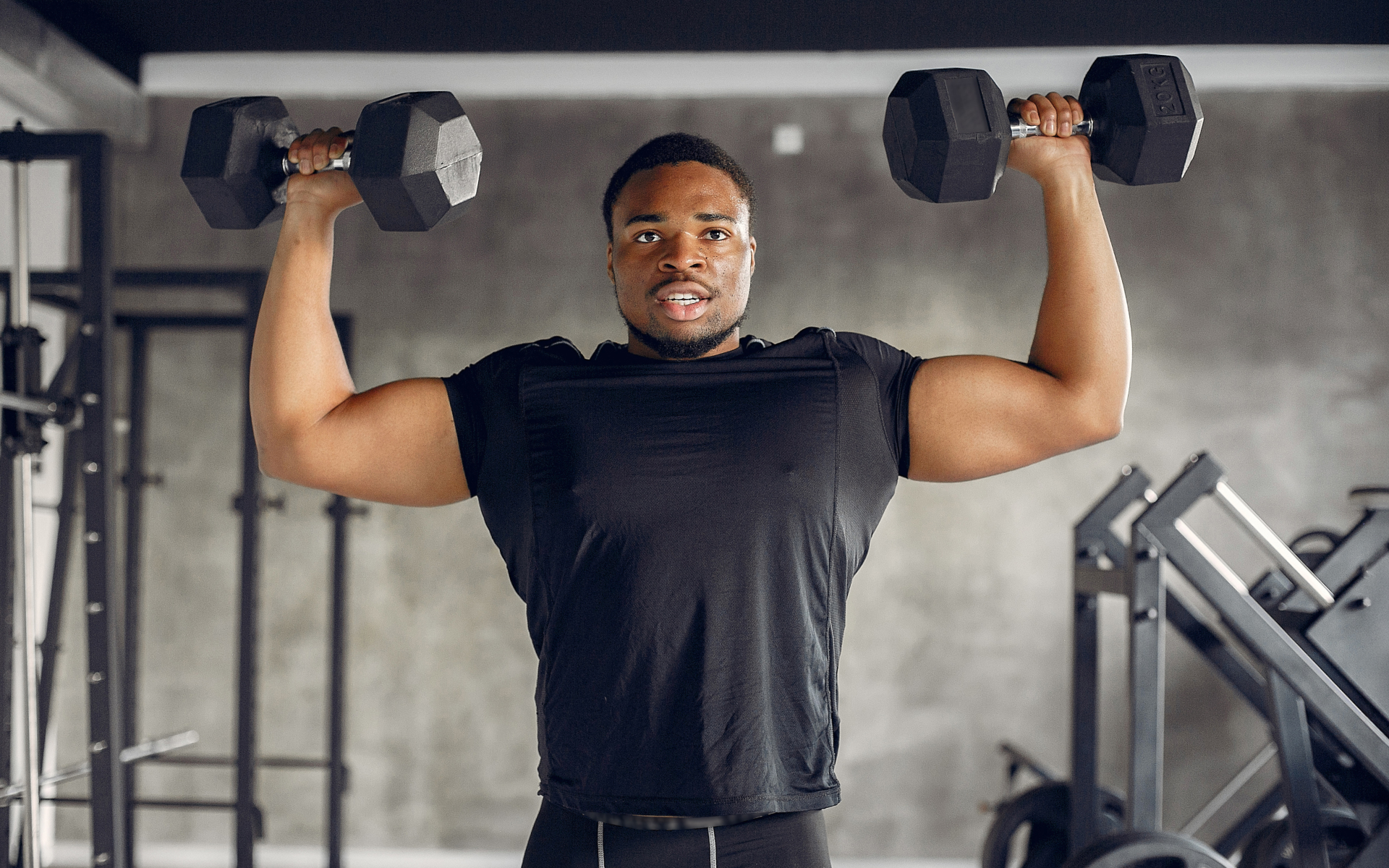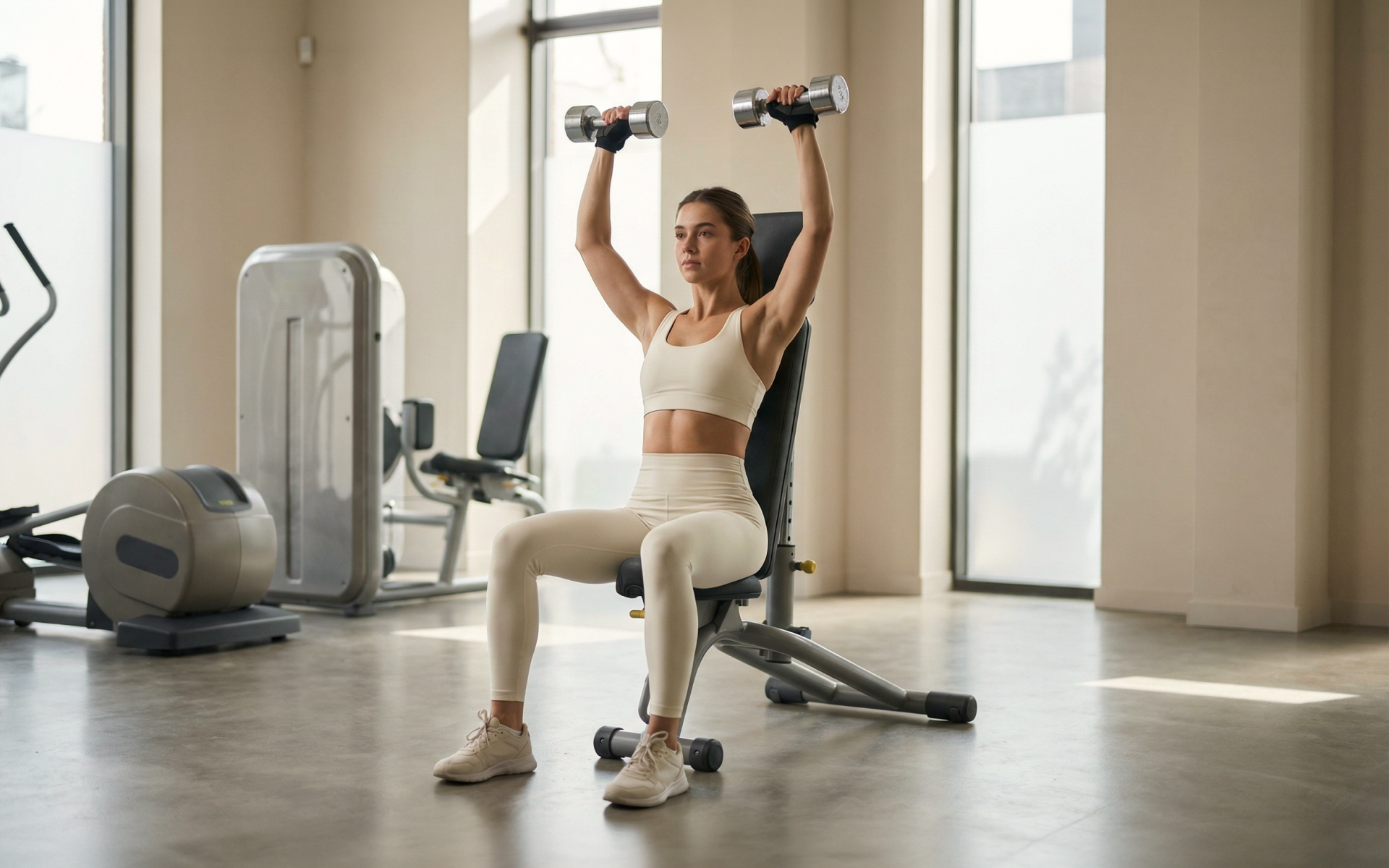
Lower-body strength exercises are movements that load your hips, thighs, and calves to build stronger, more capable legs. These muscular strength exercises can support everyday tasks such as walking, standing up, climbing stairs, and carrying items. Squats, deadlifts, lunges, and glute bridges are common examples. You can do them with or without weights. If you prefer calisthenics for lower body training, bodyweight squats, lunges, glute bridges, and calf raises can be useful starting points.
Lower-body training can support stronger legs, everyday movement, and overall wellness. However, the number of leg exercises to choose from can make building a leg workout feel unnecessarily complicated. The good news is it doesn’t need to be. As long as your program includes the right lower-body movement patterns, you can build a complete workout without doing every exercise in the gym.
This guide explains those patterns and gives you 6 lower-body strength exercises to build a well-rounded leg workout. This guide is for people who want a clearer way to train their lower body, whether you’re new to strength work, training at home, or using weights in the gym. You’ll learn which muscles these exercises target, how to choose the right movements for your level, and how to build a routine that feels practical and repeatable.
Why Is Lower-Body Strength Important?
Your lower body holds your largest muscle groups as lower-body strength supports nearly everything you do on your feet. Strong legs can help with walking, climbing stairs, standing up, and carrying things (1).
For many people, stronger legs are linked to better balance and steadier movement. One review suggested that regular strength work may support stability and confidence in daily tasks (2).
Here’s why leg strength tends to matter:
- Everyday function: Sitting, standing, and lifting all rely on your hips and thighs.
- Balance support: Stronger legs may help you feel steadier on uneven ground.
- Active movement: Walking, jogging, and quick direction changes start in the lower body.
- Long-term mobility: Keeping your legs strong as you age may support independence.
The takeaway? Lower-body work isn’t just about looks. It’s about moving well and feeling capable in your own body.
How Can You Tell If Your Lower Body Needs More Strength Work?
You may notice everyday tasks feeling harder than they used to. This is often a practical sign your legs could use more strength work.
There’s no single test here. Instead, pay attention to common, everyday experiences.
- Standing up from a low chair takes extra effort or a push from your arms.
- Stairs leave your legs feeling tired sooner than expected.
- Your balance feels less steady when standing on one foot.
- Tiring quickly during walks of 15-20 minutes.
- Finding it tricky to carry groceries or lift items from the floor.
These signals vary from person to person. They’re simply everyday clues that are worth noticing, not a sign of any condition. Regardless, one practical way to build and maintain leg strength is to follow a progressive workout program that includes lower-body training.
If you have ongoing discomfort or specific concerns, consider checking in with a qualified professional first. From there, a gentle starting routine can help you build a base.
BetterMe offers a variety of workouts, recipes, challenges, and support tools to help you stay more consistent with your wellness routine. Explore the app to find features that fit your goals, preferences, and schedule.
Which Muscles Do Lower-Body Strength Exercises Work?
Lower-body strength exercises target the major muscle groups in your hips, thighs, and lower legs. Together, they power most of your standing and walking movements.
Here’s a quick breakdown of the main players and what they do:
- Glutes (buttocks): Your largest and strongest muscles. They drive hip movement, like standing up and pushing forward (3).
- Quadriceps (front thighs): Four muscles that straighten your knee (4). They work hard in squats and lunges to extend the knee.
- Hamstrings (back thighs): They bend your knee and extend your hip (5). Key for deadlifts and bridges.
- Calves (lower legs): They point your toes and support push-off when you walk or jump (6).
- Adductors (inner thighs): They pull your legs toward the midline and aid stability (7).
- Hip flexors (front hips): They lift your knee and help with stepping and walking (8).
Smaller stabilizing muscles around your hips and ankles also pitch in to help keep you balanced during single-leg moves.
Training these groups can help support balanced, well-rounded leg strength. That’s why a complete workout often mixes pushing, hinging, and single-leg movements.
What Are the Best Lower-Body Strength Exercises?
Some of the best lower-body strength exercises are those that work multiple muscles, fit your current skill level, and you can repeat consistently. By “best”, we mean moves that offer high value, scale easily, and cover all major leg muscles.
Below are the primary lower-body movement patterns and strength exercises they include:
- Squat: A knee-driven move that lowers and lifts your body, working your quads and glutes. This includes the back squat and front squat.
- Hip hinge: A hip-driven move that loads the back of your legs, such as a deadlift.
- Unilateral movement: An exercise that either only uses one leg or emphasizes one leg at a time. This includes the walking lunge, reverse lunge, or single-leg RDL.
- Hip thrust or bridge: A glute-focused move that drives your hips up from the floor or a bench.
- Step-up pattern: A stepping move onto a box or bench that builds single-leg strength and control. This includes exercises such as the step-up.
- Calf-focused movement: A move that lifts your heels to target the calves for steadier push-off.
Each of the lower-body movement patterns targets different muscles and including all of them builds a complete routine. This can help you build a more complete lower-body workout.
| Exercise | Main muscles worked | Difficulty | Equipment needed |
|---|---|---|---|
| Back squat | Quads, glutes, adductors | Moderate | Barbell |
| Romanian deadlift | Hamstrings, glutes, back | Moderate | Barbell or dumbbell |
| Reverse lunge | Quads, glutes, hamstrings | Moderate | Bodyweight, dumbbells, or barbell |
| Hip thrust | Glutes, hamstrings | Beginner-friendly | Bodyweight, dumbbells, or barbell |
| Step-up | Quads, glutes, calves | Moderate | Step and optional weights (bodyweight, dumbbells, or barbell) |
| Calf raise | Calves, ankles | Beginner-friendly | Bodyweight, dumbbells, or barbell |
Barbells are one option for training legs as they make it easy to gradually add weight. This can help you follow a structured strength program. However, they’re not your only option. Dumbbells, kettlebells, and bodyweight exercises can also build lower-body strength if barbells don’t fit your experience, equipment, or comfort level.
Sample Lower-Body Workout
Here’s one way to program these six moves into a single session. Aim for 2-3 sessions per week with at least one rest day between. Rest for 45-90 seconds between sets.
A complete lower-body workout often starts with the most demanding barbell lifts. Simpler accessory work usually comes later. For many people, this order helps preserve form and focus when energy is highest.
| Order | Exercise | Sets | Reps | Rest |
|---|---|---|---|---|
| 1 | Back squat | 3 | 8-12 6-8 | 60-90 secs |
| 2 | Romanian deadlift | 3 | 8-12 8-10 | 60-90 secs |
| 3 | Reverse lunge | 3 | 8-10 per leg | 60-90 secs |
| 4 | Hip thrust | 2 | 8-10 | 60-90 secs |
| 5 | Step up | 2 | 12-15 | 60-90 secs |
| 6 | Calf raise | 2 | 15-20 | 30-45 secs |
Adjust the numbers to suit your level. Beginners can start with 1-2 sets and fewer reps. Below are step-by-step instructions for each move.
Read more: Beginner’s Weightlifting Program: Everything You Need to Know
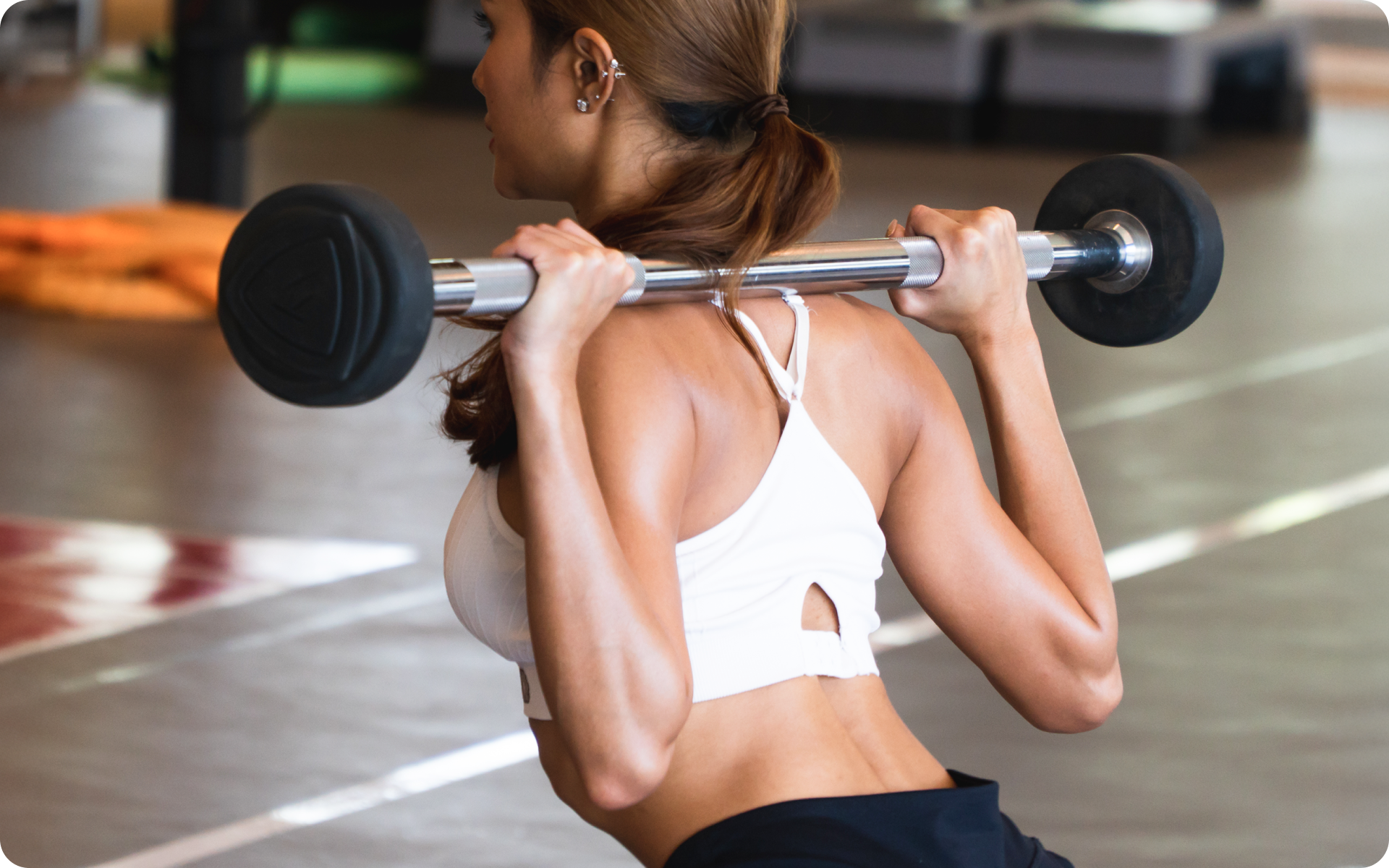
Barbell Back Squat
The barbell back squat trains the quads, glutes, and inner thighs while also challenging trunk control. It often appears first in a lower-body workout as it requires coordination, focus, and force production.
- Place the bar across your upper back, not your neck.
- Stand with your feet about shoulder-width apart.
- Brace your trunk and keep your chest steady.
- Lower by sitting down and back.
- Stop at a depth you can control with good form.
- Press through your feet to return to standing.
Use a load you can control for every planned rep. If your form changes too much at lower depth, reduce the weight and rebuild gradually.
Barbell Romanian Deadlift
The barbell Romanian deadlift focuses on the hamstrings and glutes. It’s a hip hinge, which means that most of the movement comes from your hips rather than your knees.
- Hold the bar in front of your thighs.
- Keep a soft bend in your knees.
- Push your hips back as the bar moves down your legs.
- Lower until you feel tension in the back of your thighs.
- Keep the bar close to your body.
- Drive your hips forward to return to standing.
Controlled reps often work well here. For example, a 2-second lowering phase can help many people stay more aware of their position.
Barbell Reverse Lunge
The barbell reverse lunge trains each leg separately. It can help you notice side-to-side differences in strength, control, and balance.
- Place the bar across your upper back.
- Stand tall with your feet hip-width apart.
- Step one foot back.
- Lower with control until both knees bend comfortably.
- Keep most of your weight on the front foot.
- Push through the front foot to return to standing.
For many people, reverse lunges feel more stable than forward lunges. This can make them a practical option in a barbell workout.
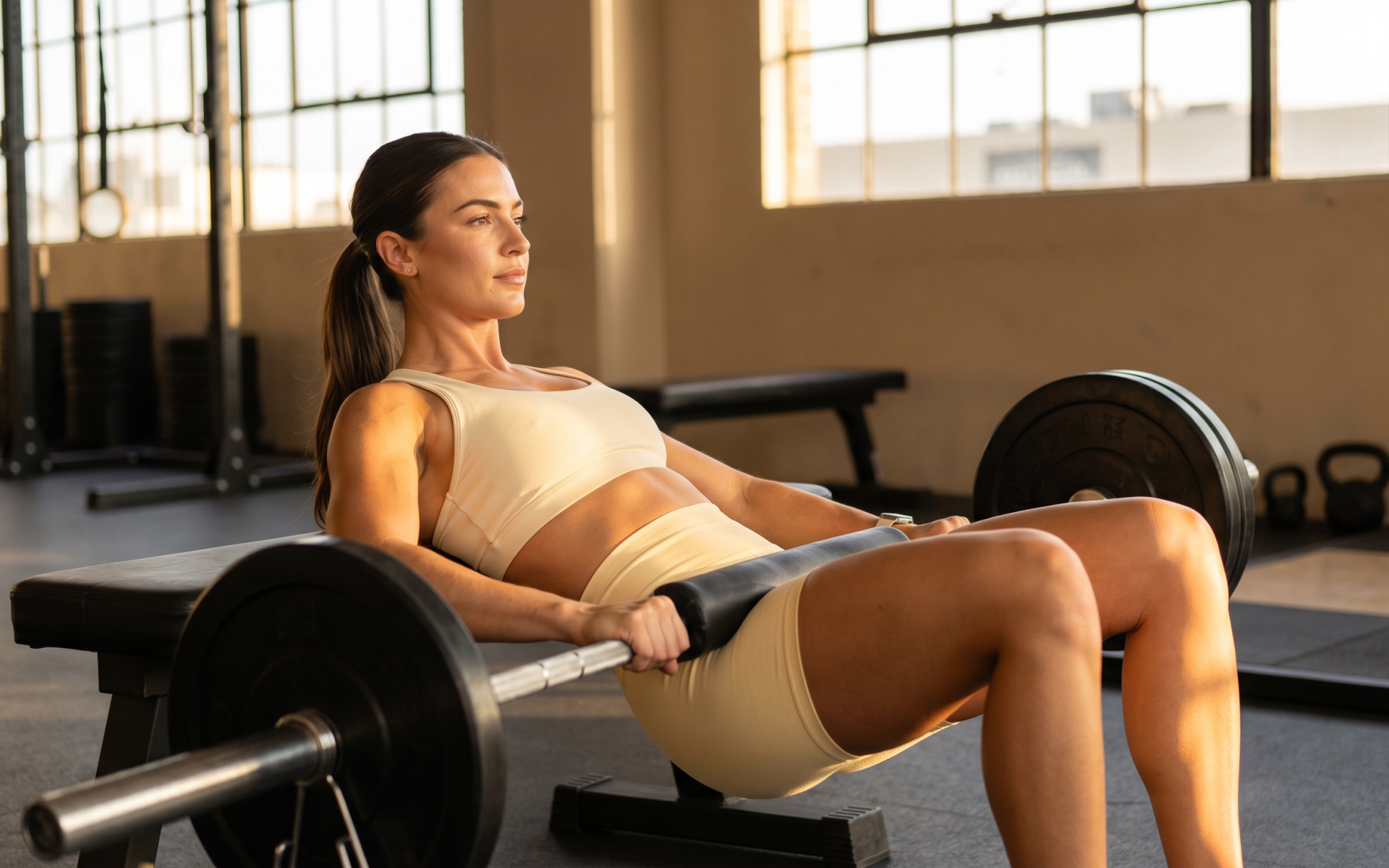
Barbell Hip Thrust
The barbell hip thrust emphasizes the glutes and trains hip extension directly. It can be useful when you want more lower-body volume without repeating another squat pattern.
- Sit on the floor with your upper back against a bench.
- Roll the bar over your hips.
- Bend your knees and place your feet flat.
- Brace your trunk.
- Drive through your heels to lift your hips.
- Pause briefly at the top, then lower with control.
A bar pad can make the setup more comfortable. Try to keep your ribs down and avoid over-arching at the top.
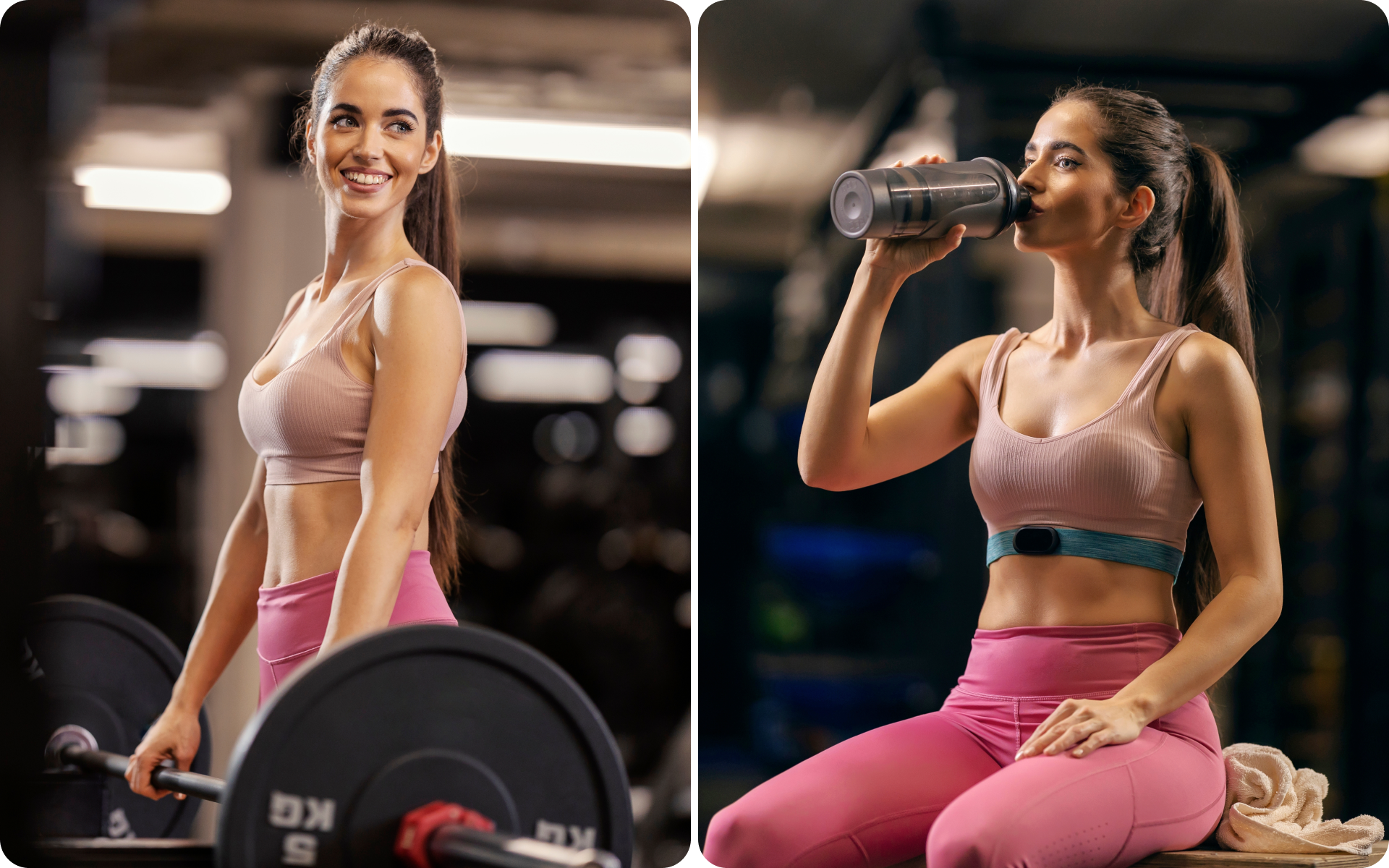
Barbell Step-Up
The barbell step-up builds single-leg strength and control. It also places most of the upward work on the leg that stays on the box or bench.
- Place one foot fully on a box or bench.
- Keep your whole foot planted.
- Lean slightly forward.
- Press through the working leg to step up.
- Stand tall at the top.
- Lower back down with control.
Choose a step height you can manage without losing balance. For many people, knee height or lower is a reasonable starting point.
Standing Barbell Calf Raise
The standing barbell calf raise targets the calves, which help with push-off during walking, running, and jumping. It is a simpler movement, so it often fits well near the end of the workout.
- Place the bar across your upper back.
- Stand tall with the balls of your feet on a raised surface if available.
- Lower your heels slowly.
- Rise up as high as you can with control.
- Pause briefly at the top.
- Lower and repeat.
Higher rep ranges often work well for calf work. A common starting range is 12-20 controlled reps.
How Can Beginners Build Lower-Body Strength?
Beginners may be able to build lower-body strength with 2-3 short sessions per week using simple moves (9). A common starting point is 1-3 sets of 6-12 reps, with 1-3 minutes of rest between sets.
Early on, the goal is control, not heavy loads. Lower-body strength exercises for beginners work best when form comes first. Here’s a gentle starting approach:
- Pick 3-6 moves: For example, squats, glute bridges, and step-ups.
- Keep the volume modest: Try 1-2 sets at first, then build toward 3.
- Move slowly: Aim for 3 seconds down and 2 seconds up.
- Add gradually: This is progressive overload—slowly increasing reps, sets, or load over time.
For example, you might add one rep per set each week. Once 12 reps feel manageable, you could try a light weight or an extra set.
Rest matters too. Leave at least one day between sessions for the same muscles.
Here’s a simple programming idea for a broader routine:
- Monday: Lower-body strength session (the workout above)
- Tuesday: Upper-body strength session
- Wednesday: Cardiovascular exercise, e.g. a 30-45 minute swim/walk
- Thursday: Lower-body session again, slightly heavier or with more reps
- Friday: Upper-body strength session
- Saturday: Cardiovascular exercise, e.g. a 30-45 minute swim/walk
- Sunday: Rest
Individual outcomes vary, so listen to your body and adjust as needed. Progress tends to be uneven. Some weeks you may feel strong, others less so—that’s completely normal. You can scale down temporarily if you need to.
Workouts, weight management tools, and recipe ideas come together in the BetterMe Well-Being Coach app, giving you practical support for building a more consistent wellness routine.
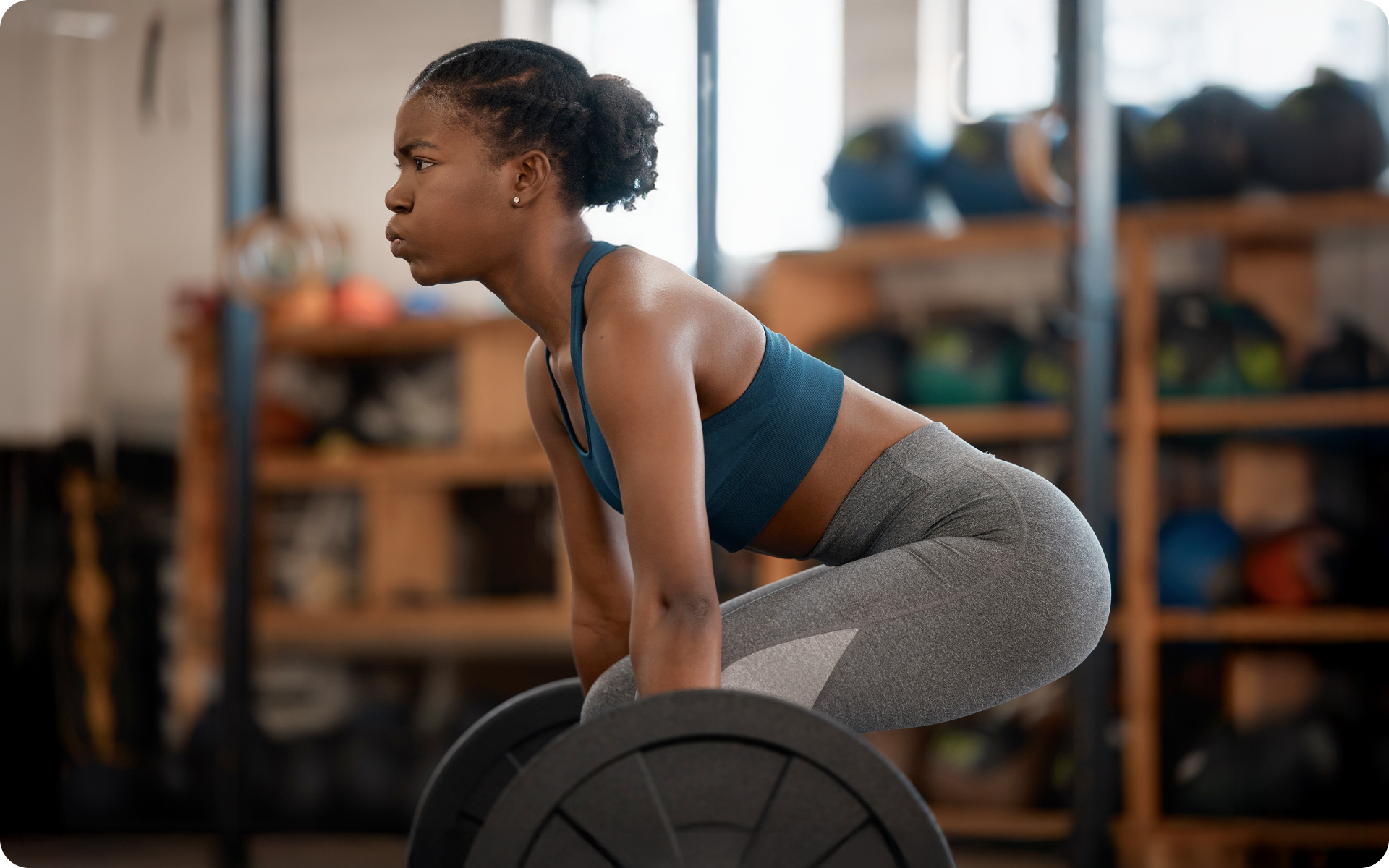
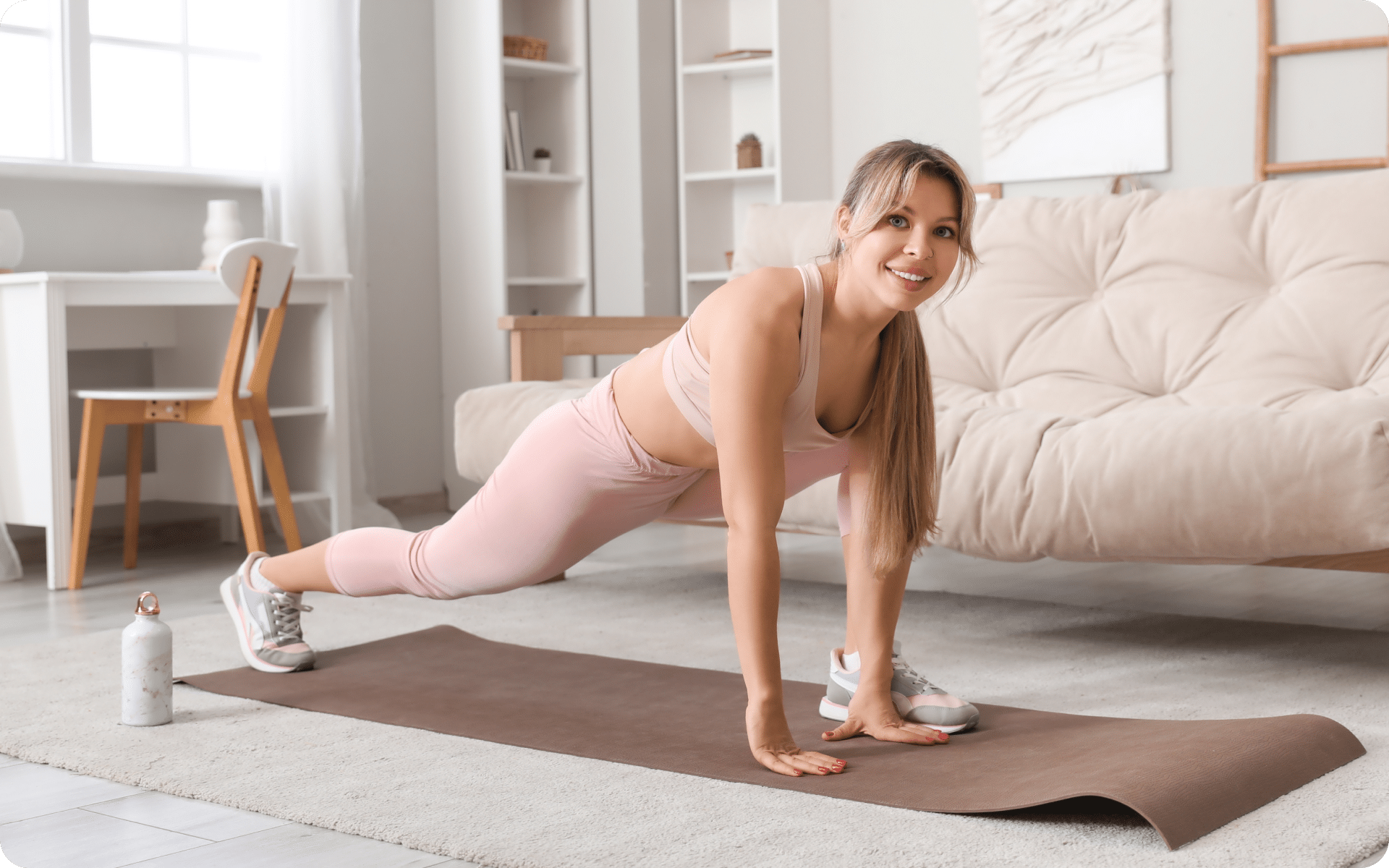
Can You Build Lower-Body Strength Without Equipment?
Yes, you can build lower-body strength without equipment using body weight alone. A bodyweight lower body workout can be especially practical at home because it requires little space and no equipment. Bodyweight moves can challenge your muscles enough to support progress, particularly for beginners (10).
Lower-body strength exercises without equipment rely on your own body as resistance. To keep them challenging, adjust the tempo, reps, and leverage.
Try these gear-free options:
- Bodyweight squats: Aim for 12-20 reps per set.
- Reverse lunges: Do 10-12 reps per leg.
- Glute bridges: Try 15-20 reps, holding for two seconds at the top.
- Single-leg calf raises: Do 12-15 reps per leg for extra challenge.
- Wall sits: Hold for 20-45 seconds.
To keep building strength without weights, make the moves harder over time. Slow your tempo, pause at the bottom, or shift to single-leg versions. For example, a slow 3-second descent in a squat adds challenge without any gear. Single-leg moves also load one side at a time, which raises the demand.
Read more: 30-Minute Full Body Dumbbell Workout at Home for Weight Loss
How Can You Use Dumbbells or Weights for Lower-Body Strength?
You can use dumbbells or weights to add resistance, which challenges your muscles beyond body weight alone. This added load may support continued strength gains over time.
Lower-body strength exercises with dumbbells are simple to start. You hold the weights during familiar moves such as squats, lunges, and deadlifts.
One awesome benefit of using dumbbells for lower-body exercises is they can make dynamic movements easier to set up. Holding dumbbells during lunges or step-ups is considerably easier than a barbell.
Here’s how to begin with added load:
- Goblet squat: Hold one dumbbell at your chest. Start with 10-20 lbs.
- Romanian deadlift: Hold a dumbbell in each hand. Begin with 10-15 lbs per hand.
- Walking lunges: Carry a dumbbell in each hand for extra challenge.
- Step-ups: Hold light dumbbells as you step up and down.
When should you add weight? A helpful cue is when you finish a set and feel you could do 3-4 more reps with good form. That tends to be a sign to bump up the load slightly.
Lower-body strength exercises with weights aren’t limited to dumbbells. You can also try kettlebells, resistance bands, or a barbell once you’re comfortable.
Increase load in small steps, such as 2-5 lbs at a time. The smaller the better as this strategy allows slow but consistent progress while allowing adaptation and keeps your form clean.
How Can Seniors Build Lower-Body Strength?
Many older adults may be able to build lower-body strength with gentle, low-impact moves done 2–3 times per week (11). Starting with support, such as a chair or wall, may help with balance and confidence.
Lower-body strength exercises for seniors often focus on stability and everyday function (12). The goal is steady, controlled movement rather than heavy loads.
Here are some beginner-friendly options to consider:
- Chair-supported squats: Lower toward a chair, then stand. Do 8-12 reps.
- Sit-to-stands: Rise from a chair without using your hands. Aim for 10 reps.
- Standing calf raises: Hold a counter for balance. Do 12-15 reps.
- Supported leg lifts: Hold a chair and lift one leg to the side. Do 10 per leg.
- Wall-supported glute bridges: Or bridges on the floor for those comfortable getting down.
Move at a comfortable pace and breathe steadily throughout—there’s no need to rush or push into discomfort.
Many older adults find that light dumbbells (2-5 lbs) add a helpful challenge over time. Add weight only when the bodyweight version feels easy.
If you have any concerns or ongoing conditions, you should consider speaking with a qualified professional first. They may suggest movement options that better fit your needs. Individual results vary, so patience and consistency tend to pay off.
How Long Does It Take to Strengthen Your Legs?
Many people notice early changes within a few weeks, although timelines vary widely. Some findings suggest noticeable strength gains often appear over several weeks to a few months of consistent training (13).
Your results depend on many factors, including your starting point, effort, sleep, and how often you train. Here’s a rough, general picture:
| Time frame | What some people notice | Key driver |
|---|---|---|
| Weeks 1-2 | Moves feel more familiar; better coordination | Learning the movements |
| Weeks 3-6 | Early strength changes; tasks may feel easier | Consistency and gradual load |
| Weeks 8-12 | More noticeable strength for many people | Progressive overload over time |
Here’s how a few training choices tend to compare:
Your timeline depends on several factors:
- Frequency: Training 2-3 times per week tends to support steady progress (9).
- Effort: Working with enough challenge in each set matters.
- Rest: Sleep, rest days, and nutrition all play a role.
- Starting point: Beginners often see faster early gains.
- Consistency: Regular sessions tend to beat occasional intense ones.
For example, someone who trains legs twice a week with steady effort may notice everyday movements gradually feeling easier. Individual outcomes vary widely, so try not to compare your progress to others.
What Common Mistakes Can Limit Lower-Body Strength Progress?
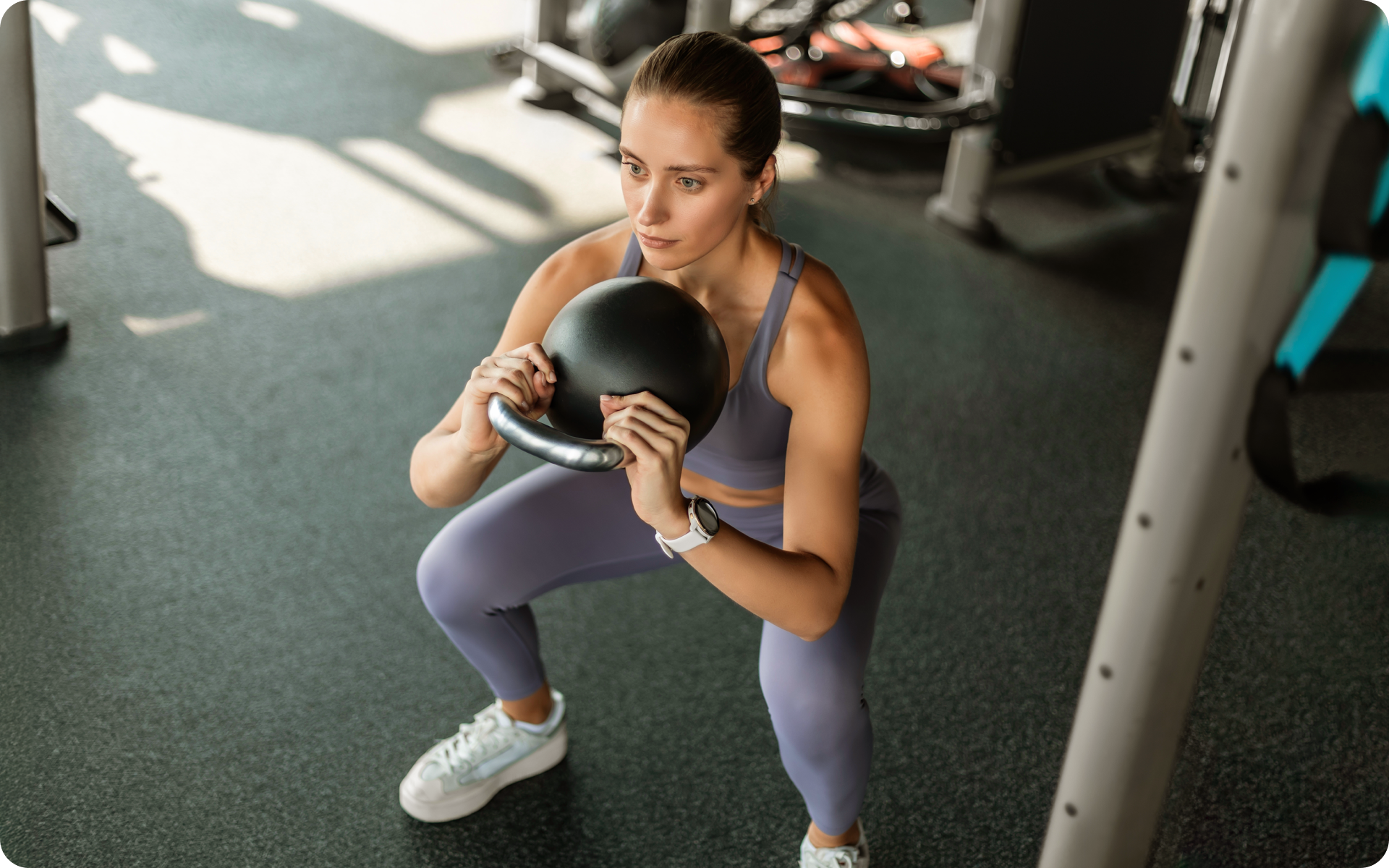
The most common mistakes include not being consistent, followed by adding load too quickly. For many people, steady effort works better than occasional hard pushes.
Small habits can slow progress without you noticing. Here are a few to watch out for:
- Rushing reps: Fast, sloppy movement reduces control and quality.
- Adding weight too soon: Large jumps in load can make your form slip.
- Skipping rest: Training the same muscles daily leaves little time to recover.
- Ignoring range of motion: Very shallow reps may limit how much you challenge the muscle.
- Doing only one move: Relying on squats alone can leave other muscles behind.
A simple fix is to slow down and track your sessions. For example, note your reps and load each week. Then adjust gradually. Add one rep, one set, or a small amount of weight when things feel manageable.
FAQs
What are the most important leg muscles to work out?
The most important leg muscles to train are your glutes, quadriceps, hamstrings, and calves. These four groups power most standing, walking, and lifting movements. Your glutes drive hip extension, your quads straighten your knees, and your hamstrings bend them. Calves and inner thighs also matter for balance and push-off. A complete routine targets all of these for well-rounded strength.
What is the easiest exercise to strengthen your legs?
The bodyweight squat or sit-to-stand is often the easiest place to start. Both use a natural movement pattern and need no equipment. You can adjust the depth to match your comfort and ability. For many beginners, rising from a chair slowly works well. As it gets easier, you can add reps, sets, or a light weight.
Are 5 exercises enough for legs?
Yes, 5 exercises can be enough for a complete leg workout. What matters most is covering the main movement patterns: a squat, a hinge, a single-leg move, and a calf exercise. For example, squats, deadlifts, lunges, step-ups, and calf raises cover all major muscles. Quality and consistency tend to matter more than the exact number. Adjust the selection to fit your level and goals.
Can older adults build lower-body strength?
Yes, older adults can build lower-body strength at many ages (14). Gentle, low-impact moves like chair squats, sit-to-stands, and supported calf raises tend to work well. Starting with body weight and adding light dumbbells over time may support steady progress. Training 2-3 times per week with rest between sessions is a common approach. Consider checking with a qualified professional to get guidance that’s suited to your needs.
When should you not do leg day?
You should consider skipping or modifying leg day if your legs feel very sore, overly tired, or if you’re under the weather. Pushing through significant discomfort may not be the most practical choice for many people. A rest day or a gentle walk may serve you better on those days. If you have any ongoing concerns, consider speaking with a qualified professional. Paying attention to how you feel can make training easier to adjust over time.
Are squats enough for lower-body strength?
Squats alone aren’t quite enough for complete lower-body strength. They mainly target your quads and glutes but underwork your hamstrings and calves. Adding a hinge move, like a deadlift, balances the back of your legs. Single-leg moves and calf raises round out your routine. For well-rounded strength, combine squats with a few complementary exercises.
The Bottom Line
Lower-body strength exercises may help you build steadier, more capable legs for everyday movement. A complete routine mixes squats, hinges, single-leg moves, and calf work, done 2-3 times per week. Start with what feels manageable, add challenges gradually, and stay patient as progress builds over a few weeks. Individual results vary, so focus on consistency and movements you enjoy. You can start with one or two exercises from this guide and build from there.
DISCLAIMER:
This article is intended for general informational purposes only and does not serve to address individual circumstances. It is not a substitute for professional advice or help and should not be relied on for making any kind of decision-making. Any action taken as a direct or indirect result of the information in this article is entirely at your own risk and is your sole responsibility.
BetterMe, its content staff, and its medical advisors accept no responsibility for inaccuracies, errors, misstatements, inconsistencies, or omissions and specifically disclaim any liability, loss or risk, personal, professional or otherwise, which may be incurred as a consequence, directly or indirectly, of the use and/or application of any content.
You should always seek the advice of your physician or other qualified health provider with any questions you may have regarding a medical condition or your specific situation. Never disregard professional medical advice or delay seeking it because of BetterMe content. If you suspect or think you may have a medical emergency, call your doctor.
SOURCES:
- Building stronger legs (2025, health.harvard.edu)
- Effects of Physical Activity Interventions on Strength, Balance and Falls in Middle-Aged Adults: A Systematic Review and Meta-Analysis (2023, link.springer.com)
- Muscles of the Gluteal Region (2026, teachmeanatomy.info)
- Anatomy, Bony Pelvis and Lower Limb: Thigh Quadriceps Muscle (2023, ncbi.nlm.nih.gov)
- Anatomy, Bony Pelvis and Lower Limb, Hamstring Muscle (2026, ncbi.nlm.nih.gov)
- Anatomy, Bony Pelvis and Lower Limb: Calf (2026, ncbi.nlm.nih.gov)
- Toward a Better Understanding of Hip Adductor Function: Internal Rotation Capability Revealed by Anatomical and MRI Evaluation (2025, mdpi.com)
- Revision of hip flexor anatomy and function in modern humans, and implications for the evolution of hominin bipedalism (2021, anatomypubs.onlinelibrary.wiley.com)
- American College of Sports Medicine Position Stand. Resistance Training Prescription for Muscle Function, Hypertrophy, and Physical Performance in Healthy Adults: An Overview of Reviews (2023, journals.lww.com)
- No Time to Lift? Designing Time-Efficient Training Programs for Strength and Hypertrophy: A Narrative Review (2021, link.springer.com)
- Exercise interventions for older adults: A systematic review of meta-analyses (2021, sciencedirect.com)
- Aging With Strength: Functional Training to Support Independence and Quality of Life (2025, journals.sagepub.com)
- Muscle Growth Is Very Strongly Correlated with Strength Gains after Lower Body Resistance Training: New Insight from Within-Participant Associations (2025, journals.lww.com)
- Lower extremity muscle hypertrophy in response to resistance training in older adults: Systematic review, meta-analysis, and meta-regression of randomized controlled trials (2023, sciencedirect.com)
 Reviewed by