
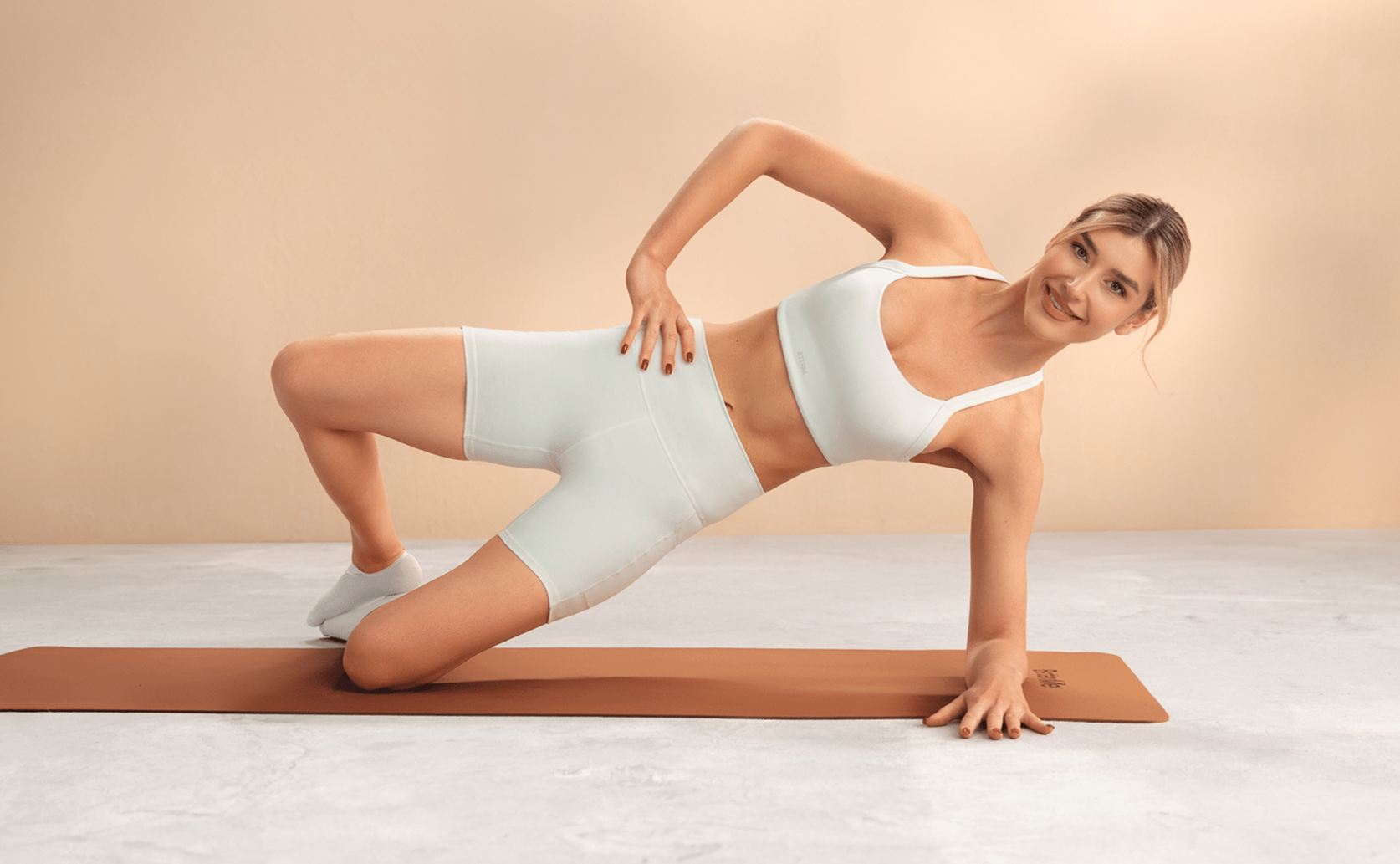
A dynamic warm-up routine is a sequence of active, continuous movements designed to prepare your body for physical activity. By taking your joints through their full range of motion, these warm-up exercises before workout gently increase blood flow, raise your core temperature, and support muscle activation. The best approach depends on your planned activity, but a brief 5-minute warm-up for strength training or cardio is an effective way to improve movement quality and set your session up for success.

Warming up before you train is an essential step for people of all fitness levels. Taking the time to properly transition your body from a resting state to an active one can make a noticeable difference in how you feel. A pre-workout warm-up routine helps with movement preparation and general workout readiness.
If you often skip this step because you are short on time, you are not alone. However, building a consistent habit can help you create a steady routine that you can adjust over time.
This guide will walk you through how to warm up properly with accessible, user-friendly exercises. Keep reading to learn the steps for a complete dynamic flow, and discover how a few minutes of activity can support your overall wellbeing.
Why Dynamic Warm-Ups Work
Understanding the logic behind a dynamic warm-up routine helps clarify why it is so popular. Movement preparation focuses on getting your body ready for the specific demands of your upcoming session (1). This approach relies on active motions rather than holding still.
One common comparison is dynamic stretching vs static stretching. Static stretching involves holding a single position for an extended period. While it helps to increase the range of motion, research shows that prolonged static stretching can impair performance (2).
A dynamic approach involves continuous movement that mimics the exercises you are about to perform. This method promotes blood flow to muscles and supports joint readiness. It also assists with neural priming, which helps your brain communicate effectively with your muscles (3).
Research suggests that active warm-ups can support better movement quality (4). By gently easing into your workout, you reduce the chances of early fatigue and discomfort.
| Feature | Dynamic Warm-Up | Static Stretching |
|---|---|---|
| Movement style | Active and continuous | Still and held |
| Best time to use | Before your workout | After your workout |
| Primary goal | Joint readiness and blood flow | Flexibility and relaxation |
| Muscle activation | High | Low |
| Neural priming | Supported | Not a primary focus |
When You Need a Warm-Up
You may wonder when a muscle activation warm-up is truly necessary. The simple answer is that you should consider warming up before any dedicated physical activity. Whether you are lifting weights, going for a run, or doing household chores, your body appreciates the transition.
Before strength training, a warm-up helps you establish a full range of motion (5). This allows you to perform exercises like squats or presses with better form. A 5-minute warm-up for strength training is often enough to get you started.
If you are going for a run or a brisk walk, an active warm-up prepares your lower body for the repetitive impact. It helps gently stretch the calves, thighs, and hips (6). This can make the first few miles feel much more comfortable.
Even before gentle practices like Pilates or yoga, a brief warm-up is helpful. It allows you to check in with your body and notice any areas of tension. Taking a few minutes to move mindfully sets a positive tone for your entire practice.
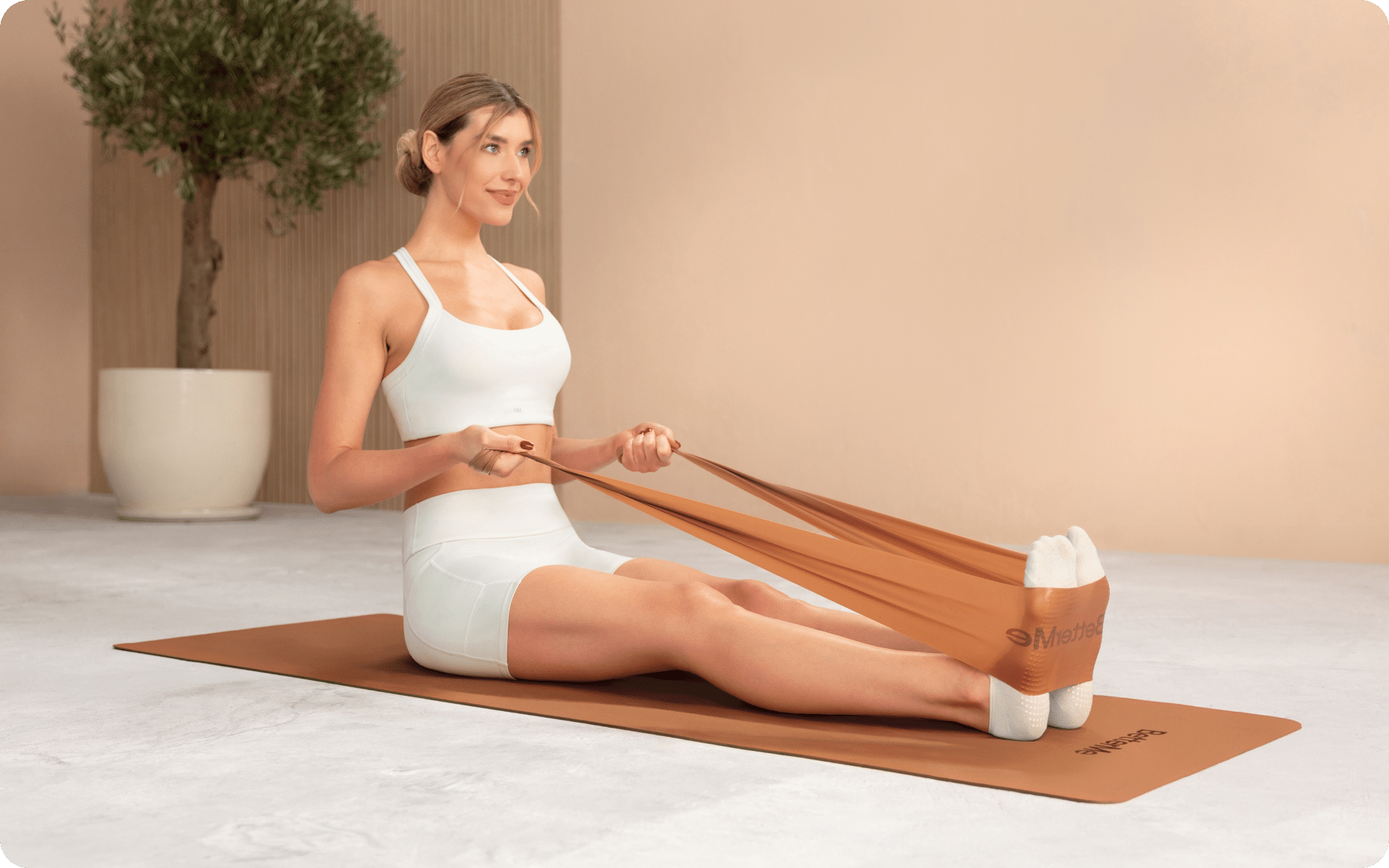
3 Lower-Body Activation Moves
Lower-body exercises form the foundation of most workouts. Preparing your legs and hips is an important part of any dynamic warm-up routine. These moves can be performed with loop and long resistance bands for glute activation and hip mobility.
Lateral Walk
The lateral walk targets your outer glutes and hips. It is a relatively simple move that helps to warm up your lower body. You can perform this with or without a resistance band.
- Stand with your feet hip-width apart and your knees slightly bent.
- Keep your chest up and your core engaged.
- Take a controlled step to your right side.
- Follow with your left foot, returning to the starting stance.
- Repeat for 10–15 steps in one direction, then switch sides.
Monster Walk
This move focuses on waking up your glutes and improving your stability. It mimics a forward and backward walking pattern while maintaining tension in the legs.
- Start in a partial squat position with your feet shoulder-width apart.
- Take a wide step forward and slightly outward with your right foot.
- Follow with your left foot, stepping forward and outward.
- Take 10 steps forward, maintaining the wide stance.
- Reverse the motion by taking 10 steps backward to your starting point.
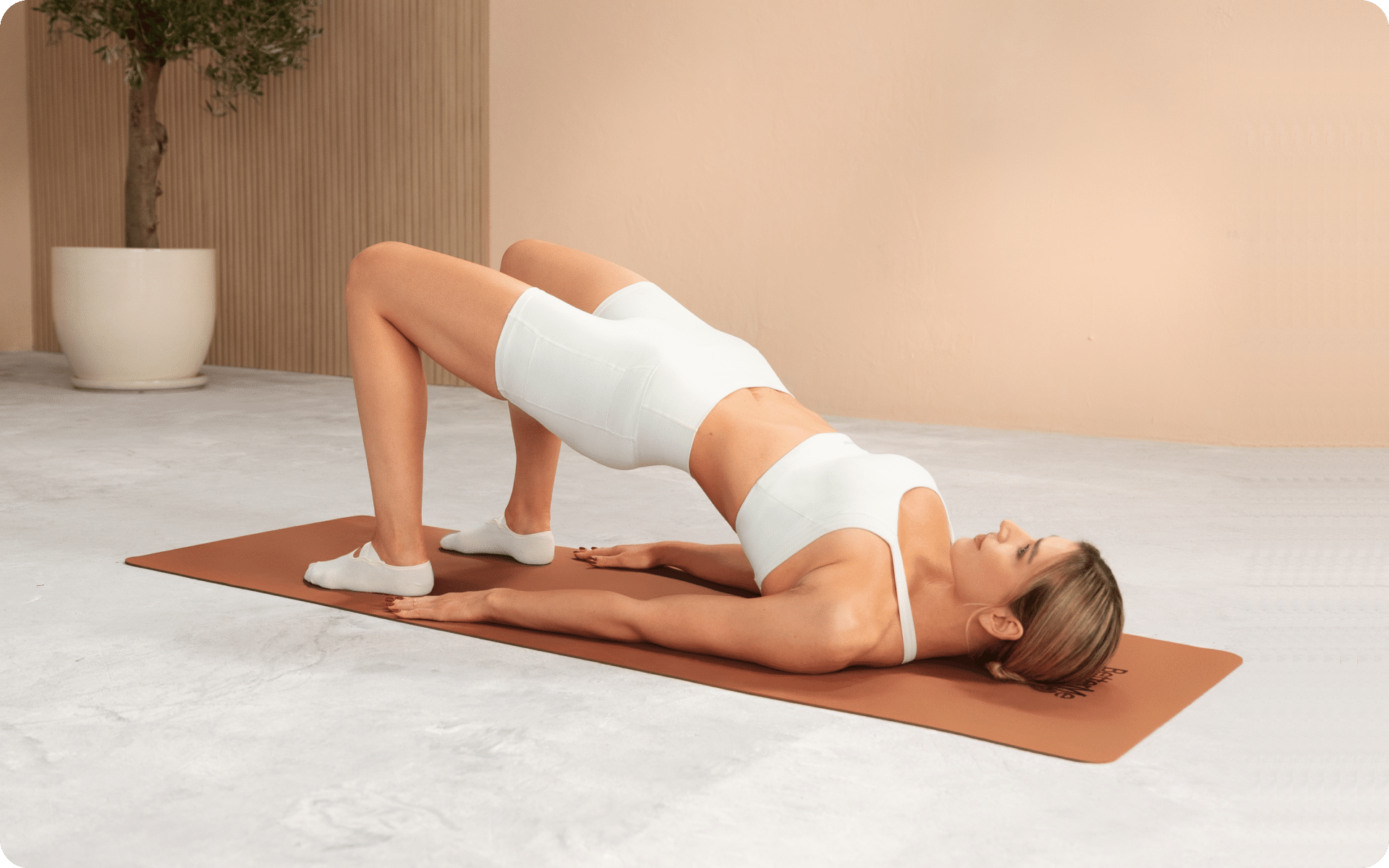
Glute Bridge Pulse
The glute bridge pulse is excellent for deep glute activation. It also gently opens the front of your hips. This move is performed on the floor for extra support.
- Lie on your back with your knees bent and feet flat on the floor.
- Place your arms by your sides with your palms facing down.
- Push through your heels to lift your hips toward the ceiling.
- At the top, pulse your hips down an inch and back up.
- Perform 15–20 continuous pulses before gently lowering your hips.
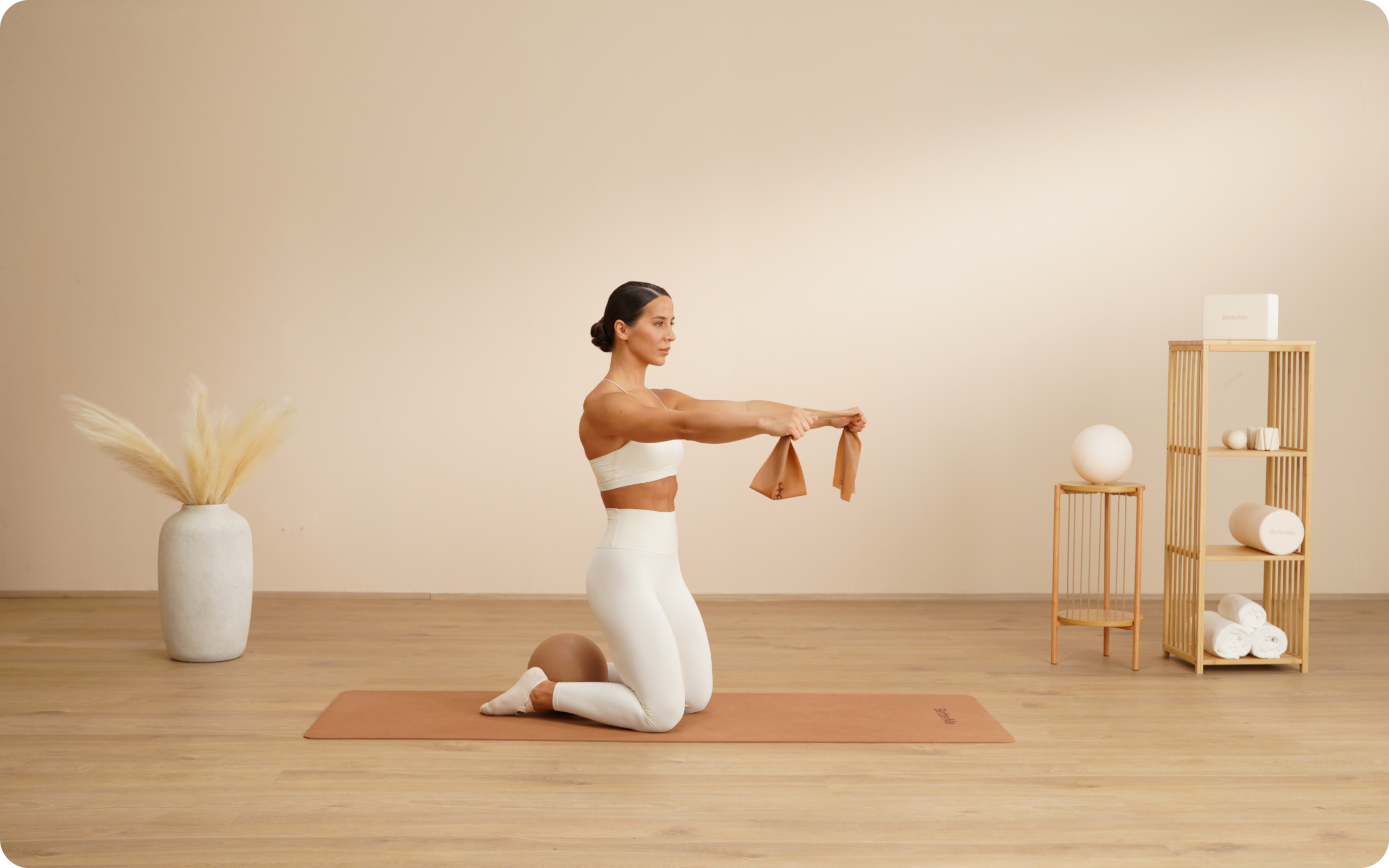
3 Upper-Body Activation Moves
Many people forget to warm up their upper body. However, shoulder activation is crucial for maintaining good posture and supporting functional upper-body movements that we do throughout the day. These moves help open your chest and mobilize your shoulder joints.
Arm Circles
Arm circles are a classic dynamic shoulder warm-up. They require no equipment and are highly effective for joint readiness.
- Stand with your feet comfortably wide and extend your arms to the sides.
- Keep your arms straight and parallel to the floor.
- Begin making small forward circles with your hands.
- Gradually increase the size of the circles over 10–15 seconds.
- Reverse the direction and make backward circles for another 10–15 seconds.
External Rotation
This gentle movement targets the small muscles around your shoulder joint. It is a great way to prepare for pushing or pulling exercises.
- Stand with your arms by your sides and bend your elbows to 90 degrees.
- Keep your elbows tucked tightly against your ribs.
- Slowly rotate your forearms outward as far as comfortable.
- Hold for a brief second to feel the upper back engage.
- Return to the center and repeat for 10–12 controlled reps.
Band Pull-Apart
The pull-apart is a well-known exercise for waking up your upper back. Using a resistance band helps to activate the shoulder muscles.
- Stand tall and hold a light resistance band in front of you with straight arms.
- Keep your hands about shoulder-width apart.
- Squeeze your shoulder blades together and pull the band apart.
- Bring the band all the way to your chest.
- Slowly return to the starting position and repeat 10–12 times.
2 Full-Body Integration Moves
After activating your upper and lower body separately, it helps to bring them together. Full-body integration moves require coordination and balance. They elevate your heart rate and finalize your movement preparation.
Squat to Press
This exercise connects a lower-body squat with an upper-body reach. It is a highly efficient way to build heat in the body due to its ability to use multiple muscle groups at once . You do not need any weights to perform this move effectively.
- Stand with your feet slightly wider than shoulder-width apart.
- Lower your hips back and down into a comfortable squat.
- Keep your chest lifted and your heels flat on the floor.
- As you stand up, extend your arms straight overhead.
- Lower your arms as you drop into the next squat, repeating 10–12 times.
Inchworm on Mat
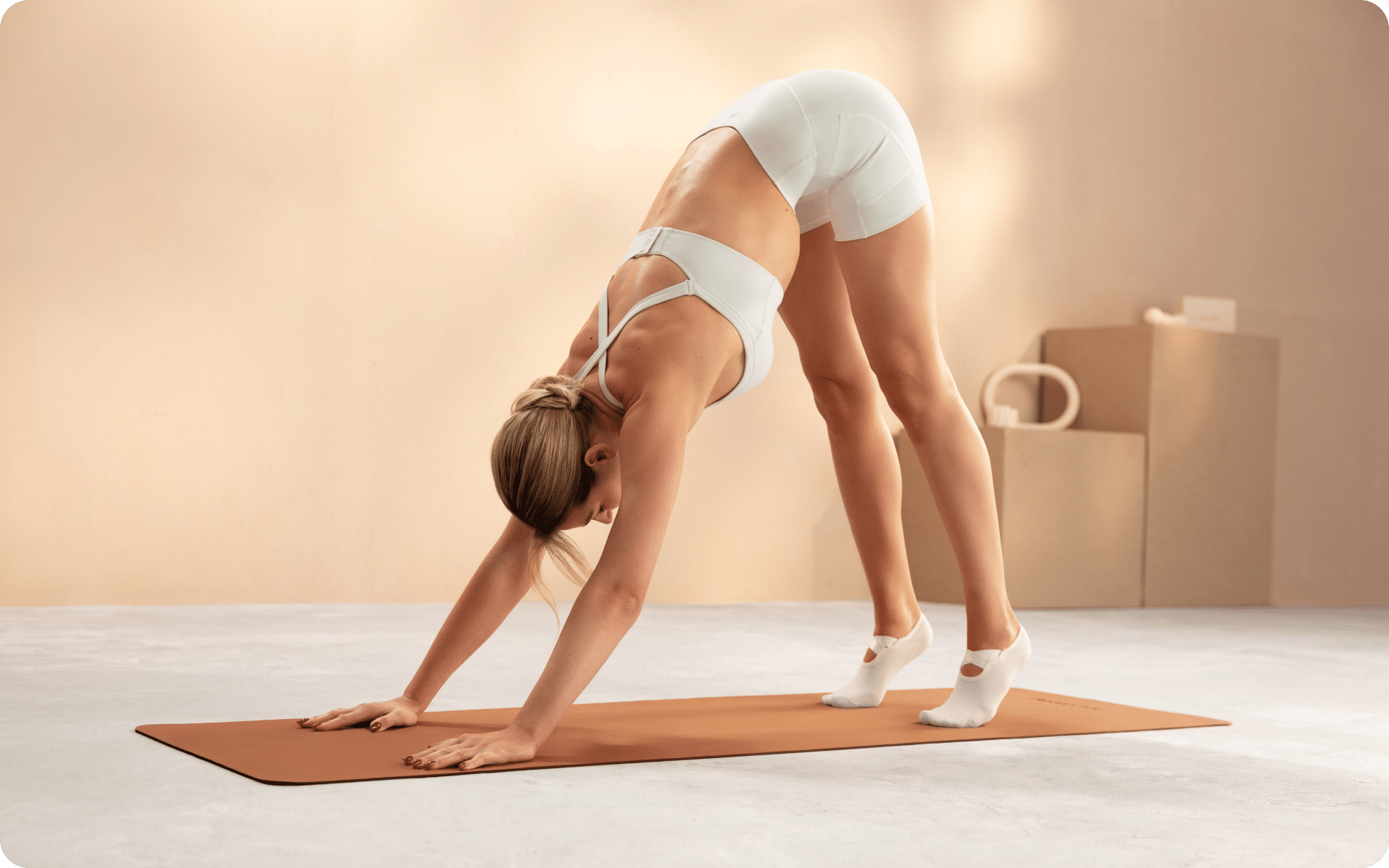
The inchworm is a popular full-body warm-up. It gently stretches your hamstrings while activating your core and shoulders. Using an exercise mat can provide extra comfort for your hands.
- Stand tall at the back edge of your mat.
- Hinge at your hips and place your hands on the floor.
- Slowly walk your hands forward until you reach a high plank position.
- Pause for a moment to engage your core muscles.
- Walk your hands back toward your feet and stand up tall.
The 5-Minute Quick Warm-Up Flow
Putting it all together creates a seamless pre-workout warm-up routine. When you are short on time, you can flow through these exercises back-to-back. This creates an efficient 5-minute warm-up for strength training or general fitness. For exercises like the glute bridge, using a mat can help you feel more comfortable.
Below is a simple guide to organizing your routine.
| Exercise | Target Area | Duration | Why It Matters |
|---|---|---|---|
| Arm circles | Shoulders | 30 seconds | Enhances shoulder joint readiness |
| Pull-apart | Upper back | 30 seconds | Promotes postural awareness |
| External rotation | Shoulders | 30 seconds | Warms up deep shoulder muscles |
| Lateral walk | Outer hips | 60 seconds | Supports lateral stability |
| Monster walk | Glutes | 60 seconds | Activates walking muscles |
| Glute bridge pulse | Deep glutes | 30 seconds | Opens the front of the hips |
| Squat to press | Full body | 30 seconds | Connects upper and lower body |
| Inchworm | Full body | 30 seconds | Stretches hamstrings and wakes up core |
Common Warm-Up Mistakes
Even with the best intentions, it is easy to make a few errors when preparing to exercise. Recognizing these common mistakes can help you get the most out of your dynamic warm-up routine.
One frequent issue is making the warm-up too intense. Your goal is movement preparation, not exhaustion. If you feel tired before your actual workout begins, consider reducing the reps or intensity of your warm-up moves.
Another common mistake is skipping the warm-up entirely. When you are rushed, it is tempting to jump straight into heavy lifting or fast running. However, taking just a few minutes to ease into activity can greatly improve your overall experience.
Finally, many people still rely heavily on static stretching before power work. While holding a stretch feels nice, it does not prepare your muscles to contract quickly. Save the long, still stretches for your cool-down period (7).
Read more: 30-Day Resistance Band Challenge: Build Full-Body Strength at Home
Frequently Asked Questions
How long should a warm-up be before strength training?
A warm-up before strength training generally takes about 5–10 minutes. This timeframe provides enough opportunity to increase your core temperature and wake up your muscles (8). You can adjust the duration based on how stiff or cold you feel that day.
Is dynamic or static stretching a better warm-up?
Dynamic stretching is widely considered a better warm-up choice. It involves continuous movement that mimics your upcoming activity, which helps prepare your joints and muscles (9). Static stretching is often more appropriate for a post-workout recovery routine (7).
Can you warm up every day?
Yes, you can do a gentle warm-up routine every day. Taking your joints through their range of motion is a practical way to support everyday mobility (10). It can be especially helpful if you spend many hours sitting at a desk.
Why is warming up important before exercise?
Warming up is important because it gently transitions your body from rest to activity. It supports increased blood flow, which delivers oxygen to your working muscles. This thoughtful preparation helps improve your movement quality during your session (11).

The Bottom Line
Taking the time to prepare your body is a practical choice that supports your overall fitness journey. A thoughtful dynamic warm-up routine sets a positive tone and prepares you for whatever activity lies ahead. Start small, try these simple moves, and enjoy a more comfortable, effective workout today.
DISCLAIMER:
This article is intended for general informational purposes only and does not serve to address individual circumstances. It is not a substitute for professional advice or help and should not be relied on for making any kind of decision-making. Any action taken as a direct or indirect result of the information in this article is entirely at your own risk and is your sole responsibility.
BetterMe, its content staff, and its medical advisors accept no responsibility for inaccuracies, errors, misstatements, inconsistencies, or omissions and specifically disclaim any liability, loss or risk, personal, professional or otherwise, which may be incurred as a consequence, directly or indirectly, of the use and/or application of any content.
You should always seek the advice of your physician or other qualified health provider with any questions you may have regarding a medical condition or your specific situation. Never disregard professional medical advice or delay seeking it because of BetterMe content. If you suspect or think you may have a medical emergency, call your doctor.
SOURCES:
- Revisiting the ‘Whys’ and ‘Hows’ of the Warm-Up: Are We Asking the Right Questions? | Sports Medicine (2023, link.springer.com)
- Prolonged static stretching increases the magnitude and decreases the complexity of knee extensor muscle force fluctuations (2023, journals.plos.org)
- Dynamic Warm-ups Play Pivotal Role in Athletic Performance and Injury Prevention (2025, sciencedirect.com)
- The Effects of Warm-Up Strategies on Athletic Performance: A Systematic Review (2025, researchgate.net)
- Warming-Up for Resistance Training and Muscular Performance: A Narrative Review (2021, researchgate.net)
- The Effect of Static and Dynamic Stretching during Warm-Up on Running Economy and Perception of Effort in Recreational Endurance Runners (2021, mdpi.com)
- Practical recommendations on stretching exercise: A Delphi consensus statement of international research experts (2025, sciencedirect.com)
- Warm Up, Cool Down | American Heart Association (2024, heart.org)
- Muscle Stretching: Exploring the Impact of Different Modalities on Maximal Range of Motion and Strength with Practical Recommendations (2025, link.springer.com)
- Dynamic Warm-ups Play Pivotal Role in Athletic Performance and Injury Prevention (2020, pmc.ncbi.nlm.nih.gov)
- Revisiting the ‘Whys’ and ‘Hows’ of the Warm-Up: Are We Asking the Right Questions? (2023, link.springer.com)




 Reviewed by