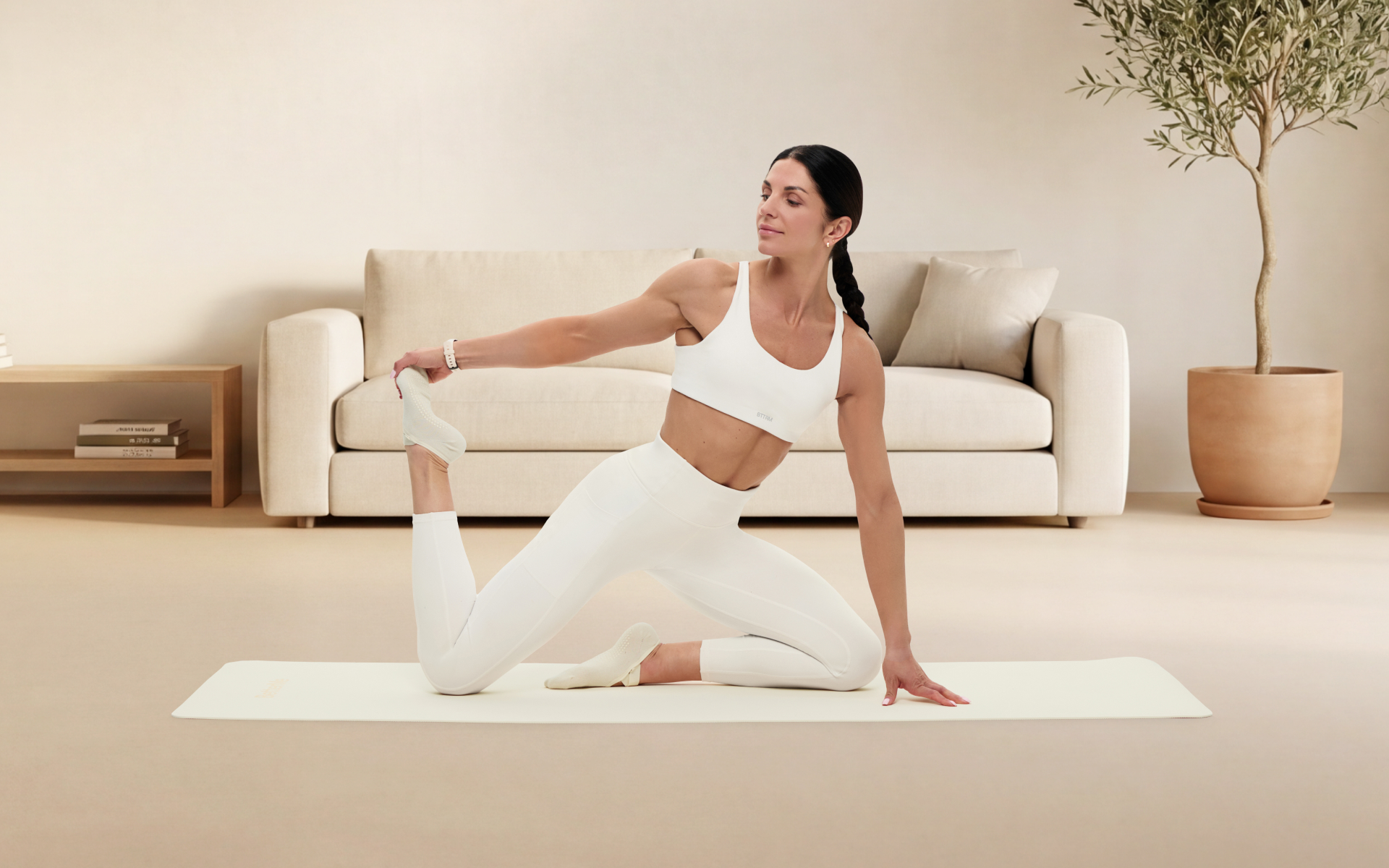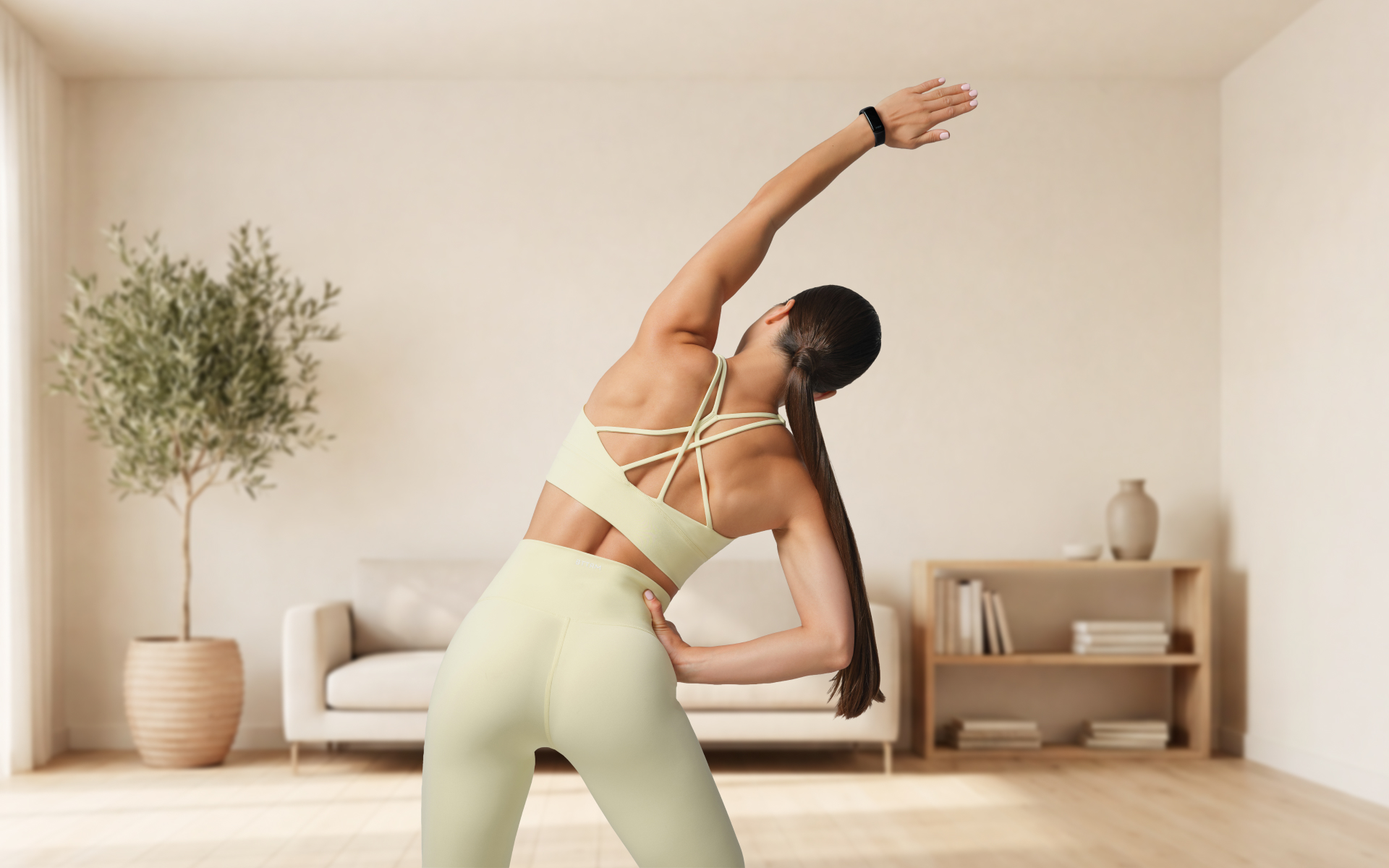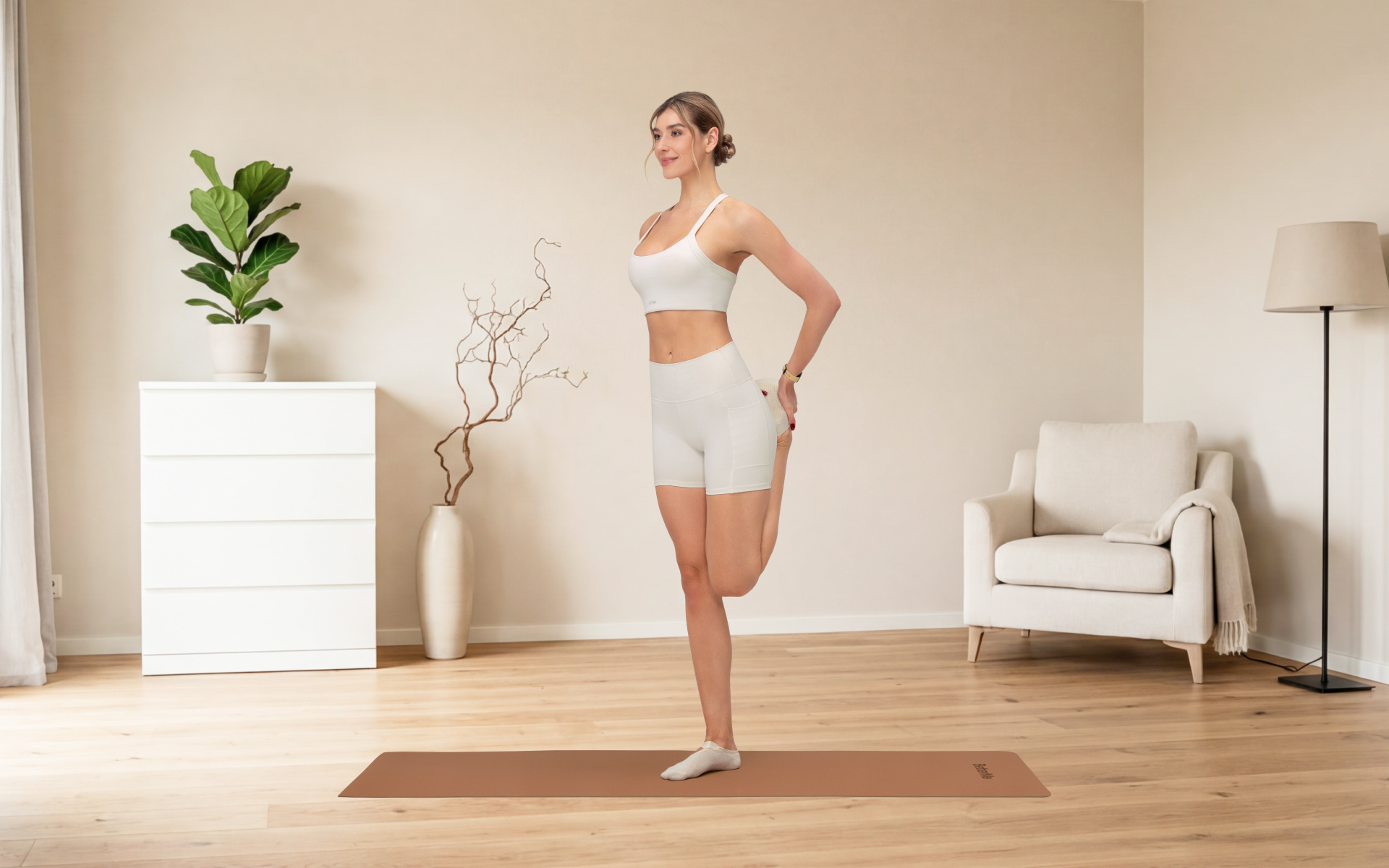
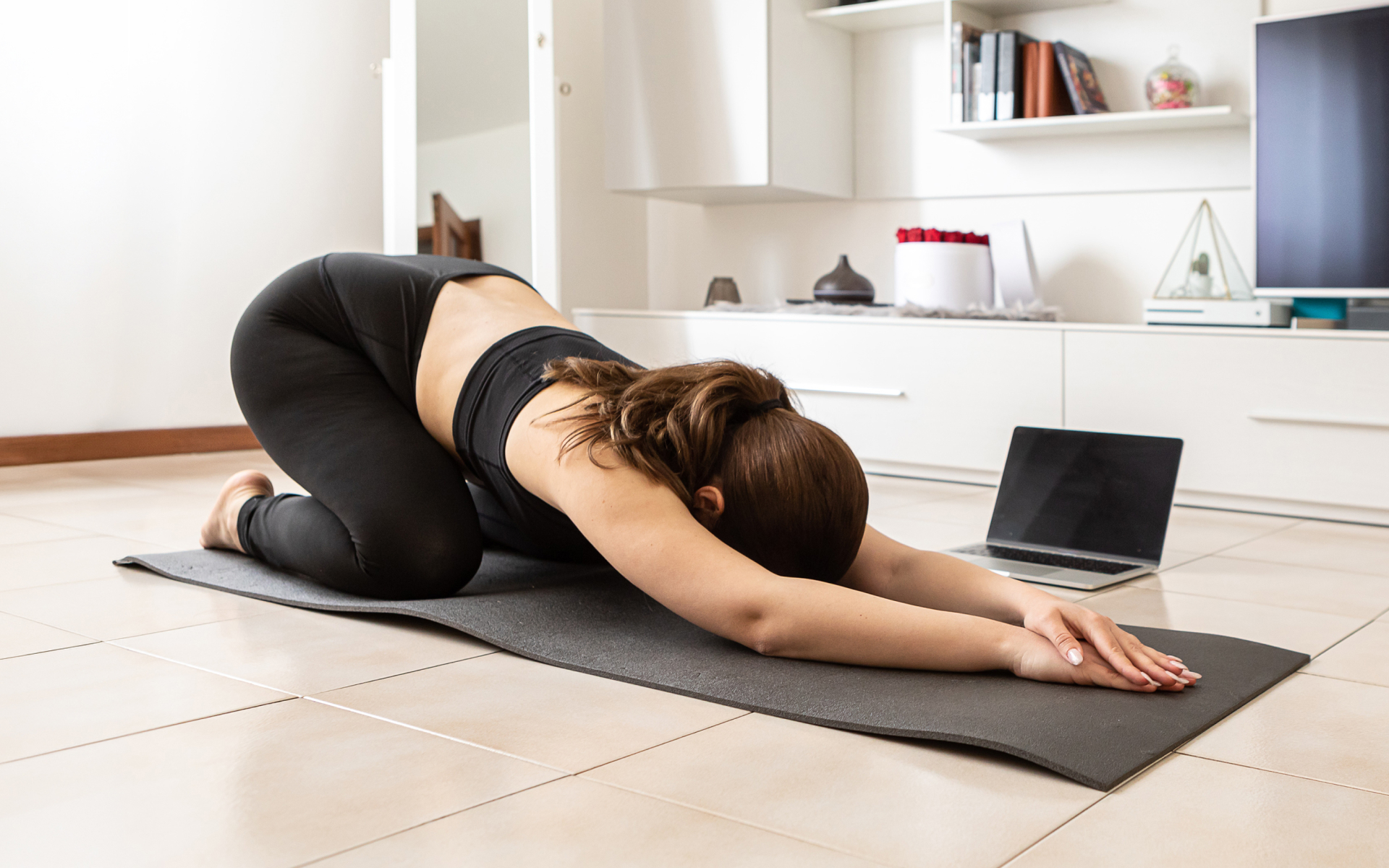
If you’ve ever felt stiff getting out of bed or noticed that reaching for your shoelaces feels like a herculean task, you’re likely experiencing the cumulative effects of sedentary living or repetitive motion. While many view flexibility as a fixed trait, something you either have or you don’t, the reality is that your habits play a major role.
Flexibility and range of motion (ROM) are impacted when the muscles and joints aren’t used through their full capacity or are overused on a regular basis. If left unchecked, this can lead to stiffness, discomfort, and even higher risk of injury, whether you’re an athlete, desk worker, or anyone in between.
Stretching can be a helpful way to support overall well-being. Here, we discuss clear, practical steps for starting a daily stretching routine.
What Is a Balanced Daily Stretching Routine?
A balanced daily stretching routine is a set of carefully selected movements aimed at improving and maintaining your body’s flexibility and joint range of motion (ROM).
Range of motion (ROM) refers to how far a joint can move in all possible directions (1), while flexibility is the ability of a muscle or muscle group to lengthen passively through a range of motion (2). Both are essential for everyday movement, athletic performance, and reducing the risk of injury.
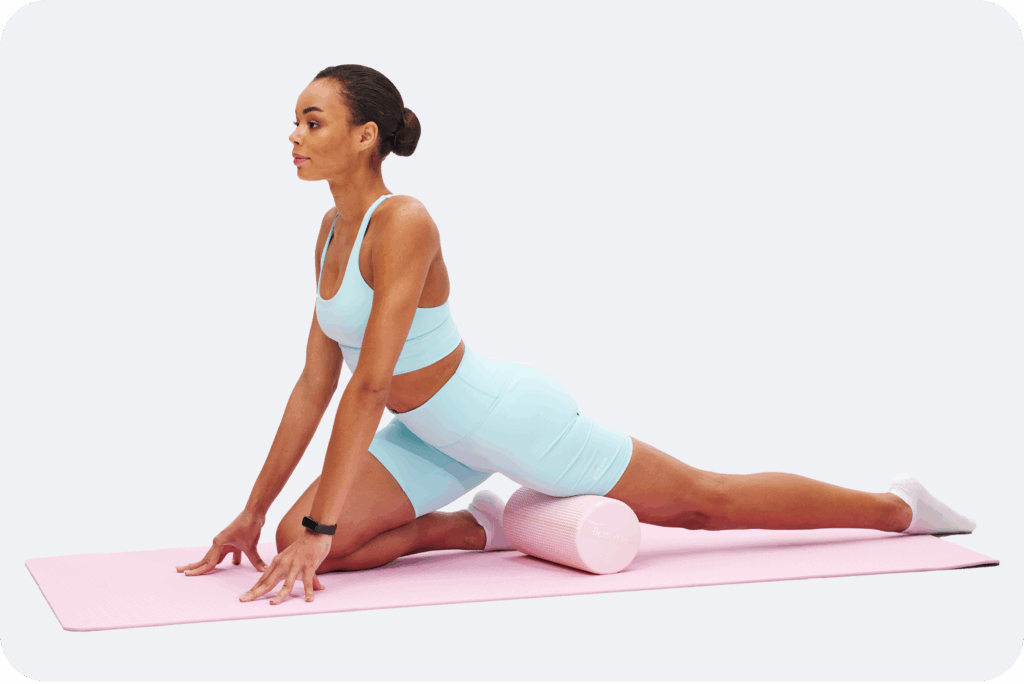
Effective stretching routines should:
- Target the areas of your body that feel most stiff or are prone to tightness (such as the hips, hamstrings, or shoulders).
- Address muscles and joints that are often limited by modern lifestyles – think prolonged sitting, repetitive use, or sport-specific activity.
- Use a mix of static and dynamic stretches:
- Static stretching involves holding a muscle in a lengthened position for a period of time (typically 15-60 seconds).
- Dynamic stretching uses controlled movements to actively take your joints through their full available range of motion.
A well-balanced routine typically includes:
- Movements for both the upper and lower body.
- Stretches that address common joint restrictions (such as limited ankle dorsiflexion or tight hip flexors).
- Low to moderate intensity – enough to create a feeling of gentle tension, not pain. Expect mild discomfort, but never sharp or pinching pain.
Good practice includes holding each stretch for at least 15-30 seconds and aiming for 2-4 total sets per muscle group each week. You can increase weekly volume (total time under tension) as your body adapts.
Remember, the best routine is one you can do consistently.
For beginners, the goal isn’t to force the body into contortionist positions using hard stretches for flexibility, but to signal safety to the nervous system, allowing for gradual relaxation and improved range of motion.
Reasons why BetterMe is a safe bet: a wide range of calorie-blasting workouts, finger-licking recipes, 24/7 support, challenges that’ll keep you on your best game, and that just scratches the surface! Start using our app and watch the magic happen.
Is It a Good Idea to Stretch Every Day?
The short answer is yes, but with a caveat regarding intensity and intent. Stretching daily is beneficial because flexibility is a “use it or lose it” adaptation. A daily, low-intensity routine is superior to a once-a-week intense session for long-term tissue adaptation (3).
Key benefits of stretching daily include (4):
- Improved flexibility: Regular stretching increases the ability of your muscles to lengthen, making movements such as reaching, bending, or squatting smoother and easier over time.
- Increased range of motion: By consistently moving joints through their full range, you reduce stiffness and maintain healthy joint function.
- Better posture and movement quality: Stretching addresses tight areas – such as hip flexors or chest – caused by prolonged sitting or repetitive activities, reducing poor postural habits.
- Reduced muscle tension and soreness: Gentle stretching after exercise or at the end of the day can decrease muscle tightness and help with recovery.
- Stress relief and relaxation: Stretching activates the body’s relaxation response, which can help lower stress and make it easier to unwind.
However, the “no pain, no gain” mentality doesn’t apply here. If you push into pain, you trigger the myotatic reflex (stretch reflex), where the muscle creates a protective contraction to prevent tearing (5). This is considered to be counterproductive.

So, how do you distinguish discomfort from pain? Stretching should create a feeling of mild tension, not sharp or pinching pain. The most sustainable routines use low to moderate intensity and build volume gradually – for example, holding each stretch for at least 15–30 seconds and working up to 2-4 sets for tight muscles each week.
Daily stretching is especially effective when you:
- Focus on muscle groups that are most affected by daily habits (such as the calves, hamstrings, hip flexors, chest, and shoulders)
- Use a mix of dynamic (before activity) and static (after activity or in a cool-down) stretches
- Remain consistent to see steady progress in flexibility and comfort
Stretching intensely or using added resistance daily – such as prolonged loaded stretches – may require recovery days in between, but for many people, gentle daily stretching can be safe and beneficial
Read more: Full-Body Stretching Routine: Benefits, Example Stretches, and More
How to Incorporate Stretching into a Daily Routine
Integrating a daily stretching routine at home requires habit stacking – attaching the new behavior to an established one. The nervous system thrives on predictability.
Optimize Your Timing
While many people look for a morning stretching routine for beginners, the best time is when you can consistently commit 10 to 15 minutes.
- Morning: May be best for relieving muscle stiffness after sleeping. Your body temperature is lower (6), so movements should be gentle and dynamic (7).
- Evening: Best for static stretching. Your body temperature is higher, and your tissues are more compliant (pliable) (8). This is also effective for down-regulating the nervous system before sleep (9).
Environment Matters
You don’t need a gym. A small space on the floor with a yoga mat is sufficient. Eliminate distractions to allow for “interoception” – the sense of the internal state of the body. Focusing on the sensation of the stretch enhances your ability to remain present throughout the movement.
If you’re struggling to find time, consider a “movement snack” approach: perform one stretch for 60 seconds every hour during your workday. This enhances postural variation, which experts recommend for relieving stiffness (10).
Those who are interested in a structured approach to full-body mobility might consider starting with a 10-minute full-body stretch for beginners.
What Is a Good Beginner Friendly Daily Stretching Routine?
This routine is designed to be performed in 8-12 minutes. It requires no equipment other than a comfortable surface. It serves as an excellent daily stretching routine for men who are looking to increase their flexibility and ROM, in addition to a daily stretching routine for women with the same goal.
Program Overview
- Frequency: Daily
- Intensity: 4-6 out of 10 (discomfort is okay, but pain is not)
- Breathing: Deep, diaphragmatic breathing is essential to lower muscle tone
| Exercise order | Exercise name | Target area | Duration / reps | Primary benefit |
|---|---|---|---|---|
| 1 | Mountain pose | Back and posture | 60 seconds | Realigns the spine and establishes a neutral pelvis |
| 2 | Neck and head turn | Neck mobility | 10 reps per side | Helps ease neck stiffness and support more balanced movement. |
| 3 | Head and shoulder stretch | Upper back and neck | 5 reps (15s hold) | Relieves tension from "text neck" and desk work |
| 4 | Lat and upper-back stretch (child's pose) | Lats and upper back | 30 seconds / side | Opens the shoulders and decompresses the spine |
| 5 | Forward-lunge lat stretch | Hip flexors and lats | 30 seconds / side | Counters the effects of prolonged sitting |
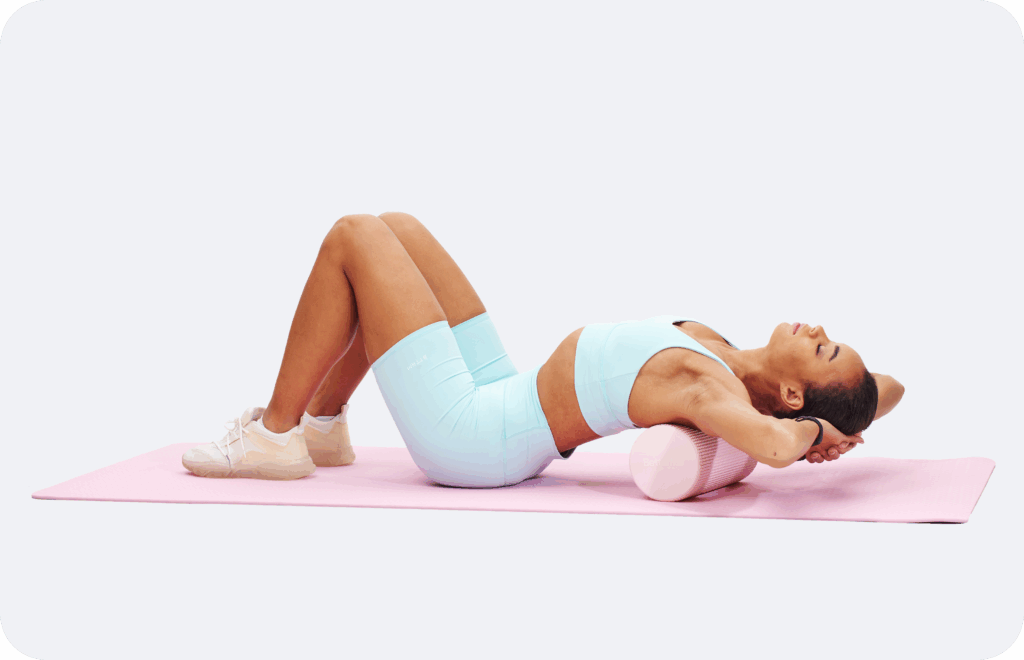
| 6 | Hip internal rotation | Hip abductors | 20 reps | Improves hip mobility and reduces lower-back strain |
| 7 | Forward bend, legs apart | Hamstrings | 20 seconds / side | Lengthens the posterior chain |
| 8 | Seated achilles stretch | Calves and achilles | 20 seconds / side | Relieves lower leg tension and improves ankle mobility |
Exercise Instructions
1. Mountain Pose
This static hold helps you recognize what neutral alignment feels like and may make it easier to notice when you’re slouching.
Execution Steps:
- Stand with your feet together and your arms at your sides.
- Press your weight evenly across the balls and arches of your feet.
- Bring your pelvis to a neutral position. Ensure your hip bones point straight forward, not down or up. Draw your belly in slightly.
- Elongate through your torso. Exhale and release your shoulder blades away from your head, toward the back of your waist.
- Rotate your inner arms outward, turning your palms to face forward.
- Hold this pose for one minute, visualizing your back lengthening toward the ceiling.
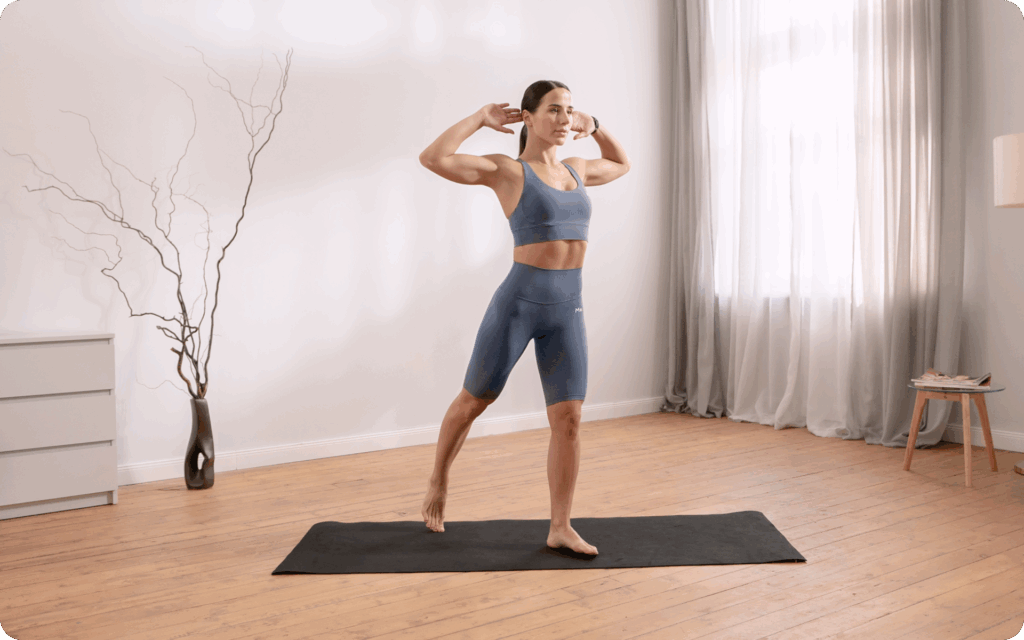
2. Neck and Head Turn
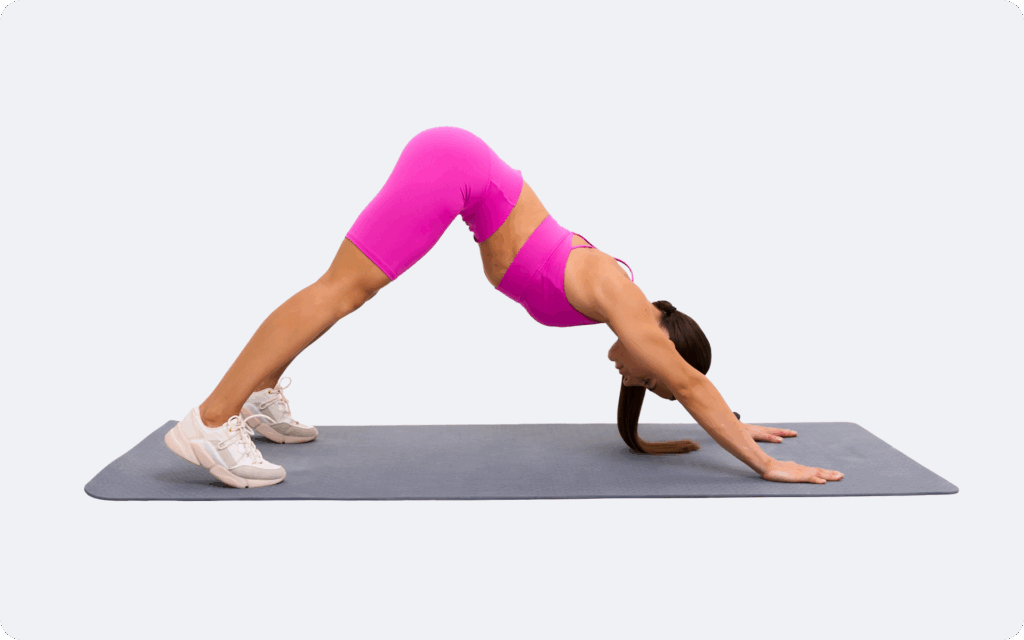
This dynamic movement helps improve neck mobility and support more even movement from side to side.
Execution Steps:
- Sit or stand with a tall, upright posture.
- Turn your head as far to the right as you comfortably can.
- Hold this end range for 15 seconds.
- Turn your head as far to the left as you comfortably can.
- Hold this end range for 15 seconds.
- Return to the starting position and repeat this cycle 10 times.
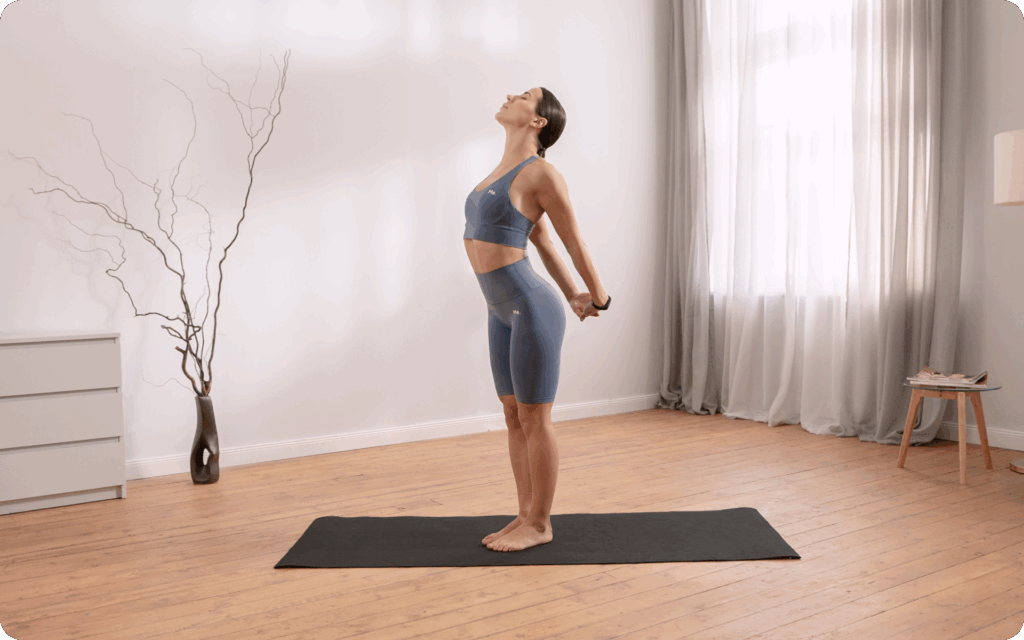
3. Head and Shoulder Stretch
This exercise helps counter the forward-slumping posture that can build up during long periods of sitting.
Execution Steps:
- Stand straight with your hands clasped behind your back.
- Curl your head and shoulders forward, tucking your chin to your chest.
- Maintain this forward curl for 15 seconds.
- Pull your head and shoulders back, pointing your chin toward the ceiling and extending your clasped hands slightly away from your body.
- Hold this extended pose for 15 seconds.
- Repeat these alternating positions five times.
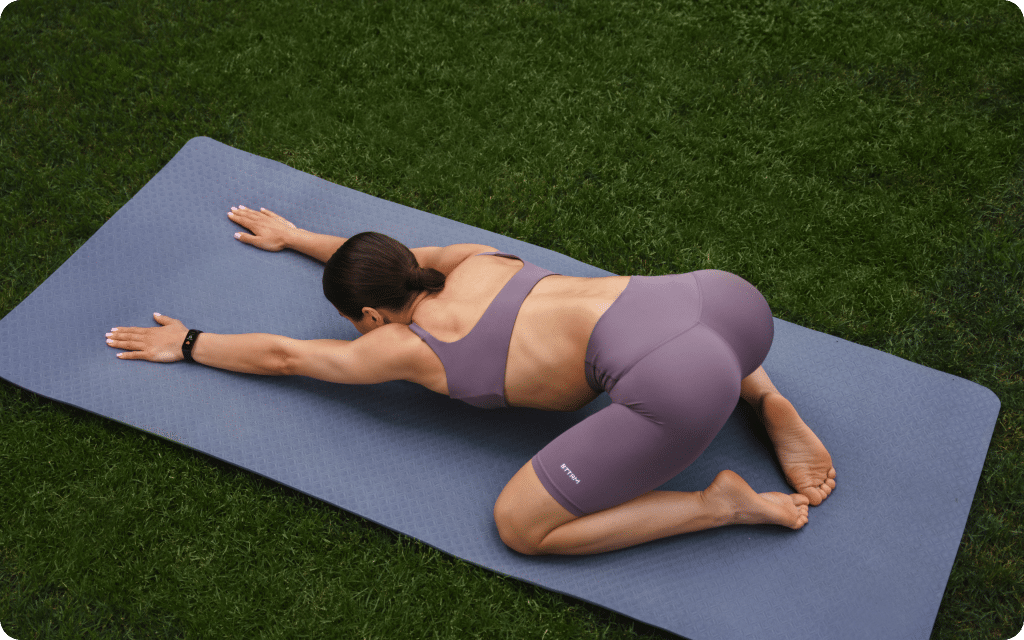
4. Lat and Upper-Back Stretch in Child’s Pose
This variation of a classic yoga pose specifically targets the latissimus dorsi, which can pull the shoulders down and forward if they’re tight.
Execution Steps:
- Kneel on the floor.
- Extend your right arm in front of you on the floor.
- Drop your left shoulder toward the floor and rotate your torso to the right.
- Bring your left arm out to the right side to deepen the stretch.
- Hold this position for 15 seconds.
- Alternate sides and repeat.
5. Forward-Lunge Lat Stretch
This compound stretch lengthens the lats while simultaneously opening the hips and strengthening the lower body.
Execution Steps:
- Start in a wide stance and lower your torso into a wide squat or lunge position.
- Place your palms flat on the floor in front of your hips.
- Lift your left hand over your right hand so it rests beside your right foot.
- Twist your torso toward the right side.
- Hold the position for 30 seconds before switching to the left side.
6. Hip Internal Rotation
Internal rotation is often neglected in standard daily stretching routines for beginners, but it’s crucial for hip joint health.
Execution Steps:
- Lie on your back with both knees bent and your feet placed apart on the floor.
- Keeping your feet planted, slowly bring your knees together until they touch (or as close as they can go).
- Return to the starting position with your knees apart.
- Repeat this opening and closing motion 20 times.
Whether you’re a workout beast or just a beginner making your first foray into the world of fitness and dieting – BetterMe has a lot to offer to both newbies and experts! Install the app and experience the versatility first-hand!
7. Forward Bend, Legs Staggered
This targets the hamstrings individually, which is often more effective than stretching both at once if you have asymmetries.
Execution Steps:
- Stand straight and step your right foot forward, keeping both feet pointed ahead.
- Bend forward at the waist, keeping your back relatively straight initially.
- Reach your hands down to hold your right ankle.
- Gently pull your torso lower toward the floor.
- Hold this position for 20 seconds.
- Release carefully and switch legs.
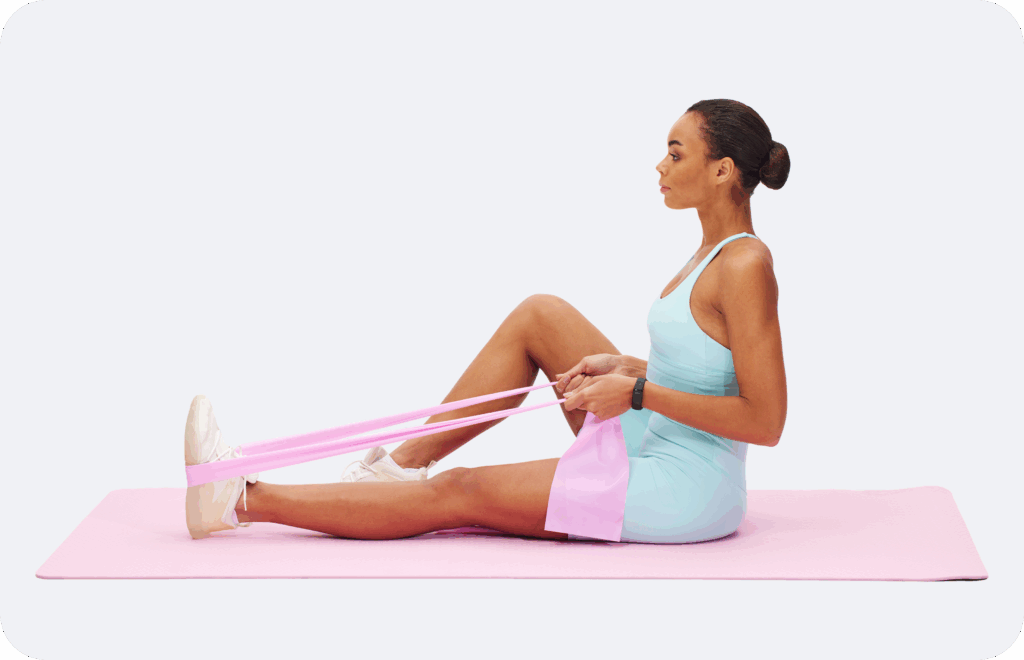
8. Seated Achilles Stretch
Tight calves can affect everything from your gait to your squat depth.
Execution Steps:
- Begin seated on the floor with your left leg outstretched and your right leg bent inward (foot against left inner thigh).
- Lean forward and grab the toes of your outstretched left leg with your left hand.
- Pull back on your toes to intensify the stretch in the calf and Achilles tendon.
- Hold for 20 seconds.
- Repeat on the right leg.
Those who are looking for more variety can explore other options for a comprehensive stretching exercise for beginners.
What Are Some Stretches You Should Do Every Day?
While the routine above is comprehensive, if you’re pressed for time, there are “non-negotiable” movements. These target the areas most affected by modern lifestyle factors such as sitting and smartphone usage.
1. Chest Openers
To counteract the hunching of desk work. The head and shoulder stretch or a simple doorway pectoral stretch is essential.
Head and Shoulder Stretch Steps:
- Stand tall with your feet hip-width apart and clasp your hands behind your back.
- Curl your head and shoulders forward, bringing your chin to your chest and rounding your upper back.
- Hold for 15 seconds, focusing on stretching the back of your neck and upper back.
- Next, pull your head and shoulders gently back, lifting your chin toward the ceiling and extending your clasped hands behind you.
- Hold this position for 15 seconds.
- Repeat both positions 3-5 times, breathing deeply.
Doorway Pectoral Stretch Steps:
- Stand in a doorway with your forearm against the doorframe and your elbow at shoulder height.
- Step one foot forward and gently lean your chest through the doorway, feeling the stretch in your chest and the front of your shoulder.
- Hold for 20-30 seconds, then switch arms.
2. Hip Flexor Extension
Sitting shortens the iliopsoas muscles. A lunge stretch, such as the forward-lunge lat stretch, can be a helpful daily option for easing tightness from prolonged sitting.
Forward-Lunge Lat Stretch Steps:
- Begin in a standing position with your feet hip-width apart.
- Take a long step forward with your right foot, lowering into a lunge so your right knee is directly above the ankle.
- Place both hands on the floor inside your right foot for support.
- Reach your left arm overhead, stretching it toward the ceiling to open up through the hip and side body.
- Hold for 30 seconds while deepening the stretch by gently pushing your hips forward.
- Repeat on the opposite side.
3. Back Decompression
Hanging from a bar or performing child’s pose allows the intervertebral discs to rehydrate and relieves pressure.
Child’s Pose Steps:
- Start on your hands and knees, with your big toes touching and your knees wide apart.
- Sit your hips back toward your heels as you extend your arms forward on the floor.
- Rest your forehead on the mat, allowing your chest to sink gently between your thighs.
- Hold for 30-60 seconds, breathing slowly and feeling your back lengthen with each exhale.
Bar Hang Steps:
- Find a sturdy pull-up bar and grip it with both hands, your palms facing away from you.
- Allow your feet to lift off the ground (bend your knees if the bar is low), letting your body hang freely.
- Feel your shoulders and back gently stretch as gravity decompresses your back.
- Hang for 10-30 seconds, avoiding any swinging.
Occasionally, advanced practitioners might suggest hard stretches for flexibility such as the splits or deep backbends. However, these should be reserved for when you’ve established a solid baseline of mobility.
For daily maintenance, consistency in basic movements yields better results than sporadic intensity.
Read more: Somatic Flexibility Technique: Stretching to Release Tension and Build Self-Awareness
How Soon Can Stretching Show Results?
Patience is a physiological necessity. The timeline for results depends on the type of adaptation you’re looking for.
- Immediate (Acute): You’ll feel looser or more relaxed immediately after stretching. This response is largely tied to how your body relaxes during stretching, which may help muscles feel less tense (11).
- Short-Term (2-4 Weeks): With a daily stretching routine for flexibility, you’ll notice a decrease in resting muscle tension. You may find it easier to adopt correct posture without fatigue (12). This is due to “sensory-motor remembering” – you’re retraining the nervous system (13).
- Long-Term (6-8 Weeks+): Structural changes in the muscle and connective tissue (fascia) begin to occur. Research suggests that consistent stretching over several weeks may support longer-term improvements in flexibility (12, 14).
Don’t be discouraged if you don’t see tangible results within the first week. Connective tissue is highly resilient and changes slowly.
What Happens if You Stretch Every Day for 30 Days?
Committing to a daily stretching routine for beginners for 30 days can lead to noticeable changes for some people.
- Postural awareness and variation: You’ll develop a sharper awareness of your body in space. You’ll catch yourself slouching sooner and correct it. You’re more likely to vary your posture throughout the day.
- Enhanced Circulation: Stretching improves blood flow to the muscles, which helps with recovery and reduces soreness from other activities (4).
- Mental Clarity: The focus that’s required for a proper morning stretching routine for beginners acts as a form of mindfulness, reducing cortisol levels and preparing the mind for the day (15).
For a deeper dive into the physiological advantages of this practice, you can read more about the benefits of stretching.
What Are Some Common Stretching Mistakes to Avoid as a Beginner?
Even with a perfect daily stretch routine for flexibility, execution errors can hinder progress or cause injury.
1. Bouncing (Ballistic Stretching)
Bouncing at the end of a stretch triggers the stretch reflex. This causes the muscle to contract to protect itself, which is the exact opposite of what you want (16). Move into the stretch slowly and hold it statically.
2. Holding Your Breath
Breathing is your remote control for the nervous system. Holding your breath can make your body feel more tense, which may make the stretch less effective (17). It can help to breathe deeply and rhythmically to engage the parasympathetic (rest and digest) nervous system, which allows muscles to relax (18).
3. Stretching Cold Muscles Intensely
While gentle mobility is fine cold, deep static stretching on completely cold muscles can increase the risk of strain (19). If you’re doing a deep daily stretching routine at home, do a few jumping jacks or walk in place for 2 minutes to raise your tissue temperature first.
4. Ignoring Asymmetry
It is common to be tighter on one side. Don’t force the tight side to match the flexible side immediately. Acknowledge the difference and perhaps spend a little extra time (gentle time) on the restricted side.
5. Focusing on “The Look” rather than “The Feel”
Don’t worry about what the pose looks like or if you match the picture. Focus on the sensation of the stretch in the target muscle belly (the middle of the muscle), not the joint. If you feel pain in the joint, back off immediately.
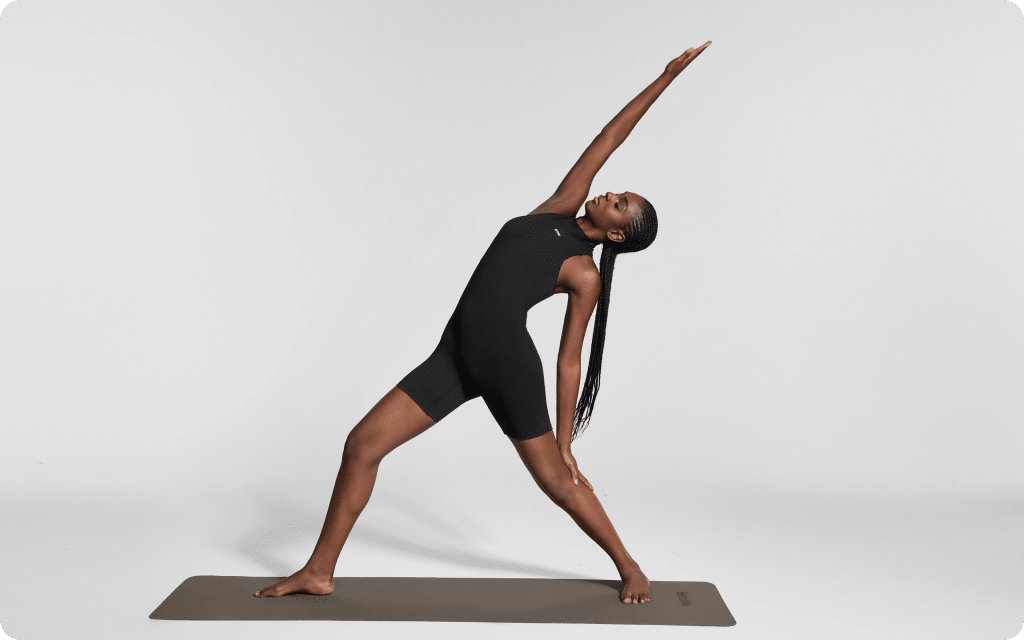
10 minutes of daily stretching may help reduce feelings of stiffness, improve resting posture, and enhance blood flow. It may help your body relax, reduce the buildup of everyday tension, and support easier movement over time (15). They serve different purposes and should not be compared as “better”. Walking provides cardiovascular benefits and low-impact dynamic movement, while stretching specifically targets muscle length and joint range of motion. For optimal well-being, a combination of both is superior to either alone. The postural muscles that fight gravity all day benefit the most. These include the calves, hamstrings, hip flexors, pecs, and the muscles in the lower back and neck. These areas are most prone to shortening due to sedentary habits and stress reflexes (20). Signs may include sharp discomfort during the stretch, joint discomfort that lingers after the session, or a sudden popping sensation followed by temporary puffiness. Soreness that lasts more than 24 hours after a stretching session may also be an indicator that the tissue was pushed beyond its current capacity. You can stretch in the morning, but you should avoid aggressive, deep static stretching immediately after waking. Your spinal discs are hydrated and swollen from sleep (21), which makes them more vulnerable to pressure, and your body temperature is low (6). Morning routines should focus on gentle, dynamic mobility rather than deep flexibility work.Frequently Asked Questions
What can 10 minutes of daily stretching do to your body
Which is better, stretching or walking?
Which muscles benefit most from stretching?
What are some signs of overstretching?
Why shouldn’t you stretch in the morning?
The Bottom Line
Building a daily stretching routine is an investment in your physical longevity. It’s not about achieving gymnastic feats, but about maintaining the functional freedom to move through life without restriction or strain.
By understanding the connection between your brain and your muscles, and by respecting your body’s limits, you may help you move with more ease over time and move with renewed ease. Start with these eight exercises, remain consistent, and let your body rediscover its natural range of motion as your reward.
DISCLAIMER:
This article is intended for general informational purposes only and does not serve to address individual circumstances. It is not a substitute for professional advice or help and should not be relied on for making any kind of decision-making. Any action taken as a direct or indirect result of the information in this article is entirely at your own risk and is your sole responsibility.
BetterMe, its content staff, and its medical advisors accept no responsibility for inaccuracies, errors, misstatements, inconsistencies, or omissions and specifically disclaim any liability, loss or risk, personal, professional or otherwise, which may be incurred as a consequence, directly or indirectly, of the use and/or application of any content.
You should always seek the advice of your physician or other qualified health provider with any questions you may have regarding a medical condition or your specific situation. Never disregard professional medical advice or delay seeking it because of BetterMe content. If you suspect or think you may have a medical emergency, call your doctor.
SOURCES:
- Range of Motion (2020, sciencedirect.com)
- What is Flexibility? (2019, mhcc.pressbooks.pub)
- Practical recommendations on stretching exercise: A Delphi consensus statement of international research experts (2025, sciencedirect.com)
- Biomechanical, Healing and Therapeutic Effects of Stretching: A Comprehensive Review (2023, mdpi.com)
- Stretch Reflex (2014, sciencedirect.com)
- Human Body Temperature Circadian Rhythm in Health and Disease (2023, intechopen.com)
- Effects of Different Amounts of Dynamic Stretching on Musculotendinous Extensibility and Muscle Strength (2024, mdpi.com)
- Circadian Regulation for Optimizing Sport and Exercise Performance (2025, mdpi.com)
- A scoping review of the effect of chronic stretch training on sleep quality in people with sleep disorders (2024, pmc.ncbi.nlm.nih.gov)
- Postural Variability in Sitting: Comparing Comfortable, Habitual, and Correct Strategies Across Chairs (2025, mdpi.com)
- Acute and Chronic Effects of Static Stretching on Neuromuscular Properties: A Meta-Analytical Review (2023, mdpi.com)
- Muscle Architecture Adaptations to Static Stretching Training: A Systematic Review with Meta-Analysis (2023, link.springer.com)
- Sensorimotor (n.d., taylorandfrancis.com)
- Mechanisms Underlying Range of Motion Improvements Following Acute and Chronic Static Stretching: A Systematic Review, Meta-analysis and Multivariate Meta-regression (2025, pmc.ncbi.nlm.nih.gov)
- Affective responses to stretching exercises: Exploring the timing of assessments (2023, sciencedirect.com)
- Muscle Stretching: Exploring the Impact of Different Modalities on Maximal Range of Motion and Strength with Practical Recommendations (2025, link.springer.com)
- Red Light Reflex (2018, somaticmovementcenter.com)
- Parasympathetic Nervous System (PSNS) (2022, my.clevelandclinic.org)
- Increased risk of muscle tears below physiological temperature ranges (2016, pmc.ncbi.nlm.nih.gov)
- Musculoskeletal pain and sedentary behaviour in occupational and non-occupational settings: a systematic review with meta-analysis (2021, link.springer.com)
- Diurnal Variation in Hydration of the Cervical Intervertebral Disc Assessed Using T2 Mapping of Magnetic Resonance Imaging (2022, pubmed.ncbi.nlm.nih.gov)

 Reviewed by