
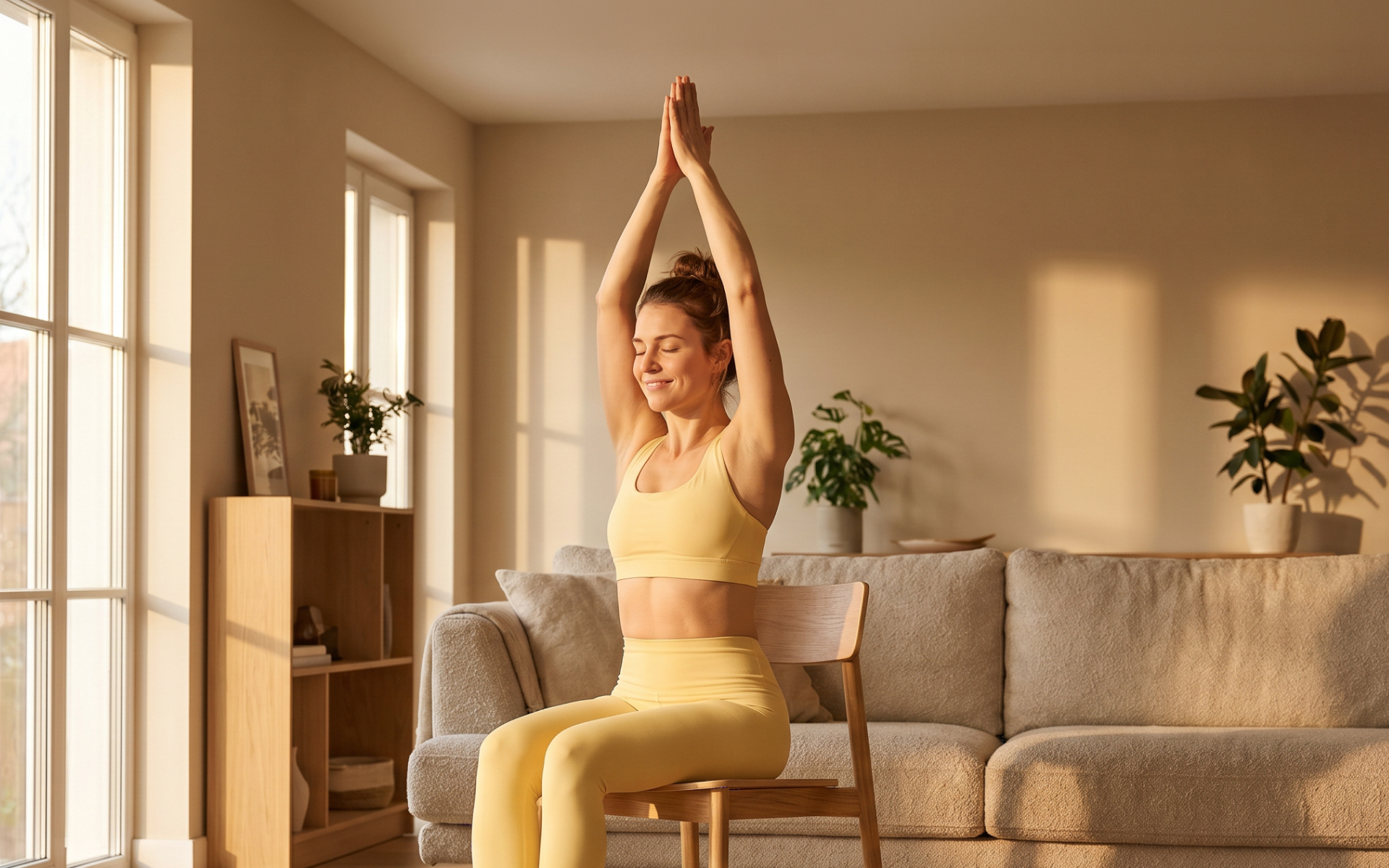
The yoga hands on head pose embodies the principles of lightness and expansion. When it’s modified for seated practice, it can be adapted for different mobility level.
In yoga tradition, this pose is often associated with prana, or life force energy, and with awareness of the heart and crown chakras. These energy centers, associated with clarity and compassion, can be subtly engaged as the arms extend overhead.
For those who are new to yoga or seeking a seated alternative, this pose provides a gateway into mindful movement.
In this article, I’ll guide you step-by-step on performing Urdhva Hastasana in a chair, focusing on alignment, breathing, and inner awareness.
What Is the Yoga Pose with Hands over Head?
The pose with hands raised overhead is known as Urdhva Hastasana in Sanskrit, which translates as “upward salute”. When practiced in a chair, this sitting yoga pose can be adapted for different comfort levels while still emphasizing posture, breathing, and awareness. Despite its apparent simplicity, this pose holds profound significance in yoga. It’s a foundational posture (asana) that embodies both physical and energetic alignment.
When practiced on its own or as part of a seated flow in chair yoga, it serves as a bridge between grounding and elevating forces within the body.
Sanskrit Roots and Symbolism
The name Urdhva Hastasana comes from two Sanskrit words. Urdhva means “upward” and Hasta refers to the “hands”. Together, they describe the graceful action of extending the arms above the head, aligning the body vertically as if reaching toward infinity.
Symbolically, this upward movement represents a connection to higher awareness and aspiration, bridging the physical and the spiritual.
This asana often acts as a gateway to cultivating awareness of prana, or life force energy, which flows within the body. By lifting the arms, you open the space across your chest, ribs, and spine, which facilitates freer breathing and optimizes the flow of energy upward through the spine.
Chakral Connection
The term chakra is Sanskrit for “wheel” or “disk”, referring to energy centers within the body that influence physical, emotional, and spiritual well-being.
These centers are believed to correspond to specific areas along the spine, starting at the base (the root chakra) and extending to the crown of the head. Each chakra governs particular aspects of our health and consciousness, and keeping them balanced is often a goal in yoga practice.
Chakras are more than abstract concepts. They serve as a framework to understand how energy (prana or life force) flows within us, affecting our overall harmony. When a pose engages a chakra, it often both stimulates and balances the energy associated with that center.
Energetically, Urdhva Hastasana has a significant connection to the heart chakra (Anahata) and the crown chakra (Sahasrara).
The heart chakra, which is located in the center of the chest, is linked to compassion, connection, and inner balance. The crown chakra, which is situated at the top of the head, is associated with spiritual awakening and clarity.
By extending your hands upward, practitioners may use the pose as a way to bring attention to these areas.
BetterMe Well-Being Coach app helps you achieve your body goals with ease and efficiency by helping to choose proper meal plans and effective workouts. Start using our app and you will see good results in a short time.
Principles of Alignment
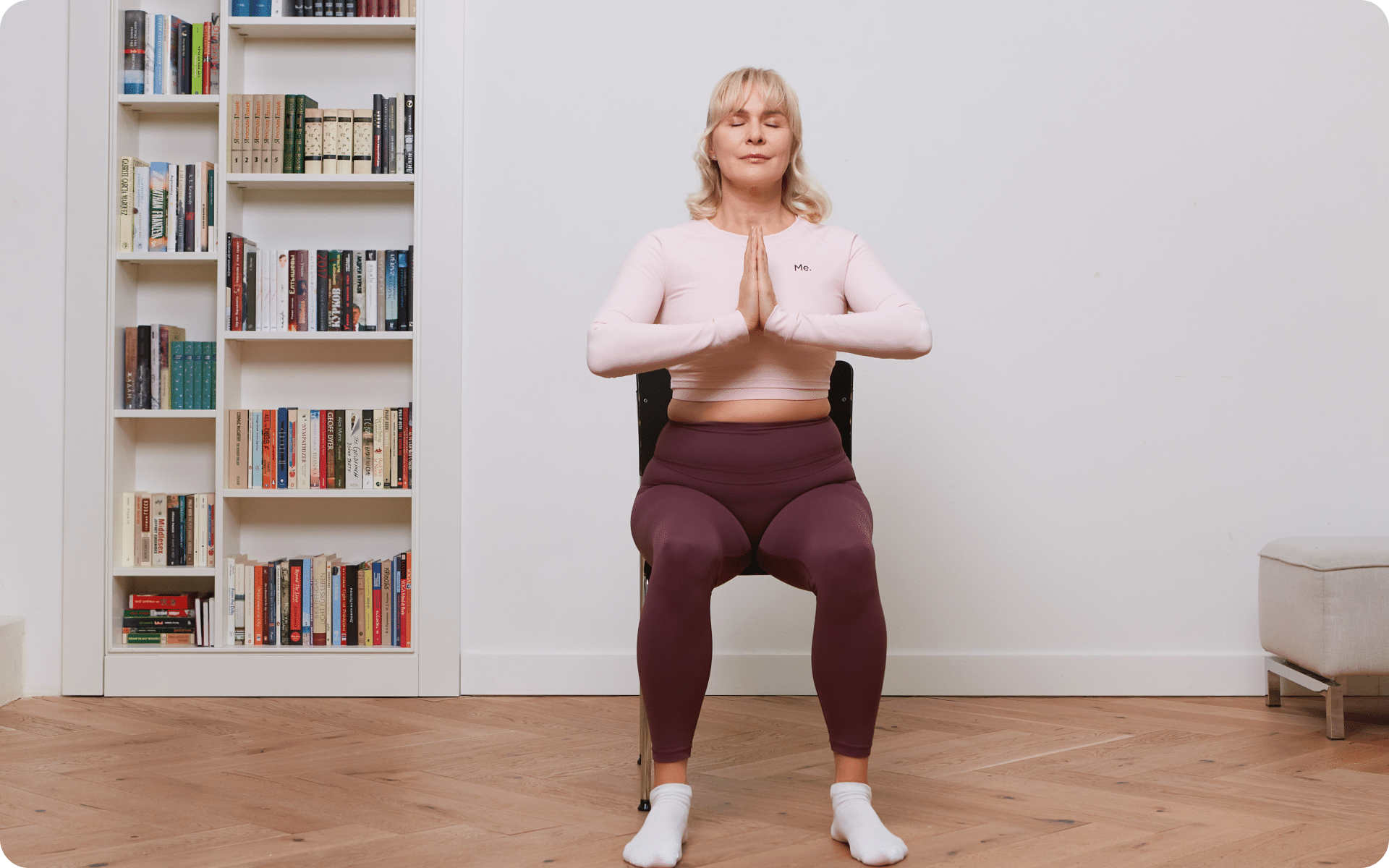
From a physical standpoint, Urdhva Hastasana invites spinal elongation, shoulder mobility, and core engagement. It encourages a straight, upright posture, essential in modern lifestyles where prolonged sitting often contributes to slouched shoulders and compressed spines.
When performed in chair yoga, the emphasis on alignment ensures that mobility challenges are met without sacrificing the integrity of the pose.
Key alignment principles include grounding your sit bones into the chair, keeping your spine lengthened, and reaching upward without collapsing through the ribcage. While the arms stretch skyward, the shoulders should relax away from the ears, fostering lightness rather than tension.
Breath and Awareness
Breath is deeply integral to this pose. The slow, intentional breathing used here shares similarities with meditation breathing techniques that encourage focus and relaxation. Urdhva Hastasana often utilizes an inhale during the upward motion of the arms, bringing a sense of expansiveness and lightness.
Awareness of breathing ties into the philosophical principle of sthira sukham asanam from the Yoga Sutras of Patanjali, which suggests that every posture should balance stability (sthira) with ease (sukha).
This balance is vital in Urdhva Hastasana, where the grounded base supports a light, effortless reach.
How to Do Hands on Head Chair Yoga Pose Correctly?
- Find Your Foundation
Begin by sitting upright in a sturdy chair with a flat seat, preferably without armrests. Place your feet flat on the floor, hip-width apart. Ensure your knees are directly above your ankles, forming a 90-degree angle to support stability. Press your sit bones (the bony points beneath your pelvis) firmly into the chair without slouching. - Engage Your Core and Lengthen Your Spine
Activate your core muscles slightly to support your lower back and avoid collapsing into the chair. Imagine a thread pulling the crown of your head toward the ceiling, elongating your spine. Avoid overarching your lower back – aim for a gentle, natural curve. - Position Your Shoulders and Chest
Keep your shoulders relaxed but open. Roll them gently back and down to create space in your chest. This action also minimizes shoulder tension, ensuring more freedom of movement. - Raise Your Arms with Intention
On an inhale, slowly lift both arms overhead. Keep your movements deliberate and synchronized with your breath. Your arms should extend straight with palms facing inward (or lightly touching if comfortable). Keep your elbows soft rather than locking them. - Maintain Alignment in the Upper Body
Ensure your shoulders stay down and away from your ears as your arms lift. This prevents strain on the neck and promotes ease of movement. Your chest should remain open, and your ribcage should avoid flaring forward, which can destabilize your posture. - Engage Awareness and Breathe
Focus on your breathing. Continue inhaling deeply through your nose as you extend upward, feeling the ribs expand sideways and upward. On the exhale, maintain the length in your spine, drawing your navel slightly inward for core support. Aim for steady, even breaths. - Pause and Embody the Stretch
Hold the posture for a few deep breaths. Imagine energy flowing up your spine, through your torso, and out through your fingertips. Feel the lightness in your arms and the grounding through your sit bones simultaneously. - Return with Control
To release, exhale as you slowly lower your arms back to your sides. Avoid rushing the movement. Take a moment to notice any subtle sensations in the body before transitioning to the next pose.
Read more: 7 Great Seniors’ Chair Yoga Exercises for Any Fitness Level
Common Mistakes to Avoid
- Slouching in the Chair
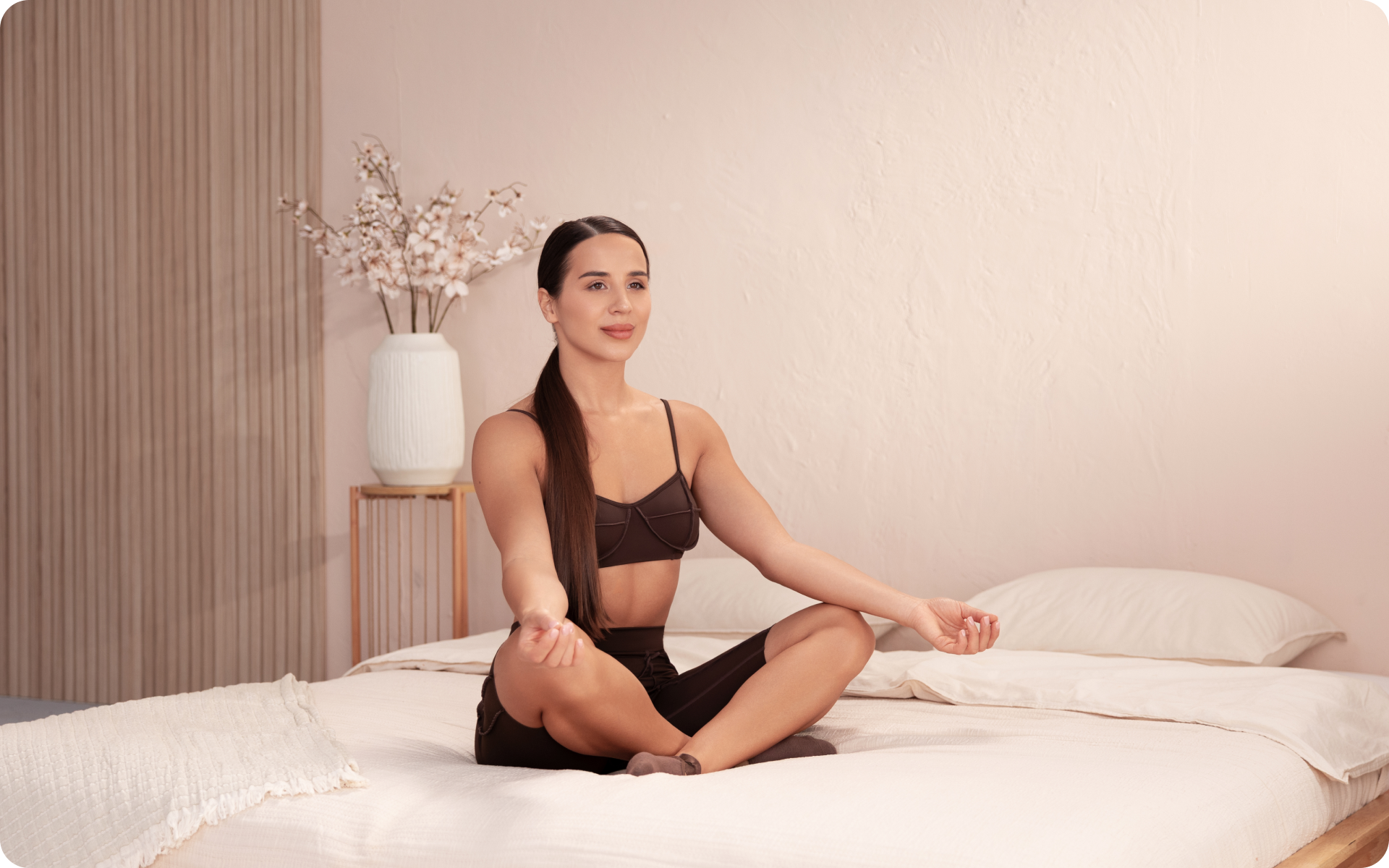
Allowing the back to round or collapse reduces the effectiveness of the pose. Prioritize spinal extension by engaging your core and lengthening upward from the tailbone to the crown. - Tensing the Shoulders
Many people unconsciously hike their shoulders toward their ears when lifting their arms. Keep your shoulders relaxed and down for optimal alignment and comfort. - Overarching the Lower Back
Overemphasizing the chest lift can push the lower back into an exaggerated arch. Stabilize your pelvis by keeping your core gently engaged and avoiding overextension. - Holding Your Breath
Forgetting to breathe is one of the most common mistakes. Remember that breathing is integral to this pose and it helps guide movement and relaxation.
Tips for Beginners
- If reaching your arms straight overhead feels challenging, slightly bend your elbows or place your palms together above your head for a more accessible variation.
- To stabilize your base further, use a yoga block or cushion beneath your feet if they don’t comfortably reach the floor.
- Occasionally practice near a mirror to check your alignment and develop greater body awareness.
What Are the Benefits of Chair Yoga Hands on Head?
1. Improves Postural Awareness
Sitting in a chair while performing Urdhva Hastasana requires the activation of the postural muscles. It encourages spinal elongation by engaging the core and aligning the shoulders over the hips. This helps combat poor posture (1), particularly for those who spend long hours seated, which often results in rounded shoulders and a compressed lower back.
2. Enhances Shoulder Mobility
Lifting the arms overhead is a functional movement that stretches the shoulders and upper back. This pose gently increases the range of motion in these areas, which makes it particularly helpful for individuals with sedentary lifestyles or those who are recovering from limited shoulder flexibility (2). Regular practice may reduce stiffness and improve overall comfort in daily activities that involve overhead arm movement.
3. Eases Chest Tightness
Urdhva Hastasana opens the chest, encouraging better expansion of the ribcage. This can counteract the restrictive effects of slouching or prolonged sitting (3), where the chest often curls inward. By creating space in the chest and upper torso, this pose supports a feeling of lightness and openness.
4. Supports Breathing Efficiency
The upward lift of the arms naturally facilitates deeper breathing by allowing the intercostal muscles (muscles between the ribs) to expand and contract more freely. This position may make it easier to notice fuller, steadier breathing during practice (4). The emphasis on mindful breathing during this pose also may support a calmer, more relaxed feeling during practice (5).
5. Promotes Energy Flow and Mental Clarity
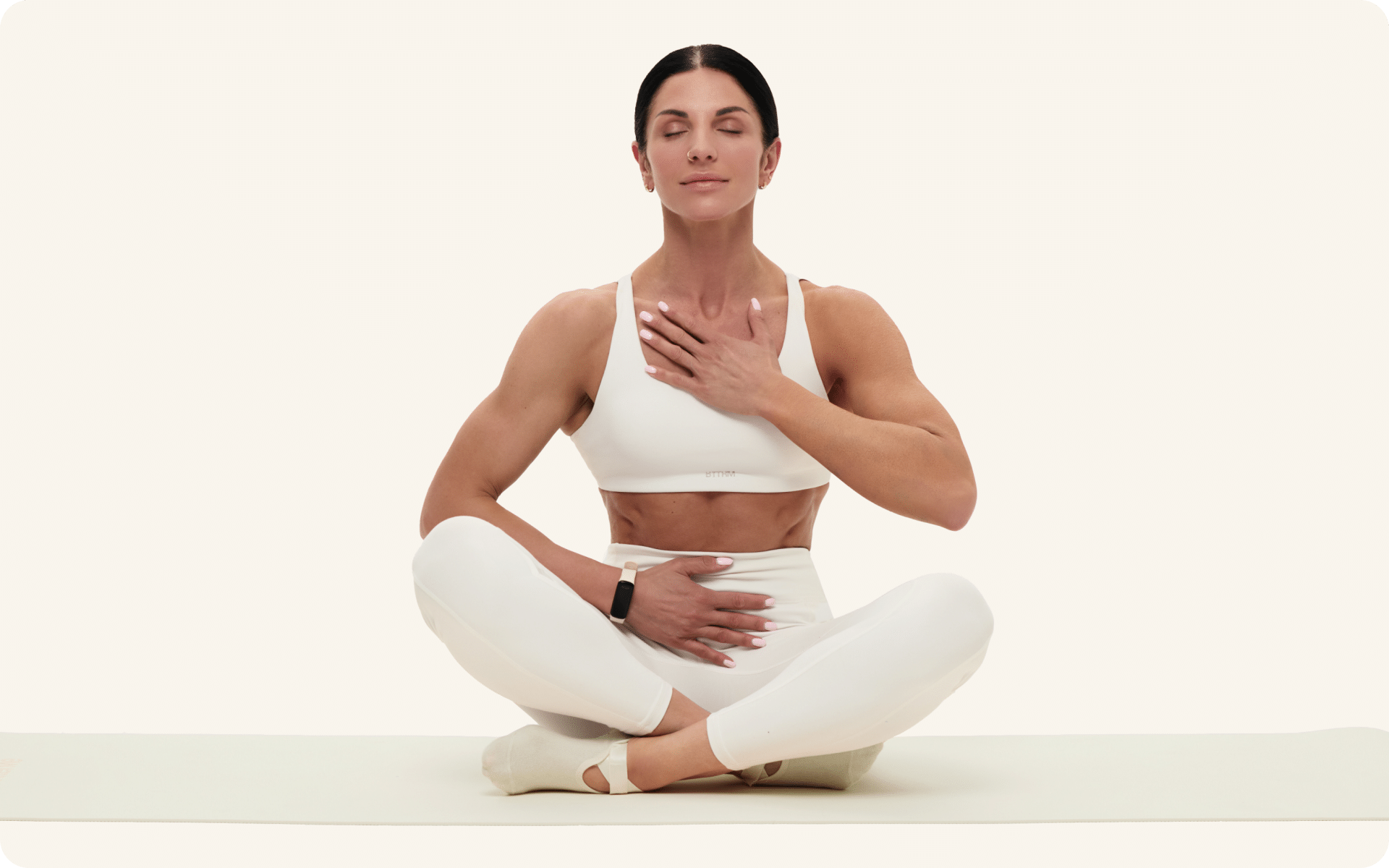
On an energetic level, Urdhva Hastasana activates the heart (Anahata) and crown (Sahasrara) chakras. With the heart chakra representing compassion and connection and the crown chakra symbolizing clarity and higher awareness, this pose gently unites physical movement with a sense of mental and emotional balance (6). While this effect may vary based on personal experience, many practitioners have reported feeling more grounded and focused after practicing.
6. Strengthens Core Stabilization
Although it may not seem obvious, practicing this pose in a seated position requires the light engagement of the abdominal muscles to stabilize the torso (7). This subtle core activation supports the lower back and helps prevent improper spinal alignment, which can otherwise lead to discomfort during the practice.
7. Supports Circulation and Gentle Upper-Body Movement
Reaching upward while maintaining an upright seated position assists in gently activating blood flow throughout the body. This pose may encourage light upper-body movement after long periods of sitting that is often associated with prolonged sitting, particularly in the upper body. In addition, by encouraging gentle mobility in the shoulders and spine, it supports gentle movement through the shoulders and upper back (8).
8. Accessible Mindful Movement
Chair yoga hands on head is an ideal option for individuals with mobility challenges or those who are uncomfortable practicing traditional standing poses. It brings the essence of yoga within reach, which makes it an inclusive choice for older adults, beginners, or anyone who is in need of a gentle practice. Its simplicity allows practitioners to focus deeply on the alignment and quality of their breath, fostering mindfulness (6).
9. Encourages Relaxation and Stress Relief
As with many yoga poses, this posture engages the breath and body in a harmonious flow. The intentional stretching motion combined with mindful breathing stimulates the parasympathetic nervous system, which is responsible for the body’s relaxation response. This calm effect makes it an excellent pose to practice during breaks, which may help you feel more settled and focused (9).
Read more: 8 Seated Arm Exercises for Seniors at Home
When Should You Practice Chair Yoga Hands on Head?
This pose can be used:
- During work breaks – This pose is perfect for counteracting the effects of sitting at a desk for long hours. It realigns the spine, stretches the shoulders, and refreshes your mind, which helps you transition back to tasks feeling more focused and alert.
- To release tension after prolonged sitting – Whether you’ve been driving, reading, or watching TV, this pose helps ease tightness in the neck, shoulders, and upper back, resetting your posture and opening up the chest.
- Post-meditation or breathwork – Practice this pose after seated meditation or pranayama (controlled breathing) to gently awaken your body while remaining grounded. Its upward stretch complements the calm state achieved during mindfulness practices.
- First thing in the morning – Starting your day with this stretch can wake up your body gradually. It activates the spine, deepens your breathing, and provides an intentional, refreshing start to the day.
- As part of a warm-up sequence – Use this pose to prepare for deeper yoga stretches or standing poses. It builds awareness of your posture, engages the core, and gently energizes your upper body.
- For a midday energy boost – When your energy drops, this pose can increase circulation and stimulate oxygen flow, helping you feel recharged and ready to tackle the rest of the day.
- For gentle exercise programs – It’s a gentle, seated option for individuals with limited mobility, older adults, or those who need a seated, lower-impact option. It is often included among easy chair yoga poses because it requires minimal equipment and can be modified to suit different ability levels. The seated position may feel more manageable than standing poses for some people.
- During moments of stress – This pose pairs slow, deliberate breathing with gentle movement, engaging the relaxation response in your body. It’s a simple yet effective way to manage moments of worry or everyday tension in stressful situations.
- Before bedtime – Wind down your day with this soothing pose. It helps relax the shoulders, elongate the spine, and focus your breathing, which may help you wind down before bed.
- When practicing mindfulness – This pose combines physical movement with a focus on breath and body awareness, which makes it an excellent choice for staying present and deepening your mind-body connection.
How Long Should You Hold Chair Yoga Hands on Head Pose?
Traditionally, in yoga, the duration for holding any pose, including the chair yoga hands on head pose (Urdhva Hastasana), is closely tied to breath cycles rather than a fixed measure of time.
Urdhva Hastasana is commonly held for 3 to 5 deep, steady breaths. Each inhale expands the ribcage and creates a sense of upward lift through the arms, while each exhale grounds you through your sit bones, promoting stability.
This rhythmic breathing cultivates a balance between effort and ease, aligning with the yoga principle of sthira sukham asanam (steady and comfortable posture).
Urdhva Hastasana is often a transitional pose, particularly in sun salutations or as part of warm-up sequences. When used this way, it’s dynamically linked with the breath, with the arms lifting on the inhale and lowering on the exhale.
However, when held as a static position, the traditional guideline remains to sustain the pose with attention for 3 to 5 breaths.
Reasons why BetterMe is a safe bet: a wide range of calorie-blasting workouts, finger-licking recipes, 24/7 support, challenges that’ll keep you on your best game, and that just scratches the surface! Start using our app and watch the magic happen.
Frequently Asked Questions
How many times a week should you do chair yoga?
You can practice chair yoga 2 to 4 times a week, depending on your goals and fitness level. Consistency is the key for improving flexibility, strength, and relaxation. If you’re new, start with shorter sessions and gradually increase frequency as you feel more comfortable.
What is the yoga pose standing with hands over head?
The yoga pose standing with hands over head is known as Urdhva Hastasana or upward salute. It involves standing with feet firmly grounded with your arms lifted overhead and your palms facing each other or touching. This pose promotes spinal elongation and opens the chest, often serving as a warm-up or transitional posture in yoga sequences.
Why can’t I clasp my hands behind my back?
Difficulty clasping your hands behind your back is often due to shoulder stiffness, tight chest muscles, or limited upper-body flexibility. Regular stretching, together with poses that open the chest and improve shoulder mobility, can help over time. Be patient and void forcing the movement, especially if it feels uncomfortable.
Does chair yoga really work for weight loss?
Chair yoga is not usually a high-calorie workout. It may be one part of a broader routine that includes regular movement, nutrition, sleep, and other lifestyle habits. Individual results vary.
The Bottom Line
Mastering the chair yoga hands on head (Urdhva Hastasana) pose is a simple yet effective way to support posture awareness, gentle flexibility, and a calmer practice experience. By focusing on proper alignment and deep, steady breaths, you can fully experience the physical benefits while enhancing your sense of relaxation and balance.
Take a few moments each day to reconnect with your body and mind through this uplifting posture, and enjoy the positive changes it brings to your well-being over time.
DISCLAIMER:
This article is intended for general informational purposes only and does not serve to address individual circumstances. It is not a substitute for professional advice or help and should not be relied on for making any kind of decision-making. Any action taken as a direct or indirect result of the information in this article is entirely at your own risk and is your sole responsibility.
BetterMe, its content staff, and its medical advisors accept no responsibility for inaccuracies, errors, misstatements, inconsistencies, or omissions and specifically disclaim any liability, loss or risk, personal, professional or otherwise, which may be incurred as a consequence, directly or indirectly, of the use and/or application of any content.
You should always seek the advice of your physician or other qualified health provider with any questions you may have regarding a medical condition or your specific situation. Never disregard professional medical advice or delay seeking it because of BetterMe content. If you suspect or think you may have a medical emergency, call your doctor.
SOURCES:
- Chair Yoga and Why Seated Yoga Poses Are Good For You (2023, brownhealth.org)
- The Effect of Chair-Based Exercise on Physical Function in Older Adults: A Systematic Review and Meta-Analysis (2021, mdpi.com)
- Impact of a six-month yoga intervention on cognitive performance among desk-based workers: An interrupted time-series design (2024, sciencedirect.com)
- Yoga, Tai Chi and Your Lungs: The Benefits of Breathing through Exercise (2017, lung.org)
- Breathing Practices for Stress and Anxiety Reduction: Conceptual Framework of Implementation Guidelines Based on a Systematic Review of the Published Literature (2023, mdpi.com)
- Yoga and meditation improve brain function and energy levels (2017, uwaterloo.ca)
- Core muscle function during specific yoga poses (2014, pubmed.ncbi.nlm.nih.gov)
- YOGA AND YOUR JOINTS (n.d., thecenteroregon.com)
- Reducing Stress with Yoga: A Systematic Review Based on Multimodal Biosignals (2023, journals.lww.com)
 Reviewed by