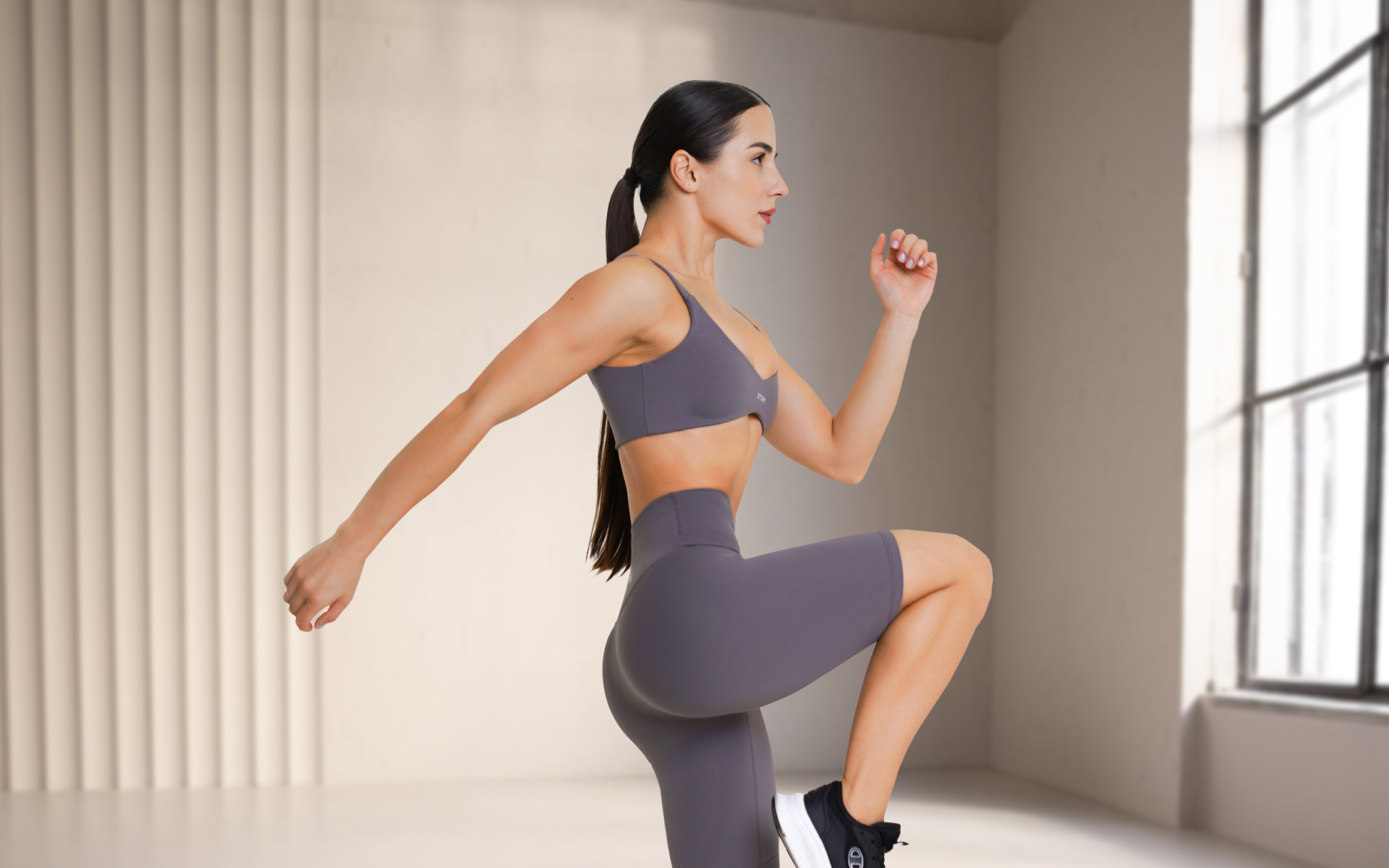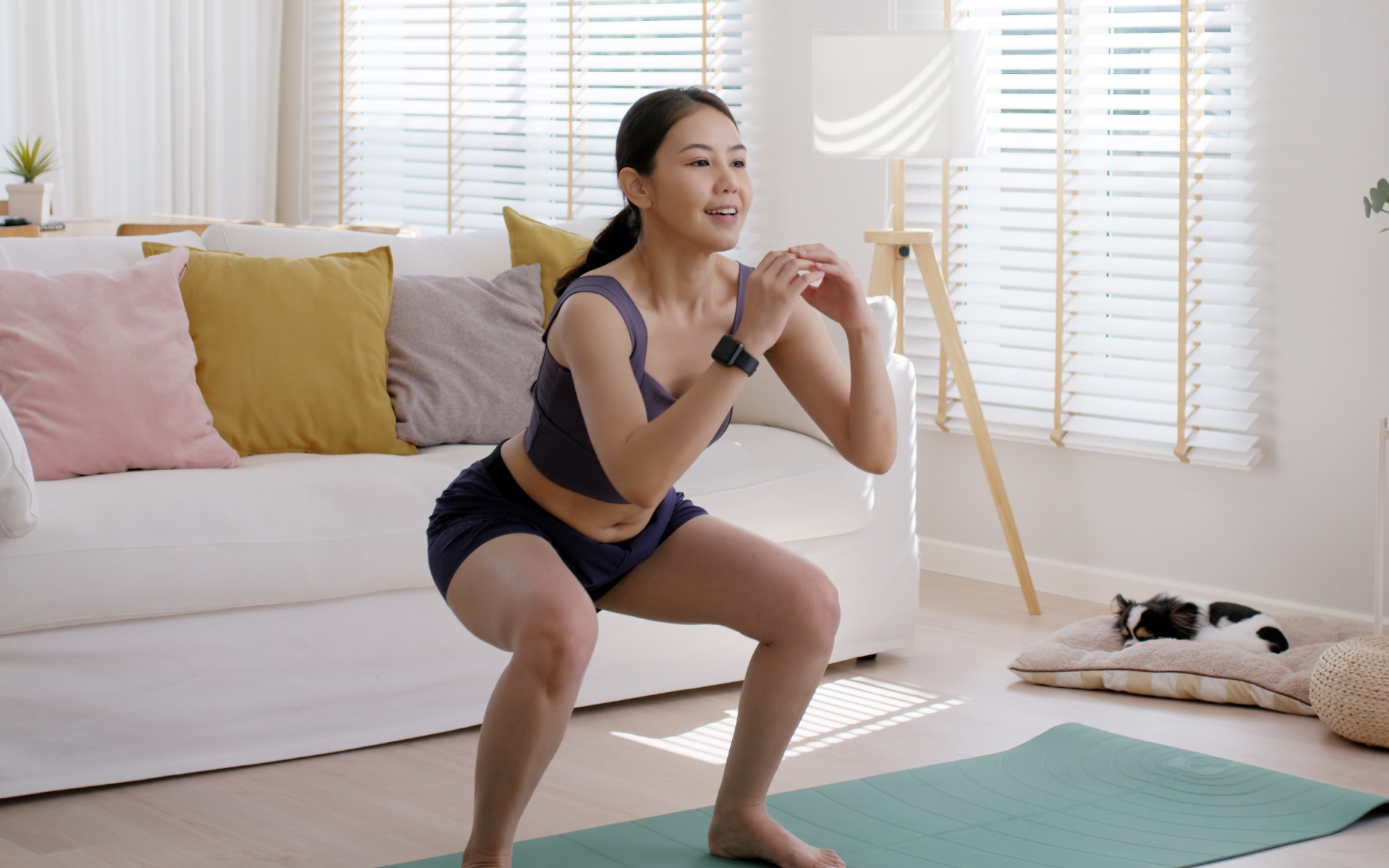
Some people may treat cardio as more demanding than strength-focused workouts, so they often deprioritize it. On one hand, you don’t want to run or jump rope because it’s too intense. On the other hand, you know cardio is essential for your overall wellness and fitness. This is why we’re providing this low-impact cardio workout with 8 no-jumping exercises. These will deliver the increased calorie burn and longevity benefits while keeping your joints pain-free.
The following cardio day workout plan allows you to build the body you always wanted, feel stronger, and most importantly, improve your daily performance.
Read the guide to the best exercises for your cardio home-based routine, and train them today to feel proud of yourself afterward. Let’s jump (ironically) into a no-jumping cardio day workout at home to stay strong, mobile, and balanced.
What Is a Fat-Burning Cardio Day Workout?
The following cardio exercises for weight loss will suit your fitness level just right – they’re quite manageable for people of all levels:
- Simple enough for beginners
- Effective for all trainees
- Easy to increase the intensity.
We promise you that among the different bodyweight cardio exercises, these will become your favorites. They involve no jumping or running, but are still intense enough to get your heart pumping, sweat pouring, and calories burning.
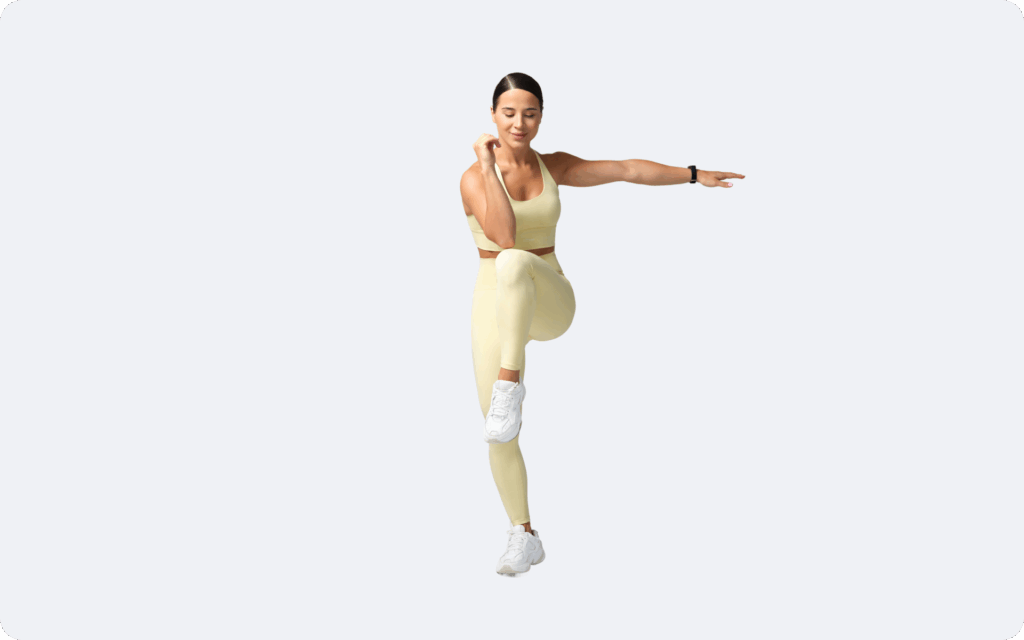
Warm-Up (5 minutes)
Move gently to prepare your body for the workout.
- March in place: 1 minute.
Lift your knees comfortably and swing your arms naturally. - Arm circles + shoulder rolls: 1 minute.
30 seconds of circles and 30 seconds of shoulder rolls. - Side steps: 1 minute.
Step side to side, keeping a light bend in your knees. - Standing torso twists: 1 minute.
Slow, controlled twists without forcing them. - Easy knee lifts: 1 minute.
Lift one knee at a time at a relaxed pace.
Exercise #1: Inchworm
How to perform the exercise:
- Stand tall with your feet hip-width apart and your arms relaxed at your sides.
- Hinge at your hips and reach your hands down to the floor.
- Walk your hands slowly forward until you’re in a high plank, with your hands under your shoulders. Your core, legs, and glutes should be engaged. Hold briefly.
- Walk your hands back toward your feet and rise to standing.
- This is 1 repetition. Complete 10 reps.
Exercise #2: Low-Impact Burpee
How to perform the exercise:
- Stand with your feet hip-width apart and your arms at your sides.
- Lower into a squat and place your hands on the floor about shoulder-width apart.
- Step one leg back, then step the other leg back to join it, creating a high plank position.
- Reverse the movement by stepping one leg forward at a time to return to the squat.
- Stand up, lifting your arms overhead while keeping your feet on the floor.
- This is 1 repetition. Perform at least 8 reps.
Reasons why BetterMe is a safe bet: a wide range of calorie-blasting workouts, finger-licking recipes, 24/7 support, challenges that’ll keep you on your best game, and that just scratches the surface! Start using our app and watch the magic happen.
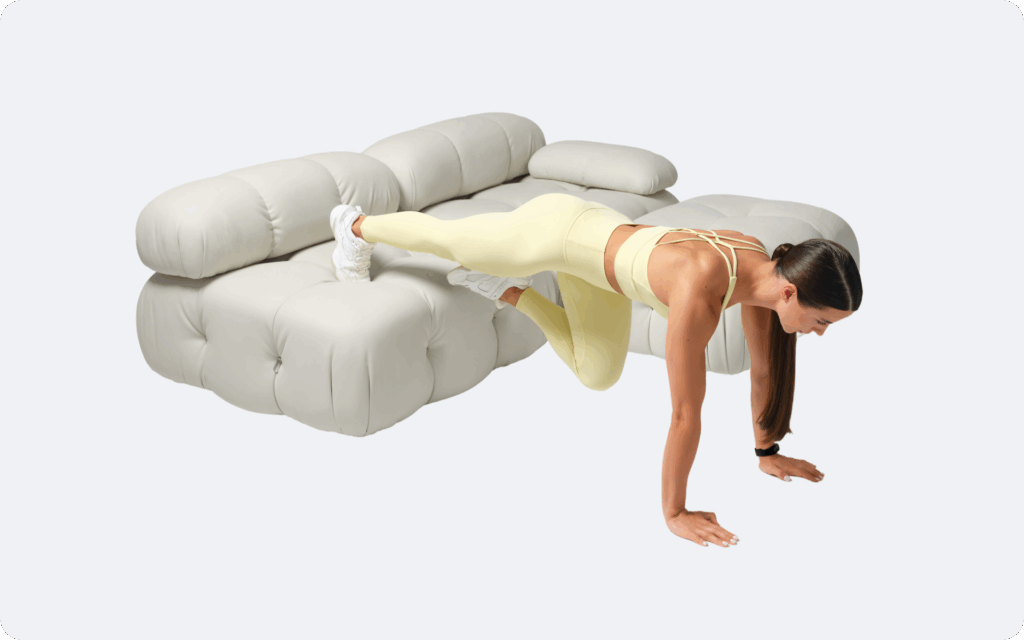
Exercise #3: Breakdancer
How to perform the exercise:
- Start on all fours with your hands under your shoulders and your knees under your hips.
- Slightly lift your knees off the floor, keeping your core engaged and your hips low.
- Thread your right leg underneath your body, rotating your torso to open toward the left side. Keep your left arm reaching forward.
- Return to the starting position and switch sides.
- This is 1 rep. Perform 12 reps.
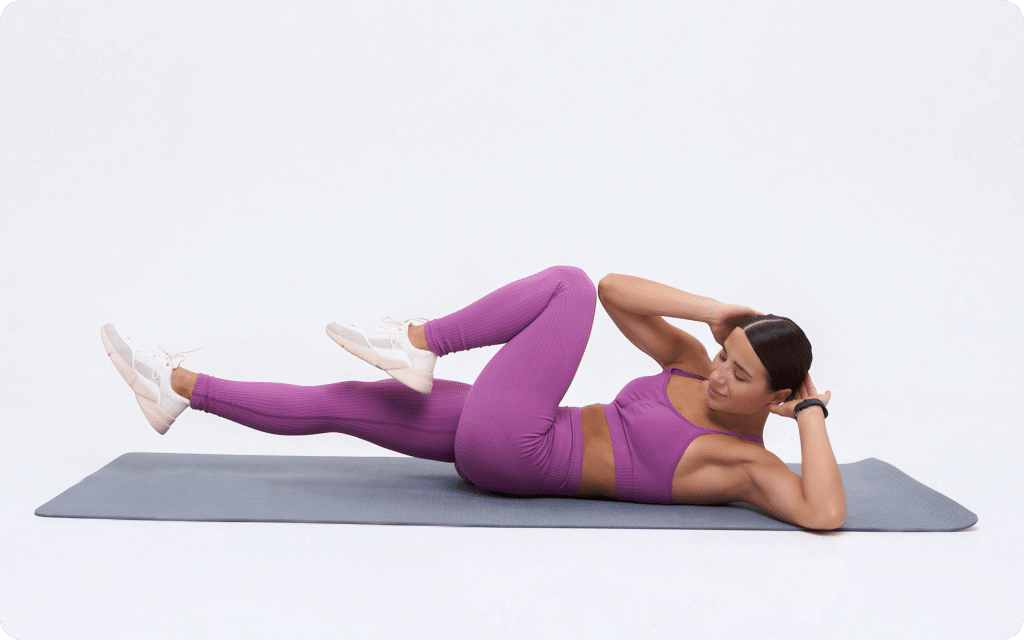
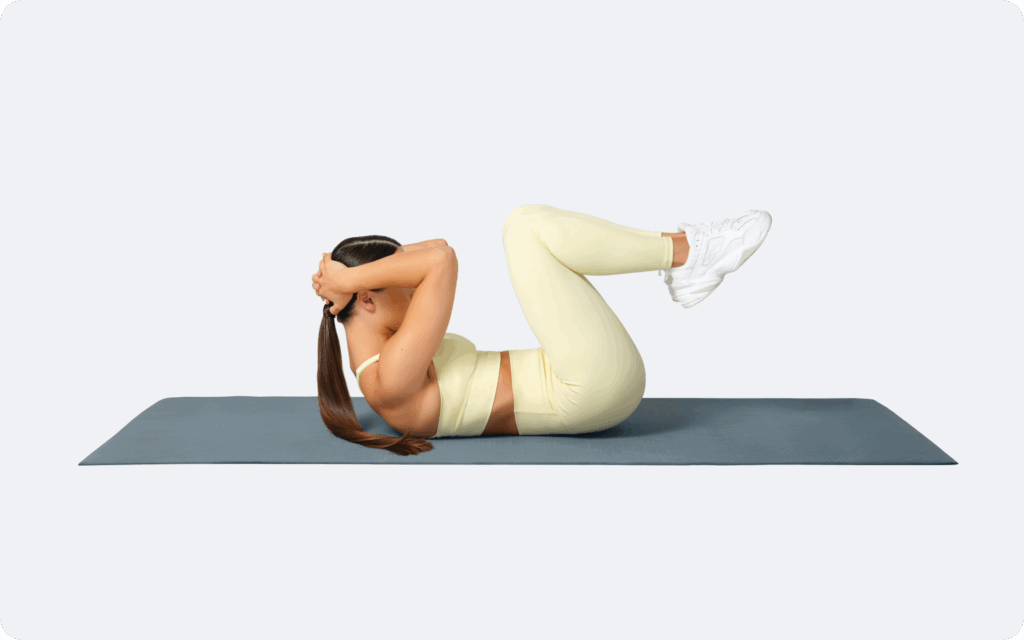
Exercise #4: Bicycle Crunch
How to perform the exercise:
- Lie on your back with your legs in a tabletop position.
- Place your hands behind your head, keeping your elbows bent. Engage your core to lift your shoulders slightly off the floor. This is your starting position.
- Twist to bring your right elbow toward your left knee while straightening your right leg. Then twist to bring your left elbow toward your right knee while straightening your left leg.
- Continue alternating sides. Perform 15 reps per side.
Exercise #5: Mountain Climber
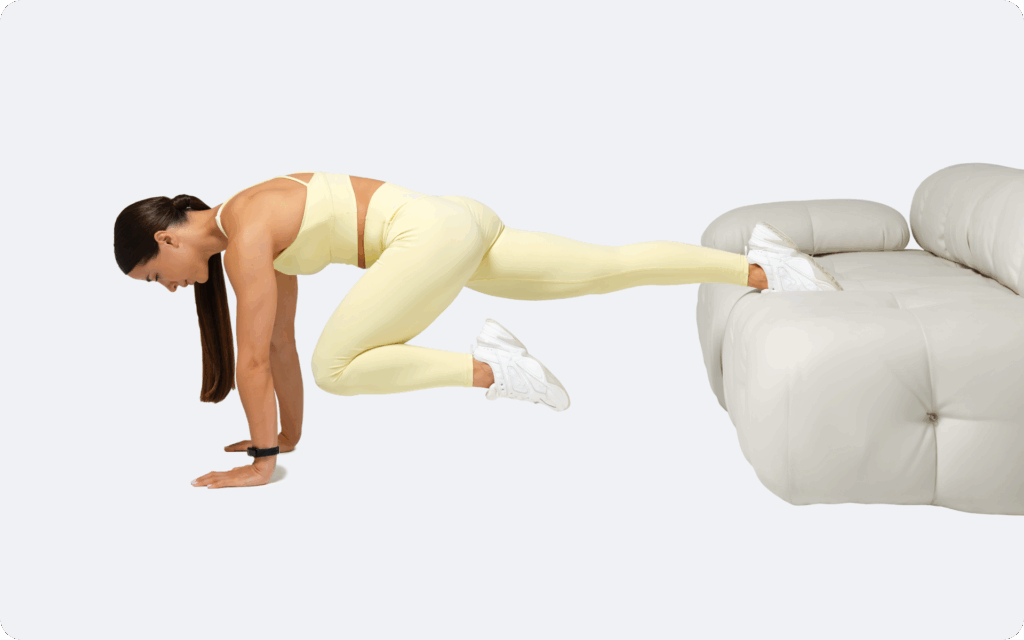
How to perform the exercise:
- Begin in a high plank position with your hands flat on the floor, your shoulders over your wrists, your legs extended, and your core engaged. This is your starting point.
- Draw your right knee toward your chest while keeping your core tight and back flat, then return it to the starting position. Next, draw your left knee toward your chest and return it.
- This completes 1 rep. Continue alternating sides for 30 seconds. Pick up the pace.
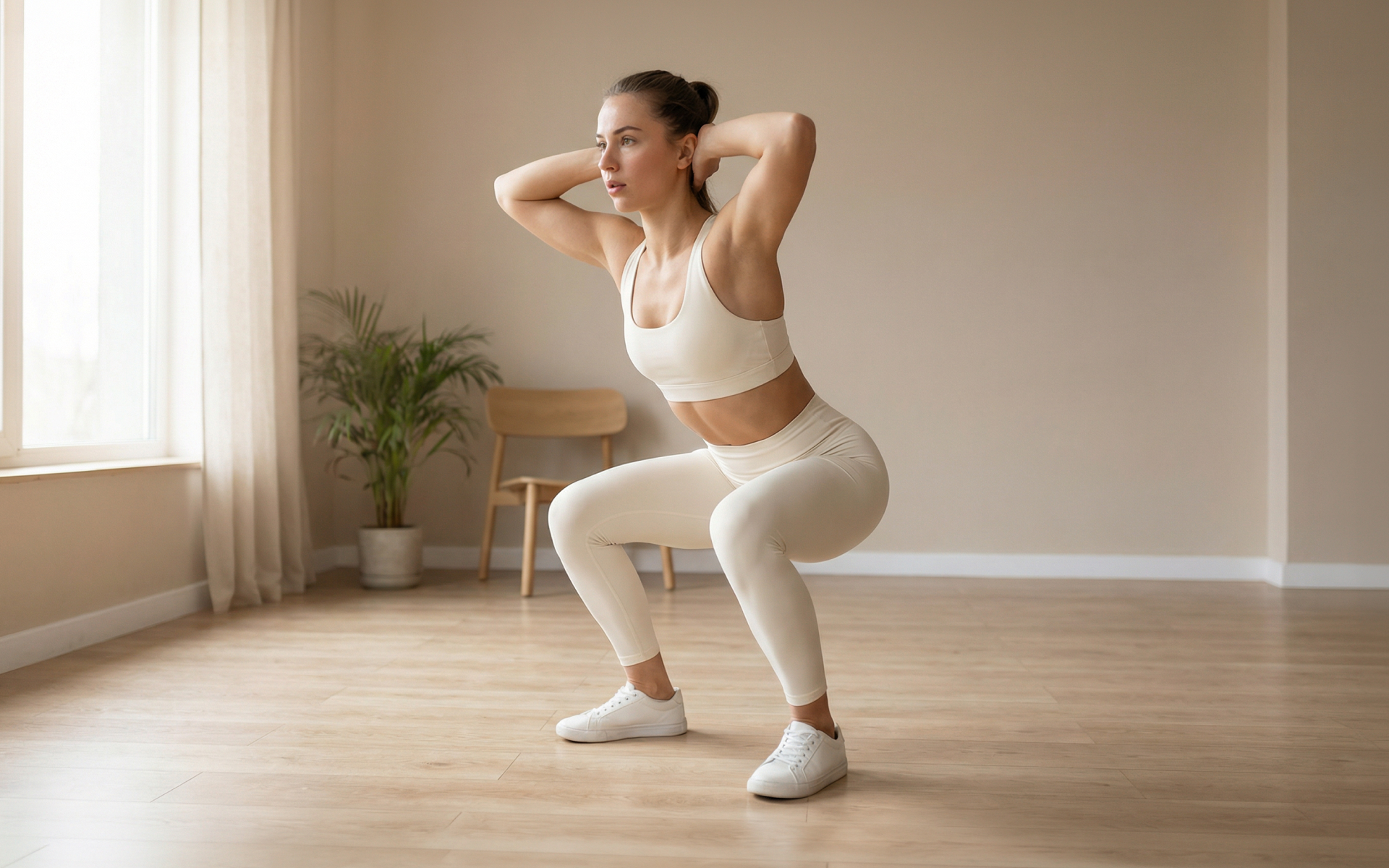
Exercise #6: Squats to Toe Lifts
How to perform the exercise:
- Stand with your feet hip-width apart, your hands at your sides, and your core engaged.
- Lower into a squat position, keeping your chest up and weight on your heels.
- Stand up and lift your heels off the floor (toe lift). Hold for a second on top.
- Lower back into the squat.
- Repeat for 15 reps.
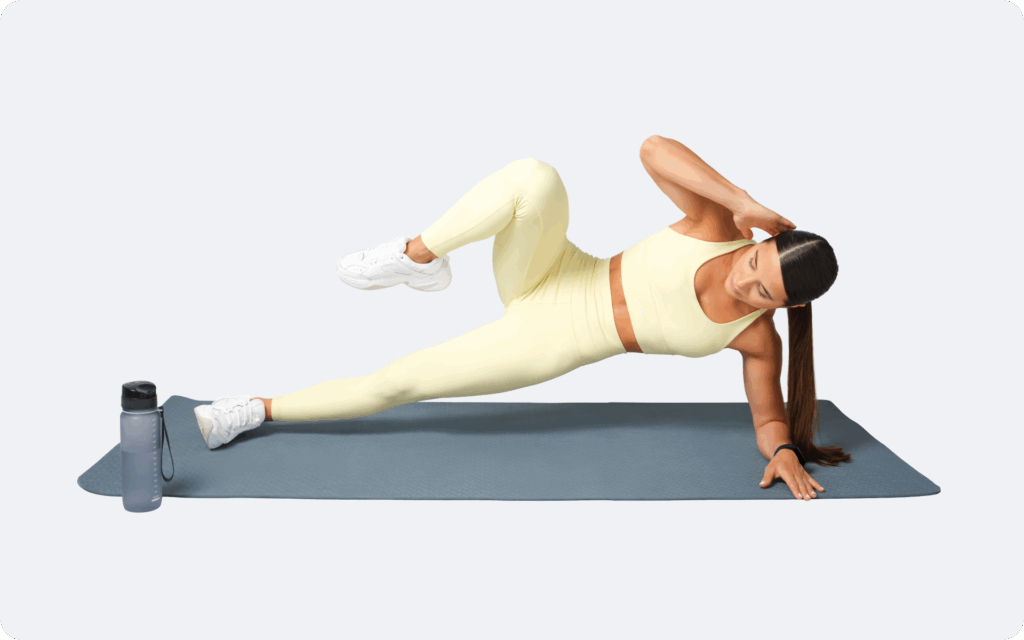
Exercise #7: Low-Impact Side Knee Lifts
How to perform the exercise:
- Stand tall with your feet hip-width apart and your core engaged.
- Place your arms behind your head with your elbows bent.
- Lift your right knee out to the side, then touch it with your right elbow.
- Lower and repeat with the left knee, tapping it with your left elbow.
- Keep alternating at a steady, brisk pace up to 45 seconds.
Exercise #8: Brisk Walking
How to perform the exercise:
- Stand tall, keeping your head up, your shoulders relaxed, and your back straight.
- Walk slowly at first and gradually increase your speed.
- A good brisk walking speed is 5-6.5 km per hour (3-4mph), or 100 steps per minute.
Go to your favorite place, enjoy the weather, and walk for as long as you desire. If you decide to brisk walk at home, you can march in place instead. It’s also a great way to challenge your cardiovascular system.
BetterMe will shake off your mental funk, rid you of your energy-zapping habits, and help you sculpt the body of your dreams. Intrigued? Hurry up and change your life for the better!
Cool-Down and Stretching (5 minutes)
- Slow march in place: March slowly in place, lifting your knees gently and swinging your arms lightly.
- Hamstring stretch: Sit or stand, extend one leg in front of you with heel on the floor, your toes up. Hinge at your hips and reach toward your toes. Hold for 20 seconds per leg.
- Quad stretch: Stand tall and bend one knee, bringing your heel toward your glutes. Hold your ankle and keep your knees together. Hold for 20 seconds per leg.
- Cat/cow stretch: Begin on all fours with your hands under your shoulders and your knees under your hips.
- Cow Pose: Inhale, arch your back, lift your chest toward the ceiling, letting your belly drop toward the floor.
- Cat Pose: Exhale, round your back, tuck your chin to your chest, and pull your belly button toward your spine.
Read more: How to Combine Pilates and Cardio for an Effective Cross-Training Routine
Does Cardio Burn Belly Fat?
Generally speaking, yes. Any type of exercise or movement will contribute to increased calories and whole-body fat loss, including your abdominal area. One study suggested that aerobic activities of at least 150 minutes a week at moderate intensity are linked to waist circumference reduction (1).
Cardio workouts at home aren’t the only remedy though. According to Harvard Health Publishing, effective exercise to reduce visceral fat should include both:
- Aerobic activity (such as brisk walking)
- Strength training (weighted exercises) (2)
A 2025 study noted that both cardio and high-intensity training are good for weight loss, including the belly area. However, there are other factors that can affect results, including:
- Age-related metabolism differences
- Menopause
- Aging (3)
Cardio is truly worth your effort as it helps you lose fat in your entire body, improve stamina, and promote mobility. Every move matters:
- One day, you may enjoy the 8 exercises mentioned in this article
- The next day, shift to light cardio exercises at home after intense sessions
- After a few days, dedicate your time to brisk walking or strength training
Can I Do a Cardio Workout Daily?
Yes, you can do cardio every day, but it will depend on how hard you’re working out and how your body feels. Low-impact (beginner cardio) workouts are ok to do daily. This includes:
- Walking
- Marching in place
- No-jump sessions
- Brisk walking
These will get your heart pumping without putting too much stress on your joints.
Moderate-intensity cardio may require some rest days in between. This includes:
- Burpees
- Mountain climbers
- Running at a moderate pace
These can be harder on your body and joints so training daily can be too much, particularly for beginners.
High-intensity cardio, such as sprint intervals or very fast routines, should be done 2-4 times a week. Such workouts may be tough for your muscles and joints. Implementing rest days can prevent burnout and injury.
How Long Should a Cardio Session Last?
150 minutes of moderate exercise weekly is the minimum and it should be spread out throughout the week based on your schedule.
The latest guidelines suggest you can count all moderate-intensity activity throughout the day, even if it’s just 10-15 minutes at a time (4).
For example:
- Do cardio exercises for beginners at home for 15 minutes
- Spend another 15 minutes walking in the park after a few hours.
However, you should try to at least include some sessions lasting 30 minutes.
If you miss a session here or there, don’t sweat it. You can simply move it to the following day. And remember, not every cardio session needs to be 30 minutes or even “look like cardio”:
- Pick up the pace or take a longer route when walking your dog
- Knock out some steps as you watch your children’s sports practice
- If your grocery store is close enough, opt to walk or cycle there
Most importantly, remember to do it on your own terms.
Life isn’t always easy and gets busy fast. Exercises should be a time to relieve stress, not add to it.
So check out your schedule, see what you can do daily, and just do it.
Can I Build Muscle with Cardio?
Regular cardio is good for building muscular endurance, enabling your muscles to work harder and longer during physical activities (5). However, cardio on its own won’t produce meaningful muscle growth.
Weight training is an incredibly effective way to promote muscle hypertrophy, based on a ResearchGate study (6).
This is why cardio and strength training go hand in hand, offering you loads of benefits for your body and mind. You build endurance, improve your power by doing cardio, and then use this power for lifting weights to build larger and stronger muscles.
Should I Lift Weights Before or After Cardio?
There’s no clear answer to this question as everything relies on your goal.
Lifting is a hard process where you need all your energy to move loads with proper form and technique to avoid injuries. A study published in The Journal of Strength and Conditioning Research proves this. Researchers compared three workout routines and their effects on training volume:
- Strength training alone
- Running before strength training
- Cycling before strength training
They found that doing cardio first reduced the number of reps participants could lift compared to just doing strength training by itself (8).
Therefore, if you’re aiming to improve endurance and stamina, it makes sense to do cardio first as:
- You have more energy to push yourself
- It increases your ability to train longer and improve performance
- It can act as a warm-up for your strength training if it’s not too intense
However, this isn’t necessarily true for other scenarios. For these, follow these guidelines from the American Council on Exercise:
- For improving your endurance, do cardio before your strength workout.
- For burning fat or losing weight, do cardio after strength training.
- For building strength, do cardio after lifting weights.
- On upper-body training days, you can do cardio either before or after.
- On lower-body training days: do cardio after your strength exercises.
For general fitness, either order works, but consider starting with the one you enjoy the least to get it done first (7).
Yes, 20 minutes of cardio daily is enough for your heart wellness, endurance, and weight management. Shifting from low to higher intensity provides even better wellness-promoting results. Rest days from cardio are recommended depending on the activity. Light cardio sessions, such as walking, don’t require any rest days, but vigorous, high-intensity cardio training will require recovery days, which are necessary to prevent injuries and help avoid burnout. The best time to do cardio is the time that’s suitable for you. What matters more is your consistency and form. You can do cardio exercises at any time you desire: morning, afternoon, or late evening. A 20-minute moderate-intensity cardio may burn approximately between 100 and 200 calories, depending on the exercise activity and your body type. Yes. You might lose weight doing 20 minutes of high-intensity, consistent workouts combined with a proper diet and calorie deficit. Don’t forget about rest days, as they help your body heal and recharge faster.Frequently Asked Questions
Is 20 minutes of cardio daily enough?
Do I need rest days from cardio?
When is the best time to do cardio?
How many calories will 20 minutes of cardio burn?
Can I lose weight by exercising for 20 minutes a day?
The Bottom Line
This article reviewed a no-jumping cardio day workout at home with 8 exercises that engage your entire body. While this cardio workout can help improve your well-being and body composition alone, you should combine it with resistance training and proper diet to optimize your results. Along with expert recommendations, we suggest engaging in at least 150 minutes of moderate activity a week along with two strength training sessions. The most important factor is building a training schedule that fits your lifestyle and you can be consistent with.
Usually, lifting loads before doing cardio is preferred if you intend to build power and shed pounds.
Note that it matters very little when you train – your consistency and motivation to progress to more intense moves play a bigger role.
DISCLAIMER:
This article is intended for general informational purposes only and does not serve to address individual circumstances. It is not a substitute for professional advice or help and should not be relied on for making any kind of decision-making. Any action taken as a direct or indirect result of the information in this article is entirely at your own risk and is your sole responsibility.
BetterMe, its content staff, and its medical advisors accept no responsibility for inaccuracies, errors, misstatements, inconsistencies, or omissions and specifically disclaim any liability, loss or risk, personal, professional or otherwise, which may be incurred as a consequence, directly or indirectly, of the use and/or application of any content.
You should always seek the advice of your physician or other qualified health provider with any questions you may have regarding a medical condition or your specific situation. Never disregard professional medical advice or delay seeking it because of BetterMe content. If you suspect or think you may have a medical emergency, call your doctor.
SOURCES:
- Aerobic Exercise and Weight Loss in Adults (2024, jamanetwork.com)
- Taking aim at belly fat (2024, health.harvard.edu)
- The Effectiveness of High-Intensity Interval Training vs. Cardio Training for Weight Loss in Patients with Obesity: A Systematic Review (2025, www.mdpi.com)
- How much cardio should you do? (2020, health.harvard.edu)
- Cardio or Strength Training: Which Is Better? (2025, clevelandclinic.org)
- Effect weight training on muscular hypertrophy: a systematic review (2023, researchgate.net)
- Cardio or Weights First? Cardio Before vs. After Lifting (2017, acefitness.org)
- Acute Effect of High-Intensity Aerobic Exercise Performed on Treadmill and Cycle Ergometer on Strength Performance (2015, journals.lww.com)

 Reviewed by
 Reviewed by