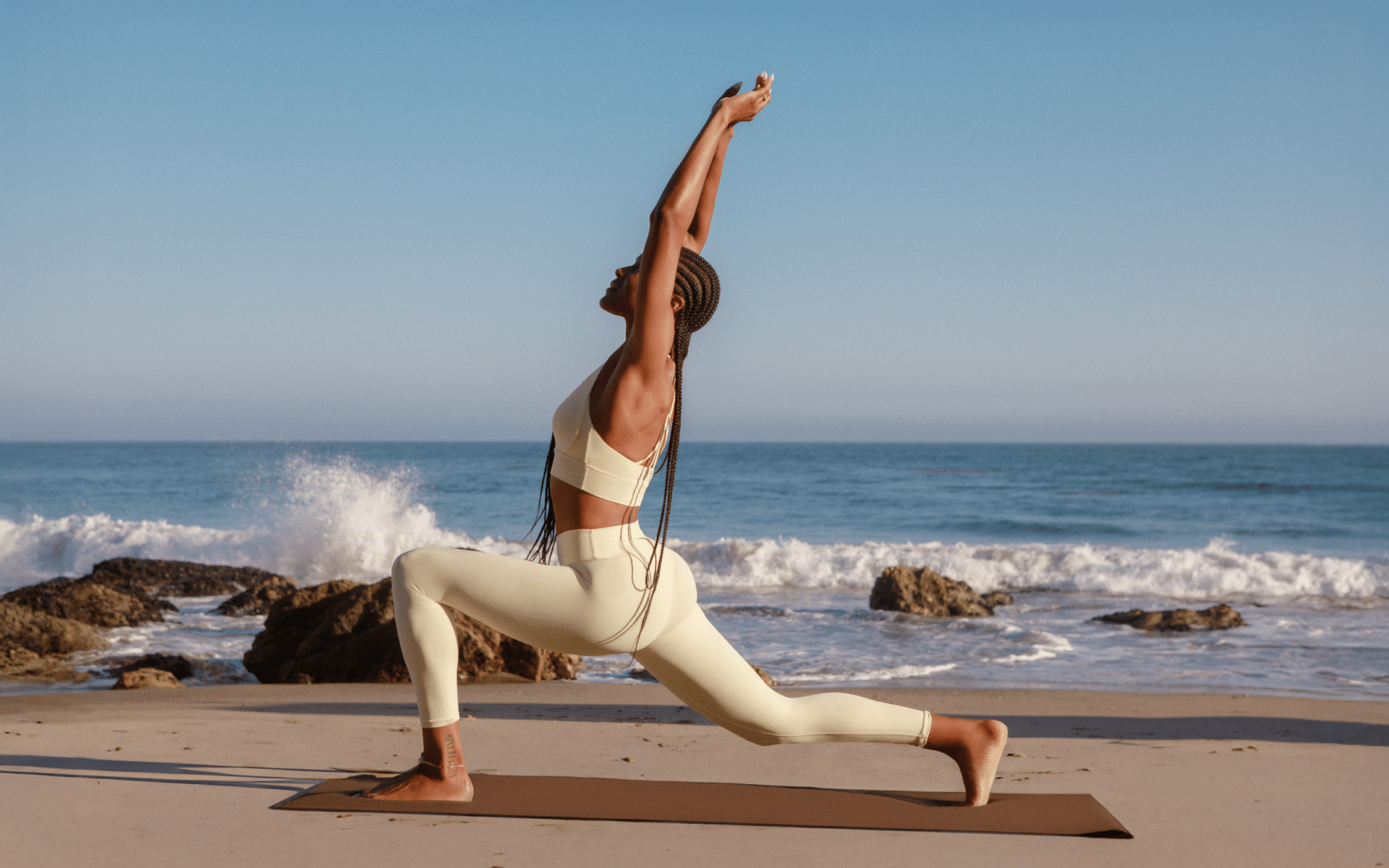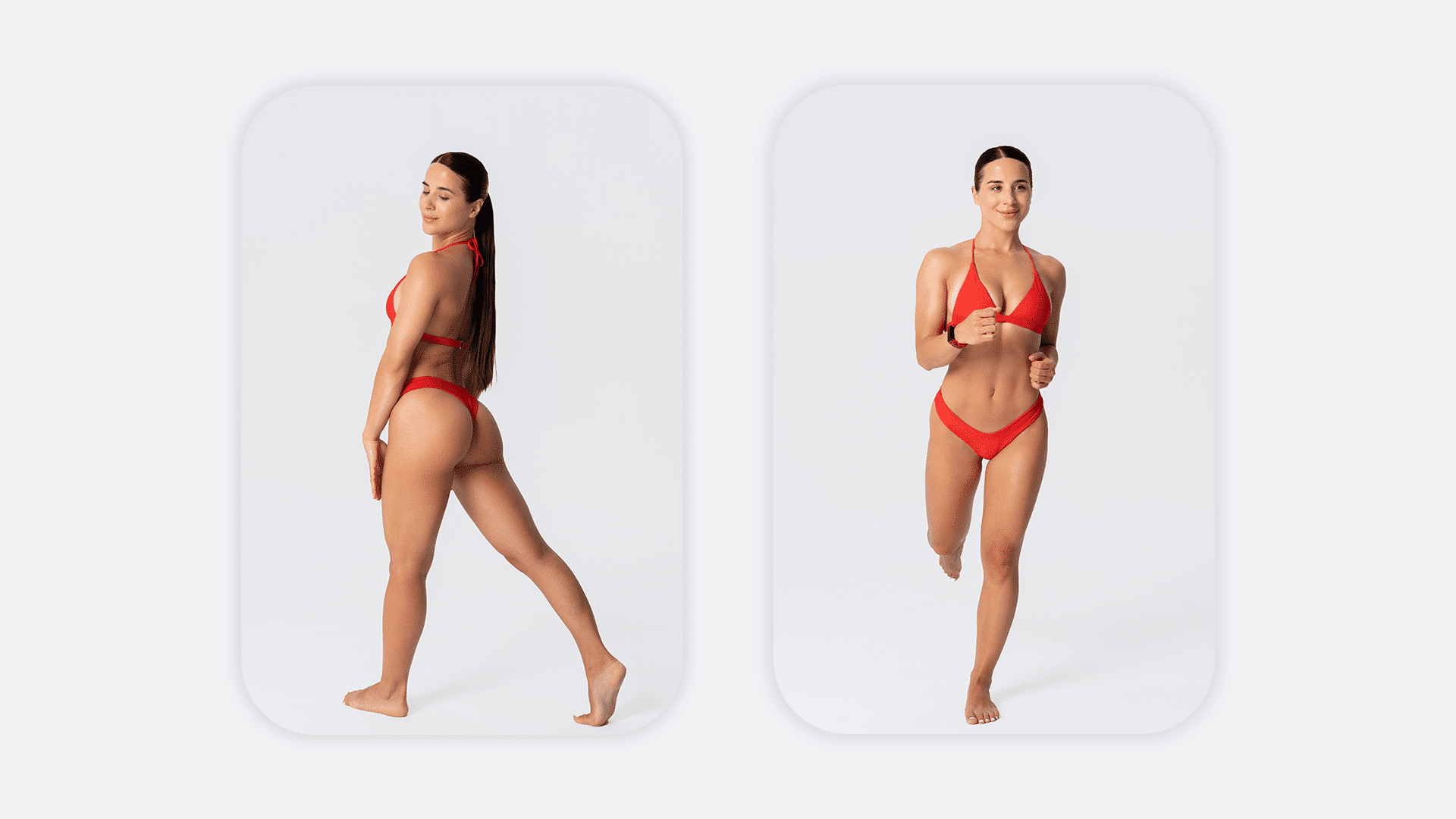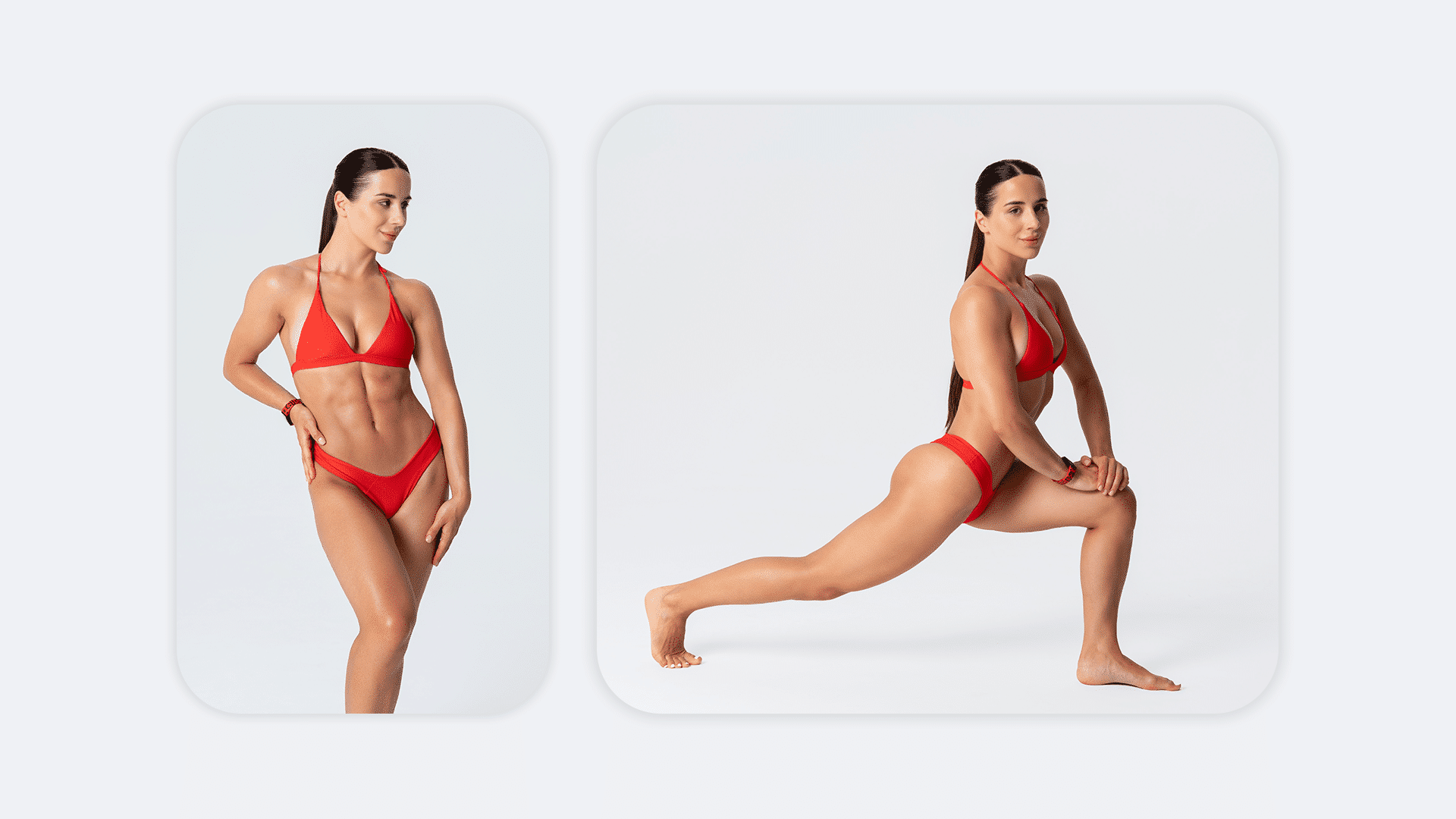
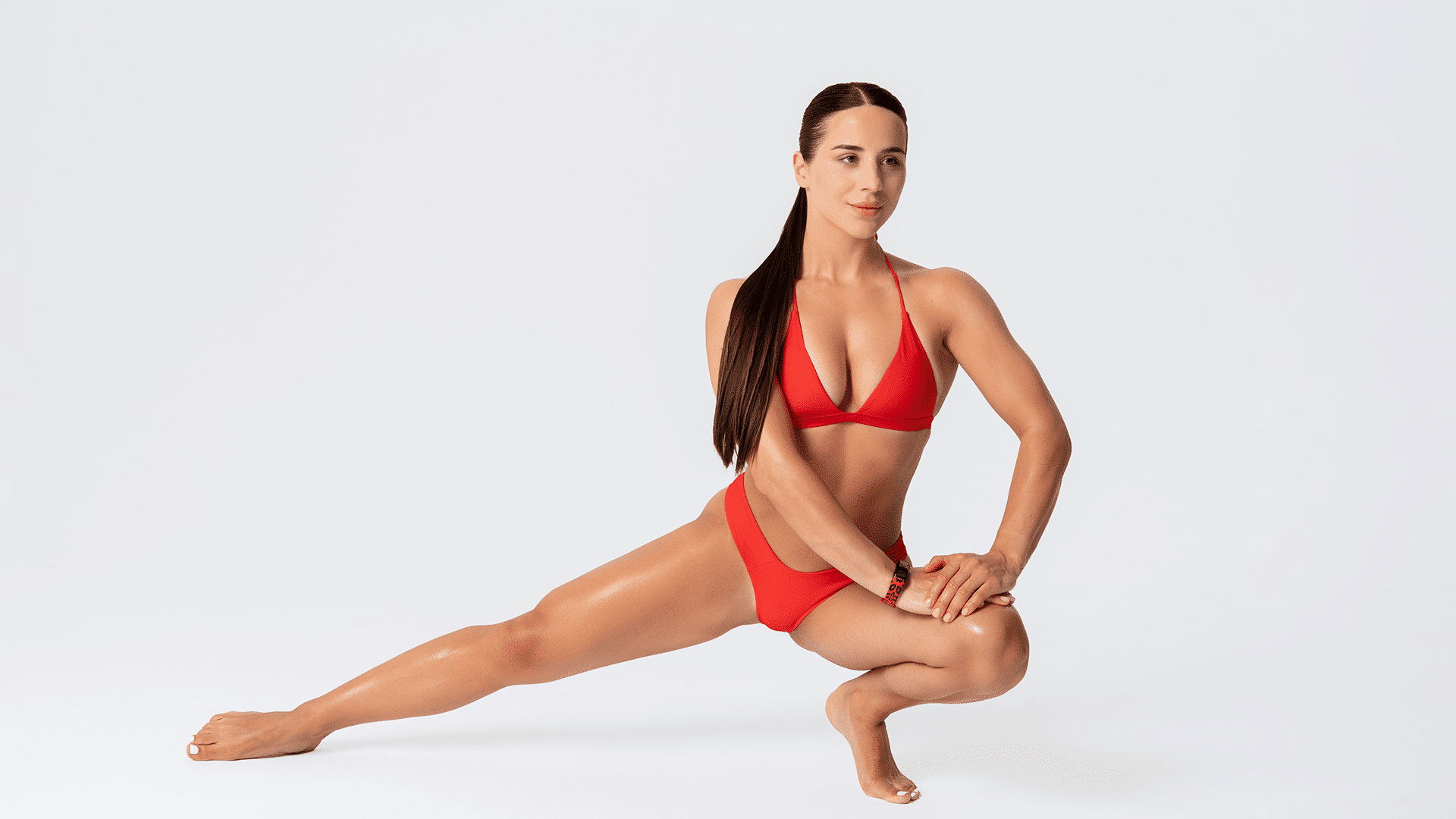
A beach volleyball workout combines jumping, changes of direction and strength work for play on sand. This three-day example can be shortened around matches. Start with controlled footwork on a firm surface before adding sand drills. For more options, see our beach workout with no equipment guide.
Check with a doctor before starting if you have a heart condition, joint problems, or recent surgery.
Following exercise and diet plans is the key in your fitness journey and greatly impacts results. In 4 weeks users can typically expect to lose not more than 1-2 lbs per week. Individual results may vary.
Key takeaways
Beach volleyball training usually targets power, core stability, and endurance, with time to adapt to sand.
- At the same speed, walking on sand used 2.1 to 2.7 times as much energy as walking on a hard surface (1).
- At the same speed, running on sand used about 1.6 times as much energy as running on a hard surface (1).
- Sand training has a higher energy cost and lower impact than training on grass (2).
- Adults are advised to do strength work on 2 or more days a week (3).
- Power training uses light to moderate loads moved quickly, with full rest between sets (4).
- Warm-ups improved performance in most measures in a review (5).
What does a beach volleyball player need to train?
Beach volleyball players need leg power, core strength, upper-body strength, and endurance.
Leg power
Leg power drives your jump and your first step. Sand absorbs some of your force, so jumping takes more effort (1).
Core strength
A strong core helps you move force from your legs to your arms. It also keeps you steady when you land on uneven sand.
Upper-body strength
Strong shoulders, chest, and back support hard spikes and firm blocks.
Endurance
Rallies mix jumps, sprints, and dives with short breaks. Good fitness helps you keep your timing late in a match.
How do you create a beach volleyball workout plan?
This sample three-day plan alternates strength, court skills and conditioning.
|
Day |
Focus |
Main exercises |
Sets x reps |
|---|---|---|---|
|
Day 1 |
Leg power |
Squat jumps, lateral bounds, split squat jumps |
3 x 5 to 6 |
|
Day 2 |
Strength and core |
Goblet squats, push-ups, rows, planks |
3 x 8 to 12 |
|
Day 3 |
Conditioning |
Sand shuttle runs, jump rope, defensive shuffles |
6 to 8 x 20 to 30 seconds |
What are the key exercises?
These exercises cover power, strength, and core. Learn them on firm ground before moving to sand.
1. Squat jumps
- Stand with feet shoulder-width apart.
- Squat down quickly to a quarter or half squat.
- Jump straight up, reaching your arms overhead.
- Land softly with bent knees. Do 5 to 6 reps.
2. Lateral bounds
- Stand on your right leg.
- Push off sideways and land on your left leg.
- Hold the landing for 1 second.
- Bound back. Do 5 to 6 per side.
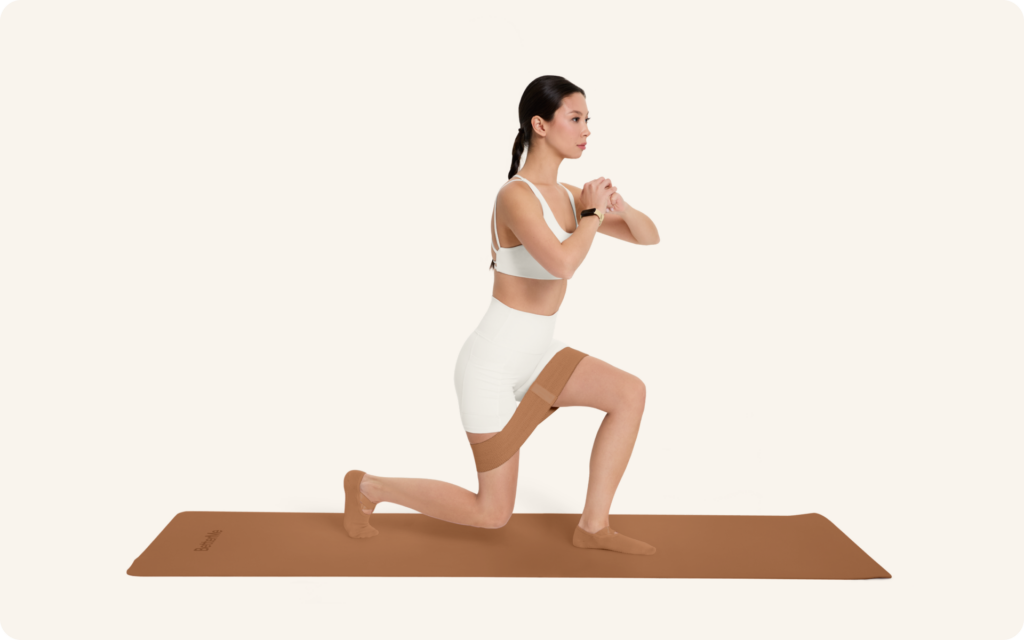
3. Split squat jumps
- Start in a lunge position.
- Jump up and switch legs in the air.
- Land softly in a lunge on the other side.
- Do 4 to 6 per side.
4. Goblet squat
- Hold a dumbbell or kettlebell at your chest.
- Squat down with your chest tall.
- Stand up through your heels. Do 8 to 12 reps.
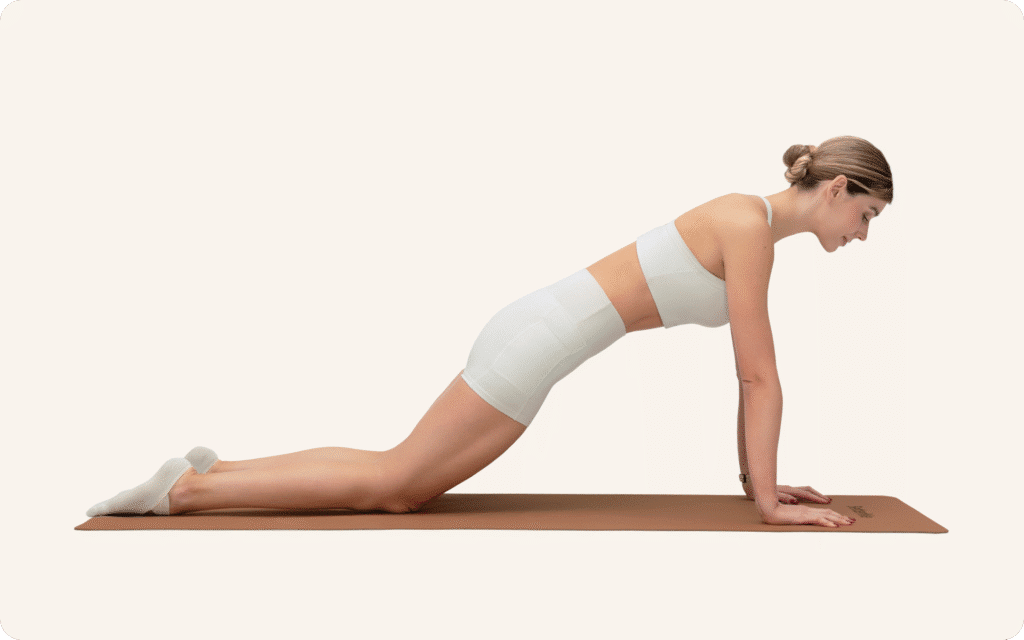
5. Push-ups
- Place your hands under your shoulders.
- Lower your chest with your body in a straight line.
- Push back up. Do 8 to 12 reps.
6. Dumbbell or band rows
- Hinge forward with a flat back.
- Pull the weight or band toward your ribs.
- Lower slowly. Do 10 to 12 reps.
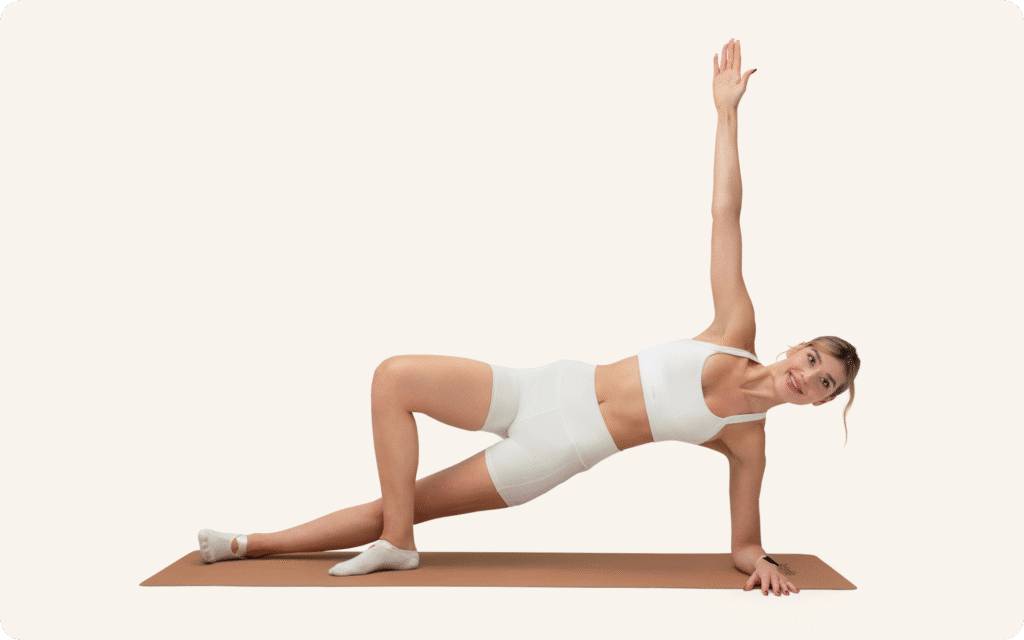
7. Plank and side plank
- Hold a forearm plank for 20 to 40 seconds.
- Turn to a side plank for 15 to 30 seconds per side.
- Repeat 2 to 3 times.
8. Medicine ball rotational throws
- Stand side-on to a wall with a light medicine ball.
- Rotate away, then throw the ball against the wall.
- Catch and repeat. Do 8 per side.
What do the 3 training days look like in detail?
Day 1: leg power
Day 1 builds jumping power for blocks and spikes. Rest 2 to 3 minutes between sets to keep each jump fast. Power training uses full rest between sets (4).
Day 2: strength and core
Day 2 builds the strength that supports jumping and arm swings. Use loads you can lift 8 to 12 times. Finish with 2 to 3 rounds of planks and side planks.
Day 3: conditioning
Day 3 trains the stop-start effort of long rallies. Sprint or shuffle hard for 20 to 30 seconds. Rest 60 to 90 seconds between efforts.
Read more: 30-Minute Bodyweight Beach Workout for Beginners
What does a full Day 1 session look like?
The session below is one example.
|
Part |
Exercise |
Sets and reps |
Rest |
|---|---|---|---|
|
Warm-up |
Sand jog, leg swings, easy jumps |
8 minutes |
None |
|
Power |
Squat jumps |
3 x 5 |
2 to 3 minutes |
|
Power |
Lateral bounds |
3 x 5 per side |
2 minutes |
|
Power |
Split squat jumps |
2 x 4 per side |
2 minutes |
|
Core |
Medicine ball rotational throws |
2 x 8 per side |
1 minute |
|
Cool-down |
Walk and stretch |
5 minutes |
None |
How do you land with control?
Controlled landings help you stay steady and set up your next move.
- Land on the balls of your feet, then let your heels settle.
- Bend your knees and hips to absorb the landing.
- Keep your knees in line with your toes.
- Hold the first landings for 1 second to check your balance.
- Stop the set when your landings get loud or sloppy.
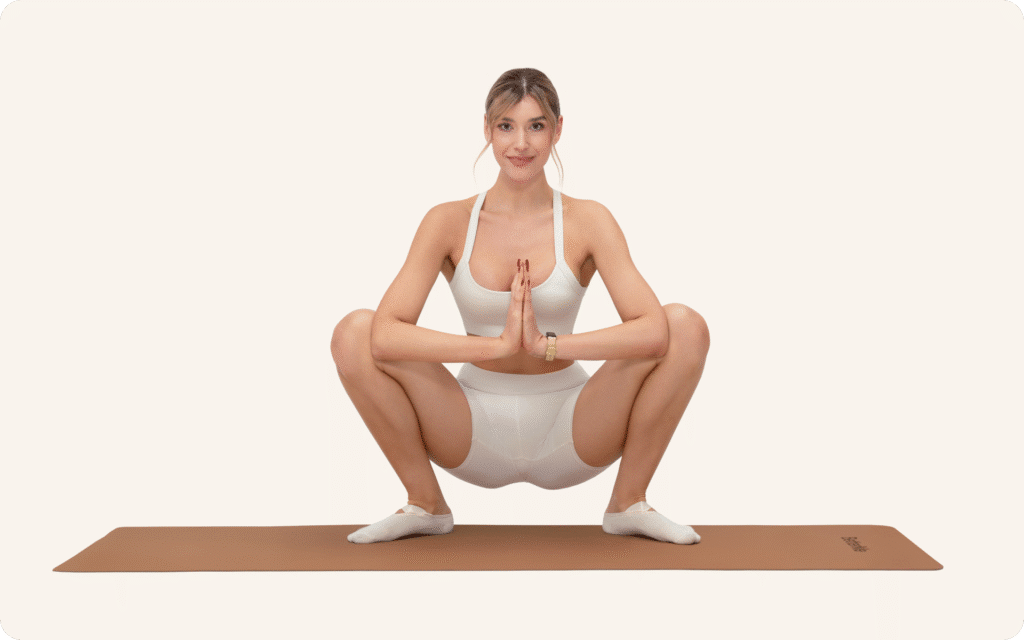
How do you warm up on sand?
Warm-ups improved performance in most measures in a review (5).
- Jog lightly on the sand for 3 minutes.
- Do 10 leg swings forward and side to side per leg.
- Do 10 arm circles each way.
- Do 10 bodyweight squats and 5 lunges per leg.
- Do 3 easy jumps and 3 short shuffles each way.
What makes playing on sand different?
At the same speed, walking on sand used 2.1 to 2.7 times as much energy as walking on a hard surface. Running on sand used about 1.6 times as much energy as running on that surface at the same speed (1).
Sand also lowers impact compared with grass (2). Your jump may feel lower and your first step slower when you start.
How do you adapt to sand?
Add sand time gradually over several weeks. For an alternative indoor strength day, use our full-body strength training routine.
- Start with short drills of 10 to 15 minutes.
- Practice jumping and landing on sand before full sessions.
- Expect your jump height to feel lower at first.
- Train barefoot or in sand socks, as you play.
- Check the sand for sharp objects before you start.
What does a 6-week build-up look like?
Start 6 weeks before the season if you can. The plan below is one example.
|
Weeks |
Focus |
|---|---|
|
1 to 2 |
Learn exercises on firm ground, 2 sand sessions a week |
|
3 to 4 |
Add power drills on sand, 3 sessions a week |
|
5 to 6 |
Full 3-day plan plus regular play |
BetterMe can help you add more structure to your daily wellness routine with workouts, meal planning tools, and habit-building features. Explore the app and take a practical step toward a routine that feels more manageable for you.
Why is cardio fitness important?
Rallies demand repeated sprints, jumps, and dives with short rests. Better fitness helps you keep your timing late in a match. Adults are advised to get 150 to 300 minutes of moderate aerobic activity a week (3).
Fun cardio options
- Jump rope intervals
- Swimming
- Cycling
- Beach soccer or flying disc
- Running on firm sand near the water
Can a beach volleyball workout support fat loss?
Moving on sand costs more energy than moving on firm ground (1). Fat loss still depends on total food intake and weekly activity. Training cannot target fat in one body area.
How many calories do 2 hours of sand volleyball use?
It depends on body size, intensity, and rest time. Casual games usually use less energy than competitive matches. A fitness tracker can give a rough personal estimate.
Read more: Beach Running Workout 101: A Comprehensive Guide to Sand Training
What are the benefits of jump rope for volleyball?
Jump rope helps with footwork, rhythm, and lower-leg endurance. Use 6 to 10 rounds of 30 seconds with 30 seconds of rest.
How do you rest between sessions?
Rest days keep your legs fresh for jumping and may lower fatigue.
- Leave a day between power sessions.
- Sleep 7 to 9 hours a night.
- Drink water before, during, and after sessions on hot days.
- Use sunscreen and shade between games.
How can you improve your volleyball game?
Pair physical training with regular skill work.
- Do target drills for passing, setting, and serving each week.
- Set one clear goal per month, such as serve accuracy.
- Work with a qualified coach for technique feedback.
- Rest when your body feels worn down.
What should you wear?
Light, breathable clothes help on hot days. Many players train barefoot on sand, and sand socks protect your feet from hot or rough sand. Wear sunglasses and a cap for glare.
Which mistakes should you avoid?
Avoid these common mistakes.
- Doing high-volume jumps on hard ground
- Skipping the warm-up
- Adding too much sand time too fast
- Training power when tired
- Ignoring sun and heat
Frequently Asked Questions
Does beach volleyball build muscle?
It can build some leg and core strength. Activity guidelines advise strength work on 2 or more days a week (3).
Can a beach volleyball workout strengthen your core?
No single workout targets belly fat. Core work strengthens the abdominal muscles, and how they look depends mostly on body fat.
How can you adjust training before a match?
Count the match as a demanding session. Shorten or skip the nearby jumping and sprint drills if your legs need more recovery.
Should you train on sand or a hard surface?
Use both. Learn moves on firm ground, then practice on sand.
How do matches fit the sample week?
Place scheduled games on the calendar first, then fit the sample workouts around recovery. On a busy match week, use fewer training sessions.
The bottom line
A beach volleyball workout can build leg power, core strength, and endurance, with gradual time on sand. Use the 3-day plan alongside regular play. Rest between hard sessions and progress steadily. For a sand running option, see our beach running workout guide.
DISCLAIMER:
This article is intended for general informational purposes only and does not serve to address individual circumstances. It is not a substitute for professional advice or help and should not be relied on for making any kind of decision-making. Any action taken as a direct or indirect result of the information in this article is entirely at your own risk and is your sole responsibility.
BetterMe, its content staff, and its medical advisors accept no responsibility for inaccuracies, errors, misstatements, inconsistencies, or omissions and specifically disclaim any liability, loss or risk, personal, professional or otherwise, which may be incurred as a consequence, directly or indirectly, of the use and/or application of any content.
You should always seek the advice of your physician or other qualified health provider with any questions you may have regarding a medical condition or your specific situation. Never disregard professional medical advice or delay seeking it because of BetterMe content. If you suspect or think you may have a medical emergency, call your doctor.
SOURCES:
- Mechanics and energetics of human locomotion on sand (1998, doi.org)
- Sand training: a review of current research and practical applications (2014, doi.org)
- WHO guidelines on physical activity and sedentary behaviour (2020, who.int)
- American College of Sports Medicine position stand: progression models in resistance training for healthy adults (2009, doi.org)
- Effects of warming-up on physical performance: a systematic review with meta-analysis (2010, doi.org)