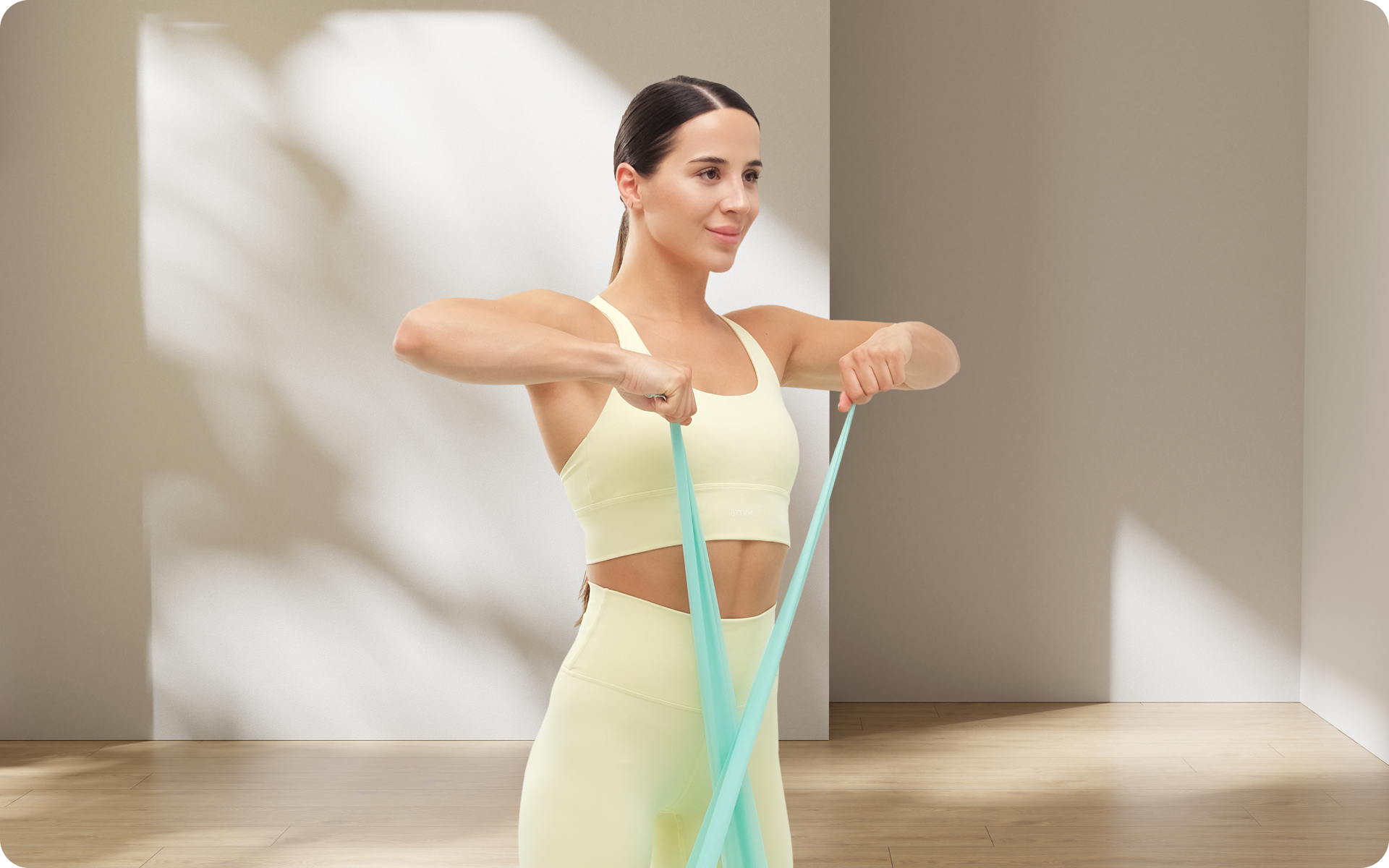
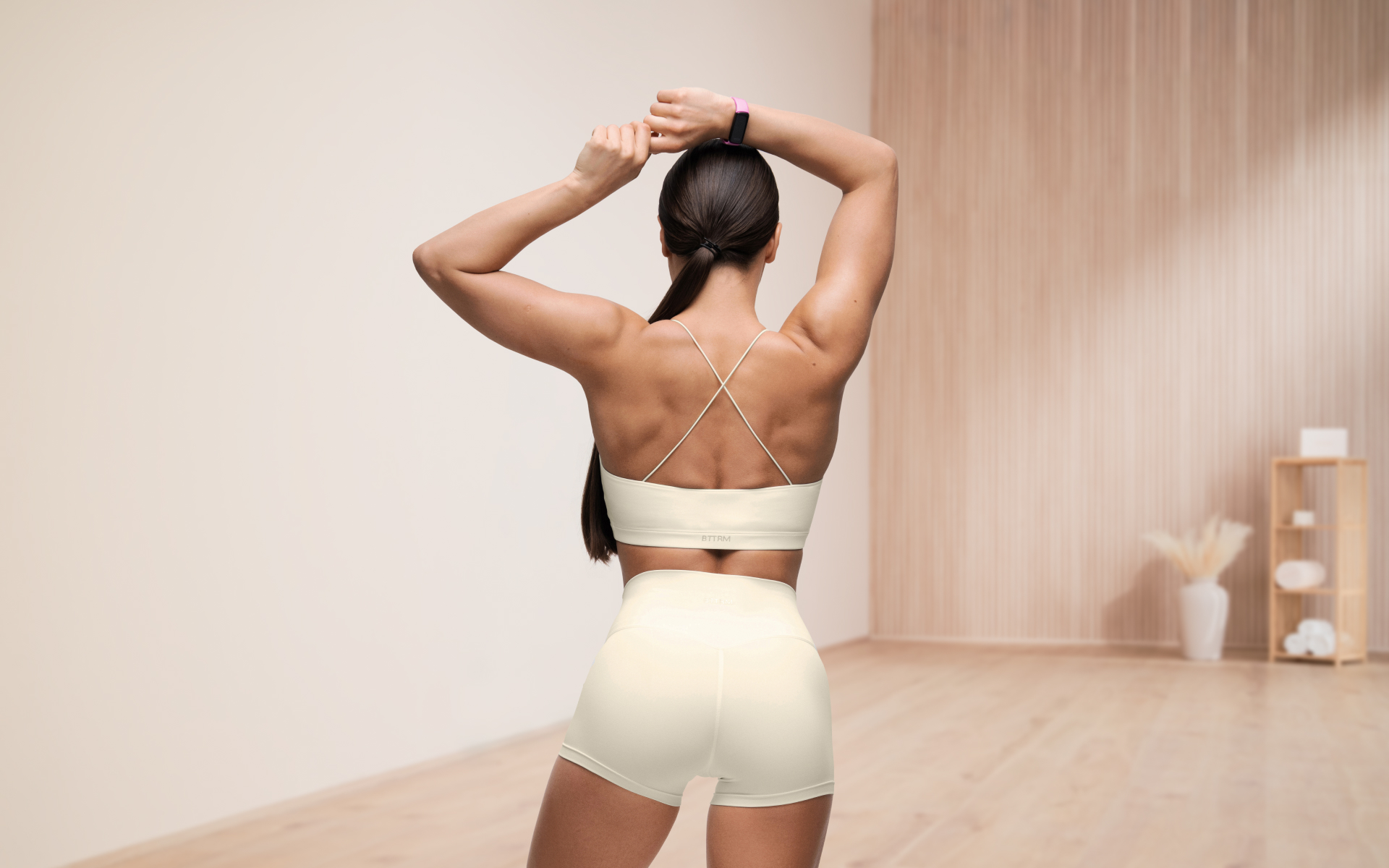
Start this sample back and bicep workout for women with alternating rows, reverse flys, and alternating curls. Perform two sets: 8 to 12 reps per arm for rows and curls, and 10 to 12 reps for flys. Adjust weight and rest to maintain control. Our back exercises for women guide offers alternatives.
Key takeaways
These points cover exercise order, load, progression, and rest for a home pulling session.
- Resistance training can improve strength and muscle size across several approaches in healthy adults (1).
- Exercises performed earlier tend to gain more strength. Exercise order has not clearly changed muscle growth (2).
- Lighter and heavier loads can build muscle, while heavier loads generally produce greater maximal-strength gains (3).
- Adding repetitions or weight both improved measured outcomes in a trial of young adults starting resistance training (4).
- Recovery findings from demanding pressing workouts do not establish a universal rest interval for a back-and-biceps routine (5).
- The three-movement starting routine is a sample you can adjust to your goals.
Is it okay to train back and biceps together?
Yes, you can train back and biceps together as a pulling session. Rows combine shoulder movement with elbow bending, while curls focus on elbow bending. Because both involve the elbow flexors, count the work from rows when deciding how many curls to add. More exercises are not automatically a better starting point.
This combination is one way to organize upper-body training at home or in the gym. This pulling session does not include direct triceps work and is not a complete weekly program. Include other sessions for the lower body and pushing movements according to your goals and schedule.
Choose the pairing because it fits your routine, rather than expecting a special benefit from training these muscles together. Current evidence supports several resistance-training formats, including home-based approaches (1).
Read more: 6 Wall Stretches for the Lower Back: A Complete Guide
What muscles does a back and biceps workout train?
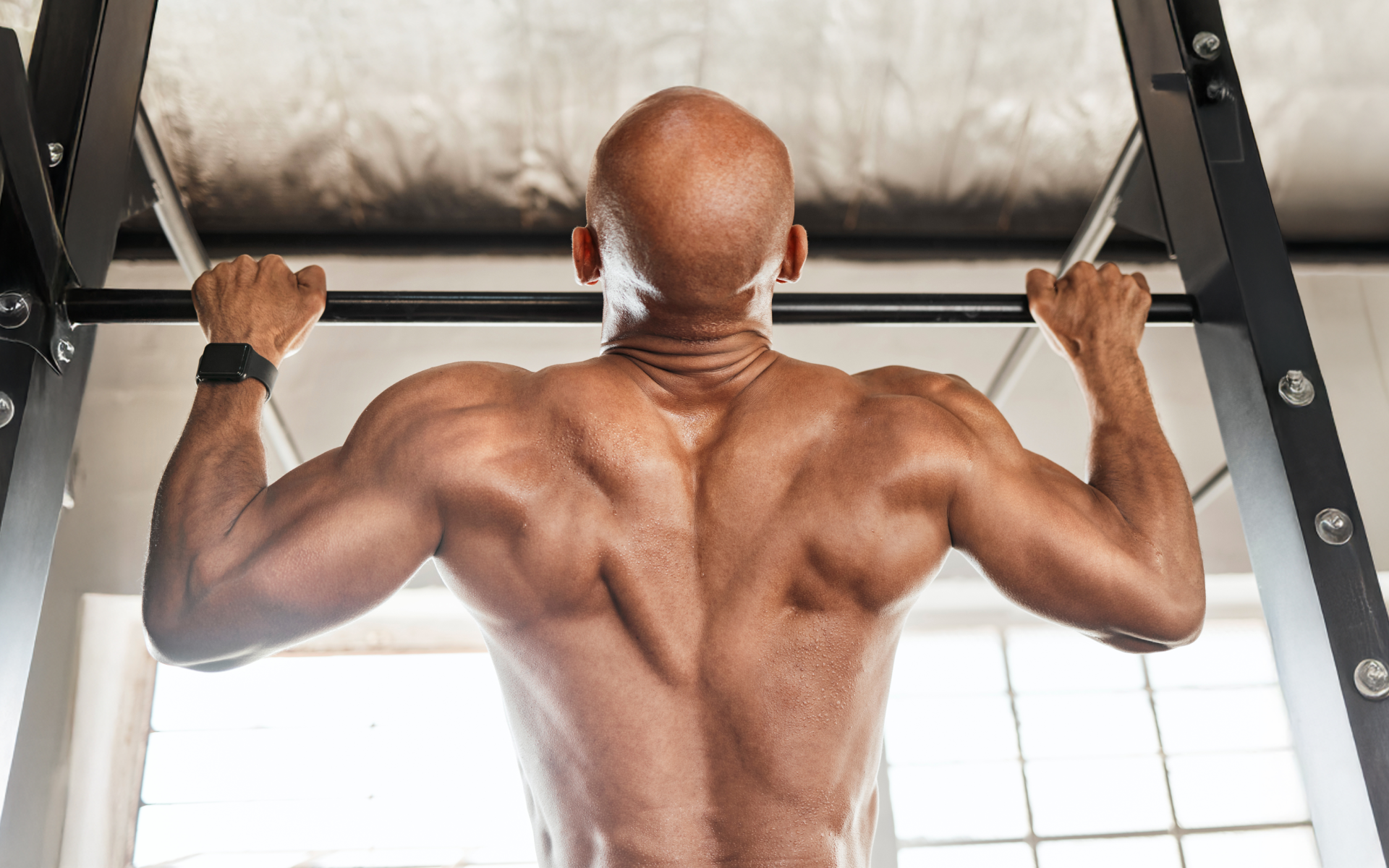
A pulling session uses several muscle groups in the upper body. The latissimus dorsi, commonly called the lats, helps move the upper arm backward and toward the torso. Upper back muscles, including the rhomboids, help draw the shoulder blades together (6).
The biceps muscle bends the arm and helps turn the palm upward into a supinated position. The posterior deltoid, often called the rear delt, helps move the upper arm backward (6). These roles explain why a back workout includes more than one movement pattern.
What exercise works both back and biceps?
A dumbbell row works both the back muscles and biceps through shoulder movement and elbow bending. A reverse fly emphasizes moving the arms outward, while a dumbbell curl focuses on bending the arm. Choose variations by the movement you want to practice; no variation isolates one muscle completely.
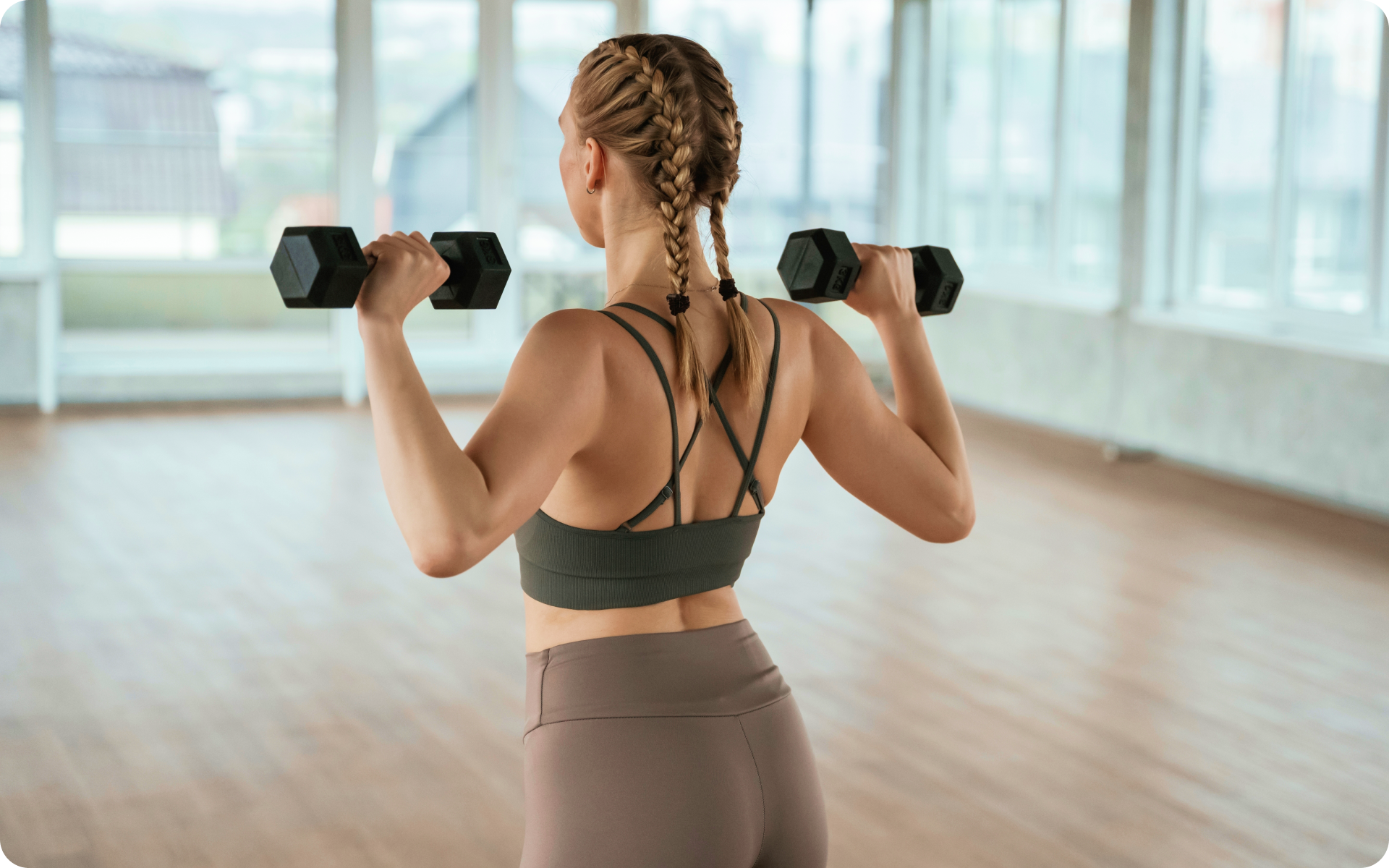
What is a good back and biceps workout routine?
Start with the exercise you most want to improve. In this sample, rows come first because back training is the priority. Then perform reverse flys and one curl variation. If curl strength is your main goal, the order can change.
A review of 11 studies found larger strength improvements in exercises performed earlier in the session. It found no clear muscle-growth difference between multi-joint-first and single-joint-first orders (2). This supports choosing an order around your goal rather than always placing large muscles first.
Before choosing the exercise order, consider:
- Which movement is your main priority?
- Which movement needs the most practice or concentration?
Organize the sample session into these parts:
- Warm up with comfortable movement and light practice sets.
- Perform your selected row and reverse fly.
- Finish with one curl variation.
- Put equipment away and record the session.
Begin with three movements, using two sets of each. The routine below suggests 8 to 12 reps per arm for rows and curls. For reverse flys, use 10 to 12 controlled reps with a lighter load when needed. These are sample ranges, not requirements shown to suit every beginner.
Rest about 60 to 90 seconds between sets initially, then extend the break if you need it. Resume when you can repeat the next set with control. Do not shorten rest simply to make the workout feel harder.
Use a weight that leaves roughly two controlled repetitions available at the end of a set. If you must swing, shrug, or twist to finish, reduce the load or stop the set earlier.
Workouts, weight management tools, and recipe ideas come together in the BetterMe: Health Coaching app, giving you practical support for building a more consistent wellness routine.
How can women do a back and bicep workout at home?
Use a pair of dumbbells you can control and a clear, nonslip training area for this workout at home. A stable support can help with rows. Start with lighter weights for the reverse fly than for the row if necessary. A back and biceps workout without equipment requires different movements; these dumbbell exercises need resistance.
Choose footwear appropriate for your floor and exercise setup. Avoid training on a slippery surface or leaving weights where you can trip over them.
Check the space before starting: you should be able to hinge, extend your arms, and lower weights without obstacles.
- Place dumbbells where you can pick them up and set them down with control.
- Check that any support or bench cannot slide or tip.
Warm-up
Prepare with comfortable shoulder movement and light rehearsal sets before lifting your working weight.
- Arm circles: Make small, comfortable circles in both directions without forcing shoulder range.
- Shoulder rolls: Roll your shoulders slowly backward and forward through a comfortable range.
- Bodyweight hip hinges: Soften your knees and move your hips backward while keeping your torso controlled.
- Practice rows: Rehearse the rowing movement with no weight or a lighter dumbbell.
- Practice curls: Perform a few easy repetitions before using your selected working weight.
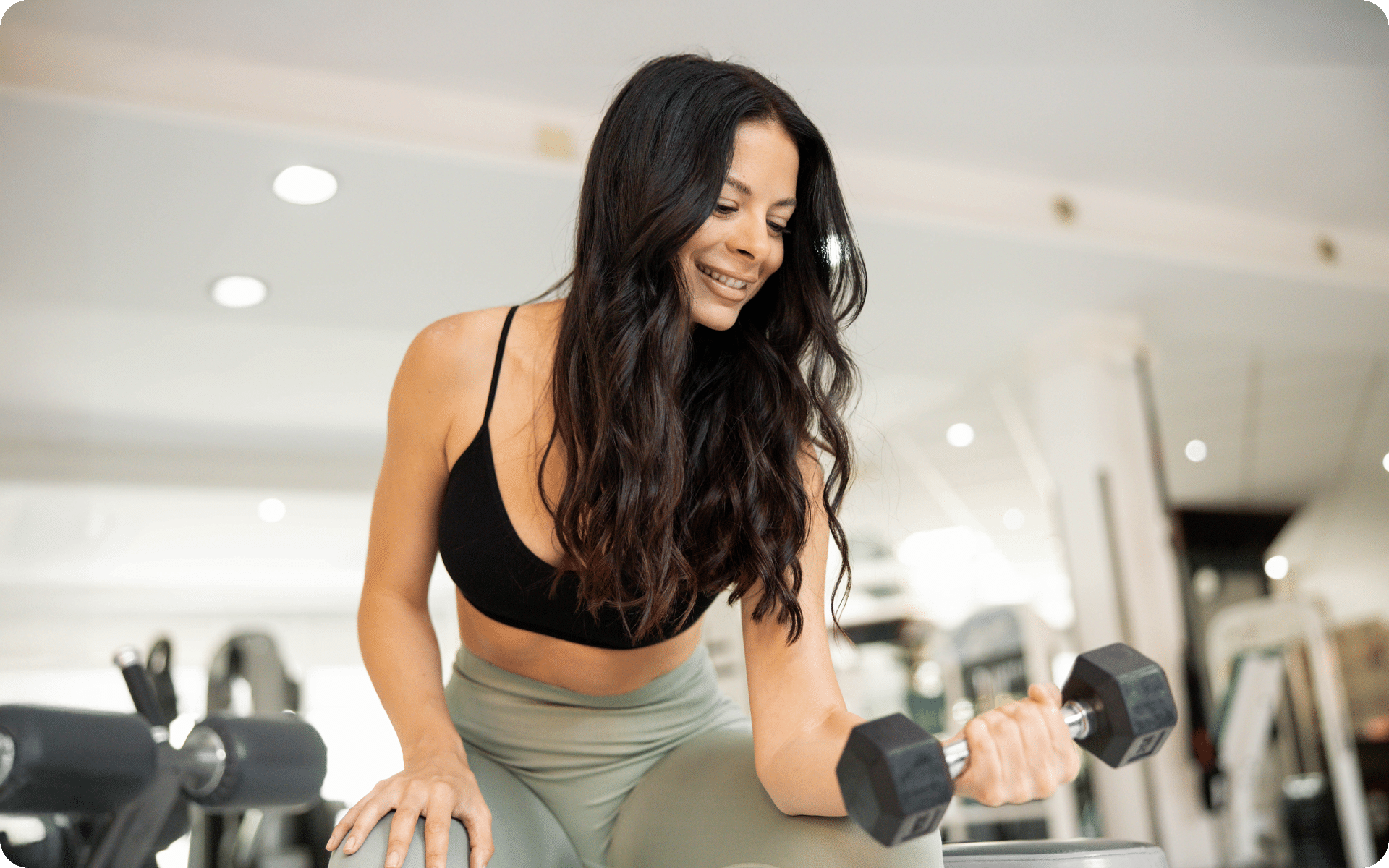
How many sets and reps should a back and biceps workout include?
Use two sets of each of the three movements in this sample. Count rows and curls per arm, and rest 60 to 90 seconds or longer between sets. Add work only when your technique and rest support it.
| Exercise | Sets | Reps |
|---|---|---|
| Alternating bent-over row | 2 | 8 to 12 per arm |
| Reverse fly | 2 | 10 to 12 |
| Alternating biceps curl | 2 | 8 to 12 per arm |
Replace the alternating curl with a hammer curl, palms facing in, if preferred; do not add both.
Alternating bent-over row
The alternating row trains your pulling muscles while you keep your torso steady. Keep both feet planted; the aim is controlled movement, not lifting the heaviest available dumbbell.
- Stand with feet shoulder-width apart, holding your dumbbells beside you.
- Soften your knees and hinge at the hips, letting your arms hang beneath your shoulders.
- Pull one elbow toward your ribs without twisting your torso.
- Lower that dumbbell under control.
- Repeat on the other side, counting repetitions separately for each arm.
- Complete 8 to 12 reps per arm, or stop sooner if your movement changes.
Reverse fly
The reverse fly uses a lighter lifting movement with the arms traveling outward through a controlled range of motion. Keep the elbow angle nearly unchanged rather than turning the movement into a row.
- Stand with your feet hip-width apart, with a dumbbell in each hand hanging at your sides.
- Hinge forward at the hips, letting your arms fall below your shoulders, your palms facing each other.
- With elbows slightly bent, lift your arms outward through a comfortable range without shrugging.
- Lower the weights back down slowly and with full control. This is one rep.
- Do 10 to 12 reps.
Alternating bicep curl
An alternating bicep curl lets you complete one arm’s movement before beginning the other. Keep the upper arm close to your side and avoid using a backward lean to lift the weight.
- Stand in a stable stance, holding a dumbbell in each hand with palms facing forward.
- Bend your right elbow to curl the weight toward your shoulder.
- Lower the right dumbbell under control.
- Repeat with the left arm, keeping the opposite arm still.
- Complete 8 to 12 reps per arm.
Read more: 9 Primarily Seated Lower-Back Exercises for Seniors
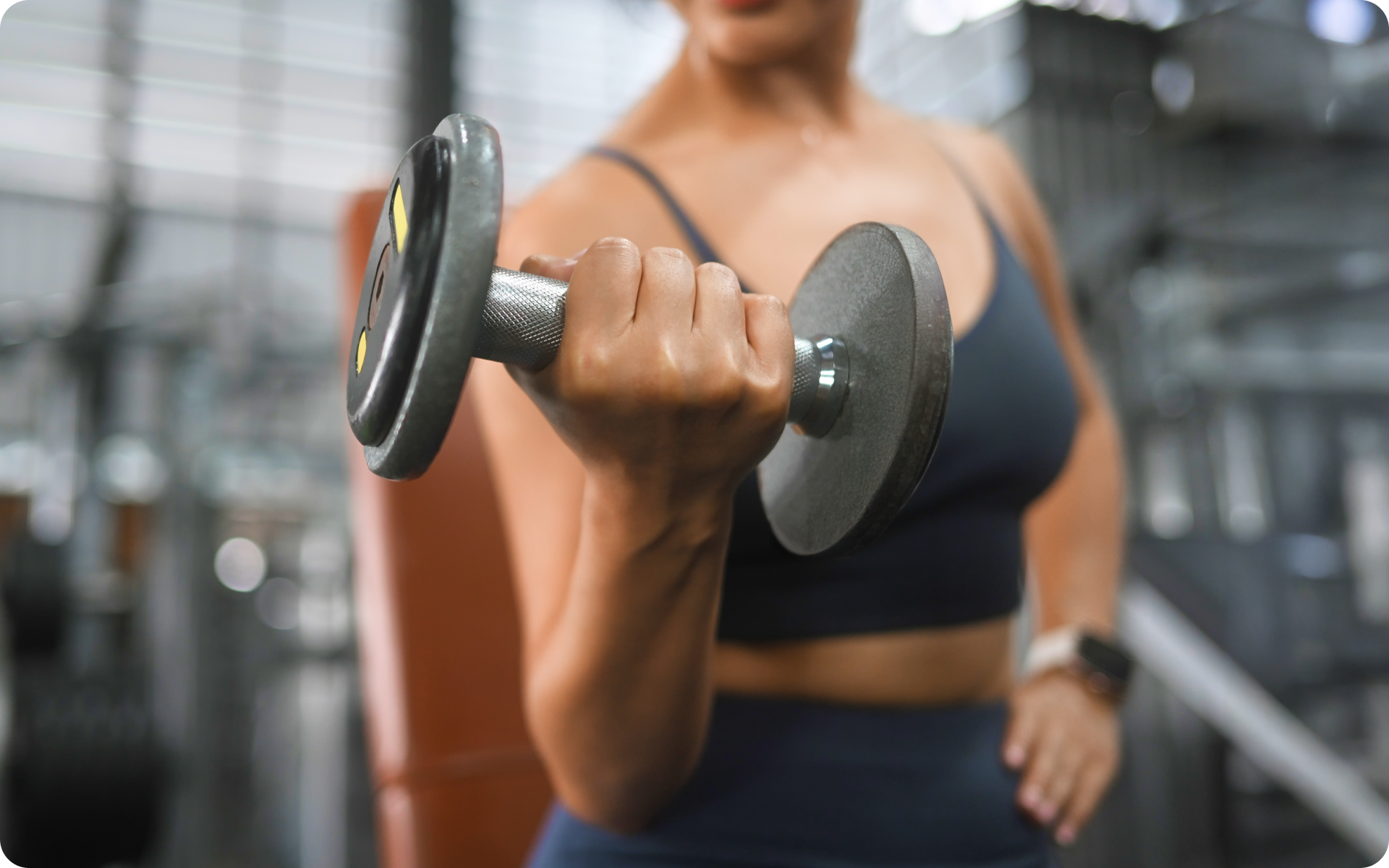
Can back and bicep exercises build muscle in women?
Resistance training can increase muscle size, but “bulky” describes a personal preference rather than a defined outcome. A workout cannot guarantee a particular appearance. Choose your training goal and review whether the program’s workload fits it.
- For strength, track the loads and repetitions you can perform with control.
- For muscle growth, review your overall training volume and progress over time.
- For general activity, choose a routine you can repeat alongside other movement.
- Adjust the plan if its demands or direction no longer match your goals.
An overview of resistance-training research included healthy adults across different ages and training approaches. Many approaches improved strength or muscle size compared with no exercise (1). These findings support options for training, not a promise about how any individual will look.
How can you progress a back and bicep workout over time?
Progress when the current workload becomes consistently manageable, rather than changing the plan every workout. Keep a record of exercise variation, weight, repetitions, and technique. A training log helps distinguish progress from a different setup or shortened range.
A trial in untrained young adults compared increasing weight with increasing repetitions over ten weeks. Both methods improved the measured strength and muscle outcomes (4). The sample progression below is a practical example, not that trial’s exact protocol.
- Add repetitions first. If you complete eight reps per arm with steady technique, try nine next time. Keep the same load until every set reaches the top of the range with roughly two reps still available.
- Then consider a small load increase. Use the smallest available increment and return to the lower end of the rep range. A fixed five-pound jump may be too large for a curl or reverse fly. If the next weight disrupts technique, keep practicing with the previous load.
- Change one variable at a time. Adding weight, sets, and repetitions together makes it harder to judge which change you can manage. Longer workouts and shorter rest periods are not required progressions for this routine.
- Keep the movement controlled. Rushing curls or reducing every rest period does not turn this session into a structured HIIT workout. If your goal is lifting technique, preserve enough rest to repeat each set.
A qualified personal trainer can help assess technique and adjust movement choices. If you move to a gym, our gym back and bicep workout guide offers equipment-based examples. Treat a new exercise as a new skill rather than carrying over the same dumbbell load automatically.
BetterMe offers a variety of workouts, recipes, challenges, and support tools to help you stay more consistent with your wellness routine. Explore the app to find features that fit your goals, preferences, and schedule.
Frequently asked questions
Do I need to train my biceps as a woman?
Biceps training is an option for developing elbow-flexion strength, whether through pulling exercises or direct curls. You do not need a separate biceps-only day. Consider how much pulling your wider routine already includes.
Is 48 hours rest enough for muscle growth?
Forty-eight hours is not a guarantee of recovery. A study of trained men found lower workload when demanding pressing sessions were repeated after 24 hours (5). Adjust your next session if soreness changes movement or performance remains below usual.
How long should a back and biceps workout take?
Workout duration depends on the exercises, sets, rest periods, and time needed to change sides or equipment. Record your first session’s duration rather than rushing to meet a fixed time. A shorter session can use fewer movements while keeping adequate rest.
How often should women train their back and biceps?
Start with one or two nonconsecutive sessions in this sample, accounting for other pulling workouts. A third session is not automatically more useful. Review total workload and recovery before adding another day.
Can women build biceps without heavy weights?
Muscle growth can occur with lighter or heavier resistance; heavier loads generally produce greater maximal-strength gains (3). That finding does not make every bodyweight exercise a biceps exercise. Choose a movement that actually trains the elbow flexors.
For more curl variations, see our bicep exercises for women guide. Use one option at a time while learning its setup.
How can women adapt this back and bicep workout for the gym?
Keep the same three-movement structure and select equipment you know how to use. A seated cable row can replace the dumbbell row. A lat pulldown or assisted pull-up provides a vertical pulling option; learn its setup before adding resistance. Choose one change at a time rather than adding every available machine to the routine.
The bottom line
Start this arm and back routine with one row, one reverse fly, and one curl variation. Record your sets and repetitions before increasing the load.
DISCLAIMER:
This article is intended for general informational purposes only and does not serve to address individual circumstances. It is not a substitute for professional advice or help and should not be relied on for making any kind of decision-making. Any action taken as a direct or indirect result of the information in this article is entirely at your own risk and is your sole responsibility.
BetterMe, its content staff, and its medical advisors accept no responsibility for inaccuracies, errors, misstatements, inconsistencies, or omissions and specifically disclaim any liability, loss or risk, personal, professional or otherwise, which may be incurred as a consequence, directly or indirectly, of the use and/or application of any content.
You should always seek the advice of your physician or other qualified health provider with any questions you may have regarding a medical condition or your specific situation. Never disregard professional medical advice or delay seeking it because of BetterMe content. If you suspect or think you may have a medical emergency, call your doctor.
SOURCES:
The list covers reviews and trials on resistance training, exercise order, load, progression, and rest, plus an upper-limb anatomy reference.
- American College of Sports Medicine Position Stand. Resistance Training Prescription for Muscle Function, Hypertrophy, and Physical Performance in Healthy Adults: An Overview of Reviews (2026, pmc.ncbi.nlm.nih.gov)
- What influence does resistance exercise order have on muscular strength gains and muscle hypertrophy? A systematic review and meta-analysis (2021, pubmed.ncbi.nlm.nih.gov)
- Influence of resistance training load on measures of skeletal muscle hypertrophy and improvements in maximal strength and neuromuscular task performance: A systematic review and meta-analysis (2021, pubmed.ncbi.nlm.nih.gov)
- Effects of Resistance Training Overload Progression Protocols on Strength and Muscle Mass (2024, pubmed.ncbi.nlm.nih.gov)
- Muscle activation and volume load performance of paired resistance training bouts with differing inter-session recovery periods (2021, sciencedirect.com)
- Anatomy, Shoulder and Upper Limb, Muscles (2023, ncbi.nlm.nih.gov)
 Reviewed by
 Reviewed by