Building a sustainable fitness habit starts with a single, manageable commitment. Navigating the world of gym programming can often feel overwhelming, with countless variables to consider, from rep ranges and rest intervals to exercise selection and frequency.
To help you navigate through the process, we’re going to explain how to structure a month of training that balances research-informed principles with practical application in this blog post.
This comprehensive guide breaks down the physiology of short-term adaptation, the mechanics of effective movement, and the specific variables that may help you make progress in 28 days. Whether you’re returning to the gym after a hiatus or stepping onto the gym floor for the first time, this plan is designed to optimize your time and effort.
What Is an Effective 4-Week Gym Workout Plan for Results?
An effective 4-week plan isn’t just a random list of exercises, it’s a calculated period of “mesocycle” training that’s designed to introduce a stimulus, allow for recovery, and produce adaptation. In structured training, a mesocycle typically lasts 4 to 6 weeks and focuses on a specific training outcome, such as hypertrophy (muscle growth), strength, or endurance (1).
For a 4-week block to be effective, it must rely on the principle of progressive overload. This doesn’t simply mean “lift heavier” – it means systematically increasing the demands on the musculoskeletal system (2).
In reality, it’s probably not quite good enough to just lift weights and eat protein to get really solid results. For example, if for two years you’ve been lifting the exact same weight for the exact same reps, you’re likely struggling to keep the muscle growing.
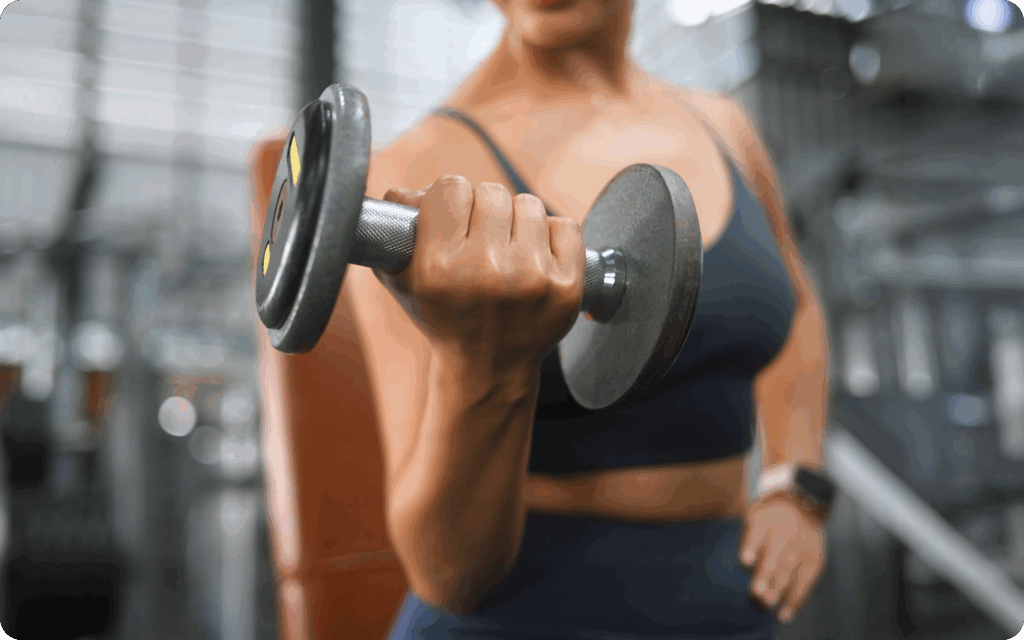
To support consistency and strength gains, your plan needs to manipulate specific acute training variables:
- Intensity: This refers to the load used, often expressed as a percentage of your 1-repetition maximum (1RM) or rate of perceived exertion (RPE). For general fitness adaptations in a 4-week window, working at an RPE of 7-8 (where you have 2-3 reps left in the tank) is generally sufficient to stimulate change without causing excessive fatigue (3).
- Volume: This is calculated as Sets x Reps x Load. An effective plan typically aims for 12-20 hard sets per muscle group per week to maximize hypertrophy signals (4).
- Frequency: How often you train a muscle group. Research has suggested that stimulating a muscle group 2-3 times per week is superior to once a week for most non-elite lifters (5).
By structuring these variables correctly, a 4-week plan serves as a foundational block – a “preparatory phase” – that improves neuromuscular efficiency (how well your brain talks to your muscles) and increases work capacity.
BetterMe: Health Coaching app helps you achieve your body goals with ease and efficiency by helping to choose proper meal plans and effective workouts. Start using our app and you will see good results in a short time.
Can You Get in Shape in 4 Weeks?
This is perhaps the most common question in the fitness industry. The answer requires us to define “in shape” with precision. If you’re looking to completely transform your physique from sedentary to bodybuilder-ready, 4 weeks is insufficient. If “in shape” means noticeable, measurable changes in how your body performs and feels, many people start to see early improvements within a few weeks.
Here is what actually happens physiologically during a 4-week window:
- Neuromuscular Adaptation (Weeks 1-2): Most early strength gains – often up to the first 4-8 weeks – come from neural improvements. Your nervous system becomes more efficient at recruiting motor units (the nerve and the muscle fibers it controls). You aren’t necessarily building massive amounts of new muscle tissue yet, but you are teaching your body to use the muscle you have more effectively (6).
- Glycogen Storage (Weeks 1-4): With consistent resistance training, your muscles increase their capacity to store glycogen (carbohydrate energy) (7). This and swelling in muscles can lead to a slightly “fuller” look in the muscles relatively quickly, which is often mistaken for rapid muscle growth (8).
- Metabolic Efficiency: Over a few weeks of regular exercise, your body may start to adapt in terms of how it uses and stores energy, especially during easy movement and recovery days (9).
However, you must be careful with your expectations regarding fat loss. A commonly recommended amount of fat loss is generally considered to be 0.5% to 1.0% of body weight per week (10). For a 180lb individual, this is roughly 0.9 to 1.8 lbs per week. Over 4 weeks, this equates to roughly 3.6 to 7.2 lbs of weight loss. While it’s visible, it’s not a complete overhaul.
Therefore, you can get “in shape” in the sense that you’ll feel stronger, move better, and see initial definition changes, but patience is required for significant anatomical changes.

What’s the Best 4-Week Gym Workout Plan for Beginners?
For beginners, the “best” plan is one that prioritizes frequency and motor learning over pure intensity. A full-body split performed 3 days per week is widely considered to be a common starting point for novice trainees.
Why full body? Beginners require less volume per session to trigger a growth response, but benefit from practicing the skill of lifting more frequently. By hitting a squat pattern 3 times a week, you get 12 opportunities to practice that skill in a month, versus only 4 times if you use a “body part split” (such as a dedicated leg day).
This 4-week gym workout plan for beginners utilizes an alternating A/B structure. You’ll alternate between Workout A and Workout B across three non-consecutive days (e.g. Monday, Wednesday, Friday).
Beginner Full-Body Schedule
- Week 1: A – B – A
- Week 2: B – A – B
- Week 3: A – B – A
- Week 4: B – A – B
Workout A: Lower Focus + Push Emphasis
| Exercise order | Exercise name | Sets | Reps | Rest (secs) | RPE (1-10) |
|---|---|---|---|---|---|
| 1 | Goblet squat | 3 | 10-12 | 90 | 7 |
| 2 | Dumbbell bench press | 3 | 10-12 | 90 | 7 |
| 3 | Seated cable row | 3 | 12-15 | 60 | 7-8 |
| 4 | Dumbbell lateral raise | 2 | 12-15 | 60 | 8 |
| 5 | Plank | 3 | 30-45s | 60 | 7 |
Workout B: Hinge Focus + Pull Emphasis
| Exercise order | Exercise name | Sets | Reps | Rest (secs) | RPE (1-10) |
|---|---|---|---|---|---|
| 1 | Romanian deadlift (dumbbell or kettlebell) | 3 | 10-12 | 90 | 7 |
| 2 | Overhead dumbbell press (seated or standing) | 3 | 10-12 | 90 | 7 |
| 3 | Lat pulldown | 3 | 12-15 | 60 | 7-8 |
| 4 | Bodyweight lunge | 2 | 10-12/leg | 60 | 8 |
| 5 | Dead bug | 3 | 10/side | 60 | 7 |
Exercise Instructions
Goblet Squat
- Setup: Stand with your feet slightly wider than shoulder-width apart, your toes pointing out about 15-30 degrees. Hold a dumbbell or kettlebell vertically against your chest, cupping the top end with both hands.
- Descent: Break at the hips and knees simultaneously, keeping your chest up and elbows tucked in.
- Depth: Lower hips until your thighs are at least parallel to the floor, with your heels planted.
- Ascent: Press through the mid-foot to return to standing, contracting your glutes at the top, avoiding hyperextension.

Dumbbell Bench Press
- Setup: Sit on a flat bench, dumbbells on your thighs. Roll back, pressing the weights above your chest with your arms extended.
- Descent: Lower the dumbbells with control until they’re level with your chest, your elbows around 45 degrees from your torso.
- Ascent: Press weights up, driving your biceps toward your chest for optimal chest activation.
Seated Cable Row
- Setup: Sit at the row station with your feet on the platform, your knees slightly bent and your torso upright. Grasp the handle with your arms extended.
- The Pull: Pull your elbows back past your torso, squeezing your shoulder blades together.
- Return: Extend your arms forward with control, allowing your lats to stretch while keeping your lower back neutral.
Dumbbell Lateral Raise
- Setup: Stand tall with a dumbbell in each hand, your arms by your sides and your palms facing your body.
- Raise: With a slight bend in your elbows, lift the dumbbells out to the sides until your arms reach shoulder height.
- Lower: Lower the weights with control back to your sides. Don’t shrug your shoulders up.
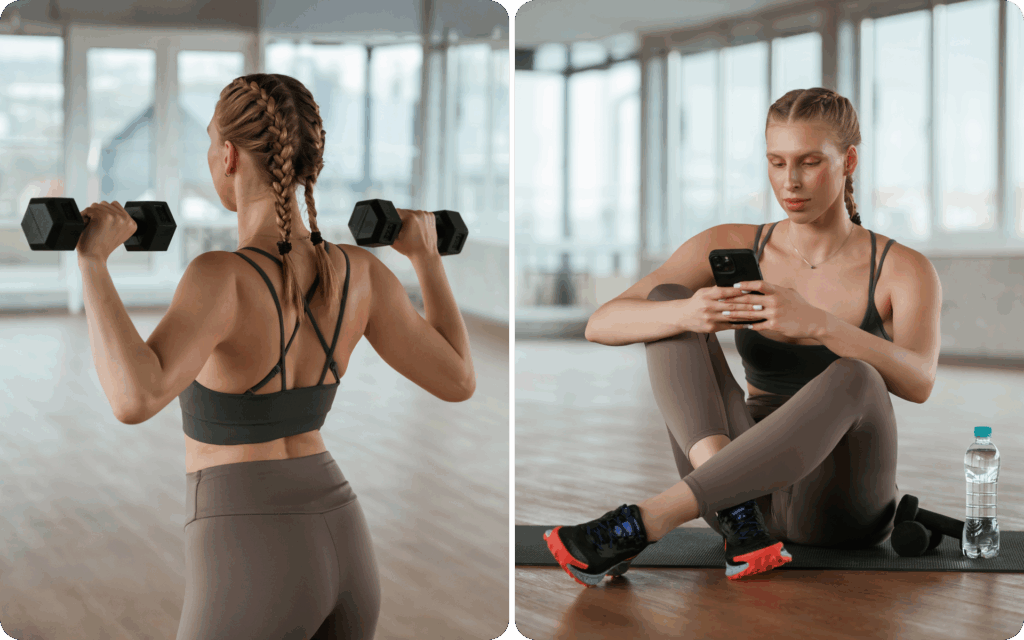
Plank
- Setup: Position your forearms on the ground with your elbows under your shoulders and your legs extended behind.
- Align: Maintain a straight line from your head to your heels, engaging your core and glutes.
- Hold: Breathe steadily and keep your hips level throughout the duration.
Romanian Deadlift (RDL)
- Setup: Stand with your feet hip-width apart, holding dumbbells in front of you with your palms toward your thighs.
- The Hinge: Bend your knees slightly and push your hips back, lowering the dumbbells along your legs.
- Descent: Lower until you feel a stretch in your hamstrings (usually mid-shin).
- Ascent: Drive your hips forward to stand tall, keeping the weights close to your body and your spine neutral.
Overhead Dumbbell Press (Seated or Standing)
- Setup: Sit or stand with dumbbells at shoulder height, your palms facing forward or in.
- Press: Push the weights overhead until your arms are extended without locking your elbows.
- Lower: Return with control to the starting position at shoulder level.
Lat Pulldown
- Setup: Secure your legs under the pad and grasp the bar with a grip wider than shoulder width.
- Pull: Lean back 10-15 degrees, pulling the bar down toward the top of your chest by driving your elbows toward your sides.
- Release: Return the bar upward in a controlled manner, fully extending your arms at the top.
Bodyweight Lunge
- Setup: Stand with your feet hip-width apart. Take a step forward with one leg.
- Lower: Bend both knees to lower until your back knee hovers just above the ground and your front thigh is parallel to the floor.
- Return: Push off the front foot to return to the start. Repeat on the opposite side.
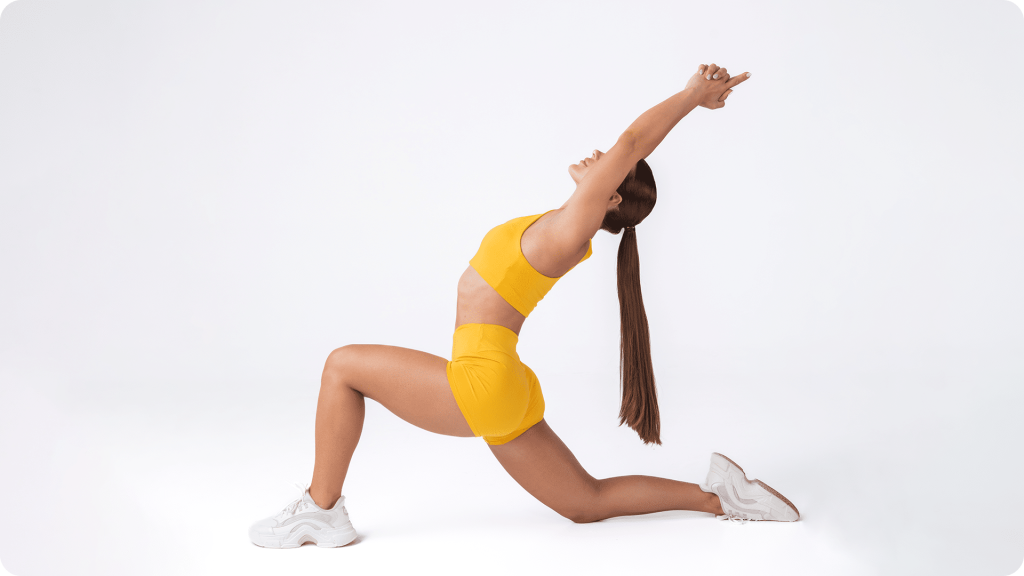
Dead Bug
- Setup: Lie on your back, your arms reaching toward the ceiling and your knees bent at 90 degrees above your hips.
- Extend: Slowly lower your right arm and left leg toward the floor, keeping your core engaged and your back flat.
- Return: Bring them back to start, then repeat with the opposite limbs.
When the goal shifts to fat loss, the training stimulus must change to support caloric expenditure while preserving lean muscle mass. A common misconception is that you must do high reps with light weights to “tone” muscle. In reality, maintaining intensity (lifting heavy) is essential to signal to your body that muscle tissue is necessary and shouldn’t be catabolized (broken down) for energy (11).
A 4-week gym workout plan for weight loss should incorporate metabolic resistance training. This often involves supersets or circuits to keep the heart rate elevated and increase excess post-exercise oxygen consumption (EPOC) – the “afterburn” effect where your body burns more calories after the workout to return to homeostasis (12).
This program uses an upper/lower split that is performed 4 days a week. We’ll utilize supersets (performing two exercises back-to-back with no rest) to increase density.
Read more: High-Intensity Interval Training (HIIT) Workout Plan for Weight Loss
Fat Loss Schedule
- Monday: Upper body (metabolic focus)
- Tuesday: Lower body (strength focus)
- Wednesday: Active recovery (Zone 2 cardio)
- Thursday: Upper body (strength focus)
- Friday: Lower body (metabolic focus)
- Weekend: Rest or light activity
Upper-Body Workout (Metabolic Focus)
| Exercise group | Exercise name | Sets | Reps | Rest (secs) |
|---|---|---|---|---|
| Superset A | 1. Push-up | 3 | 12-15 | |
| 2. Inverted row (TRX or bar) | 3 | 12-15 | 90 | |
| Superset B | 1. Standing dumbbell shoulder press | 3 | 12 | |
| 2. Dumbbell hammer curl | 3 | 12-15 | 90 | |
| Superset C | 1. Tricep rope pushdown | 3 | 15 | |
| 2. Face pull | 3 | 15 | 60 |
Lower-Body Workout (Metabolic Focus)
| Exercise group | Exercise name | Sets | Reps | Rest (secs) |
|---|---|---|---|---|
| Superset A | 1. Dumbbell step-up | 3 | 10/leg | |
| 2. Leg curl (seated or lying) | 3 | 15 | 90 | |
| Superset B | 1. Walking lunge | 3 | 12/leg | |
| 2. Plank to push-up | 3 | 10 | 90 | |
| Finisher | Kettlebell swing | 4 | 20 | 60 |
Exercise Instructions
Push-Up
- Setup: Start in a high plank with your hands slightly wider than shoulder-width apart and your core braced.
- Lower: Bend your elbows to bring your chest toward the floor, your elbows at about 45 degrees to your torso.
- Press Up: Push through your palms to return to the plank, keeping your body straight.
Inverted Row (TRX or Bar)
- Setup: Lie under a bar or TRX, your grip slightly wider than shoulder-width and your arms extended.
- Row: Pull your chest toward the bar, squeezing your shoulder blades together, and keeping your body rigid.
- Lower: Extend your arms to lower yourself with control.
Whether you’re a workout beast or just a beginner making your first foray into the world of fitness and dieting – BetterMe has a lot to offer to both newbies and experts! Install the app and experience the versatility first-hand!
Standing Dumbbell Shoulder Press
- Setup: Stand with dumbbells at shoulder height, your feet shoulder-width apart.
- Press: Drive the weights upward until your arms are fully extended overhead.
- Lower: Return the weights to shoulder height with control.
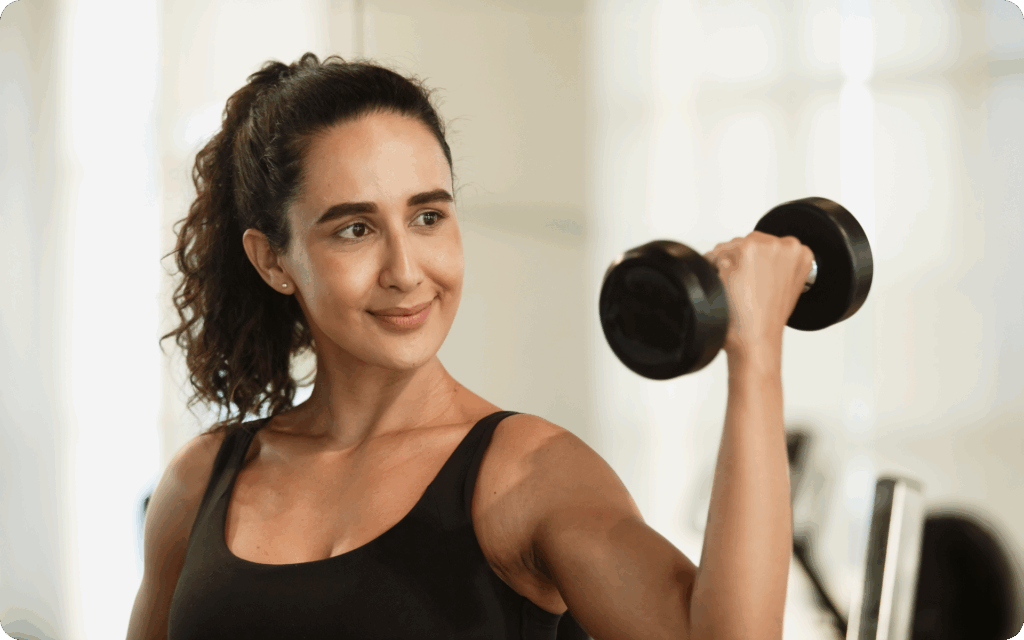
Dumbbell Hammer Curl
- Setup: Stand tall, elbows at your sides, dumbbells in your hands with your palms facing in.
- Curl: Lift the dumbbells toward your shoulders, keeping your palms facing in and your elbows tight.
- Lower: Lower the dumbbells slowly back to the starting position.
Tricep Rope Pushdown
- Setup: Stand at a cable station, grasping the rope attachment with both hands, your elbows close to your torso.
- Press: Extend your arms, pushing the rope down and apart until your elbows are straight.
- Return: Let the rope return upward slowly, keeping your upper arms stationary.
Face Pull
- Setup: Attach the rope at the upper pulley, grip with both hands, step back, and pull the rope toward your face, your elbows high.
- Pull: Squeeze your shoulder blades together at the end of the motion.
- Release: Return with control to the starting position.

Dumbbell Step-Up
- Setup: Stand facing a box or bench, holding dumbbells at your sides.
- Step Up: Place one foot on the box and push through the heel to bring your body up.
- Step Down: Step down with control. Switch legs after each set.
Leg Curl (Seated or Lying)
- Seated: Sit at the machine, your ankles beneath pads. Curl your heels toward your glutes and return with control.
- Lying: Lie prone, the pad above your heels. Curl your heels toward your glutes and slowly lower back.
Walking Lunges
- Setup: Stand tall, step forward with your right leg, and lower into a lunge.
- Move: Push off your back foot and step forward into a lunge with your left leg. Repeat alternating legs.
Plank to Push-Up
- Setup: Start in a forearm plank position.
- Move Up: Press up with one hand at a time into a high plank (push-up position).
- Lower: Return one hand at a time to the forearm plank. Alternate the lead hand each rep.

Kettlebell Swing
- Setup: Stand with your feet shoulder-width apart, a kettlebell on the floor. Hinge at the hips to grip the handle.
- Hike: Swing the kettlebell back between your legs.
- Drive: Explosively thrust your hips forward to swing the kettlebell to chest height.
- Return: Let gravity swing the kettlebell back and repeat, keeping your arms relaxed and your motion controlled.
For more details about weight loss workout plan at home, take a look at our prior publication.
How Many Workout Days Should a 4-Week Gym Plan Include?
Determining the frequency of your training is a balancing act between stimulus and recovery. The “more is better” mentality often leads to burnout or strain, especially in a 4-week aggressive cycle.
Here is a breakdown of optimal frequencies based on training age and goals:
- 2 Days Per Week: Ideal for maintenance or those with extremely limited time. This frequency makes it difficult to drive significant progressive overload, but is sufficient for health benefits.
- 3 Days Per Week: The sweet spot for the general population and the 4-week gym workout plan for female and male beginners alike. It allows for 4 recovery days, which is crucial for soft tissue adaptation.
- 4 Days Per Week: Optimal for intermediate lifters seeking body composition changes (like the fat loss plan above). An upper/lower split works best here.
- 5-6 Days Per Week: generally reserved for advanced athletes who use a push/pull/legs split. This requires precise volume management to avoid systemic fatigue.
For a standard 4-week commitment, 3 to 4 days is the recommendation. This frequency provides a high enough consistency to form a habit, but low enough impact to prevent the “week 3 crash” where motivation and energy levels typically dip.
If you’re following a 4-week gym workout plan at home, you may be able to tolerate a higher frequency (4-5 days) as home equipment (dumbbells/bands) often limits the absolute load (intensity), which means less systemic stress on the central nervous system compared to heavy barbell training.
Read more: Strength and Conditioning Program for Beginners: The Ultimate Guide
How to Get Maximum Results from a 4-Week Gym Workout Plan
To extract every ounce of progress from these 28 days, you must look beyond the hour you spend in the gym. Results are stimulated in the gym, but realized during recovery.
1. Progressive Overload is Non-Negotiable
You must track your numbers. If you lifted 20 lbs for 10 reps in Week 1, you cannot simply lift 20 lbs for 10 reps in Week 4 and expect change. You must aim for one of the following each week:
- Increase Weight: Go from 20 lbs to 22.5 lbs.
- Increase Reps: Go from 10 reps to 12 reps with the same weight.
- Improve Form: Perform the same reps/weight with better control and less momentum.
- Decrease Rest: Do the same work in less time (increasing density).
2. Prioritize Protein Intake
Muscle protein synthesis (MPS) requires building blocks. For active individuals, aiming for 1.6 to 2.0 grams of protein per kilogram of body weight (roughly 0.7 – 1g per lb) is optimal for muscle repair (13). In a 4-week phase, being consistent with this intake every single day (not just training days) allows for maximal recovery.
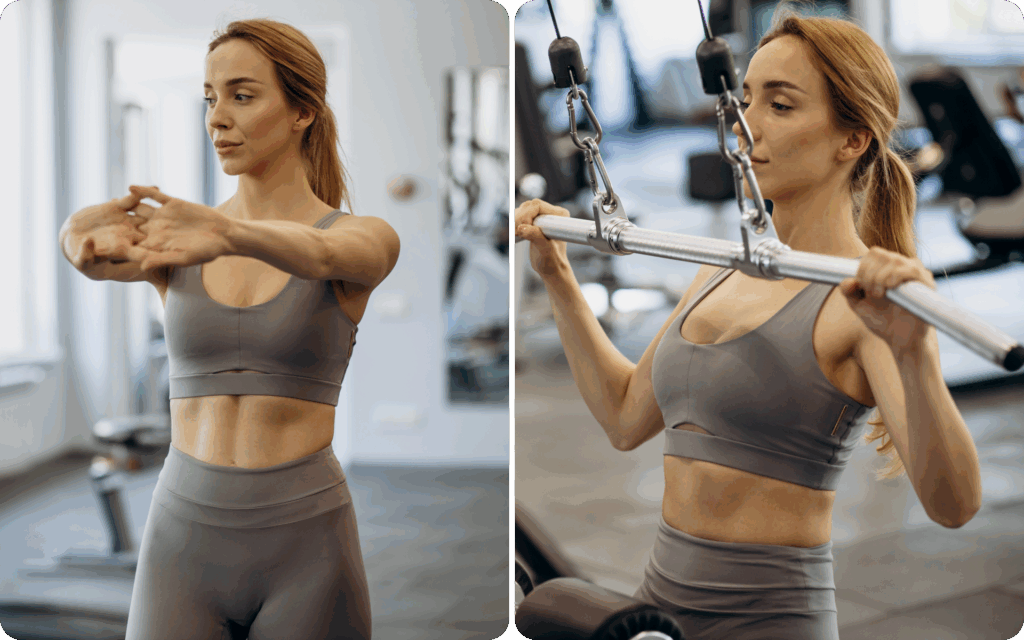
3. Sleep Hygiene
Sleep supports recovery and helps regulate processes in the body, including those that are influenced by hormones. Many adults aim for 7-9 hours per night. If you’re training hard but regularly sleeping for around 5 hours, you may feel more run-down and recover less effectively, which can affect training consistency and results (14).
4. Hydration and Performance
A dehydration level of just 2% of body weight may affect strength and cognitive performance. If you are 180 lbs, losing 3.6 lbs of water weight (sweat) reduces your performance. Aim for clear, pale yellow urine as a qualitative marker, or drink roughly 3-4 liters of water daily, adjusting for sweat loss (15).
5. Mind-Muscle Connection
Internal cueing – thinking about the muscle contracting – has been shown to increase muscle activation when focused on deep core muscles (16). Taking this same logic, when doing a bicep curl, don’t just move the weight from A to B. Visualize the bicep fibers shortening. This focus maximizes the quality of every repetition, which is essential when you only have 4 weeks to make an impact.
If you’re curious about 4-week body transformation female, check out our earlier article.
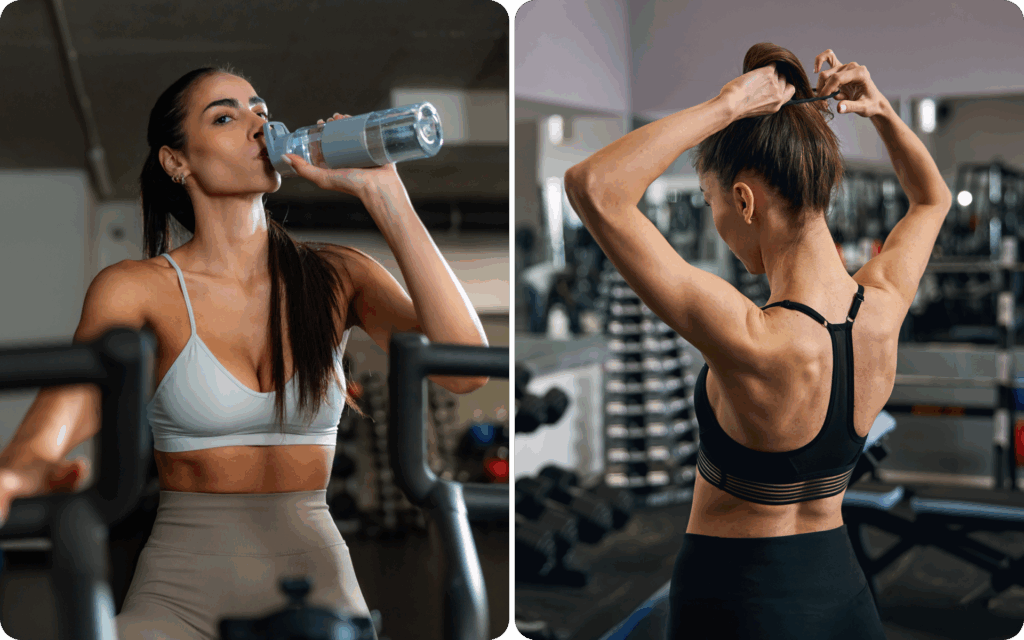
Yes, one month of consistent gym training can support measurable changes for some people in terms of neuromuscular strength, glycogen storage, and metabolic efficiency, in addition to potential initial improvements in body composition and energy levels (9). Within the first four weeks of training, a novice can expect noticeable strength gains on primary lifts largely due to neural adaptations rather than muscle hypertrophy (6). When aerobic or interval training is included, cardiovascular capacity (VO₂ max) can also improve (17). If training is paired with a consistent calorie-controlled diet, meaningful fat loss of 3-4 pounds may occur (18), although the exact amount varies between individuals. Lifting weights burns fat primarily by increasing your resting metabolic rate (RMR) through the maintenance and building of metabolically active muscle tissue (19), and secondarily through the caloric expenditure of the workout itself and the post-exercise oxygen consumption (EPOC) (20). Yes, cardiovascular exercise becomes perceptibly easier within 2-4 weeks as your heart becomes more efficient at pumping blood (stroke volume increases) and your mitochondria become denser, which allows for better oxygen utilization in the muscles (21).Frequently Asked Questions
Will 1 month at the gym make a difference?
How much fitness can you gain in 4 weeks?
Does lifting weights burn fat?
Does cardio get easier?
The Bottom Line
A 4-week gym workout plan is more than just a temporary fix, it’s an educational phase that teaches your body the language of physical stress and adaptation. By adhering to the principles of progressive overload, managing your recovery, and executing movements with precision, you’ll lay a concrete foundation for long-term health.
The goal of these 28 days isn’t to reach a finish line, but to build the momentum required to keep going. Start today, track your progress, and trust the physiology.
DISCLAIMER:
This article is intended for general informational purposes only and does not serve to address individual circumstances. It is not a substitute for professional advice or help and should not be relied on for making any kind of decision-making. Any action taken as a direct or indirect result of the information in this article is entirely at your own risk and is your sole responsibility.
BetterMe, its content staff, and its medical advisors accept no responsibility for inaccuracies, errors, misstatements, inconsistencies, or omissions and specifically disclaim any liability, loss or risk, personal, professional or otherwise, which may be incurred as a consequence, directly or indirectly, of the use and/or application of any content.
You should always seek the advice of your physician or other qualified health provider with any questions you may have regarding a medical condition or your specific situation. Never disregard professional medical advice or delay seeking it because of BetterMe content. If you suspect or think you may have a medical emergency, call your doctor.
SOURCES:
- Mesocycle (Periodization) (2026, brookbushinstitute.com)
- Effects of Resistance Training Overload Progression Protocols on Strength and Muscle Mass (2024, pubmed.ncbi.nlm.nih.gov)
- Prescribing Intensity in Resistance Training Using Rating of Perceived Effort: A Randomized Controlled Trial (2022, frontiersin.org)
- A Systematic Review of The Effects of Different Resistance Training Volumes on Muscle Hypertrophy (2022, pmc.ncbi.nlm.nih.gov)
- The Effectiveness of Frequency-Based Resistance Training Protocols on Muscular Performance and Hypertrophy in Trained Males: A Critically Appraised Topic (2020, journals.humankinetics.com)
- Resistance training-induced adaptations in the neuromuscular system: Physiological mechanisms and implications for human performance (2025, physoc.onlinelibrary.wiley.com)
- Exercise training-induced adaptations associated with increases in skeletal muscle glycogen content (2013, pubmed.ncbi.nlm.nih.gov)
- Early resistance training-induced increases in muscle cross-sectional area are concomitant with edema-induced muscle swelling. (2016, pubmed.ncbi.nlm.nih.gov)
- Adaptations to Endurance and Strength Training (2018, pmc.ncbi.nlm.nih.gov)
- Aim for a Healthy Weight (2025, nhlbi.nih.gov)
- Anabolic signals and muscle hypertrophy – Significance for strength training in sports medicine (2025, sciencedirect.com)
- Isocaloric High-Intensity Interval and Circuit Training Increases Excess Post-Exercise Oxygen Consumption and Lipid Oxidation Compared to Moderate-Intensity Continuous Training (2025, mdpi.com)
- ISSN exercise & sports nutrition review update: research & recommendations (2018, link.springer.com)
- The effect of acute sleep deprivation on cortisol level: a systematic review and meta-analysis (2024, pubmed.ncbi.nlm.nih.gov)
- Effects of hypohydration and fluid balance in athletes’ cognitive performance: a systematic review (2022, pmc.ncbi.nlm.nih.gov)
- Effect of external and internal cues on core muscle activation during the Sahrmann five-level core stability test (2025, pmc.ncbi.nlm.nih.gov)
- Evidence-Based Effects of High-Intensity Interval Training on Exercise Capacity and Health: A Review with Historical Perspective (2021, mdpi.com)
- Steps for Losing Weight (2025, cdc.gov)
- Increasing muscle mass to improve metabolism (2013, pmc.ncbi.nlm.nih.gov)
- Influence of Resistance Training Variables on Excess Post-Exercise Oxygen Consumption (EPOC): A Systematic Review (2013, researchgate.net)
- Submaximal exercise cardiac output is increased by 4 weeks of sprint interval training in young healthy males with low initial Q̇-V̇O2: Importance of cardiac response phenotype (2019, pmc.ncbi.nlm.nih.gov)
 By
By 
 Reviewed by
 Reviewed by