Building muscle at home often seems like a goal that’s reserved for those with expensive equipment and endless free time. Many people believe that significant changes require a gym membership and a complex regimen.
However, the science of muscle growth tells a different story. With a structured approach, consistent effort, and a solid understanding of fundamental principles, you can achieve noticeable muscle development in just 30 days without ever leaving your home.
This guide will break down the process of building muscle at home into clear, actionable steps. We’ll explore the science behind muscle hypertrophy, outline an effective 30-day workout plan, and provide the nutritional and lifestyle strategies you need to maximize your results.
Is It Possible to Build Muscle in 1 Month?
Yes, it’s possible to see measurable muscle growth within one month. While you won’t transform into a professional bodybuilder overnight, the initial weeks of a new resistance training program are when your body is most responsive to the stimulus.
Research from the European Journal of Applied Physiology examined the timeline of muscle growth and found that significant skeletal muscle hypertrophy can occur as early as three to four weeks into a training program (1). Initially, some of the size increase you notice may be due to muscular edema, which is temporary fluid retention in the muscle cells (2). However, this early swelling is followed by genuine growth.

Quantifying Early Muscle Growth
The process of building new muscle tissue is called muscle protein synthesis (MPS). For hypertrophy to occur, the rate of MPS must exceed the rate of muscle protein breakdown (3). Resistance training provides the signal for this to happen (4).
- Initial Neurological Gains: In the first few weeks, a large portion of your strength increase comes from your nervous system becoming more efficient at recruiting muscle fibers, not from larger muscles (5, 6).
- Measurable Hypertrophy: True muscle growth begins to contribute more significantly after about 3-4 weeks. In one 8-week study, participants saw their thigh muscle cross-sectional area (CSA) increase by nearly 10%, with significant changes starting to appear around the one-month mark (7).
Gaining 1-3 pounds of lean muscle in the first month is a realistic and achievable goal for beginners, as long as training and nutrition are both on point.
Read more: Beginner Full-Body Workout Plan for Sustainable Fitness
Can I Build Muscle in 30 Days at Home?
Absolutely. The key principles of muscle hypertrophy – mechanical tension, metabolic stress, and muscle damage (8) – can be effectively applied in a home setting. Your muscles don’t know whether you’re in a state-of-the-art gym or your living room – they only respond to the stress you place on them.
A 30-day muscle-building workout plan at home for beginners can be incredibly effective because the body is highly adaptable. The main requirement is applying progressive overload (9), which means continually challenging your muscles to do more than they’re used to.
Reasons why BetterMe is a safe bet: a wide range of calorie-blasting workouts, finger-licking recipes, 24/7 support, challenges that’ll keep you on your best game, and that just scratches the surface! Start using our app and watch the magic happen.
You can achieve this at home in several ways (10, 11):
- Increase Repetitions: Perform more reps with the same body weight or dumbbell weight.
- Increase Sets: Add another set to each exercise.
- Decrease Rest Time: Shorten the rest periods between sets to increase metabolic stress.
- Improve Form: Increase the time under tension by performing exercises with slower, more controlled movements.
- Use More Challenging Variations: Progress from a standard push-up to a decline push-up.
While a 30-day muscle-building workout plan at home with dumbbells can accelerate progress by making it easier to add mechanical tension, you can still achieve great results with a 30-day muscle-building workout plan at home with no equipment. Bodyweight exercises create sufficient tension to stimulate growth, particularly for those who are new to training.
Which Exercises Build Muscle the Fastest?
To maximize muscle growth in a short timeframe, your focus should be on compound exercises. These movements engage multiple joints and muscle groups at once, which allows you to create more total mechanical tension and trigger a greater hormonal response. This is beneficial for hypertrophy (12).
Core Compound Movements for Home Workouts
- Squats: Targets the quadriceps, hamstrings, glutes, and core. It’s a foundational movement for lower-body strength and size.
- Push-Ups: Works the chest, shoulders, and triceps. This is the quintessential upper-body pushing exercise.
- Rows: Essential for building a strong and thick back, targeting the lats, rhomboids, and biceps. This can be done with dumbbells or resistance bands.
- Lunges: A unilateral exercise that builds leg strength and improves balance and stability by targeting the quads, glutes, and hamstrings individually.
- Plank Variations: While an isometric exercise, the plank is essential for developing core strength, which is the foundation for all other movements.
By building your 30-day workout plan at home around these exercises, you’ll ensure that you’re training your body in a functional, efficient, and effective way to promote overall muscle growth.
What Is a 30-Day Muscle-Building Workout Plan at Home?
This plan is designed to maximize hypertrophy by training every major muscle group with sufficient frequency and volume. It follows a split routine to allow for adequate recovery, which is when your muscles actually grow.
Program Notes
- Key Terms:
- 1RM (One-Repetition Maximum): The maximum amount of weight you can lift for a single repetition of an exercise. For bodyweight exercises, this relates to the most difficult variation you can perform once.
- RPE (Rate of Perceived Exertion): A scale from 1-10 that measures how hard an exercise feels (13). Aim for an RPE of 8-9, which means you have 1-2 reps left “in the tank” at the end of each set.
- Progressive Overload: The principle of gradually increasing the stimulus placed on your muscles over time (9).
- Equipment: This program can be done with just your body weight. If you have dumbbells, you can substitute them for exercises such as goblet squats and dumbbell rows.
- Split Structure: The plan utilizes an upper/lower split, which is a proven method for allowing muscle groups to recover while you train others (14). It includes a full-body day to increase weekly training frequency.
- Rep and Set Scheme: The program uses a repetition range of 8-15 reps per set, which research has suggested is optimal for inducing hypertrophy by balancing mechanical tension and metabolic stress (15). You will perform 3-4 sets per exercise.
- Rest Periods: Rest for 60-90 seconds between sets. This timeframe is short enough to induce metabolic stress, but long enough to allow for sufficient recovery to perform the next set with good form (16).

The 30-Day Workout Schedule
| Week | Monday | Tuesday | Wednesday | Thursday | Friday | Saturday | Sunday |
|---|---|---|---|---|---|---|---|
| Week 1 | Upper-body A | Lower-body A | Rest | Upper-body B | Lower-body B | Light cardio | Rest |
| Week 2 | Upper-body A | Lower-body A | Rest | Upper-body B | Lower-body B | Light cardio | Rest |
| Week 3 | Upper-body A | Lower-body A | Rest | Upper-body B | Lower-body B | Light cardio | Rest |
| Week 4 | Upper-body A | Lower-body A | Rest | Upper-body B | Lower-body B | Light cardio | Rest |
The Workout Program
Table 1: Upper-Body A
| Exercise | Sets | Reps | Rest (seconds) |
|---|---|---|---|
| Push-ups | 4 | To failure | 90 |
| Pike push-ups | 3 | 8-12 | 60 |
| Tricep dips (on chair) | 3 | 10-15 | 60 |
| Plank | 3 | Hold 60s | 60 |
| Exercise | Sets | Reps | Rest (seconds) |
|---|---|---|---|
| Bodyweight squats | 4 | 15-20 | 90 |
| Lunges | 3 | 12-15 | 60 |
| Glute bridges | 3 | 15-20 | 60 |
| Calf raises | 3 | 20-25 | 60 |
| Exercise | Sets | Reps | Rest (seconds) |
|---|---|---|---|
| Dumbbell rows/band rows | 4 | 10-15 | 90 |
| Supermans | 3 | 15 | 60 |
| Bicep curls (with dumbbells/bands) | 3 | 12-15 | 60 |
| Side plank | 3 | Hold 45s (per side | 60 |
| Exercise | Sets | Reps | Rest (seconds) |
|---|---|---|---|
| Single-leg Romanian deadlift (bodyweight or light weight) | 4 | 10-12 | 90 |
| Split squats | 3 | 12-15 | 60 |
| Hip thrusts | 3 | 15-20 | 60 |
| Reverse lunges | 3 | 12-15 | 60 |
For more advanced workout structures, you can learn about designing a bodyweight workout split.
Exercise Instructions
Proper form is non-negotiable. It ensures that you target the right muscles and, more importantly, prevents injury. Use the following instructions for each exercise in your 30-day muscle-building workout plan at home.
Push-Ups
- Start in a high plank with your hands slightly wider than shoulder-width apart.
- Engage your core and glutes. Keep your body in a straight line from your head to your heels.
- Lower your body under control until your chest is about an inch from the floor and your elbows are at a 45-degree angle.
- Push through your palms to return to the start, fully extending your arms.
- Keep your neck neutral and avoid letting your hips sag or rise.
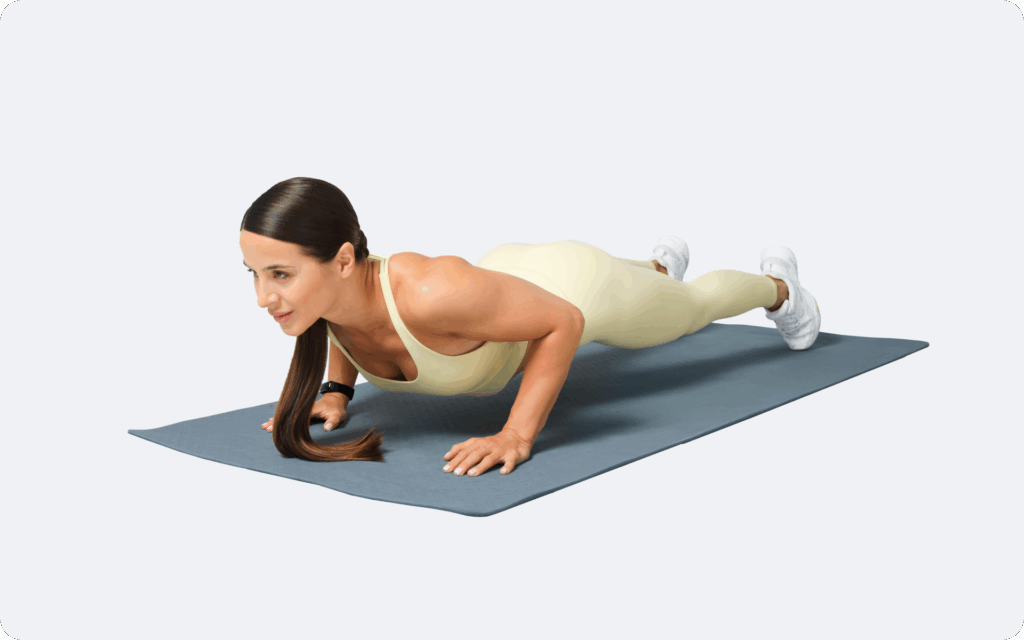
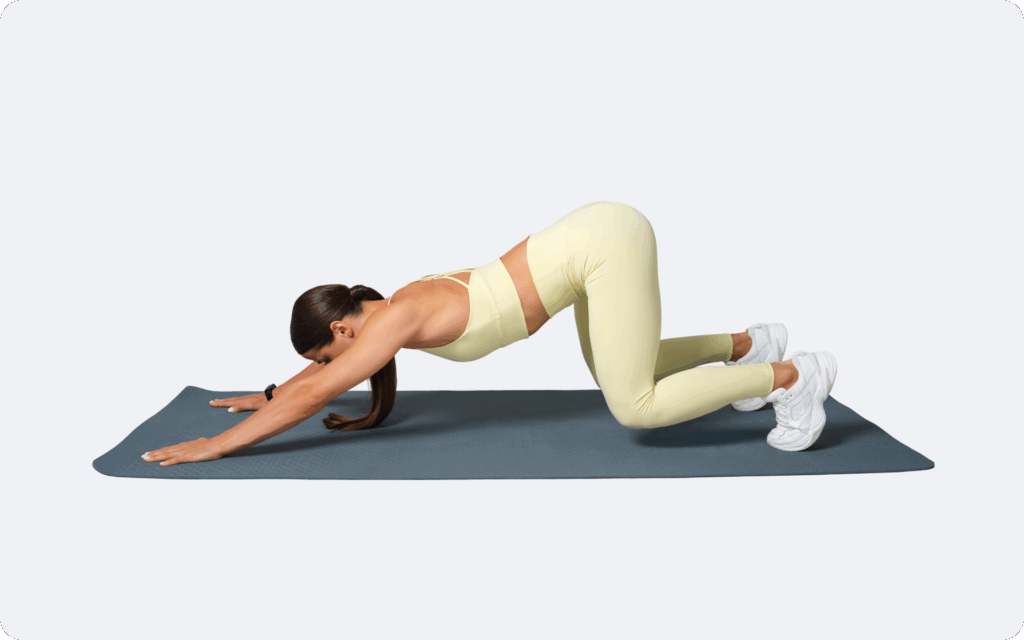
Pike Push-Ups
- Begin in a downward dog position, forming an inverted V with your hips high.
- Place your hands shoulder-width apart, your fingers spread for stability.
- Keep your legs straight and your heels slightly raised.
- Bend your elbows to lower the top of your head toward the floor, stopping just above the ground.
- Press through your hands to return to the starting position.
- Maintain an active core for spinal alignment.
Tricep Dips (on Chair)
- Sit at the edge of a stable chair and grip the edge with your palms beside your hips.
- Walk your feet forward, slide your hips off the edge, keeping your legs extended or bent for an easier variation.
- Lower yourself by bending your elbows straight back to 90° and keeping them close to your body.
- Avoid shrugging your shoulders.
- Press down with your hands to lift your body back up.
- Squeeze your triceps at the top, but don’t lock your elbows.
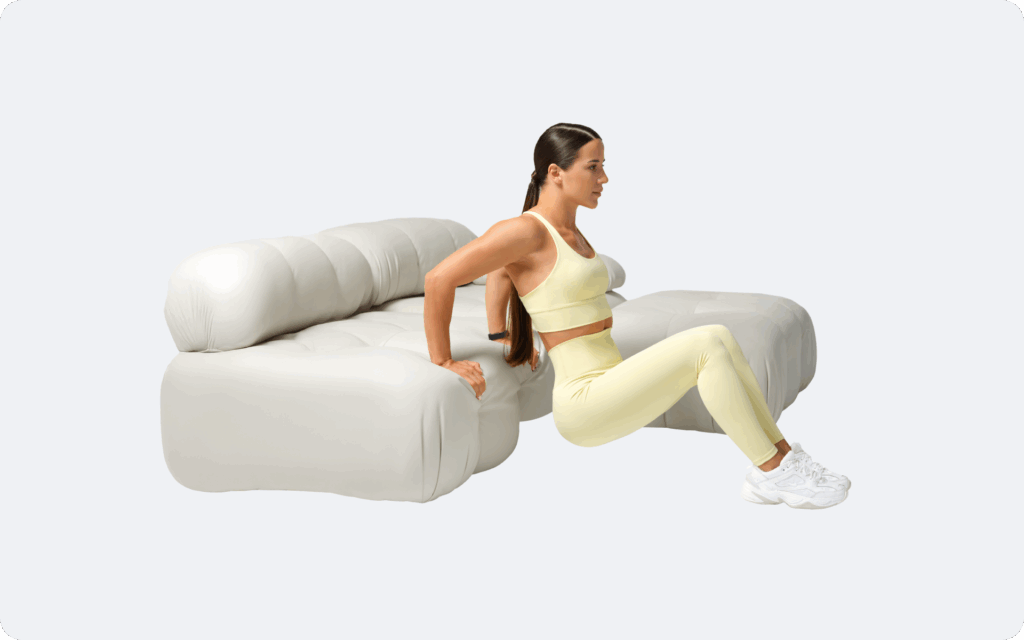
Plank
- Position your forearms on the floor, your elbows under your shoulders, and your legs extended.
- Form a straight line from your head to your heels by bracing your core and glutes.
- Keep your gaze down to maintain a neutral spine.
- Don’t allow your hips to drop or pike up.
- Hold for the prescribed time, focusing on steady breathing and total-body tension.
Bodyweight Squats
- Stand with your feet shoulder-width apart, your toes pointing slightly outward.
- Brace your core and retract your shoulder blades slightly.
- Initiate the movement by pushing your hips back, then bending your knees to lower.
- Descend until your thighs are parallel with the floor or lower if your mobility allows.
- Keep your knees aligned with your toes, your heels flat on the floor.
- Drive through your heels to return to standing, fully extending your hips at the top.
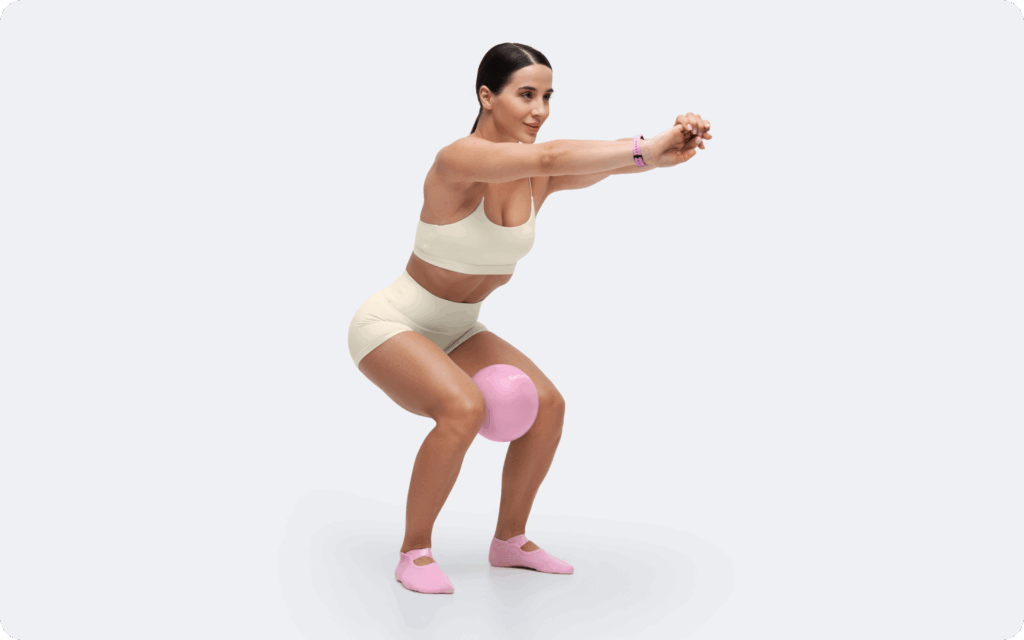
Lunges
- Stand tall with your feet hip-width apart and your hands at your sides or on your hips.
- Step forward with one leg, lowering your hips until both knees are at 90°.
- Keep your chest up, your back straight, and your front knee directly above your ankle.
- Lower until your back knee hovers just above the floor.
- Press through your front heel to return to the starting position.
- Alternate legs with each rep.
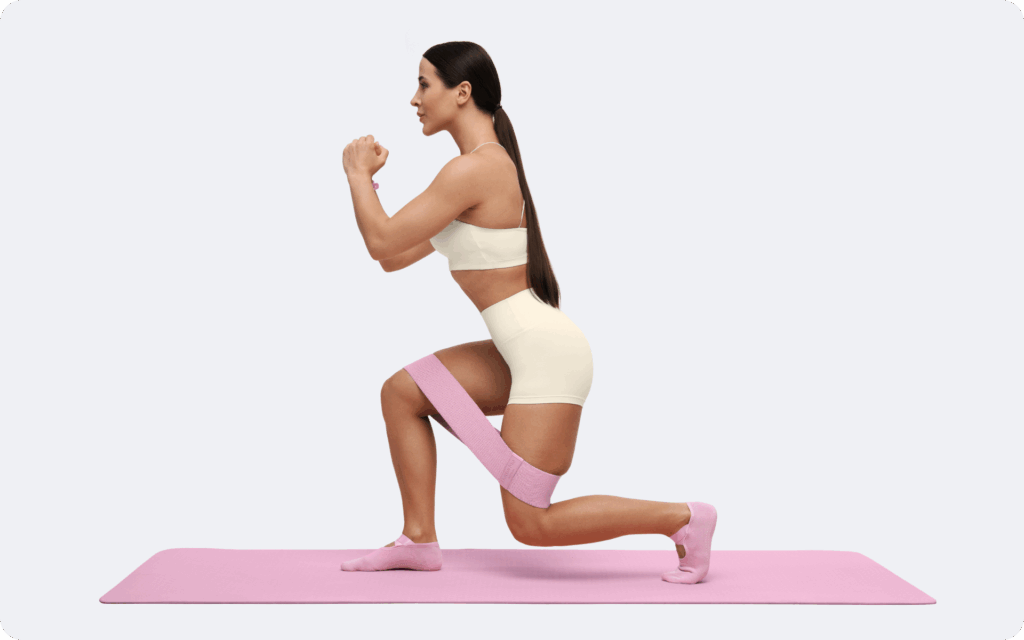
Glute Bridges
- Lie on your back with your knees bent, your feet flat, and your arms at your sides.
- Push through your heels to lift your hips off the floor until your knees, hips, and shoulders form a straight line.
- Squeeze your glutes at the top for 1-2 seconds.
- Avoid overextending your back. Keep the movement in your hips.
- Lower your hips to the floor with control.
Calf Raises
- Stand with your feet hip-width apart, near a wall or chair for balance if needed.
- Press through the balls of your feet to rise up as high as possible.
- Squeeze your calves at the top for a second.
- Slowly lower your heels back to the starting position.
- Avoid bouncing – move with control throughout.
If you’re curious about the 1-month calisthenics workout plan, check out our earlier article.
Dumbbell Rows / Band Rows
- Place one hand and knee on a bench (or sturdy surface) for support if using a dumbbell, or stand on the center of a band for resistance.
- Grip the dumbbell or handles with one hand, your arm extended toward the floor.
- Engage your core and retract your shoulder blade.
- Pull the weight or band toward your hip, your elbow close to your body.
- Squeeze your back muscles at the top of the movement.
- Lower the weight/band with control. Switch sides after each set.
Whether you’re a workout beast or just a beginner making your first foray into the world of fitness and dieting – BetterMe has a lot to offer to both newbies and experts! Install the app and experience the versatility first-hand!
Supermans
- Lie face down on the mat with your arms extended overhead and your legs straight.
- Simultaneously lift your arms, chest, and legs off the ground as high as possible.
- Hold for 1-2 seconds, focusing on contracting your lower back and glutes.
- Lower back to the ground with control.
- Keep your neck neutral throughout. Avoid overextending your spine.
Bicep Curls (with Dumbbells or Bands)
- Stand tall, holding dumbbells or band handles at your sides, your palms facing forward.
- Keep your elbows tucked to your sides.
- Curl the weights or bands up toward your shoulders, only moving your forearms.
- Squeeze your biceps at the top without swinging your elbows forward.
- Lower to the start position slowly, maintaining tension.
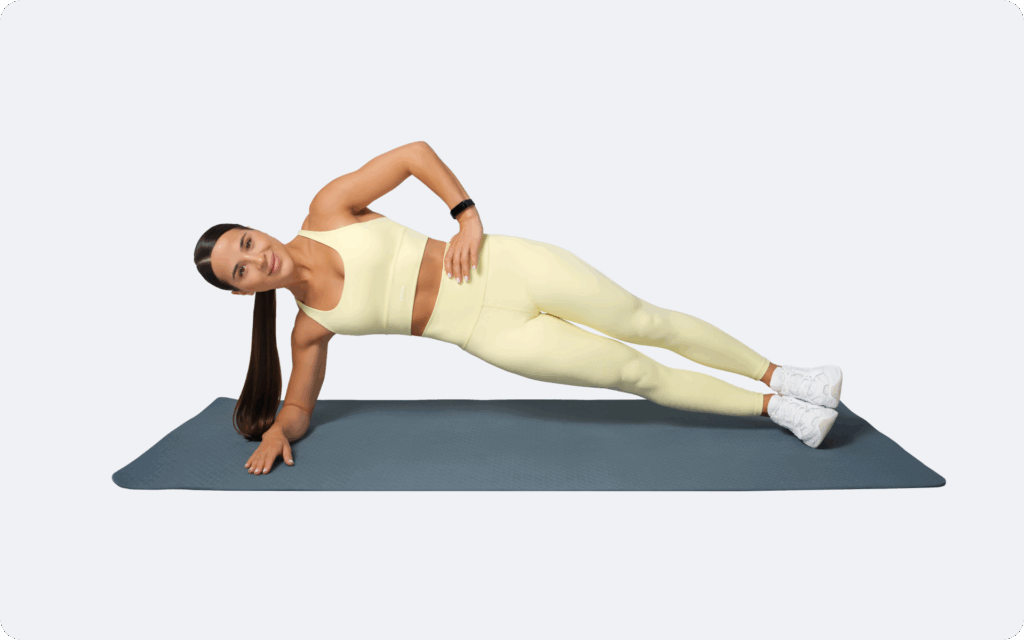
Side Plank
- Lie on your side with your forearm on the ground, your elbow under your shoulder, and your feet stacked.
- Raise your hips off the ground to form a straight line from your head to your feet.
- Keep your top arm at your side or raised for balance.
- Hold for the assigned time, maintaining a neutral spine.
- Switch sides after each set.
Single-Leg Romanian Deadlift (Bodyweight or Light Weight)
- Stand tall, your feet hip-width apart and a slight bend in your knees.
- Shift weight to one foot, and hinge at your hips, sending the other leg straight back.
- Lower your torso forward, maintaining a flat back, until you feel a stretch in your hamstring.
- Keep your hips square – don’t rotate open.
- Return to standing by driving through the heel of your planted foot.
- Repeat all reps on one side before switching.
Split Squats
- Stand with one foot in front and one foot back (shoulder-width stance).
- Drop your back knee directly down toward the floor, keeping your torso upright.
- Your front knee should align over your ankle, your back knee hovering just above the floor.
- Push through your front heel to rise back to standing.
- Complete all reps, then switch legs.
Hip Thrusts
- Sit on the floor with your upper back resting on a bench or sturdy surface, your feet flat and your knees bent.
- Position your feet hip-width apart, your shins vertical when at the top.
- Drive through your heels and elevate your hips until your body forms a straight line from your shoulders to your knees.
- Squeeze your glutes forcefully at the top for one second.
- Lower your hips back down with control.
Reverse Lunges
- Start standing with your feet hip-width apart.
- Step backward with one leg and lower your hips until both knees are at 90°, your front knee above your ankle.
- Keep your chest up and your core engaged.
- Press through your front heel to return to standing.
- Alternate legs with each rep.
By committing to careful, controlled movement patterns and following these steps, you maximize each rep – targeting the intended muscles and reducing injury risk.
Read more: Strength and Cardio Workout Plan for Ultimate Fitness Results
How Can I Speed up My Muscle Growth?
Beyond the workout itself, nutrition is the most important factor for muscle growth. You can’t build a house without bricks, and you can’t build muscle without adequate protein and calories.
Calorie Surplus
A slight calorie surplus is generally recommended to maximize muscle growth. This means eating slightly more calories than what you’ve been consuming, i.e. eating more than your maintenance calories (17).
To find your maintenance calorie level, track your daily food intake and body weight for 1-2 weeks. If your weight remains stable, you’re likely eating at maintenance. Alternatively, use an online total daily energy expenditure (TDEE) calculator, entering your age, weight, height, and activity level for an initial estimate, then adjust based on your results.
That being said, not everyone needs to be in surplus to build muscle. For example, individuals who are new to resistance training (beginners) or those with higher body fat percentages can often gain muscle while maintaining or even slightly reducing their body weight. This process is sometimes called “body recomposition” (18).
- Standard Approach: Most people who are looking for optimal muscle gain should aim for a modest surplus of 250-500 calories above their daily maintenance level. This promotes muscle growth while minimizing unwanted fat gain.
- Exceptions: If you’re overweight or new to training, you may have success building muscle at maintenance calories or a mild calorie deficit, thanks to your body’s heightened sensitivity to resistance exercise (18).

Protein Intake
Protein provides the amino acids necessary for muscle repair and growth.
- Recommendation: Research has consistently shown that an intake of 1.6-2.2 grams of protein per kilogram of body weight per day is optimal for maximizing muscle protein synthesis (19). For a 180 lb (82 kg) person, this equals 131-180 grams of protein daily.
- Timing: Distribute your protein intake evenly throughout the day, aiming for 20-40 grams per meal (20).
Carbohydrates and Fats
Carbohydrates are your body’s primary energy source, fueling your workouts and replenishing glycogen stores (21). Fats are essential for hormone production, including testosterone (22).
- Carbohydrates: Should make up the majority of your non-protein calories.
- Fats: Aim for around 20-30% of your total daily calorie intake (23).
If your goal is to both build muscle and lose fat, check out this 1-month workout plan to get ripped.
Is Sleep Important for Muscle Growth?
Sleep is not just important, it’s absolutely essential. During sleep, your body enters a prime anabolic (muscle-building) state.
This is when crucial restorative processes occur:
- Hormone Release: The majority of your daily growth hormone (GH) is released during deep sleep (24). GH plays a significant role in repairing tissues and promoting muscle growth (25).
- Protein Synthesis: Sleep enhances muscle protein synthesis, the fundamental process of repairing and building muscle fibers damaged during your workout (26, 27).
- Cortisol Reduction: A lack of sleep increases cortisol, a stress hormone that is catabolic, which means it breaks down muscle tissue (28).
Aim for 7-9 hours of quality sleep per night. Anything less will severely hinder your recovery and limit your muscle-building potential, no matter how hard you train or how well you eat.
Both have their place. Lifting heavy weights for low reps (e.g. 1-5) is superior for building maximal strength and primarily targets myofibrillar hypertrophy (15), while lifting lighter weights for higher reps (e.g. 10-20) is excellent for inducing metabolic stress and sarcoplasmic hypertrophy (15, 29). A comprehensive program should include a variety of rep ranges to stimulate all pathways for muscle growth. Larger muscle groups such as the quadriceps, glutes, and lats tend to grow faster simply as they contain more muscle fibers and have a greater capacity for growth. However, individual genetics plays a significant role. Some people may find their calves or biceps grow easily, while others may struggle. Water is the most important drink for overall health and performance (30). For muscle gain, a protein shake (whey, casein, or a plant-based blend) that is consumed after a workout or as a snack can be a convenient way to meet your daily protein targets (31). Milk is also an excellent option, as it contains both fast-digesting (whey) and slow-digesting (casein) proteins (32). Yes. In fact, muscles only grow on rest days. Exercise is the stimulus that signals the muscle to grow, but the actual repair and hypertrophy process occurs during recovery – when you’re resting, sleeping, and providing your body with adequate nutrients (33). Training without sufficient rest leads to overtraining, not growth (34).Frequently Asked Questions
Is it better to lift heavy or light?
What muscle is easiest to grow?
What should you drink to gain muscle fast?
Do muscles grow on rest days?
The Bottom Line
Your first 30 days of training are an exciting time that is filled with rapid progress and learning. By focusing on a structured program, applying progressive overload, and supporting your efforts with smart nutrition and sufficient rest, you can lay a powerful foundation for a stronger, more muscular physique. The key is consistency – stick to the plan, listen to your body, and embrace the process of becoming a stronger version of yourself.
DISCLAIMER:
This article is intended for general informational purposes only and does not serve to address individual circumstances. It is not a substitute for professional advice or help and should not be relied on for making any kind of decision-making. Any action taken as a direct or indirect result of the information in this article is entirely at your own risk and is your sole responsibility.
BetterMe, its content staff, and its medical advisors accept no responsibility for inaccuracies, errors, misstatements, inconsistencies, or omissions and specifically disclaim any liability, loss or risk, personal, professional or otherwise, which may be incurred as a consequence, directly or indirectly, of the use and/or application of any content.
You should always seek the advice of your physician or other qualified health provider with any questions you may have regarding a medical condition or your specific situation. Never disregard professional medical advice or delay seeking it because of BetterMe content. If you suspect or think you may have a medical emergency, call your doctor.
SOURCES:
- An examination of the time course of training-induced skeletal muscle hypertrophy (2011, link.springer.com)
- Early resistance training-induced increases in muscle cross-sectional area are concomitant with edema-induced muscle swelling (2016, link.springer.com)
- Making Sense of Muscle Protein Synthesis: A Focus on Muscle Growth During Resistance Training in (2021, journals.humankinetics.com)
- Muscle protein synthesis in response to nutrition and exercise (2012, pmc.ncbi.nlm.nih.gov)
- Adaptations to Endurance and Strength Training (2018, pmc.ncbi.nlm.nih.gov)
- The increase in muscle force after 4 weeks of strength training is mediated by adaptations in motor unit recruitment and rate coding (2019, physoc.onlinelibrary.wiley.com)
- An examination of the time course of training-induced skeletal muscle hypertrophy (2011, link.springer.com)
- The Mechanisms of Muscle Hypertrophy and Their Application to Resistance Training (2010, journals.lww.com)
- Progressive Overload Explained: Grow Muscle & Strength Today (n.d., blog.nasm.org)
- Exercise progression and regression (n.d., us.humankinetics.com)
- Complexity: A Novel Load Progression Strategy in Strength Training (2019, frontiersin.org)
- Compound Exercises (n.d., physio-pedia.com)
- Rate of Perceived Exertion (RPE) Scale (2023, my.clevelandclinic.org)
- Progression Models in Resistance Training for Healthy Adults (2009, journals.lww.com)
- Loading Recommendations for Muscle Strength, Hypertrophy, and Local Endurance: A Re-Examination of the Repetition Continuum (2021, pmc.ncbi.nlm.nih.gov)
- Give it a rest: a systematic review with Bayesian meta-analysis on the effect of inter-set rest interval duration on muscle hypertrophy (2024, frontiersin.org)
- Is an Energy Surplus Required to Maximize Skeletal Muscle Hypertrophy Associated With Resistance Training (2019, frontiersin.org)
- Body Recomposition: Can Trained Individuals Build Muscle and Lose Fat at the Same Time? (2020, journals.lww.com)
- International Society of Sports Nutrition Position Stand: protein and exercise (2017, jissn.biomedcentral.com)
- International society of sports nutrition position stand: nutrient timing (2017, pmc.ncbi.nlm.nih.gov)
- Exercise and Regulation of Carbohydrate Metabolism (2015, pmc.ncbi.nlm.nih.gov)
- Athletes’ nutritional demands: a narrative review of nutritional requirements (2024, frontiersin.org)
- Current knowledge about sports nutrition (2011, pmc.ncbi.nlm.nih.gov)
- Exercise‐Induced growth hormone during acute sleep deprivation (2014, physoc.onlinelibrary.wiley.com)
- Growth hormone and aging: a clinical review (2025, frontiersin.org)
- The effect of acute sleep deprivation on skeletal muscle protein synthesis and the hormonal environment (2021, physoc.onlinelibrary.wiley.com)
- Sleep and muscle recovery: endocrinological and molecular basis for a new and promising hypothesis (2011, pubmed.ncbi.nlm.nih.gov)
- The effect of acute sleep deprivation on skeletal muscle protein synthesis and the hormonal environment (2021, physoc.onlinelibrary.wiley.com)
- Effects of Low-Load, Higher-Repetition vs. High-Load, Lower-Repetition Resistance Training Not Performed to Failure on Muscle Strength, Mass, and Echo Intensity in Healthy Young Men: A Time-Course Study (2020, journals.lww.com)
- Narrative Review of Hydration and Selected Health Outcomes in the General Population (2019, pmc.ncbi.nlm.nih.gov)
- Understanding the effects of nutrition and post-exercise nutrition on skeletal muscle protein turnover: Insights from stable isotope studies (2021, sciencedirect.com)
- Milk protein for improved metabolic health: a review of the evidence (2013, link.springer.com)
- Exploring the Science of Muscle Recovery (n.d., blog.nasm.org)
- Overtraining Syndrome as a Complex Systems Phenomenon (2022, frontiersin.org)

 Reviewed by