

The arrival of winter often brings a natural inclination to slow down and stay indoors. Shorter days and colder temperatures can make the idea of outdoor exercise seem less appealing, but allowing your activity levels to drop during these months can have a noticeable impact on your physical and mental well-being.
Research has shown there to be a clear link between seasonal changes and physical activity patterns. A 2023 study published in the journal Healthcare highlighted that many people become less active during the winter. This can lead to unwanted changes in body composition and a decline in overall fitness (1).
Staying active isn’t just about avoiding “winter weight gain”, it’s about maintaining your health, boosting your mood, and keeping your body resilient. This guide will provide science-backed insights and practical ideas to help you embrace the cold and make this winter your most active one yet.
How to Survive Winter Boredom by Staying Active
Seasonal dips in activity are common, but they’re not inevitable. The key to staying active during winter is to shift your mindset and adapt your routine. Rather than seeing the cold as a barrier, view it as a new environment offering unique opportunities for movement and fun outdoor winter activities.
A study on Polish adult men demonstrated that those who maintained regular physical activity outdoors during winter saw significant health benefits. They experienced a decrease in body fat and an increase in skeletal muscle mass (1).
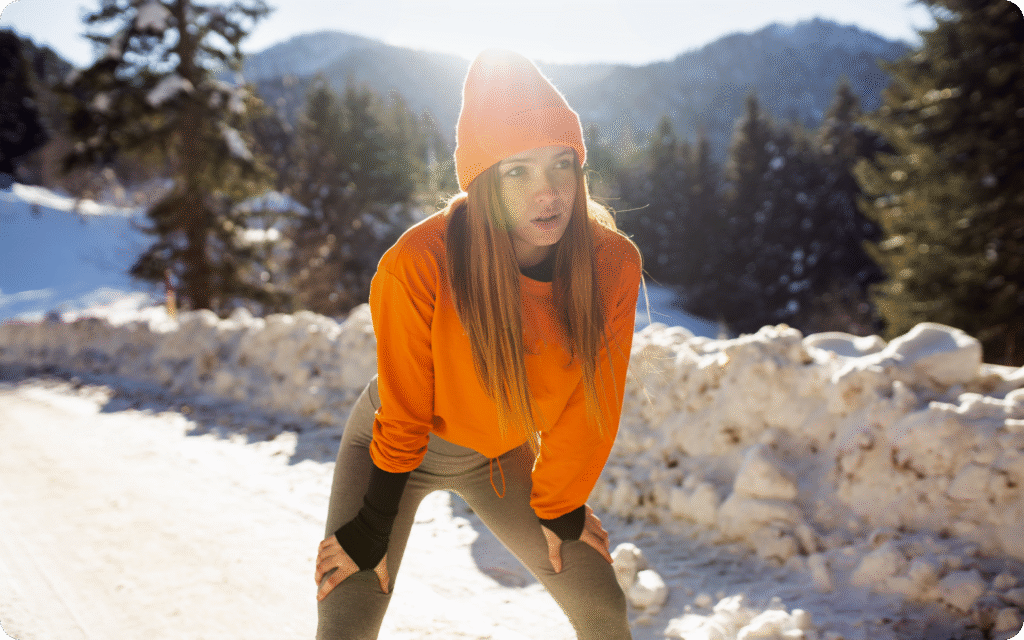
More impressively, they improved their flexibility, strength, and cardiorespiratory endurance compared to their inactive counterparts. This shows that your body is more than capable of adapting to and thriving in colder conditions (1). The primary challenge isn’t physiological, it’s psychological.
To overcome this, focus on planning and preparation. Having a set schedule for your activities removes the daily debate of whether to go outside. Knowing what you’re going to do and having the right gear ready makes the process seamless. The goal is to make staying active the easy choice.
Reasons why BetterMe is a safe bet: a wide range of calorie-blasting workouts, finger-licking recipes, 24/7 support, challenges that’ll keep you on your best game, and that just scratches the surface! Start using our app and watch the magic happen.
What Do People Do During the Winter Season?
Physical activity levels tend to follow a seasonal pattern. Studies show that people are generally more active in warmer months. Factors like lower temperatures, less daylight, and precipitation can discourage outdoor activities. This often leads to an increase in sedentary behavior, such as spending more time indoors watching screens (1).
However, many people successfully combat this trend by adapting their recreational habits. Common winter activities include:
- Traditional Winter Sports: Skiing (both downhill and cross-country), snowboarding, and ice skating remain popular choices in snowy regions. These are excellent forms of cardiovascular exercise (2). If you’re curious about 6 best exercises for skiing, check out our earlier article.
- Year-Round Activities: Many people continue their favorite warm-weather activities, such as running and cycling, by simply training indoors or adjusting their gear and expectations for training in the cold.
- Family-Oriented Fun: Sledding, building snowmen, and winter hiking are accessible outdoor winter activities that families enjoy together.
- Outdoor Winter Activities Without Snow: In areas with milder winters, activities such as trail running, hiking, and rucking are popular ways to stay active outdoors.
The crucial element is intentionality. Those who stay active in winter do so because they make a conscious decision to incorporate movement into their daily lives, regardless of the weather.
Are you ready to find the perfect winter workout? Explore more winter exercise ideas.

How to Enjoy the Outdoors when It’s Cold
Enjoying the outdoors in the cold is all about preparation and mindset. Your body is well-equipped to deal with lower temperatures, but you need to support its natural thermoregulation processes.
Dress in Layers
Layering is the most effective strategy for managing body temperature. It allows you to trap warm air close to your body while also giving you the flexibility to remove layers if you start to overheat. A three-layer system is a proven approach (3):
- Base Layer: This layer sits against your skin and should be made of a moisture-wicking material like merino wool or synthetic fabric. Its job is to pull sweat away from your skin to keep you dry. Cotton isn’t a good choice, as it holds moisture and can make you feel colder.
- Mid Layer: This is your insulating layer. Fleece, down, or synthetic insulation works well to trap body heat. The thickness of this layer can be adjusted based on the temperature and your activity level.
- Outer Layer (Shell): This layer protects you from wind, rain, and snow. A waterproof and breathable shell is ideal, as it keeps moisture out while allowing sweat vapor to escape.
Protect Your Extremities
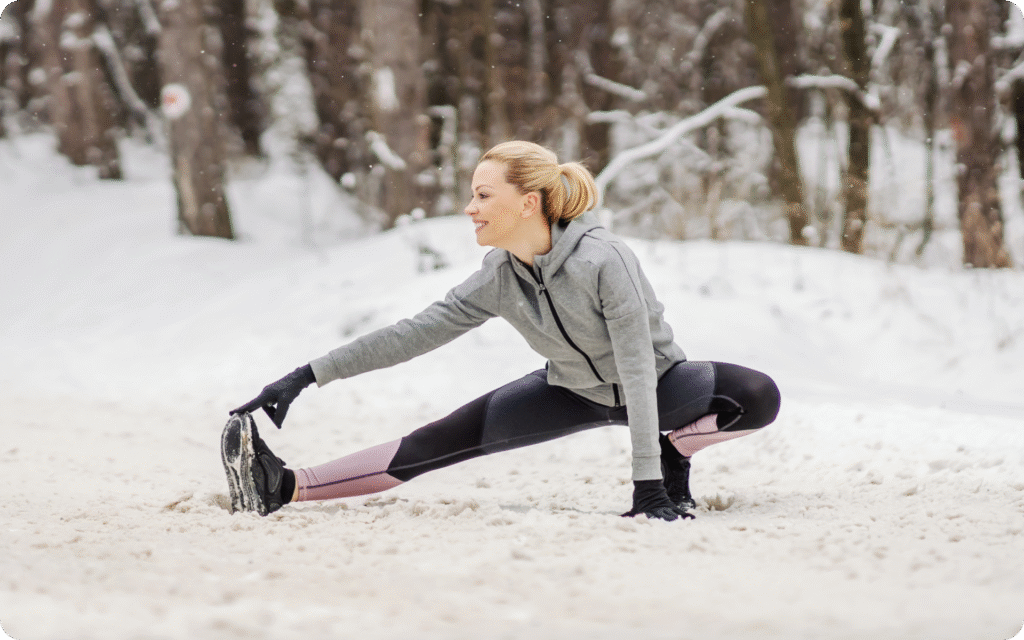
Your hands, feet, and head are more susceptible to cold (4).
- Wear insulated, waterproof gloves or mittens.
- Choose wool or synthetic socks that provide warmth without causing your feet to sweat excessively.
- A warm hat is essential, as you can lose a significant amount of body heat through your head.
Fuel and Hydrate Properly
Your body burns more calories in the cold to stay warm (5). Ensure you’re eating enough to fuel your activities. It’s also easy to become dehydrated in winter because the cold air is dry and you may not feel as thirsty. Continue to drink water before, during, and after your outdoor excursions (6).
Embrace the “Post-Activity Glow”
Recent research has explored the connection between physical activity, mood, and thermal comfort. A 2024 study in Energy and Buildings found that a positive mood after exercise can influence your perception of comfort. Engaging in an enjoyable activity indoors after your outdoor workout – such as listening to music or watching a comedy – can enhance feelings of well-being and make the entire experience more rewarding (7).
Are you looking for advice on layering up for a run? Learn what to wear running in winter.
Read more: Winter Workout 101: How to Build Muscle and Stay Fit
What Are Some Fun Winter Outdoor Activities to Try?
Winter offers a diverse range of activities to keep you moving and engaged. Whether you live in a snowy wonderland or a more temperate climate, there are plenty of options. Here are 7 fun winter activities to consider.
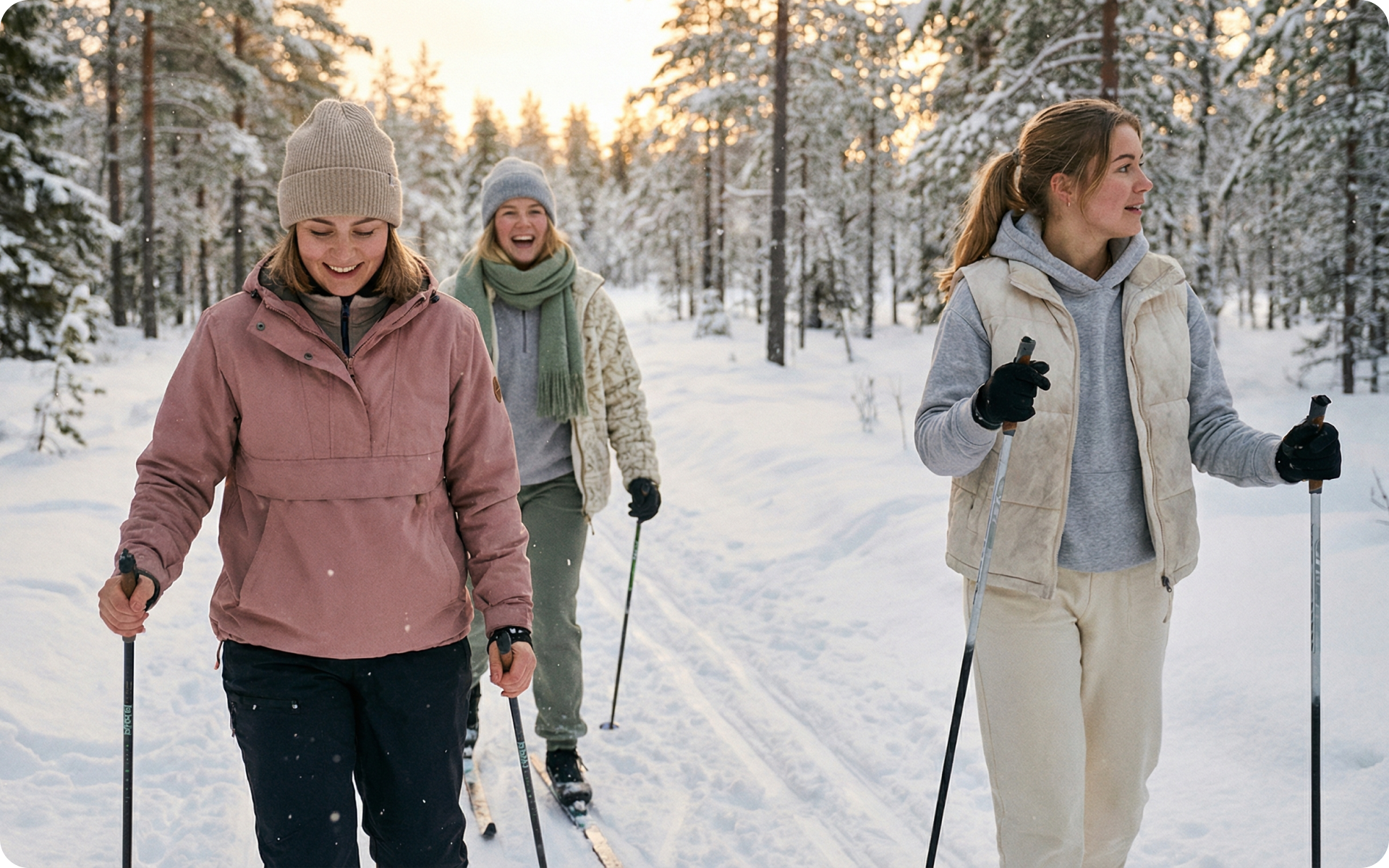
1. Cross-Country Skiing
Cross-country skiing is a full-body workout that’s low-impact and highly effective for improving cardiovascular fitness. It engages your legs, core, and upper body simultaneously. It’s one of the best winter nature activities, which allows you to explore serene, snow-covered trails.

2. Snowshoeing
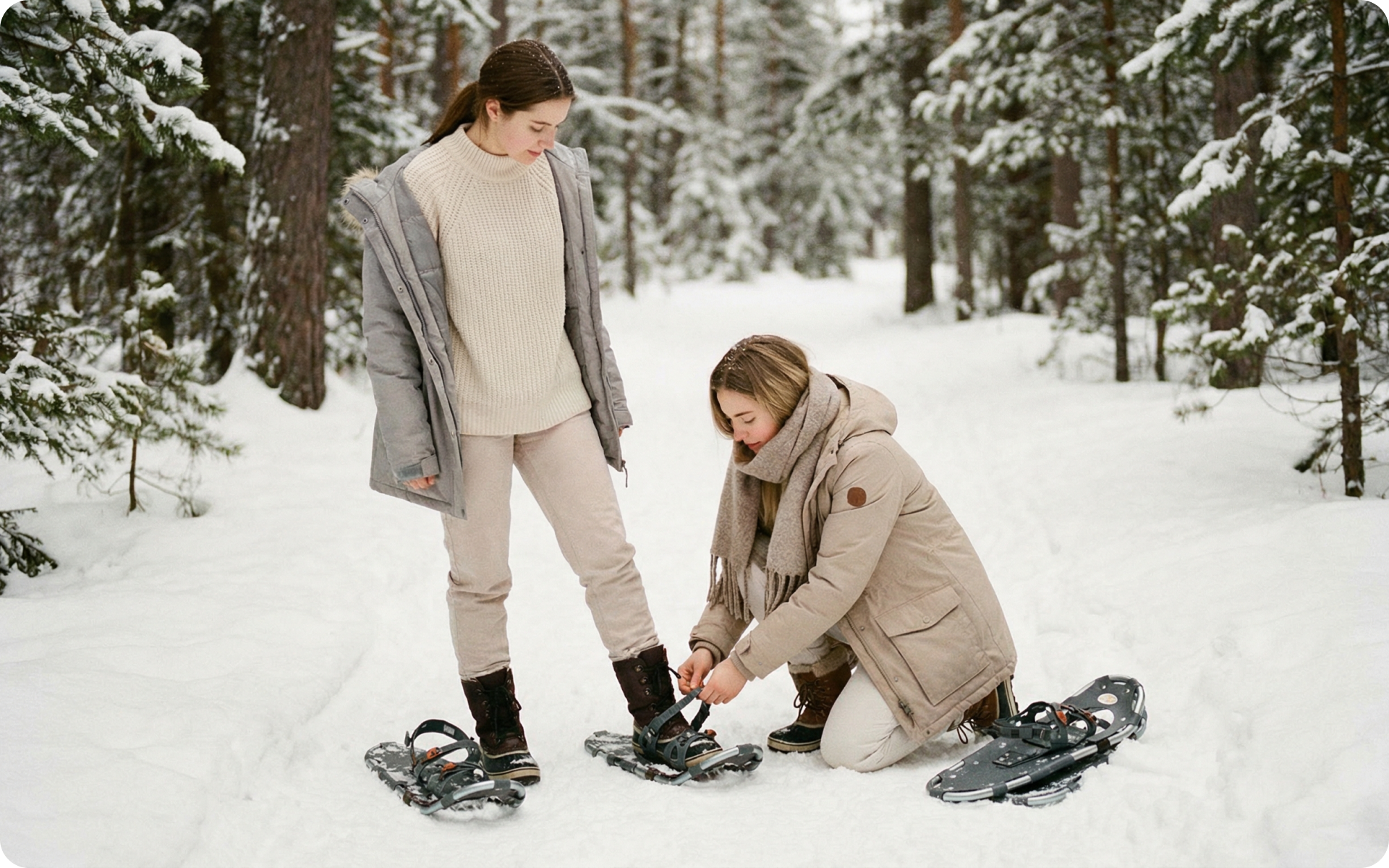
If you can walk, you can likely snowshoe. This activity is a fantastic way to go hiking in deep snow. It provides an excellent cardiovascular workout and is less technical than skiing. It’s a great option for exploring local parks and trails that may otherwise be inaccessible.
3. Ice Skating
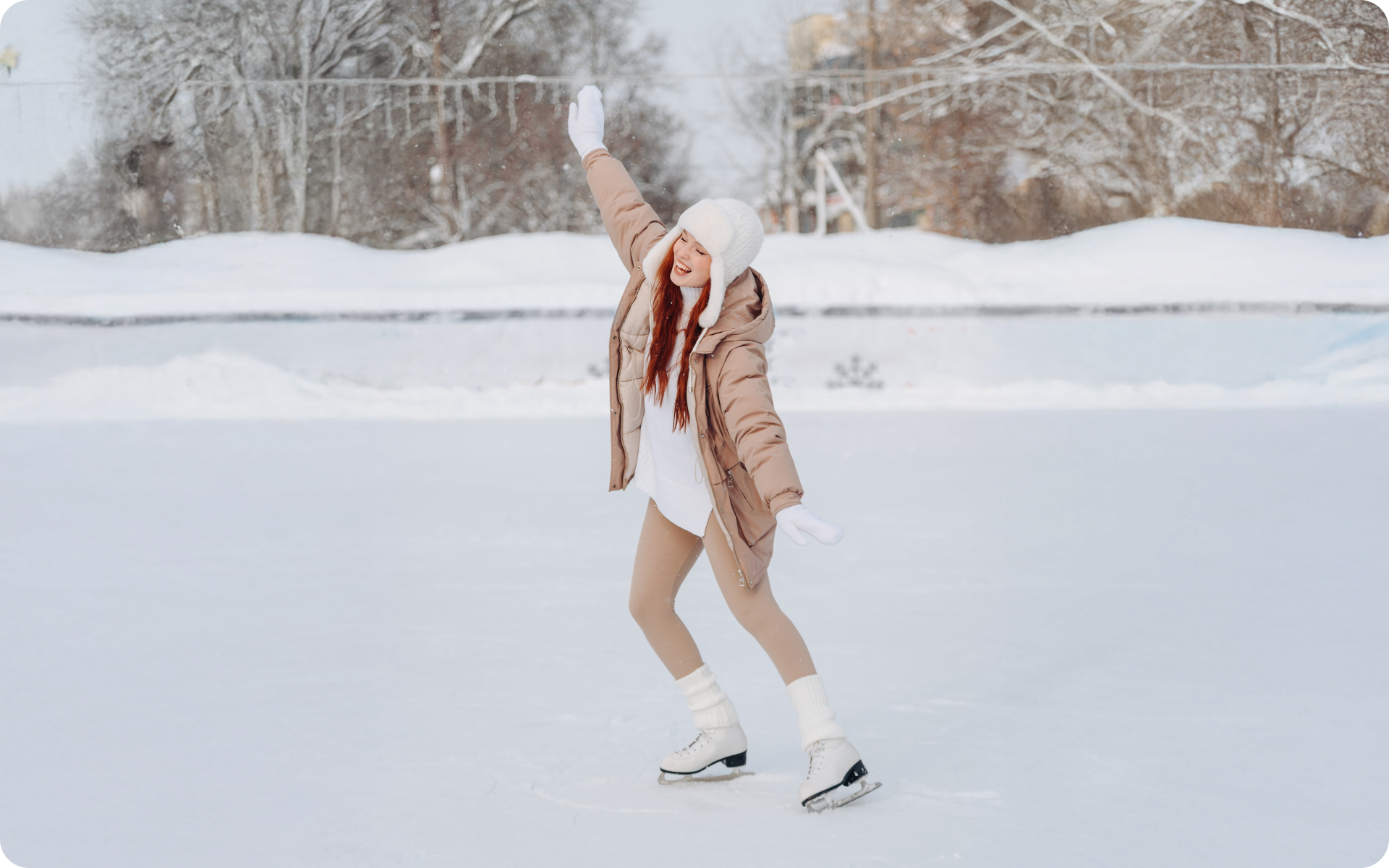
Whether on a frozen pond or at an outdoor rink, ice skating is a classic winter pastime that improves balance, coordination, and lower-body strength. It’s a fun activity for people of all ages and can be as leisurely or intense as you make it.
Whether you’re a workout beast or just a beginner making your first foray into the world of fitness and dieting – BetterMe has a lot to offer to both newbies and experts! Install the app and experience the versatility first-hand!
4. Winter Hiking or Trail Running
Don’t let cold weather stop you from hitting the trails. Hiking and running in the winter offer a unique experience with crisp air and quiet landscapes. With proper footwear (consider traction devices such as microspikes for icy trails), you can safely enjoy these year-round activities. They’re excellent examples of outdoor winter activities without snow, so they’re perfect for milder climates.
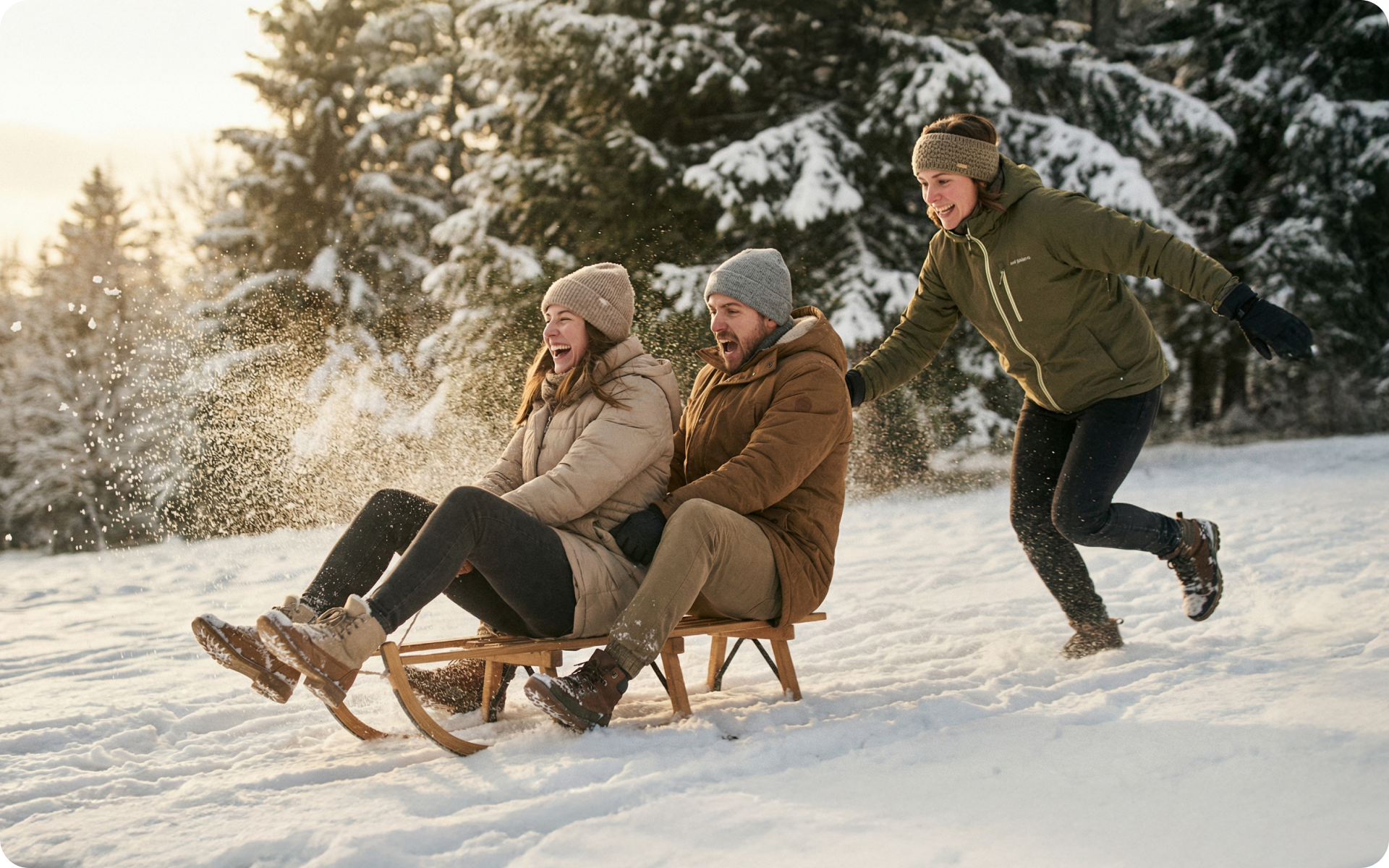
5. Sledding
Sledding isn’t just for kids. Repeatedly walking up a hill to slide back down is a surprisingly effective form of interval training. It’s a joyful way to get your heart rate up and engage your lower body muscles.
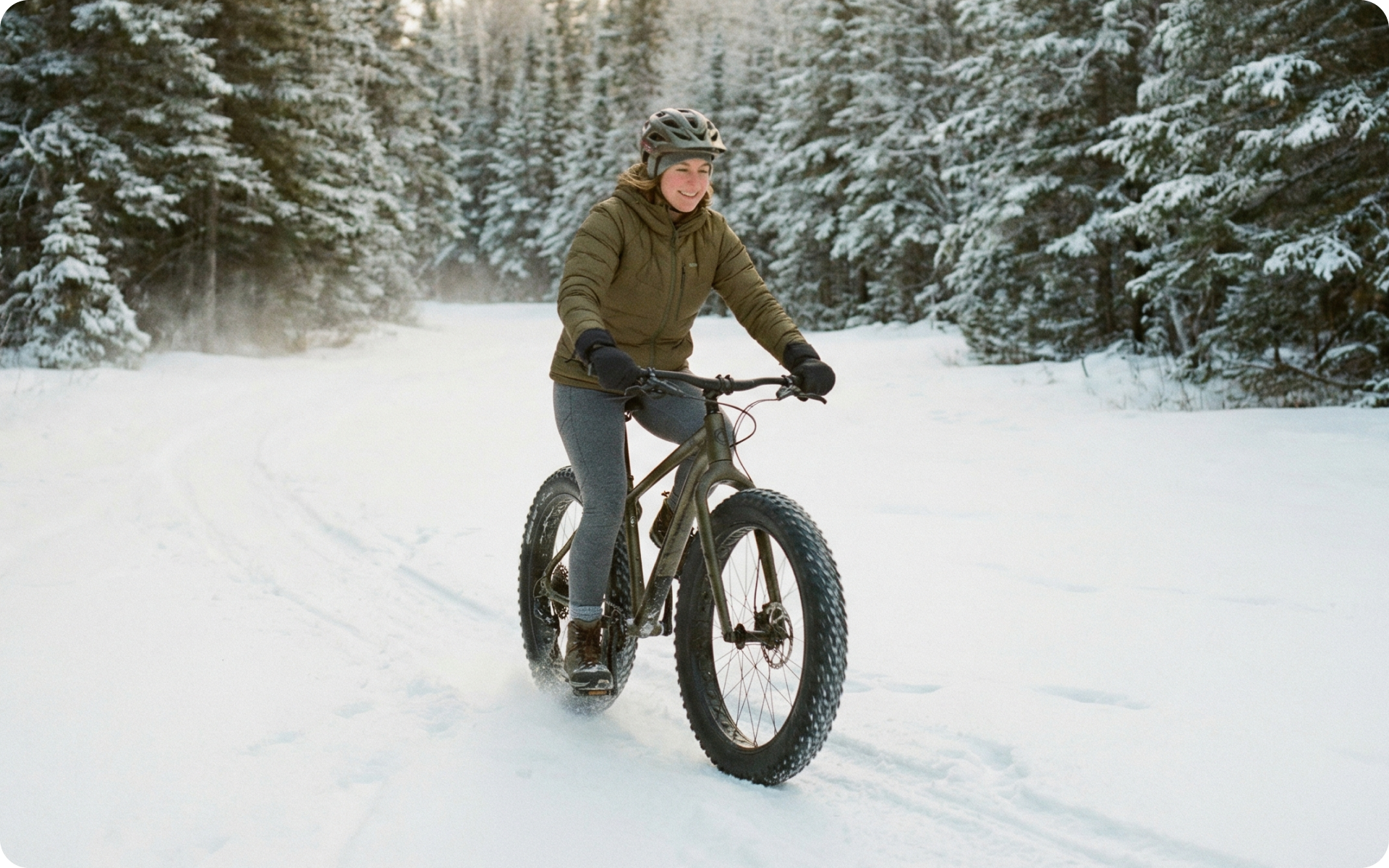
6. Fat Biking
Fat bikes are off-road bicycles with oversized tires designed for riding on soft, unstable terrain such as snow. Biking through a snowy landscape offers a challenging workout and a fresh perspective on familiar trails.
7. Rucking
Rucking is simply walking with a weighted backpack. It’s a versatile and scalable activity that builds strength and endurance. You can do it anywhere, which makes it a perfect choice for outdoor winter activities for adults who are looking for a simple yet effective workout.
Here’s a sample program to get you started with rucking.
Program Notes
- Glossary: 1RM (one-repetition maximum) is the most weight you can lift for a single repetition. RPE (rate of perceived exertion) is a scale of 1-10 to measure exercise intensity.
- Equipment: A sturdy backpack (rucksack) and weights (ruck plates, dumbbells, or even water bottles).
- Split Structure: Perform this workout 2-3 times per week on non-consecutive days.
- Loading: Start with a weight that is 10-15% of your body weight.
- Rest: Rest as needed between exercises, but try to keep rest during the ruck itself to a minimum.
Beginner Rucking Workout Program
| Exercise | Sets | Reps/Duration | Intensity (RPE) |
|---|---|---|---|
| Warm-up | |||
| Bodyweight squats | 2 | 15-20 | 4-5 |
| Walking lunges | 2 | 10 per leg | 4-5 |
| Arm circles | 2 | 10 forward, 10 back | 3-4 |
| Workout | |||
| Ruck (walk with pack) | 1 | 20-30 minutes | 6-7 |
| Rucksack rows | 3 | 10-12 | 7-8 |
| Rucksack squats | 3 | 12-15 | 7-8 |
| Push-ups | 3 | As many as possible | 8-9 |
| Cool-down | |||
| Quad stretch | 2 | 30 seconds per leg | 3 |
| Hamstring stretch | 2 | 30 seconds per leg | 3 |
Exercise Instructions
Bodyweight Squats
- Stand with your feet shoulder-width apart, your toes pointing slightly outward.
- Keep your chest up and your core engaged.
- Push your hips back and bend your knees as if sitting in a chair.
- Lower yourself until your thighs are parallel to the ground, or as low as you can comfortably go.
- Push through your heels to return to the starting position.

Walking Lunges
- Stand with your feet together.
- Take a large step forward with your right foot, lowering your hips until both knees are bent at a 90-degree angle.
- Ensure your front knee is directly above your ankle and your back knee is hovering just above the ground.
- Push off your left foot and bring it forward to meet your right, returning to a standing position.
- Repeat with the left leg.
Ruck (Walk with Pack)
- Stand tall with the rucksack on your back. Keep your shoulders back and your chest up.
- Walk at a brisk, steady pace. Maintain good posture throughout the walk.
- Engage your core to support the weight and to protect your lower back.
Rucksack Rows
- Hold the top handle of your rucksack with both hands.
- Hinge at your hips, keeping your back straight, until your torso is nearly parallel to the floor.
- Pull the rucksack up toward your chest, squeezing your shoulder blades together.
- Lower the weight with control to the starting position.
Rucksack Squats
- You can hold the rucksack in front of your chest (goblet squat style) or wear it on your back.
- Perform a squat following the same form as the bodyweight squat.
- Keep your core tight to manage the extra weight.
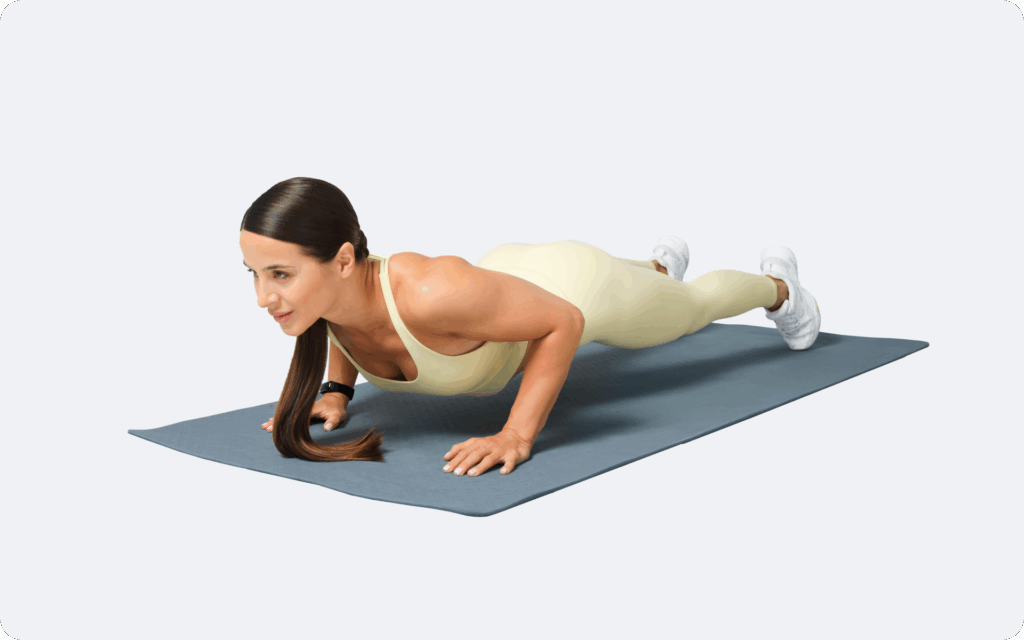
Push-Ups
- Start in a high plank position with your hands slightly wider than your shoulders.
- Lower your body until your chest nearly touches the floor, keeping your elbows tucked in at about a 45-degree angle.
- Push back up to the starting position. Keep your body in a straight line from your head to your heels.
What Is the Best Winter Outdoor Activity for a Family?
For families, the best activities are those that are inclusive, require minimal gear, and focus on fun. Sledding is a top contender. It’s exciting for all ages and provides a great workout from walking back up the hill.
Building a snow fort or having a friendly snowball fight are other classic choices that encourage teamwork and creative play. For a calmer experience, a winter nature walk or scavenger hunt can be a wonderful way to explore the outdoors together.
These activities require little more than warm clothing and a sense of adventure, which makes them accessible to everyone. The goal is to create positive memories associated with being active in the cold.
Read more: Cold Weather Jogging – The Excellent Way To Get Invigorated During Winter
Bonus Tip: How to Get 10,000 Steps a Day During Winter Easily
Hitting a 10,000-step goal can feel daunting when it’s cold outside. Here’s how to make it easier:
- Break It Up: You don’t need to get all your steps at once. Aim for three 15-20 minute walks throughout the day – one in the morning, one at lunchtime, and one in the evening.
- Embrace the Cold: A brisk 10-minute walk in the cold can be incredibly invigorating. The cold air can improve alertness and mood. A study on Polish men showed regular winter activity boosts endorphins, helping to combat the “winter blues”.
- Walk and Talk: Schedule phone calls with friends or family as “walking meetings”. You’ll be so engaged in the conversation that you’ll hardly notice the steps adding up.
- Park Farther Away: When running errands, intentionally park at the far end of the parking lot to add extra steps to your day.
- Make It a Household Activity: Get the whole family involved in a post-dinner walk around the neighborhood.
Are you thinking about running through the winter? Get tips on cold-weather jogging.
Yes, walking outside in winter is excellent for your health. It helps maintain cardiovascular fitness, boosts your mood through endorphin release, and exposes you to natural light, which can help regulate your sleep cycle (8). Just make sure that you dress appropriately and watch for icy surfaces. Make winter walks more enjoyable by listening to a podcast or audiobook, walking with a friend, or exploring a new route. You can also try “purposeful” walks, such as walking to a local coffee shop or library. Turning your walk into a game, such as a nature scavenger hunt, can also add an element of fun. Skiing and snowboarding are among the most popular winter sports globally, particularly in regions with reliable snowfall. For more accessible, everyday activities, walking and hiking are popular choices for staying active during the winter months. Winter is a great time to pick up hobbies that keep you active. Consider snowshoeing, cross-country skiing, ice skating, or winter photography hikes. If you prefer to stay indoors, you can try activities such as climbing at an indoor gym, yoga, or learning a new dance style. The key is to find something you enjoy.
Frequently Asked Questions
Is it good to walk outside in winter?
How can I make winter walks fun?
What is the most popular winter activity?
What hobbies can I do in winter?
The Bottom Line
The colder months don’t have to mean a pause in your fitness journey. By choosing activities you enjoy and preparing properly for the weather, you can continue to build strength, endurance, and resilience all year long. This winter, challenge yourself to get outside and discover the unique benefits of staying active in the cold. You’ll maintain your physical health and also boost your mental well-being, emerging into spring feeling stronger and more capable than ever.
DISCLAIMER:
This article is intended for general informational purposes only and does not serve to address individual circumstances. It is not a substitute for professional advice or help and should not be relied on for making any kind of decision-making. Any action taken as a direct or indirect result of the information in this article is entirely at your own risk and is your sole responsibility.
BetterMe, its content staff, and its medical advisors accept no responsibility for inaccuracies, errors, misstatements, inconsistencies, or omissions and specifically disclaim any liability, loss or risk, personal, professional or otherwise, which may be incurred as a consequence, directly or indirectly, of the use and/or application of any content.
You should always seek the advice of your physician or other qualified health provider with any questions you may have regarding a medical condition or your specific situation. Never disregard professional medical advice or delay seeking it because of BetterMe content. If you suspect or think you may have a medical emergency, call your doctor.
SOURCES:
- Effect of Winter Outdoor Physical Activity on Body Composition and Motor Performance of Polish Adult Men (2023, mdpi.com)
- Potential Health Benefits From Downhill Skiing (2019, frontiersin.org)
- EXERCISING IN THE COLD (2012, journals.lww.com)
- Maximizing Safety When Exercising in the Cold (2018, journals.lww.com)
- Humans in the cold: Regulating energy balance (2020, pubmed.ncbi.nlm.nih.gov)
- Hydration in Cold Weather (2025, extension.psu.edu)
- Effect of the mood of indoor activities on thermal comfort after winter commutes with different metabolic levels (2024, sciencedirect.com)
- Don’t Let Bad Weather Stop You – Getting Outside Has Big Benefits (2025, uhhospitals.org)


 Reviewed by