If you’re looking to strengthen your lower-body muscles such as the glutes, hamstrings, quadriceps, and calves, a leg workout at the gym is inevitable. These workouts also work on smaller stabilizing muscles such as the hip internal and external rotators.
In this post, we’ll discuss everything that involves leg workouts at the gym and some of the best workouts you can do to improve your lower-body strength. Your legs play an important role and carry your entire body weight. Walking, jumping, standing, and most other activities rely mostly on the stability and strength of the legs. For days when you cannot make it to the gym, we’ll also touch on practical leg exercises you can do at home that still help you train consistently.
The Benefits of Leg Workouts
Before we delve deeper, let’s first discuss the benefits of leg workouts. The purpose of doing leg workouts is to help in the following ways:
- Enhances Metabolism and Fat Loss
The largest body muscles are in the legs and working them helps increase energy expenditure and burn more calories. It may also help boost metabolic rate and fat loss.
- Greater Strength in the Upper Body
A 2018 study from The Journal of Strength and Conditioning Research showed that exercises or workouts that focus on lower-body muscle hypertrophy may be helpful for stimulating upper-body strength and power gains (1).
- Improves Balance and Stability
Leg workouts are also important for strengthening the primary movers and stabilizing muscles around the hips, ankles, and knees. In addition, a study from 2022 from Perceptual and Motor Skills showed that single-leg balance training is useful for improving balance performance, particularly in older adults (2).
- Enhances Sporting Performance
The legs hold the largest muscle groups, which can generate the most power and stability. Depending on your sport, building healthy and strong legs through leg workouts is the way to achieve excellence. In addition, exercise can enhance endurance, agility, power, and speed (3). This is one reason why high-intensity leg workouts are often used in athletic training blocks (when programmed appropriately).
- Injury Prevention
Stronger legs with better stability help prevent injuries that could result from daily activities or during sports activities. They also make everyday activities such as walking for long distances, climbing the stairs, and jumping less tiring.
Read more: The Best Leg Day Routine at Home with Dumbbells
What Are Effective Leg Workouts at the Gym?
Some of the most effective workouts at the gym are compound movements that focus on the quadriceps, hamstrings, glutes, and calves. Such exercises are meant to strengthen, tone, and improve the endurance of your lower-body muscles. Effective leg workouts at the gym include:
Warm-Up Exercises
A proper warm-up is important. This can include 5-10 minutes of light cardio such as cycling or brisk walking, combined with dynamic stretches such as leg swings. Warming up increases blood flow to muscles, reduces injury risk, and improves performance (4).
Squats
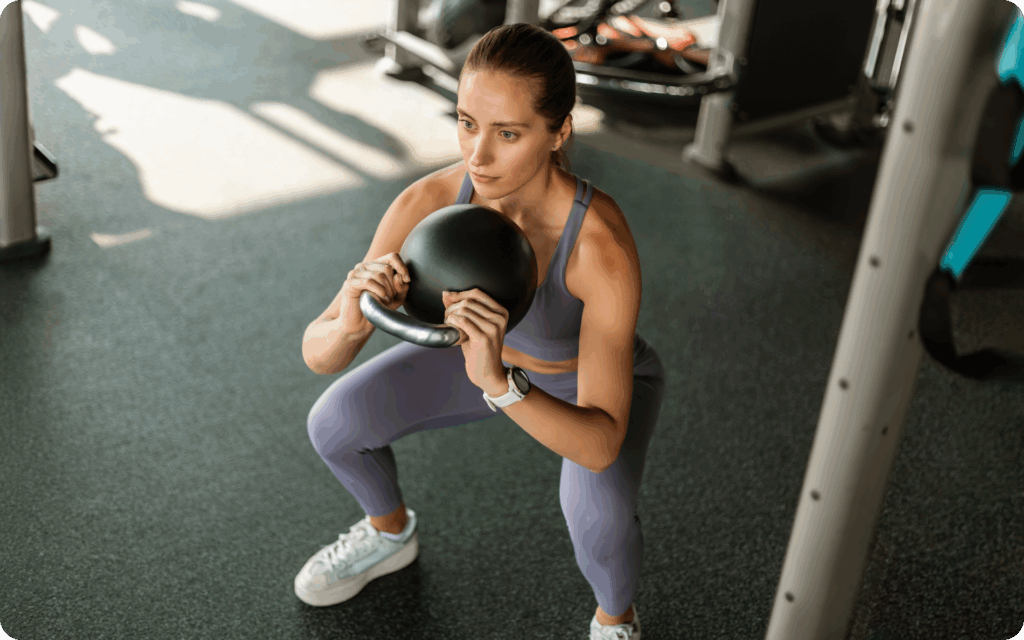
Squats are among the most effective leg exercises as they engage multiple muscles, including the quadriceps, hamstrings, and glutes. They can be performed with bodyweight, dumbbells, or a barbell.
For it to be effective, maintain proper form by keeping your chest up, your back straight, and lowering your hips until your thighs are parallel to the floor. Squats also improve core strength and stability. If you want the best bodyweight leg workout option, bodyweight squats (and their variations) are a strong starting point.
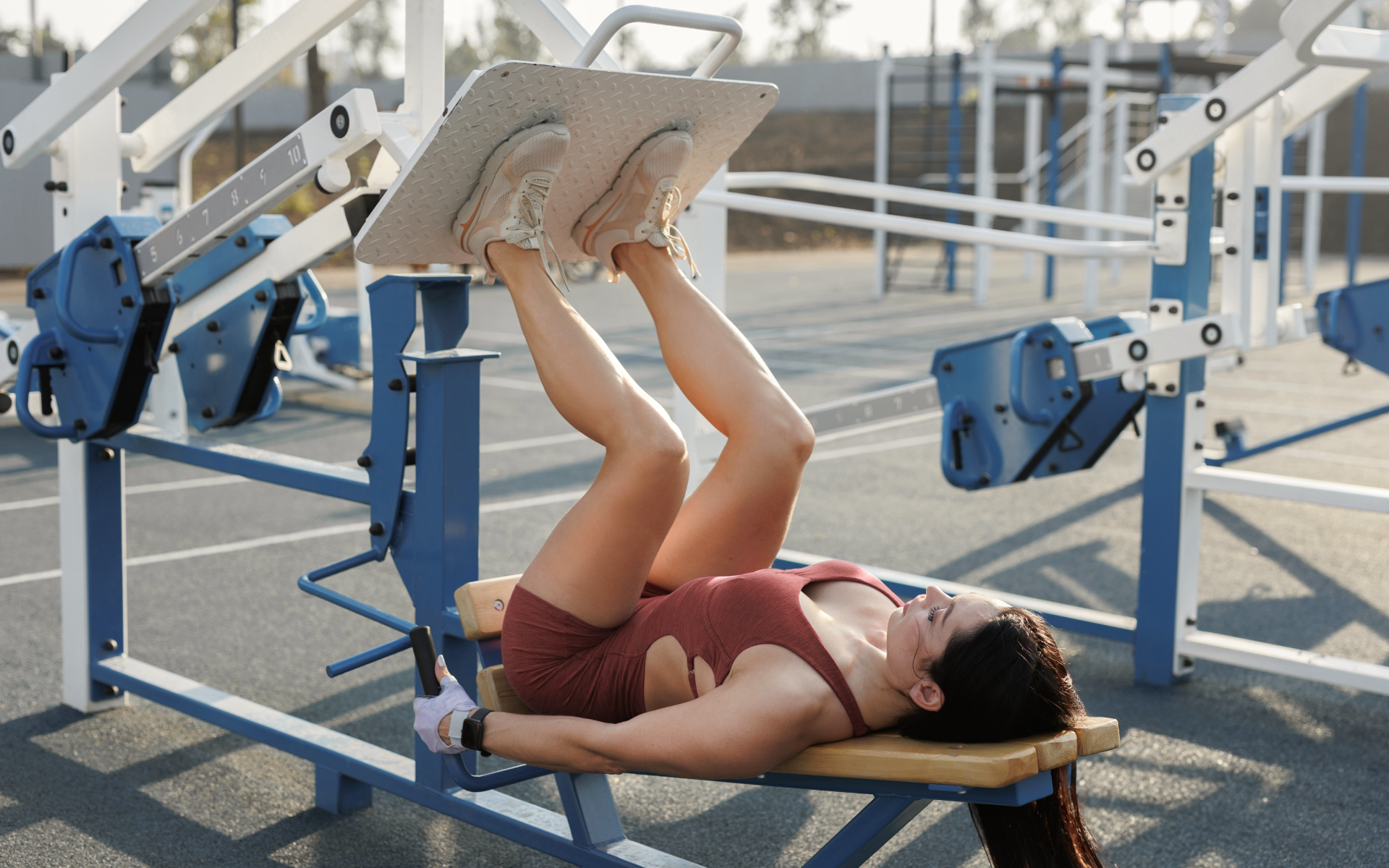
Leg Press
Another effective exercise is the leg press. The leg press machine allows you to push a weighted platform using your legs. It primarily targets the quadriceps, but also engages the glutes and hamstrings. It’s easier on the back than heavy barbell squats, and that makes it suitable for leg workouts at the gym for beginners or those with lower-back concerns.
Lunges
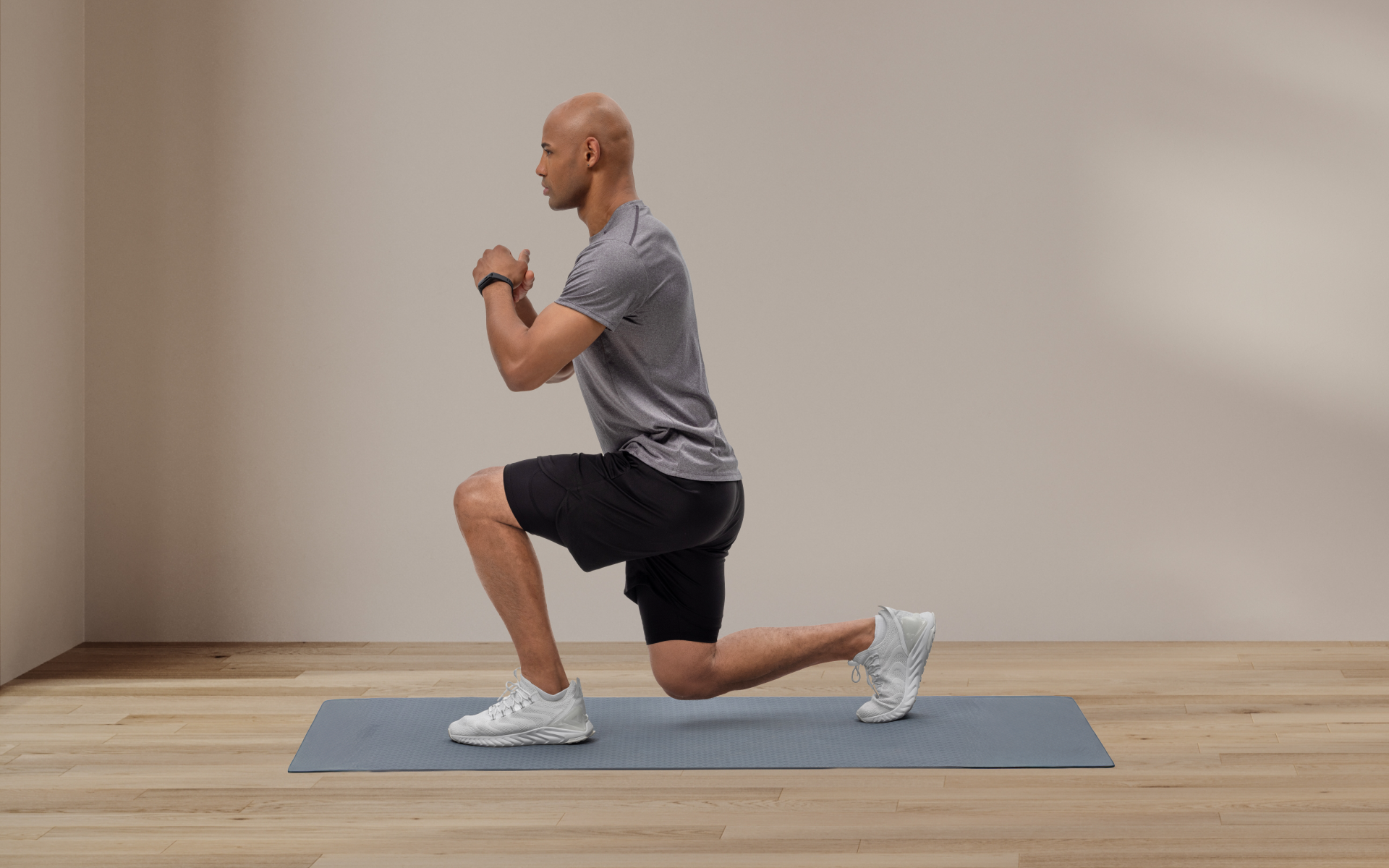
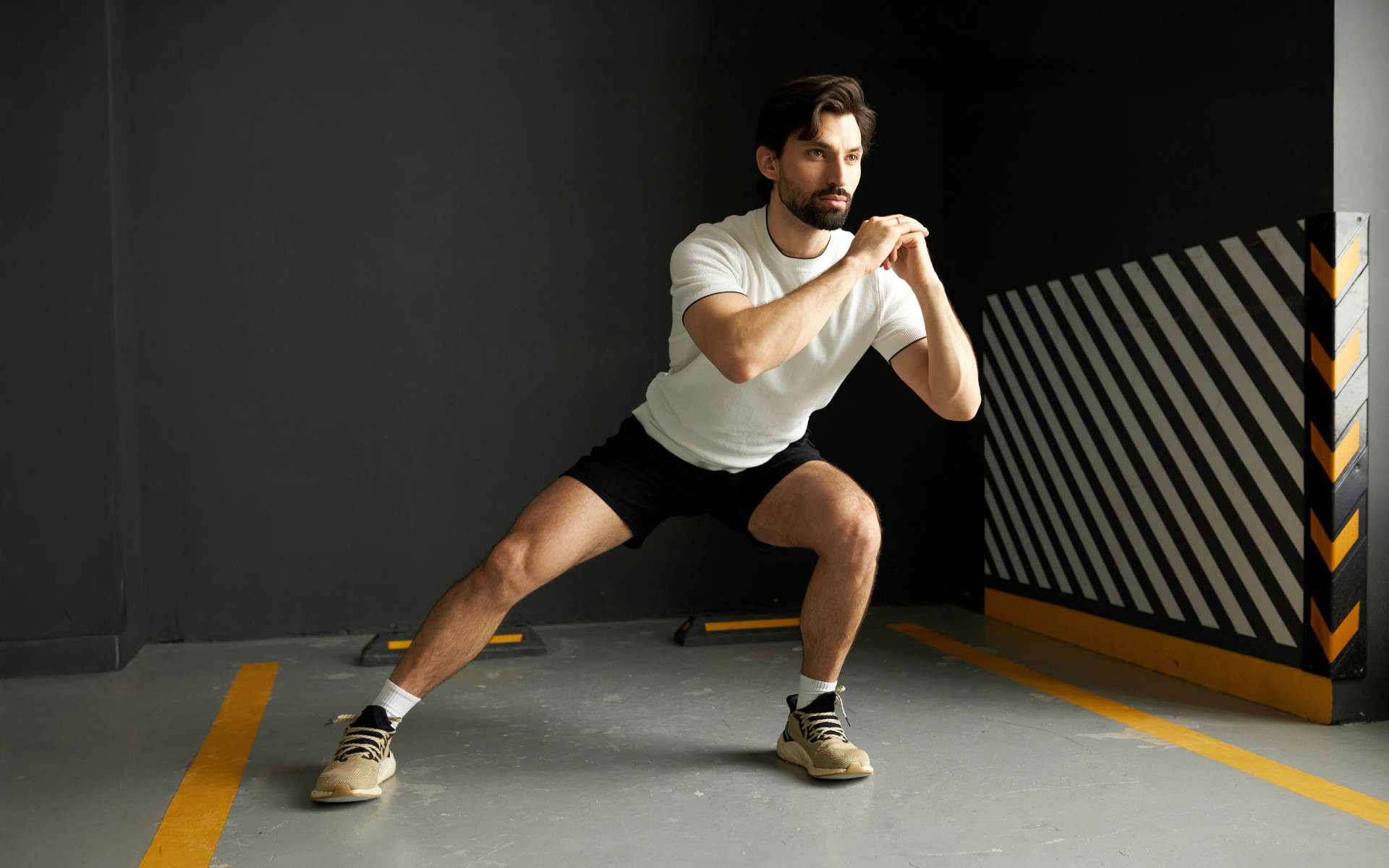
Lunges involve stepping forward and lowering your body until both knees are bent. They target the quads, hamstrings, and glutes while also improving balance and coordination. There are other variations of this exercise that include walking lunges, reverse lunges, and side lunges, which can emphasize different muscles and provide variety in training.
Split Squats
A split squat is also an effective exercise. You can do it by placing your back foot on a bench while your front leg performs a squat. This exercise isolates each leg and results in a number of benefits that include building strength, stability, and muscle balance.
Reasons why BetterMe is a safe bet: a wide range of calorie-blasting workouts, finger-licking recipes, 24/7 support, challenges that’ll keep you on your best game, and that just scratches the surface! Start using our app and watch the magic happen.
Romanian Deadlifts
Romanian deadlifts target the hamstrings and glutes. The movement involves lowering a weight or barbell while pushing your hips back, keeping a slight bend in your knees.
Calf Raises
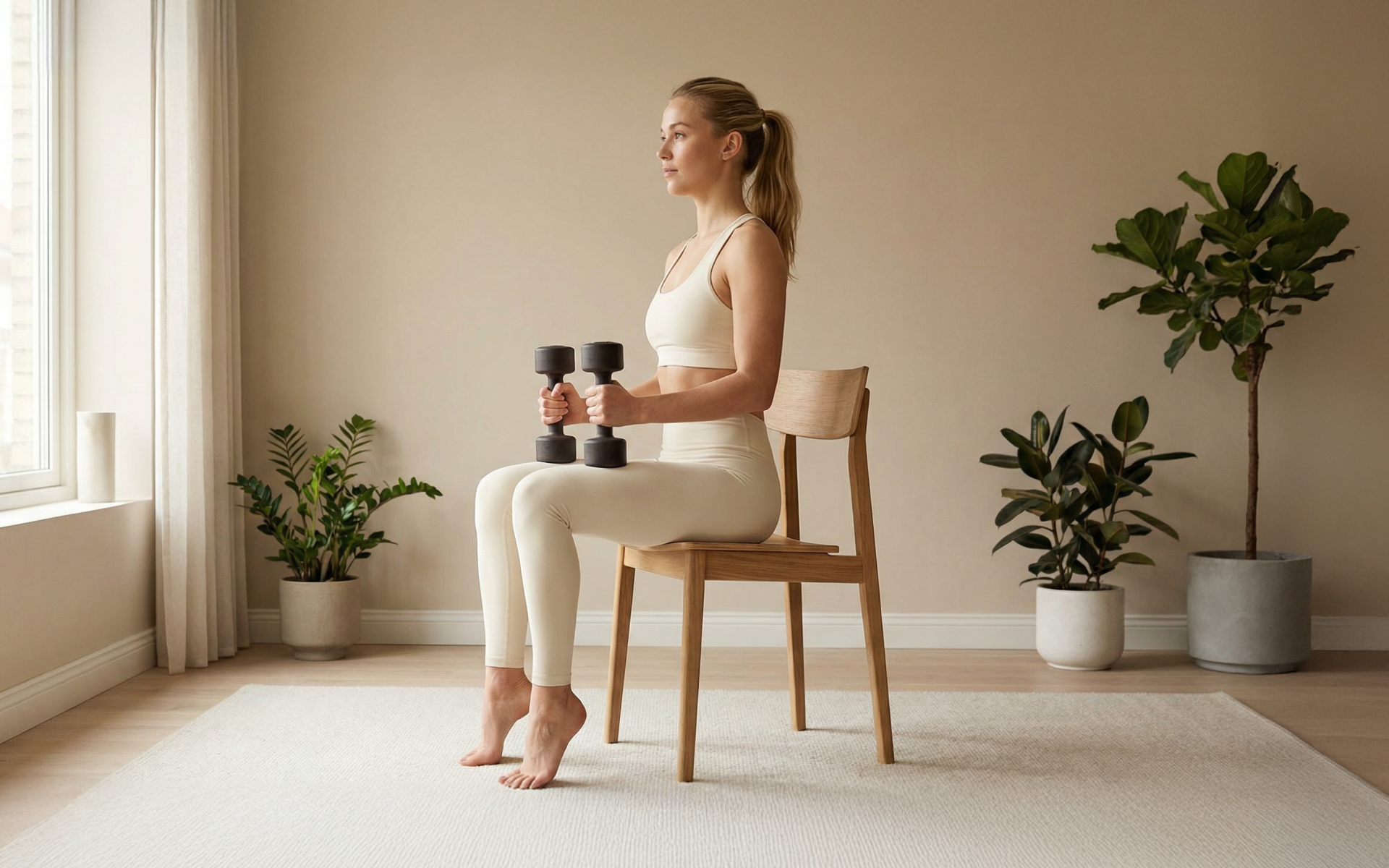
Calf raises focus on the muscles in the lower leg. They can be done standing or seated by lifting your heel off the ground, often with some added weight. Strong calves improve ankle stability, running performance, and balance.
How to Get Thicker Legs
You can get thicker legs by building muscle through resistance training, eating enough calories and protein, and resting so your muscles can grow. To build muscle, you need to challenge your leg muscles and gradually increase the load over time, particularly if your goal is leg workouts at the gym for mass. Some of the key steps you should take to grow or get thicker muscles include:
- Performing resistance training exercises such as squats, lunges, deadlifts, leg presses, and leg extensions.
- Progressive overload by increasing weight, reps, or sets over time.
- Getting adequate nutrition with more protein.
- Allowing for recovery time and sleep for muscle repair.
How to Structure a Gym Leg Workout
You can structure a leg workout with warm-up, compound exercises, isolation exercises, and cool-down as in the following example:
- Warm-up: 5-10 minutes of light cardio and dynamic stretching.
- Starting with compound exercises that need more energy such as squats, deadlifts, and leg press.
- Incorporating isolation exercises after compound movement. These include leg extensions, hamstring curls, and calf raises.
- Cool-down exercises such as stretching to improve flexibility and recovery.
BetterMe: Health Coaching app helps you achieve your body goals with ease and efficiency by helping to choose proper meal plans and effective workouts. Start using our app and you will see good results in a short time.
What Are the Best Leg Workouts at the Gym?
The best leg workouts combine compound and isolation exercises:
- Squats for the quads, glutes, and core.
- Romanian deadlifts for the hamstrings and glutes
- Leg press for the quads and glutes
- Lunges or Bulgarian split squats for unilateral work
- Leg extensions/curls for the quads and hamstrings
- Calf raises for the calves
How Long Should a Leg Workout Take?
A typical leg workout should take about 30-60 minutes. This includes warm-up, the main workout, accessory work, rest between sets, and cool-down. Exercises that are intense and prolonged for more than 90 minutes may reduce performance and increase fatigue (5).
What Not to Do on Leg Day
Here are some things you shouldn’t do on leg day:
- Rushing Through Exercises
Avoid rushing your reps as this reduces muscle tension and control. Instead, make your movements deliberate and steady to help your leg muscles work harder and improve results while lowering the risk of injury.
- Using Poor Form
Poor form puts awkward stress on your joints instead of your muscles. Therefore, you must always focus on correct posture and full range of motion before increasing weight.
- Skipping Warm-Up and Cool-Down
Warm-up activates muscles for exercise and cool-down helps with recovery. Therefore, you must not skip warm-ups as this can cause muscle strains. Cooling down and stretching will also help reduce soreness and improve recovery.
- Lifting Too Heavy Too Soon
Progressive overload is the way to go. Adding weight too fast leads to bad form and injury. You can only increase weight gradually as your strength improves and when your current weight/rep feels too easy.
- Overtraining Your Legs
Overtraining isn’t a good idea for your legs. Training legs too often without rest can cause fatigue and slow growth. Therefore, you should always give your legs at least one day between sessions to recover between hard workouts.
- Ignoring Nutrition and Sleep
Rest and sleep are essential for muscles to grow. Muscles grow during rest and not during workouts. You need to eat enough and sleep well for leg growth and recovery.
Read more: The Energizing Leg Day Workout Plan Fitness Experts Are Turning to
What Are Signs that Your Legs Are Growing?
Some signs that your leg muscles are growing include becoming stronger, your leg muscles looking and feeling fuller, and daily movements or workouts feeling easier. These changes occur gradually as your muscles adapt to training stress.
Growth isn’t only about size – improvements in strength, endurance, and muscle firmness are also strong indicators that your leg workouts are effective.
Increase in Strength
An increase in strength is a sign that your legs are growing. You can lift heavier weights or perform more repetitions with the same weight. This shows that your leg muscles are adapting and getting stronger.
Increase in Leg Size
The size of your thighs, glutes, or calves may become larger, and your clothes may feel tighter around your legs.
Better Workout Endurance
Endurance during workouts is also a sign that your legs are growing. You recover faster between sets and feel less exhausted during leg workouts, showing improved muscle capacity.
Visible Muscle Shape
Another sign of leg growth is visible muscle shape. You may notice clearer muscle lines and better definition in your legs, particularly in your quads and calves.
Growing lower-body muscle isn’t easy, but it can improve with the right training. To grow your leg muscles, you need enough training volume, good resistance, and recovery or rest time. Yes, doing 100 squats a day can help grow the muscles in your legs. It can also help increase your strength and endurance, particularly if you’re new to training. However, it may not guarantee big muscle growth unless you do exercises in progressive overload, such as by adding weight or intensity over time. Neither is better as the speed will depend on your goals or what you want to achieve. For example, if you want to grow muscles, you need to focus on slow reps and tempo, and if you want to gain power, you need to focus on moving the weights fast (6). If you’re experienced and can manage your energy well, then doing 7 leg exercises in one session can be okay. Many people focus on 4-6, but advanced practitioners may include more movements to target the muscles fully. No, 3 leg days a week isn’t too much. For most people, training the legs 2-3 times per week is good, but 3 high-intensity leg days may not give you enough recovery between sessions. It’s better to spread them out as you listen to your body.Frequently Asked Questions
Are legs easy to grow?
Will my legs grow if I do 100 squats a day?
Is it better to do squats fast or slow?
Can I do 7 exercises on leg day?
Is 3 leg days a week too much?
The Bottom Line
Leg workouts are good for gaining lower-body strength. They should focus on the major muscles in the lower body, including the glutes, hamstrings, quadriceps, and calves. Some of the benefits are that they increase strength, burn more calories, improve balance and stability, and improve athletic performance.
DISCLAIMER:
This article is intended for general informational purposes only and does not serve to address individual circumstances. It is not a substitute for professional advice or help and should not be relied on for making any kind of decision-making. Any action taken as a direct or indirect result of the information in this article is entirely at your own risk and is your sole responsibility.
BetterMe, its content staff, and its medical advisors accept no responsibility for inaccuracies, errors, misstatements, inconsistencies, or omissions and specifically disclaim any liability, loss or risk, personal, professional or otherwise, which may be incurred as a consequence, directly or indirectly, of the use and/or application of any content.
You should always seek the advice of your physician or other qualified health provider with any questions you may have regarding a medical condition or your specific situation. Never disregard professional medical advice or delay seeking it because of BetterMe content. If you suspect or think you may have a medical emergency, call your doctor.
SOURCES:
- Effect of Lower-Body Resistance Training on Upper-Body Strength Adaptation in Trained Men (2018, pubmed.ncbi.nlm.nih.gov)
- Single Leg Balance Training: A Systematic Review (2022, researchgate.net)
- Strong legs help power summer activities: Hiking, biking, swimming, and more (2024, health.harvard.edu)
- Benefits of Warming up in Sports – An Analytical Study (2018, ijcrt.org)
- The Effect of Duration on Performance and Perceived Fatigability During Acute High-Intensity Interval Exercise in Young, Healthy Males and Females (2024, onlinelibrary.wiley.com)
- The effects of eccentric phase tempo in squats on hypertrophy, strength, and contractile properties of the quadriceps femoris muscle (2025, frontiersin.org)
 Reviewed by
 Reviewed by
 Reviewed by