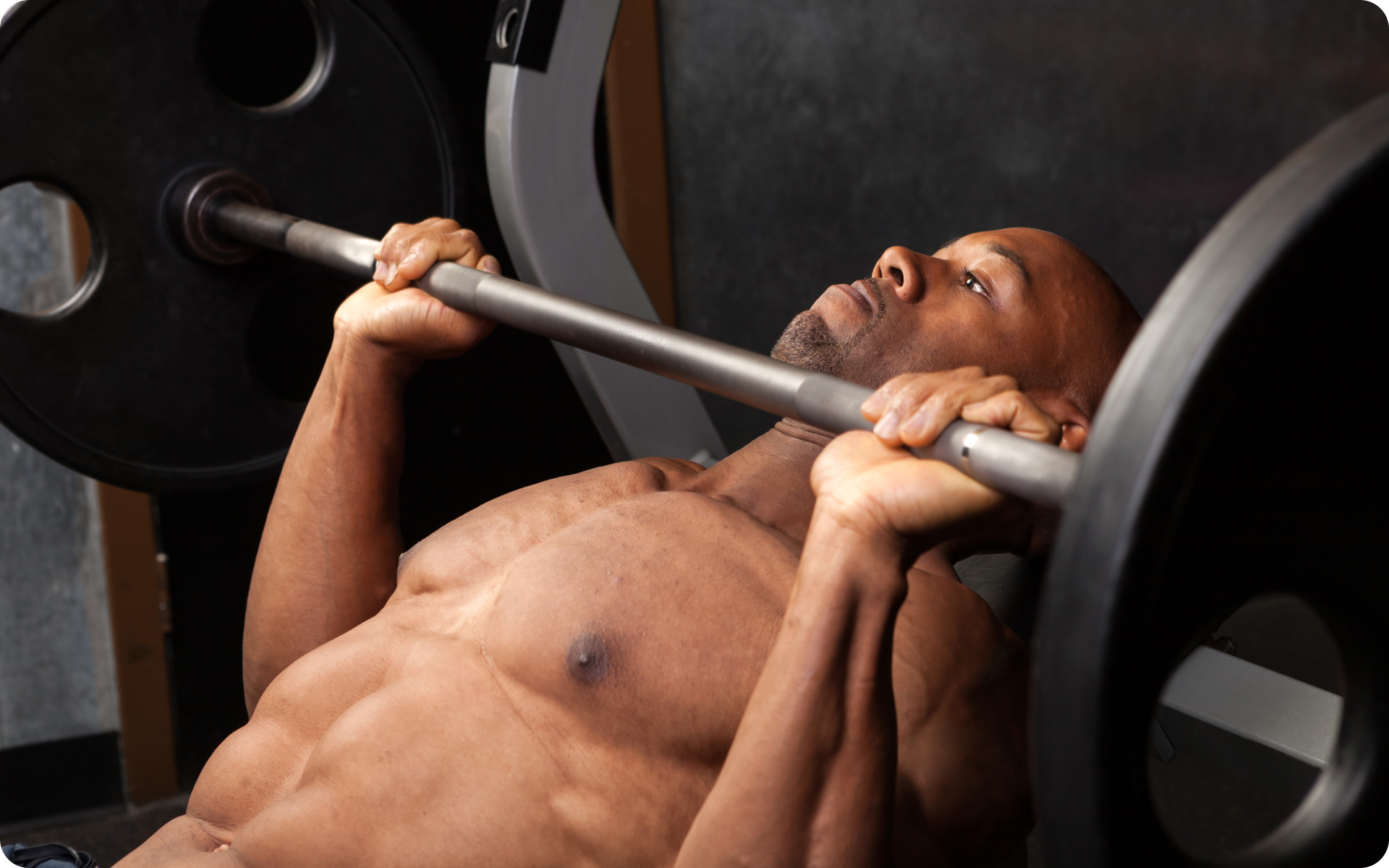

A well-developed chest is often seen as a symbol of strength and fitness. However, building a strong, defined chest requires more than just a few sets of bench presses. It demands a strategic approach that’s grounded in an understanding of anatomy, exercise science, and smart programming.
This guide will break down the science of chest training into practical, actionable steps. We’ll explore the anatomy of the chest muscles, discuss the principles of muscle growth, and provide a full chest workout routine that is designed to deliver results.
Whether you’re a beginner who is looking to lay a solid foundation or an experienced lifter who is aiming to break through a plateau, you’ll find the evidence-based insights you need to optimize your training.
What Are Essential Chest Exercises for Men?
To build a complete chest, you need to understand its structure. The primary muscle you’re targeting is the pectoralis major, a large, fan-shaped muscle that makes up most of your chest wall (1). It has two main heads:
- The Clavicular Head (Upper Chest): This upper portion originates from your clavicle (collarbone). It’s primarily responsible for flexing the arm, such as when you lift your arm forward and up (2).
- The Sternocostal Head (Mid and Lower Chest): This is the larger section, originating from your sternum (breastbone) and the cartilage of your ribs. It’s responsible for adducting the arm – bringing it across your body – and extending it from a flexed position (2).
Beneath the pectoralis major lies the pectoralis minor, a smaller muscle that helps stabilize your scapula (shoulder blade). While not a primary mover for chest aesthetics, its health is essential for proper shoulder function (3).
Therefore, essential chest exercises are those that collectively target both heads of the pectoralis major through different angles and ranges of motion. Compound movements, which involve multiple joints and muscle groups, are the most efficient way to do this (4). Isolation exercises can then be used to refine specific areas (5).
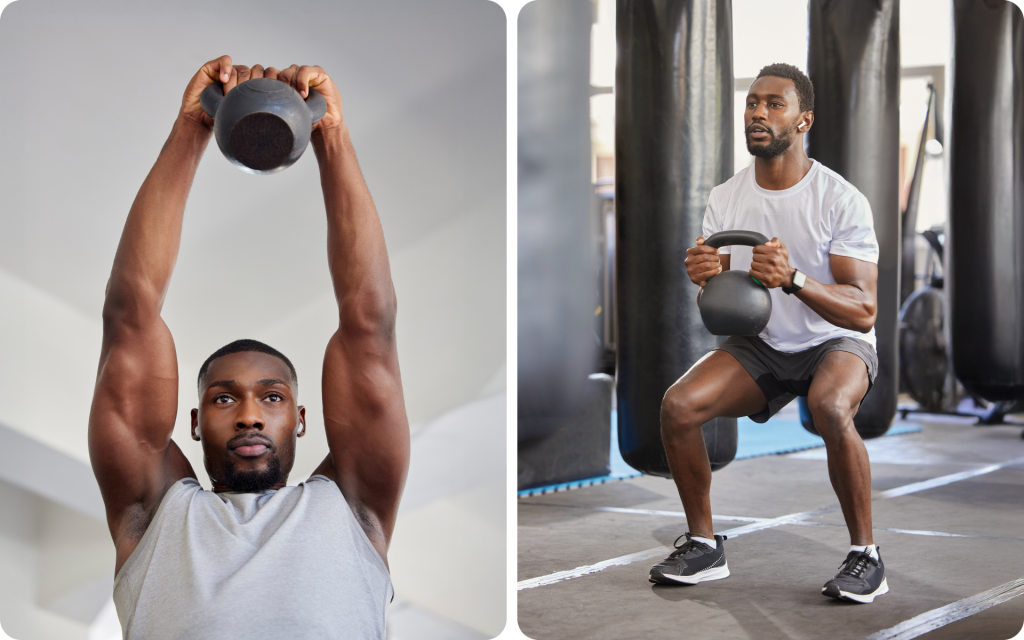
How Do Men Fix a Saggy Chest?
A “saggy” or undefined chest is often the result of three main factors: genetic predispositions, excess body fat and underdeveloped muscle mass. We all have a unique body and some people genetically hold more fat in certain areas than others do. However, addressing this issue requires a two-pronged approach that combines strategic nutrition with targeted resistance training. You can’t “spot reduce” fat from a specific area, so a comprehensive plan is necessary.
First, focus on reducing overall body fat. This is achieved by creating a consistent caloric deficit, meaning you consume fewer calories than your body expends. A moderate deficit of 300-500 calories per day is a sustainable starting point for most men, promoting fat loss while preserving muscle. Prioritizing whole foods – lean proteins, complex carbohydrates, and healthy fats – will support this goal (6).
Second, you must build the underlying muscle. A well-developed pectoralis major will create a fuller, firmer, and more lifted appearance (7). Your training should focus on exercises that promote hypertrophy (muscle growth) across the entire chest. This means incorporating movements that target the upper, middle, and lower regions of the pecs. Exercises such as the incline press (for the upper chest) and flat or decline presses (for the mid and lower chest) are crucial.
BetterMe: Health Coaching app helps you achieve your body goals with ease and efficiency by helping to choose proper meal plans and effective workouts. Start using our app and you will see good results in a short time.
Is Chest Muscle Difficult to Build?
Building any muscle requires consistency, effort, and a smart approach. The difficulty of building chest muscle often comes down to three key factors: genetics, training technique, and program design.

Genetically, some individuals have a more favorable muscle fiber composition or muscle belly insertions, which can make growth appear faster. However, everyone can build a stronger, more muscular chest with the right stimulus. The key drivers of muscle growth, as supported by extensive research, are (8):
- Mechanical Tension: This is the force placed on your muscles when you lift weights. It’s widely considered the most important factor for hypertrophy. You create high mechanical tension by lifting challenging loads through a full range of motion.
- Metabolic Stress: This is the “pump” or burning sensation you feel during a set. It results from the buildup of metabolic byproducts such as lactate in the muscle. Techniques that increase time under tension, such as higher-rep sets (15-25 reps) or drop sets, are effective at inducing metabolic stress.
- Muscle Damage: This refers to the microscopic tears that occur in muscle fibers during intense exercise. The body’s repair process for this damage can lead to muscle growth. It’s often associated with the soreness you feel after a new or particularly challenging workout.
A common mistake is focusing exclusively on one factor, such as lifting heavy all the time (mechanical tension) without incorporating other stimuli. A well-rounded program will strategically use all three mechanisms to maximize growth.
Read more: How to Build Muscle with Calisthenics: A Complete Guide
What Are the Most Effective Chest Exercises for Men?
The most effective exercises are those that allow for progressive overload, activate a high number of muscle fibers, and can be performed safely with proper form (9). For a complete chest workout, you should include a mix of compound and isolation movements performed at different angles.
Based on exercise science principles, here’s a routine that is designed for hypertrophy.
The Science-Based Chest Hypertrophy Program
Program Notes:
- Glossary:
- 1RM (One-Rep Max): The maximum weight you can lift for a single repetition.
- RPE (Rate of Perceived Exertion): A scale of 1-10 measuring how hard a set feels. An RPE of 8 means you feel you have 2 reps left in the tank.
- Progressive Overload: The principle of gradually increasing the demand on your muscles over time by adding weight, reps, or sets (10).
- Equipment: Barbell, dumbbells, adjustable bench, cable machine.
- Split Structure: This workout can be performed once or twice per week, with at least 48-72 hours of rest between sessions that target the same muscle group.
- Rep & Set Scheme: The program uses a variety of rep ranges to target all hypertrophy mechanisms.
- Rest: Rest 90-120 seconds between sets for compound lifts and 60-90 seconds for isolation movements (11).
| Exercise | Sets | Reps | Intensity (RPE) |
|---|---|---|---|
| 1. Barbell incline bench press | 4 | 6-8 | 8-9 |
| 2. Dumbbell flat bench press | 3 | 8-12 | 8 |
| 3. Decline dumbbell fly | 3 | 12-15 | 8-9 |
| 4. Weighted dip | 3 | 8-10 | 9 (to failure on last set) |
| 5. Cable crossover | 3 | 15-20 | 9-10 |
Exercise Instructions
Proper execution is essential for maximizing muscle activation and minimizing injury risk. Here’s how to perform each exercise in the program.
Barbell Incline Bench Press
- Set an adjustable bench to a 30-45 degree angle. A lower incline (30 degrees) tends to be more effective for targeting the upper chest without over-engaging the shoulders.
- Lie back on the bench, planting your feet firmly on the floor. Your back should have a natural arch, with your shoulder blades retracted and squeezed together.
- Grip the barbell with your hands slightly wider than shoulder-width apart. Unrack the bar and hold it directly above your upper chest with your arms fully extended.
- Lower the bar slowly and controllably to your upper chest, keeping your elbows tucked at a 45-60 degree angle relative to your torso.
- Pause briefly at the bottom without bouncing the bar off your chest.
- Press the bar powerfully back to the starting position, focusing on squeezing your chest muscles.

Dumbbell Flat Bench Press
- Sit on a flat bench with a dumbbell in each hand resting on your thighs.
- Lie back, using your legs to help “kick” the dumbbells up into the starting position. Your arms should be extended above your chest, with the dumbbells nearly touching and your palms facing forward.
- Plant your feet firmly on the floor and retract your shoulder blades.
- Lower the dumbbells in a controlled arc until they are level with your chest. Your elbows should be at a 45-60 degree angle to your body.
- Press the dumbbells back up to the starting position, squeezing your chest at the top of the movement.
Decline Dumbbell Fly
- Set a bench to a decline angle of approximately 15-30 degrees.
- Lie on the bench, securing your feet. Hold a dumbbell in each hand directly above your lower chest with your palms facing each other and a slight bend in your elbows.
- Lower the dumbbells out to your sides in a wide, controlled arc. Focus on feeling a deep stretch across your lower and outer chest.
- Once you feel a good stretch, reverse the motion, squeezing your pecs to bring the dumbbells back to the starting position. Avoid clanking the weights together at the top.

Weighted Dip
- Secure a weight to a dip belt or hold a dumbbell between your ankles.
- Grip the parallel bars with your hands neutral (your palms facing each other). Push yourself up until your arms are fully extended.
- Lean your torso forward slightly. This shifts the emphasis from your triceps to your chest.
- Lower your body by bending your elbows until your shoulders are slightly below your elbows, or as far as your flexibility comfortably allows.
- Press forcefully back to the starting position, focusing on contracting your chest.
Cable Crossover
- Set the pulleys on a cable machine to a high position. Grab a handle in each hand.
- Take a step forward into a staggered stance to create stability. Your arms should be extended out to your sides with a slight bend in your elbows, feeling a stretch in your chest.
- Keeping your torso stationary, pull the handles down and across your body in a wide arc until your hands meet or cross in front of your lower abdomen.
- Squeeze your chest hard at the point of peak contraction for a second.
- Slowly return to the starting position, controlling the resistance until you feel a stretch in your pecs again.
Are you interested in different ways to structure your training? Read more about the benefits of a chest superset workout.

Are 3 Chest Exercises Enough for a Workout?
Yes, three well-chosen chest exercises can be sufficient for an effective workout, provided they are structured correctly. The key is to ensure that you hit the chest from multiple angles and apply enough total volume to stimulate growth.
An effective three-exercise routine would include:
- An Incline Press: To target the upper (clavicular) head. Examples: incline barbell press, incline dumbbell press.
- A Flat Press: To target the middle (sternocostal) portion. Examples: flat bench press, dumbbell bench press, or even a well-executed push-up variation.
- A Dip or Decline Movement: To target the lower portion of the sternocostal head. Examples: weighted dips, decline press.
In order for this to be effective, you must perform these exercises with sufficient intensity and volume. Aim for 3-4 challenging sets of each exercise, working within a hypertrophy-focused rep range (e.g. 6-12 reps) and taking sets close to muscular failure (RPE 8-9). This approach provides a balanced stimulus for a great full chest workout.
Will 100 Push-ups a Day Build Chest?
Doing 100 push-ups a day can certainly build some muscle and endurance, particularly for beginners. The push-up is a fantastic bodyweight exercise that targets the chest, shoulders, and triceps. However, this approach has significant limitations due to the principle of progressive overload (12).
Your muscles grow in response to a stimulus that is greater than what they’re accustomed to. When you first start, 100 push-ups will be a major challenge. Your body will adapt by building muscle to handle this new demand.
However, over time, your body will become efficient at performing push-ups. The exercise will no longer provide enough mechanical tension to trigger significant hypertrophy. At this point, the workout becomes more of an endurance challenge than a muscle-building one. To continue stimulating growth, you would need to make the exercise harder. You could do this by (13, 14):
- Adding weight (e.g. wearing a weighted vest).
- Elevating your feet to create a decline push-up.
- Slowing down the tempo of each repetition.
While 100 push-ups a day is a good starting point, it’s not a sustainable long-term strategy for maximizing chest growth. For those who are looking to train without equipment, there are better ways to structure a chest workout at home.

How Quickly Do Chest Muscles Grow?
Muscle growth, or hypertrophy, is a gradual process that varies from person to person based on genetics, training experience, nutrition, and consistency (8, 15). While you may notice strength gains within a few weeks, visible changes in muscle size typically take longer.
- Beginners (0-1 year of training): Beginners often experience “newbie gains”, where muscle growth can be relatively rapid (16). With consistent training (2-3 times per week) and adequate protein intake (around 1.6-2.2 grams per kilogram of body weight), a beginner may see noticeable chest development within 2-3 months.
- Intermediates (1-3 years of training): As you become more trained, the rate of muscle gain will slow down (17). Progress becomes more about fine-tuning your program, optimizing nutrition, and pushing past plateaus. Noticeable changes might take 4-6 months of dedicated effort.
- Advanced Lifters (3+ years of training): For advanced athletes, gains are incremental and hard-won. Building even a small amount of new muscle tissue can take a year or more of highly strategic training and recovery.
Patience and consistency are your greatest assets. Focus on getting stronger in your key lifts and adhering to your nutrition plan, and the growth will follow.
Read more: Chest and Back Workout Plan: Complete Guide for Beginners with Answers to FAQs
What Are the Biggest Mistakes when Training the Chest?
Many lifters struggle to develop their chest because of a few common, correctable errors. Avoiding these pitfalls will significantly improve your results.
- Ego Lifting
This is the act of using too much weight at the expense of proper form. When the weight is too heavy on a bench press, the shoulders and triceps take over, reducing the tension on the chest. It also increases the risk of injury, particularly to the shoulder joint. Reduce the weight and focus on a controlled movement through a full range of motion.
- Neglecting the Upper Chest
The flat bench press is often the star of chest day, but over-emphasizing it can lead to an imbalanced physique with a well-developed lower chest and a flat upper shelf. Always start your chest workouts with an incline movement when you’re fresh to ensure the upper pecs get the stimulus they need to grow.
Reasons why BetterMe is a safe bet: a wide range of calorie-blasting workouts, finger-licking recipes, 24/7 support, challenges that’ll keep you on your best game, and that just scratches the surface! Start using our app and watch the magic happen.
- Limited Range of Motion
Performing partial reps cheats you out of the most productive part of the lift. The stretched position at the bottom of a press or fly is crucial for creating mechanical tension and stimulating hypertrophy. Lower the weight until you feel a deep, safe stretch in your chest on every rep.
- Improper Form and Lack of Mind-Muscle Connection
Simply moving a weight from point A to B is not enough. You must focus on using your chest to move the weight. Retracting your shoulder blades, keeping a slight arch in your back, and consciously squeezing your pecs throughout the movement will ensure the target muscle is doing the work.
Are you looking for a wider selection of movements? Discover more exercises to build your chest.
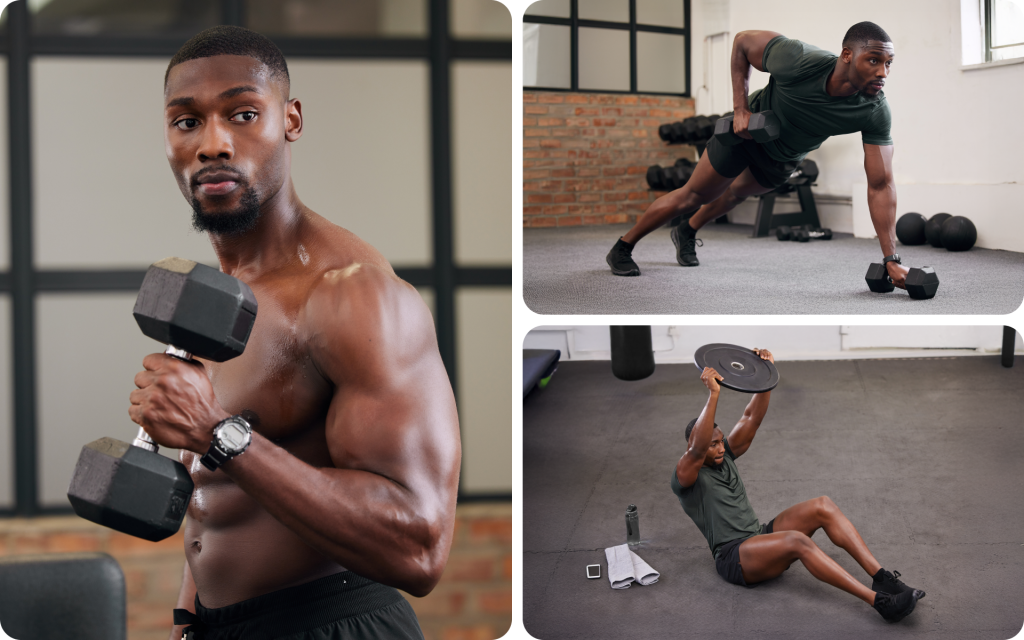
Yes, sleep is absolutely essential. During deep sleep, your body releases human growth hormone (HGH) and facilitates muscle protein synthesis – the process of repairing and rebuilding muscle fibers (18). Consistently getting 7-9 hours of quality sleep per night is one of the most effective things you can do to maximize your training results. The fastest way to build your chest is by consistently applying progressive overload to compound exercises like the incline press and flat dumbbell press, eating in a slight caloric surplus with adequate protein (1.6-2.2 g/kg of body weight), and getting 7-9 hours of sleep per night. There are no shortcuts – consistency with these fundamentals is key. Absolutely. While hormonal changes can make muscle growth slightly more challenging after 40, it’s entirely possible to build significant muscle and strength. The same principles of progressive overload, proper nutrition, and adequate recovery apply (19). In fact, resistance training is one of the most beneficial activities for maintaining health and vitality as you age. For most people, training the chest three times a week is likely too much and could lead to overtraining and potential injury. Muscles require 48-72 hours to recover and grow after a strenuous workout (20). A frequency of one to two times per week is optimal for most lifters to allow for full recovery and adaptation.Frequently Asked Questions
Is sleep important for muscle growth?
What builds your chest the fastest?
Can you build muscle at 40?
Is training the chest 3 times a week too much?
The Bottom Line
Building an impressive chest is an achievable goal for anyone who is willing to apply scientific principles with consistency and hard work. By focusing on compound movements at various angles, prioritizing proper form over heavy weight, and ensuring you progressively overload your muscles, you create the ideal environment for growth.
Remember that training is only one piece of the puzzle – adequate nutrition and restorative sleep are just as important for recovery and muscle protein synthesis. Embrace the process, stay patient, and the results will speak for themselves.
DISCLAIMER:
This article is intended for general informational purposes only and does not serve to address individual circumstances. It is not a substitute for professional advice or help and should not be relied on for making any kind of decision-making. Any action taken as a direct or indirect result of the information in this article is entirely at your own risk and is your sole responsibility.
BetterMe, its content staff, and its medical advisors accept no responsibility for inaccuracies, errors, misstatements, inconsistencies, or omissions and specifically disclaim any liability, loss or risk, personal, professional or otherwise, which may be incurred as a consequence, directly or indirectly, of the use and/or application of any content.
You should always seek the advice of your physician or other qualified health provider with any questions you may have regarding a medical condition or your specific situation. Never disregard professional medical advice or delay seeking it because of BetterMe content. If you suspect or think you may have a medical emergency, call your doctor.
SOURCES:
- Anatomy, Thorax, Pectoralis Major Major(2023, ncbi.nlm.nih.gov)
- A Detailed Review on the Clinical Anatomy of the Pectoralis Major Muscle (2018, researchgate.net)
- Pectoralis Minor Muscle (n.d., elsevier.com)
- Compound Exercises (n.d., physio-pedia.com)
- Do Single-Joint Exercises Enhance Functional Fitness? (2012, journals.lww.com)
- Optimal Diet Strategies for Weight Loss and Weight Loss Maintenance (2020, pmc.ncbi.nlm.nih.gov)
- Optimizing Development of the Pectoralis Major (2010, thesportjournal.org)
- The Mechanisms of Muscle Hypertrophy and Their Application to Resistance Training (2010, journals.lww.com)
- No Time to Lift? Designing Time-Efficient Training Programs for Strength and Hypertrophy: A Narrative Review (2021, link.springer.com)
- Progressive Overload Explained: Grow Muscle & Strength Today (n.d., blog.nasm.org)
- The effects of interset rest duration on performance and muscle activation during resistance training (2020, researchgate.net)
- Bodyweight Training: A Return To Basics (2010, journals.lww.com)
- Exercise progression and regression (n.d., us.humankinetics.com)
- Complexity: A Novel Load Progression Strategy in Strength Training (2019, frontiersin.org)
- Anabolic signals and muscle hypertrophy – Significance for strength training in sports medicine (2025, sciencedirect.com)
- An examination of the time course of training-induced skeletal muscle hypertrophy (2011, link.springer.com)
- Adaptations to Endurance and Strength Training (2018, pmc.ncbi.nlm.nih.gov)
- Sleep and muscle recovery: endocrinological and molecular basis for a new and promising hypothesis (2011, pubmed.ncbi.nlm.nih.gov)
- Defining Muscular Hypertrophy & Growth Training Best Practices (n.d., blog.nasm.org)
- Why Rest Days Are Important for Muscle Building (n.d., blog.nasm.org)


 Reviewed by
 Reviewed by