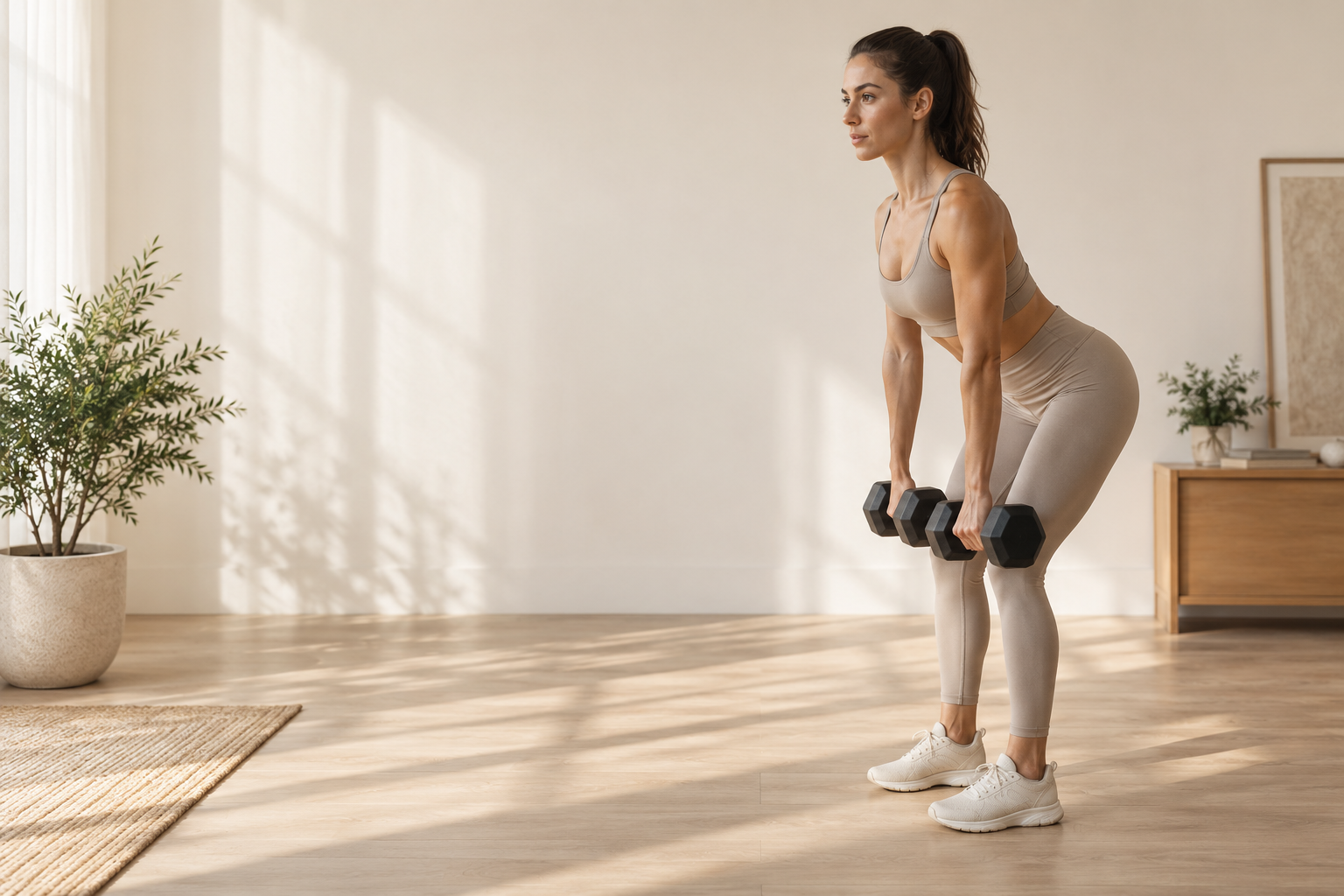
Building full-body strength doesn’t require living in the gym or hoarding a rack full of heavy machinery. Using a single pair of dumbbells and three targeted sessions a week, you can hit every major muscle group, trigger muscle growth, and build functional power without burning out.
An interesting part about dumbbell workouts is how versatile they can be. You can do multiple sequences using just a pair of dumbbells. It all comes down to what you want to achieve and how consistently you can achieve it. This article provides insightful information on 3-day dumbbell workouts, followed by tips and sample workout sequences.
This could be the push you always needed to tread down this road!
What Can You Train with a Three-Day Dumbbell Routine?
A well-designed 3-day dumbbell workout can train your entire body without requiring a gym full of equipment. You can use dumbbells to build strength and muscle in your upper and lower body. The key is to vary your exercises across the three sessions rather than repeating the same movements every workout.
Dumbbell training packs plenty of benefits into a simple workout. Research has linked it to improvements in muscle mass, strength, body composition, and functional ability. This shows that those weights are useful for both fitness and everyday movement (1)(2).
A typical 3-day dumbbell workout should include:
| Muscle group | Exercises to include |
|---|---|
| Chest | Dumbbell bench press, floor press, chest fly |
| Back | Bent-over row, single-arm row, dumbbell pullover |
| Shoulders | Shoulder press, lateral raise, front raise |
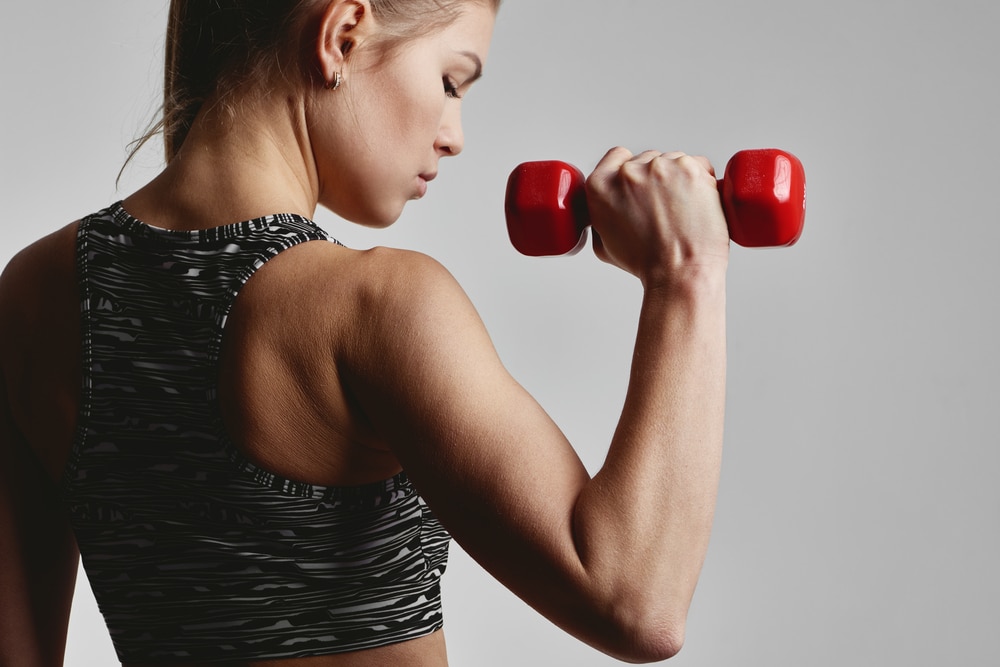
| Biceps | Biceps curl, hammer curl |
| Triceps | Overhead triceps extension, kickbacks |
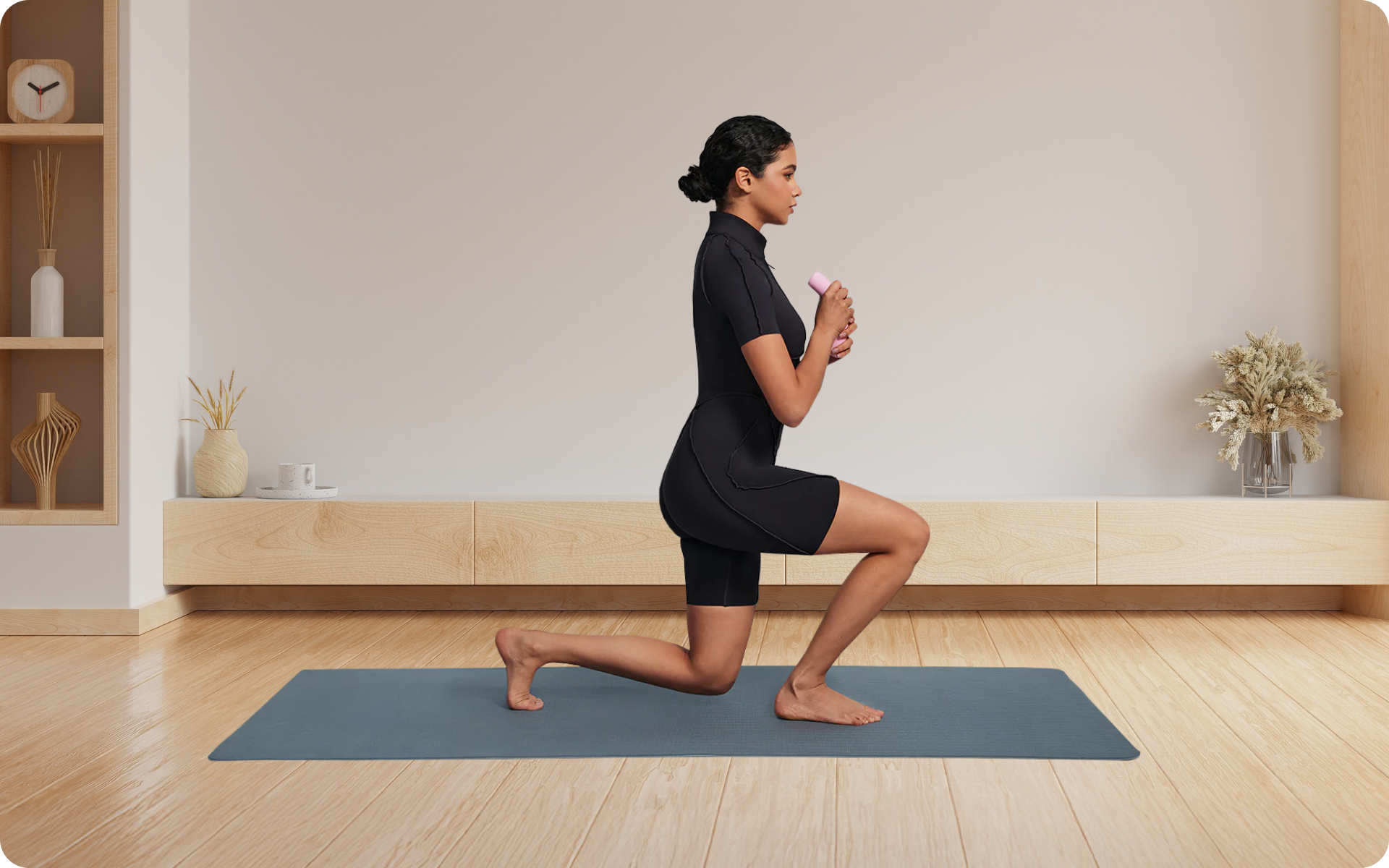
| Legs | Goblet squat, split squat, reverse lunge |
| Glutes | Romanian deadlift, dumbbell hip thrust, sumo squat |
| Core | Weighted crunch, Russian twist, suitcase carry |
You can organize these movements into a full-body dumbbell workout three times a week or divide your dumbbell workout routine into different movement patterns across the sessions.
For example:
- Day 1: Emphasize squats and pressing
- Day 2: Emphasize hinges and pulling
- Day 3: Combine full-body movements, arms, and shoulders
Read more: 4-Day Dumbbell Workout For Beginners Who Don’t Know What To Do With Dumbbells
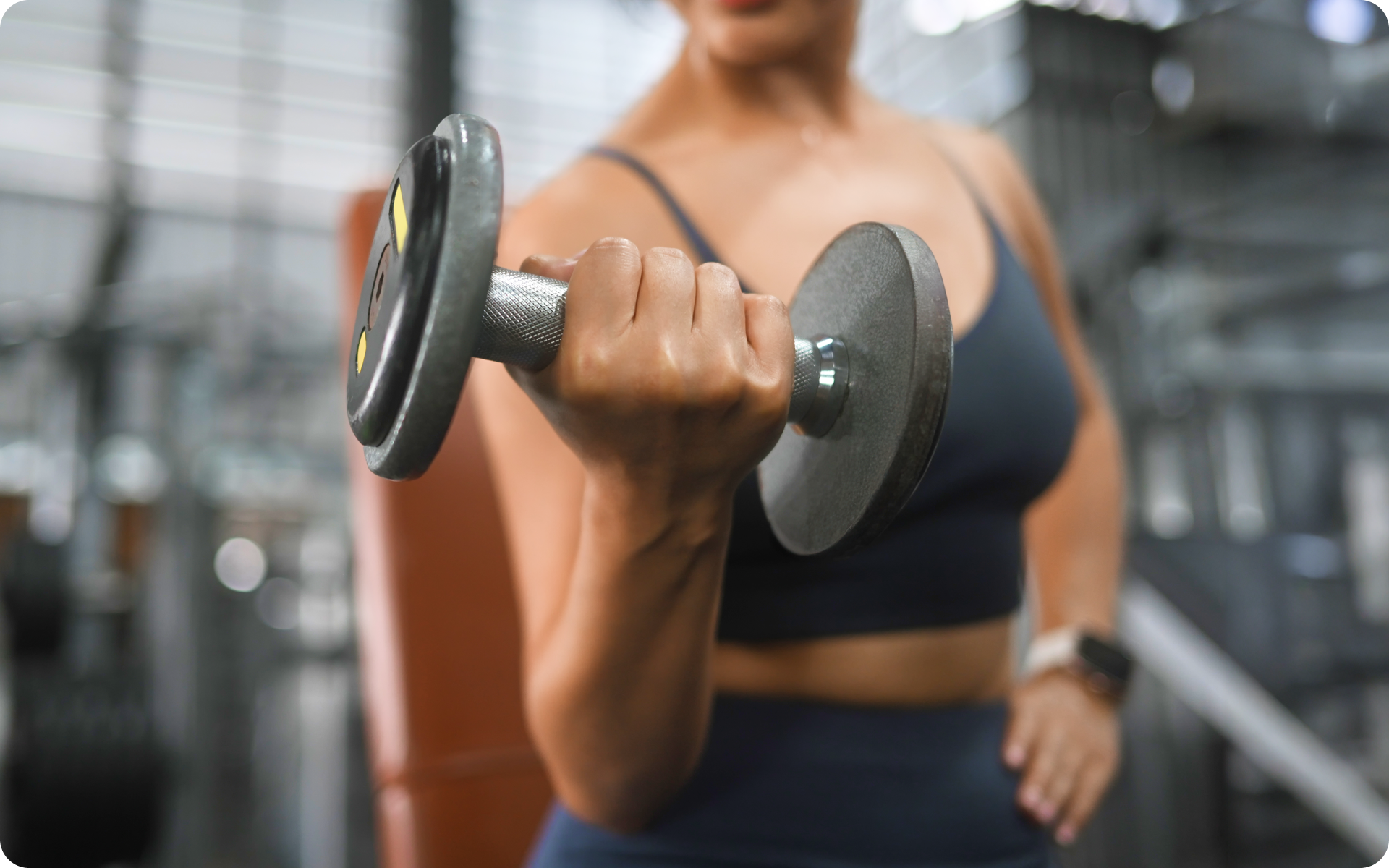
How Can You Tell Whether a Dumbbell Is Too Heavy or Too Light?
The right dumbbell should make the final few repetitions challenging without forcing you to sacrifice good form. A simple way to judge the load is to use reps in reserve (RIR). This refers to how many additional repetitions you could perform before reaching muscular failure (3).
When performing the beginner dumbbell workouts, aim to finish with around 2-3 reps in reserve. If you could easily perform 5 or more extra reps, the weight is probably too light. If you can’t complete your planned repetitions with controlled technique, it is likely too heavy.
Determine the right dumbbell weights using the table below:
| Signs | What it means | What to do |
|---|---|---|
| You finish every set with several reps left | Too light | Increase the weight gradually |
| Your form breaks before the target reps | Too heavy | Reduce the weight |
| You can complete the target reps with good form, but the last few are difficult | Appropriate | Keep the weight |
| You cannot reach the minimum target reps | Too heavy | Use a lighter dumbbell |
| The exercise feels easy throughout | Probably too light | Increase the load or reps |
Apart from this, the right weight can also differ between exercises. You may need heavier dumbbells for goblet squats or Romanian deadlifts than for lateral raises or biceps curls. When performing full-body dumbbell exercises, you should try to control every movement.
What Does the Three-Day Dumbbell Workout Schedule Look Like?
A three-day dumbbell schedule gives each major muscle group regular training while leaving recovery days between sessions. For most people, Monday, Wednesday, and Friday work well, but you can choose any three non-consecutive days that fit your routine.
A simple 3-day dumbbell-only workout plan can follow this structure:
| Day | Focus | Example exercises |
|---|---|---|
| Day 1 | Full-body strength | Goblet squats, dumbbell bench press, bent-over rows, shoulder press, Romanian deadlifts |
| Day 2 | Lower body + upper body | Reverse lunges, dumbbell hip thrusts, one-arm rows, lateral raises, biceps curls |
| Day 3 | Full body + core | Dumbbell deadlifts, split squats, floor press, rear-delt flyes, overhead triceps extensions, weighted crunches |
How to Structure the Workouts
Start with larger compound movements while you have the most energy, then finish with smaller isolation exercises and core work. A typical session can include:
- 5-6 exercises
- 2-4 sets per exercise
- 8-15 repetitions per exercise.
If you’re new to resistance training, begin with manageable weights and prioritize controlled movement. You can keep your routine challenging with dumbbell progressive overload. This means you have to gradually increase the weight, reps, or sets as your strength improves. Use rest days for recovery (4). Walk or choose light mobility so you’re ready to train hard again.
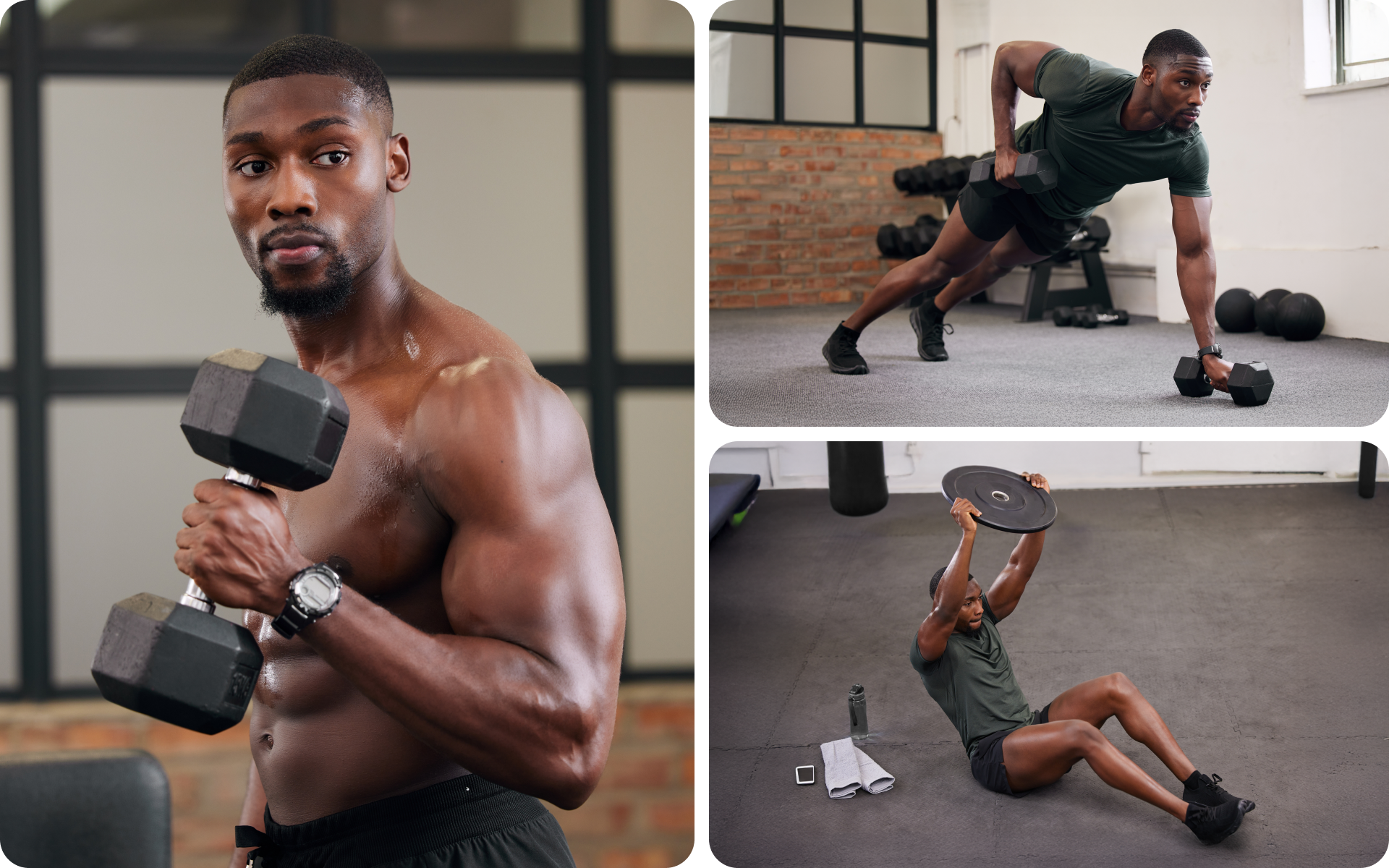
How Can You Adapt the Workouts to Your Experience Level?
A good dumbbell routine should grow with you. Rather than assigning exercises to specific fitness levels, use training intensity, volume, and exercise difficulty to determine when to progress:
- Beginner: Start with a weight that allows you to perform the target number of repetitions with good form while still having a few repetitions left in reserve. At this point, you should only focus on learning the movement pattern and building consistency.
- Intermediate: Gradually increase the weight, repetitions, or number of sets as the exercises become easier. You can also introduce more demanding exercises or variations that require greater strength and control.
- Advanced: Continue progressing through more demanding exercise variations or techniques, such as slower tempos. With each practice, aim to increase the training stimulus without compromising form.
When you understand how to modify volume, intensity, and movement complexity, you can systematically scale your routines over time.
As your strength and exercise tolerance improve, your training can progress to the next stage. A qualified trainer can help build or adjust a 30-day muscle-building workout plan at home based on your current fitness level and individual goals.
Whether you want to refresh your fitness routine, explore lower-calorie recipe ideas, or bring more structure to your wellness habits, BetterMe Well-Being Coach app offers tools that can support your next step. Explore the app and find an approach that works for your lifestyle.
How Should You Progress When You Have Fixed-Weight Dumbbells?
Fixed-weight dumbbells don’t mean your progress has to stay fixed. Try these simple ways to keep your workouts progressive:
- Increase repetitions gradually while maintaining good form.
- When your usual sets feel easy, add one more to increase training volume.
- Use a slower lowering phase to make each rep more challenging without increasing the weight.
- Progress from basic movements to more demanding versions, such as split squats instead of regular squats.
- Reduce your rest slightly to increase the workout’s intensity, but don’t rush at the expense of form.
- Hold the hardest part of an exercise for a second or two to increase muscle tension.
- Apply the principles of an adjustable dumbbell workout, even when your weights are fixed.
- Keep a simple record of your reps and sets so your home dumbbell workout keeps progressing rather than becoming repetitive.
People working out at home usually look for ways to diversify their workout routines, so their strength build-up won’t stall. If it’s difficult to invest in multiple weights, you can use the tips above to progress your workouts. They ensure that your muscles face a fresh challenge and continue to adapt, no matter how light your dumbbells might seem.
You should also seek professional help before you begin working out with dumbbells or if you are facing any issues while following a routine. A certified trainer or platform can help you create a 30-day home workout plan with dumbbells that caters to your physical needs.
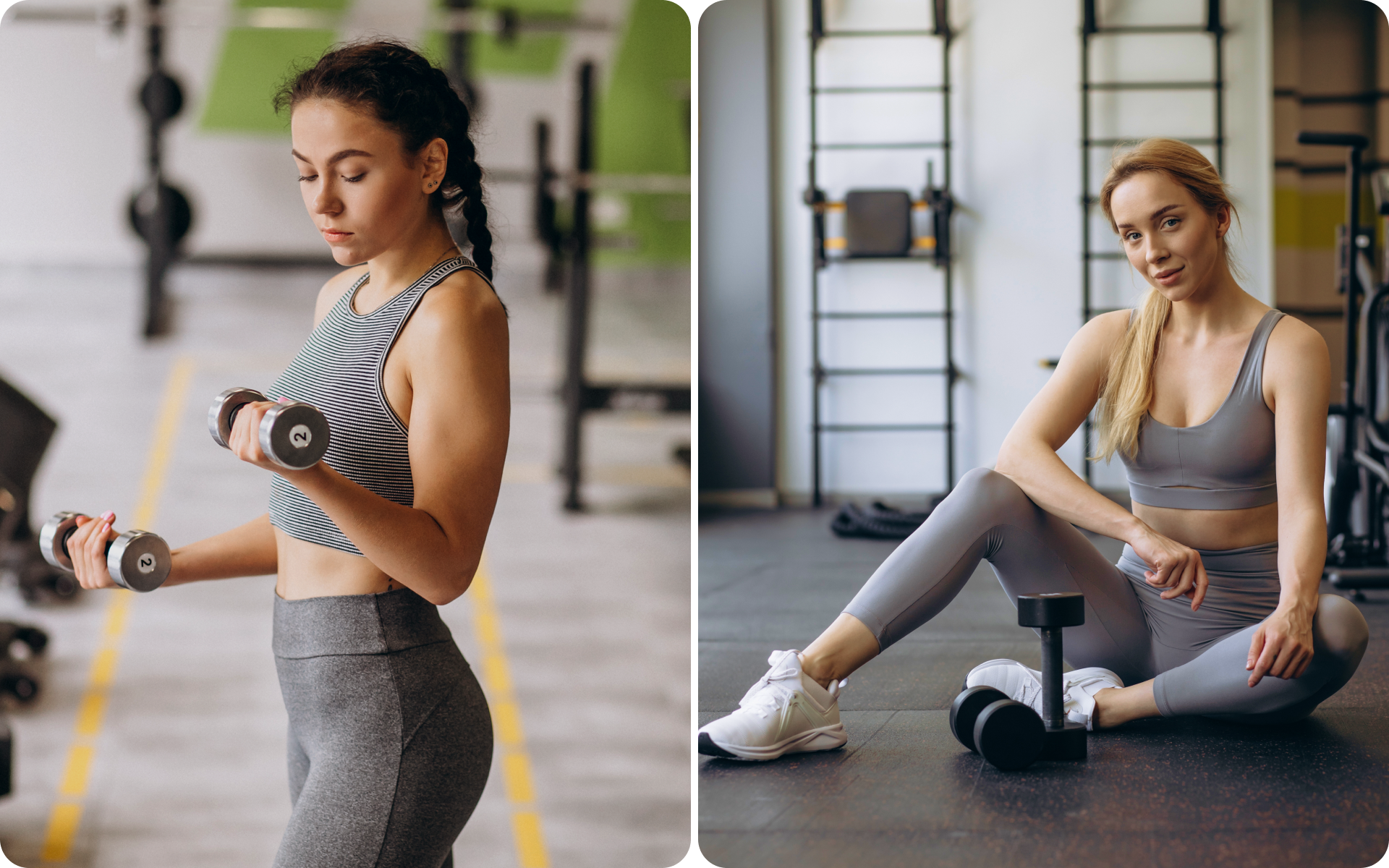
How Long Should You Rest Between Dumbbell Exercises?
Rest long enough to recover, but not so long that your workout loses momentum. For most dumbbell strength training, around 60-90 seconds between sets is a practical starting point. Heavier compound movements may need closer to 2-3 minutes, while lighter isolation exercises can often be performed with shorter breaks.
A 2024 meta-analysis found slightly more muscle growth with rest periods longer than 60 seconds, but little additional benefit beyond 90 seconds (5).
If your reps drop sharply because you’re rushing, add more rest. If you feel fully recovered well before a minute, you can get moving sooner.
Read more: Dumbbell Arm Workout: Adding Some Weights Might Just Be The Game-Changer You Need!
When Should You Put the Dumbbells Down and Stop Exercising?
Knowing when to put the dumbbells down is just as important as knowing how to lift them. Pushing yourself builds muscle, but pushing past your body’s safety thresholds can set you back weeks. Look out for these vital signs that tell you it’s time to end the set, or wrap up the workout entirely.
When Mechanics Fail (Technical Failure)
The moment your form breaks, your set is officially over. If you have to swing your hips, arch your lower back, or rely on momentum to lift a dumbbell, your target muscles have reached their capacity (6).
Continuing under these conditions shifts the force directly onto your muscles, drastically increasing your risk of acute injury.
Rule of thumb: Stop at “technical failure.” The last repetition you can complete with clean, uncompromising technique, rather than true mechanical collapse.
Sharp Pain vs. Muscle Burn
Muscle burning is a normal product of metabolic fatigue, but sharp discomfort could be a red flag (7). If you feel a sudden strain in your shoulder, elbow, or lower back during an exercise, park the weights immediately. Masking sharp pain by powering through sets leads to prolonged lay-offs.
Dizziness, Lightheadedness, or Nausea
Heavy resistance training and intensive circuit protocols can cause rapid, temporary changes in blood pressure and cerebral blood flow (8)(9).
Stop exercising and sit down immediately if you experience:
- Sudden lightheadedness
- Tunnel vision
- Nausea
These symptoms can occur when rapid changes in blood pressure temporarily affect blood flow to the brain. Rest until the symptoms pass, hydrate as needed, and call it a day if you continue to feel unwell.
The Hidden Cost of Exercise Cessation
Knowing when to stop a single workout prevents strain, but avoiding forced, long-term breaks helps protect real progress. When injuries or severe overtraining force you to stop working out completely, the body rapidly loses its hard-earned physical gains.
A 2021 systematic review protocol examined how stopping exercise affects strength and other physical outcomes. The researchers noted that detraining can lead to declines in physical function and metabolic health (10).
Their analysis underscores that prolonged inactivity can quickly reverse the benefits.
The takeaway: Putting the dumbbells down at the right moment is a training strategy. Ending a set when form breaks down or fatigue becomes excessive can reduce injury risk and help you stay consistent with your training.
Workouts, weight management tools, and recipe ideas come together in the BetterMe Well-Being Coach app, giving you practical support for building a more consistent wellness routine.
FAQs
Can beginners complete a three-day dumbbell workout?
Yes. Beginners can start with three weekly sessions using lighter weights and simple exercises. Remember to focus on proper form and gradually increase the weight or reps as you become stronger.
Can you train your full body with one pair of dumbbells?
Absolutely. Only one pair can train your legs, glutes, chest, back, shoulders, arms, and core. Exercises such as squats, rows, presses, and Romanian deadlifts can form the foundation of a full-body dumbbell workout.
How long should each dumbbell workout take?
Aim for around 30-60 minutes, including your warm-up and rest periods. The exact duration depends on your number of exercises, sets, repetitions, and rest times.
Can you combine this routine with running or other cardio?
Yes. You can combine dumbbell training with running, cycling, or other cardio. Schedule harder cardio sessions away from demanding leg workouts when possible, and allow enough recovery between sessions.
Can a dumbbell-only routine replace gym-based strength training?
For many people, yes. Dumbbells can provide effective resistance for building strength and muscle. However, a gym offers heavier loads and specialized equipment, which can be useful for advanced lifters or specific training goals.
The Bottom Line
Pushing your limits builds muscle, but knowing your boundary keeps you in the game. You can always opt for a 3-day dumbbell workout. It lets you see your strengths and notice where you fall short. Take it as a probationary period that can eventually help you draft a 30-day muscle-building workout plan.
The ground rules to follow are: choose the right exercises, use good form, progress gradually, and give your muscles time to recover.
DISCLAIMER:
This article is intended for general informational purposes only and does not serve to address individual circumstances. It is not a substitute for professional advice or help and should not be relied on for making any kind of decision-making. Any action taken as a direct or indirect result of the information in this article is entirely at your own risk and is your sole responsibility.
BetterMe, its content staff, and its medical advisors accept no responsibility for inaccuracies, errors, misstatements, inconsistencies, or omissions and specifically disclaim any liability, loss or risk, personal, professional or otherwise, which may be incurred as a consequence, directly or indirectly, of the use and/or application of any content.
You should always seek the advice of your physician or other qualified health provider with any questions you may have regarding a medical condition or your specific situation. Never disregard professional medical advice or delay seeking it because of BetterMe content. If you suspect or think you may have a medical emergency, call your doctor.
SOURCES:
- Effect of free-weight vs. machine-based strength training on maximal strength, hypertrophy and jump performance – a systematic review and meta-analysis (2024, pmc.ncbi.nlm.nih.gov)
- Short-term resistance training in older adults improves muscle quality: A randomized control trial (2021, pubmed.ncbi.nlm.nih.gov)
- Accuracy In Predicting Repetitions In Reserve During Resistance Training: Differences Across Load Intensities, Distance From Muscular Failure, Sexes, And Exercises (2025, researchgate.net)
- The Importance of Recovery in Resistance Training Microcycle Construction (2024, researchgate.net)
- Effect of physical exercise cessation on strength, functional, metabolic and structural outcomes in older adults: a protocol for systematic review and meta- analysis (2021, researchgate.net)
- Neuromuscular Fatigue and Perceived Fatigability in the Hours Following a High-Intensity Endurance Running Depend on the Exercise Protocol (2026, onlinelibrary.wiley.com)
- Pathophysiology of Exercise-Induced Muscle Damage and Its Structural, Functional, Metabolic, and Clinical Consequences (2020, biomed.cas.cz)
- The effects of circuit-based resistance training on blood pressure, arterial stiffness, and body composition in community-dwelling older adults: a systematic review and meta-analysis (2025, frontiersin.org)
- Effects of resistance exercise intensity on cerebral blood flow and cerebrovascular reactivity in healthy young males: A pilot study (2025, pmc.ncbi.nlm.nih.gov)
- Practical Application of Respiratory Muscle Training in Endurance Sports (2024, ovid.com)
 Reviewed by