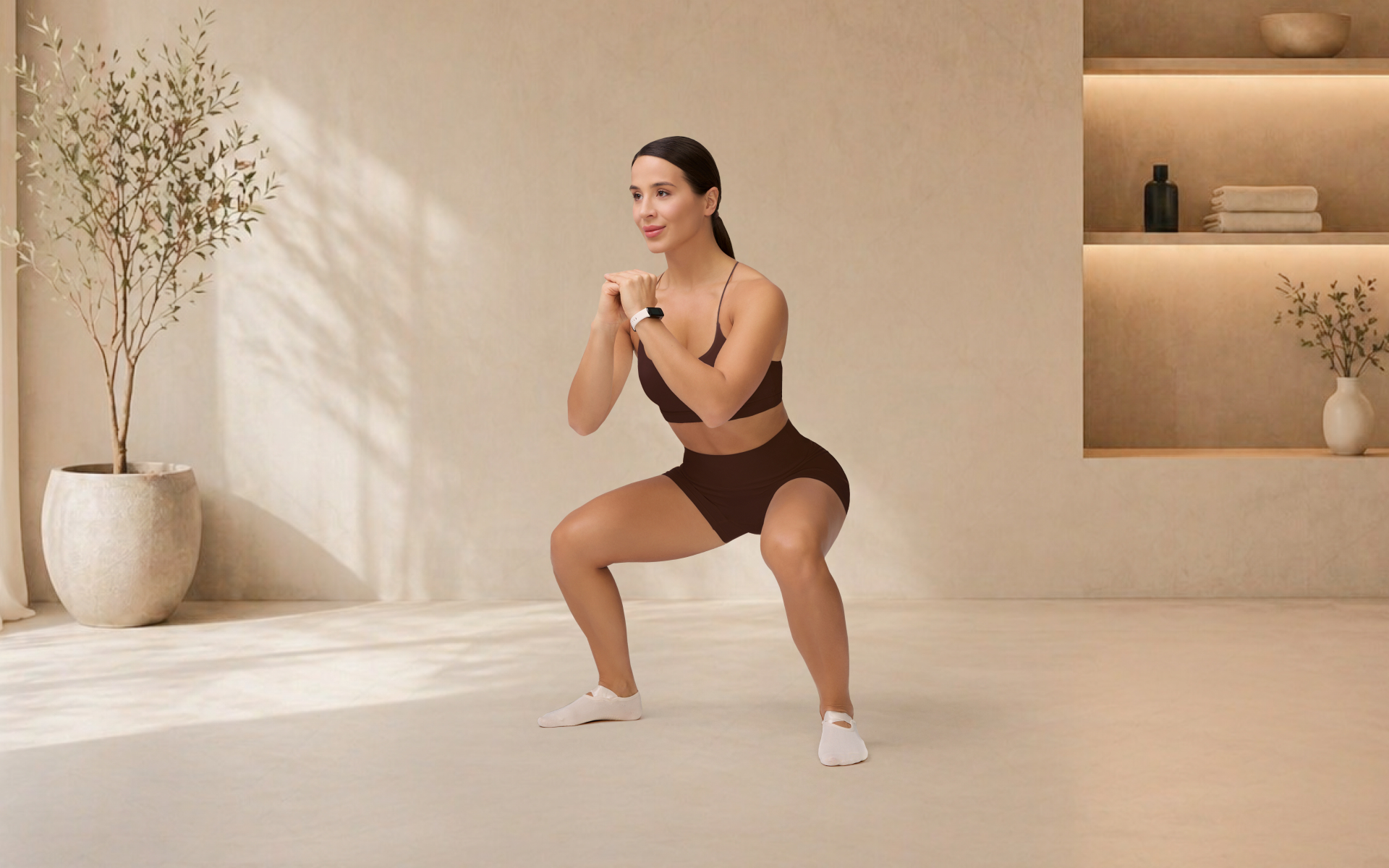
A 30-minute full-body workout routine with no equipment can help build strength and support your overall wellness. By using your own body weight to create resistance, you can challenge major muscle groups at home. Consistent effort and gradually increasing the difficulty will help you progress steadily over time.
A full-body workout is an exercise session that targets all your major muscle groups, including your upper body, lower body, and core. A bodyweight workout uses your own mass for resistance instead of weights or machines. If you want a structured 30-minute full-body workout with no equipment for beginners, you’re in the right place.
This routine can help you build a steady habit that you can adjust over time. You don’t need a gym or fancy gear to work toward progress. In this article, we’ll explore how to warm up, modify movements, and structure your sessions.
Can You Get an Effective Full-Body Workout Without Equipment?
Yes, you can get an effective full-body workout without any equipment by focusing on mechanical tension and consistent effort. Mechanical tension is the force that your muscles generate when they contract against resistance (1). This tension can be created by using just your body weight (2).
Some research has suggested that high effort is a key driver of muscle growth. This means performing repetitions until you reach a point where you could only complete 1 to 3 more reps with good form (3). The good news is that you don’t need weights to reach this level of effort, as your body weight can create sufficient muscular tension. This is one reason a 30-minute full-body workout at home can be so useful.
Start with foundational movements such as push-ups, squats, and lunges because they work several muscle groups at once and give you more value from a shorter workout (4). Once those main movements are in place, you can add one or two accessory exercises based on your weak points. These smaller movements target specific muscle groups in isolation and help round out your full-body workout routine.
Keep in mind that individual results will vary based on your starting point and consistency. Over time, you will find that bodyweight exercises offer a flexible way to support your fitness routine.
How Should You Warm Up Before a No-Equipment Full-Body Workout?
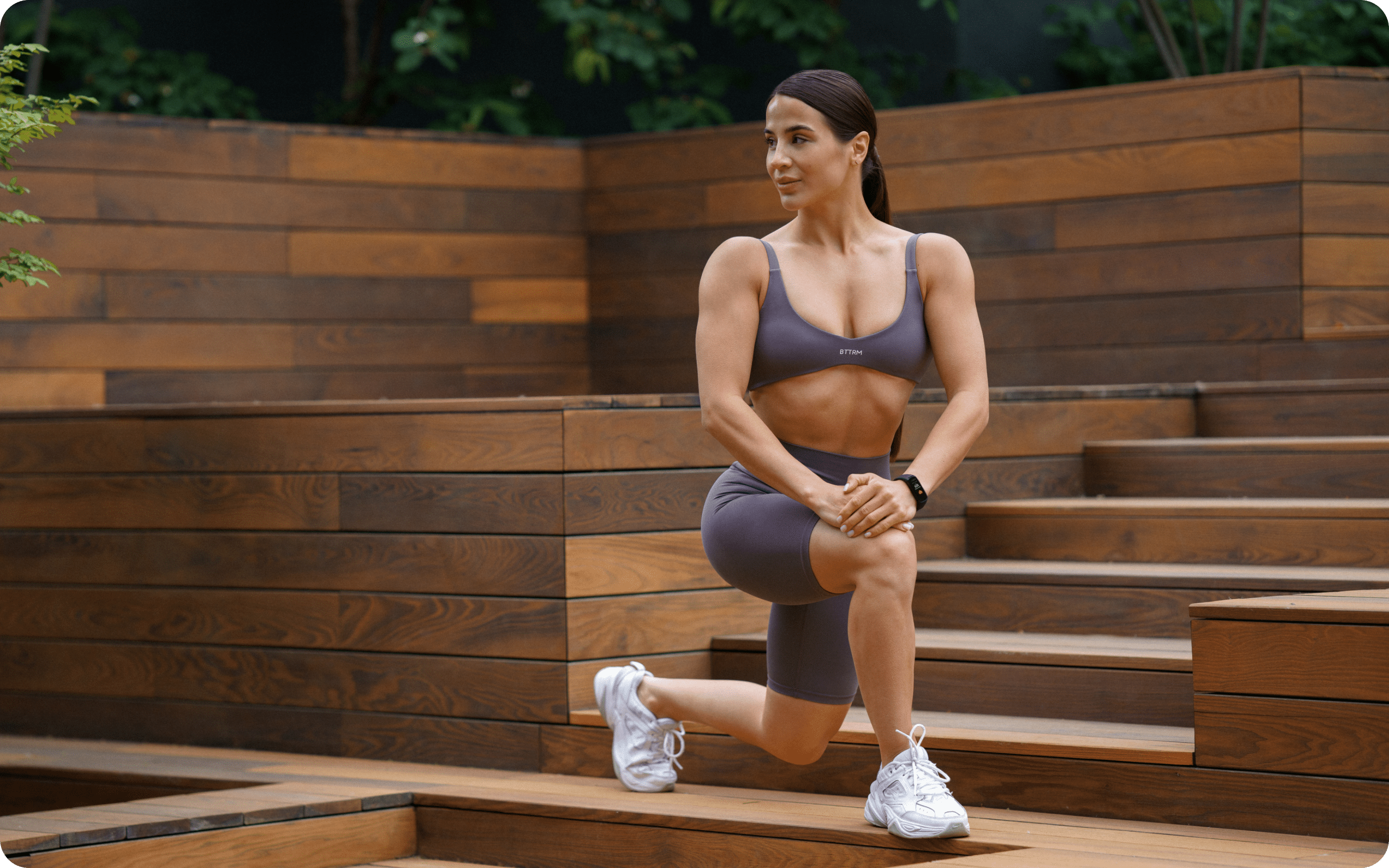
Start your 30-minute workout at home with 5 to 10 minutes of dynamic warm-up movements. This helps increase blood flow, prepares your muscles and joints for exercise, and gives your body time to transition into a working state (5). It also lets you practice the same ranges of motion you’ll use during the main workout, which can make the session feel more controlled (6).
Try this simple warm-up:
- High knees: 20 steps
- Hip swings: 15 reps per leg
- Arm circles: 15 reps per arm
- Gentle torso twists: 10 reps per side
- Bodyweight squats: 10 to 15 reps
For a more detailed prep routine, check out these full body warm up exercises before starting the main circuit.
Move at a comfortable pace and focus on control rather than speed. By the end of the warm-up, your muscles should feel warmer and your movements should feel easier, which can help you maintain proper form during the workout (7).
Whether you’re a workout beast or just a beginner making your first foray into the world of fitness and dieting – BetterMe has a lot to offer to both newbies and experts! Install the app and experience the versatility first-hand!
What Does a 30-Minute Full-Body No-Equipment Workout Look Like?
A 30-minute full-body no-equipment workout usually consists of a brief warm-up, a main circuit of bodyweight exercises, and a short cooldown.
- A circuit is a sequence of exercises performed one after the other with minimal rest in between.
- Reps, or repetitions, are the number of times you perform a single exercise movement.
- A set is a group of consecutive repetitions.
This structured at-home full-body workout will challenge your upper body, lower body, and core. Follow the table below for a balanced, user-friendly routine.
| Workout block | Exercise | Reps/time | Rest between sets |
|---|---|---|---|
| Block 1: lower body | Bodyweight squats | 10-15 reps | 30-45 seconds |
| Block 1: lower body | Reverse lunges | 8-12 reps per leg | 30-45 seconds |
| Block 2: upper body | Push-ups | 8-12 reps | 30-45 seconds |
| Block 2: upper body | Plank shoulder taps | 10-14 taps per arm | 30-45 seconds |
| Block 3: core | Glute bridges | 12-15 reps | 30-45 seconds |
| Block 3: core | Dead bugs | 8-10 reps per side | 30-45 seconds |
Complete all three blocks in order as one full circuit. After you finish Block 1, move on to Block 2, then Block 3. Rest for 60 seconds after completing all three blocks, then repeat the full circuit 2 more times for a total of 3 rounds.
Bodyweight Squats
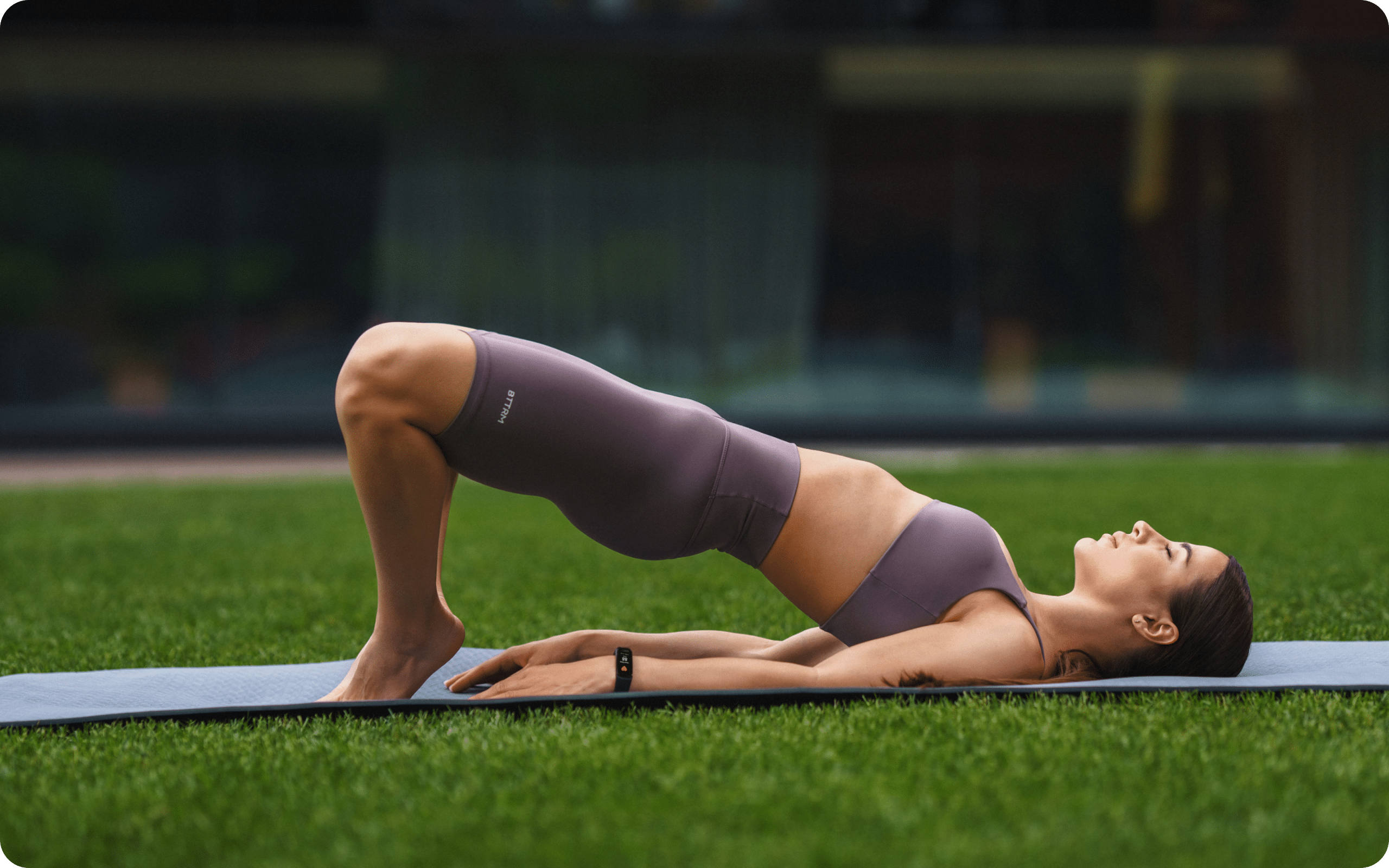
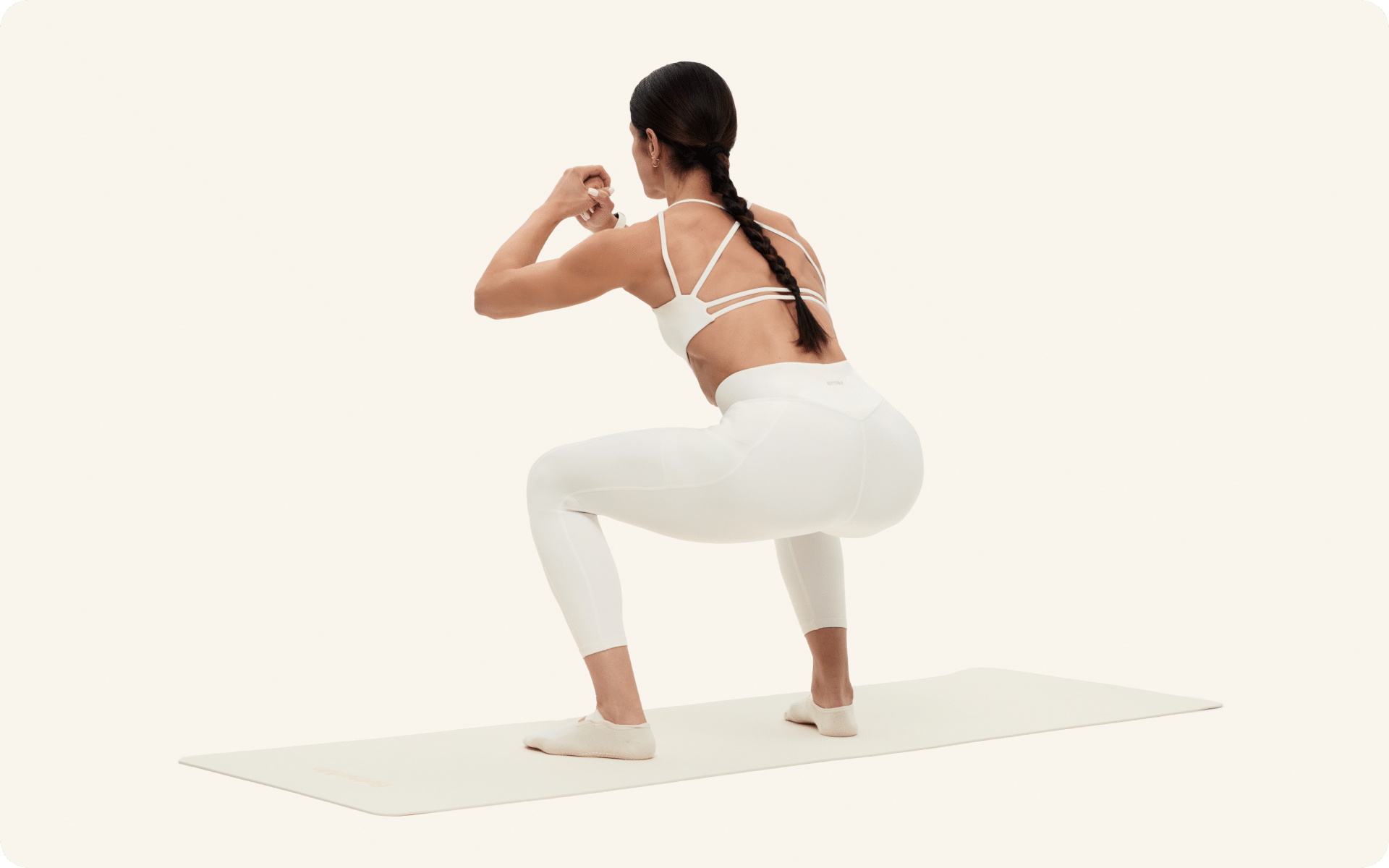
- Stand with your feet shoulder-width apart, your toes pointing slightly outward.
- Keep your chest up and lower your hips down and back, as if sitting in a chair.
- Lower yourself until your thighs are parallel to the floor, or as low as feels comfortable.
- Push through your feet to return to the standing position.
Reverse Lunges
- Stand tall with your feet together and your hands on your hips.
- Step your right foot back, lowering your hips until both knees are bent at a 90-degree angle.
- Keep your front knee aligned with your ankle.
- Push off your back foot to return to the starting position, then switch legs.
Push-Ups
- Start in a high plank position with your hands slightly wider than shoulder-width apart.
- Keep your body in a straight line from your head to your heels.
- Lower your body until your chest is just above the floor.
- Push back up to the starting position.
Plank Shoulder Taps
- Begin in a high plank position with your core engaged.
- Keep your hips as still as possible.
- Lift your right hand to tap your left shoulder, then return it to the floor.
- Lift your left hand to tap your right shoulder, and continue alternating.
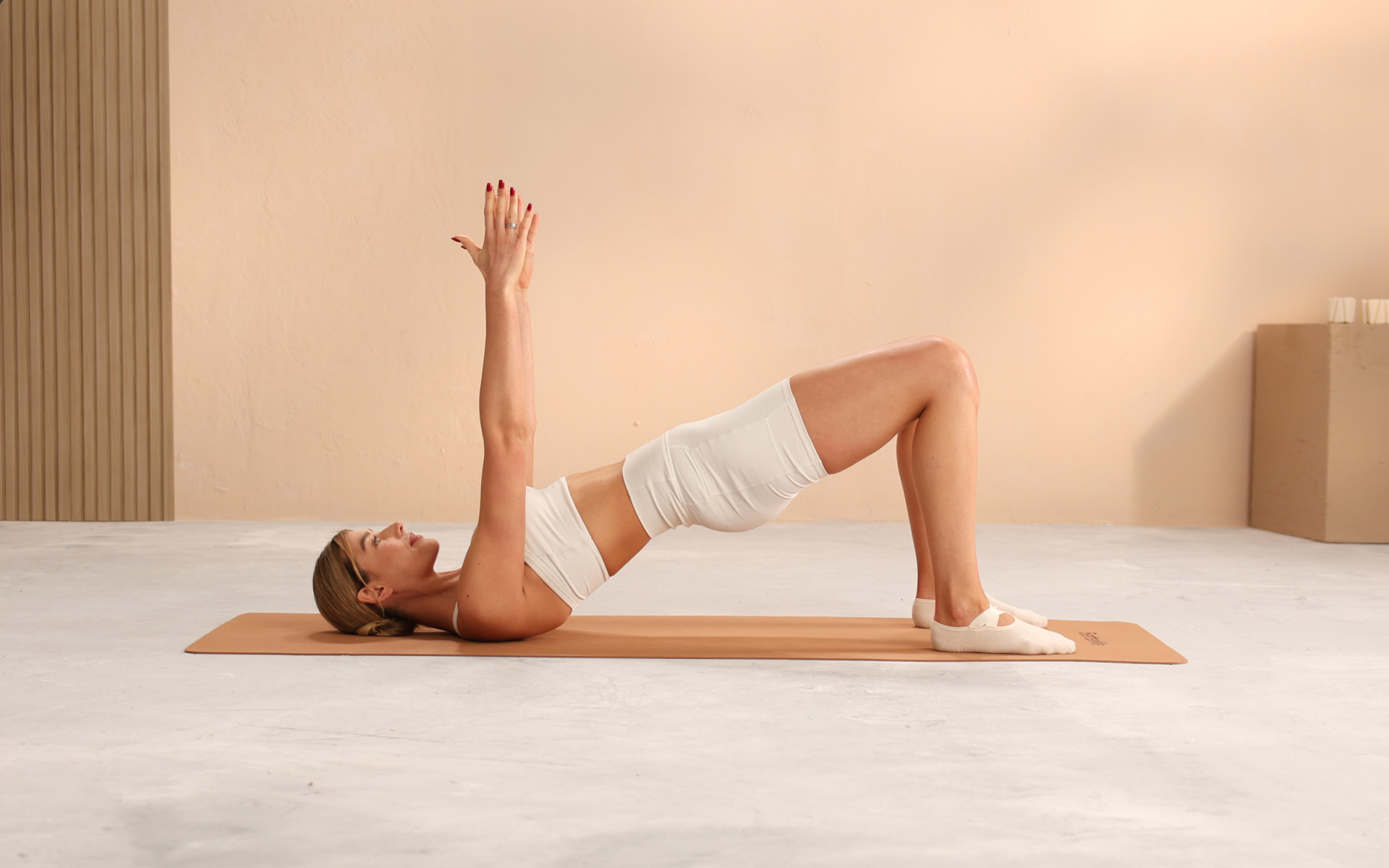
Glute Bridges
- Lie on your back with your knees bent and your feet flat on the floor.
- Keep your arms by your sides with your palms facing down.
- Press through your heels to lift your hips toward the ceiling.
- Squeeze your glutes at the top, then slowly lower your hips back down.
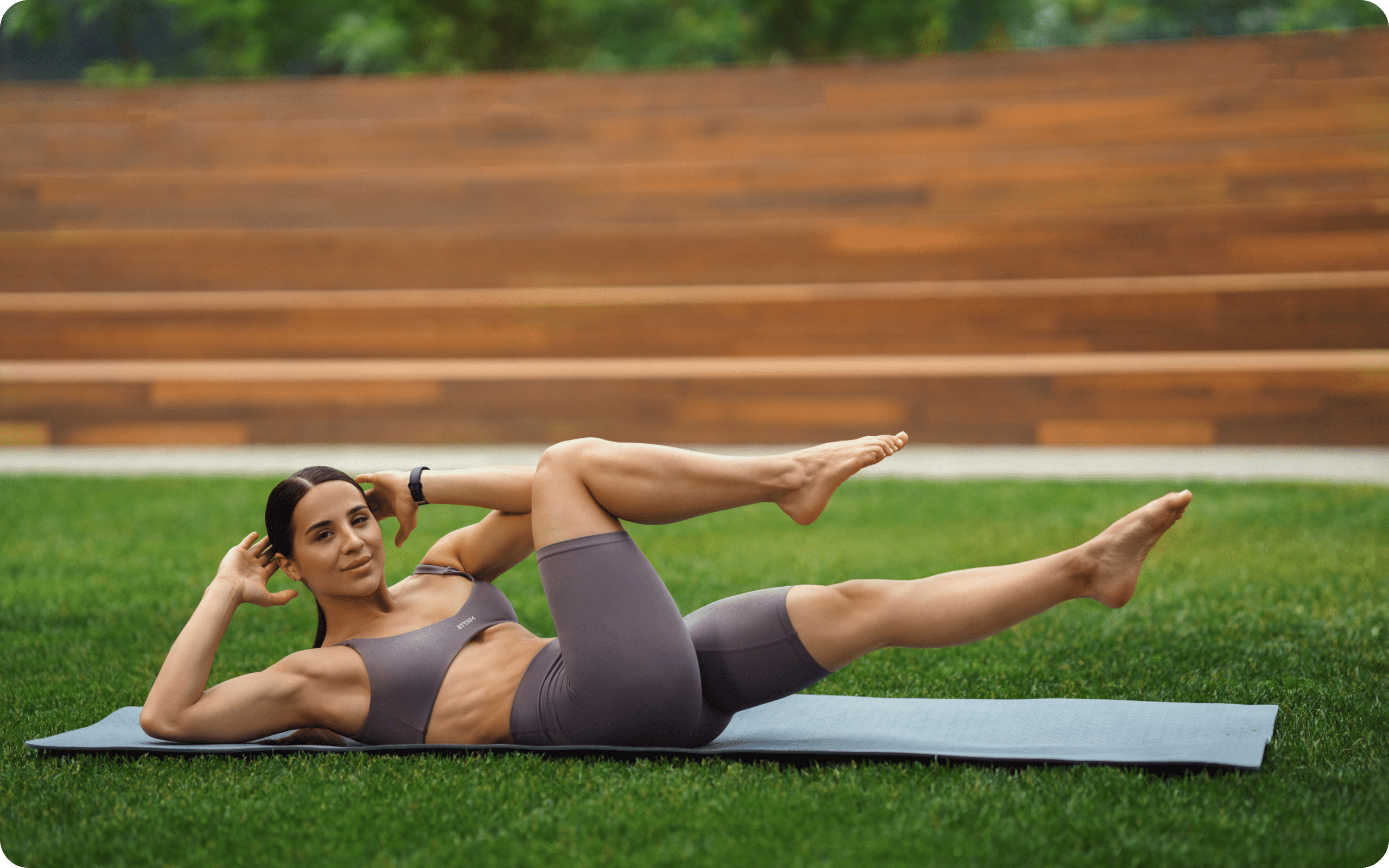
Dead Bugs
- Lie on your back with your arms extended toward the ceiling and your knees bent at 90 degrees.
- Press your lower back into the floor.
- Slowly extend your right arm behind your head while straightening your left leg toward the floor.
- Return to the starting position and repeat on the opposite side.
Read more: Bodyweight Core Exercises: A Simple Way to Build Strength
How Can Beginners Modify a Full-Body Workout with No Equipment?
Beginners can modify a full-body workout in two directions: regress it when a move feels too demanding, or progress it when the same move feels too easy.
For a 30-minute workout routine at home, you have several options to alter your workout. You can adjust:
- Leverage
- Range of motion
- Tempo
- Number of reps
- Rest time
- Total rounds
Making proper alterations is the key to progressing in the long term.
For example, if floor push-ups feel too hard:
- Do wall push-ups with your hands at chest height.
- Progress to incline push-ups using a couch, bench, or table.
- Lower to your knees for knee push-ups.
- Aim for 6-10 reps.
Over time, when you need more effort:
- Slow the lowering phase to 3 seconds.
- Pause for 1 second at the bottom.
- Add 2-3 reps per set.
- Use close-grip or decline push-up variations if your form stays steady.
When squatting, if you need a simpler option:
- Sit down onto a chair or couch cushion, then stand back up.
- Limit your depth to a comfortable and controlled range.
- Do 8-10 reps instead of 12-15 reps.
- Rest for 45-60 seconds after the set.
Over time, when you’ve mastered the standard squat, and you want more challenge:
- Slow the lowering phase to 3 seconds.
- Add 2-3 reps per set.
- Complete 3-4 rounds instead of 2-3 rounds.
Use regressions when you need more support, such as shorter ranges, wall variations, knee variations, or longer rests.
Use progressions when the movement feels steady, such as deeper reps, slower tempo, shorter rests, or 1-2 extra reps per set.
The same can be said for the entire workout. If the full session feels like it’s too much, scale it down in one of these ways:
- Reduce the session from 3 rounds to 2 rounds.
- Work for 20 seconds instead of 30-40 seconds.
- Cut reps by about 20%-30%.
- Rest for 45-60 seconds between exercises.
- Skip the most demanding move and return to it next week.
If the workout starts to feel too easy, increase the challenge gradually:
- Add 2 reps to each set.
- Add 1 extra round.
- Reduce rest by 5-10 seconds.
- Slow the lowering phase of each rep.
- Add a pause at the hardest point of the movement.
- Move from easier variations to standard versions, then to harder versions.
Intense sweat sessions, working weight loss tips, lip-smacking recipes come in one package with the BetterMe: Health Coaching app—all at your fingertips, start transforming your life now!
How Often Should You Do a 30-Minute Full-Body Workout?
You can usually perform a 30-minute full-body workout 2 to 3 times per week, allowing for adequate rest between sessions. Rest days are essential because your body needs time to rebuild muscle tissue (8). A full-body workout routine at home works well when it’s spaced out evenly throughout the week.
A 3-day full-body workout schedule is often a practical option as it lets you train all the major muscle groups several times per week while still leaving recovery days between sessions. For many people, a full body workout 3 times a week provides a balance between training frequency and recovery.
| Schedule option | Workout days | Rest or active recovery days |
|---|---|---|
| Beginner (2 days) | Monday, Thursday | Tuesday, Wednesday, Friday, weekend |
| Standard (3 days) | Monday, Wednesday, Friday | Tuesday, Thursday, weekend |
| Flexible (every other day) | Varies (e.g. Mon, Wed, Fri, Sun) | Varies (e.g. Tue, Thu, Sat) |
Giving yourself 48 hours between full-body sessions will allow your muscles to rest properly (8). On your rest days, you can engage in light activities such as walking, gentle stretching, or yoga (9). This balanced approach helps you stay consistent without feeling drained.
If you prefer a full body workout everyday approach, keep the intensity lighter on some days and alternate harder sessions with mobility, walking, or gentle core work so your body still has time to recover.
What Should You Do After a No-Equipment Full-Body Workout?
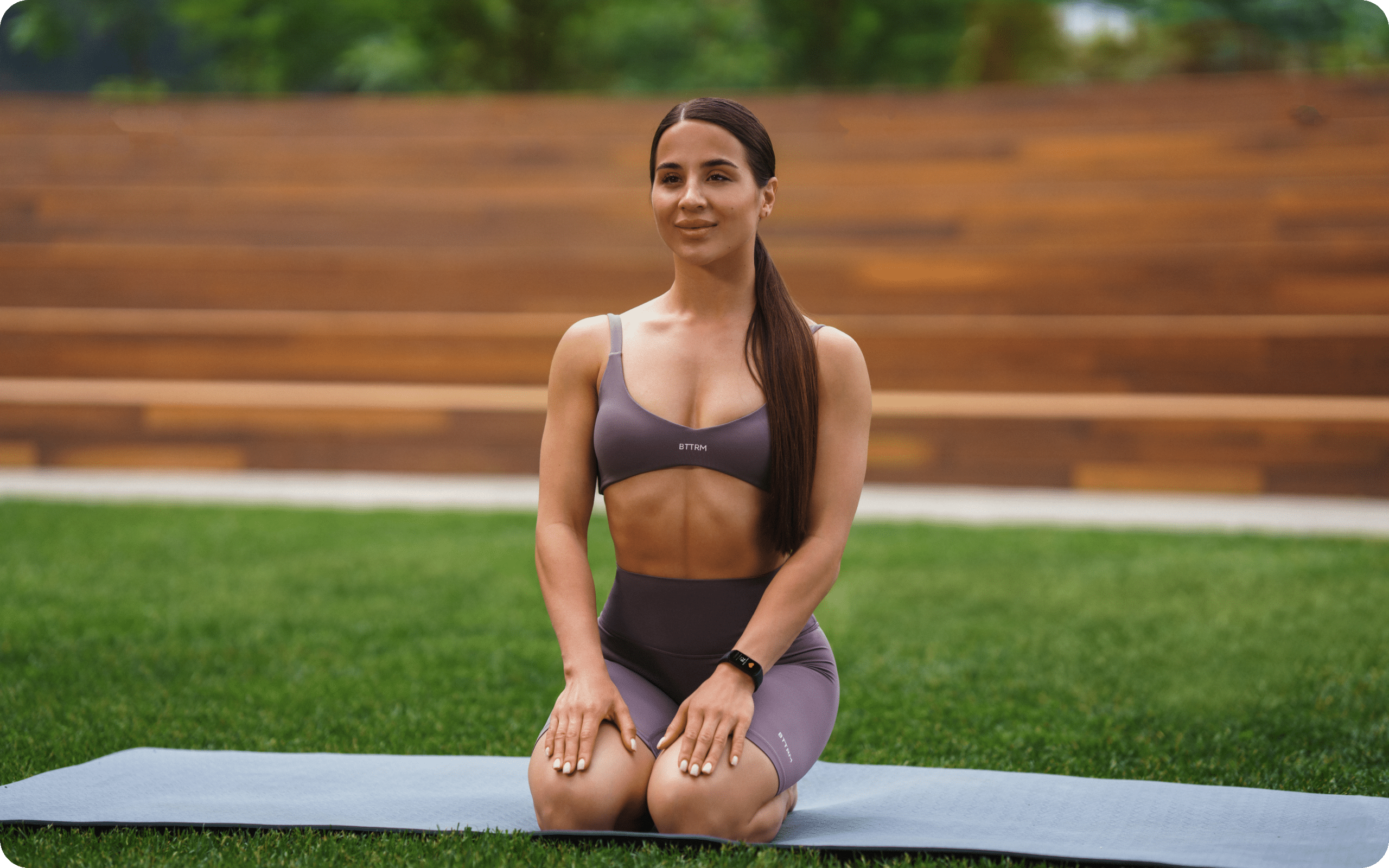
After your workout, you could spend 3 to 5 minutes performing a cool-down and drinking water to rehydrate. A cooldown involves slow, gentle movements and stretching to help your heart rate return to normal. This practice supports your recovery journey and helps your body transition back to a resting state (5).
Gently stretch the major muscle groups you just worked, holding each stretch for 20 to 30 seconds. Focus on your chest, thighs, hamstrings, and calves. Breathing deeply during these stretches can help you feel more grounded and relaxed.
Taking a few minutes to cool down is an excellent way to acknowledge the effort you just put in. It reinforces a positive relationship with movement and leaves you feeling accomplished.
Read more: Standing Leg Exercises: 6 Moves for Lower-Body Strength
What Mistakes Should You Avoid During a Full-Body Bodyweight Workout?
You should avoid rushing your repetitions, forgetting to breathe, and using poor form to complete a set. Many people try to perform exercises too quickly, which reduces the mechanical tension on the muscles (10). Focus on a steady pace, taking 2 seconds to lower yourself and 1 second to push back up.
Another mistake is neglecting progressive overload. Progressive overload is the practice of gradually increasing the difficulty of your workouts over time to keep challenging your muscles (11). You can do this by adding 1 or 2 extra repetitions each week, or by slowing down your movements.
Finally, holding your breath during exertion can increase pressure in your body unnecessarily. Aim to exhale during the hardest part of the movement and inhale during the easier part. By focusing on breathing and form, you make your 30-minute full-body workout with no equipment more consistent and manageable over time.
Frequently Asked Questions
What is the best time to do a full-body workout?
The best time to do a full-body workout is whenever it fits most consistently into your schedule. Some people prefer mornings to energize their day, while others like evenings to unwind (12). Choose a time that you can realistically maintain, as consistency is more important than the exact hour of the day.
Is it better to do upper body or lower body first?
It’s usually better to start with the lower body as leg exercises demand more energy and focus. Moves such as squats and lunges require significant effort from large muscle groups (13). Or, you can alternate training days with the muscle group you start with.
How many reps should you do in a full-body workout?
You should aim for 8 to 15 reps per set for most bodyweight exercises. This range provides a solid balance of building muscular endurance and strength (14). If you reach 15 reps easily, you may need to slow down your tempo or try a more challenging variation of the movement.
How many days a week should you do a full-body workout?
You can comfortably do a full-body workout 2 to 3 days a week. This frequency allows you to challenge all your major muscle groups while providing enough rest days for recovery (15). Spacing your workouts out with at least one rest day in between tends to yield the best progress.
What should you eat after a full-body workout?
You should consider eating a balanced meal or snack containing protein and carbohydrates within a few hours of finishing your routine. Protein supports post-workout muscle recovery, while carbohydrates help refill your energy reserves (16). Options such as Greek yogurt with fruit or a chicken and rice bowl can be practical options for many people.
The Bottom Line
If you’re ready to start moving, a 30-minute full-body workout with no equipment is a wonderful place to begin. It empowers you to take charge of your wellness from the comfort of your own home. Lace up your sneakers, clear some space in your living room, and enjoy the process of getting stronger today.
DISCLAIMER:
This article is intended for general informational purposes only and does not serve to address individual circumstances. It is not a substitute for professional advice or help and should not be relied on for making any kind of decision-making. Any action taken as a direct or indirect result of the information in this article is entirely at your own risk and is your sole responsibility.
BetterMe, its content staff, and its medical advisors accept no responsibility for inaccuracies, errors, misstatements, inconsistencies, or omissions and specifically disclaim any liability, loss or risk, personal, professional or otherwise, which may be incurred as a consequence, directly or indirectly, of the use and/or application of any content.
You should always seek the advice of your physician or other qualified health provider with any questions you may have regarding a medical condition or your specific situation. Never disregard professional medical advice or delay seeking it because of BetterMe content. If you suspect or think you may have a medical emergency, call your doctor.
SOURCES:
- Load-induced human skeletal muscle hypertrophy: Mechanisms, myths, and misconceptions (2026, sciencedirect.com)
- The advantages of body-weight exercise (2024, health.harvard.edu)
- For Bigger Muscles Push Close to Failure, For Strength, Maybe Not (2024, fau.edu)
- Comparison of single- and multi-joint lower body resistance training upon strength increases in recreationally active males and females: a within-participant unilateral training study (2019, pmc.ncbi.nlm.nih.gov)
- Warm Up, Cool Down (2024, heart.org)
- Effects of an integrative warm-up method on the range of motion, core stability, and quality of squat performance of young adults (2024, frontiersin.org)
- The effect of muscle warm-up on voluntary and evoked force-time parameters: A systematic review and meta-analysis with meta-regression (2025, sciencedirect.com)
- Why Rest Days Are Important for Muscle Building (2024, nasm.org)
- Comparison of Different Recovery Strategies After High-Intensity Functional Training: A Crossover Randomized Controlled Trial (2022, frontiersin.org)
- Go slower for strength training gains (2025, health.harvard.edu)
- Effects of Resistance Training Overload Progression Protocols on Strength and Muscle Mass (2024, pubmed.ncbi.nlm.nih.gov)
- Exercise conundrum: When’s the best time to work out? (2024, mayoclinichealthsystem.org)
- The Impact of Exercise Order on Velocity Performance in the Bench Press and the Squat: A Comparative Study (2024, mdpi.com)
- Loading Recommendations for Muscle Strength, Hypertrophy, and Local Endurance: A Re-Examination of the Repetition Continuum (2021, pmc.ncbi.nlm.nih.gov)
- The influence of resistance exercise training prescription variables on skeletal muscle mass, strength, and physical function in healthy adults: An umbrella review (2024, sciencedirect.com)
- Nutritional Strategies to Improve Post-exercise Recovery and Subsequent Exercise Performance: A Narrative Review (2025, link.springer.com)
 By
By 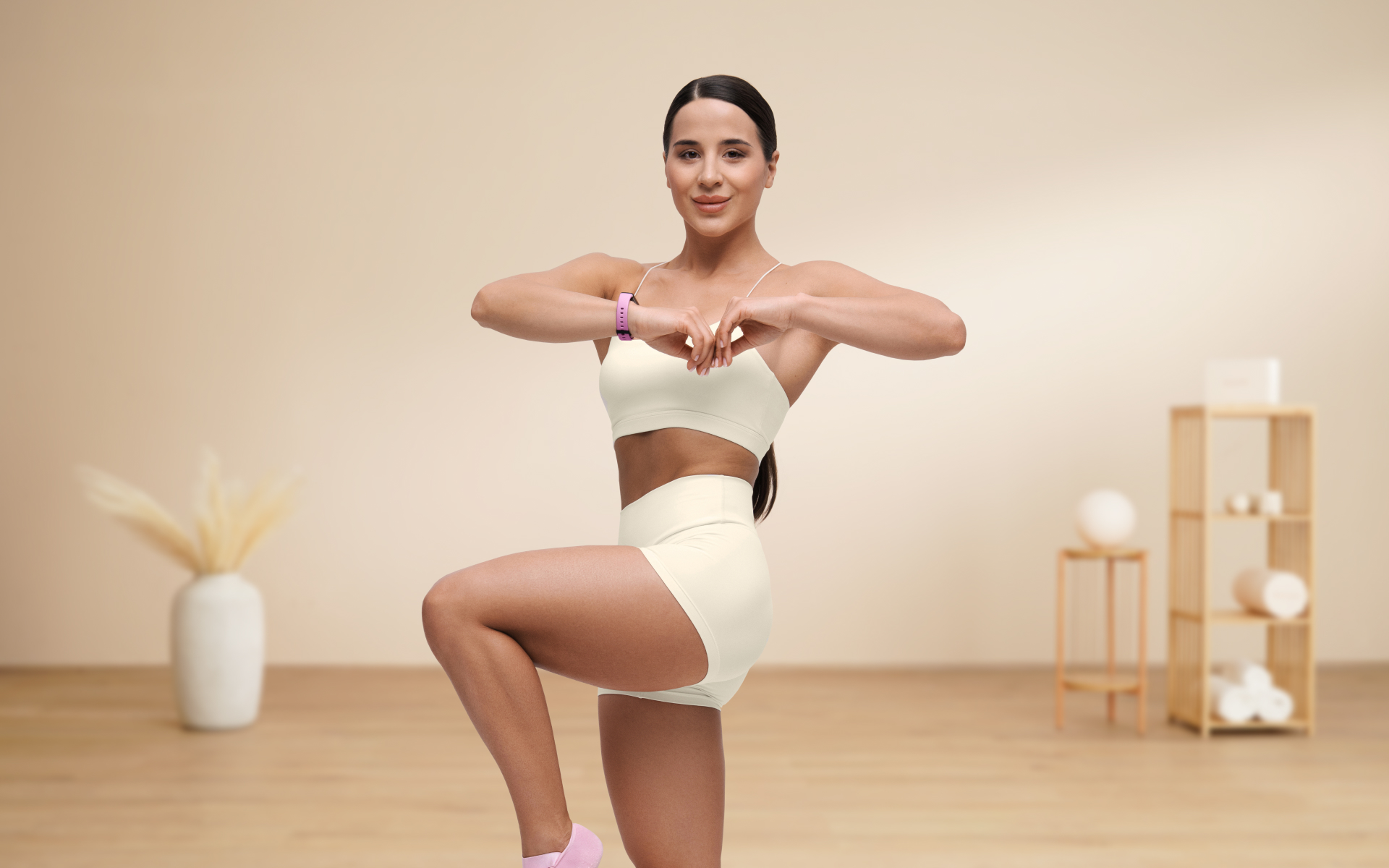
 Reviewed by